… You also say that men in STEM fields — unlike those in the humanities and social sciences — don’t even have the “requisite vocabulary” to discuss sex discrimination, since they haven’t read enough feminist literature. Here I can only speak for myself: I’ve read at least a dozen feminist books, of which my favorite was Andrea Dworkin’s Intercourse (I like howls of anguish much more than bureaucratic boilerplate, so in some sense, the more radical the feminist, the better I can relate). I check Feministing, and even radfem blogs like I Blame the Patriarchy. And yes, I’ve read many studies and task force reports about gender bias, and about the “privilege” and “entitlement” of the nerdy males that’s keeping women away from science.
Alas, as much as I try to understand other people’s perspectives, the first reference to my “male privilege” — my privilege! — is approximately where I get off the train, because it’s so alien to my actual lived experience. This is not, insanely, to suggest a lack of misogyny in the modern world! To whatever extent there is misogyny, one could say that there’s also “male privilege.” Rather it’s to suggest that, given what nerdy males have themselves had to endure in life, shaming them over their “male privilege” is a bad way to begin a conversation with them.
But I suspect the thought that being a nerdy male might not make me “privileged” — that it might even have put me into one of society’s least privileged classes — is completely alien to your way of seeing things. To have any hope of bridging the gargantuan chasm between us, I’m going to have to reveal something about my life, and it’s going to be embarrassing.
(sigh) Here’s the thing: I spent my formative years — basically, from the age of 12 until my mid-20s — feeling not “entitled,” not “privileged,” but terrified. I was terrified that one of my female classmates would somehow find out that I sexually desired her, and that the instant she did, I would be scorned, laughed at, called a creep and a weirdo, maybe even expelled from school or sent to prison. And furthermore, that the people who did these things to me would somehow be morally right to do them — even if I couldn’t understand how.
You can call that my personal psychological problem if you want, but it was strongly reinforced by everything I picked up from my environment: to take one example, the sexual-assault prevention workshops we had to attend regularly as undergrads, with their endless lists of all the forms of human interaction that “might be” sexual harassment or assault, and their refusal, ever, to specify anything that definitely wouldn’t be sexual harassment or assault. I left each of those workshops with enough fresh paranoia and self-hatred to last me through another year.
My recurring fantasy, through this period, was to have been born a woman, or a gay man, or best of all, completely asexual, so that I could simply devote my life to math, like my hero Paul Erdös did. Anything, really, other than the curse of having been born a heterosexual male, which for me, meant being consumed by desires that one couldn’t act on or even admit without running the risk of becoming an objectifier or a stalker or a harasser or some other creature of the darkness.
Of course, I was smart enough to realize that maybe this was silly, maybe I was overanalyzing things. So I scoured the feminist literature for any statement to the effect that my fears were as silly as I hoped they were. But I didn’t find any. On the contrary: I found reams of text about how even the most ordinary male/female interactions are filled with “microaggressions,” and how even the most “enlightened” males — especially the most “enlightened” males, in fact — are filled with hidden entitlement and privilege and a propensity to sexual violence that could burst forth at any moment.
Because of my fears — my fears of being “outed” as a nerdy heterosexual male, and therefore as a potential creep or sex criminal — I had constant suicidal thoughts. As Bertrand Russell wrote of his own adolescence: “I was put off from suicide only by the desire to learn more mathematics.”
At one point, I actually begged a psychiatrist to prescribe drugs that would chemically castrate me (I had researched which ones), because a life of mathematical asceticism was the only future that I could imagine for myself. The psychiatrist refused to prescribe them, but he also couldn’t suggest any alternative: my case genuinely stumped him. As well it might — for in some sense, there was nothing “wrong” with me. In a different social context — for example, that of my great-grandparents in the shtetl — I would have gotten married at an early age and been completely fine. (And after a decade of being coy about it, I suppose I’ve finally revealed the meaning of this blog’s title.) This is not, in any way, shape, or form, to suggest that I yearn for an era when women could be purchased as property. There were many times and places where marriages did not occur without both parties’ consent, but there was also a ritualized system of courtship that took much of the terror and mystery out of the process. Even that is not exactly what I “yearn” for; I merely say it’s what I felt “optimized” for.
All this time, I faced constant reminders that the males who didn’t spend months reading and reflecting about feminism and their own shortcomings — even the ones who went to the opposite extreme, who engaged in what you called “good old-fashioned ass-grabbery” — actually had success that way. The same girls who I was terrified would pepper-spray me and call the police if I looked in their direction, often responded to the crudest advances of the most Neanderthal of men by accepting those advances. Yet it was I, the nerd, and not the Neanderthals, who needed to check his privilege and examine his hidden entitlement! Contrary to what countless people have said, this is not intended to blame women for their choices — or even, really, to blame the Neanderthals. Rather, it’s intended to blame a culture that told male nerds since childhood that they’d be horrible people if they asked — even more horrible than if they didn’t ask! — thereby ceding the field to the Neanderthals by default.
So what happened to break me out of this death-spiral? Did I have an epiphany, where I realized that despite all appearances, it was I, the terrified nerd, who was wallowing in unearned male privilege, while those Neaderthal ass-grabbers were actually, on some deeper level, the compassionate feminists — and therefore, that both of us deserved everything we got?
No, there was no such revelation. All that happened was that I got older, and after years of hard work, I achieved some success in science, and that success boosted my self-confidence (at least now I had something worth living for), and the newfound confidence, besides making me more attractive, also made me able to (for example) ask a woman out, despite not being totally certain that my doing so would pass muster with a committee of radfems chaired by Andrea Dworkin — a prospect that was previously unthinkable to me. This, to my mind, “defiance” of feminism is the main reason why I was able to enjoy a few years of a normal, active dating life, which then led to meeting the woman who I married.
Now, the whole time I was struggling with this, I was also fighting a second battle: to maintain the liberal, enlightened, feminist ideals that I had held since childhood, against a powerful current pulling me away from them. I reminded myself, every day, that no, there’s no conspiracy to make the world a hell for shy male nerds. There are only individual women and men trying to play the cards they’re dealt, and the confluence of their interests sometimes leads to crappy outcomes. No woman “owes” male nerds anything; no woman deserves blame if she prefers the Neanderthals; everyone’s free choice demands respect.
That I managed to climb out of the pit with my feminist beliefs mostly intact, you might call a triumph of abstract reason over experience.
But I hope you now understand why I might feel “only” 97% on board with the program of feminism. I hope you understand why, despite my ironclad commitment to women’s reproductive choice and affirmative action and women’s rights in the developing world and getting girls excited about science, and despite my horror at rape and sexual assault and my compassion for the victims of those heinous crimes, I might react icily to the claim — for which I’ve seen not a shred of statistical evidence — that women are being kept out of science by the privileged, entitled culture of shy male nerds, which is worse than the culture of male doctors or male filmmakers or the males of any other profession. I believe you guys call this sort of thing “blaming the victim.” From my perspective, it serves only to shift blame from the Neanderthals and ass-grabbers onto some of society’s least privileged males, the ones who were themselves victims of bullying and derision, and who acquired enough toxic shame that way for appealing to their shame to be an effective way to manipulate their behavior. As I see it, whenever these nerdy males pull themselves out of the ditch the world has tossed them into, while still maintaining enlightened liberal beliefs, including in the inviolable rights of every woman and man, they don’t deserve blame for whatever feminist shortcomings they might still have. They deserve medals at the White House. This is obvious hyperbole.


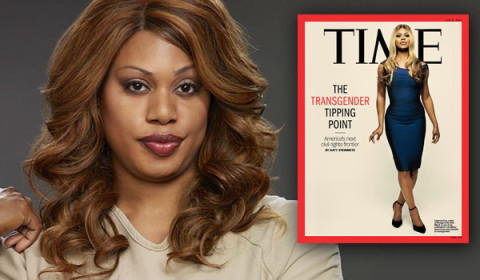 Yet, at the same time, the trans-rights movement is growing in power and cachet: a recent Time cover featuring the actress Laverne Cox was headlined “THE TRANSGENDER TIPPING POINT.” The very word “transgender,” which first came into wide use in the nineteen-nineties, encompasses far more people than the term “transsexual” did. It includes not just the small number of people who seek gender-reassignment surgery—according to frequently cited estimates, about one in thirty thousand men and one in a hundred thousand women—but also those who take hormones, or who simply identify with the opposite gender, or, in some cases, with both or with neither. (According to the National Center survey, most trans women have taken female hormones, but only about a quarter of them have had genital surgery.) The elasticity of the term “transgender” has forced a rethinking of what sex and gender mean; at least in progressive circles, what’s determinative isn’t people’s chromosomes or their genitals or the way that they were brought up but how they see themselves.

