
World War Two and Spartacus Olsson
Published 25 Apr 2026In early 1936, Adolf Hitler took one of the greatest risks of his rule — sending German troops into the demilitarized Rhineland in direct violation of the Treaty of Versailles and the Locarno Pact. It was a gamble that could have triggered immediate war. Instead, it became a turning point that transformed Hitler from a powerful dictator into a figure many Germans saw as a national savior.
In this episode of Death of Democracy, we examine how the re-militarization of the Rhineland, combined with the propaganda spectacle of the 1936 Winter Olympics in Garmisch-Partenkirchen, helped cement Hitler’s popularity at home while exposing the paralysis of Britain and France abroad. Through contemporary voices like William L. Shirer and Victor Klemperer, we explore the uneasy mix of fear, relief, and growing enthusiasm among ordinary Germans — alongside the continued escalation of repression against Jews and political opponents.
This quarter reveals a crucial dynamic: how foreign policy success, propaganda, and public sentiment fused to elevate Hitler into something approaching a political messiah — while simultaneously closing the space for resistance.
History is not inevitable — but moments like this show how easily it can be shaped.
April 26, 2026
How to Stage (and Win) an International Crisis – Death of Democracy 13 – Q1 1936
April 19, 2026
How to Tank the Economy for War – Death of Democracy 12 – Q4 1935
World War Two and Spartacus Olsson
Published 18 Apr 2026Nazi Germany in late 1935 was becoming more ruthless, more militarized, and more dangerous. In this episode, Spartacus Olsson reports from Berlin on the final months of 1935, when Hitler’s regime tightened its grip through food shortages, propaganda, rearmament, and the continued implementation of the Nuremberg Laws. As ordinary Germans faced rising prices, scarce meat and butter, and mounting pressure to sacrifice for the Reich, the Nazi state pushed its “guns before butter” economy even further. We examine the “fat gap”, Winter Relief, Eintopfsonntag, and the growing burden placed on German families while resources were diverted to war preparation.
At the same time, the First Supplementary Decree to the Reich Citizenship Law gave the regime a bureaucratic definition of who counted as a Jew, accelerating exclusion, dismissal, and persecution. Courts, police, and the Gestapo increasingly enforced the racist order, while Goebbels’ propaganda machine worked to normalize hardship, suppress criticism, and intensify antisemitism.
Against the backdrop of Mussolini’s invasion of Abyssinia and the paralysis of the League of Nations, Hitler found new room to maneuver internationally while consolidating dictatorship at home. This episode explores how the Third Reich turned scarcity into discipline, prejudice into law, and national pride into obedience — bringing Germany one step closer to catastrophe.
Never Forget.
April 12, 2026
How to Legalize Scapegoating – Death of Democracy 11 – Q3 1935
World War Two and Spartacus Olsson
Published 11 Apr 2026
Nuremberg Laws explained: how Nazi Germany turned antisemitic street violence into state policy in 1935. In this episode, Spartacus Olsson reports from Berlin on the third quarter of 1935, when the Kurfürstendamm riots, Goebbels’ propaganda campaigns, and Hitler’s regime culminated in the passage of the Nuremberg Laws.
This historical analysis breaks down how the Reich Citizenship Law and the Law for the Protection of German Blood and German Honor stripped German Jews of civil rights, redefined citizenship around “German blood”, and replaced chaotic mob violence with systematic bureaucratic persecution. The video also explores the role of Joseph Goebbels, the SA, the coming 1936 Berlin Olympics, Leni Riefenstahl’s Triumph of the Will, worsening shortages in the Nazi economy, and the collapse of democracy, human rights, and freedom of expression in the Third Reich.
This episode is essential viewing for anyone interested in Nazi Germany, Holocaust history, antisemitism, Nazi propaganda, the rise of fascism, and the origins of World War II. It shows how legal language, public conformity, and state power combined to normalize persecution long before the worst crimes were fully visible.
April 5, 2026
How To Let the People Pay For War – Death of Democracy 10 – Q2 1935
World War Two and Spartacus Olsson
Published 4 Apr 2026June 1935: Adolf Hitler reassures the world with promises of peace — while secretly accelerating Germany’s path to war. In this episode of Death of Democracy, we examine how Hitler manipulated international diplomacy and domestic opinion in the second quarter of 1935. From the collapse of the Stresa Front to the signing of the Anglo-German Naval Agreement, foreign leaders were drawn into a dangerous illusion. Meanwhile, inside Germany, antisemitic violence escalated, press censorship intensified under Joseph Goebbels, and economic realities worsened under Hjalmar Schacht’s policies.
Drawing on firsthand accounts from William L. Shirer and Victor Klemperer, this episode reveals a society caught between fear, propaganda, and growing dictatorship.
How did Hitler convince both his people and world leaders that he wanted peace – while preparing for war?
Watch to understand how democracies can be misled – and what happens when we fail to act.
(more…)
March 29, 2026
How Radio Killed Democracy – Death of Democracy 09 – Q1 1935
World War Two and Spartacus Olsson
Published 28 Mar 2026Radio did not just spread Nazi propaganda — it helped make dictatorship feel normal.
In How Radio Killed Democracy, we examine how Adolf Hitler and Joseph Goebbels used mass broadcasting to manipulate public opinion in Germany in early 1935. As the Saar plebiscite returned the Saarland to the Reich, the regime turned radio into a political weapon: shaping emotion, manufacturing consent, and helping millions of Germans embrace rearmament, conscription, and the destruction of democracy.
This episode of Death of Democracy follows the decisive first quarter of 1935: the Saar vote, Göring’s admission of [the existence of] the Luftwaffe, Hitler’s open defiance of Versailles, and the growing power of the Gestapo. While Nazi propaganda promised pride, unity, and national revival, civil liberties were collapsing, Jews were being isolated, and Germany was being prepared for war.
How did propaganda become so effective? How did radio help turn fear, resentment, and nationalism into obedience? And how did so many people support a regime that was already dismantling the rule of law?
This is the story of how radio helped kill democracy in Nazi Germany.Never Forget
(more…)
March 22, 2026
How To Indoctrinate the Children – Death of Democracy 08 – Q4 1934
World War Two and Spartacus Olsson
Published 21 Mar 2026In this episode of Death of Democracy, we examine Germany in the final quarter of 1934, as Adolf Hitler tightens his grip on power after Hindenburg’s death and prepares the Reich for the next stage of Nazi rule. Behind a façade of order, the regime accelerates secret rearmament, deepens propaganda and youth indoctrination, pushes Jews further out of public life, and turns universities, schools, and culture into instruments of ideological control.
This documentary explores Nazi Germany in late 1934 through the looming Saar plebiscite, the growth of the Hitler myth, rising public frustration with local Nazi officials, and the regime’s deeper preparation for dictatorship, expansion, and war. If you are interested in Hitler, Nazi propaganda, rearmament, antisemitism, the Saar vote, and the collapse of democracy in Germany, this episode provides the critical context.
(more…)
March 17, 2026
How Germans were propagandized into supporting the National Socialists
I’ve read a fair bit about the rise of Hitler after the First World War, beginning when I was in middle school and did a history project on the topic. Yet one aspect of the political success of Hitler’s fascist movement always puzzled me: how such blatant crude propaganda persuaded so many Germans to see things the Nazi way. Over the last five years in Canada, as our legacy media have fallen directly into the clutches of a single political party, I now understand all too well how millions of people getting their world view informed by a single point of view can create and maintain a movement. When all the mainstream media tell effectively the same story in 2026 and go out of their way to praise the government — especially the leader — and belittle and denigrate the opposition parties, it’s easy just to believe what you’re being told and not make waves.
Anyway, back to interwar Germany and their more absolute control of the newspapers and radio stations was used to mould and shape popular opinion:
In the run-up to the German invasion of Poland in September 1939, most people in Germany believed what was being put about both on radio and in the state-controlled press, namely that the Poles were committing all kinds of atrocities to former Prussians living in Poland, that they were war-mongering and using threatening language, and that not only was the Danzig corridor rightfully part of Germany, it was the duty of the Reich to defend those subjects living there.
Eighteen year-old Heinz Knocke was from Hameln in central Germany and typical of many of his age. He had absolute faith in the Führer and the rightness of the German cause. Planning to join the Luftwaffe as a pilot, he had had his preliminary examinations and was hoping that with war imminent, his call-up would be accelerated. “The Polish atrocities against the German minority make horrible reading today”, he scribbled in his diary on 31st August. “Thousands are being massacred daily in territory which had once been part of Germany.”
Oberleutnant Hajo Herrmann, a twenty-four year-old pilot with the bomber group III/KG4, also thought the Poles had brought war upon themselves. As far as he was concerned, the Danzig issue was one of principle. It had been German before 1919, was still inhabited mostly by Germans, and since the Poles had rejected any peaceful solution, what did they expect? “The anger that I felt inside at their unreasonableness”, he noted, “matched my sacred conviction: that of German rightness”. For Oberleutnant Hans von Luck, on the other hand, an officer in the 7th Armoured Reconnaissance Regiment, the escalating situation had brought a sudden recall from leave just a few days’ earlier. He had found everyone at the garrison in Bad Kissingen near Schweinfurt in high spirits. Neither he nor his friends believed a word of Goebbels’ propaganda about the Poles, but they did believe Danzig and the corridor should be part of Germany once more. “We were not hungry for war”, von Luck noted, “but we did not believe the British and French would come to Poland’s defence”. How wrong he was; for while von Luck may have understood that going to war was not a matter to be taken lightly, even he had blindly accepted Hitler’s assurances that Britain and France were bluffing. It was a feature of Hitler’s rule that he frequently said one thing with immense conviction and authority but quite another once events had been proved him wrong. Such was his grip on the German people, however, almost no-one ever questioned this, and certainly not his inner circle or anyone in the German media. At any rate, all three of these young men had believed parts of the nonsense that had been spouted by Nazi propaganda, whether it be false claims about the Poles, the justness of the Nazi cause for invasion, or Hitler’s assurances the British and French were bluffing. Such was he power of Nazi disinformation.
[…]
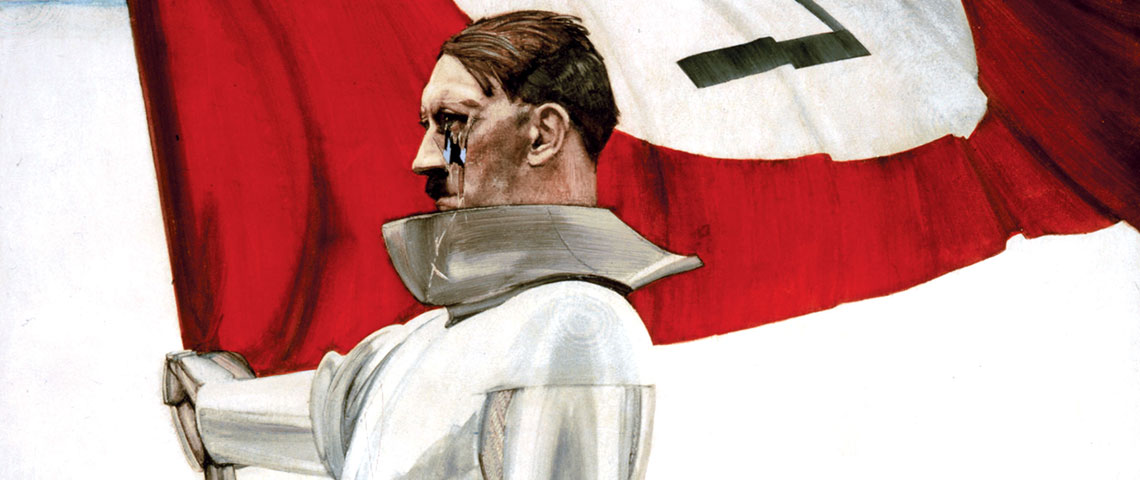
Both the Imperial Japanese and the Nazis dominated the new forms of media communication emerging in the 1930s. Propaganda had been a key component of Nazi politics from the outset, and while there were some who had not been persuaded, it had been unquestionably hugely effective, not just within the Reich but around the world too. To a large degree, this was due to Dr Josef Goebbels, the Reich Minister for Popular Enlightenment and Propaganda, and Gauleiter — administrative leader — of Berlin, an old Frankish term that had been resurrected by the Nazis. A former failed journalist and one of the first Nazis, he was utterly devoted to Hitler, so much so he had even given up an affair with a Czech film star with whom he was deeply in love because the Führer asked him to. Although the son of a shop assistant, Goebbels was highly intelligent and despite those humble beginnings had attended several universities and gained a doctorate. Marriage to Magda Quant, a society divorcee, gave him the kind of money and status he needed to help him climb up the Nazi ladder. He had become Propaganda Minister in 1933, the year Hitler became Chancellor, and had immediately announced his prime goal was to achieve the “mobilisation of mind and spirit” of the German people. “We did not lose the war because our artillery gave out”, he said of defeat in 1918, “but because the weapons of our minds did not fire”.
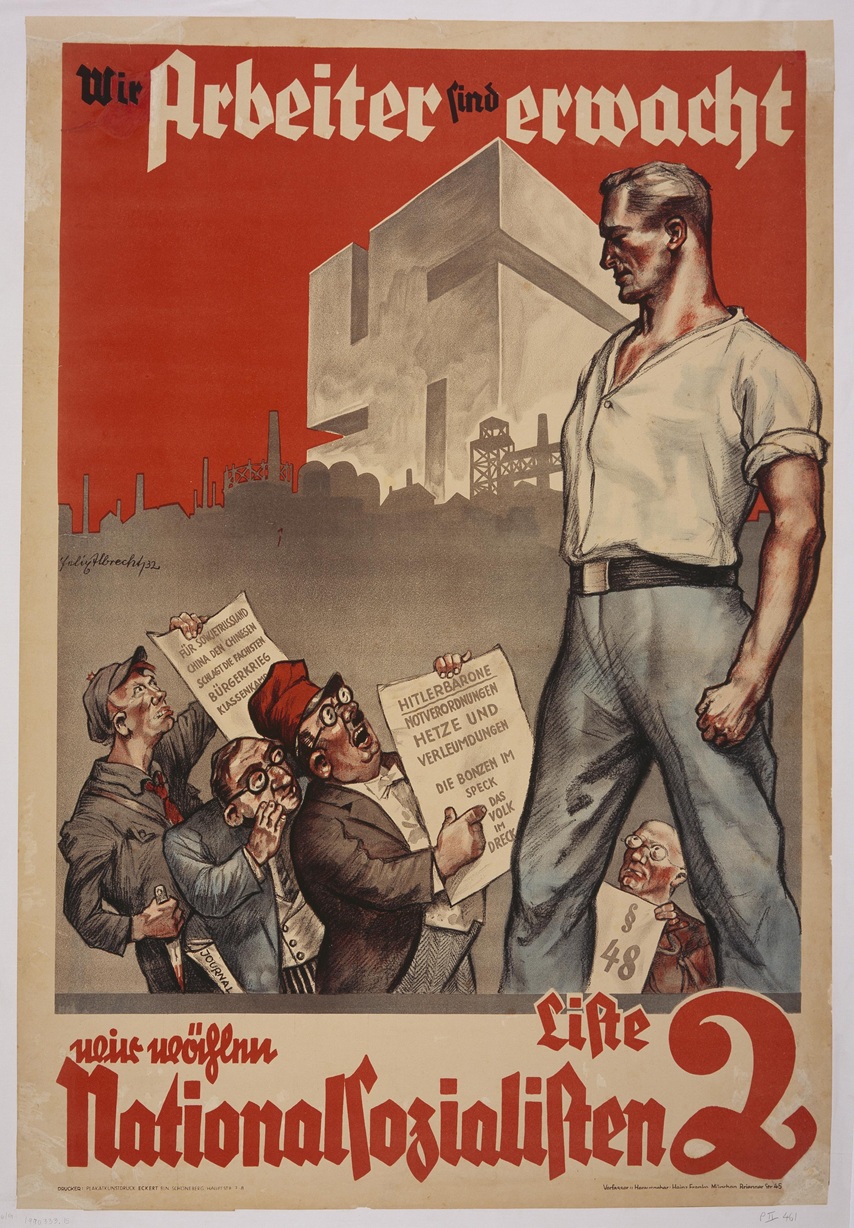
In many ways, Goebbels was as responsible for Hitler’s position as Hitler was himself and he was the man who had largely shaped the Nazi’s public image. It was he [who] had insisted on draping swastikas – the bigger the better – from as many places as possible; it was he who taught Hitler how to whip a crowd into a frenzy; it was also Goebbels who had elevated Hitler into a demigod in the eyes of many. He knew all about manipulation theories, orchestrated heavy-handed mob violence, and in the 1933 election created the “Hitler over Germany” campaign; it was the first time, for example, that aircraft had been used to take a candidate around a country in an effort to reach more people. It worked spectacularly well.
With the Nazis in power, Goebbels had also done much to stoke up the virulent anti-Semitism that lay at the heart of Nazi ideology and had done much to turn Nazism into a form of surrogate religion, in which, again, drawing on nostalgia, they had harked back to a “purer” Aryan past to help bind the people both together and behind the Party and, more importantly, the Leader. Goebbels’ influence – his genius – should never be underestimated.
Update, 18 March: Welcome, Instapundit readers! Have a look around at some of my other posts you may find of interest. I send out a daily summary of posts here through my Substack – https://substack.com/@nicholasrusson that you can subscribe to if you’d like to be informed of new posts in the future.
March 15, 2026
How to Go From President to King – Death of Democracy 07 – Q3 1934
World War Two and Spartacus Olsson
Published 14 Mar 2026In Q3 1934, Adolf Hitler completed the transformation of Nazi Germany from a dictatorship into an absolute Führer state. In this episode of Death of Democracy, we examine the aftermath of the Night of the Long Knives, the destruction of the SA leadership, and the consolidation of Hitler’s personal rule after the death of President Paul von Hindenburg.
From the creation of the People’s Court (Volksgerichtshof) to the rise of the SS under Heinrich Himmler, the Nazi regime tightened its grip on the state, the press, and everyday life. Meanwhile, propaganda, economic control under Hjalmar Schacht’s New Plan, and growing antisemitic persecution reshaped German society.
Using contemporary voices from Victor Klemperer, Luise Solmitz, and other witnesses, this episode explores how Hitler’s popularity soared even as terror and repression intensified. Watch the full Death of Democracy series to understand how the Nazi regime consolidated power step by step — and how ordinary societies can slide into dictatorship.
(more…)
March 13, 2026
Argentina shedding decades of mal-investment in uncompetitive industries
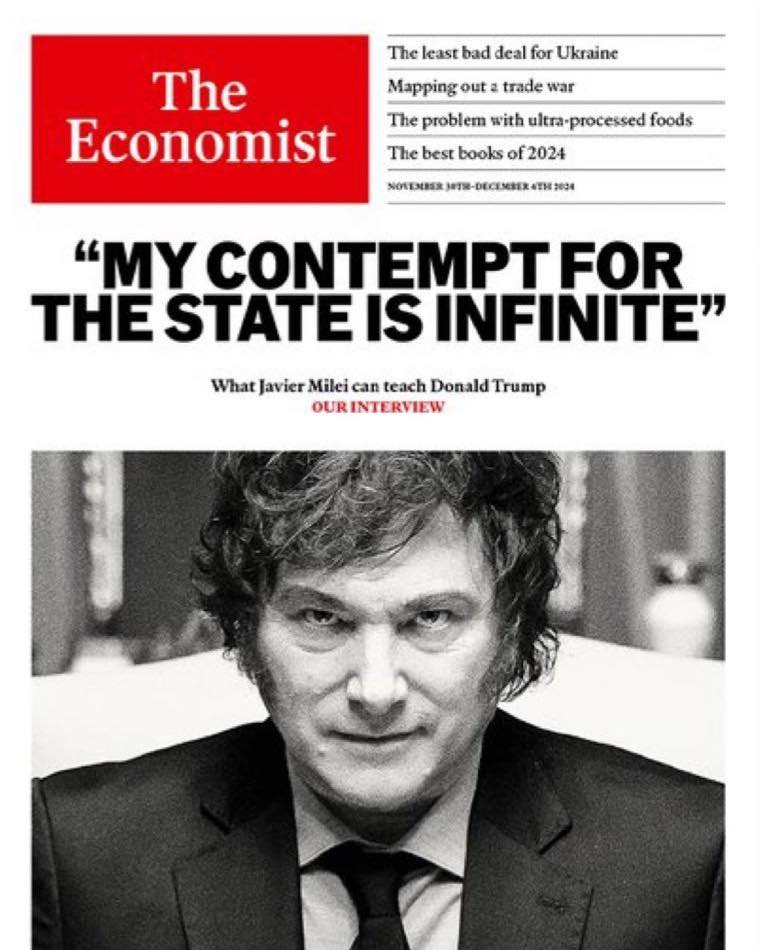
Argentine President Javier Milei didn’t promise an economic revival for all of Argentina, because significant chunks of the Argentine economy were invested in low-profit or even loss-making industries as the country followed “traditional” South American economic advice. Tim Worstall celebrates some of the belated losses in those deadweight areas of the economy:
Argentina has, for decades now, been making itself poorer by following — effectively — fascist economic policy. That whole process of trying to make everything at home, not importing, being self-reliant in manufactures and so on. The effect being that everything is made by companies of sub-optimal size and therefore consumers can only gain access to expensive shite.
So along comes a liberal — Milei — who lets consumers buy what they wish to buy from whoever, whereever. The result is that those inefficient, expensive, manufacturing firms close down as people buy the better, cheaper, stuff from abroad. The people are better off because they get better, cheaper, stuff. Not that expensive shite from the domestic producers.
Now, true, those jobs go. But those workers can go and do something else. Which they will too. In fact, they are — the unemployment rate is falling.
So, who loses out here? Obviously, the domestic capitalists, the people who own the now bust factories. Which, well, the correct reaction is probably Har Har. If your wealth is based upon producing expensive shite your customers are forced to buy then why shouldn’t we celebrate when you lose the lot?
We can — and should — take our analysis that one step further too. If the absence of the trade restrictions harms the domestic capitalists then who benefitted from the trade restrictions? The domestic capitalists, obviously. Which is how that infant industry protection, that insistence upon self-reliance, how fascist economics always does work out — the people who benefit are the domestic capitalists. And why in buggery would we want to protect them from the effects of free trade?
March 8, 2026
How to Destroy Your Own Revolution: Night of the Long Knives – Death of Democracy 06 – Q2 1934
World War Two and Spartacus Olsson
Published 7 Mar 2026In the spring of 1934, Nazi Germany stands on the edge of internal collapse. In this episode of Death of Democracy, we follow the escalating conflict between Adolf Hitler, the SA stormtroopers, and the German Army that culminates in the Night of the Long Knives. As economic cracks appear behind the Nazi “recovery”, Joseph Goebbels launches propaganda campaigns against critics while Heinrich Himmler expands SS power over the Gestapo.
When Vice-Chancellor Franz von Papen publicly challenges the regime, Hitler moves decisively. On June 30, 1934, the Nazi leader unleashes a purge that eliminates Ernst Röhm, the SA leadership, and political rivals — consolidating absolute power.
Using contemporary voices from Martha Dodd, Victor Klemperer, and underground SPD reports, this episode explores how terror, propaganda, and political maneuvering reshaped Germany in just a few months — and paved the way for dictatorship.
Watch the full Death of Democracy series to understand how democracies collapse from within.
(more…)
March 1, 2026
How to Serve the Oligarchs for Power – Death of Democracy 05 – Q1 1934
World War Two and Spartacus Olsson
Published 28 Feb 2026In Q1 1934, Nazi Germany reaches a breaking point. In this episode of Death of Democracy, Hitler codifies central control with the Law for the Reconstruction of the Reich, crushing what remains of federalism. Abroad, the German–Polish Non‑Aggression Pact (January 26, 1934) shocks Europe while rearmament continues behind a diplomatic mask.
Inside the Reich, the real story is the power struggle: SA chief Ernst Röhm demands a “people’s militia”, forcing Hitler to choose the Reichswehr over the stormtroopers — setting the stage for the Night of the Long Knives. As Himmler expands SS power and Goebbels tightens the propaganda screws, even historic liberal papers like the Vossische Zeitung disappear. Meanwhile, unemployment falls toward three million amid manipulated statistics, wage freezes, shortages, and a looming foreign‑currency crisis.
Watch, then comment: what warning signs do you see when “order” is used to justify permanent power?
(more…)
February 22, 2026
How to Use a Tariff War to Disrupt the World – Death of Democracy 04 – Q4 1933
World War Two and Spartacus Olsson
Published 21 Feb 2026In Q4 1933 Hitler pivots Nazi Germany from internal takeover to outward defiance. The London Economic Conference collapses and the tariff truce unravels, Hitler withdraws from the Disarmament Conference and the League of Nations — then stages the November 12 plebiscite and one‑party Reichstag election to claim the nation stands behind him. As Goebbels tightens propaganda and press control through the Editors’ Law (Schriftleitergesetz) and daily directives, the Winter Relief campaign turns “charity” into social pressure and Volksgemeinschaft theater. In December, Reichsbank president Hjalmar Schacht hardens the transfer moratorium to conserve foreign currency for raw materials and rearmament. Using contemporary voices, this episode shows how isolation, manipulation, and “unity” accelerate Europe toward a pre‑war era.
(more…)
February 20, 2026
Sci-Fi, Satire, and the Post-WWII Mythos
Feral Historian
Published 17 Oct 2025The caricature of fascism as the arch-evil, born in WWII propaganda and endlessly re-imagined in popular entertainment ever since, has served both as an inoculation against that particular brand of tyranny and blinders to many others. Is it still relevant? Or has it become one of our culture’s foundational archetypes that will live on for centuries disconnected from its roots? Let’s explore a bunch of facets and ask some odd, sometimes difficult questions along the way.
00:00 Intro
03:02 Myth of Singular Evil
06:06 Andor and Now
09:18 Fading Narratives
12:01 Iron Sky
16:21 What Comes Next?
(more…)
February 16, 2026
The destruction of Dresden, February 1945
If you’ve watched the two-part video on the bombing of Dresden by LordHardThrasher (Part 1, Part 2), much of this will already be familiar to you, as Ed West discusses the history of the city up to the point the RAF bombs began to fall on Shrove Tuesday in 1945:
… Just over six years later the city of Dresden would be reduced to ashes by hundreds of bombers from the RAF and US Air Force, a horror that began on the evening of Shrove Tuesday, February 13, 1945, lasting until Thursday morning. Griebel would survive, but all his art went up in the blaze.
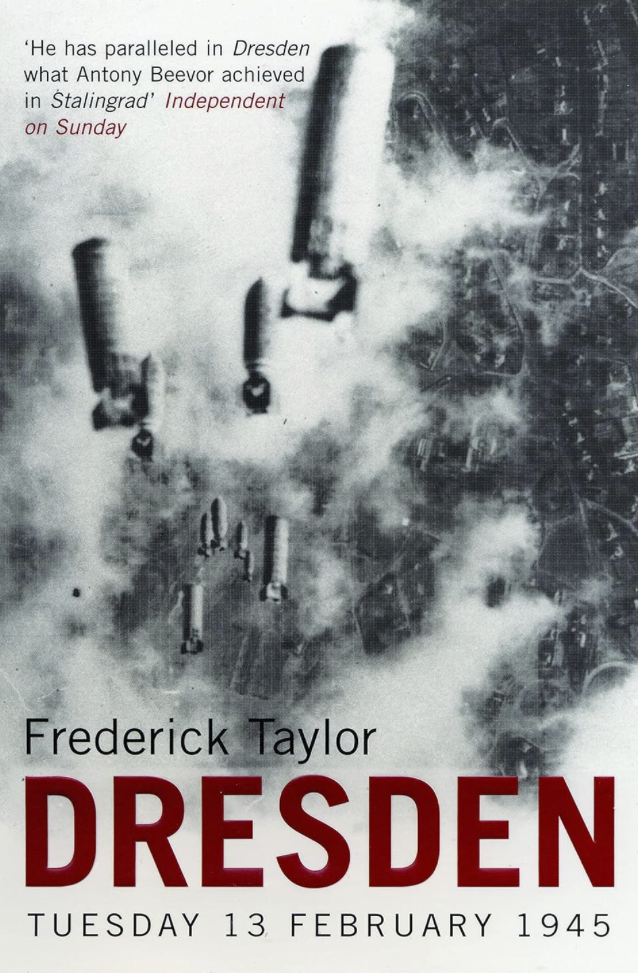
Dresden is perhaps, after Hiroshima, the name most synonymous with slaughter from the air, and in Britain at least the most controversial. Last year, while visiting this incredibly beautiful city — much of it now rebuilt — I reread Frederick Taylor’s account of the bombing, published back in 2005 on the 60th anniversary of the event.
Dresden’s destruction was extensive. Almost no buildings in the centre or its inner suburbs survived the bombs, and the death toll was immense, although difficult to assess in a city packed with refugees from the east. Anything between 20,000 and 80,000 fatalities is possible, although the consensus seems to be around 25,000.
That night was to be the worst of many wartime firestorms, a meteorological event in which the heat of the blaze becomes so intense, up to a thousand degrees centigrade, that the oxygen is sucked out of the surrounding air. More died in Dresden from asphyxiation than fire, and even those who thought they had found shelter in fountains were boiled alive. Many more drowned in the city’s reservoir, where they had gone to seek protection, their energy sapped by the soaring temperatures, unable to climb out. The bombers, thousands of feet above, could feel the warmth of the thousand fires below.
[…]
As everyone in the 1930s was well aware, the new war would bring aerial destruction on a hideously greater scale, and when it came again, it was the Luftwaffe who first put these ideas into practise, first in Poland and then Rotterdam.
After failing to destroy the Royal Air Force over the summer of 1940, the Nazis switched to aerial bombing of British cities. Between September 7, 1940 and New Year’s Day 1941, London was attacked on 57 consecutive nights, killing 14,000 inhabitants, a rate of 250 fatalities for each day of bombing. The German air force went on to kill an estimated 43,000 British civilians over the course of the war, with V-1 attacks continuing until the last weeks of the war.
On November 14, 1940, over 500 German bombers took off for a mission that would gift their language a new verb: Coventrated. Five hundred tons of high explosives, 30,000 incendiary bombs, fifty landmines and twenty petroleum mines were dropped on the target, and the medieval city went up in flames.
Like the blitz on other British cities, morale was not crushed in Coventry, but something dawned on the British high command. The destruction of Coventry’s infrastructure, utilities and transport had proved far more damaging than the destruction of any purely “military” target. Furthermore, bombers were notoriously inaccurate, and one survey showed that only 2 per cent of bombs fell within even one thousand feet of their intended point. Aerial bombardment of cities would prove far more effective than any hopeless targeting of particular coordinates.
They also learned that a large enough bombing raid would result in a firestorm, in which air currents are drawn in from the surrounding area, causing the fire to burn far more intensely. Indeed, a major attack on the City of London on December 29, 1940 might have become another firestorm but for the bad weather.
The British had been initially reluctant to take the war to Germany. While Poland was left to endure hell, leaflets were dropped over Berlin in October 1939 claiming that Nazi leaders were secretly profiting from the war, leading Noel Coward to suggest that it looked like we were trying to bore the Germans to death. There is even the apocryphal story about British official Sir Kingsley Wood refusing to bomb industrial targets in the Black Forest because it was private property. Indeed, our attempts to bomb Germany in 1940 were so feeble that Goebbels had to fake British “atrocities” to rouse the German public
With the entry of the United States and Soviet Union into the war in 1941, and with the German defeat at Stalingrad, the shoe was now on the other foot. The British invested more resources in Bomber Command and its head, Air Marshall Arthur Harris. “Bomber” Harris would become representative of the entire policy of destroying Germany’s cities, and a figure of controversy; the unveiling of his statue in 1992 attracted protests and has been repeatedly vandalised, but like many architects of wartime destruction, he was motivated by a desire to prevent a repeat of what he saw in 1914-18. The son of a colonial official who might have spent the rest of his life as a farm manager in Rhodesia were it not for war, he had joined the Royal Flying Corp in the first conflict and from his plane saw the horror of trench warfare and became determined that this sort of stalemate should never be repeated.
Having stuck to targeted industrial centres, in February, 1942 Allied command issued the Area Bombing Directive authorising the wide scale destruction of enemy cities. On 28 March the Hanseatic town of Lübeck was destroyed in a firestorm, and its most famous son, the anti-Nazi novelist Thomas Mann, appeared on BBC radio saying that while he regretted the destruction of his native city, “I think of Coventry, and have no objection to the lesson that everything must be paid for. Did Germany believe that she would never have to pay for the atrocities that her leap into barbarism seemed to allow?”
After the Lübeck bombing, Goebbels approached a state of panic for the first time, describing the damage as “really enormous”. He responded, in April 1942, by saying that he would “bomb every building in England marked with three stars in the Baedeker Guide” – Exeter was now hit in retaliation.
On May 30 the Allies launched what Harris called “the Thousand Plan”, the first thousand-bomber raid. Cologne and Hamburg were singled out for destruction, but on last-minute meteorological advice only the Rhineland city was chosen. Hamburg’s citizens would never know how fate had saved them – if only for another year.
So shocked were the Germans by the attack that the authorities forced the city’s fleeing citizens to sign a pledge of secrecy about what they saw, which ended with the sinister line “I know what the consequences of breaking this undertaking will be”.
Things would only get worse, and the Allies were getting both more destructive and more skilled. In faraway Utah, the Americans were now busy testing the destruction of German-style buildings, even hiring German refugee architect Erich Mendelssohn to recreate a German apartment block.
February 15, 2026
How to Make The Economy Look Better Than It Is – Death of Democracy 03 – Q3 1933
World War Two
Published 14 Feb 2026Death of Democracy returns to Nazi Germany in Q3 1933. See Hitler enforce one‑party rule, sign the Reichskonkordat, tighten propaganda and press control, and expand work programs that feed rearmament. From July to September, follow the legal and cultural Gleichschaltung that normalizes terror and reshapes Europe’s future in this episode.
(more…)


