
Quotulatiousness

November 21, 2017

Scaling back the Imperial Presidency

Filed under: Government, Liberty, USA — Tags: , , , — Nicholas @ 03:00

The US government was explicitly set up with clear separation of powers, to ensure that too many powers are not drawn together to create a potential tyranny. For over 100 years, the office of the President has been granted, or taken without challenge, more and more of the powers that the founders had intended to be kept separate. Many Democrats were horrified to discover just over a year ago that those powers could be inherited by a man they believed totally unfit for the job (and even some Republicans agreed). However, Donald Trump may be the first president in living memory to actually devolve power back to Congress:

Donald Trump did not campaign for president as the guy who would reverse the mostly unbroken, century-old trend of the executive power assuming more and more power in the face of an increasingly self-marginalizing Congress. If anything, the imperial presidency looked set to increase given Trump’s braggadocious personality and cavalier approach to constitutional restraints. “Nobody knows the system better than me,” he famously said during his worryingly authoritarian Republican National Convention speech, “which is why I alone can fix it.”

You wouldn’t know it from viewing policy through the prism of the president’s Twitter feed, which is filled with cajoling and insult toward the legislative branch, but Trump has on multiple occasions taken an executive-branch power-grab and kicked the issue back to Congress, where it belongs. As detailed here last month, the president has taken this approach on Iran sanctions, Obamacare subsidies, and the Deferred Action Against Childhood Arrivals program (DACA), at minimum. And notably, his one Supreme Court nominee, Neil Gorsuch, was most famous pre-appointment for rejecting the deference that courts have in recent decades given to executive-branch regulatory agencies interpreting the statutory language of legislators.

Are there any other examples? Sure — the 15 regulatory nullifications this year via the Congressional Review Act (14 more than all previous presidents combined) are definitionally power-transfers from the executive to legislative. And certainly, the sharp decreases in the enactment, proposal, and even page-count of regulations amount to the administration declining to exercise as much power as its predecessors.

Josh Blackman also looks at this unexpected phenomenon:

Our Constitution carefully separates the legislative, executive, and judicial powers into three separate branches of government: Congress enacts laws, which the president enforces and the courts review. However, when all of these powers are accumulated “in the same hands,” James Madison warned in Federalist No. 47, the government “may justly be pronounced the very definition of tyranny.” The rise of the administrative state over the last century has pushed us closer and closer to the brink. Today, Congress enacts vague laws, the executive branch aggrandizes unbounded discretion, and the courts defer to those dictates. For decades, presidents of both parties have celebrated this ongoing distortion of our constitutional order because it promotes their agenda. The Trump administration, however, is poised to disrupt this status quo.

In a series of significant speeches at the Federalist Society’s national convention, the president’s lawyers have begun to articulate a framework for restoring the separation of powers: First, Congress should cease delegating its legislative power to the executive branch; second, the executive branch will stop using informal “guidance documents” that deprive people of the due process of law without fair notice; and third, courts should stop rubber-stamping diktats that lack the force of law.

Executive power is often described as a one-way ratchet: Each president, Democrat or Republican, augments the authority his predecessor aggrandized. These three planks of the Trumpian Constitution — delegation, due process, and deference — are remarkable, because they do the exact opposite by ratcheting down the president’s authority. If Congress passes more precise statues, the president has less discretion. If federal agencies comply with the cumbersome regulatory process, the president has less latitude. If judges become more engaged and scrutinize federal regulations, the president receives less deference. Each of these actions would weaken the White House but strengthen the rule of law. To the extent that President Trump follows through with this platform, he can accomplish what few (myself included) thought possible: The inexorable creep of the administrative leviathan can be slowed down, if not forced into retreat.

November 7, 2017

“Paying for” tax cuts

In the latest issue of the Libertarian Enterprise, L. Neil Smith explains why he isn’t a fan of the notion that tax cuts need to be “paid for”:

I am not an economist, nor do I play one on TV, but I know a hand-job when I see one. The mindless mutants who are mangling Donald Trump’s tax plans are dragging this nation and the world into a Da-Daesque vortex we may never get out of. (Only a “progressive” Democrat would stomp a man’s legs, break them in a dozen places, and then make fun of him because he can’t walk.) While lowering almost everybody’s taxes, they want a special bracket appended to the deal to punish people with a million dollars or more to “pay for” everybody else’s tax relief. My question, in an era when government takes too much away from us already, why the bloody hell should it be allowed to steal more?

Even from people who are supposedly hated by the “masses”? (I seriously doubt it. “The Democrat Party masses, more likely. Most right-wing masses — if there is such a thing — aspire to become millionaires, themselves.)

Half a century ago, when I was a shiny new Objectivist warrior, jousting with various statist orcs and trolls on the left, a major concern of theirs seemed to be the big, luxurious houses that rich people built for themselves or bought and lived in. Somehow, there was something evil or sinful in that — “conspicuous consumption” one famous comtard called it — and it needed to be stopped. It didn’t ever seem to have occurred to these feeble-minded pickpockets (who had likely never done an honest day’s work in their worthless lives) that the construction of a big, luxurious house (today, we call them McMansions) requires the skilled services of dozens, if not hundreds, of earth-movers, concrete-workers, framers, finish carpenters, glazers, roofers, plumbers, sheet-rock guys, landscapers, etc., most of whom have families to feed, clothe, and house, themselves.

They need rich people to build big, luxurious houses for.

In general, there are few, if any, ways the most malign “malefactor of great wealth” can spend his money without benefitting someone who needs a job. Even cocaine has to be cultivated and processed by somebody. This lesson was learned the hard way back in 1990 when Idiot-in-Chief George 41 Bush broke his “read my lips” promise and allowed a punitive “luxury tax” to be levied on yachts, big, expensive cars, and assorted other keen stuff like that. Hundreds of jobs were lost. Thousands suffered. One company went from 220 workers to 50 overnight. Within two years those who had stirred up class envy the most energetically were calling for repeal of this “hate the rich” tax. In the same way, millionaires’ money would fly overseas in an instant and vanish from our struggling economy.

October 27, 2017

The revival of the paranoid style in social media

Filed under: Media, Politics, USA — Tags: , , , , , — Nicholas @ 03:00

During the Clinton presidency, the conspiracy theorists were limited to the reach of their printed-and-mailed newsletters and fringe radio to spread the word (because so relatively few people were online yet). By the time George W. Bush was president, the paranoia had gone digital but had switched sides … now it was the left’s turn to fret about shadowy quasi-governmental organizations amassing arms caches and plotting to throw everyone into prison camps. Then Obama was elected, and the far-right conspiracy theorists re-emerged, bringing in the racist fringe to spice up the crazy. Now Trump is president, and both left and right are free to get their total paranoia on. This is a wonderful example of the type:

H/T to Colby Cosh for the link.

October 25, 2017

Climb aboard the invective treadmill!

Filed under: Media, Politics, USA — Tags: , , , , — Nicholas @ 05:00

Megan McArdle tries to point out the urge to call everyone you don’t like a “racist” or “white supremacist” runs you the same trust risk that the boy who cried wolf did:

It’s the inverse of what Steven Pinker has dubbed “the euphemism treadmill,” where we try to find nicer words for something we don’t think is very nice, and find that the new words quickly take on all the old connotations. So “toilet,” turns into “bathroom,” then migrates onward to “rest room.” Only we still know there’s a toilet behind that door, and whatever words we use about it, our feelings don’t change.

This is why attempting to change how Americans feel about illegal migrants by changing the terms we use to describe them is a project doomed to failure; whether they are “illegal aliens” or “undocumented immigrants,” the political realities remain the same. People who feel negatively toward “illegals” feel just as negatively toward “undocumented immigrants.”

The invective treadmill works in a similar fashion, only in reverse.

[…]

During the 2016 presidential campaign, I found myself confronted by a curious problem: Many of my readers simply didn’t take it seriously when I pointed out that Donald Trump was, if not an outright racist himself, at least happily pandering to people who were.

“The media calls every Republican racist,” my conservative readers replied. “They said it about Mitt Romney, they said it about George Bush, so what’s different about Trump?”

They were right. Other columnists had accused Romney and Bush of being racist and pandering to racists. I pointed out that Trump’s racist appeals were different, and much worse, than anything that earlier Republican presidential candidates had been accused of. But it didn’t do any good. The media had cried wolf to condemn garden-variety Republicans; labels like “racist” had been rendered useless when a true threat emerged. We shouted to no avail as Trump coyly flirted with hardcore white supremacists, something no mainstream party had done for decades.

Indeed, it seems to me that critical race theorists have gone to “white supremacy” precisely because the increasingly broad uses of the word “racism” have made it less effective than it used to be at rallying moral outrage. The term still packs some wallop, but less than it once did, because it is now defined so broadly that a Broadway musical could sing “Everyone’s a Little Bit Racist.” White supremacy, on the other hand, is still clearly understood as beyond the pale.

But if we indiscriminately apply the term to everything from the alt-right white nationalist Richard Spencer, to anyone who thinks that football players should stand for the national anthem … for how long will white supremacy still be considered beyond the pale? What happens if people accused of racism start shrugging off the epithet — or worse, embracing it? And when another Richard Spencer comes along, how will we convey how dangerous he is?

October 8, 2017

Despite the rhetoric, Trump can’t just “wave goodbye” to Puerto Rico’s debt

Filed under: Government, Politics, USA — Tags: , , , , , — Nicholas @ 05:00

Megan McArdle on the financial plight that Puerto Rico was facing even before the hurricane season began:

… the fact remains that Puerto Rico is not going to be able to pay all of its debts. Prior to the hurricane, the territory had $73 billion in outstanding debt, and a population of 3.4 million people. That’s approximately $21,500 for every man, woman and child on the island – just about enough to buy each of them a brand new Mini Cooper, provided that they don’t insist on the sport package or the heated seats.

Puerto Rico couldn’t afford to buy 3.4 million Mini Coopers before; they certainly can’t now that Maria has washed out so many roads. Even before the hurricane, Puerto Rico’s GDP was around $100 billion, meaning that repaying its debt would consume nearly nine months of everything the island earned. And while there will probably be a brief bump in economic activity as disaster relief funds pour in and the destruction is cleared away, over the long term the hurricane represents a huge setback: businesses destroyed, people killed or injured, funds that could be generating economic growth instead diverted to simply replacing what has been lost.

So whatever President Trump does, or does not do, investors in Puerto Rican bonds are going to have to take a substantial haircut. The problem is, we’re not going to wipe out the debt entirely. And even if we could, it wouldn’t be enough to get Puerto Rico back to economic or fiscal health.

“If it’s that bad,” you may be thinking, “surely we ought to simply wipe out the debt holders? After all, they’re investment professionals. They can afford to take the loss; ordinary Puerto Ricans can’t.” The problem is that most of the folks holding Puerto Rico’s debt aren’t vulture hedge funds sitting on wads of ill-gotten gains; the overwhelming majority of the debt is held by ordinary folks who buy bonds or bond funds. Like, say, your parents. Or maybe you. And also, a lot of Puerto Ricans, who would be hit very hard if the value of their investments were wiped out.

How did Puerto Rico get so deeply into debt? Step forward the federal and Puerto Rican governments to take a bow:

The operations of the Puerto Rico Electric Power Authority, for example, defy belief: It essentially gave unlimited free power to municipalities and government-owned entities, which used it to do things like operate skating rinks in the tropics. Everywhere you look, you see signs of a government struggling to perform basic tasks: collect taxes, maintain the infrastructure, improve the health system. In the jargon of development economists, the island lacks “state capacity”: It is simply unable to exert the amount of power over its operations that we on the mainland mostly take for granted.

But you can’t entirely blame the Puerto Rican government for the state of the underlying economy, which is what had plunged the island into a bankruptcy crisis even before the hurricane. For that you have to look to the federal government, which eliminated a tax break that had given companies incentives to locate in Puerto Rico, and then oversaw a financial crisis that sent them into an even deeper spiral. We also made sure that a relatively poor island was forced to adopt the federal minimum wage, which was too high for the local labor market. That has contributed to the 11.5 percent unemployment rate. And Puerto Rico uses the U.S. dollar, leaving it unable to adjust monetary policy to overcome economic stagnation.

September 29, 2017

Judge Roy Moore as a sign that worse is coming

Filed under: Politics, USA — Tags: , , , , , — Nicholas @ 03:00

ESR posted this to G+ yesterday:

Judge Roy Moore, a truly repellent creature who reifies every liberal’s fantasy of what fundamentalist conservatives are like (well, except for the racism – even Moore is not actually a racist), has won in Alabama against a candidate backed by the GOP establishment and Trump.

And I wonder if Democrats are too far gone to heed the warning.

You demonized the Tea Party, and you got Trump. If you neutralize or expel Trump as you dream of doing, worse is coming. Roy Moore is worse. Roy Moore is a sign. The conservative/populist revolt can no longer be contained even by Trump. The beast is loose.

Time to question your assumptions, Democrats (and establishment Republicans). The more painful and disruptive that self-questioning is, the more likely it is that your party might escape the destruction that is coming.

As the Instapundit often says, “Do you want more Trump? Because this is how you get more Trump.”

September 28, 2017

Back to the Moon in 2019?

Filed under: Space, USA — Tags: , , , , — Nicholas @ 04:00

Charles Stross thinks a US circumlunar expedition is on the cards for just two years ahead, and he might well be right:

If Donald Trump is still president, US astronauts will return to circumlunar space around July 16th, 2019 …

That’s the 50th anniversary of the launch of Apollo 11. It’s also 6-12 months on from the projected date of Musk’s translunar tourist trip on a Falcon Heavy.

I expect Falcon Heavy to be delayed a few months, minimum, because no new launch vehicle ever flies on time, especially a crew-rated one, but it’s currently due to fly around December this year for the first time, with a vehicle currently undergoing integration at Cape Canaveral and commercial orders for subsequent flights. It’s rather hard to describe it as vaporware at this point. The same goes for the Dragon 2 crewed capsule; it’s due for a first uncrewed orbital flight test in March 2018, and a crewed orbital test flight later in 2018.

[…]

I’m making this a prediction, however, because the POTUS factor.

July 2019 lies within the term in office of Donald Trump (or Mike Pence, depending whether impeachment/removal has happened first then). Trump is nothing if not an egomaniac, and offering him the opportunity to make a historic phone call to lunar orbit in front of the TV cameras is a guaranteed ego-stroke. Trump is of an age to have young-adult memories of Apollo and I can’t see the idea not appealing to him if he can take credit for it.

So I’m betting that this is how Musk will fund development of his lunar-orbit capability.

(Terms and conditions: prediction invalid in event of nuclear war, global environmental or economic collapse, Trump and Pence both being impeached, or a Dragon 2 capsule exploding in flight, because any of these things might impact the launch schedule.)

Note: Charles is quite a fan of the impeachment scenario, if you hadn’t picked that up from context. The fact that he’s very much not a Trump fan actually makes his prediction that much more striking: he has no interest or desire to see Trump get a propaganda coup to end his term in office.

September 24, 2017

We Read Hillary’s Book So You Don’t Have To

Filed under: Books, Humour, Media, Politics, USA — Tags: , , , — Nicholas @ 04:00

ReasonTV
Published on 22 Sep 2017

Hillary Clinton’s new book What Happened attempts to explain Trump’s upset victory in 2016 through a series of reasons which are not Hillary Clinton.

Rolling back the regulation tide

Filed under: Bureaucracy, Business, Government, USA — Tags: , , — Nicholas @ 03:00

Megan McArdle on the Trump administration’s attempt to rein-in the regulation machine of the US federal government and its many, many agencies:

One of the first things Trump did as president was to sign an executive order requiring that two regulations be rolled back for every new one that was promulgated. As a longtime advocate of rolling back regulatory complexity, I found a lot to like in this rule. Unless strenuous effort is made to regularly prune them back, regulations have a tendency to blindly grow until they have wrapped the economy so tight that nothing can breathe, much less thrive. Trump’s executive order forces us to do some very necessary maintenance.

Unfortunately, it’s a rather crude instrument for the job. It’s possible that nothing more nuanced would actually work; nuance and flexibility, alas, give regulators quite a bit of discretion to put off an annoying chore. Just the same, we should recognize the dangers of cutting with such a dull knife.

In agencies that are dealing with a genuinely new and disruptive force — one for which innovators need regulatory clarity before they can bring a product to market — such a strict regulatory requirement faces them with an unpalatable dilemma. Every new regulation that is vitally necessary means finding two regulations that aren’t. But each of those dusty old rules was created for a reason. Some of those reasons were bad; in some cases the rule never worked as intended; and in others the rule later became obsolete. But that does not describe all of our regulations. And imagine the brutal publicity that will ensue if someone dies or gets hurt in an accident that could plausibly have been prevented by a rescinded rule.

An even larger problem is that the “two for one” rule doesn’t really tell us about the relative quality of the regulations involved. An agency could satisfy that executive order by issuing a terrible, stupid, costly regulation that forced power companies to rip out their windmills, as long as it repealed two sensible and necessary regulations that (for now) prevent factories from dumping toxic waste into our watersheds.

Reducing regulatory complexity is an important goal, but it cannot be our only goal. We ought to strive for less regulation, yes, but also for good regulation, and for regulation that gives companies enough clarity to innovate and build their businesses. Unfortunately, while the Trump administration has proven enthusiastic about the first goal, we’ve seen much less talk about the others. And given how long it has taken for Trump to staff all the agencies he oversees, we haven’t really had the personnel to deliver on things like better regulation, even if doing so were the Trump administration’s main priority.

September 21, 2017

“Once Obama and his allies launched their domestic surveillance operation, they crossed the Rubicon”

Filed under: Government, Law, Politics, USA — Tags: , , , , — Nicholas @ 05:00

Daniel Greenfield explains why the recent news on wiretapping Trump associates might yet bring about a Watergate for the 21st century, only with Obama team members in the defendant roles:

Last week, CNN revealed (and excused) one phase of the Obama spying operation on Trump. After lying about it on MSNBC, Susan Rice admitted unmasking the identities of Trump officials to Congress.

Rice was unmasking the names of Trump officials a month before leaving office. The targets may have included her own successor, General Flynn, who was forced out of office using leaked surveillance.

While Rice’s targets weren’t named, the CNN story listed a meeting with Flynn, Bannon and Kushner.

Bannon was Trump’s former campaign chief executive and a senior adviser. Kushner is a senior adviser. Those are exactly the people you spy on to get an insight into what your political opponents plan to do.

Now the latest CNN spin piece informs us that secret FISA orders were used to spy on the conversations of Trump’s former campaign chairman, Paul Manafort. The surveillance was discontinued for lack of evidence and then renewed under a new warrant. This is part of a pattern of FISA abuses by Obama Inc. which never allowed minor matters like lack of evidence to dissuade them from new FISA requests.

Desperate Obama cronies had figured out that they could bypass many of the limitations on the conventional investigations of their political opponents by ‘laundering’ them through national security.

If any of Trump’s people were talking to non-Americans, the Foreign Intelligence Surveillance Act (FISA) could be used to spy on them. And then the redacted names of the Americans could be unmasked by Susan Rice, Samantha Power and other Obama allies. It was a technically legal Watergate.

If both CNN stories hold up, then Obama Inc. had spied on two Trump campaign leaders.

Furthermore the Obama espionage operation closely tracked Trump’s political progress. The first FISA request targeting Trump happened the month after he received the GOP nomination. The second one came through in October: the traditional month of political surprises meant to upend an election.

The spying ramped up after Trump’s win when the results could no longer be used to engineer a Hillary victory, but would instead have to be used to cripple and bring down President Trump. Headed out the door, Rice was still unmasking the names of Trump’s people while Obama was making it easier to pass around raw eavesdropped data to other agencies.

No matter how bad the information gets, I doubt that Trump will go after Obama personally — ex-Presidents have an unwritten constitutional privilege that way, I understand — but some of his former cabinet and sub-cabinet officers might well be sacrificed to minimize long-term damage to the Obama administration’s various legacies.

On the other hand, CNN hasn’t been having a lot of luck with their big breaking stories lately … this might be another one of those “lots of smoke, but no fire” situations. Democrats facing tough races in 2018 will be hoping that there’s no “smoking gun” there as far as criminal prosecutions are concerned.

August 28, 2017

“Convicting Arpaio of contempt of court was like busting Al Capone on tax evasion”

Filed under: Politics, USA — Tags: , , , , — Nicholas @ 03:00

Jon Gabriel on Il Donalduce‘s pardon of the world-class authoritarian scumbag and all-around thug, ex-Sheriff of Maricopa County, Joe Arpaio:

President Trump asked the crowd last week at his Phoenix rally, “Was Sheriff Joe convicted for doing his job?” Had the hall been filled with an accurate cross-section of Arpaio’s former constituents, the answer would have been a resounding “no.”

Nevertheless, Trump pardoned the ex-sheriff on Friday, though he had not yet been sentenced and had shown zero remorse for his crime.

America’s self-proclaimed “toughest sheriff” was convicted of criminal contempt of court last month after refusing to obey court orders. This most recent legal battle involved numerous federal attempts to get Arpaio to stop racially profiling residents of Maricopa County.

Not only did Arpaio refuse, he bragged about it. “Nobody is higher than me,” he said. “I am the elected sheriff by the people. I don’t serve any governor or the president.”

Many conservatives outside of Arizona celebrated his headline-grabbing antics, but they don’t know the real story. I’m a conservative Maricopa County resident who has lived under Arpaio throughout his decades-long reign. Arpaio was never a conservative; he just played one on TV.

I saw his love of racial profiling firsthand, especially on my daily commutes through the tiny Hispanic community of Guadalupe, Ariz. When conducting these “sweeps,” helicopters buzzed houses, an 18-wheeler marked “Mobile Command Center” was planted in the center of town, and countless sheriff’s deputies stood on the roadsides, peering into the cars rolling by. Being Caucasian, I was always waved through. The drivers ahead and behind me weren’t so lucky.

Washington’s laxity in border enforcement led many right-of-center Americans to appreciate more robust enforcement, even when it regularly included authoritarian scenes like the one in Guadalupe. But even if you turn a blind eye to the human cost of such race-based enforcement, Arpaio’s other misdeeds are legion.

August 19, 2017

How to Safely Watch The Eclipse or CNN

Filed under: Humour, Media, Politics, USA — Tags: , , , — Nicholas @ 06:00

Published on 18 Aug 2017

Remy has a few helpful tips for safely watching large orange balls of gas.

Written by Remy. Produced by Austin Bragg

August 14, 2017

The NRA as a “domestic security threat”

Filed under: Politics, USA — Tags: , , , , — Nicholas @ 05:00

Kevin Williamson on the recent calls for the National Rifle Association to be viewed in the same way as the KKK, al Queda or ISIS:

Representative Kathleen Rice, a batty New York congressman — and, significantly, a former prosecutor — […] called upon the U.S. government to designate the National Rifle Association and its public faces, including Dana Loesch, “domestic security threats.” This demand comes in response to the NRA’s having shown a recruiting video in which Loesch criticizes sundry progressive bogeymen (the media, Hollywood, etc.) and calls upon like-minded allies to “fight this violence of lies with the clenched fist of truth.” It was immediately denounced by the usual opportunistic nincompoops as a call to violence and sedition, even a call to overthrow the government.

It is of course no such thing. It’s a dopey bit of cheap PR hackery from an increasingly partisan NRA that has made the lamentable decision to branch out from what it is good at — its enormously successful and historically bipartisan campaign of agitation for gun rights — and go all-in with Trump (a fickle friend of the Second Amendment) and the kulturkampf associated with his movement. None of that adds up to “domestic security threat” or anything like a domestic security threat. The only thing the NRA or Loesch have done violence to is a decent respect for the limitations of metaphor.

“Domestic security threat” is a term without legal meaning, being a conflation of two terms that Democrats like to employ against their critics: “national-security threat” and “domestic terrorists.” That should give us some idea of what Representative Rice would like to see done in response to the “domestic security threat” she imagines. Recent precedent here is not particularly inspiring: The Obama administration assassinated an American citizen, Anwar al-Awlaki, for the grave offense of being “the Osama bin Laden of Facebook,” a phrase that would be hard to say without laughing in a context other than the extrajudicial killing of an American citizen.

Gun owners and gun enthusiasts have been targeted for some time by Democrats, who have insisted, among other things, that the federal government ought to suspend the constitutional rights of people put on a secret blacklist by the federal government with no due process and no course of appeal. Democrats dream of registries, property seizure, and other invasive measures reminiscent of the totalitarian excesses of the 20th century — so long as those tools of tyranny are used on their political enemies.

What are the possible offenses of the NRA? It is an organization that does nothing more aggressive than political organization and political communication. Its efforts are labor-intensive: Contrary to the ignorant assumptions that inform our political discourse, the NRA is a relatively small spender when it comes to campaign donations and lobbying, being at the moment the 460th-largest campaign donor and the 156th-highest-spending lobbyist. The NRA has long excelled at its core mission because it excels at arguing its case in public and at delivering the votes, particularly in tight House races. And it is for this — for ordinary political activism of precisely the sort that the First Amendment exists to protect — that Representative Rice and others seek to have the NRA punished as a criminal organization, or as a terrorist organization. That these authoritarian measures are cheered by people who still call themselves “liberals” suggests a widespread moral and intellectual failure among a significant portion of the American public.

July 31, 2017

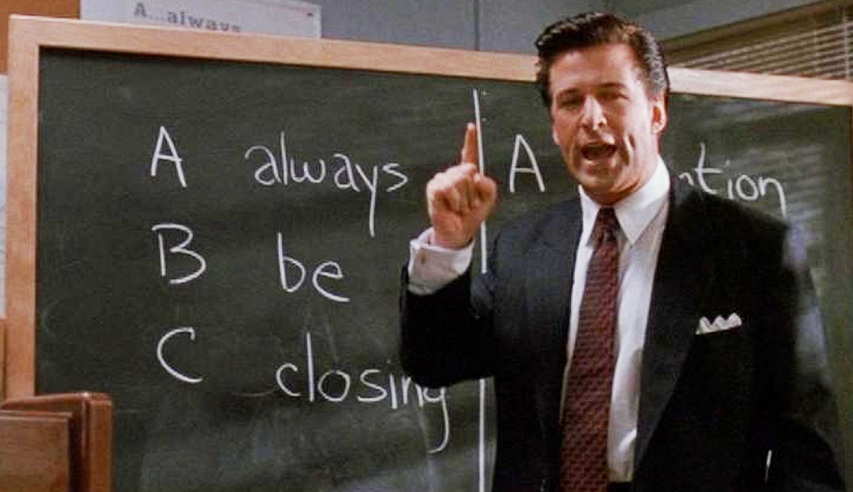
“If you’re wondering where Anthony Scaramucci learned to talk and behave […] ask him how many times he’s seen Glengarry Glen Ross“

Filed under: Media, Politics, USA — Tags: , — Nicholas @ 05:00

Anthony Scaramucci is doing his very best impression of “Blake”, says Kevin Williamson:

Glengarry Glen Ross is the Macbeth of real estate, full of great, blistering lines and soliloquies so liberally peppered with profanity that the original cast had nicknamed the show “Death of a F***ing Salesman.” But a few of those attending the New York revival left disappointed. For a certain type of young man, the star of Glengarry Glen Ross is a character called Blake, played in the film by Alec Baldwin. We know that his name is “Blake” only from the credits; asked his name by one of the other salesmen, he answers: “What’s my name? F*** you. That’s my name.” In the film, Blake sets things in motion by delivering a motivational speech and announcing a sales competition: “First prize is a Cadillac Eldorado. Second prize? A set of steak knives. Third prize is, you’re fired. Get the picture?” He berates the salesmen in terms both financial — “My watch cost more than your car!” — and sexual. Their problem, in Blake’s telling, isn’t that they’ve had a run of bad luck or bad sales leads — or that the real estate they’re trying to sell is crap — it is that they aren’t real men.

[…]

These guys don’t want to see Alec Baldwin in Glengarry Glen Ross. What they want is to be Blake. They want to swagger, to curse, to insult, and to exercise power over men, exercising power over men being the classical means to the end of exercising power over women, which is of course what this, and nine-tenths of everything else in human affairs, is about. Blake is a specimen of that famous creature, the “alpha male,” and establishing and advertising one’s alpha creds is an obsession for some sexually unhappy contemporary men. There is a whole weird little ecosystem of websites (some of them very amusing) and pickup-artist manuals offering men tips on how to be more alpha, more dominant, more commanding, a literature that performs roughly the same function in the lives of these men that Cosmopolitan sex tips play in the lives of insecure women. Of course this advice ends up producing cartoonish, ridiculous behavior. If you’re wondering where Anthony Scaramucci learned to talk and behave like such a Scaramuccia, ask him how many times he’s seen Glengarry Glen Ross.

What’s notable about the advice offered to young men aspiring to be “alpha males” is that it is consistent with the classic salesmanship advice offered by the real-world versions of Blake in a hundred thousand business-inspiration books (Og Mandino’s The Greatest Salesman in the World is the classic of the genre) and self-help tomes, summarized in an old Alcoholics Anonymous slogan: “Fake it ’til you make it.” For the pick-up artists, the idea is that simply acting in social situations as though one were confident, successful, and naturally masterful is a pretty good substitute for being those things. Never mind the advice of Cicero (esse quam videri, be rather than seem) or Rush — just go around acting like Blake and people will treat you like Blake.

If that sounds preposterous, remind yourself who the president of the United States of America is.

Trump is the political version of a pickup artist, and Republicans — and America — went to bed with him convinced that he was something other than what he is. Trump inherited his fortune but describes himself as though he were a self-made man.

Update: I guess he came in third.

July 28, 2017

13 Reasons Jeff Sessions is a @$#/!

Filed under: Liberty, Politics, USA — Tags: , , , , — Nicholas @ 04:00

Published on Jul 27, 2017

Jeff Sessions is on the ropes with Donald Trump. Good.

The president is pissed because Sessions recused himself from the investigation of Russian attempts to influence the 2016 election. But here are a baker’s dozen of reasons to hate the attorney general, including his obsession with restarting the war on pot, his call to jack up mandatory minimums, and his support for civil asset forfeiture. Then there’s his lack of interest in due process, willingness to subvert state’s rights when they conflict with his desired outcome, and desire to lengthen prison terms for non-violent criminals. Also, he might be some kind of statist elf.
—–
During Sessions’ confirmation hearings, Democrats claimed the former Alabama senator was unfit for office because he was a racist, charges that were never really substantiated. But Sessions’ voting record and policy agenda are more than enough to disqualify him from being the nation’s top law enforcement officer.

Mostly Weekly is hosted by Andrew Heaton and written by Sarah Rose Siskind.

Edited by Austin Bragg and Sarah Rose Siskind.

Produced by Meredith and Austin Bragg.

Theme Song: Frozen by Surfer Blood.

« Newer Posts — Older Posts »

Powered by WordPress

