
World War Two
Published 7 Sep 2024In this issue of the Weimar Wire, we dive deep into the critical events of January 1930. Political violence in the streets, uncertainty over the nation’s very character and Nazis entering a governing coalition provide a veritable treasure trove of political intrigue, hidden aspirations, and grand schemes.
(more…)
September 8, 2024
Hitler’s Victory in Thüringen – Rise of Hitler 01
Comments Off on Hitler’s Victory in Thüringen – Rise of Hitler 01
September 7, 2024
A Nation Divided, Part One
The Korean War by Indy Neidell
Published 6 Sep 2024Join us as we unfold the post-WW2 history of Korea that resulted in political escalation and eventually a military conflict in 1950. Stay tuned for the remaining parts of this mini-series!
(more…)
Comments Off on A Nation Divided, Part One
September 2, 2024
QotD: Yes, yes, but does it work in theory?
For Smart people, it’s all about the process. As we’ve discussed before, there’s some mysterious Hegelian alchemy happening in the minds of the Left, whereby process somehow becomes achievement. I’ll give you an example from academia, because that puts us firmly in the realm of “stuff that can’t possibly matter”. Stick with me:
I told y’all a while back about a friend of mine in grad school, who did his dissertation on an aspect of the Vietnam War. I’m making some of this up, of course, to protect various anonymities, but it’s at least as “fake but accurate” as the Rather Memo. Anyway, he had a long section on how Colonel So-and-So’s actions while attached to MACV-SOG only made sense in the light of his belief that his ARVN counterpart, Maj. Long Duc Dong, was a Communist infiltrator.
To my buddy, this appeared to be a completely unproblematic assertion. After all, he had reams of paperwork from Col. So-and-So, asserting his categorical belief that Long Duc Dong was a communist. Please note that it was absolutely irrelevant, for dissertation purposes, if Long Duc Dong actually was a Communist. It only matters that Col. So-and-So thought he was, and acted accordingly — which was a 100% true fact, about as “proven” as anything gets in the Liberal Arts. It’s actually extremely rare in the History Biz to find someone saying something like “I, Colonel So-and-So, believe X, with all my heart and soul, and I’m staking my entire professional reputation, not to mention the very lives of my soldiers, on this belief,” but that’s what my buddy had.
One particular prof on my buddy’s defense committee had a problem with this section. Oh, the evidence was fine, and the conclusions reasonable, and well written, and all that jazz. It was just that my buddy didn’t have enough Theory. That’s how it came back through the mark-up process: “Needs more Theory”.
This is where you need to understand academia’s weird argot, as it’s a window into the Smart People’s world. Normal folks would be scratching their heads at this point. Didn’t my buddy already have a theory, a really robust one? “Col. So-and-So only did thus-and-such because he thought Long Duc Dong was a Communist.” My buddy unearthed literal reams of evidence pointing to exactly that. QED, time to move on dot org …
… but that’s not how “Theory” works in academia. I’ve been very careful to capitalize it, because to them, it’s nothing so grubby as “a hypothesis which can be verified or rejected on the basis of evidence”. No, “Theory” is that highfalutin’ Frog shit. What my buddy really needed was an analysis of Long Duc Dong’s subalternity (or “subalterity”, despite years in grad school I’m still not sure which one is “correct”) vis a vis Col. So-and-So, an examination of the colonial and postcolonial discourses of power between the two of them, a long explication of the Colonel’s hegemony and Dong’s resistance. In other words, a shitload of buzzwords, simply for the sake of having buzzwords.1
That‘s how Smart People operate. The real world of actions and consequences, real people doing real things, is completely irrelevant. If you can’t fit it into Gayatri Spivak’s work on “strategic essentialism”, it doesn’t matter.
That’s why Smart People’s decisions seem so randomly stupid, yet planned, simultaneously. They’re not interested in examining actual facts in the real world. Most of the time, they’re not dealing with what we’d recognize to be “facts” at all. Regarding Long Duc Dong’s “subalternity”, or “subalterity”, or whatever, normal people’s normal response is: Who gives a shit? He himself surely didn’t, not having his PhD in Grievance Studies, and neither did Col. So-and-So. Those dumbasses, being so very very NOT-Smart, were only concerned with irrelevancies like “staying alive” and “winning the war”.
But to the Smart, Long Duc Dong’s subalternity (or whatever) isn’t just a real thing, it’s the only thing. When they’re forced to confront actual facts in the real world, they will put all their mental energy into shoehorning those facts into their paradigm, their “Theory”. Hence, Afghanistan. Did the Totally Legit Joe administration really believe that handing a list of our people to the Taliban was a good idea? Did they really think the Taliban would help them get to the airport, rather than marking them down on their rapidly-growing kill list?
You’re damn right they did. Despite all evidence, despite all reason, because the Afghans are “the subaltern” in the Smart People’s Theory — they have to act in thus-and-such way, because Postcolonial Theory insists they can do no other.
Really. I know it’s mind-boggling, but it’s nonetheless true.
Severian, “Mail”, Rotten Chestnuts, 2021-08-27.
1. After talking my buddy down from the ledge — he had, after all, spent years on this, including several trips to frickin’ Hanoi — we got blind drunk together and had great fun writing the “Theory” section of that chapter. My friends, you’ve never seen such incomprehensible polysyllabic buffoonery. The Postmodern Essay Generator itself couldn’t have done better. To this day I have no idea what any of that shit meant — not one word — but it sailed through committee, and my buddy now has tenure at Big State. When he went to publish his diss as his first book, even the editors — no mean SJWs themselves — confessed to being baffled by it, and suggested taking it out.
Comments Off on QotD: Yes, yes, but does it work in theory?
September 1, 2024
Can Chiang and Mao Unite China? – WW2 – Week 314 – August 31, 1945
World War Two
Published 31 Aug 2024Mao Zedong takes his first ever journey by plane to go and meet with Chiang Kai-Shek. They begin what will be several weeks of talks and negotiations. However, Chiang is not aware that Josef Stalin is lurking in the background. And the Soviet Red Army is lurking in Manchuria, having defeated the Japanese there, and are giving tacit support to the Chinese Communists, whose power base is very strong in the north. As for Japan, a motley collection of Allied fleets arrives in Tokyo Bay, for Japan’s surrender document is to be officially signed two days from now.
(more…)
Comments Off on Can Chiang and Mao Unite China? – WW2 – Week 314 – August 31, 1945
July 21, 2024
Britain’s Weird Vietnam War
Real Time History
Published Mar 15, 2024Fall 1945: the Second World War is over, but there is fresh fighting in Vietnam. Now, former enemies become allies as British-Indian troops, French Commandos, and surrendered Japanese soldiers join in a rag-tag alliance against Ho Chi Minh’s Communists in Saigon. The outcome will shape Vietnam’s future for decades to come, in Great Britain’s weird Vietnam War.
(more…)
Comments Off on Britain’s Weird Vietnam War
June 19, 2024
Why the US Lost the Tet Offensive Despite Beating the NVA
Real Time History
Published Feb 16, 2024After years of boots on the ground and bloody combat in Vietnam, US officials are publicly confident. The strategy of eliminating the Viet Cong is working. The North Vietnamese communist forces are on their last legs and victory is only a matter of time. Or so they say. But as 1968 and the traditional lunar new year festivities begin, US and South Vietnamese troops find themselves on the receiving end of a formidable North Vietnamese surprise attack: The Tet Offensive.
(more…)
Comments Off on Why the US Lost the Tet Offensive Despite Beating the NVA
June 18, 2024
“If you convince a group of Homo sapiens that that group over there are economic parasites … then you have primed them for mass murder”
Lorenzo Warby on the malign influence of Karl Marx:
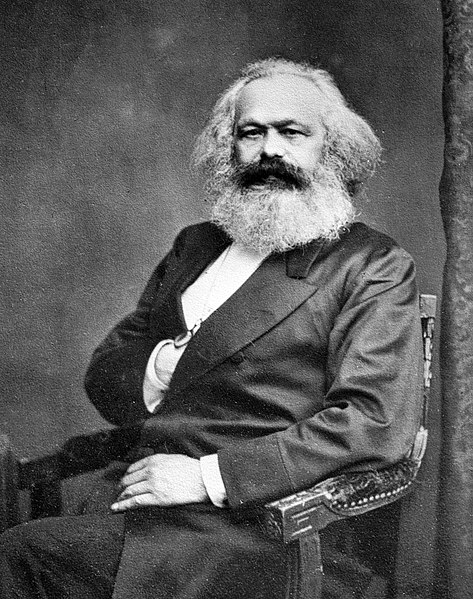
Despite — in some ways because of — all his Theorising about “capitalism”, Marx made no serious attempt to understand the actual dynamics of commerce, creating a (false) theory of economic parasitism (“surplus value”) that — both predictably, and in practice — motivated mass murder. If you convince a group of Homo sapiens that that group over there are economic parasites — and you and your society is better off without them — then you have primed them for mass murder. Hence, Marx’s theory was used to justify actual Marxist mass-murders, starting with Lenin’s infamous hanging order.
Marx’s economistic systematising created a pretence of being social scientist — to himself and even more to Engels — that many people have maintained ever since. Hence a pre-Darwinian metaphysician is even now regularly treated as if he was a social scientist. This despite being wrong about more or less everything — class, commerce, surplus, immiseration, the state, patterns of history, commodification, division of labour, foraging societies …
As I have noted elsewhere:
To have a state, farming niches have to be sustainable after taxes are extracted. That means resources are extracted before they turn into extra babies. This means that states create surplus (income above subsistence): indeed, they dominate the creation and extraction of surplus.
The perennial dominance of the state in extraction of surplus — and hence the creation of class structures — is nowhere more obvious than in Marxist states.
Philosopher Charles Taylor pointed out the tension between the claim to being science — and the causal determinism that goes with that — and the messianic vision that motivates Marx’s and Marxist activism. In any tension between the two, the latter wins because it is so powerfully motivating. This includes with Marx himself, which is why his “science” is so profoundly wrong in fact. It exists to justify the messianic vision.
No political (or religious) movement has killed and tyrannised more people than revolutionary Marxism. A Marxist is someone for whom no amount tyranny and mass murder will stop them worshipping the splendour in their head. This testifies to the power of the messianic vision.
Marx was the original launderer of ideas. Over decades of wrestling with the economics of Smith and Ricardo, he laundered — via economic reasoning — the metaphysical conclusions he reached in the 1840s to create a system that would “scientifically” generate and justify those conclusions. That those conclusions went mostly unpublished in his lifetime — with the most dramatic exception being The Communist Manifesto (1848) — does not belie this. Marx himself insisted on the centrality of this period of “self-clarification”.
Nothing he published later significantly contradicted those conclusions. Marx is the archetypal activist scholar, whose activism drives, and so degrades, his scholarship and analysis. He is the key formulator of the Dialectical Faith, that has generated various disastrous spin-offs, from his own economism to Lenin’s Jacobinising of Marxism to the Cultural Marxism of Lukacs and Gramsci, Critical Theory, and all forms of Critical Social Justice.
No form or derivative of the Dialectical Faith have ever generated a net positive contribution to human flourishing, or understanding, compared to available alternatives.
Ibn Khaldun was a far more acute analyst of the role of the state in the economy, and patterns within history, than Marx. Ibn Khaldun sought systematically to understand what he observed, participated in and read about. He was not laundering ideas, not justifying pre-set conclusions, nor judging evidence by his Theory.
Ibn Khaldun was a social scientist (arguably the first). Marx was not, he was pretending to be one (including to himself).
The Dialectical Faith holds that history is driven by dialectical process that transforms society from an oppressive past to a future liberated from constraints, if the oppressive elements of society are suppressed or abolished. As Marx tells us, our productive capacity will be so great, that we will so humanise the world, that division of labour will end for:
In communist society, where nobody has one exclusive sphere of activity but each can become accomplished in any branch he wishes, society regulates the general production and thus makes it possible for me to do one thing today and another tomorrow, to hunt in the morning, fish in the afternoon, rear cattle in the evening, criticise after dinner, just as I have a mind, without ever becoming hunter, fisherman, herdsman or critic.
Marx was not engaged in scientific enquiry but pseudo-scientific, or scientistic — the form of science without the substance — justification of already reached conclusions. He regularly judges and chooses evidence based on Theory, a pattern that has become endemic within all forms of Marxism and its spinoffs (such as Critical Theory). Marx exemplifies the activist principle that “what I can imagine — however self-contradictory — is so much better than what others have struggled to achieve”.
Marx’s picture of the evils of division of labour is metaphysical twaddle flatly contradicted by any serious study of the role of division of labour — and, for that matter, commodification — in production at scale. How can division of labour be such an alienating evil when it is built into sexual reproduction, into every eusocial species, even into the cells of every single complex organism?
The answer is via a ludicrous quasi-theological metaphysical inflation of human consciousness and creativity. Marx collectivises — through his notion of species-being — the Romantic notion of human fulfilment through self-expression.
Comments Off on “If you convince a group of Homo sapiens that that group over there are economic parasites … then you have primed them for mass murder”
June 16, 2024
Orwell’s Nineteen Eighty-Four at 75
Ed West on the attempts by many different parties to claim the legacy of George Orwell for their own purposes:
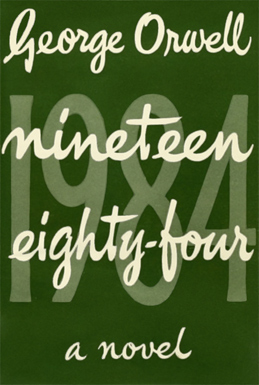
No writer’s legacy and approval is so fought over as George Orwell, whose final — and most celebrated — work Nineteen-Eighty-Four was published seventy five years ago this month.
The most influential piece of political fiction in history, such is the success of the dystopian novel that its themes have been recited to death by columnists, often by people I imagine he would have loathed (including me).
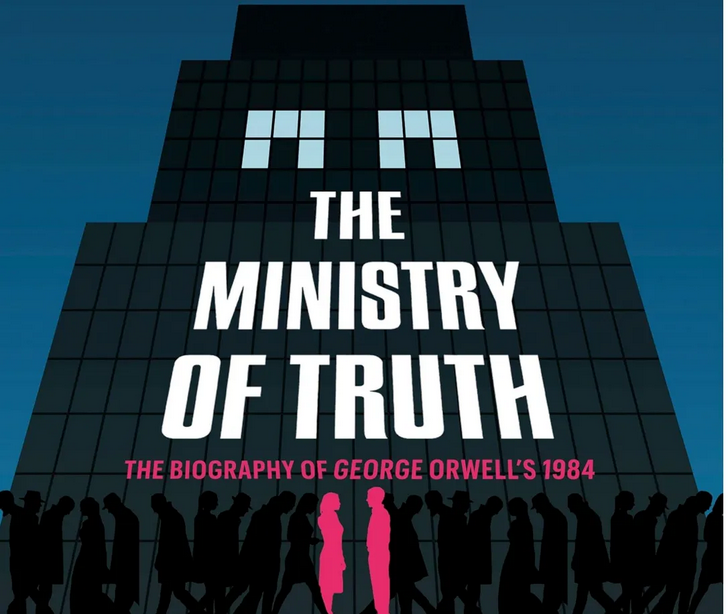
Orwell’s nightmare became a particular focus of conservative commentators from the 1990s with the rise of “political correctness”, which might be seen as both a form of politeness and at the same time a way of policing opinions by changing the language. As Orwell’s Newspeak was described, it was to ensure that dissent cannot be voiced because “the necessary words were not available”. Newspeak, along with thought police and doublethink, has become a part of our political vocabulary, while even the proles have Big Brother to entertain them. No one can doubt that Orwell has won the final victory, and the struggle for the writer’s soul forms part of Dorian Lynskey’s entertaining and informative The Ministry of Truth, a biography of Nineteen-Eighty-Four which was published at the time of the last significant anniversary.
Lynskey, a hugely gifted writer who specialises in the relationship between arts and politics, is very much on the Left and sees the modern parallels with the Trumpian disdain for truth, although the great man himself is now often more cited by the Right. Indeed the anniversary was recently celebrated by the free-market think-tank the Institute of Economic Affairs with a new edition and an introduction by my friend Christopher Snowdon.
Orwell was a paradoxical man, contradictory, sometimes hypocritical (aren’t we all?). In the preface to his book, publisher Victor Gollancz wrote that “The truth is that he is at one and the same time an extreme intellectual and a violent anti-intellectual. Similarly he is a frightful snob – still (he must forgive me for saying this), and a genuine hater of every form of snobbery.”
As Lynskey writes: “Until the end of his life, Orwell acknowledged that microbes of everything he criticised existed in himself. In fact, it was this awareness of his own flaws that inoculated him against utopian delusions of human perfectibility.”
Such awareness is surprisingly rare among intelligent journalists and commentators, especially when ideology takes a grip — and Orwell was introduced to this reality in quite brutal form.
The background to both Nineteen Eighty-Four and Animal Farm was Orwell’s disillusionment during the Spanish Civil War. The conflict between Nationalists and Republican galvanised western intellectuals and marked the turning point when the intelligentsia became firmly wedded to the Left. Over a thousand writers went to fight in Spain, and while few entirely understood the political situation they did grasp, as Malcolm Muggeridge said, that “it seemed certain that in Spain Good and Evil were at last joined in bloody combat”.
In reality it was a conflict in which both sides committed appalling atrocities, although Franco’s forces certainly outdid their enemies in murderous scale. That ruthlessness partly explains their victory, but the Republicans were not helped by the seemingly endless factionalism that saw various squabbling leftist acronyms fight each other, and which makes the war hard to follow. There was the socialist UGT, the Russian-backed PSUC, the anarchist FAI and anarcho-syndicalist CNT, and also the POUM, Workers’ Party of Marxist Unification, which rather belied its name by falling out with both Stalin and Trotsky.
Spain was an education for Orwell. Witnessing in Barcelona a Russian known only as “Charlie Chan”, allegedly an agent of NKVD, he wrote: “I watched him with some interest for it was the first time I had seen a person whose profession was telling lies — unless one counts journalists”.
He recorded how, with the honourable exception of the Manchester Guardian, “One of the dreariest effects of this has been to teach me that the Left-wing press is every bit as spurious and dishonest as that of the Right”. Welcome to the Intellectual Dark Web, George Orwell.
Comments Off on Orwell’s Nineteen Eighty-Four at 75
Mao Tightens His Grip – WW2 – Week 303 – June 15th, 1945
World War Two
Published 15 Jun 2024After several weeks of the Congress of the Chinese Communist Party, Mao Zedong’s power has consolidated to the point that it is absolute. All pledge loyalty Mao, and his infallibility shall not be questioned. Meanwhile the war goes on in the field with Australian landings on Brunei, continuing fighting on Okinawa, and the last part of Europe — in the Netherlands — liberated from Axis control.
(more…)
Comments Off on Mao Tightens His Grip – WW2 – Week 303 – June 15th, 1945
May 30, 2024
The Bloody Birth of Socialist Yugoslavia
World War Two
Published May 29, 2024In the final months of the war, Partisan leader Josip Tito and his forces complete their conquest of Yugoslavia. They destroy Draza Mihailovic’s Chetniks and Ante Pavelic’s Croatian Independent State and they outmanoeuvre King Peter. As Tito’s forces take revenge on their vanquished foes, Socialist Yugoslavia is born in a cradle of fire and blood.
02:08 Mihailovic’s Last Roll of the Dice
04:35 Tito Aligns himself with the Soviets
07:06 Albania
08:25 Tito begins state building
10:51 Hoxha purges his enemies
12:00 The Fall of Mihailović
13:08 The End of the Independent State of Croatia
14:54 The Events at Bleiburg
17:08 The Massacres
19:41 The Birth of Socialist Yugoslavia
20:54 Conclusion
(more…)
Comments Off on The Bloody Birth of Socialist Yugoslavia
April 6, 2024
Italian Communists, the French in Indochina, and the fate of Italy’s army – WW2 – OOTF 34
World War Two
Published 5 Apr 2024What happened to Italian soldiers overseas after the fall of Mussolini? What about the French soldiers left over in Indochina after the Japanese “occupation by invitation”? And, what did the Allies think of the Italian Communist movement and its partisan forces?
(more…)
Comments Off on Italian Communists, the French in Indochina, and the fate of Italy’s army – WW2 – OOTF 34
March 17, 2024
QotD: Imperial Japan and Nazi Germany never had a “long game” … but Stalin did
The Russians, meanwhile, never stopped playing the long game. While Goebbels made a few token gestures at rapprochement with “the West” (yeah, they called it that), and to sell Nazism to ditto, his heart wasn’t in it, any more than the Japanese’s heart was in their “Greater East Asia Co-Prosperity Sphere” hooey. Stalin, by contrast, was always pimping Communism to the West — even in the deepest, darkest days of the war, when it looked like the Wehrmacht was about to march into Moscow, the propaganda directed at the West continued full blast.
Like the German and Japanese aircraft industries, the German propaganda industry was ideologically locked into its core mission: To sell Nazism to Germans. And they were aces at it, no doubt … but then the mission changed. The smart thing for the Germans (and Japanese) to have done with their conquered territories was, in the context of the war, to ease up on the Nazi shit for the duration. The Nazis could’ve had zillions of Ukrainians fighting for them in 1941 just as the Japanese probably could’ve waltzed into India in 1941 had they not been so … well, so Japanese, in the rest of the Pacific rim. Stalin would’ve done it in a heartbeat, had the situation been reversed, and to hell with “authentic” Marxism-Leninism. Win the war first; square the ideology later.
As this is running way long, one example should suffice. Goebbels approached the task of selling Nazism to Germans in the most German way possible: He created the Reich Culture Chamber, which controlled all newspapers, radio broadcasts, film distribution, etc. And it worked, as far as it went — Goebbels deserves his “evil genius” rep — but as we’ve seen, that locked the leadership into an ideological straightjacket. Telling the Wehrmacht to ignore the Commissar Order and buddy up with the Ukrainians would’ve been the smart thing to do, militarily, but it was culturally impossible. Goebbels did his job too well … and then the mission changed.
The Soviets had a similar problem inside the USSR, but — here’s Stalin’s evil genius — they had free reign in propagandizing the West. Goebbels hardly bothered, but the Soviets poured massive resources into it. Forget, as far as you can, everything you think you know about “Nazism” […]. Even if you look at it as objectively as possible, it still seems ridiculous, and there’s a simple explanation for that — it’s not for you. Unless you were a pure blooded Aryan, actually living in Germany (or within Germany’s potential military reach), [they] couldn’t care less about you. Which made being a “Nazi” in, say, America uniquely pointless — you just look like a bigot at best, a traitorous bigot at worst.
Being a “Communist”, though? That was universal. Indeed, that made you a Smart person, a very very smart person, and morally superior to boot. Why? Because you care so much that you’ve mastered this large body of deliberately esoteric doctrine, comrade … all straight out of the NKVD playbook. And if actual life as it was lived in the Soviet Union didn’t quite measure up to the promises, well, that’s because they didn’t have the right people — people like YOU — running things. It’s fucking brilliant — a totally ideologically closed, indeed brutal, system at home, presented as the most open-minded, enlightened, tolerant one possible abroad.
Which is why Joey G. needed a huge Reich Culture Chamber that never came close to justifying its budget, and Stalin needed, effectively, nothing. Being so very, very Smart, wannabe “elites” in the West were happy to spread Commie propaganda for free. The NKVD, let alone the Gestapo, ain’t got shit on the Junior Volunteer Thought Police of Twitter and Facebook …
… which forces us to confront the question: Which model of propaganda are our rulers using? Has the one morphed into the other? Is it real, or is it just “German efficiency”?
Severian, “The Myth of German Efficiency”, Rotten Chestnuts, 2021-05-26.
Comments Off on QotD: Imperial Japan and Nazi Germany never had a “long game” … but Stalin did
February 22, 2024
The Malayan Emergency – Britain’s Jungle War v Communists
The History Chap
Published Nov 16, 2023Britain’s Victorious Jungle War Against the Communists
Get My FREE Weekly Newsletter
https://www.thehistorychap.com
Comments Off on The Malayan Emergency – Britain’s Jungle War v Communists
February 16, 2024
Regional Power: North Korea
Army University Press
Published Feb 13, 2024This film examines the current political and military situation in North Korea. Subject matter experts discuss Korean history, DPRK current affairs, and KPA military doctrine. Topics include the rise of the Kim family to political leadership of the DPRK, its influence in the region, and how the U.S. works in partnership with the Republic of Korea.
Comments Off on Regional Power: North Korea
January 27, 2024
QotD: McCarthy was right
Yet McCarthy was right – not just in a general sense of clearly understanding that communism is not merely an alternative path to a brighter future but an evil and inhuman ideology at war with the liberal, democratic and Christian West, but also in focusing on the federal bureaucracy’s strangely ineffectual response to the presence in its ranks of many people, often in very senior and influential positions, suspected of working for the communist cause.
Contrary to the official version, it was never McCarthy’s role to unmask Red agents; a job more appropriately done by investigative agencies. In his legislative role overseeing federal bureaucracies, he made it his mission to inquire why so many individuals, whose loyalty has already been put under the question mark by numerous internal and external investigations, had no problems staying in sensitive jobs for years and moving unhindered from one agency to another. Those named by McCarthy (on the Democrat insistence) were not simply some random individuals with vaguely progressive sympathies; already at the time many of them have been identified as Soviet agents and security risks in the testimony of communist renegades (like Whitaker Chambers and Elizabeth Bentley) or through secret FBI surveillance. Others were suspects on the account of their associations with Eastern European or local communists and causes.
Over the following decades, most have been further incriminated from a variety of sources, including Soviet defectors and the deciphered Venona transcripts of secret Soviet intelligence cables, which mention some 400 individuals in the 1940s and 50s United States as active agents and contacts or abettors and helpers. The problem was not Reds under the beds, but Reds quite literally in positions of access to highly valued classified information or positions of influence over the shape of US policy, from the White House, through the State Department, to a host of other departments and agencies. All this is now beyond any dispute, but these weren’t mere idle speculations at the time either. Lauchlin Currie, Owen Lattimore, Harry Dexter White, Nathan Silvermaster, T.A. Bisson and dozens and dozens of others did conspire in small groups and networks to pass on classified information to the Soviets or steer the American foreign policy into the direction favourable to the communists (particularly in China during and after the war). And yet, despite all having serious question marks over them, they were allowed to work in government for years undisturbed. It was not because of some giant communist conspiracy at the highest levels of government but because of the bureaucratic inertia, old boys’ networks and the organisational reluctance to admit problems – but also because communist agents within protected and promoted each other. Time and time again mistakes got buried instead of rectified. McCarthy dared to shed the public spotlight on the continuing outrage and ask why. It was like a poor country cousin being invited to a formal dinner by his big city relatives and dropping a loud fart between the entree and the main.
But the story of McCarthy goes beyond these well-established historical facts to the campaign of character assassination and falsification of the record that succeeded beyond anyone’s wildest dreams. There is truly nothing new under the sun when the entrenched liberal establishment wants to protect its turf and fend off its enemies and as you read what McCarthy has been subjected to in relatively short period of 1950-54 you will no doubt experience a sense of deja vu from recent history: indiscriminate mud throwing in a hope that something sticks; blatant lies, misrepresentations and misinterpretations of evidence; politicians working hand in hand with public servants to coordinate the attacks; destroying and withholding of information and evidence (for example, the security information about the suspected individuals being physically transferred from the State Department to the Truman White House so that it could not be subpoenaed or otherwise accessed; a practice condemned by the Republicans and then continued by the Eisenhower White House); blackmailing witnesses or preventing them from testifying; biased media running the narrative (fake news is nothing new); whitewashing the accused and discrediting the accusers; incessant lawfare; trumped up charges and defamation. Coincidentally, McCarthy too was compared to Hitler while at the same time being accused of helping Russians. McCarthyism is not what McCarthy has done to his supposed victims; it’s what the left has done to him. It’s what it keeps doing to people who get in the way and threaten to disturb the business as usual.
Arthur Chrenkoff, “Before there was Trump, there was Joe McCarthy”, Daily Chrenk, 2019-09-30.
Comments Off on QotD: McCarthy was right


