PauliosVids
Published 20 Nov 2018The deadly cargo of the Vulcan Bomber is a crucial part of Britain’s deterrent force.

PauliosVids
Published 20 Nov 2018The deadly cargo of the Vulcan Bomber is a crucial part of Britain’s deterrent force.
Qxir
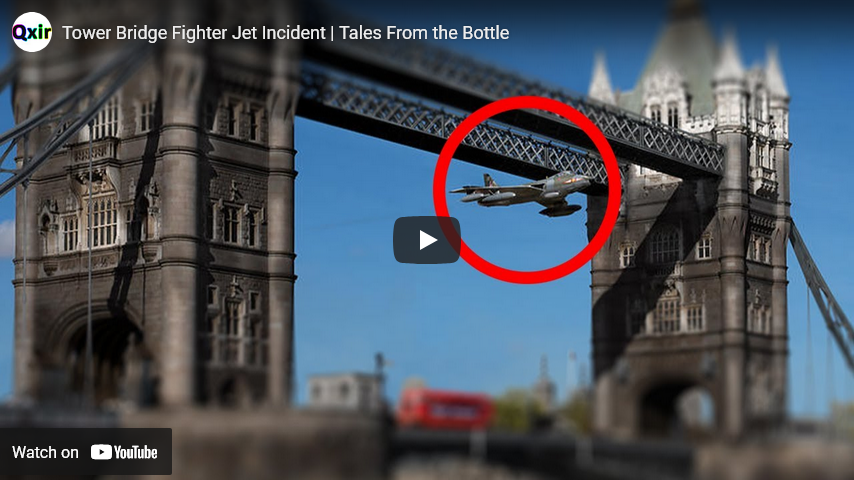
Published 26 Nov 2021This jet pilot decided to stage a protest in the skies of London, but his actions became more well known for an incident that occurred on his journey home.
“The Hawker Hunter Tower Bridge incident occurred on 5 April 1968 when Royal Air Force (RAF) Hawker Hunter pilot Alan Pollock performed unauthorised low flying over several London landmarks and then flew through the span of Tower Bridge on the Thames. His actions were to mark the 50th anniversary of the founding of the RAF and as a demonstration against the Ministry of Defence for not recognising it.
Upon landing he was arrested and later invalided out of the RAF on medical grounds, which avoided a court martial.”
More on Wikipedia:
https://en.wikipedia.org/wiki/Hawker_…Merch: teespring.com/stores/qxir
Patreon: https://www.patreon.com/qxir
Twitter: https://twitter.com/QxirYT
Discord: https://discord.gg/jZzvvwJ
Twitch: https://www.twitch.tv/qxiryt/
Subreddit: https://www.reddit.com/r/Qxir/
From the comments:
Qxir
3 weeks ago (edited)
Yes, I know it’s pronounced “Tems” lol
Historigraph
Published 31 Mar 2022For up to 60% off a subscription to Babbel, head over to https://bit.ly/historigraph_babbel
To help support the creation of the rest of the Falklands series, consider supporting on Patreon:
https://www.patreon.com/historigraphCome join the historigraph discord: https://discord.gg/ygypfs3BEB
Buy Historigraph Posters here! historigraph.creator-spring.com
This video was sponsored by Babbel.
► Twitch: https://www.twitch.tv/historigraph
► Second Channel: https://www.youtube.com/channel/UCpIj…
► Twitter: https://twitter.com/historigraph
► Instagram: https://www.instagram.com/historigraphSources for the Falklands War Series (so far):
Max Hastings & Simon Jenkins, Battle for the Falklands
https://archive.org/details/battlefor…
Martin Middlebrook, Operation Corporate
Martin Middlebrook, Battle for the Malvinas
Mike Norman, The Falklands War There and Back Again: The Story of Naval Party 8901
Kenneth Privratsky, Logistics in the Falklands War
Sandy Woodward, One Hundred Days
Paul Brown, Abandon Ship
Julian Thompson, No Picnic
John Shields, Air Power in the Falklands Conflict
Edward Hampshire, The Falklands Naval Campaign 1982
Hugh McManners, Forgotten Voices of the Falklands
Cedric Delves, Across an Angry Sea: The SAS in the Falklands War
Rowland White, Vulcan 607
Vernon Bogdanor, “The Falklands War 1982” lecture https://www.youtube.com/watch?v=a9bWw…
Arthur Gavshon, The sinking of the Belgrano https://archive.org/details/sinkingof…
Gordon Smith, Battle Atlas of the Falklands War 1982 by Land, Sea and Air
http://www.naval-history.net/NAVAL198…
Hansard – https://api.parliament.uk/historic-ha…
Recording of Margaret Thatcher’s statement to the commons is from https://www.youtube.com/watch?v=HvbhV…Music Credits:
“Rynos Theme” Kevin MacLeod (incompetech.com)
Licensed under Creative Commons: By Attribution 4.0 License
http://creativecommons.org/licenses/b…“Crypto” Kevin MacLeod (incompetech.com)
Licensed under Creative Commons: By Attribution 4.0 License
http://creativecommons.org/licenses/b…“Stay the Course” Kevin MacLeod (incompetech.com)
Licensed under Creative Commons: By Attribution 4.0 License
http://creativecommons.org/licenses/b…Other music and SFX from Epidemic Sound
From the comments:
Historigraph
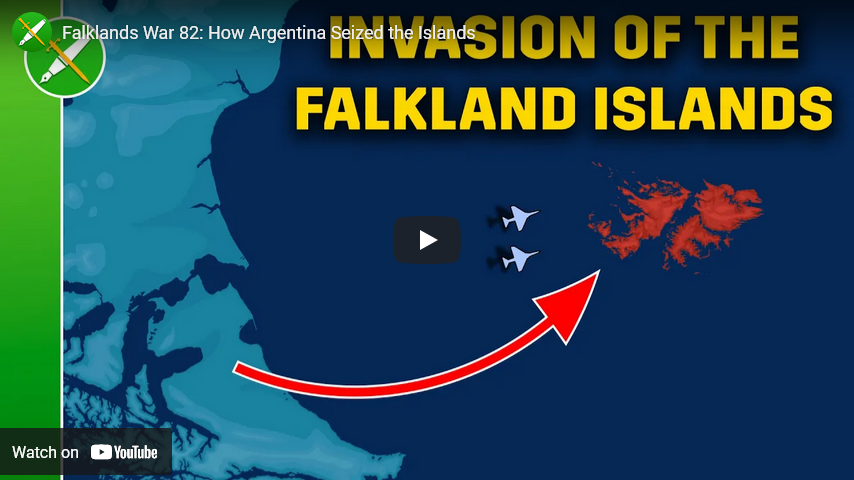
1 day agoThis series has been about four months in the making, and is by far the most ambitious project I’ve set out to complete on Historigraph. It’s going to be 8 (possibly 9) videos over the next three months, charting the course of the Falklands War as it happened 40 years ago.
If you liked this video and want to help support the creation of the remaining seven videos, it would meant the world to me if you could consider supporting on Patreon https://www.patreon.com/historigraph, become a channel member, or even just share this video far and wide.
Polyus Studios
Published 7 Jul 2020Full documentary is still in development, enjoy the teaser!
(more…)
Arthur Chrenkoff notes some plot points from his second novel, written in 2010, and the headlines from Ukraine over the last few weeks:
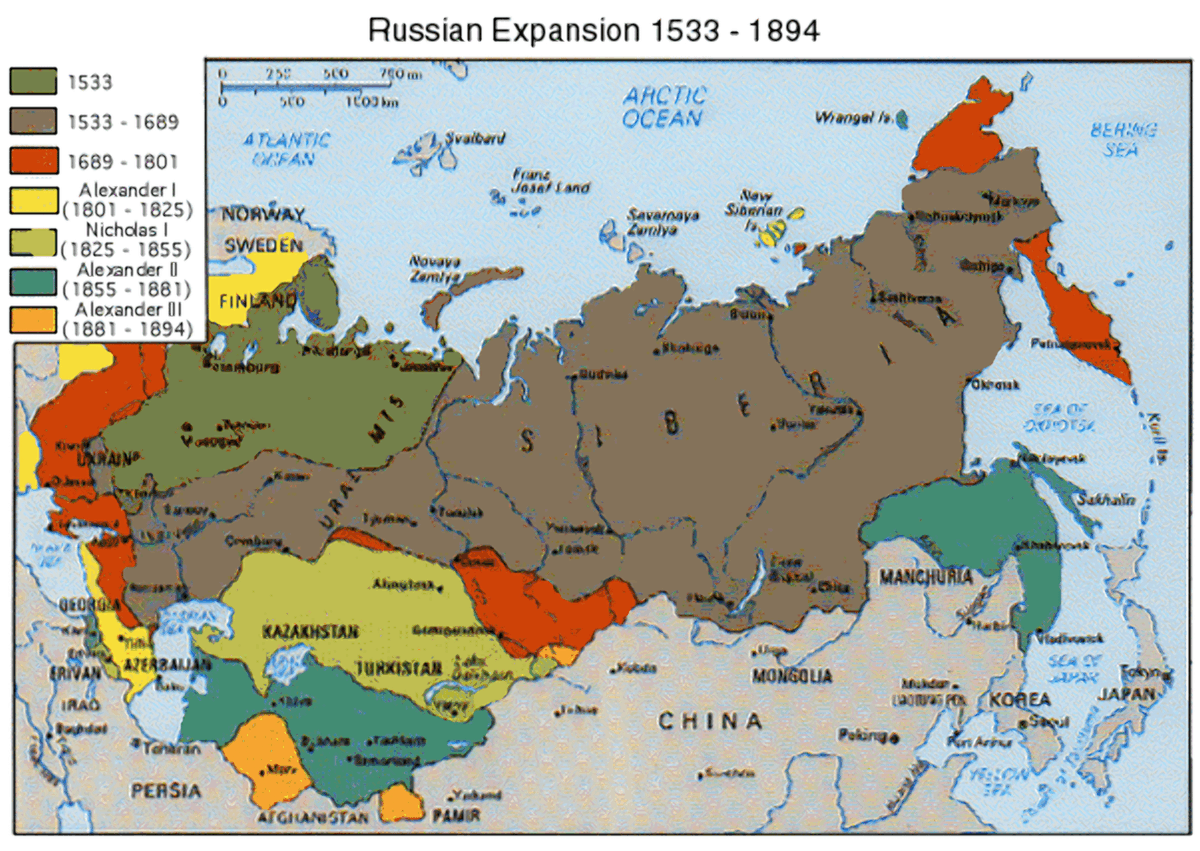
Russian expansion in Eurasia between 1533 and 1896.
Map originally from the Marxist Internet Archive via Wikimedia Commons.
Twelve years ago I wrote my second novel. The action took place in an Eastern European magic kingdom, superimposed in another dimension over what is, in this world, western Ukraine, south-east Poland, eastern Slovakia, and reaching down perhaps as far as the north-eastern corner of Hungary and the northern border of Romania. I named the kingdom after two historical regions, partly overlapping, by which this borderland of ethnicities and states had once been known. Last together as part of the Austro-Hungarian Empire, five independent nations now share the tectonic fault zone between Russia and the Orthodox Slavdom in the east and the Catholic Central Europe to the west.
One of the plots of the novel – titled Ruthenia & Galicia – revolved around the attempts by Russia to blackmail sections of the kingdom’s political establishment and destroy the country if unsuccessful.
If the plot sounds vaguely familiar today, I hasten to add I’m not claiming any prophetic abilities. While in 2010 Ukraine was largely at peace, two years prior Vladimir Putin briefly invaded Georgia in order to detach from it two separatist regions. In any case, the main point is that over the past five centuries, ever since overthrowing the Tartar yoke and consolidating under Ivan the Terrible, Russia has been an imperialist and expansionist power, which has repeatedly and consistently invaded, absorbed and dominated its many neighbours. Sadly, there is not much that is unusual about the current conflict in Ukraine; mid-17th century Poles, Ukrainians (to the extent there existed then any ethnic consciousness among the region’s peasantry), Cossacks and Muscovites would have been intimately familiar with the issues at stake.
Forget for a moment the Bidens, “globalists”, NATO, the “decadent West” and all other attempts to blame one’s own side first for, in effect, “provoking” Russia, and ask yourself why all of Russia’s regional neighbours, from Finland, through the Baltic states, Poland, Czechia, Slovakia, Rumania and beyond (Hungry and Serbia being two exceptions, the former contemporary political, the latter historical) are so fiercely opposed to Russia’s military actions and so supportive of Ukraine’s resistance against Putin’s aggression. Most of the historical Poland (which prior to WW2 included western Belarus and western Ukraine) had been, with small breaks, dominated, occupied and colonised by Russia (either as the centre of the empire or of the Soviet Union) for well over three centuries. Ditto for the Baltic states. Finland used to be a Russian vassal before WW1, fought Russia twice (in 1939-40 and 1941-44) and after the war had lent its very name to the concept of forced pro-Russian neutrality. Other parts of Central, Eastern and Southern Europe had only experienced Russian domination post-1945, as member states of the Warsaw Pact. Hungary and Czechoslovakia were at the receiving end of military interventions directed by Moscow; Poland almost was. Foreign policy realists like John Mearsheimer might argue for the unchanging reality of power politics in human history – from which point of view, a great power like Russia needs and will get a friendly or neutral buffer zone – but the states, which have the geographical and historical misfortune to exist within such buffer zone are by now well and truly over having to live in perpetual shadow and/or under the jackboot of an imperial power with delusions about its civilisational mission.
From that point of view, the challenge is not “de-Nazification” of Ukraine, whatever that means apart from being another example of Russia’s historical tendency, now also assumed by the Western left, of smearing everyone and everything it doesn’t like as Nazi (the Azov Battalion, whose heritage harks back to the Ukrainian collaboration with Hitler against Stalin, is a real problem – in an ideal world the Azov men and the pro-Russian Chechens would all kill each other – but as propagandictically exaggerated as attempts to portray the American right as a whole as white supremacists, bigots, extremists and terrorists). The true challenge is de-imperialising Russia.
This is perhaps a Sisyphean task. Former imperialist powers like Germany and Japan are now normal countries, liberal democracies, successful and prosperous economies and generally good international citizens. Arguably the reason for that can be traced to their unequivocal military defeat in WW2, large scale devastation and subsequent occupation, which forced a traumatic psychological reset. After “year zero”, the past was consigned to history and new society were born.
This has not happened in Russia. In fact, Russia today is much more reminiscent of Germany in the 1930s than Germany in the 1960s. Like the Imperial Wilhelmine Germany, Russia had lost the war – the cold one – without suffering a crushing military defeat or the indignity of foreign occupation. What the Versailles Peace was for the inter-war Germany, the dissolution of the Soviet Union has been for Russia – a disadvantageous and humiliating settlement, which resulted in imperial dissolution and has left millions of Russian speakers scattered beyond the borders of the Fatherland/Motherland. The newly independent states are illegitimate – both the Nazi Germany and the Soviet Union considered Poland a “bastard creation of Versailles”, just as Russian nationalists nowadays see the former Soviet republics and satellites as artificial entities that are rightfully Russia’s. If there are temperamental similarities between the Weimer Germany and Yeltsin’s Russia, Putin himself resembles Hitler circa 1938. Let us hope and pray he never graduates to 1939 and beyond (though some would argue that the invasion of Ukraine is worryingly analogous to the invasion of Poland at the start of WW2). For the international community, Russia of the past two and a bit decades represents the worst of all worlds: humiliated enough to be resentful but undefeated enough to remain unrepentant. Hence Putin can claim the fall of the Soviet Union to be the greatest tragedy of the 20th century (as opposed to both world wars or communism) and agitate for the de facto recreation of the Russian, if not the Soviet, empire.
Imperial Germany’s crushing military defeat (from the “Black Day of the German Army” through the Hundred Days to the Armistice) at the hands of the British, French, American, Canadian, and Australian forces on the western front … but stopped near the German border. The provisional government after the fall of the monarchy signed the armistice because the German army had been decisively defeated and was dissolving in the face of Allied pressure. Because the fighting didn’t penetrate into Germany proper — as it did in 1944-45 — this significantly helped solidify the myth that the Germany army had been “stabbed in the back” by the civilian government, which was so helpful to the Nazis during their rise to power.
Christian Monson debunks the common tale taught in western schools of reason for the amazing recovery of West Germany’s economy after World War Two:
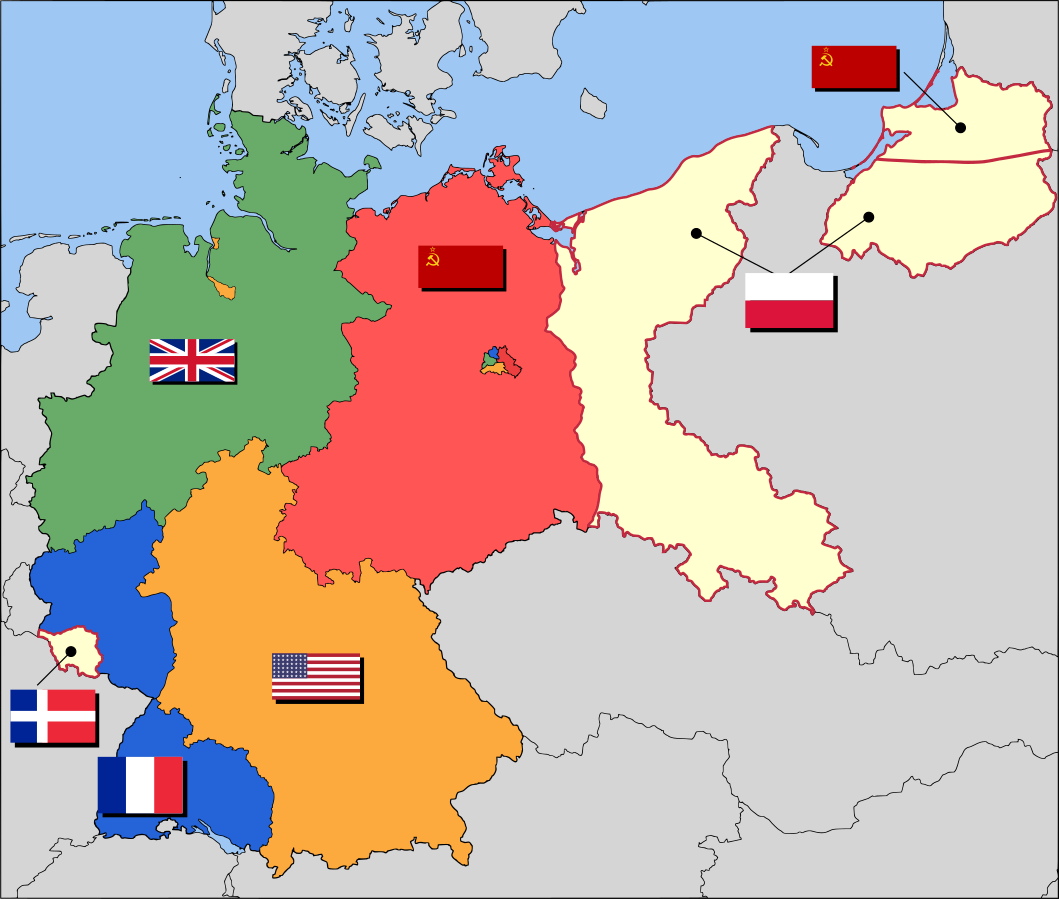
Occupation zone borders in Germany, 1947. The territories east of the Oder-Neisse line, under Polish and Soviet administration/annexation, are shown as cream as is the likewise detached Saar protectorate. Berlin is the multinational area within the Soviet zone.
Image based on map data of the IEG-Maps project (Andreas Kunz, B. Johnen, and Joachim Robert Moeschl of the University of Mainz) — www.ieg-maps.uni-mainz.de, via Wikimedia Commons.
This “economic miracle” is commonly referred to as die Wirtschaftswunder. But how did Germany go from rubble to riches in just a decade while neutral countries like Spain merely treaded economic water? If you ask your average American history student, they will say the Marshall Plan, of course!
Unfortunately, the ubiquity of the myth that the Marshall Plan rebuilt Germany is proof that state-controlled education favors propaganda over economic literacy. Despite the fact that most modern historians don’t give the Marshall Plan much credit at all for rebuilding Germany and attribute to it less than 5 percent of Germany’s national income during its implementation, standard history textbooks still place it at the forefront of the discussion about post-war reconstruction.
Consider this section from McDougal Littell’s World History (p. 968), the textbook I was given in high school:
This assistance program, called the Marshall Plan, would provide food, machinery, and other materials to rebuild Western Europe. As Congress debated the $12.5 billion program in 1948, the Communists seized power in Czechoslovakia. Congress immediately voted approval. The plan was a spectacular success.
Of course, the textbook makes no mention of the actual cause of the Wirtschaftwunder: sound economic policy. That’s because, for the state, the Marshall Plan makes great statist mythology.
Not only is it frequently brought up to justify the United States getting involved in foreign conflicts, but it simply gives support for central planning. Just look at the economic miracle the government was able to create with easy credit, they say.
And of course, admitting that the billions of dollars pumped into Germany after WWII accomplished next to nothing, especially when compared to something as simple as sound money, would be tantamount to admitting that the government spends most of its time making itself needed when it isn’t and thereby doing little besides getting in the way.
Credit for the turnaround should be accorded to Ludwig Erhard, according to Alasdair Macleod at the Cobden Centre:
Anyone who favours regulation needs to explain away Germany’s post-war success. Her economy had been destroyed, firstly by the Nazi war machine, and then by Allied bombing. We easily forget the state of ruin the country was in, with people in the towns and cities actually starving in the post-war aftermath. The joint British and American military solution was to extend and intensify war-time rationing and throw Marshall aid at the problem.
Then a man called Ludwig Erhard was appointed director of economics by the Bizonal Economic Council, in effect he became finance minister. He decided, against British and American misgivings, as well as opposition from the newly-recreated Social Democrats, to do away with price controls and rationing, which he did in 1948. These moves followed his currency reform that June, which contracted the money supply by about 90%. He also slashed income tax from 85% to 18% on annual incomes over Dm2,500 (US$595 equivalent).
Economists of the Austrian school would comprehend and recommend this strategy, but it goes wholly against the bureaucratic grain. General Lucius Clay, who was the military governor of the US Zone, and to whom Erhard reported, is said to have asked him, “Herr Erhard, my advisers tell me what you have done is a terrible mistake. What do you say to that?”
Erhard replied, “Herr General, pay no attention to them! My advisers tell me the same thing.”
About the same time, a US Colonel confronted Erhard: “How dare you relax our rationing system, when there is a widespread food shortage?”
Erhard replied, “I have not relaxed rationing, I have abolished it. Henceforth the only rationing ticket the people will need will be the deutschemarks. And they will work hard to get those deutschemarks, just wait and see.”
The US Colonel did not have to wait long. According to contemporary accounts, within days of Erhard’s currency reform, shops filled with goods as people realised the money they sold them for would retain its value. People no longer needed to forage for the basics in life, so absenteeism from work halved, and industrial output rose more than 50% in the second half of 1948 alone.
In The Line‘s weekly round-up for freeloading cheapskates like me (we only get a diet version of the full post), Boris and Natasha explain why it’s all the fault of NATO and the west, and that Russia is completely innocent of any wrongdoing:
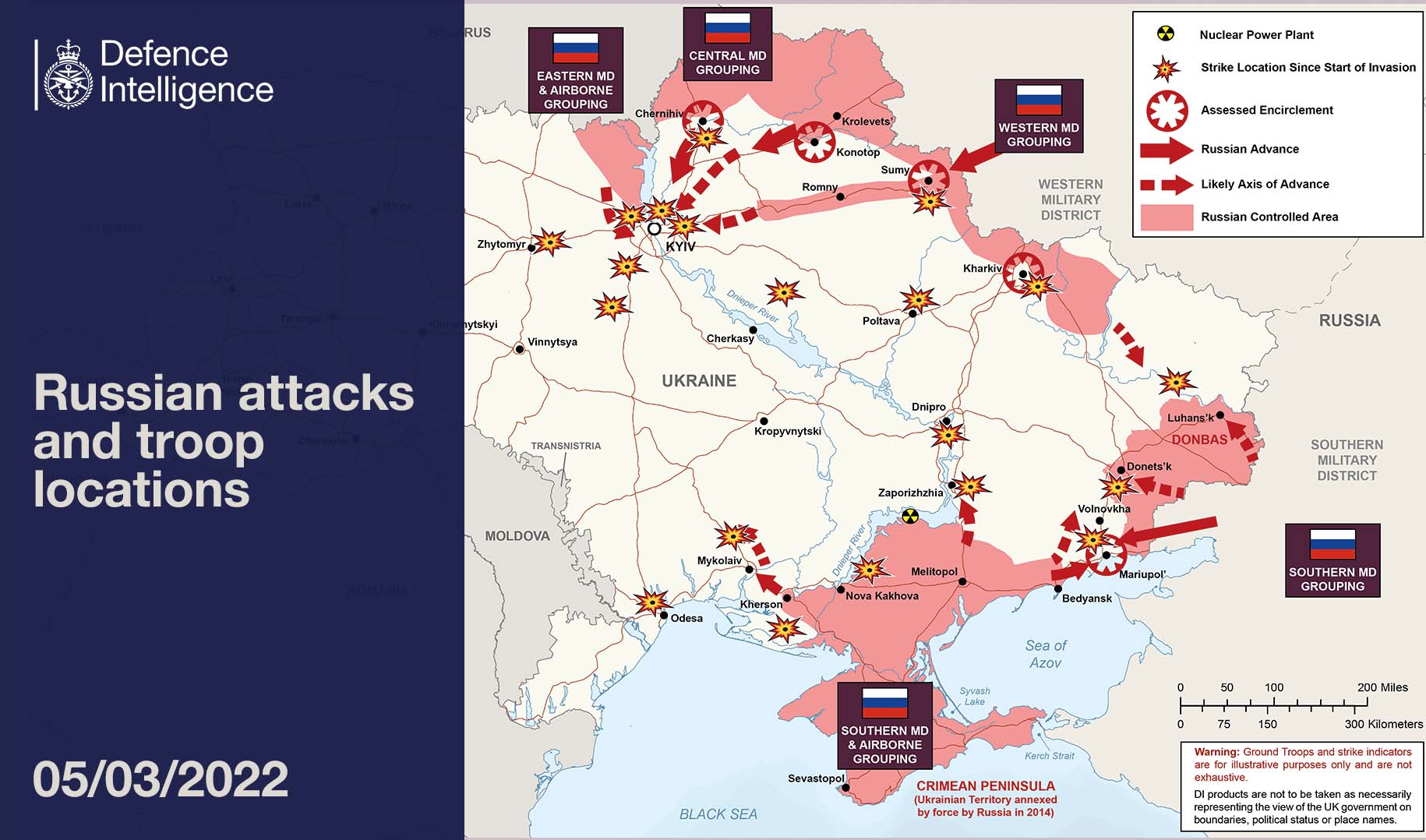
As the world continues to watch the horrors unfolding in Europe, we in our cozy Western enclaves are left to re-discover uncomfortable realities about the geopolitical circumstances around us. Namely, the world is not as safe as once we had thought, and America is not the only great power capable of inflicting atrocities on a smaller, sovereign nation for its own benefit. In fact, watching the situation in Europe play out, we’re reminded that America is not a uniquely evil entity at all — and that many of the moral errors it has committed were made precisely because the neighbourhoods in which it presumed to operate are neither peaceful, easy, nor kind.
These are old lessons of history and history — unlike ideology — is messy and complicated. And as we once again draw out those long-forgotten lessons, we find ourselves confronting old arguments as well.
Namely, we see a lot of thoughtful individuals offering the contrarian argument that NATO and the West are ultimately to blame for the invasion in Ukraine because of our military alliance’s expansion into Russia’s traditional sphere of influence. This undermined the old Russian empire’s dignity, the argument goes, and fomented Cold War paranoia that was bound to break out into an aggressive military response.
We at The Line expect this decades-old position will be debated for decades more to come, but in light of the events of the last week, we find it less compelling than ever. We offer the following three problems with this line of argument.
The first is that it falls into the trap of assuming that NATO — and, by implication, America — is the Main Character of global history.
In the minds of the NATO blamers, neither Russia’s domestic political intrigues, Vladimir Putin’s personal ideological commitments and sanity, nor the histories and cultures of the actual regions in question are given greater weight than NATO’s scheming or Joe Biden’s speaking skills. The solipsism and self-regard that this argument implies is, in truth, both stunning and entirely in keeping with the United States’ national character (and the West in a broader sense). By this metric, it’s America/the West, and only America/the West, that is the true global protagonist. The rest of humanity are just bit-players in a grand Western narrative.
As Canadians, we find these assumptions particularly offensive. Ours is a country that exists between America and Russia, and while we may disagree with specific American military engagements and tactics — and will say so! — we are not hapless serfs of American imperialism. Let’s lay out our choices plainly: a middle power like Canada can ally itself with Russia, China, NATO, or find some form of interdependence with a patchwork of one-on-one military alliances. Even if we were to take our economic interdependence with America out of the equation, NATO is our best option by far. We mean … Jesus. Duh.
We will pick NATO 999 times out of 1,000 and so will most free people living in democratic societies. Because the other options are clearly, obviously much, much worse: NATO is the certified preferred military alliance of the free peoples on this planet.
We welcome historical self-reflection and improvement, but America cannot allow itself to wallow so deeply in its own self-flagellating narcissism that it forgets this fact. America is not the Main Character of our shared history, but it is a leader within the global community, and must rise to that role and NATO with it.
In the Daily Sceptic, Noah Carl notes that “the West’s response [to the Russian invasion] seems to have been slapped together on the fly amidst a storm of social media outrage”:
The West has responded to Russia’s invasion of Ukraine in three main ways: pouring arms into Ukraine to buttress the country’s defence; imposing heavy sanctions on Russia to cripple its economy; and essentially “cancelling” Russia by shutting down its foreign media, censoring its cultural exports, and banning its athletes from international competitions.
The hope seems to be that either one of three things will happen: the Russians will be defeated or forced to withdraw; Putin will be overthrown in a palace coup or popular uprising; or he’ll be brought to the negotiating table and made to accept terms highly unfavourable to Russia. While this strategy may work, I’ve yet to read a cogent defence of it.
In fact, the strategy could have a number of negative second-order effects – i.e., unintended consequences – that haven’t been properly thought through.
As several people have observed, the West’s response seems to have been slapped together on the fly amidst a storm of social media outrage, as opposed to being carefully devised after consideration of all possible eventualities. One Substack commenter noted:
Just as COVID-19 is the first pandemic in the Age of Twitter, so the Ukraine invasion is, in some sense, the first war in the Age of Twitter. As it unfolds, we are seeing many disturbing parallels to the events of early 2020. People are rapidly normalising once-fringe ideas like a NATO-enforced no-fly zone, direct U.S. conflict with Russia, regime change in Moscow, and even, incredibly, the use of nuclear weapons. Just as with Covid, we’re seeing the rapid abandonment of longstanding Western policies. The overnight flips on German defence spending and SWIFT are like the overturning of conventional public health policies on masking, lockdowns, and so on.
Let’s deal with each aspect of the Western response in turn. Pouring arms into Ukraine may precipitate a Russian defeat. But it could just as easily prolong the conflict, leading to many more Ukrainian deaths. The Syrian civil war has dragged on for more than ten years and claimed more than 400,000 lives, in part thanks to external arming of rebel groups.
If there’s a good chance the Ukrainians can win, supplying them with arms makes sense. But if they’re unlikely to prevail, why would we want to prolong the conflict?
One possible answer is to deter the next autocratic ruler from launching a similar invasion. But how much deterrence does supplying arms really achieve, especially if Russia ends up winning? Now, entering the war on Ukraine’s side – that would achieve deterrence, but it’s something the West isn’t willing to do (for obvious reasons).
Brendan O’Neill is hoping that the conflict in Ukraine can also help end the “Age of Fragility” in the west:
It is not the most pressing question to emerge from Russia’s onslaught on Ukraine, but I have nonetheless found myself wondering – what will happen with the word “erasure” following this terrible war? Ukraine’s heroic president Volodymyr Zelensky used the e-word the other day. Russia, he said, is out to “erase our history”. The Putin regime and its marauding forces want to “erase our country, erase us all”, Zelensky cried, aptly, given the vigour and bigotry with which Vladimir Putin has mocked and violently undermined Ukrainian sovereignty. Putin clearly sees Ukraine as a joke nation that can be casually scrubbed from the map and collapsed back into Russia.
Zelensky’s impassioned, existential words got me thinking: which woke warrior here in the mercifully war-free West will dare to misuse the word “erasure” now? “Erasure” is a key buzzword in the PC lexicon. There’s trans erasure, LGBT erasure, the erasure of black women with “kinky hair”. Only erasure here doesn’t mean “the removal of all traces of something”. It certainly doesn’t mean a foreign power using brute force to extinguish your most basic rights. No, it means a gender-critical feminist turning up to your campus and saying “If you have a penis, you are a man”. It means EastEnders not having enough bisexual characters. It means being asked “Can I touch your hair?”. It means attending a museum or some other public institution and seeing that its Pride flag doesn’t include the shade that represents your femme-boy demisexual identity. All of this is very seriously described as “erasure”, as the “violent” exclusion of me and my identity. Even as bombs fall on Kharkiv and Kyiv, threatening to erase people and infrastructure, designed to erase a nation’s identity, still time-rich, experience-poor activists in the West seriously believe they are being erased by tweets and questions and opinions that differ from their own.
It remains to be seen which woke midwit will be the first to say out loud that having to walk past a statue of a long-dead Brit with iffy beliefs feels “erasing” at the same time as statues and buildings and people in Ukraine are being erased by Russian bombs. But what we know for sure, already, is that the war in Ukraine has raised burning questions not only about the Putin regime’s criminal behaviour and Ukraine’s right to self-determination, but also about us, about the West, about what we might say and do, if anything, in relation to this war in Europe. The war in Ukraine is an incredibly confronting moment for our continent. It reminds us that history is not in fact over, that unresolved questions of power and territory lurk just beneath the surface of politics, and that war is not the faraway phenomenon we thought it was. More fundamentally, it implicitly issues a challenge to the unseriousness, the smallness, of what passes for public life in 21st-century Western Europe. It asks us if we are ready for the violent return of history. The answer, right now, sadly, is No.
Over the past week, the contrast between the frivolousness of the woke West and the seriousness of threatened Ukraine, between the narcissistic obsessions of secure Westerners and the fight for survival being waged by youthful Ukrainians, could not have been more stark. On the very day Russia launched its invasion, the UK Ministry of Defence’s LGBT Network (why?) announced on Twitter that it was having a coffee morning to discuss pansexuality and asexuality. Yes, as Ukrainians hid from Russian tanks and planes, a part of the actual MoD was sipping lattes and chatting about folks who feel a “romantic, emotional and / or sexual attraction to people regardless of their gender”. Not to be outdone, the head of MI6, Richard Moore (he / him), used the occasion of Russia’s bombardment of Ukraine to issue a “series of tweets” on LGBTHM2022 – that’s LGBT History Month 2022 for those of you not abreast with the alphabet soup. “We want your help!”, Ukrainians cried. “Here’s some information about the vast spectrum of human sexual attraction”, the British security services replied.
As everyday Ukrainians pull together and arm themselves with guns and petrol bombs, the military top brass of Britain have rather different concerns. Such as why you should avoid using words like “manpower”, “strong” and “grip”. They “reinforce dominant cultural patterns”, according to a recent internal report authored by UK national security adviser Sir Stephen Lovegrove. Does that mean I’m not allowed to tell military bosses to get a grip? Apparently you should also check your white privilege and use gender-neutral language wherever possible. And let’s not forget the campaign for “vegan uniforms” in the British army. This week, as Ukraine burns, it was reported that the Ministry of Defence Vegan and Vegetarian Network (again, why?) is agitating for animal-friendly clothing and boots, excluding things like leather. Well, you wouldn’t want to be wearing the skin of a dead animal as you kill a human being, would you?
In The Line, Matt Gurney outlines German history since the end of WW2 and why German governments have allowed the Bundeswehr to shrivel to almost Canadian Armed Forces status and why they have also been eager to scrap local power options in favour of imported Russian oil and gas:
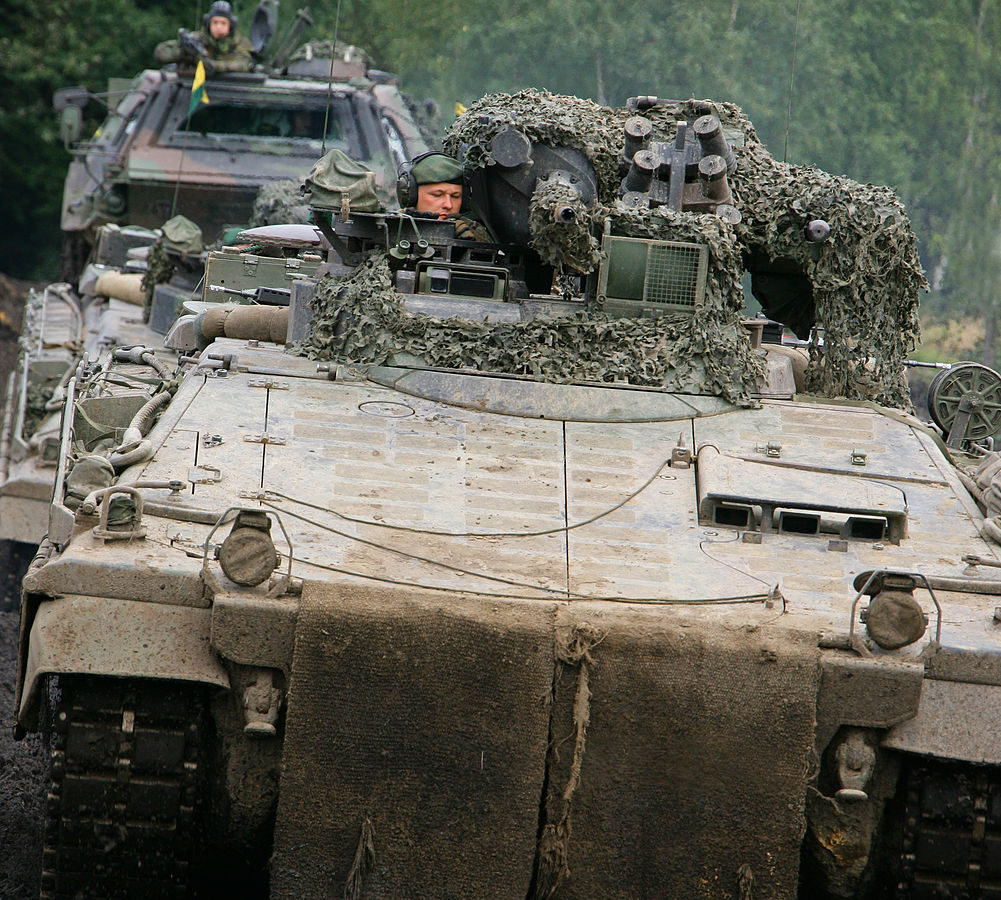
A Bundeswehr Marder 1A3 Infantry Fighting Vehicle during an exercise at the Munster Training Centre, 1 September, 2010.
Photo by Bundeswehr-Fotos via Wikimedia Commons.
After 1990, the newly combined German military largely evaporated. Manpower levels plummeted; huge quantities of equipment were mothballed or sold off. German military spending fell well below that of other large European NATO allies. Indeed, despite their military history and economic clout, Germany, on a per capita basis, is more a Canada to NATO than a France or Britain.
And not by accident. Germany’s partial demilitarization was driven by a series of considerations, all of which reflected deliberate choices. Germany is still haunted by its Nazi-era history, and even its peacekeeping contribution to Afghanistan was controversial, marking the country’s first major foreign mission since 1945. A smaller, little-used military is a balm to the nation’s wounded psyche. Further, a small German military, and a Germany broadly and overtly uninterested in military affairs, did much to ease concerns of wary allies with living memories of life under the Luftwaffe and Wehrmacht.
And, well, yeah: the Germans also cut their force levels like crazy because, as noted in my recent column here, it saved them a ton of money.
It’s important to understand, though, that it’s not just about the German military, though that’s perhaps the most stark symbol. The country has emerged as a leading force for European unity and liberal-democratic values. Not for nothing was recently retired chancellor Angela Merkel touted as a leader of the free world during the rocky Trump presidency in Washington. Under Merkel, the country tried to live the ideal of the modern Europe, including by letting in a million refugees fleeing fighting in the Middle East, a decision that has opened up political fissures in Germany that remain a problem today.
Much has also been made of the country’s decision to shut down its nuclear plants and rely instead on imports of Russian natural gas for energy. Dismissed by many as foolhardy — and it was foolhardy — it’s also not hard to read a whiff of almost pathetic desperation into the move. If we are just nice enough, if we buy enough Russian gas, if we perfectly model the new amiable European ideal, maybe, just maybe, could Germany cast off some of its historical taint?
If that was the plan, it hasn’t worked, and gosh, it hasn’t worked with a vengeance. Since the Cold War ended — paused? changed? — the Germans have remained minimally armed and resolutely affable and committed to European unity. The country did increase military spending after Putin’s 2014 annexation of Crimea, but it almost had to — the German military had fallen into a state of neglect and non-functionality that any Canadian would find instantly recognizable. Hundreds of billions of Euros were budgeted, and tens of thousands of new enlistments authorized, in the first expansion of German military power since reunification. Even while embarking on this effort, though, Germany continued to shut down its nuclear plants and increase its use of Russian energy imports.
That’s over. Deader than East Germany, as much as a relic as the bits of the Berlin Wall that tourists now collect (I have a fragment myself somewhere in a file in my office, though damned if I could find it when I went searching today while procrastinating on this column). On top of the many billions of Euros already pledged to military modernization, Chancellor Olaf Scholz has committed a supplemental fund of a further €100 billion for immediate shoring up of military capabilities, and has also committed to substantially raise Germany’s baseline defence spending to the two per cent NATO target — an effectively permanent annual boost of roughly a third over the already higher level achieved since 2015.
Mark Felton Productions
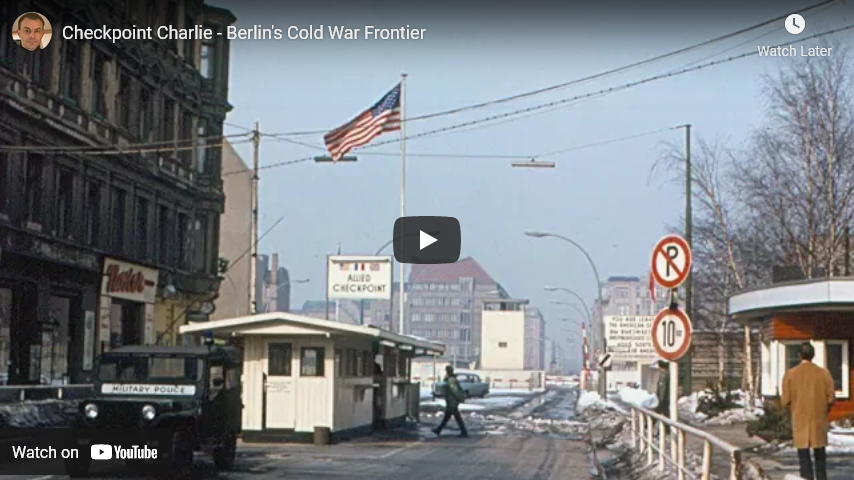
Published 4 Dec 2018The history of Checkpoint Charlie, the most famous of Berlin’s East-West crossing points and the focus of a serious standoff between the US and Soviet Union in 1961 that could have led to World War III.
Support Mark at Patreon for $1 a Month!
https://www.patreon.com/markfeltonpro…
The Tank Museum
Published 19 Nov 2021Our Patreons have already enjoyed Early Access and AD free viewing of our weekly YouTube video! Consider becoming a Patreon Supporter today: https://www.patreon.com/tankmuseum
David Fletcher is back with another Tank Chat on the M24 Chaffee. Learn all about this American light tank and how it was used at the end of the Second World War and in post-WW2 conflicts.
(more…)
Mark Felton Productions
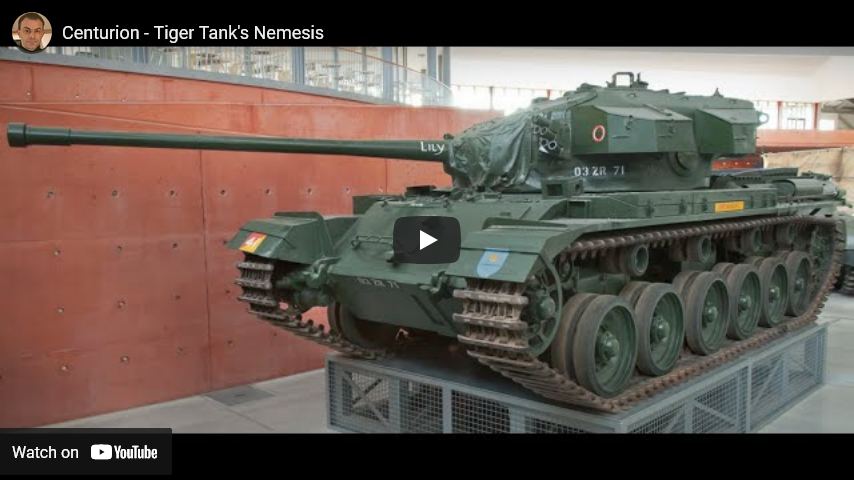
Published 22 Oct 2020The Centurion, the famous Cold War tank, was actually developed to take on the dreaded German Tiger in WW2. Find out whether they ever met on the battlefield in 1945.
Dr. Mark Felton is a well-known British historian, the author of 22 non-fiction books, including bestsellers Zero Night and Castle of the Eagles, both currently being developed into movies in Hollywood. In addition to writing, Mark also appears regularly in television documentaries around the world, including on The History Channel, Netflix, National Geographic, Quest, American Heroes Channel and RMC Decouverte. His books have formed the background to several TV and radio documentaries. More information about Mark can be found at: https://en.wikipedia.org/wiki/Mark_Fe…
Visit my audio book channel ‘War Stories with Mark Felton’: https://youtu.be/xszsAzbHcPE
Help support my channel:
https://www.paypal.me/markfeltonprodu…
https://www.patreon.com/markfeltonpro…Disclaimer: All opinions and comments expressed in the ‘Comments’ section do not reflect the opinions of Mark Felton Productions. All opinions and comments should contribute to the dialogue. Mark Felton Productions does not condone written attacks, insults, racism, sexism, extremism, violence or otherwise questionable comments or material in the ‘Comments’ section, and reserves the right to delete any comment violating this rule or to block any poster from the channel.
Credits: David Holt; Simon Q.; Tony Hisgett; Danie van der Merwe; Oliver Gottlob.
Thumbnail: The Tank Museum
Polyus Studios
Published 20 Nov 2018Don’t forget to like the video and subscribe to my channel!
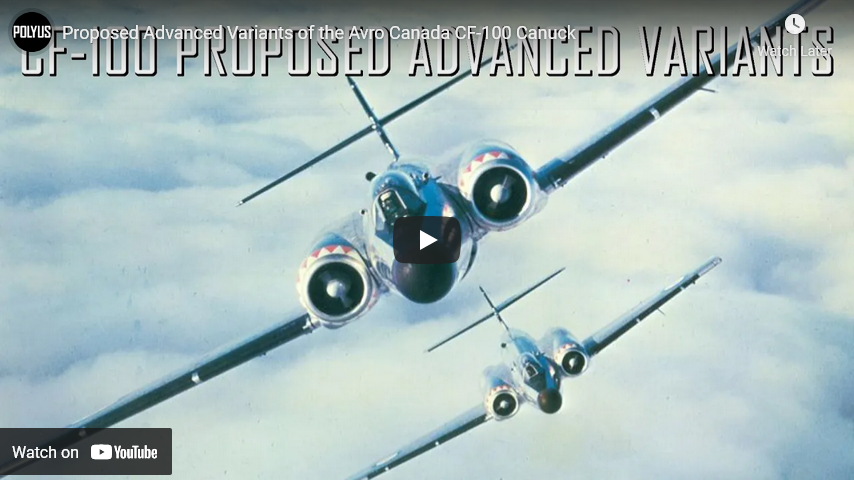
Support me on Patreon – https://www.patreon.com/polyusstudiosThis video covers some of the advanced variants that were proposed for to enhance the capabilities of the CF-100 Canuck. It covers both weapon systems and a few airframe redesigns.
0:00 Introduction
0:55 Velvet Glove and Sparrow 2 missiles
1:36 Falcon and Sidewinder missiles
2:22 Eagle missile
2:53 Genie nuclear rocket
3:18 Engine testing
3:50 Canuck Mk10
4:40 VTOL Canuck
6:03 ConclusionMusic:
Denmark – Portland Cello Project#CF100 #CanadianAerospace #PolyusStudios
Whitehall Moll History Clips
Published 29 May 2019How did Winston Churchill draw on the lessons of his ancestor John Churchill to fight World War II? The Duke of Marlborough’s influence is apparent as Dr David Starkey explains

Forgotten Weapons
Published 26 Jun 2017Armament Research Services (ARES) is a specialist technical intelligence consultancy, offering expertise and analysis to a range of government and non-government entities in the arms and munitions field. For detailed photos of the guns in this video, don’t miss the ARES companion blog post:
http://armamentresearch.com/british-k…
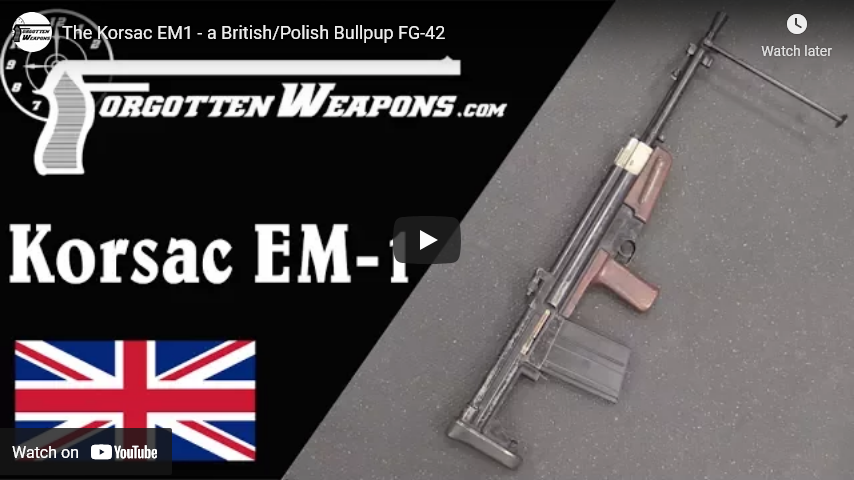
The Korsac EM-1 (not to be confused with the Thorpe EM-1, which is a completely different rifle) was a bullpup light machine gun based on captured examples of the German FG-42 paratroop rifle. It was developed between 1945 and 1947 by a team led by a Polish refugee designer named Korsac.
It was chambered for the 8mm Mauser cartridge, and used an 18 round magazine adapted from the ZB-26. The operating mechanism was closely copied from the FG-42, as were many elements of the rifle’s controls, including the capability for firing from an open bolt in fully automatic and from a closed bolt in semi-automatic. Unlike the FG-42, it used a short stroke tappet type gas piston, and had a detachable barrel. Ultimately only two examples were built, and only one of those (the one in this video) was completed to firing condition. It suffered from reliability problems in semi-automatic mode, and was quickly sidelined in favor of the other development projects ongoing by 1947. However, many lessons from its development would be put into the EM-2 rifle.
Cool Forgotten Weapons merchandise! http://shop.bbtv.com/collections/forg…
http://www.patreon.com/ForgottenWeapons
If you enjoy Forgotten Weapons, check out its sister channel, InRangeTV! http://www.youtube.com/InRangeTVShow
In The Critic, Nikos A. Salingaros decries “architectural urbanicide”:
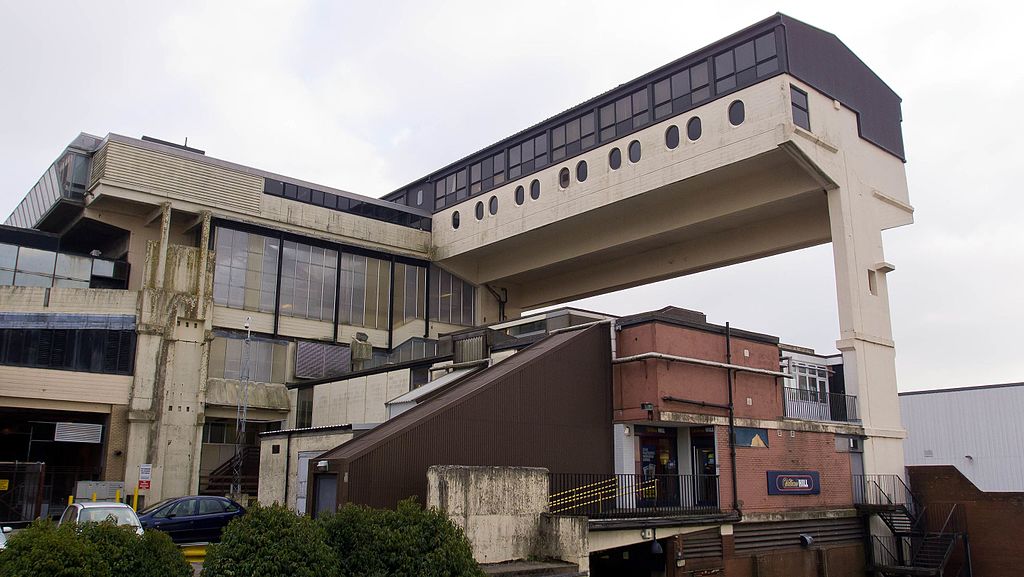
Cumbernauld Shopping Centre, voted as Britain’s most hated building.
Photo by Ed Webster via Wikimedia Commons.
Biological life transforms energy from the sun into complexes of organic materials that either metabolize while remaining relatively fixed, or move about and eat each other. Human energy creates the analogous case of artifacts and buildings, which give us a healing effect akin to the feedback experienced from our interaction with biological organisms. This positive emotion corresponds to the mechanism of “biophilia”.
Women grow and nurture the human baby. They are predisposed to appreciate the created life form through an intense bond of love through beauty. Most people — though not all, a notable exception being the architect Le Corbusier — love babies and have a built-in reflex of smiling at the sight of one, even if it’s not their own. Beauty is inseparable from creation and life.
Established architecture in our times, and for a century before now, has been an almost exclusively male domain, dominated by sheer power. The profession has aligned itself with ideology and extractive money interests. A design movement that ignores living structure took dominance after World War II. It thrives through global consumption. Mathematical analysis can measure very precise living qualities embedded in design and materials, such as fractal scaling, multiple nested symmetries, color harmonization, organized details, vertical axis, etc. Recent experimental tools of eye-tracking and artificial intelligence using Visual Attention Software determine which designs attract the eye unconsciously, and which remain uninteresting to our sophisticated brain evolved for survival.
[…]
After the Second World War, the architecture-industrial complex of building and real estate industries began a massive rebuilding of major cities. This freed up real estate for new construction, an activity that enriched a certain section of society. Working with politicians at all levels, architectural review boards did not value traditional buildings, nor those in any of several new but non-modernist form languages. Any qualms about the irreversible destruction of the life of cities were offset by the media convincing the population that this was an inexorable and much desired move towards progress. Anybody opposing this program of architectural substitution — replacing living by dead structure — was labeled an obscurantist reactionary. The promised utopia seduced academia to join this campaign. People failed to realize that an ideology ostensibly linked to Marxist beliefs was driven by ruthless industry manipulation.
Nevertheless, architects don’t tear down buildings: it is real estate speculators who do. Those corporate entities are amoral, willing to do anything for profit. It’s not their responsibility to save valuable older buildings; that task falls upon society, which has failed miserably in this duty. The various mechanisms that are supposed to protect a perfectly sound and health-inducing building become a cruel joke when such a building is demolished. A decision is taken outside the light of public scrutiny, while implementing the strategy of the fait accompli — after the bulldozers and wreckers, it’s too late to do anything.
The story of the systematic destruction of the UK’s architectural heritage is long and ugly. To mention just one example, the corrupt Newcastle City Council Member Thomas Daniel Smith managed to erase large swaths of central city districts and replace them with cheaply-built glass-and-steel monstrosities before he was jailed in 1974. Smith worked closely with dishonest — and extremely successful — architect John Poulson, who was also jailed in 1974. He appealed directly to democratic and liberal sentiments to further his ambitions, and the political class at the time fell for his manipulations. This sordid story repeats, with only minor variations, except that the other urbanicides were never prosecuted.



Powered by WordPress