Quotulatiousness

June 7, 2021

Why is the belated discovery of (potentially hundreds of) unmarked graves at a former residential school surprising?

Filed under: Cancon, Education, Government, History, India — Tags: , , , , — Nicholas @ 03:00

The weekly wrap-up post at The Line considers the recent revelation of possibly hundreds of unmarked graves of First Nations children at the site of a former Catholic-run residential school in BC. Despite being Canadian, my interest in Canadian history centres mostly on economic, naval, and military aspects, but I was certainly aware that the residential school system was a black mark on Canada’s historical dealings with First Nations and that the general outline of events — if not the gruesome details — had been known for many years. The first time I found out about it was in middle school, through what we’d now call a “Young Adult” novel about a young First Nations boy escaping from the residential school he’d been sent to and his attempts to travel hundreds of miles to get home. I read it in the early 70s and it may have been published up to a decade before then (I no longer remember the author’s name or the title of the book, unfortunately).

If I, as a schoolchild, knew something of this fifty years ago, why have people younger than me been shocked and appalled to be hearing about this widespread tragedy for the first time now?

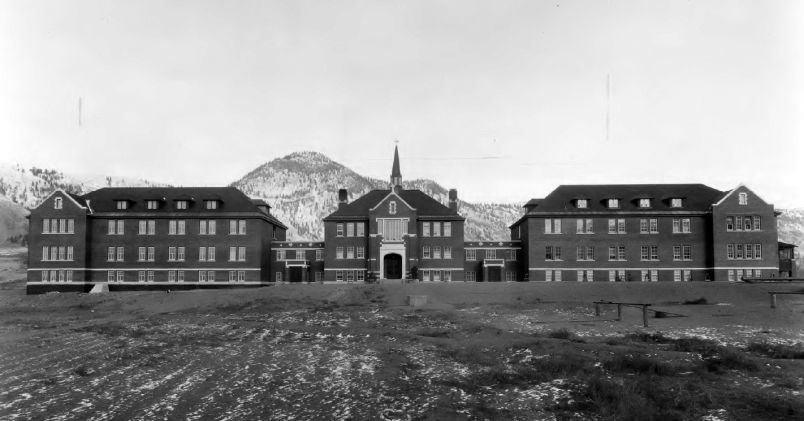
Kamloops Indian Residential School, 1930.
Photo from Archives Deschâtelets-NDC, Richelieu via Wikimedia Commons.

We like to start our dispatches with something pithy or casual, but it’s been a heavy week. The discovery of what appears to be a burial site containing the bodies of more than 200 children at the site of a former residential school in B.C. has shaken Canadians. Of course it has. There are two outrages here — the outrageous reality of the generations of combined abuses inflicted on Indigenous Canadians, of which the residential school system was but a part. Also, the outrage that most Canadians are only learning about this now.

Your Line editors are not experts on Indigenous affairs or history, but we dare say we’re better read than most on Canadian history in a general sense. We do not say this in any way with snark or derision, but to our fellow Canadians — this should not be surprising to you. The Catholics who ran most of these schools under the sanction of the state had a long history of trying to save souls at the expense of the bodies in which they inhabited. Religious institutions were slow to recognize and stop the spread of disease in their own institutions. Most disturbingly, their ideology glorified, even sanctified, physical suffering. It still does.

Mass graves have been uncovered in Ireland, at the site of Catholic-run homes once devoted to the care of unwed mothers and children. “Saint” Mother Teresa’s hospitals in India were altars to the needless suffering of impoverished people who could not afford to die in peace and dignity. Her hospitals were dirty, poorly run facilities where children were reportedly tied to beds, and terminal patients were given little more than aspirin.

One of the great lessons of history that we consistently fail to accept is that many of our most evil actions are rooted not in self-evidently evil impulses, but rather in our desire to “save” others. Hubris and paternalism, these are the sins we cannot seem to shake. Residential schools, Catholic or otherwise, were the disastrous result of marrying a poisonous and righteous ideology with the authority and resources of a centralized state.

The Truth and Reconciliation report laid out much of this in detail in its final report in 2015, which also spelled out that graves like the ones we’re now mourning in Kamloops are likely to be far more prevalent and common than we now understand. Everyone here deserves the truth.

Update: I’m delighted to see that David Warren continues to improve from his recent health issues and he has rather a different view on Canada’s residential school system and its place in the lives of the First Nations children who attended the schools:

Ryerson was also a figure in the development of Canada’s “residential schools”, which took Indians from (mostly) dysfunctional homes and gave them an education with priests, nuns, and respectable Protestants. Not all denizens of an orphanage are happy, and by attaching the word “colonialism”, and giving simplified accounts, full of libels, “progressive” Canadian politicians have made this period of Canadian history into a scandal. Those who know better have been silenced.

Some years ago I tried to defend the “residential schools”, more or less alone in the Canadian “meejah”. I received many, many letters from former students of them, who said their memories were happy. They had been inspired by teachers of real Christian faith and conviction, and had been equipped with the rudiments of sound learning. “They saved my life,” was a frequent comment.

I could understand the residential schools because I am familiar with Canadian education before it was taken over by barbaric hordes; and also because I am myself partly a product of “British colonial” private schools in Asia, decades ago. They were brutal towards their boys, sometimes. I was myself beaten, and their teachers were sometimes tyrannical.

As a young man I thought this was the way of the world. Now that I am old, I look back on the teaching I received with great pride. It was vastly better than what I would receive in a Canadian high school; and that was much better than what we get today.

February 11, 2021

“… the entire Canadian constitution boiled down to the government saying, essentially, ‘trust us'”

Filed under: Cancon, Government, History — Tags: , , , , , , , , — Nicholas @ 03:00

Andrew Potter on the interesting and almost certainly unCanadian notion that the Prime Minister actually accept responsibility for things that happen on his watch:

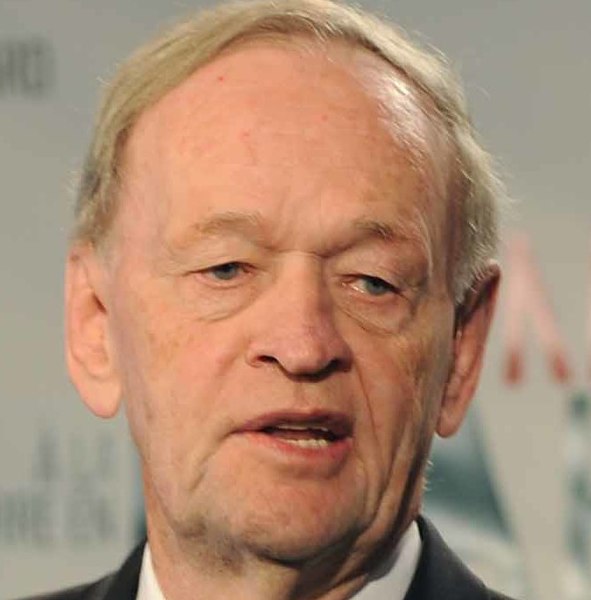
Former Prime Minister Jean Chrétien speaking at the “No to the war in Iraq: 10 years later” colloquium, 15 March 2013.
Detail of a photo by Gopmtl1 via Wikimedia Commons.

The late UBC law professor Wesley Pue once remarked that the entire Canadian constitution boiled down to the government saying, essentially, “trust us.” He was speaking in the wake of the release of the Hughes Report into the APEC affair.

A refresher: In 1997 it was Canada’s turn to host the annual APEC summit, a free trade and cooperation gabfest for countries in the Pacific Rim. Prime Minister Jean Chrétien decided to hold the meeting on the campus of UBC. Given that it is probably one of the most gorgeous pieces of real estate in the country, Chrétien probably thought he was being a good host. But some UBC students objected to the presence of Indonesian dictator Suharto at their school, and so they marched, held up signs, blocked campus roads and exits, chanted slogans, the usual student protest stuff.

Chrétien was clearly embarrassed, and orders went out from the PMO to clear the roads. The Mounties started telling students their campus was now a “Charter-free zone,” arresting a bunch of them. In a notorious incident captured by CBC cameras, RCMP Staff Sgt. Hugh Stewart walked amongst the students hosing them down with pepper spray. (Asked about the incident at a press conference, Chrétien made a joke.)

The only proper investigation into the affair was led by commissioner Ted Hughes, who issued his report in the summer of 2001. Hughes found that the RCMP had behaved by turns incompetently and unprofessionally and that they had systematically violated the Charter rights of the students. Further, Hughes found that they had done so under direction from the PMO — in particular at the behest of its director of operations, Jean Carle. While Chrétien himself escaped direct censure (Hughes could find no evidence that Carle had acted on Chrétien’s explicit orders), Pue pointed out that the fundamental principle of responsible government requires that the prime minister accept responsibility for what happened. Yet Chrétien did not. He neither accepted personal responsibility, nor did he throw Carle under the bus. Instead, what happened was typically Canadian: the matter simply went away.

The APEC affair serves as a useful reminder of a fundamental truth about our system of government. As Pue noted, there are virtually no effective parliamentary or legal checks on a prime minister’s authority, and as a result it is pretty much impossible to hold our executive branch to account. We need to just trust them.

[…]

It’s worth rehearsing all of this because we are going through a rather extended “just trust us” phase in Ottawa. After shuttering parliament last spring, ostensibly to focus their energies on fighting the COVID-19 pandemic, Justin Trudeau’s Liberals spent the summer dreaming of “building back better” while fighting a ferocious rearguard action to keep MPs from finding out the truth about payments to Trudeau’s family by a charity. Trudeau has since spent the better part of the last six months governing by press conference from the front steps of his cottage, but even as the extreme levels of federal spending continue, and even as scandals and reports of gross mismanagement pile up, the Liberals have been brazenly testing the waters for a spring election.

October 21, 2020

“[A]ll white people are racists … because they participate in a system that secures their own structural advantages”

Filed under: Cancon, Politics, USA — Tags: , , , , — Nicholas @ 05:00

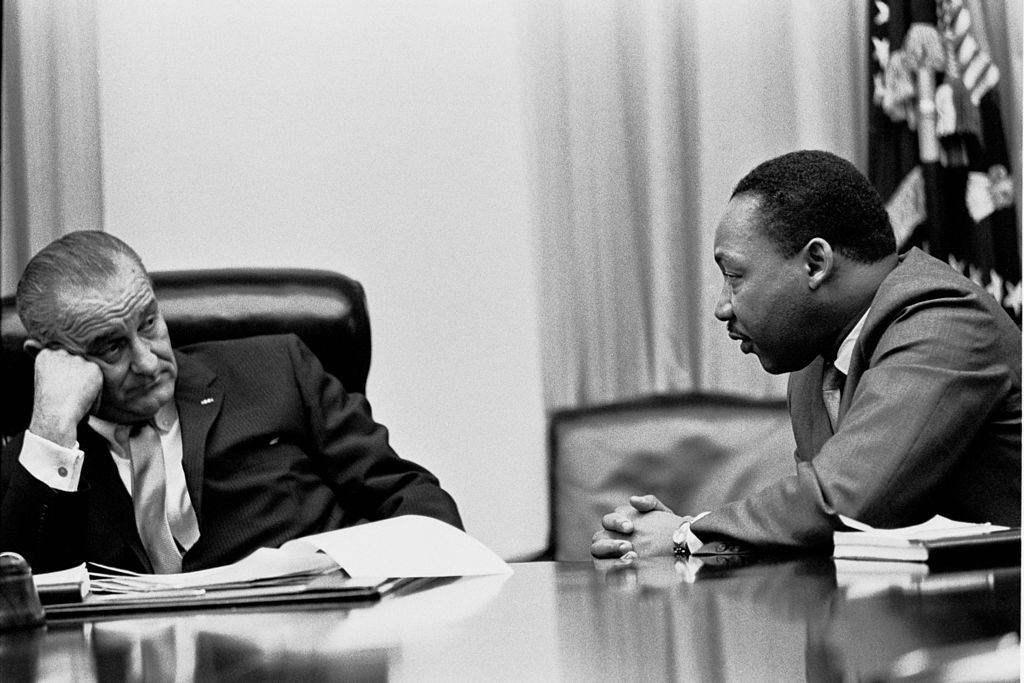
In The Line, Meaghie Champion commits some sort of thought crime by quoting Martin Luther King’s famous words (which I have been assured more than once are now “forbidden” to non-POC speakers because reasons):

President Lyndon B. Johnson meets with Martin Luther King, Jr. in the White House Cabinet Room, 18 March 1966.
Photo by Yoichi Okamoto via Wikimedia Commons.

Most of us have been committed to the ideals of anti-racism since Martin Luther King famously delivered his “I Have a Dream Speech.” This was a masterclass of persuasion and rhetoric; one that convinced generations to re-frame their positions on racial inequity.

King said that he hoped that one day his children would grow up to be judged, not by the colour of their skin, but by the content of their character. That’s the ethos [BC NDP leader John] Horgan channelled when he said: “I don’t pay attention to skin colour or ethnicity.”

But this is not good enough for those who promote Critical Race Theory, an emerging ideology that tips these values on their head. CRT presupposes that the world is dominated by white supremacists. Further, that all white people are racists — regardless of their individual actions — simply because they participate in a system that secures their own structural advantages. CRT redefines what “racism” has traditionally meant: bigotry or discrimination based on skin colour.

Under this new ethos, only white people are capable of racism, because racism is systemic and works towards keeping all power vested in the hands of the white supremacists. I’m simplifying this, of course, because CRT is a rabbit hole best tackled by people with a lot more patience than me. One of the laziest rebuttals that CRT’s adherents use to deflect criticism is that its critics simply don’t understand it well enough, and therefore need to spend endless hours of their lives “doing the work,” integrating key academic texts, and absorbing their meaning until they fully accept the unerring truth of the ideology. If this tactic sounds indistinguishable from a deeply manipulative religious movement, well …

I’m a “person of colour” and I have spent my whole life trying to be anti-racist. I agree with the idea that there are systemic problems involving racism in many institutions within society. Some of those systemic problems are destroying Indigenous nations, including my own. Where I disagree with the Critical Race Theory crowd is in their depiction of everyone who is not a person of colour as being inherently racist. I don’t agree with their solutions for solving the racism problems we have to confront as a society. I don’t believe that they are the only ones working against racism, or coming up with viable strategies for how to do so. We can have differing views about racism and how to combat it; failing to adhere to one single philosophy, or parrot a specific set of terminology, does not mean a person is racist.

Horgan has worked for decades to do what he thought best for all the people. He’s been on our side in the struggle against racism all his life. The fact that he wasn’t up-to-date on the latest acceptable phrases to speak on the matter doesn’t negate that.

August 31, 2020

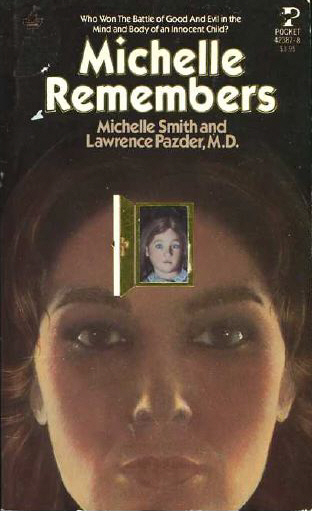
Michelle Remembers, the seminal Satanic Panic book

Filed under: Books, Cancon, History, Media, USA — Tags: , , , , , — Nicholas @ 03:00

Jen Gerson discusses the first modern Satanic Panic and the book about the “recovered” childhood memories of a British Columbia woman in the 1970s:

QAnon may sound like something that could only have birthed in the darker corners of the internet. But QAnon predates president Donald Trump and even the internet itself; It’s just the latest iteration of a moral panic that swept the highest levels of Western society only a generation ago. One of the most polarizing and divisive social movements in modern history; it destroyed families, turned communities against one another, and sent numerous innocent men and women to prison.

And it all started in Victoria, BC.

It was known as the Satanic Panic; a conspiracy theory that convinced millions of well meaning and rational people that a secret cabal of Satanists had infiltrated the highest echelons of society in order to sexually molest children. The Satanists were accused of sacrificing animals and using women as “breeders” to create an endless supply of dead babies for use in their gory, bloody-fuelled rituals and orgies.

It destroyed lives and ripped apart families. Reports of ritualistic child abuse were reported across the English speaking-world. Almost all of them were eventually found to have been partially, or wholly fabricated, but not before dozens of innocent people were falsely accused, and sentenced to years and even decades in prison.

Born of a genuine historical injustice — society’s neglect of childhood sexual abuse — this was a panic that saw some of the world’s smartest minds taken in by accusations, that, at their root, were as preposterous as any raised during medieval European witch hunts. It was legitimized by a professional class, captivated law enforcement and proved itself a lucrative grift for fraudsters and attention seekers. Worse, as the conspiracy grew under its own weight and influence, the hysteria inspired real and horrific crimes — usually by disturbed teenagers who claimed they were sacrificing humans to Satan.

This is a case study of how badly off the rails we can go when we allow our best intentions and passions to overwhelm us.

The story begins in 1980, with the publication of a book called Michelle Remembers. It detailed the fantastic claims of Michelle Proby, who recounted several months of gory and sadistic ritualistic abuse at the hands of a cabal of Satanists when she was a child in 1950s Victoria. The memories, she alleged, were repressed for decades, until she sought help from psychiatrist Lawrence Pazder. Under a state of hypnosis, Proby began to uncover a horrifying tale of murder, torture, abduction, and molestation. She claimed to have been taken from her willing family and groomed to take part in a ritual to call the devil — one in which she witnessed the murder of children, was forced to eat human remains, covered in dead baby parts, and locked in a cage with snakes.

An explosive bestseller. Michelle Remembers would become the folkloric template for countless other claims of Satanic Ritual Abuse ostensibly uncovered during therapy during the 80s and 90s.

August 27, 2020

QotD: Racism and the minimum wage

Filed under: Australia, Business, Cancon, Economics, Quotations, USA — Tags: , , , , , , — Nicholas @ 01:00

Minimum-wage laws can even affect the level of racial discrimination. In an earlier era, when racial discrimination was both legally and socially accepted, minimum-wage laws were often used openly to price minorities out of the job market.

In 1925, a minimum-wage law was passed in the Canadian province of British Columbia, with the intent and effect of pricing Japanese immigrants out of jobs in the lumbering industry.

A Harvard professor of that era referred approvingly to Australia’s minimum wage law as a means to “protect the white Australian’s standard of living from the invidious competition of the colored races, particularly of the Chinese” who were willing to work for less.

In South Africa during the era of apartheid, white labor unions urged that a minimum-wage law be applied to all races, to keep black workers from taking jobs away from white unionized workers by working for less than the union pay scale.

Some supporters of the first federal minimum-wage law in the United States — the Davis-Bacon Act of 1931 — used exactly the same rationale, citing the fact that Southern construction companies, using non-union black workers, were able to come north and underbid construction companies using unionized white labor.

These supporters of minimum-wage laws understood long ago something that today’s supporters of such laws seem not to have bothered to think through. People whose wages are raised by law do not necessarily benefit, because they are often less likely to be hired at the imposed minimum-wage rate.

Thomas Sowell, “Why racists love the minimum wage laws”, New York Post, 2013-09-17.

May 23, 2020

“If you want to advance your cause, make friends with the Ontario Mohawks. They pretty much run the country.”

Filed under: Cancon, Government, Railways — Tags: , , , , — Nicholas @ 03:00

Chris Selley on the utter, abject defeat of the Canadian and British Columbian governments in their “negotiations” with the hereditary leadership of the Wet’suwet’en:

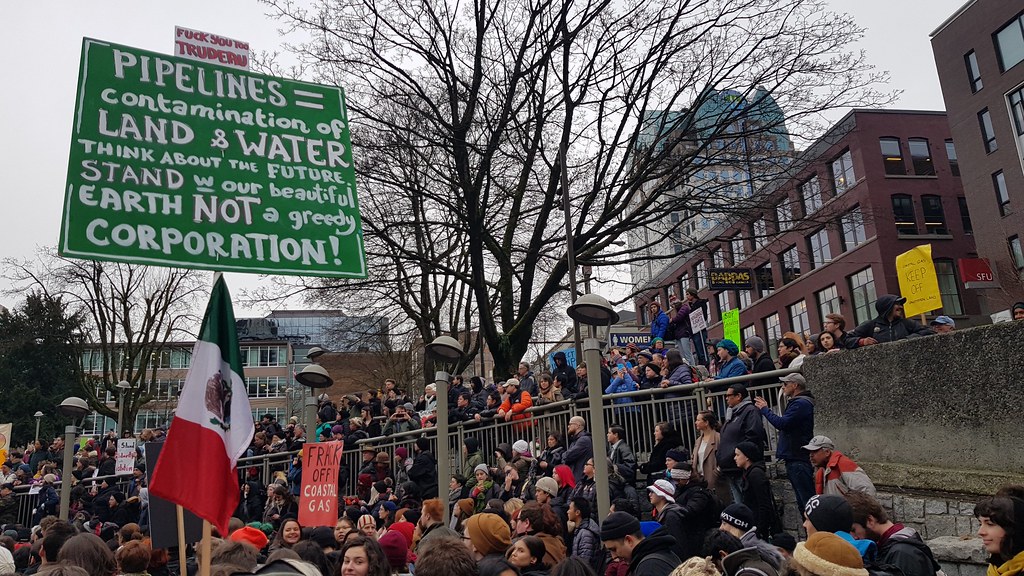
“Vancouver Solidarity with Wet’suwet’en” by jencastrotakespictures is licensed under CC BY-NC-SA 2.0

“We’re not understanding what is the rush here,” elected chief Maureen Luggi told CBC — a sentiment Naziel echoed. “We sat here for 30 years already, waiting and talking about it,” Naziel said. “We can wait another year or two. It’s not going to hurt anything.”

Indeed, from the average Wet’suwet’en member’s point of view, there is no hurry at all. The logical thing would be to fix the governance structure, heal the wounds that need healing, and then undertake these monumental negotiations.

But for the governments involved, this wasn’t about offering the Wet’suwet’en a better future. It was about putting out a fire: A group of Mohawks thousands of kilometres away in eastern Ontario had blockaded CN’s main line in solidarity with the hereditary chiefs; and the Ontario Provincial Police, armed with an injunction demanding the blockade end, refused to lift a finger.

Something had to give. Somebody had to get screwed, and it was the rank-and-file Wet’suwet’en. For no good reason whatsoever, the hereditary chiefs now hold all the keys to their future. It’s an appalling and appallingly predictable result.

“I don’t see why the government gave them this, because this has got nothing to do with what the protests across Canada started from,” chief Dan George of Ts’il Kaz Koh First Nation told CBC. “Those issues are not resolved. They can set up roadblocks again and do it again, and that’s what I’m worried about.”

If negotiations don’t go well, that might well prove to be a prescient remark. But for now, the hereditary chiefs’ victory is total: They have every reason to stay the course. The message to other groups, however, is clear: If you want to advance your cause, make friends with the Ontario Mohawks. They pretty much run the country.

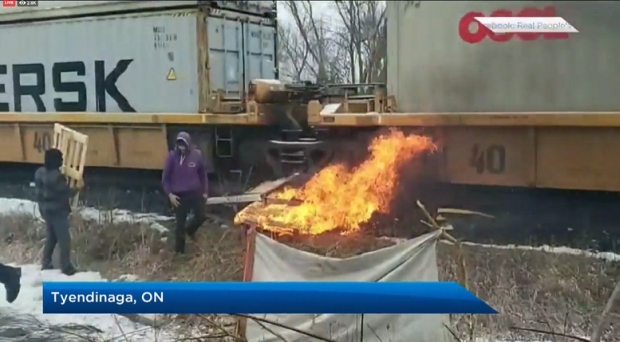
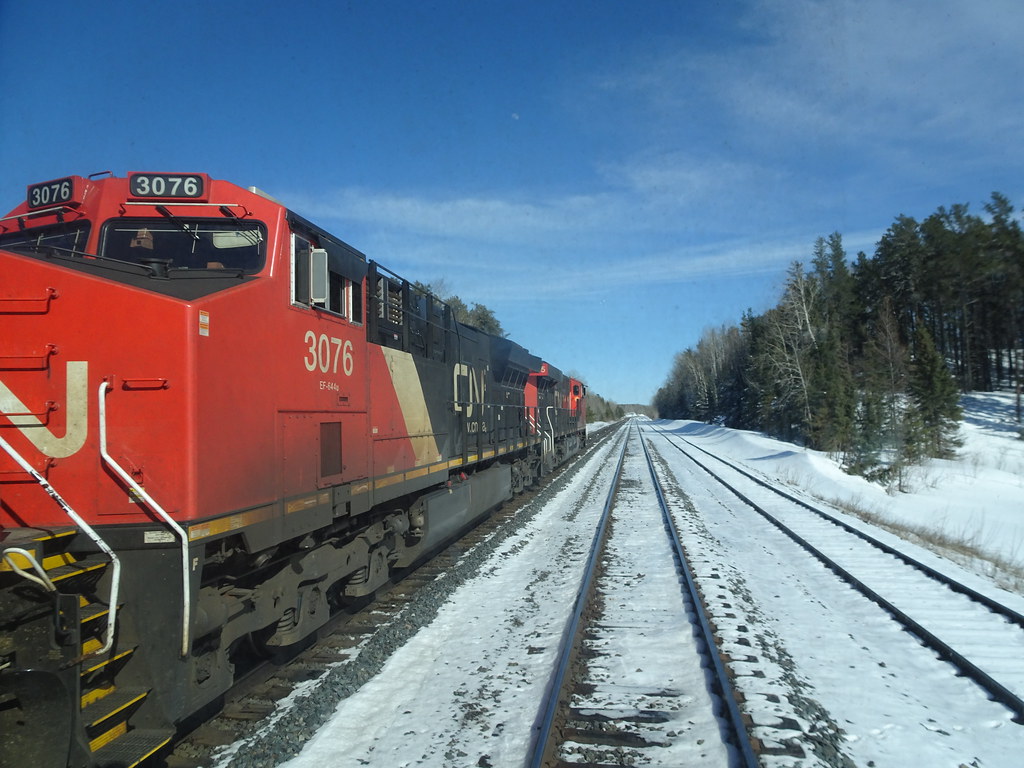
Screencap from a TV report on Mohawk Warriors attempting to set a freight car on fire along the Canadian National mainline through Tyendinaga near Belleville, Ontario in February, 2020.

March 6, 2020

“[A] decision of such absolutely mind-boggling stupidity and irresponsibility that it could only have come from Justin Trudeau, himself”

Filed under: Cancon, Government, Law, Politics, Railways — Tags: , , , — Nicholas @ 05:00

Ted Campbell on the Trudeau government’s apparent abject surrender to the Wet’suwet’en hereditary chiefs (“apparent” because we still don’t have any details of the “deal”):

The Wet’suwet’en hereditary chiefs’ agenda seems simple enough to me. They don’t like the notion that the Wet’suwet’en people can elect band councils that might act for the good of the people and < quelle horreur > the people might even disagree with the hereditary chiefs. Some (male) hereditary chiefs seem to have managed to strip some other (female) chiefs of their titles because they, the female chiefs, sided with the elected councils. This is, in 21st century British Columbia, something of a replay of 17th century Europe and the end of the divine right of kings, except that the Wet’suwet’en hereditary chiefs might succeed where Charles I and Louis XVI failed because they have the dimwits in the Trudeau cabinet on their side.

To make matters worse, as John Morris of the Canadian Press points out in an article published in the Globe and Mail, the government negotiated with the hereditary chiefs, only ~ with the people who broke the law; and they ignored the elected leaders ~ the people who played by the rules.

How typically Trudeau: he surrenders, cravenly, to the reactionary, anti-democratic lawbreakers and, simultaneously, shuts out the elected representatives of the Wet’suwet’en peoples. Is that the Canada in which we all want to live? Is that the sort of “leadership” for which millions of Canadians voted in 2019? I think not. Justin Trudeau is both a fool and a coward and his party, the Liberal Party of Canada, has a duty to Canada: throw the bum out!

But, not to worry, the Trudeau regime’s propagandists press agents will tell us that it’s all good, we “won,” something or other … didn’t we? And who cares if we lost something nebulous like honour and responsibility? It’s all about reconciliation, isn’t it? What do trivialities like democracy and the national interest matter when really important things, like preserving the power of hereditary chiefs over elected councils, are at stake? But that reactionary system seems to have been strengthened, and so “It was a famous victory.”

February 21, 2020

Justin Trudeau, Prime Empathizer of Canada

Filed under: Cancon, Government, Law, Politics, Railways — Tags: , , , , , , — Nicholas @ 03:00

The Prime Minstrel channels his inner Bill Clinton, although he just manages to avoid saying that he “feels our pain”:

A strange thing happened Tuesday morning. That strange thing was … an important and interesting exchange on the floor of the House of Commons. It happened during routine proceedings, and not in the Punch-and-Judy exchange of question period. The leaders of the various parties in the House stood and outlined positions on the rail blockades being conducted around the country in support of Wet’suwet’en opponents of B.C.’s Coastal GasLink pipeline.

First came the prime minister. “People are troubled by what they have been witnessing this past week,” he said. Our empathizer-in-chief, the emotional mascot of Confederation, was about to go to work. “Young, old, Indigenous and newcomers are asking themselves what is happening in the country … On all sides, people are upset and frustrated.”

The next three words out of his mouth were: “I get it.” Huh. Is that the sort of thing you say when you’ve actually gotten it? If a friend called you up in a shattered emotional state because he had just lost his job, as people are starting to lose jobs to the Wet’suwet’en solidarity protests, would you say “I get it”?

Beyond this tin-eared reassurance, Trudeau did not have much specific to say, and what there was seemed to contradict itself. “Our government’s priority is to resolve this situation peacefully, but also to protect the rule of law in our country,” he promised. “That is a principle we will always stand up for.” One would have thought the role of a prime minister was to apply the law rather than to “stand up for” it. He gave his usual spiel about the myriad of ways in which the federal government has failed First Nations, again speaking as though someone else were in charge. Certainly very little of it is his own fault: the government he leads has “invested more than any other … to right historic wrongs.”

Trudeau worried aloud that Canada might become “a country where people think they can tamper with rail lines and endanger lives,” but he seemingly renounced the use of force (it’s not “helpful”) against protesters who openly discuss sabotage. What the prime minister means when he talks of the “rule” of something called “law” has been left imperfectly clear.

Chris Selley suggests the government’s fecklessness will continue to prevent any solutions being implemented:

The stupefying weightlessness of Justin Trudeau’s government has never been more evident than in recent days, as it tries to arrange an end to the Mohawk blockade of CN’s main line near Belleville, Ont. At times it seems as if it might just float away, like an improperly tethered bouncy castle in a thunderstorm.

This week has been particularly windy.

[…]

The situation is ludicrous: Because Ontario’s independent provincial police won’t enforce a court injunction, the federal public safety minister seems to be in discussions with B.C.’s solicitor general about whether B.C.’s independent provincial police might back off enforcing a different injunction.

And the worst part of this absurdist theatre festival is how difficult it is to imagine a better alternative. Conservatives continue to call on Trudeau to somehow fix the problem, but the way Canada is set up, it’s really not a federal issue. The RCMP might have some jurisdiction over the railway as federally regulated infrastructure, said University of Toronto law professor Kent Roach, but that hasn’t happened in past cases. It wouldn’t even be up to Trudeau to send in troops: under the Emergencies Act, Roach said, a provincial solicitor-general has to request it.

These are structural issues that any PM will face. Indeed, the biggest difference between the Liberals’ approach to this blockade and the Conservatives’ approach to the 2013 Idle No More protests, which included a 13-day blockade of a CN line in southwestern Ontario, has been one of rhetoric and engagement. The Conservatives talked tougher, but Aboriginal Affairs rebuffed CN’s request to intervene. (Those protesters eventually obeyed a court injunction and left.) The Liberals needlessly tie themselves in knots and insult our intelligence — they know no other way — but they clearly believe it’s their job to broker some kind of resolution.

It’s tough to say which approach is likelier to work. At this point odds seem to favour “neither.” If you have a better, workable idea to get the trains moving, for God’s sake get on the horn to Ottawa.

February 16, 2020

The Canadian economy taken hostage while the PM swans around the world schmoozing for a temporary Security Council seat

Chris Selley on the state of play in the stand-off between (some) First Nations protesters and their temporary fellow travellers of the various permanent protest class:

“DSC02285” by Bengt 1955 is licensed under CC BY-NC 2.0

The majority of Wet’suwet’en First Nation members support the Coastal GasLink natural gas pipeline project, and they are in an objectively peculiar situation. On the one hand, the RCMP is doing its best to clear away the protesters and let construction proceed. On the other hand, anti-pipeline protesters claiming solidarity with the Wet’suwet’en have created chaos in their name — most notably the total shutdown of CN Rail’s eastern Canadian network, the cancellation of nearly every Canadian passenger train, and the layoffs and untold economic costs that go with that.

If protesters acknowledge the diversity of opinion among the Wet’suwet’en at all, they will defer to the authority of five hereditary chiefs who oppose the project, or observe that the five elected Wet’suwet’en band councils — all of which have signed community benefits agreements — represent a form of settler democracy imposed by the Indian Act.

[…]

Clearly the Wet’suwet’en are a divided community, including on the most basic questions of how they should be governed. It’s a mess. Mind you, look at the state of Canada as a whole.

Just as the RCMP have court authorization to clear protesters and encampments along the pipeline route, the Ontario Provincial Police have court authorization to clear the Mohawk rail blockade near Belleville, Ont. Unlike the RCMP, the OPP refuses to exercise its authority. And we just have to live with that. Conservative politicians are barking at Justin Trudeau to “enforce the law,” but he doesn’t give orders to the OPP, and neither does Ontario Premier Doug Ford, and nor should we want them to.

Still, you might expect senior ministers to have moderately stern words for folks illegally causing economic harm. You might expect the prime minister, at minimum, to be in the country. Instead, Trudeau spent the week swanning around Africa drumming up support for the UN Security Council seat with which he remains unaccountably obsessed, then decamped for the Munich Security Conference, where he was photographed warmly embracing Iranian foreign affairs minister Mohammad Javad Zarif, five weeks after Iran blew an airliner full of Canadians out of the sky over Tehran.

The Little Potato is probably doubly happy to have a valid (in his own mind) excuse for not being in the country at this particular time. He loves being the centre of attention … as long as that attention is friendly. He doesn’t handle situations well if the tempers are higher and the hostility is rising … like much of Canada right now.

The pipeline is a provincial project, not a federal one, but if the OPP won’t end the blockade and the feds aren’t willing to take truly extraordinary measures, then at some point in the foreseeable future it may well make short-term economic sense to give in to their demands. Maybe the feds can buy the pipeline from Coastal GasLink and shut it down.

And what if the Mohawks do lose interest, or are somehow induced to stand down? That now counts as the best-case scenario, and it will have involved shutting down the CN railway for at least a week — maybe two, maybe three — with enormous consequences for people’s livelihoods and the economy as a whole, all in the name of killing a project supported by the vast majority of Indigenous people affected by it. And it will happen again, as many times as any group wants it to, on whatever issue they want it to, for as long as they want it to. Unless someone in power does something unusually bold and concrete in the very near future – and it’s not even clear what that thing would be — we are well on the road as a country to being terminally screwed. In the meantime, we certainly have no lessons on accountable government to give the Wet’suwet’en.

January 19, 2020

“… if the Constitution is a threat to killer whales, why, then, to hell with the Constitution”

Filed under: Cancon, Environment, Government, Law, Politics — Tags: , , , , — Nicholas @ 03:00

Colby Cosh reviews the sad tale of the British Columbian government’s defeat before the Supreme Court of Canada over pipelines:

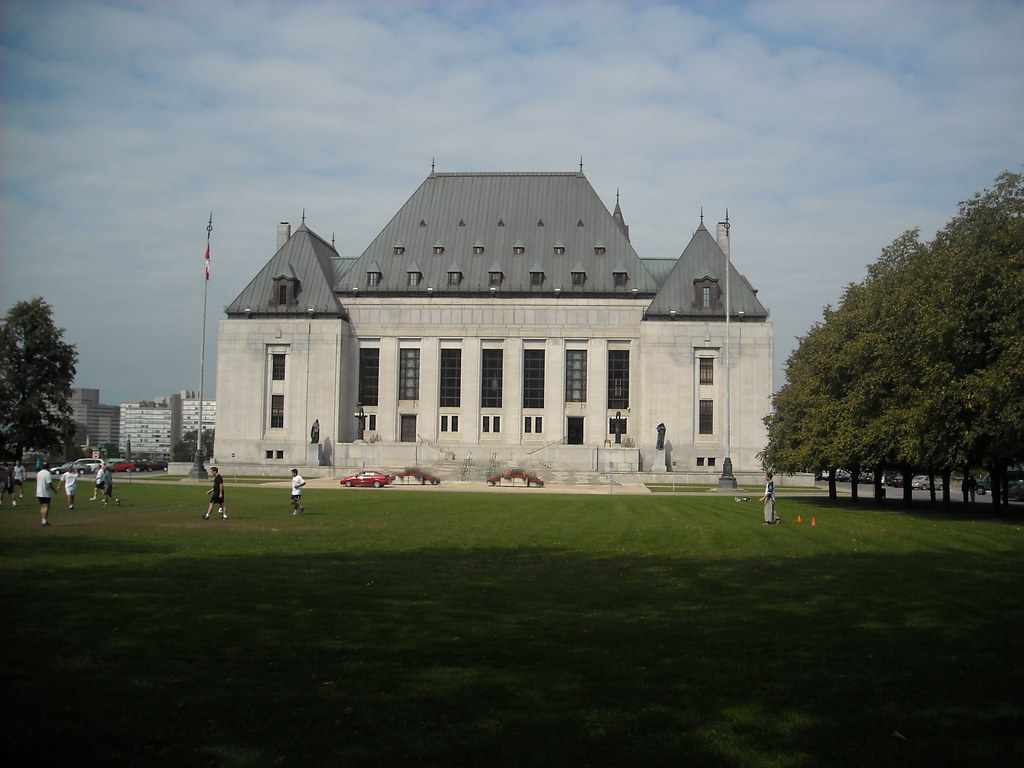
So … yeah, that didn’t go real well. On Thursday the province of British Columbia sent its chosen representative, lawyer Joseph Arvay, to the Supreme Court to plead the oral case for B.C.’s law regulating bitumen in pipelines. John Horgan’s government had attempted to establish its own permit regime for pipeline contents, which are, under accepted constitutional doctrine, a federal responsibility. The B.C. Court of Appeal had wiped out the provincial law unanimously last summer.

Arvay’s task was widely recognized as a Hail Mary pass. But things got even more awkward as the hearing commenced and the justices of the Supreme Court interrogated him on his province’s logical, environmental, and even economic premises. An appellate court’s disposition is sometimes hard to ferret out in its hearings, but this one was so rough that Arvay was reduced to grumbling “If I’m not going to win the appeal, then I don’t want to lose badly.” Alas, the judges did not even see the need to deliberate over their reasons: they at once, and as one, ruled against B.C.

Which is not to suggest that Mr. Arvay didn’t do the best possible job. If we’re sticking with the football metaphor, the problem all along was the game plan. Given the clear federal responsibility for interprovincial pipelines, as “Works and Undertakings connecting … Provinces,” the B.C. government had no choice but to downplay the conflict between the purpose of its proposed environmental permits and the purpose of the ones the federal government hands out. Arvay had to try to convince the ermine gang that a law applying exclusively to the contents of a pipeline wasn’t a regulation of the pipeline.

“The only concern the premier, the attorney general and the members of the government have had is the harm of bitumen,” Arvay protested. “It’s not about pipelines. They’re not anti-pipelines, they’re not anti-Alberta, they’re not anti-oilsands, they’re not anti-oil.”

It’s enough to almost make one sympathetic to the more radical strategy of argument pursued at the hearing by Harry Wruck, a lawyer for Ecojustice Canada who appeared as an intervener supporting B.C. Wruck put before the Supreme Court the same idea he had presented to the BCCA: if the Constitution is a threat to killer whales, why, then, to hell with the Constitution.

July 25, 2019

In British Columbia, “butthurt” damages can exceed $75,000 under Human Rights legislation

Filed under: Cancon, Law, Liberty — Tags: , , , — Nicholas @ 05:00

In the Post Millennial, Jordan Schroeder illustrates how BC human rights rules have created a new class of tort:

I would argue that the issue is not with the BC Human Rights Tribunal itself, but with the perverse incentive of litigating for profit that is created by the BC Human Rights Code. The BC Human Rights Code creates this incentive through a type of damages called “injury to dignity, feelings, and self-respect.”

This head of damages is harmful to human rights law in BC. It is unfair to the defendants, and it incentivizes predatory litigation. All of this causes British Columbians to lose trust in the important role that the tribunal can play in redressing wrongs.

Section 37 of the BC Human Rights Code allows the tribunal to make an award of damages to a complainant for “injury to dignity, feelings, and self-respect”. The tribunal is permitted to award any amount for this that it sees fit.

By the admission of the Human Rights Tribunal [PDF], the awards for this type of damages is high and is “trending upwards.” For example, in the Oger v Whatcott case, Whatcott was ordered to pay $35,000 for discriminatory speech against Morgane Oger. Whatcott had made critical comments about Oger based Oger’s transgender identity. In the same case, the tribunal cited $5,000 awards as “lower” awards. Other cases have seen awards of up to $75,000.

Awards for hurt feelings are unique to human rights law. Damages awarded in every other area of law are based on the principle that the award should only make the complainant whole. A complainant should never be better off after receiving the damages award.

For example, consider if a company leased a concert hall to a business that wanted to use the space to put on a production. Imagine that business stood to make $50,000 in profit from a sold-out production.

If the rental was cancelled by the company leasing the concert hall in breach of the contract, that company would have to pay the other party $50,000, representing all of the profit the other party could have made. The other party is not better off after the award. They are only made whole.

In contrast, awards for hurt feelings undoubtedly put the complainant better off than they would have been had the human rights violation not occurred in the first place. It is self-evident that an award in the tens of thousands of dollars outweighs any injury to feelings caused by the discriminatory speech or action.

Why is it a problem to have an award that amounts to more than what the complainant actually lost? Obviously, there is the problem that it saddles a defendant with a massive financial burden that doesn’t reflect the damage that they caused. A woman starting a small business who is ordered to pay a “small” award of $5,000 dollars would likely find it ruinous.

May 17, 2019

QotD: Mark Steyn and the “Human” “Rights” Tribunals

Filed under: Cancon, Law, Liberty, Quotations, Religion — Tags: , , , , — Nicholas @ 01:00

It’s statements like these that have landed Steyn on various hit lists, including, most famously, those of the Canadian Human Rights Commission, the British Columbia Human Rights Tribunal and the Ontario Human Rights Commission, which are strange quasi-judicial bodies that were stirred to action a decade ago by the Canadian Islamic Congress. Between 2005 and 2007 the weekly news magazine Maclean’s published eighteen articles by Steyn, including an excerpt from America Alone, that were all deemed “Islamophobic” by the human rights tsars. Without going into excruciating detail about the various legal jockeying that took place — who knew one country could have this many commissions and tribunals that could all attack simultaneously? — Steyn and Maclean’s were charged with inciting hatred against Muslims, setting in motion an endless process of discovery and hearings.

“We were trying to lose,” said Steyn. “We wanted them to find us guilty so that we could appeal to a real court, hopefully the Supreme Court, and prove that these hate-speech laws are more absurd than any laws outside North Korea. Before I came along, these human rights tribunals had a 100 per cent conviction rate! The fact that we fought back meant that I became an albatross around their neck. The Thought Police were exposed to massive unrelenting publicity for the first time, and they didn’t expect that. They didn’t expect us to push back. But free speech is on the retreat, and this was not a time for a faint-hearted defence.”

The Canadian Human Rights Commission eventually bowed out of their part in the imbroglio, saying the articles were “polemical, colourful and emphatic” but failed to satisfy the definition of writings “of an extreme nature” as defined by the Supreme Court. But the British Columbia Human Rights Tribunal was not so sure, holding a five-day hearing during which the Canadian Islamic Congress presented evidence that twenty articles in Maclean’s presented Islam as a violent religion and Muslims as violent people, with the Islamist lawyer using words like racist, hateful, contemptuous, Islamophobic and irresponsible. Mahmoud Ayoub, a Harvard historian of religion, testified that Steyn didn’t understand the meaning of the word jihad and that, of the 1.5 billion Muslims in the world, less than a million interpreted jihad to justify violence against non-believers. (I don’t know of any other religion in the world that has merely a million devotees willing to kill, but that’s what the man said.)

Mark Steyn, interviewed by John Bloom, “Mark Steyn, Cole Porter and Free Speech”, Quadrant, 2017-05-11.

May 4, 2019

Canadian privacy laws

Filed under: Cancon, Law, Liberty, Media — Tags: , , , — Nicholas @ 03:00

Michael Geist asks whether it matters that Canadian privacy laws provide more privacy protection if they can’t actually be enforced:

It has long been an article of faith among privacy watchers that Canada features better privacy protection than the United States. While the U.S. relies on binding enforcement of privacy policies alongside limited sector-specific rules for children and video rentals, Canada’s private sector privacy law (PIPEDA or the Personal Information Protection and Electronic Documents Act), which applies broadly to all commercial activities, has received the European Union’s stamp of approval, and has a privacy commissioner charged with investigating complaints.

Despite its strength on paper, my Globe and Mail op-ed notes the Canadian approach emphasizes rules over enforcement, which runs the risk of leaving the public woefully unprotected. PIPEDA establishes requirements to obtain consent for the collection, use and disclosure of personal information, but leaves the Privacy Commissioner of Canada with limited tools to actually enforce the law. In fact, the not-so-secret shortcoming of Canadian law is that the federal commissioner cannot order anyone to do much of anything. Instead, the office is limited to issuing non-binding findings and racing to the federal court if an organization refuses to comply with its recommendations.

The weakness of Canadian law became evident last week when the federal and British Columbia privacy commissioners released the results of their investigation into Facebook arising from the Cambridge Analytica scandal. The report details serious privacy violations and includes several recommendations for reform, including new measures to ensure “valid and meaningful consent”, greater transparency for users, and oversight by a third-party monitor for five years.

Facebook’s response? No thanks. The social media giant started by disputing whether the privacy commissioner even had jurisdiction over the matter. After a brief negotiation, the company simply refused to adopt the commissioners’ recommendations. As their report notes “Facebook disagreed with our findings and proposed alternative commitments, which reflected material amendments to our recommendations, in certain instances, altering the very nature of the recommendations themselves, undermining the objectives of our proposed remedies, or outright rejecting the proposed remedy.”

January 20, 2019

Identifying the real victim in the Burnaby South byelection mini-scandal

Filed under: Cancon, Media, Politics — Tags: , , , — Nicholas @ 03:00

Andrew Coyne suggests that we should sympathize with the true victim:

You have to feel for the Liberal Party of Canada, who are surely the real victims in the Karen Wang affair.

The party had innocently selected the B.C. daycare operator to run in next month’s byelection in Burnaby South based solely on her obvious merits as a failed former candidate for the provincial Liberals in 2017, and without the slightest regard to her Chinese ethnicity, in a riding in which, according to the 2016 census, nearly 40 per cent of residents identify as ethnically Chinese.

Imagine their shock when they discovered that she was engaging in ethnic politics.

In a now-infamous post on WeChat, a Chinese-language social media site, Wang boasted of being “the only Chinese candidate” in the byelection, whereas her main opponent — NDP Leader Jagmeet Singh — is “of Indian descent.”

The party was instantly and publicly aghast. Pausing only to dictate an apology to be put out under her name (“I believe in the progress that Justin Trudeau and the Liberal team are making for British Columbians and all Canadians, and I do not wish for any of my comments to be a distraction,” etc etc), party officials issued a statement in which they “accepted her resignation.” Her online comments, the statement noted, “are not aligned with the values of the Liberal Party of Canada.”

Certainly not! How she got the idea that the Liberal Party of Canada was in any way a home for ethnic power-brokers prized for their ability to recruit members and raise funds from certain ethnic groups, or that it would even think of campaigning in ridings with heavy concentrations of voters from a given ethnic group by crude appeals to their ethnic identity — for example by nominating a candidate of the same ethnicity — must remain forever a mystery.

January 17, 2019

Jagmeet Singh and the federal NDP

Filed under: Cancon, Media, Politics — Tags: , , , , , — Nicholas @ 03:00

Chris Selley on the political issues afflicting federal NDP leader Jagmeet Singh as he tries to win a byelection in British Columbia:

More and more New Democrats seem concerned that Jagmeet Singh mightn’t have been the best choice for leader, let alone deserving of a whopping 54 per cent first ballot victory. His various alleged crimes include rendering himself invisible for months, imposing draconian punishments on popular MPs, and going on TV to suggest we stop importing Saudi oil and get it from other countries instead — at a time when Alberta’s NDP government is fighting both for pipelines and for its continued existence.

[…]

Tom Mulcair was a pro. Dumping him appears to be the dumbest thing the NDP ever did. Still, if Singh wins his seat, there is reason to hope he might grow into the job. To skeptics he evinces a distinctly Trudeauvian brand of superficiality, and a similar gift for quotes that land well but fall to pieces if you actually read them back. That hasn’t hurt Trudeau, though — not much and not yet. Singh, a criminal lawyer, certainly boasts a more impressive resumé outside of politics. And goodness knows there are more than enough avenues for any NDP leader to attack a Liberal government that promised us the moon but left us conspicuously earthbound.

If Singh is an anchor on NDP fortunes, it doesn’t seem to be massively heavy one. Nanos Research has them at 15.4 per cent, as of last week — not good at all, but well within recovery distance of their 19.7 per cent performance in the 2015 election. Pre-campaign polls are generally held to be meaningless. Again assuming Singh wins his seat, he has plenty of time to introduce himself and his vision for the NDP.

It’s also possible, though, that the federal NDP in 2019 is a busted flush no matter who’s leading it. The combination of personal charisma and political circumstance that propelled it to Official Opposition status in 2011 might just be throttling back down toward cruising speed.

We shouldn’t overestimate just how improbable Jack Layton’s achievements were. He dragged the NDP to the political centre, where the votes are, marginalizing various breeds of crackpots along the way, while keeping the famously restive portside of the party relatively content. Then he stole a huge chunk of the Quebec nationalist vote in the dead of night.

When Jagmeet Singh was elected NDP leader, I really did think he’d be a significant challenge to Justin Trudeau due to the media’s apparent fascination with Singh (a love affair that appeared to be as deep and lasting as that of Justin’s teeny-bopper fan club for their darling), but it faded very quickly indeed. I guess as far as the Canadian media is concerned, there can only be one…

The byelection is looking pretty safe for Singh, as his Tory opponent beclowned himself quickly, and news broke on Wednesday that the Liberal candidate has withdrawn, after similarly beclowning herself:

« Newer PostsOlder Posts »

Powered by WordPress