Before 1939 the United States Army was small, but it was professional. Its tiny officers corps was parochial, but true. Its members devoted their time to the study of war, caring little what went on in the larger society around them. They were centurions, and the society around them not their concern.
When so ordered, they went to war. Spreading themselves thinner still, they commanded and trained the civilians who heeded the trumpet’s call. The civilians did the fighting, of course — but they did it the Army’s way.
In 1861 millions of volunteers donned blue or gray. Millions of words have been written on American valor, but few books dwell on the fact that of the sixty important battles, fifty-five were commanded on both sides by West Pointers, and on one side in the remaining five.
In 1917 four million men were mustered in. Few of them liked it, but again they did things the way the professionals wanted them done.
The volunteers came and went, and the Army changed not at all.
But since the Civil War, the Army had neither the esteem nor the favor of public or government. Liberal opinion, whether business-liberal or labor-liberal, dominated the United States after the destruction of the South, and the illiberal Army grew constantly more alienated from its own society.
In a truly liberal society, centurions have no place. For centurions, when they put on the soldier, do not retain the citizen. They are never citizens to begin with.
There was and is no danger of military domination of the nation. The Constitution gave Congress the power of life or death over the military, and they have always accepted the fact. The danger has been the other way around — the liberal society, in its heart, wants not only domination of the military, but acquiesence of the military toward the liberal view of life.
Domination and control society should have. The record of military rule, from the burnished and lazy Praetorians to the juntas of Latin America, to the attempted fiasco of the Légion Étrangére, are pages of history singularly foul in odor.
But acquiesence society may not have, if it wants an army worth a damn. By the very nature of its mission, the military must maintain a hard and illiberal view of life and the world. Society’s purpose is to live; the military’s is to stand ready, if need be, to die.
Soldiers are rarely fit to rule — but they must be fit to fight.
The military is in essence a tool, to be used by its society. If its society is good, it may hope to be used honorably, even if badly. If its society is criminal, it may be, like the Wehrmacht, unleashed upon a helpless world.
But when the Wehrmacht dashed against the world, it was brought to ruin, not by a throng of amateurs, but by well-motivated, well-generaled Allied troops, who had learned their military lessons.
T.R. Fehrenbach, This Kind of War: A Study in Unpreparedness, 1963.
September 14, 2019
QotD: America and its army
September 9, 2019
QotD: War
Pushbotton war has its place. There is another kind of conflict — crusade, jihad, holy war, call it what you choose. It has been loosed before, with attendant horror but indecisive results. In the past, there were never means enough to exterminate all the unholy, whether Christian, Moslem, Protestant, Papist, or Communist. If jihad is preached again, undoubtedly the modern age will do much better.
Americans, denying from moral grounds that war can ever be a part of politics, inevitably tend to think in terms of holy war — against militarism, against fascism, against bolshevism. In the postwar age, uneasy, disliking and fearing the unholiness of Communism, they have prepared for jihad. If their leaders blow the trumpet, or if their homeland is attacked, their millions are agreed to be better dead than Red.
Any kind of war short of jihad was, is, and will be unpopular with the people. Because such wars are fought with legions, and Americans, even when they are proud of them, do not like their legions. They do not like to serve in them, nor even to allow them to be what they must.
For legions have no ideological or spiritual home in the liberal society. The liberal society has no use or need for legions — as its prophets have long proclaimed.
Except that in this world are tigers.
T.R. Fehrenbach, This Kind of War: A Study in Unpreparedness, 1963.
September 8, 2019
How Did War Become a Game?
Invicta
Published on 28 Jun 2019Get your first audiobook and two Audible originals when you try Audible for 30 days. Visit https://www.audible.com/Invicta or text “Invicta” to 500 500!
In this video we continue to take a look at the history of Kriegsspiel and explore the early days of wargaming that eventually gave rise to modern table top games such as Warhammer and Dungeons & Dragons.
Research: Jon Peterson
Script: Invicta
Narration: Invicta
Artwork: Gabriel Cassata
Editing: InvictaBibliography
Playing at the World by Jon Peterson
Debugging Game History: A Critical Lexicon by Henry Lowood
War Games: A History of War on Paper by Philipp von Hilgers
Pluie de Balles – Complex Wargames In the Classroom by Jorit Wintjes and, Steffen Pielstrom
September 6, 2019
Browning M2 .50cal “Ma Deuce” | HEAVY MACHINE GUN
Matsimus
Published on 22 Jul 2019The Browning heavy machine gun was designed towards the end of World War I. Development of a large-caliber machine gun in the USA was initiated at the direct request of General Pershing, the commander of US expeditionary corps in Europe. He requested a large-caliber machine gun, capable of destroying military aircraft and ground targets such as armored cars and tanks. The task of developing such a gun was passed to John Browning. The task of developing ammunition for this new weapon was passed to Winchester Arms company.
This machine gun is similar to John Browning’s earlier M1919 machine gun, that was chambered for a standard rifle cartridge. In around 1917 Browning started to redesign his weapon for a larger caliber. His new machine gun was chambered for much larger and much more powerful 12.7×99 mm (.50 caliber) cartridge, that was developed alongside this weapon by Winchester. That’s why sometimes this weapon is simply referred as Browning .50 caliber machine gun. After the John Browning’s death in 1926, the design of this weapon was finalized by other designers.
This machine gun entered service with the US armed forces in 1933 and was manufactured by Colt. Design of this weapon proved to be extremely successful. Since the 1930s it has been used extensively to the present day. This remarkable weapon has seen service during countless wars all over the world. Only during WWII nearly 2 million of these HMGs were produced. It has been in production longer than any other machine gun and its production still continues. Furthermore the M2 machine gun has been in use longer than any other small arm in the US armed forces inventory, except the M1911 pistol, that was also designed by John Browning. The M2 machine gun is currently manufactured by General Dynamics and US Ordnance companies. Since the 1930s this weapon is license-produced by FN Herstal of Belgium. Currently the M2 is used by about 100 countries all over the world. It is the primary heavy machine gun of NATO countries.
The M2 is typically used as a vehicle weapon or helicopter armament. It can be also used from a tripod. This heavy machine gun is highly effective against infantry, unarmored or lightly armored vehicles, boats, light fortifications and helicopters. It is closer in power to a small cannon.
This weapon is typically used with standard ball, tracer, armor-piercing, armor-piercing incendiary, or armor-piercing incendiary tracer rounds. There is also an M962 SLAP-T (Saboted Light Armor Penetrator) round, fitted with a tungsten penetrator.
The M2 is fed from disintegrating belt. Spent cartridge cases are extracted down. It can be adapted to feed from the left or right side of the weapon by reinstalling some parts. This conversion takes two minutes. The charging handle can be also changed from right to left hand side.
The M2 has slow and rapid firing modes. It can fire full-auto, as well as single shots. This weapon fires from a closed bolt.
When used as a crew served weapon, the M2 is mounted on an M3 tripod. This tripod weights 20 kg. So the complete weight of the machine gun on tripod is 58 kg. When fired from the tripod this HMG has an effective range of 1 830 m. Maximum effective range is 2 000 m.
The M2 comes with standard iron sights. However various types of telescopic and night sights can be installed using appropriate mountings.
Hope you enjoy!!
💰 Want to support my channel? Check out my Patreon Donation page! https://www.patreon.com/user?u=3081754
👕 Check out my Merch: https://teespring.com/stores/matsimus…
📬Wanna send me something? My PO Box: Matthew James 210A – 12A Street N Suite
#135 Lethbridge Alberta Canada T1H2J🎮 Twitch: https://www.twitch.tv/matsimus_9033
👋DISCORD: https://discord.gg/B7cbXgy
🐦Twitter: https://twitter.com/MatsimusGaming
⛔️ (DISCLAIMER: This video is for informative and entertainment purposes only. The views and opinion come from personal experience and not that of others or other organizations. This content and information is there to provide information from public accessible sources.)
September 4, 2019
Japan, the Bureaucratic War Machine | BETWEEN 2 WARS I 1931 Part 2 of 3
TimeGhost History
Published on 3 Sep 2019In Japan there has been a gradual increase of militarism since the Great War and in 1931 the country goes to war again when they invade Chinese Manchuria based on a false flag terrorist strike at the Mukden railway junction.
Join us on Patreon: https://www.patreon.com/TimeGhostHistory
Subscribe to our World War Two series: https://www.youtube.com/c/worldwartwo…
Hosted by: Indy Neidell
Written by: Spartacus Olsson
Directed by: Spartacus Olsson and Astrid Deinhard
Executive Producers: Bodo Rittenauer, Astrid Deinhard, Indy Neidell, Spartacus Olsson
Creative Producer: Joram Appel
Post-Production Director: Wieke Kapteijns
Research by: Joram Appel and Spartacus Olsson
Edited by: Danile Weiss
Sound design: Marek KaminskySources:
A TimeGhost chronological documentary produced by OnLion Entertainment GmbH.
Sources:
James Fulcher, The Bureaucratization of the State and the Rise of Japan (1988)
Katō Yōko, “The debate on fascism in Japanese historiography”, in: Sven Saaler and Christopher W.A. Szpilman (ed.), Routledge Handbook of Modern Japanese History (2018), 225-236.
Ethan Mark, “Japan’s 1930s crisis, fascism, and social imperialism”, in: Sven Saaler and Christopher W.A. Szpilman (ed)., Routledge Handbook of Modern Japanese History (2018), 237-250.
Penolepe Francks, “The path of economic development from the late nineteenth centre to the economic miracle”, in: Sven Saaler and Christopher W.A. Szpilman (ed)., Routledge Handbook of Modern Japanese History (2018), 267-278.
Sandra Wilson and Robert Cribb, “Japan’s colonial empire”, in: Sven Saaler and Christopher W.A. Szpilman (ed)., Routledge Handbook of Modern Japanese History (2018), 77-91.
Mark R. Peattie, “Nanshin: The ‘Southward Advance’, 1931-1941, as a Prelude to the Japanese Occupation of Southeast Asia”, in: Peter Duus e.a., The Japanese Wartime Empire, 1931-1945 (2010), 190-242.
From the comments:
TimeGhost History
13 minutes ago
This is the third of several episodes that cover the developments in East Asia leading to World War Two. In this episode we look at how Japan by 1931 has developed to be on the brink of a fascist state without anyone specifically taking power or staging a coup. The democratic reforms from the past four decades are dying a death by a thousand cuts as the Japanese administration and military simply take one small decision after the other that erodes freedom, dials back democracy, and inevitably leads to war. It’s an anonymous, mechanic, gradual movement towards global conflict proceeding with clockwork precision.This episode also sees the first change to the Between 2 Wars set as Astrid and Wieke have started adapting the set to the changing themes, while we move closer and closer to the outbreak of WW2 — we’d love to hear what you think!
September 3, 2019
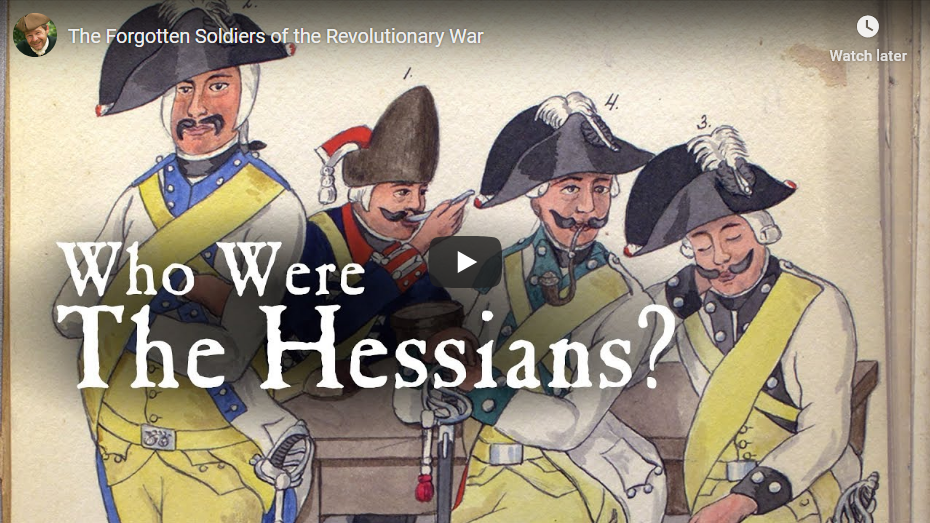
The Forgotten Soldiers of the Revolutionary War
Townsends
Published on 25 Jan 2018Get the book here! ▶ https://www.amazon.com/Hessians-Three…
Visit Our Website! ▶ http://www.townsends.us/
Help support the channel with Patreon ▶ https://www.patreon.com/townsend
Sign up for the YouTube Mailing List! ▶ http://www.townsends.us/youtube_list.htm
August 30, 2019
Is The Roman Gladius (Sword) Really That Good?
scholagladiatoria
Published on 15 Jul 2019Is The Roman Gladius (Sword) Really That Good?
August 24, 2019
“82nd All The Way” – Alvin York – Sabaton History 029 [Official]
Sabaton History
Published on 22 Aug 2019When the Americans joined the Great War in Europe, the 82nd “All American” division was the division that would engage in heavy fighting at St Mihiel. Among them was Alvin York, leading his battalion at the ferocious Battle of Hill 223.
Support Sabaton History on Patreon: https://www.patreon.com/sabatonhistory
Listen to The Great War (Where “82nd All the Way” is featured):
CD: http://nblast.de/SabatonTheGreatWar
Spotify: https://sabat.one/TheGreatWarSpotify
Apple Music: https://sabat.one/TheGreatWarAppleMusic
iTunes: https://sabat.one/TheGreatWarItunes
Amazon: https://sabat.one/TheGreatWarAmazon
Google Play: https://sabat.one/TheGreatWarGooglePlayWatch the official music video for “82nd All the Way” right here: https://www.youtube.com/watch?v=0LS0Z…
Hosted by: Indy Neidell
Written by: Markus Linke and Indy Neidell
Directed by: Astrid Deinhard and Wieke Kapteijns
Produced by: Pär Sundström, Astrid Deinhard and Spartacus Olsson
Creative Producer: Joram Appel
Executive Producers: Pär Sundström, Joakim Broden, Tomas Sunmo, Indy Neidell, Astrid Deinhard, and Spartacus Olsson
Maps by: Eastory
Edited by: Iryna Dulka
Sound Editing by: Marek KaminskiEastory YouTube Channel: https://www.youtube.com/channel/UCEly…
Archive by: Reuters/Screenocean https://www.screenocean.com
Music by Sabaton.Sources:
– IWM: Q 516, 23706
– National Library of Scotland: 3155
– Saturday Evening Post scan and Alvin York portraits courtesy of the Tennessee State Library & Archives.
– National WWI Museum and Memorial
– Alvin York colorized by Chiel ZilverbergAn OnLion Entertainment GmbH and Raging Beaver Publishing AB co-Production.
© Raging Beaver Publishing AB, 2019 – all rights reserved.
From the comments:
Sabaton History
2 days ago
This video is about the 82nd Division who, together with Sergeant Alvin York stormed Hill 223 in September 1918. Just before that, the “Lost Battalion” made a stand against German forces in the same area. We have made an episode about the Sabaton Song “Lost Battalion” as well, which you can watch right here: https://youtu.be/pgNxijbDlJMWe love the reception of our weekly videos, and have some great stuff coming up over coming weeks. We want as many of our fans to see this, so make sure to share this channel with your friends, family, neighbours, colleagues, teachers and other loved ones. You’d be doing them and us a real favour! Cheers!
August 16, 2019
QotD: It’s not really accurate to call the French “cheese-eating surrender monkeys”
When it comes to military history, this particular bias mostly comes out in references to three weeks in May 1940, and specifically one piece of particularly crap judgement by General Gamelin and one bypassed fortress line. The fact that that the allied participants — France, Britain, the Netherlands and Belgium — have spent most of the time since blaming each other and trying to work out who sold out whom has been allowed to mask the fact that this particular campaign was successful beyond all reasonable expectations for the Germans, and that when the French actually had troops in the right places, they were perfectly capable of fighting the advancing Panzers to a standstill at a tactical or operational level. Visitors to Paris may wish to note that the big — rather bigger than you think until you actually see it in the flesh — structure at one end of the Champs Elysées is called the Arc de Triomphe, and not the Arc de Defaite; it bears an admittedly tedious and tasteless, but indubitably long, list of battles at which the French did rather well. The fact that your school history lessons may have taught you rather more about Paul Revere or Clive of India than about Charles Martel is not relevant in the greater scheme of things.
Albert Herring, “Why neither the French nor the Italians are the worst military nation”, Everything2, 2002-01-07.
August 10, 2019
Sulla’s dictatorships
In New York magazine, Andrew Sullivan portrays the current state of the American Republic in light of the late history of the Roman Republic:
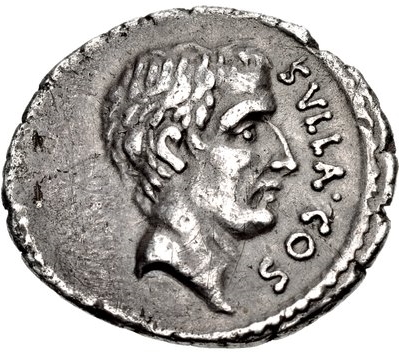
This 54 B.C. coin bears the portrait of the dictator Sulla. The moneyer was Q. Pompeius Rufus, the grandson of Sulla and his home would likely have had portraits of their famous ancestor. Thus, although posthumously struck, the portrait on these coins is probably an accurate representation.
Photo by CNG via Wikimedia Commons.
… zoom out a little more and one obvious and arguably apposite parallel exists: the Roman Republic, whose fate the Founding Fathers were extremely conscious of when they designed the U.S. Constitution. That tremendously successful republic began, like ours, by throwing off monarchy, and went on to last for the better part of 500 years. It practiced slavery as an integral and fast-growing part of its economy. It became embroiled in bitter and bloody civil wars, even as its territory kept expanding and its population took off. It won its own hot-and-cold war with its original nemesis, Carthage, bringing it into unexpected dominance over the entire Mediterranean as well as the whole Italian peninsula and Spain.
And the unprecedented wealth it acquired by essentially looting or taxing every city and territory it won and occupied soon created not just the first superpower but a superwealthy micro-elite — a one percent of its day — that used its money to control the political process and, over time, more to advance its own interests than the public good. As the republic grew and grew in size and population and wealth, these elites generated intense and increasing resentment and hatred from the lower orders, and two deeply hostile factions eventually emerged, largely on class lines, to be exploited by canny and charismatic opportunists. Well, you get the point.
After the overthrow of the monarchy, the new Republic went from strength to strength, struggling against and generally beating and absorbing other city states in the Italian peninsula, eventually rising to face the challenge of Carthage, the dominant power in the western Mediterranean. The eventual Roman victory over Carthage left Rome the superpower of its age, able to dominate and control even the remaining “great” powers of the eastern Mediterranean world. One of the costs of military dominance was an over-reliance on its citizen armies, which eventually changed the entire economy of the Republic, switching from largely small-holding farmers (who were subject to legionary service) to larger slave-worked farms that displaced the families of free citizens from their lands. The result was a constant inflow of impoverished rural citizens to the urban centres, especially Rome itself.
The newly enlarged urban poor found champions to push for reforms to aid them in their plight, the first of whom was Tiberius Gracchus (Extra Credits did a short video series on the Brothers Gracchi: Part I, Part II, Part III, Part IV, Part V, and an extra commentary video). The defeat and death of the Gracchi brothers by agents of the Patrician order led, as you might expect, to yet more polarization and further violent political struggle. This process was hastened by the conflict between Marius and his former protégé Sulla:
As the turn of the first century BCE approached and wars proliferated, with Roman control expanding west and east and south across the Mediterranean, the elites became ever wealthier and the cycle deepened. Precedents fell: A brilliant military leader, Marius, emerged from outside the elite as consul, and his war victories and populist appeal were potent enough for him to hold an unprecedented seven consulships in a row, earning him the title “the third founder of Rome.” Like the Gracchi, his personal brand grew even as republican norms of self-effacement and public service attenuated. In a telling portent of the celebrity politics ahead, for the first time, a Roman coin carried the portrait of a living politician and commander-in-chief: Marius and his son in a chariot.
A dashing military protégé (and rival) of Marius, Sulla, was the next logical step in weakening the system — a popular and highly successful commander whose personal hold on his soldiers appeared unbreakable. Tasked with bringing the lucrative East back under Rome’s control, he did so with gusto, prompting a somewhat nervous Senate to withdraw his command and give it to his aging (and jealous) mentor Marius. But Sulla, appalled by the snub, simply refused to follow his civilian orders, gathered his men, and called on them to march back to Rome to reverse the decision. His officers, shocked by the insubordination, deserted him. His troops didn’t, soon storming Rome, restoring Sulla’s highly profitable command, and forcing his enemies into exile. Sulla then presided over new elections of friendly consuls and went back into the field. But his absence from Rome — he needed to keep fighting to reward his men to keep them loyal — enabled a comeback of his enemies, including Marius, who retook the city in his absence and revoked Sulla’s revocations of command. Roman politics had suddenly become a deadly game of tit for tat.
When Sulla entered Rome a second time, he rounded up 6,000 of his enemies, slaughtered them en masse within earshot of the Senate itself, launched a reign of terror, and assumed the old emergency office of dictator, but with one critical difference: He removed the six-month expiration date — turning himself into an absolute ruler with no time limit. Stocking and massively expanding the Senate with his allies, he neutered the tribunes and reempowered the consuls. He was trying to use dictatorial power to reestablish the old order. And after three years, he retired, leaving what he thought was a republic restored.
Within a decade, though, the underlying patterns deepened, and nearly all of Sulla’s reforms collapsed. What lasted instead was his model of indefinite dictatorship, with the power to make or repeal any law. He had established a precedent that would soon swallow Rome whole.
August 4, 2019
QotD: The post-WW2 American army
They were not half so good soldiers as the bronzed men who followed Rommel in the desert, or the veterans who slashed down toward Bastogne.
They were well armed, but their weapons were no better than those of United States design, if as good.
But the American soldier of 1950, though the same breed of man, was not half so good as the battalions that had absorbed Rommel’s bloody lessons, or stood like steel in the Ardennes.
The weapons his nation had were not in his hands, and those that were were old and worn.
Since the end of World War II ground weapons had been developed, but none had been procured. There were plenty of the old arms around, and it has always been a Yankee habit to make do. The Army was told to make do.
In 1950 its vehicles in many cases would not run. Radiators were clogged, engines gone. When ordered to Korea, some units towed their transport down to the LST’s, because there was no other way to get it to the boat. Tires and tubes had a few miles left in them, and were kept — until they came apart on Korean roads.
In Japan, where the divisions were supposedly guarding our former enemies, most of the small arms had been reported combat unserviceable. Rifle barrels were worn smooth. Mortar mounts were broken, and there were no longer any spare barrels for machine guns.
Radios were short, and those that were available would not work.
Ammunition, except small arms, was “hava-no.”
These things had been reported. The Senate knew them; the people heard them. But usually the Army was told, “Next year.”
Even a rich society cannot afford nuclear bombs, supercarriers, foreign aid, five million new cars a year, long-range bombers, the highest standard of living in the world, and a million new rifles.
Admittedly, somewhere you have to cut and choose.
But guns are hardware, and man, not hardware, is the ultimate weapon. In 1950 there were not enough men, either — less than 600,000 to carry worldwide responsibilities, including recruiting; for service in the ranks has never been on the Metropolitan Life Insurance Company’s preferred list of occupations.
T.R. Fehrenbach, This Kind of War: A Study in Unpreparedness, 1963.
July 30, 2019
Units of Classical Antiquity: The Praetorian Guard (Roman Army)
Invicta
Published on 18 Mar 2016Who were the Praetorian Guard? Special Forces, dictatorial musclemen, or ceremonial relics? In this documentary episode we dive deep into the history of this feared unit of the Roman empire!
July 29, 2019
QotD: Put up your dukes!
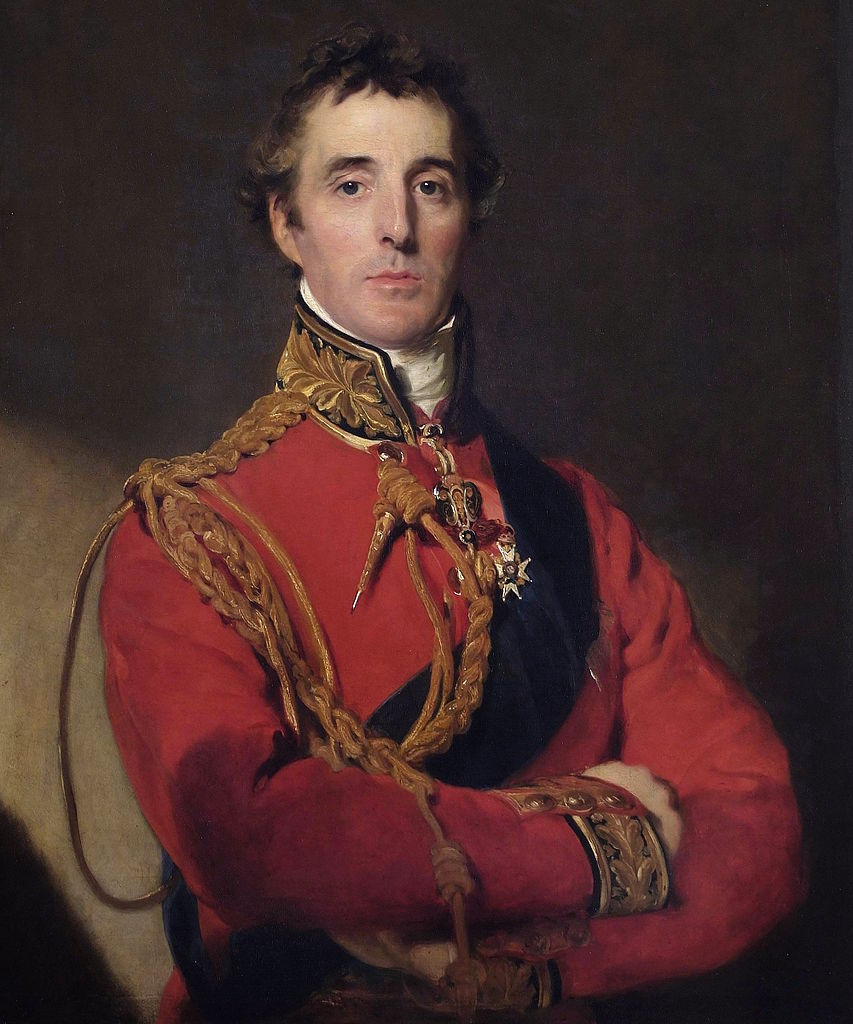
Arthur Wellesley, 1st Duke of Wellington (1769–1852) by Thomas Lawrence, circa 1815-1816.
Wikimedia Commons.The phrase “duke it out”, meaning “fight”, appears to derive ultimately from a nickname of one of the Great Captains, the Duke of Wellington (1769-1852).
It seems that the Duke had a rather prominent nose, so distinctive, in fact, that his troops often referred to him as “Old Nosey”. So the word “duke” soon became a synonym for “nose” in working class English slang, attested during Wellington’s own lifetime. That, in turn, led to the rise of the threat “bust your duke”, meaning “punch your nose”, and thus to “duke buster” as slang for “fist”, which was soon shortened to “duke”.
By further evolution, the phrase “put up your dukes” developed as an invitation to fight and “duke it out” became slang for “fight”.
While some etymologists apparently do not agree with this derivation, it’s worth noting that there is in London a mini-monument to the ducal proboscis, suggesting how notable it was.
Al Nofi, “Al Nofi’s CIC, Issue 472”, Strategy Page, 2019-06-01.
July 18, 2019
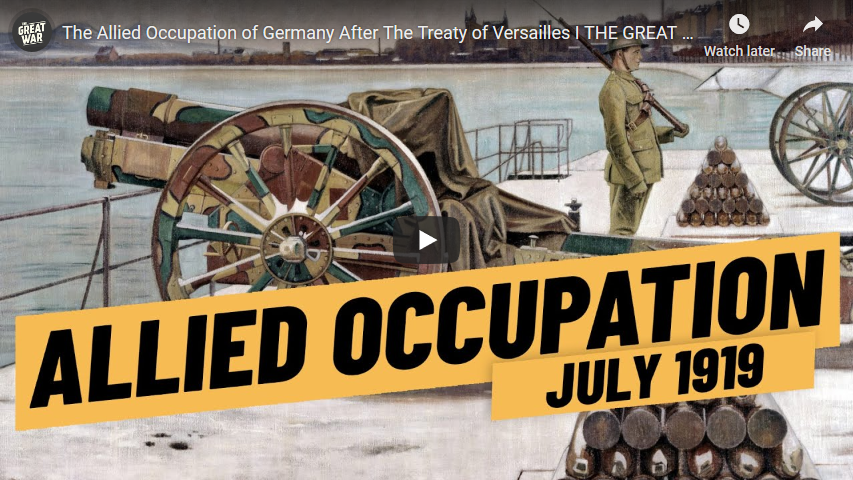
The Allied Occupation of Germany After The Treaty of Versailles I THE GREAT WAR July 1919
The Great War
Published on 17 Jul 2019When the Allied armies marched into German territory in late 1918 under the terms of the armistice, they were surprised to see a relatively untouched land. After the signing of the Treaty of Versailles, the Allied Occupation was made permanent and the troops settled in to stay in a country that did not want them there initially.
» SUPPORT THE CHANNEL
Patreon: https://www.patreon.com/thegreatwar
Merchandise: https://shop.spreadshirt.de/thegreatwar/» SOURCES
Leonhard, Jörn. Der überforderte Frieden. Versailles und die Welt 1918-1923 (CH Beck, 2018)
Macmillan, Margaret. The Peacemakers: Six Months that Changed the World (London: John Murray, 2001).
Le Naour, Jean-Yves. La Honte noire (Hachette, 2004).
Schröder, Joachim, Watson, Alexander. “Occupation during and after the War (Germany)” in: 1914-1918-online. International Encyclopedia of the First World War https://encyclopedia.1914-1918-online…
Roos, Julia. “Schwarze Schmach” in: 1914-1918-online. International Encyclopedia of the First World War https://encyclopedia.1914-1918-online…
Godfroid, Anne. “Occupation after the War (Belgium and France)” in: 1914-1918-online. International Encyclopedia of the First World War https://encyclopedia.1914-1918-online…
Pawley, Margaret. The Watch on the Rhine: The Military Occupation of the Rhineland, 1918-1930 (I.B.Tauris, 2007).
Hart, Keith. “A Note on the Military Participation of Siam in WWI.” Journal of the Siam Society (ndp): 133–136.
Lauter, Anna-Monika. Sicherheit und Reparationen. Die französische Öffentlichkeit, der Rhein und die Ruhr (1919-1923) (Essen: Klartext, 2006).
Krugler, Gilles. “Allemagne decembre 1918. Les premières heures de l’occupation“. In Revue historique des armées 254 (2009): 76-81. https://journals.openedition.org/rha/…
Mignon, Nicolas. “Boche, ex-ennemie ou simplement femme? Le point de vue des responsables politiques et militaires sur la question des mariages entre militaires belges et femmes allemandes pendant les occupations de la Rhénanie et de la Ruhr (1918-1929).” In Revue belge de Philologie et d’Histoire (2013) 91-4 : 1259-1283.»CREDITS
Presented by: Jesse Alexander
Written by: Jesse Alexander
Director: Toni Steller & Florian Wittig
Director of Photography: Toni Steller
Sound: Toni Steller
Editing: Toni Steller
Mixing, Mastering & Sound Design: http://above-zero.com
Motion Design: Christian Graef – GRAEFX
Maps: Daniel Kogosov (https://www.patreon.com/Zalezsky)
Research by: Jesse Alexander
Fact checking: Florian WittigChannel Design: Alexander Clark
Original Logo: David van StepholdA Mediakraft Networks Original Channel
Contains licensed material by getty images
All rights reserved – Real Time History GmbH 2019
July 11, 2019
Unofficial High Speed Tour of Borden Base Military Museum
The_Chieftain
Published on 8 Jun 2019Canadian Forces Base Borden is located about an hour’s drive North of Toronto. The base is open access, so anyone can go to the museum.
In addition to the vehicles at the museum, there are others scattered as monuments around the base. I encountered a T-72 and T-55 on my way out the gate.