Quotulatiousness

February 26, 2019

QotD: The infantryman

Filed under: Military, Quotations — Tags: , , — Nicholas @ 01:00

Let us be clear about three facts. First, all battles and all wars are won in the end by the infantryman. Secondly, the infantryman always bears the brunt. His casualties are heavier, he suffers greater extremes of discomfort and fatigue than the other arms. Thirdly, the art of the infantryman is less stereotyped and far harder to acquire in modern war than that of any other arm. The role of the average artilleryman, for instance, is largely routine; the setting of a fuse, the loading of a gun, even the laying of it are processes which, once learnt, are mechanical. The infantryman has to use initiative and intelligence in almost every step he moves, every action he takes on the battlefield. We ought therefore to put our men of best intelligence and endurance into the Infantry.

Field Marshal Earl Wavell, “In praise of infantry”, The Times, 1945-04-19.

February 22, 2019

Germany’s armed forces – from world class to laughing stock

Filed under: Germany, Government, Military — Tags: , , , , , — Nicholas @ 05:00

Germany’s military has fallen on very hard times, and there’s so much wrong that it will be very difficult to fix even with all the goodwill in the world:

The German Navy training ship Gorch Fock (launched in 1958) under full sail (less the spanker topsail) in Kiel Fjord near the Laboe Naval Memorial in July 2006.
Photo by Felix Koenig via Wikimedia Commons.

Most Germans’ eyes glaze over at the mention of the Bundeswehr’s perpetual troubles, but an affair surrounding the Gorch Fock, the navy’s three-masted naval training ship, has caught their attention.

Launched in 1958 to school a new generation of West German naval recruits, the imposing 81-meter ship, which takes its name from a popular seafaring German author’s pseudonym, is more than just a training vessel; to many, the Gorch Fock — whose likeness was etched onto some Deutsche Mark bills — is a symbol of Germany’s postwar revival.

The ship’s iconic status is one reason why few objected when the Bundeswehr announced in 2015 that it needed a major overhaul. Until, that is, the price tag exploded from an initial projection of €10 million to €135 million, according to the latest estimate.

Bundeswehr officials claimed the depth of the ship’s troubles only became clear when it was in dry dock, but few are buying such explanations. “When the repairs cost more than a new ship, something is obviously amiss,” Bartels, the Bundeswehr’s parliamentary overseer, said in an interview.

The Gorch Fock “is a symptom of the Bundeswehr’s broader problems,” Bartels said. “Everything takes too long and costs too much money. It’s as if time and money were endless resources, and in the end no one takes responsibility.”

Almost overnight, the ship has gone from pride and joy to running gag. Last week, German weekly Der Spiegel pictured the Gorch Fock on its cover under the headline, “Ship of Fools.”

It’s an apt metaphor for Germany’s body politic as well. Given Germany’s size and economic might, Berlin’s attention to security is surprisingly shallow; citizens and politicians alike often seem oblivious to the challenges the country faces. Though Germany faces growing security threats from both Russia and China, one wouldn’t know it hanging around the German capital.

Much of the media now portrays the U.S. as a security threat on par with Russia. Public attitudes have moved in a similar direction. Security discussions are driven by a handful of like-minded think tank analysts who seem to spend most their time on Twitter, fretting about whether Trump will pull the plug on NATO.

More Germans believe China is a better partner for their country than the U.S., according to a survey published last week by Atlantik Brücke, a Berlin-based transatlantic lobbying group. About 80 percent of those surveyed consider U.S.-German relations to be “negative” or “very negative.”

H/T to Instapundit for the link.

February 19, 2019

LOONEY TUNES (Looney Toons): Rookie Revue (1941)

Filed under: History, Humour, Military, USA — Tags: , , , — Nicholas @ 02:00

8thManDVD.com™ Cartoon Channel
Published on 8 Dec 2013

Random gags around military life, set on an army base. A bugler uses a jukebox to play reveille. In formation, one private has a great deal of trouble remembering what comes after “3”; after he gets it, he decides not to go for the $32 question. In the mess hall, the machine gunners machine gun their food while the bombers catch falling biscuits. The infantry marches for miles – past a “next time, take the train” billboard. The camouflage troops march by, invisibly. We see training substitutes: wooden guns, cars marked “tank” and, alas, a banner marked “parachute” deployed in mid-jump. More training: aerial games (of tic-tac-toe). The anti-aircraft division has target practice, on an aerial shooting gallery. Finally, in an elaborate process, a general provides firing instructions to a big gun; when it hits his own building, he says, “I’m a baaad general.”

8thManDVD.com and all content © 2013 ComedyMX LLC. All rights reserved. Unauthorized use is prohibited.

The looney tunes (commonly mistaken as Looney Toons) series features characters such as bugs bunny, daffy duck & porky pig. The looney tunes cartoons, movies and new looney tunes show have been produced for years. The looney tunes full episodes, produced by the official looney tunes are available on DVD and TV.

February 18, 2019

Forgotten history of India’s Thermopylae

Filed under: Britain, History, India, Japan, Military, WW2 — Tags: , , , , — Nicholas @ 02:00

The History Guy: History Deserves to Be Remembered
Published on 20 Jun 2017

The History Guy tells the forgotten history of the World War II battle of Imphal also known as India’s Thermopylae.

The History Guy uses images that are in the Public Domain. As photographs of actual events are often not available, I will sometimes use photographs of similar events or objects for illustration.

Patreon: https://www.patreon.com/TheHistoryGuy

The History Guy: Five Minutes of History is the place to find short snippets of forgotten history from five to fifteen minutes long. If you like history too, this is the channel for you.

The episode is intended for educational purposes. All events are presented in historical context.

QotD: Patton and Prohibition

Filed under: History, Military, Quotations, USA — Tags: , , , , — Nicholas @ 01:00

Observance of Prohibition in the breech was also common amongst junior officers. While commanding tank battalions and living next door to one another in renovated barracks at Camp Meade, Maryland, Dwight Eisenhower and George Patton avidly partook in the new American pastime of making their own bootleg alcohol. Eisenhower distilled gin in an unused bathtub, while Patton brewed beer, storing it in a shed outside his kitchen. One summer evening there was a sudden noise outside the Pattons’ barracks that sounded like a machine gun, followed by a series of soft booms. As their cook began screaming, Patton instinctively dove for cover. When they realized it was merely the beer bottles exploding from the heat, he rose, sheepishly explaining how much it had sounded like hostile fire. His wife Beatrice “laughed and laughed and called him ‘her hero’ and he got very red.” Omar Bradley commanded an infantry battalion in the 27th Infantry Regiment in the 1920s and took advantage of the Hawaii Division’s leisurely pace of duty to play golf several times a week. At the end of one round, the 33-year-old teetotaler drank his first glass of whiskey, which he liked enough to make “a habit of having a bourbon and water or two (but never more) before dinner” for the rest of his life.

Benjamin Runkle, “‘What a Magnificent Body of Men Never to Take Another Drink’: The U.S. Army and Prohibition”, Real Clear Defense, 2019-01-16.

February 13, 2019

QotD: The goose-step

Filed under: Britain, Germany, History, Italy, Military, Quotations, WW2 — Tags: , — Nicholas @ 01:00

One rapid but fairly sure guide to the social atmosphere of a country is the parade-step of its army. A military parade is really a kind of ritual dance, something like a ballet, expressing a certain philosophy of life. The goose-step, for instance, is one of the most horrible sights in the world, far more terrifying than a dive-bomber. It is simply an affirmation of naked power; contained in it, quite consciously and intentionally, is the vision of a boot crashing down on a face. Its ugliness is part of its essence, for what it is saying is “Yes, I am ugly, and you daren’t laugh at me”, like the bully who makes faces at his victim. Why is the goose-step not used in England? There are, heaven knows, plenty of army officers who would be only too glad to introduce some such thing. It is not used because the people in the street would laugh. Beyond a certain point, military display is only possible in countries where the common people dare not laugh at the army. The Italians adopted the goose-step at about the time when Italy passed definitely under German control, and, as one would expect, they do it less well than the Germans. The Vichy government, if it survives, is bound to introduce a stiffer parade-ground discipline into what is left of the French army. In the British army the drill is rigid and complicated, full of memories of the eighteenth century, but without definite swagger; the march is merely a formalized walk. It belongs to a society which is ruled by the sword, no doubt, but a sword which must never be taken out of the scabbard.

George Orwell, “The Lion And The Unicorn: Socialism and the English Genius”, 1941-02-19.

February 11, 2019

QotD: Gandhi’s conflicted views of war and pacifism

Filed under: History, India, Media, Quotations — Tags: , , , — Nicholas @ 01:00

… the real center and raison d’être of Gandhi is ahimsa, nonviolence, which principle when incorporated into vast campaigns of noncooperation with British rule the Mahatma called by an odd name he made up himself, satyagraha, which means something like “truth-striving.” During the key part of his life, Gandhi devoted a great deal of time explaining the moral and philosophical meanings of both ahimsa and satyagraha. But much as the film sanitizes Gandhi to the point where one would mistake him for a Christian saint, and sanitizes India to the point where one would take it for Shangri-la, it quite sweeps away Gandhi’s ethical and religious ponderings, his complexities, his qualifications, and certainly his vacillations, which simplifying process leaves us with our old European friend: pacifism. It is true that Gandhi was much impressed by the Sermon on the Mount, his favorite passage in the Bible, which he read over and over again. But for all the Sermon’s inspirational value, and its service as an ideal in relations among individual human beings, no Christian state which survived has ever based its policies on the Sermon on the Mount since Constantine declared Christianity the official religion of the Roman empire. And no modern Western state which survives can ever base its policies on pacifism. And no Hindu state will ever base its policies on ahimsa. Gandhi himself — although the film dishonestly conceals this from us — many times conceded that in dire circumstances “war may have to be resorted to as a necessary evil.”

It is something of an anomaly that Gandhi, held in popular myth to be a pure pacifist (a myth which governments of India have always been at great pains to sustain in the belief that it will reflect credit on India itself, and to which the present movie adheres slavishly), was until fifty not ill-disposed to war at all. As I have already noted, in three wars, no sooner had the bugles sounded than Gandhi not only gave his support, but was clamoring for arms. To form new regiments! To fight! To destroy the enemies of the empire. Regular Indian army units fought in both the Boer War and World War I, but this was not enough for Gandhi. He wanted to raise new troops, even, in the case of the Boer and Kaffir Wars, from the tiny Indian colony in South Africa. British military authorities thought it not really worth the trouble to train such a small body of Indians as soldiers, and were even resistant to training them as an auxiliary medical corps (“stretcher bearers”), but finally yielded to Gandhi’s relentless importuning. As first instructed, the Indian Volunteer Corps was not supposed actually to go into combat, but Gandhi, adamant, led his Indian volunteers into the thick of battle. When the British commanding officer was mortally wounded during an engagement in the Kaffir War, Gandhi — though his corps’ deputy commander — carried the officer’s stretcher himself from the battlefield and for miles over the sun-baked veldt. The British empire’s War Medal did not have its name for nothing, and it was generally earned.

Richard Grenier, “The Gandhi Nobody Knows”, Commentary, 1983-03-01.

February 10, 2019

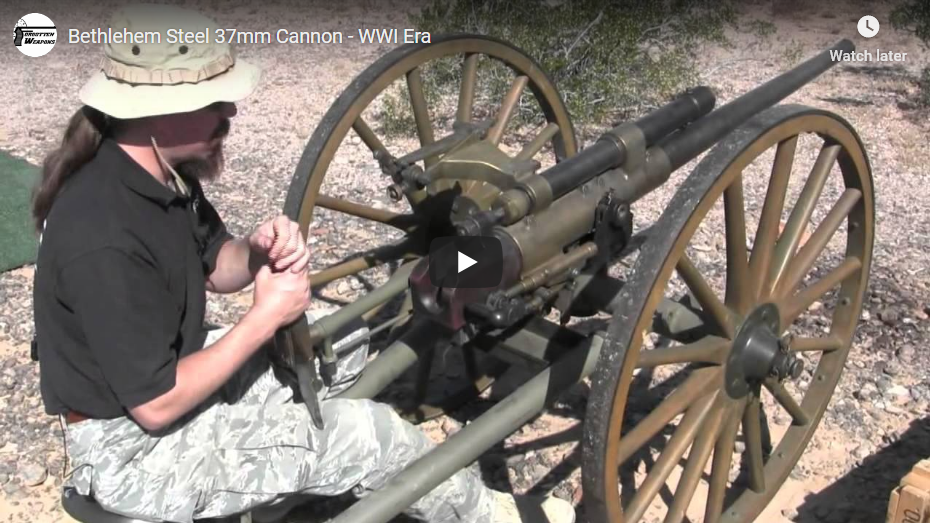
Semiauto M2 Hyde Reproduction: The Interim US WW2 Subgun

Filed under: History, Technology, USA, Weapons, WW2 — Tags: , , , , — Nicholas @ 02:00

Forgotten Weapons
Published on 9 Jan 2019

http://www.patreon.com/ForgottenWeapons

Cool Forgotten Weapons merch! http://shop.bbtv.com/collections/forg…

George Hyde designed the gun that would eventually be adopted as the M2 submachine gun in the late 1930s, and it was first tested at Aberdeen Proving Grounds in October of 1939. At that time, the gun had many good traits (weight, handlings, etc) but suffered from parts breakage and unreliability. Hyde went back to work on the gun at the Inland Division of GM, and came back with a much improved version in April of 1942.

The Inland-Hyde SMG was chambered for .45 ACP ammunition and used standard Thompson magazines, and was poised to become the US Army’s new submachine gun, replacing the overly expensive Thompson. The Hyde passed a 6080 round endurance test with flying colors, and exhibited much better effectiveness in fully automatic than the Thompson. At the end of the April tests, it was formally accepted to replace the Thompson and given the designation M2.

A contract was given to the Marlin company (Inland being busy with other projects) to manufacture 164,450 of the guns, with delivery to begin in December 1942. However, Marlin had problems tooling up to produce the new gun, in particular with dies for several parts to be made using powdered metal sintering. Actual delivery of the first guns did not happen until May of 1943. In the meantime, Hyde and Inland had continued working on cheaper and simpler designs, and created the stamped sheet metal M3 “Grease Gun”. By the time the M2 was actually ready for delivery, the M3 had been tested and accepted by the Army as a better replacement than the M2. By mid-June, the M2 was declared obsolete and Marlin’s contract cancelled.

In total only about 500 M2 submachine guns were made, with (I believe) 6 surviving today. The example in this video is a semiautomatic-only reproduction made from scratch by a viewer of the channel, who graciously offered to loan it to me for this filming. Thanks, K!

Contact:
Forgotten Weapons
PO Box 87647
Tucson, AZ 85754

February 8, 2019

Equality comes to the US Army’s fitness standards

Filed under: Military, USA — Tags: , , , — Nicholas @ 03:00

NBC News reported on the new US Army non-gendered fitness testing standards:

The Army is developing a new, more grueling and complex fitness exam that adds dead lifts, power throws and other exercises designed to make soldiers more fit and ready for combat. “I am prepared to be utterly embarrassed,” Sampson said on a recent morning, two days before he was to take the test.

Commanders have complained in recent years that the soldiers they get out of basic training aren’t fit enough. Nearly half of the commanders surveyed last year said new troops coming into their units could not meet the physical demands of combat. Officials also say about 12 percent of soldiers at any one time cannot deploy because of injuries.

In addition, there has long been a sense among many senior officials that the existing fitness test does not adequately measure the physical attributes needed for the battlefield, said Gen. Stephen Townsend, head of U.S. Army Training and Doctrine Command.

The new test, “may be harder, but it is necessary,” Townsend said.

Reaching the new fitness levels will be challenging. Unlike the old fitness test, which graded soldiers differently based on age and gender, the new one will be far more physically demanding and will not adjust the passing scores for older or female soldiers.

This may be a case of a change that — on the surface — is all about equality, but will almost certainly work to reduce the number of women and older soldiers qualified for front-line combat duty. Which will not sit well with the non-military commentariat who will only see the drop in female participation and not necessarily the egalitarian reasons why.

This isn’t what we normally think of as an increase in justice and righteousness in society but it is indeed so – the US Army is to bias its fitness standards against women. It is going to do this by insisting that men and women be able to meet exactly the same standards. Obviously enough, in logic, demanding equal standards is not bias but that’s not the way that gender works in the current world. That fewer women pursue the top jobs and thus fewer get them is taken to be bias rather than that fewer so pursue. That there are fewer female engineers is apparently bias while the personal choices that lead to more female nurses is not.

[…]

We’re a sexually dimorphic species, the male and female physiques differ. Of course, there are women who can pass high and strict fitness tests. But there are fewer of them than men at any particular standard. Which is why the older tests were gendered. Women had to meet a good standard for women, men for men.

So, now think of this from the viewpoint of the Army. Great societal pressure to open up all jobs to all and any gender. It might even be that’s righteous too. But that did mean that the tests for women concerning lifting and hauling had to be different. Otherwise there simply wouldn’t be enough women who could pass them to get to anything like equality.

February 6, 2019

Yes, Minister – The North

Filed under: Britain, Government, Humour, Military — Tags: , , , — Nicholas @ 02:00

Greger Tomasson
Published on 9 Oct 2012

January 30, 2019

WW2 from German perspective

Filed under: Germany, History, Military, Russia, WW2 — Tags: , , , — Nicholas @ 02:00

FootageArchive – Videos From The Past
Published on 18 Dec 2012

Welcome to FootageArchive! On this channel you’ll find historic and educational videos from the 1900s. Watch, learn, and take a trip back in time as we gain insight into a previous time. Subscribe for more.

Note: this video contains archived public domain/licensed footage. This footage serves documentary purposes on world history and is to be viewed as educational.

January 25, 2019

The Royal Canadian Regiment and The Battle of Paardeberg

Filed under: Africa, Cancon, History, Military — Tags: , , — Nicholas @ 02:00

The History Guy: History Deserves to Be Remembered
Published on 1 Jan 2019

The forgotten history of a storied regiment. This is the second episode of a special holiday series featuring the History Guy’s hat collection. It was originally made as exclusive content for the channel’s patrons on Patreon. You can get exclusive content too by giving as little as one dollar a month to The History Guy at https://www.patreon.com/TheHistoryGuy.

This is original content based on research by The History Guy. Images in the Public Domain are carefully selected and provide illustration. As images of actual events are sometimes not available, images of similar objects and events are used for illustration.

All events are portrayed in historical context and for educational purposes. Those who do not learn from history are doomed to repeat it.

he History Guy: History Deserves to Be Remembered is the place to find short snippets of forgotten history from five to fifteen minutes long. If you like history too, this is the channel for you.

January 17, 2019

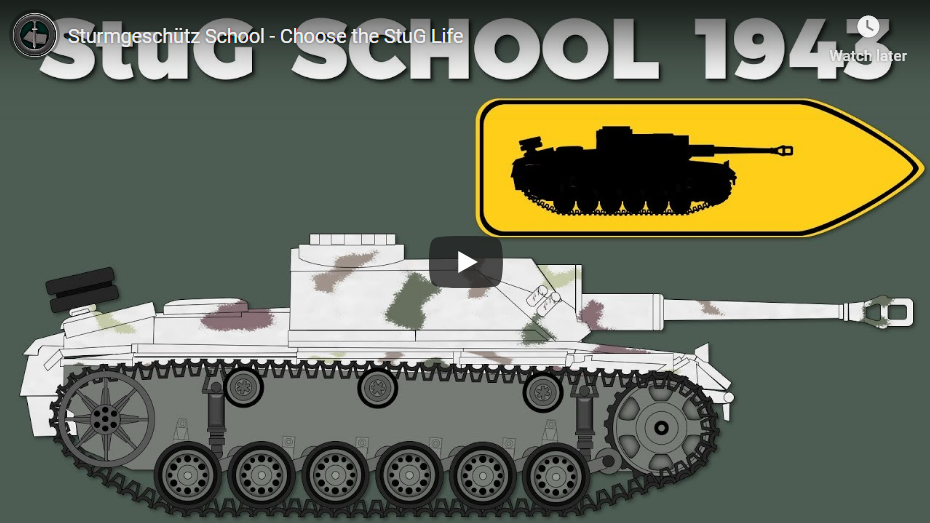
How effective was the Tiger really?

Filed under: Germany, History, Military, Technology, WW2 — Tags: , — Nicholas @ 02:00

Military History Visualized
Published on 18 Dec 2018

There are quite many debates about the Panzerkampfwagen VI Ausführung E & B – the Tiger & Königstiger – tanks, so in this video we look at how effective or ineffective these panzers were in combat. This means we look at doctrine, kill to loss ratios, mission accomplishment and various other issues.

»» SUPPORT MHV ««
» patreon – https://www.patreon.com/mhv
» subscribe star – https://www.subscribestar.com/mhv

»» SOCIAL MEDIA ««
» twitter – https://twitter.com/MilHiVisualized

Military History Visualized provides a series of short narrative and visual presentations like documentaries based on academic literature or sometimes primary sources. Videos are intended as introduction to military history, but also contain a lot of details for history buffs. Since the aim is to keep the episodes short and comprehensive some details are often cut.

January 11, 2019

Battle of Stalingrad (German perspective)

Filed under: Germany, History, Military, Russia, WW2 — Tags: , — Nicholas @ 02:00

FootageArchive – Videos From The Past
Published on 16 Jan 2014

Welcome to FootageArchive! On this channel you’ll find historic and educational videos from the 1900s. Watch, learn, and take a trip back in time as we gain insight into a previous time. Subscribe for more.

Note: this video contains archived public domain / licensed footage. This footage serves documentary purposes on world history and is to be viewed as educational.

January 9, 2019

QotD: When the solution to one problem becomes a bigger problem

Filed under: Cancon, Military, Quotations — Tags: , , , — Nicholas @ 01:00

A couple of weeks ago I posted an article about the important of “junior leadership” in the military, especially, but, by extension, in all enterprises. My point was that if one lays a good, firm, foundation of “junior leadership” (tank and rifle section and troop and platoon commanders in the Army) then everything else ~ senior leadership, management, operations and even strategy ~ will probably thrive, but, if the foundation is weak, poorly laid, then success is unlikely in anything, and, if it does occur, it will be by accident.

I am reminded that back in the 1960s one of the (many) problems than then Minister of National Defence Paul Hellyer wanted to solve was pay. The Navy, Army and Air Force were having some trouble recruiting in the late 1950s and early 1960s: the post war recessions were over, the economy was growing, the threat of war seemed to be receding and military pay was quite low … all those things made recruiting and retaining the right people more difficult ~ especially for a military that was changing, rapidly, into a technologically sophisticated organization. There had been several boards and panels, reporting to both Prime Ministers Diefenbaker and Pearson, recommending new, better, higher pay scales for the military but little action had been taken because there was no public appetite for military pay raises. Paul Hellyer decided to ‘work around’ the problem by changing the definitions of “junior leadership.” Whereas, prior to the mid 1960s, the tank or infantry section commander had been a corporal (a rank that one could, theoretically, achieve after only 18 months of training ~ and 20 or 21 year old corporals were not rare, I was one) and the platoon or troop commanders were lieutenants, Mr Hellyer changed the rank of tank and section commander to sergeant (a rank that, typically, takes 10 years to achieve) and made promotion to corporal automatic, subject only to passing a trade/speciality skill course, and he made troop and platoon commanders captains and lowered the time that had to be spent as a lieutenant.

The effect was to debase the rank of corporal ~ which still retained its status as a “non commissioned officer” rank in the National Defence Act and Queen’s Regulations ~ by making privates and corporals interchangeable as “workers,” and, equally, to debase the captain rank by making captains and lieutenants interchangeable as first level combat commanders. In effect, while trying to solve one problem, Mr Hellyer created another ~ which I believe might be more serious.

Ted Campbell, “The foundation (2)”, Ted Campbell’s Point of View, 2017-02-21.

« Newer PostsOlder Posts »

Powered by WordPress