Quotulatiousness

March 22, 2023

California – Embrace the Unicorn! No, the other Unicorn!

Chris Bray on California’s hoped-for path to transition away from fossil fuels:

California has the progressive vision to go all-electric, with laws and regulations that phase out gas water heaters, furnaces, and cars in the near future — while transitioning away from the production of electricity through the use of nuclear and natural gas technologies. Putting the teensy-weensy engineering questions aside and embracing the unicorn, this deep blue vision of the future means the state needs to build wind and solar power facilities in massive quantities, and now. California currently has about half the power it needs to do what it says it plans to do in just ten years.

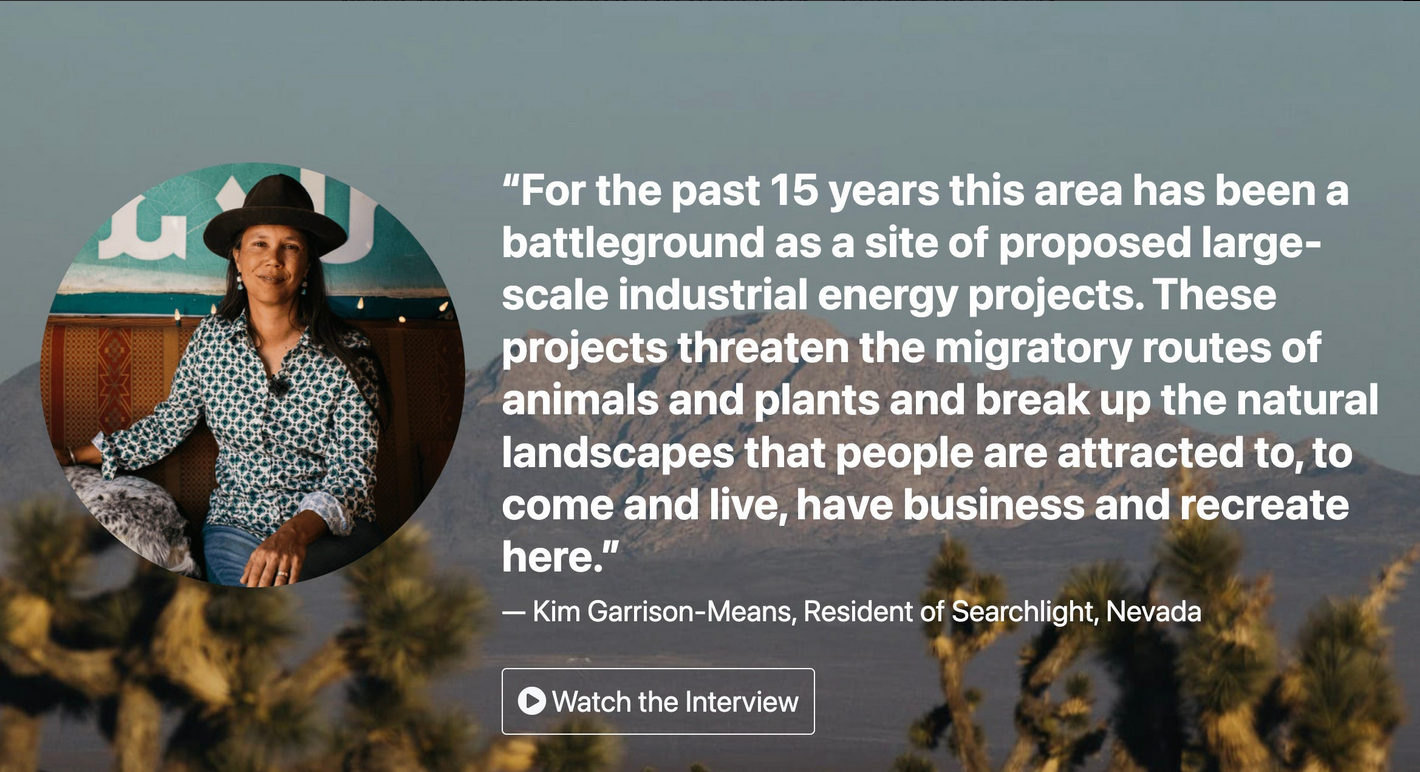
But President Joe Biden just announced a move that aggressively advances the progressive vision of preserving wilderness and preventing development, naming the Avi Kwa Ame National Monument in the Mojave Desert — preventing solar and wind development on 506,814 acres of lightly populated and federally owned desert land. The coalition of tribal and community groups that has worked to get the national monument designated make the anti-solar point explicit on their website:

Where progressive coastal urbanites see the progressive project of decarbonization, people in wilderness-adjacent areas see industrial blight, and express that view in the language of progressive conservationism. To a degree not explored by the false binary of media-defined American politics, in which good people on the left face bad people on the right, California’s future is an increasingly sharp conflict between left and left — and note what kind of permits energy companies have to get to build big wind and solar plants in the desert:

When progressive California builds its progressive energy infrastructure, it’s going to incidentally take a shit-ton of bighorns and tortoises and birds. I assume I don’t have to explain the euphemism.

October 25, 2022

A Multi-Trillion Dollar Pipe Dream

Filed under: Business, China, Economics, Environment, Technology, USA — Tags: , , , — Nicholas @ 02:00

PragerU
Published 16 Jun 2022

Are we heading toward an all-renewable energy future, spearheaded by wind and solar? Or are those energy sources wholly inadequate for the task? Mark Mills, Senior Fellow at the Manhattan Institute and author of The Cloud Revolution, compares the energy dream to the energy reality.
(more…)

September 24, 2022

The end of crisis culture – “[Y]ou can’t go on having a culture of crisis if people stop showing up for it”

Chris Bray on the inevitable endgame of “all crisis, all the time” culture:

The journalist John Tierney has described the Crisis Crisis, “the incessant state of alarm fomented by journalists and politicians”. What we’re experiencing now is the Crisis Crisis crisis, the emerging crisis caused by the Crisis Crisis. Over and over again, interventions in some invented or overhyped form of the crisis, undertaken in the hysterical spirit of the Crisis Crisis, cause a form of the Crisis Crisis crisis, which eventually results in a course correction that may or may not be fully apparent for a while. Skip right over the next paragraph if you don’t need to see examples again.

The Sri Lankan government intervenes in climate change by instantly ending the use of commercial fertilizers in agriculture, which causes a dangerous decline in the production of food. The German government intervenes in climate change by declaring a commitment to 100% clean energy, which causes dangerous instability in the availability of actual energy (“committing national suicide“), with some help from the Nord Stream shut-off valve, which nobody ever could have seen coming. The Dutch government intervenes in climate change by declaring an intention to limit agricultural production, which doesn’t cause anything yet, because Dutch farmers won’t stand for it, but final outcome TBD.

All over the world, things that work stop working because of excessive and unwarranted interventions led by people who cry crisis and throw sand in functioning gears. Dutch agriculture was just fine; then the government decided to help end the crisis. The interventions — the interveners, the people who get in the way — are harming us, when their harm could be prevented by literal nothing, by the simple choice to not perform the interventions. What we need is for the interveners to go play Risk in their basement or something, and forget their important duty to help.

The entertainment industry has had its own intervention, famously described on Substack, in woke-facing talent purges and narrative shifts and insulting “It’s Ghostbusters … but with WOMEN!” reboots. And now some hint about the endgame of the one big cycle of fraud comes from woke Hollywood — which has pounded audiences with The Message for years, resulting in a catastrophic loss of audience. The result is starting to look like this:

The social justice intervention in Hollywood storytelling is harming Hollywood; the intervention in that industry is causing the decline of the industry. At some point, people stop eating shit.

June 8, 2022

The Climate Wars are dead, merely collateral damage from the Russia-Ukraine War

Filed under: Europe, Russia — Tags: , , , , — Nicholas @ 05:00

JoNova links to this Foreign Policy article by Ted Nordhous, signfiying the end of a “lame Cold War substitute” as the conflict in Ukraine pushes it decisively off the agenda for most western nations:

Four days after Russian tanks rolled into Ukraine, the U.N. Intergovernmental Panel on Climate Change released its latest assessment of the impacts of global warming. Leading media outlets did their best to pick out the most dire scenarios and findings from the report. But the outbreak of the first major European war since 1945 kept the report off the front page or, at the very least, below the fold. “Climate Change Is Harming the Planet Faster Than We Can Adapt” simply couldn’t compete with “Putin Is Brandishing the Nuclear Option”.

Meanwhile, the headlong rush across Western Europe to replace Russian oil, gas, and coal with alternative sources of these fuels has made a mockery of the net-zero emissions pledges made by the major European economies just three months before the invasion at the U.N. climate summit in Glasgow, Scotland. Instead, questions of energy security have returned with a vengeance as countries already struggling with energy shortages and price spikes now face a fossil fuel superpower gone rogue in Eastern Europe.

In the decades following the end of the Cold War, global stability and easy access to energy led many of us to forget the degree to which abundant energy is existential for modern societies. Growing concern about climate change and the push for renewable fuels also led many to underestimate just how dependent societies still are on fossil fuels. But access to oil, gas, and coal still determines the fate of nations. Two decades of worrying about carbon-fueled catastrophes — and trillions of dollars spent globally on transitioning to renewable power — haven’t changed that basic existential fact.

Virtually overnight, the war in Ukraine has brought the post-Cold War era to a close, not just by ending Europe’s long era of peace, but by bringing basic questions of energy access back to the fore. A new era, marked by geopolitically driven energy insecurity and resource competition, is moving climate concerns down on the list of priorities. If there is a silver lining in any of this, it’s that a shift of focus back to energy security imperatives might not be the worst thing for the climate. Given the scant effect international climate efforts have had on emissions over the past three decades, a turn back toward energy realpolitik — and away from the utopian schemes that have come to define climate advocacy and policymaking worldwide — could actually accelerate the shift to a lower-carbon global economy in the coming decades.

The issue of climate change burst into the global debate just as the Cold War was coming to an end. As one existential threat seemingly receded, another came into view. For much of the international community, particularly the United Nations and its agencies, climate change also became much more than an environmental issue, offering an opportunity to reshape the post-Cold War order to be more equitable, multilateral, and politically integrated.

Nonetheless, when the framework for climate action emerged in the early 1990s, it built on the experience of the Cold War era. U.S.-Soviet arms control agreements became the model for global cooperation on climate change. Just as the superpowers had signed treaties to gradually draw down their nuclear weapons stocks, nations would commit to draw down their emissions. Yet the first major agreement to propose legally binding limits on emissions — the 1997 Kyoto Protocol — was dead from the moment the U.S. Senate unanimously rejected its terms, even before the negotiations had been finalized. Combine U.S. opposition with the understandable reluctance of energy-hungry, fast-developing nations such as China and India to even consider limiting emissions, and the inefficacy of international climate action was set.

April 3, 2022

Of all the things the future might hold, “food shortages” was never one of the entries I expected to see on the Bingo card

Elizabeth Nickson on the astonishing news that we may be facing actual food shortages in the near future:

Food shortages. Food. Shortages. That’s how incompetent this vast superstructure of over-paid, over-benefited, bullies are. Out of their vast superstructures, their buildings filled with “administrators”, their massive computer systems that track everything and everyone, unending flows of money that they just print when they need it, they have created food shortages.

We haven’t had food shortages since the Blitz in London. You basically have to have been under bombardment by Nazis to have food shortages in the western democracies. Furthermore our wealth has grown since the early 1940s by about 1000%. You have to be bombed by 100 many Nazis as there were Nazis per capita, to have food shortages in the 21st century.

That’s how malignant they are.

I guess destroying millions of businesses in the last two years, blowing up national and sub-sovereign debt way way way past sustainable level, ruining children, setting them back years, having to start math, reading, science all over again, their minds so slippery they have lost a half-decade of learning. Let’s not forget all the doctor’s visits that didn’t happen, the cancers that ran away, the heart disease that bolted given the nightmare stress they created. The domestic violence that spiked, the depression that spiked, the loneliness that turned into addiction. And then they launch a “vaccine” that has killed more people than the cold virus they engineered using elements of HIV using our money.

Everything they do turns to shit.

They expect us to forget this. We won’t. No one outside their civil services, their pet (read funded) satellites, their quangos, the PPPs that have subsumed corporations in their vicious enterprises, believes a word they say anymore. It is all bullshit, all the time.

Why the hell do we put up with them? What kind of forelock-tugging stupor leads us to believe anything they say about anything? They are the stupidest people the world has ever seen. And the most malignant, and that is saying something because history is filled with Game-of-Thrones level malignity.

This is all easier to understand once you take on board the fact that they hate us and want us to die.

Even before the lockdown pandemic theatre we all put up with for much of the last two years, the other globalist hobby horses had been out for quite some time:

The over-arching scam they are using is “climate change”. Which is not happening. No one with even basic statistics on board can read into the science and within a few hours know what a complete fabrication this is. The climate (and nature) is so complex, we probably know about 5% of what we need to know to make the decision that three billion people must die. Early on, it was engineers who realized it was false because engineers build things that can’t be faked. If a building, mine or bridge collapses, it’s because they fudged the math. Climate Change is entirely fudged math.

Everything about green energy is falsified. It doesn’t work. Other than of course, for the people who “invested” in it, which means their returns come from government subsidies, ie other people’s life energy. Here we find an ethical uncoupling at the deepest human level: Who are you to profit by the energy of others, by something that is destroying the energy system? Because destroy it, it does. Nowhere does “green” “energy” deliver sustained power. Literally nowhere. It is always breaking down, always failing, meaning that every winter the coal mines are 100% busy. It might work if the backup systems are reliable, or the climate absolutely perfect, in the desert say, but only on a small scale, never country, state or even county-wide.

“Coal is on the way out”, my CBC radio producer daughter said to me a couple of years ago. I looked at her, and managed not to laugh. Coal delivers 50% of the electricity on the east coast of North America. And it will continue. For fucking ever. Until we have nuclear.

So now, we have energy shortages. Our current inflation is caused by our administrative elites closing down energy creation and transport in the US, Canada and Europe. Energy prices have skyrocketed. Which means old people freezing in their homes.

March 4, 2022

Germany is finally being forced to adapt to 21st century realities

Filed under: Germany, History, Military, Russia — Tags: , , , , — Nicholas @ 03:00

In The Line, Matt Gurney outlines German history since the end of WW2 and why German governments have allowed the Bundeswehr to shrivel to almost Canadian Armed Forces status and why they have also been eager to scrap local power options in favour of imported Russian oil and gas:

A Bundeswehr Marder 1A3 Infantry Fighting Vehicle during an exercise at the Munster Training Centre, 1 September, 2010.
Photo by Bundeswehr-Fotos via Wikimedia Commons.

After 1990, the newly combined German military largely evaporated. Manpower levels plummeted; huge quantities of equipment were mothballed or sold off. German military spending fell well below that of other large European NATO allies. Indeed, despite their military history and economic clout, Germany, on a per capita basis, is more a Canada to NATO than a France or Britain.

And not by accident. Germany’s partial demilitarization was driven by a series of considerations, all of which reflected deliberate choices. Germany is still haunted by its Nazi-era history, and even its peacekeeping contribution to Afghanistan was controversial, marking the country’s first major foreign mission since 1945. A smaller, little-used military is a balm to the nation’s wounded psyche. Further, a small German military, and a Germany broadly and overtly uninterested in military affairs, did much to ease concerns of wary allies with living memories of life under the Luftwaffe and Wehrmacht.

And, well, yeah: the Germans also cut their force levels like crazy because, as noted in my recent column here, it saved them a ton of money.

It’s important to understand, though, that it’s not just about the German military, though that’s perhaps the most stark symbol. The country has emerged as a leading force for European unity and liberal-democratic values. Not for nothing was recently retired chancellor Angela Merkel touted as a leader of the free world during the rocky Trump presidency in Washington. Under Merkel, the country tried to live the ideal of the modern Europe, including by letting in a million refugees fleeing fighting in the Middle East, a decision that has opened up political fissures in Germany that remain a problem today.

Much has also been made of the country’s decision to shut down its nuclear plants and rely instead on imports of Russian natural gas for energy. Dismissed by many as foolhardy — and it was foolhardy — it’s also not hard to read a whiff of almost pathetic desperation into the move. If we are just nice enough, if we buy enough Russian gas, if we perfectly model the new amiable European ideal, maybe, just maybe, could Germany cast off some of its historical taint?

If that was the plan, it hasn’t worked, and gosh, it hasn’t worked with a vengeance. Since the Cold War ended — paused? changed? — the Germans have remained minimally armed and resolutely affable and committed to European unity. The country did increase military spending after Putin’s 2014 annexation of Crimea, but it almost had to — the German military had fallen into a state of neglect and non-functionality that any Canadian would find instantly recognizable. Hundreds of billions of Euros were budgeted, and tens of thousands of new enlistments authorized, in the first expansion of German military power since reunification. Even while embarking on this effort, though, Germany continued to shut down its nuclear plants and increase its use of Russian energy imports.

That’s over. Deader than East Germany, as much as a relic as the bits of the Berlin Wall that tourists now collect (I have a fragment myself somewhere in a file in my office, though damned if I could find it when I went searching today while procrastinating on this column). On top of the many billions of Euros already pledged to military modernization, Chancellor Olaf Scholz has committed a supplemental fund of a further €100 billion for immediate shoring up of military capabilities, and has also committed to substantially raise Germany’s baseline defence spending to the two per cent NATO target — an effectively permanent annual boost of roughly a third over the already higher level achieved since 2015.

January 15, 2022

The futility of “ethical” divestment agitation

In C2C Journal, William McNally explains why activists are demanding that university investments be moved away from fossil fuel companies in favour of “green” investment, and why it won’t work the way they expect:

A recent press release announced that 100 faculty and other staff at three Ontario postsecondary institutions have petitioned the University Pension Plan (UPP) to divest from the fossil fuel sector. The UPP manages the pension funds for over 30,000 employees at the University of Toronto, Queen’s and Guelph. The press release was issued by Shift Action, an organization that helps activist pension members agitate for divestment from what it calls “high-carbon, high-risk fossil fuel investments” such as oil producers and pipeline companies, and shift investments to a “decarbonized” portfolio focused on climate solutions.

I highlighted the UPP petition to draw attention to its activist source, but it is not unique, as it reflects a broader trend of politically driven or, as proponents prefer, “ethical” investing. The motivating claim for divestment in the Shift press release is that we are experiencing a “worsening climate crisis”. That too is a common sentiment nowadays. Because it is a crisis, we have a moral duty to mitigate the threat. The underlying reasoning is that divestment will starve fossil fuel companies of capital and less capital means less production which, in turn, means less CO2 emitted and ultimately slower climate change.

All campaigns of this sort trigger some immediate questions, such as, why choose a strategy as indirect as divestment? Why not reduce fossil fuel use in one’s own backyard, in this case the universities? Looking more broadly, Shift’s argument is more wishful thinking than sound economic analysis. Investors should feel free to hold any portfolio they want, but they should do so without illusions. In particular, they shouldn’t expect divestment to influence climate change by starving oil and natural gas companies of capital.

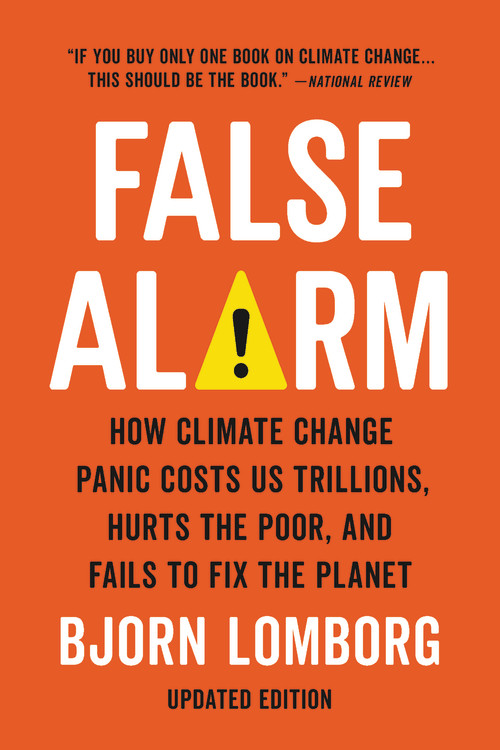
The first thing wrong is the underlying motivation: there is no climate crisis. As well-known author Bjorn Lomborg states in his most recent book, False Alarm: How Climate Change Panic Costs Us Trillions, Hurts the Poor, and Fails to Fix the Planet: “Climate change is real, but it’s not the apocalyptic threat that we’ve been told it is.” One of the clearest ways to see this is through climate economics. Scenarios set out by the Intergovernmental Panel on Climate Change (IPCC) forecast that over the next 80 years worldwide GDP per capita will likely increase to 450 percent of today’s level.

Lomborg estimates that climate damages will reduce this anticipated increase to 434 percent. Climate change is a problem. Accepting all of the assumptions that went into this modelling, climate change is likely to leave us somewhat less well off than we otherwise would be, by modestly slowing humanity’s overall progress. But judging by these figures, it is not a crisis.

H/T to Robert at SDA for the link.

October 18, 2021

“If Extinction Rebellion had brains, they’d be blockading building sites rather than airports”

In The Critic, Andrew Hunt runs through the invisible environmental costs of the building industry and points out that despite the eye-opening amount of carbon emissions, the buildings we’re putting up everywhere are just not built to stand the test of time:

The Centre national de la danse in Pantin (Seine-Saint-Denis), designed in 1965 by Jacques Kalisz.
Photo by Cinerama14 via Wikimedia Commons.

In the run up to COP26, you can be sure we won’t be spared the preaching about windmills, electric cars and heat pumps, along with pious admonishments against any form of human pleasure, from taking holidays to eating a steak. As always, those in charge will ignore the elephant in the room. The world’s biggest polluter by far is the construction industry. According to the UN, it produces 38 per cent of global emissions. By comparison, airlines produce just 2 per cent. If Extinction Rebellion had brains, they’d be blockading building sites rather than airports.

Politicians seem equally blind. They fetishise house-building, but fail to notice that building even a two-bed house creates 80 tonnes of carbon and uses 150 tonnes of materials – the same amount of landfill as an average household creates over 300 years! By comparison, powering your house produces about 2 tonnes of CO2 per year. Even if you could build a truly net zero home tomorrow (which you can’t), it would take forty years to break even.

A big part of the problem is modern construction materials. Producing concrete (180kg of CO2/tonne) and steel (1.85 tonnes of CO2/tonne!) are two of the most ubiquitous and environmentally destructive industries on the planet. By contrast, sandstone has a carbon footprint of just 77kg/tonne, and wood can be CO2 negative as it locks in carbon. Those old materials last longer as well. There are stone buildings that have been knocking around for more than a millennium — Rome’s Pantheon is 1900 years old. If treated properly, wooden buildings can last almost as long. The world’s oldest inhabited house in the Faroe Islands is 900 years old and built from wood. China’s ornately carved Nanchang Temple has been welcoming Buddhists since the 8th century.

Pre-stressed concrete meanwhile has a lifespan of 50-100 years, meaning many of the first concrete structures have already crumbled into carcinogenic dust.

It’s not just the materials. For buildings to last, we must love them enough to preserve them.

In a little-known study, “Sustainable Build Heritage“, a group of Danish academics looked at why some buildings stand for centuries while others are demolished in as little as a generation. Their conclusion was that buildings that last are made of good materials, are functional and, above all, are beautiful. They acknowledged the timelessness of traditional notions of beauty: how some buildings give us the same gut reactions as they did our ancestors. Copenhagen is of course full of examples — not least her colourful townhouses that have been standing for over two centuries. They have had to be adapted, but they have always been popular places to live.

Closer to home, badly built eyesores are being torn down barely a generation after their construction: tower blocks from the 60s, council offices from the 70s and shopping centres from the 90s. That’s billions of tonnes of fossil fuels and mining degradation ending up as landfill.

Has anything been learnt? The Prime minister’s “Build Back Better” plan is in no way green. Construction can never be green. Is it possible to conceive of a crueller thing to do to future generations than a debt-fuelled frenzy of brutalist carbuncles that will be theirs to demolish? When Greta Thunberg described Build Back Better as “blah-blah-blah”, she was being generous. It’s an environmental catastrophe.

September 27, 2021

Britain’s electricity grid facing the inevitable result of over-dependence on “renewable” generation

Filed under: Britain, Economics, Environment, Government — Tags: , , — Nicholas @ 03:00

Peter Hitchens on the grim choices ahead for Britain, as the choice to switch to carbon-free electricity generation has left the country with a less reliable and more expensive grid:

These worrying signs came just after we learned that nothing, apart from luck and prayer, stands between us and a shutdown of our power grid. Our gas reserves are almost gone. We have blown up our coal-fired power stations. We have failed to build new gas-powered plants that should have replaced them. Our ancient nuclear power system is fast wearing out.

So we must rest our hopes on wind that does not always blow and on foreign power that may not arrive when we need it.

Can we even begin to imagine what will happen to us if this all goes wrong? We are far more reliant on electricity than ever before. The computers that govern all we do cannot run on anything else, and if they crash cannot be instantly switched on again.

In response, our allegedly conservative Prime Minister praises the green policies that have created this disaster, and pledges to continue them. And he is applauded for doing so.

We may not be facing The Day Of The Triffids, but we face the Day Of The Nitwits, when 30 years of relentless green zealotry send us spinning into the Third World.

There, we’ll be the only Third World country with a submarine-launched nuclear deterrent – Burkina Faso with rockets, as an old joke about the USSR went.

Once again, I saw this coming. Arguing with the Greta Thunberg lot is like arguing with the Spanish Inquisition. The only thing they want to hear from me is a full confession before they burn me at the stake, using carbon-free fuel.

So rather than contesting their faith, I suggested that our best future lies in non-polluting nuclear power. As long ago as 2006, I urged: “Building nuclear power stations, and making ourselves independent in energy, is at least as important as maintaining a nuclear bomb.” I also pointed out, rather before this was fashionable, that “the Russian threat is to our energy”.

Now, I don’t fantasise about being Prime Minister. The job seems to me to be unrewarding, unhealthy, physically exhausting and surprisingly powerless. But on this occasion I have to say that if I could have seen this in 2006, so could the Government and the Civil Service.

And if serious action had been taken then, we could now have a fleet of modern nuclear power stations that would make us secure in energy, and probably turn us into a power exporter.

Instead, leaders of both parties chose the path of vanity, an unusable Cold War superpower weapon, maintained at impossible cost long after the Cold War ended, and even longer after we ceased to be a superpower.

And they chose the pursuit of green policies – the most all-embracing, dimwit wooden-headed dogma since the death of Communism, without enough sense to take any precautions in case it did not work out.

Update: Link was broken.

October 22, 2020

Carbon taxes may be the most efficient way to address GHG emissions, but no government has implemented them properly

I was persuaded by the economic arguments in favour of a carbon tax to address the externaly of greenhouse gas emissions, but I’ve long been skeptical that governments would actually implement them in a way to minimize economic distortion. A report from the Fraser Institute this week shows I was right to be doubtful, as none of the 31 OECD countries in the study have managed to introduce some form of carbon pricing without political “tinkering” … rather than replacing inefficient regulations, taxes and mandates with the carbon tax, they’ve generally just added carbon pricing on top of existing rules, making the carbon pricing scheme merely another tax grab that fails to achieve the stated goals:

Most economists consider human-made greenhouse gas (GHG) emissions an unintended negative externality of production and consumption. A negative externality occurs when the effects of producing or consuming goods and services impose costs on a third party which are not reflected in the prices charged for said goods and services. In the context of GHG emissions, this negative externality is calculated using the “social cost of carbon,” which is the future damage to society (adjusted to present value) of one additional tonne of carbon emitted to the atmosphere today.

Governments have a wide variety of policy alternatives to address the negative externality of emissions depending on the degree and depth of the policy intervention. They can either mandate individuals and firms to change their behaviour through com­mand-and-control regulations, grant subsidies and tax credits to foster cleaner energy sources, or use market-based mechanisms to correct the misalignment of incentives. It is widely acknowledged that carbon pricing, one of these market tools, is the most cost-effective policy to reduce emissions, as it relies on price signals and trade to provide flex­ibility to economic agents as to where and how emissions mitigation occurs.

[…]

This report includes thirty-one high-income OECD countries, where each country has either implemented a carbon tax, an ETS [emissions trading system], or a combination of both pricing mechan­isms. Carbon taxes are being implemented in 14 of them whereas 25 of these countries have their emissions covered by an ETS. Our analysis finds that, on average, 74 percent of carbon tax revenues in high-income OECD countries go directly into their general budget with no earmarking for any specific expenditure, while 12 percent are ring-fenced for environmental spending, and only 14 percent for revenue-recycling measures. This means that most governments are using carbon taxes as a revenue-raising tool rather than a mechanism to internalize the negative externalities of emissions in a cost-effective man­ner. Additionally, the vast majority of ETS revenues are being used to artificially acceler­ate the use of renewable energy sources, infrastructure, and technology.

The study also finds that no high-income OECD country has used carbon pricing to repeal emission-related regulations, but instead have introduced new ones following the adoption of the carbon tax or the ETS. Emissions caps, mandated fuel standards, technology-based standards, and renewable power mandates are just some examples of these regulations that undermine the cost-effectiveness of carbon pricing mechanisms. The majority of high-income OECD countries have a combination of support schemes for renewable energy sources, carbon pricing tools, and command-and-control regulations.

Overall, no high-income OECD country is following the textbook model of an optimal carbon pricing system, undermining their theoretical efficiency by design and implementation.

July 9, 2020

QotD: Energy return on energy invested

The modern world stands on a cairn built by energy conversions in the past. Just as it took many loaves of bread and nosebags of hay to build Salisbury Cathedral, so it took many cubic metres of gas or puffs of wind to power the computer and develop the software on which I write these words. The Industrial Revolution was founded on the discovery of how to convert heat into work, initially via steam. Before that, heat (wood, coal) and work (oxen, people, wind, water) were separate worlds.

To be valuable, any conversion technology must produce reliable, just-in-time power that greatly exceeds — by a factor of seven and upwards — the amount of energy that goes into its extraction, conversion and delivery to a consumer. It is this measure of productivity, EROEI (energy return on energy invested), that limits our choice.

By the EROEI criterion, biofuel is a disastrous choice, requiring about as much tractor fuel to grow as you get out in ethanol or biodiesel. Wind power has a low energy return, because its vast infrastructure is energetically costly and needs replacing every two decades or so (sooner in the case of the offshore turbines whose blades have just expensively failed), while backing up wind with batteries and other power stations reduces the whole system’s productivity. Geothermal too may struggle, because turning warm water into electricity entails waste. Solar power with battery storage also fails the EROEI test in most climates. In the deserts of Arabia, where land is nearly free, sunlight abundant and gas cheap, solar power backed up with gas at night may be cheap.

Fossil fuels have amply repaid their energy cost so far, but the margin is falling as we seek gas and oil from tighter rocks and more remote regions. Nuclear fission passes the EROEI test with flying colours but remains costly because of ornate regulation.

Matt Ridley, “Nuclear Fusion Could Provide Unlimited Energy”, HumanProgress, 2018-04-09.

June 26, 2020

Progressive hate for nuclear power

In Quillette, Michael Shellenberger discusses the demands of some climate activists who also reject the best solutions to the problems they foresee:

For the last decade I have been obsessed with a question: Why are the people who are the most alarmist about environmental issues also opposed to all of the obvious solutions?

Those who raise the alarm about food shortages oppose expanding the use of chemical fertilizers, tractors, and GMOs. Those who raise the alarm about Amazon deforestation promote policies that fragment the forest. And those who raise the alarm about climate change oppose nuclear energy, the largest source of zero-emissions energy in developed nations. Why is that?

It is not an academic question for me. I have been a climate activist for 20 years and an energy expert for 10 of them. I was adamantly against nuclear energy until about a decade ago when it became clear renewables couldn’t replace fossil fuels. After educating myself about the facts, I came to support the technology.

Over the last five years, I have campaigned, as founder and president of my small and independent nonprofit research organization, Environmental Progress, to expand the use of nuclear energy. During that time our main opponents have not been climate skeptics or even the fossil fuel industry but rather other climate activists.

This is the case around the world. It is climate alarmist Democrats and Greens who are seeking to shut down nuclear plants in the US and Europe. Greta Thunberg last year condemned the technology as “extremely dangerous, expensive, & time-consuming,” which is false. And Green New Deal architect Rep. Alexandria Ocasio-Cortez (AOC) has advocated closing the Indian Point nuclear plant in New York, which is now being replaced with natural gas.

In nearly every situation around the world, support for nuclear energy from climate activists like Thunberg and AOC would make the difference between nuclear plants staying open or closing, and being built or not being built. Had Thunberg spoken out in defense of nuclear power she likely could have prevented two reactors in her home nation of Sweden from being closed. Had AOC advocated for Indian Point rather than condemned it as dangerous, it could likely keep operating, for at least 40 years longer.

That’s because the main problem facing nuclear energy is that it’s unpopular — and far more among progressives than conservatives, and far more among women than men. There are no good technical or economic reasons that nations from the US and Japan to Sweden and Germany are closing their nuclear plants. Center-left governments are closing them early in response to the demands of progressives and Greens — the very same people who are claiming climate change will kill billions of people.

Darlington Nuclear Generating Station in Clarington, Ontario.
Photo by Óðinn via Wikimedia Commons.

Some prominent environmental groups have a pecuniary interest in replacing existing nuclear generating stations with natural gas and “renewable” energy sources, but money isn’t the only reason for the widespread opposition to nuclear power:

Sierra Club, NRDC, and EDF have worked to shut down nuclear plants and replace them with fossil fuels and a smattering of renewables since the 1970s. They have created detailed reports for policymakers, journalists, and the public purporting to show that neither nuclear plants nor fossil fuels are needed to meet electricity demand, thanks to energy efficiency and renewables. And yet, as we have seen, almost everywhere nuclear plants are closed, or not built, fossil fuels are burned instead.

Thomas Malthus.
Portrait by John Linnell, 1834, via Wikimedia Commons

But it’s not just about money. It’s also about ideology. Anti-nuclear groups have long had a deeply ideological motivation to kill off nuclear energy.

Policymakers, journalists, conservationists, and other educated elites in the ’50s and ’60s knew that nuclear was unlimited energy and that unlimited energy meant unlimited food and water.

We could use desalination to convert ocean water into freshwater. We could create fertilizer without fossil fuels, by harvesting nitrogen from the air, and hydrogen from water, and combining them. We could create transportation fuels without fossil fuels, by taking carbon dioxide out of the atmosphere to make artificial hydrocarbons, or by splitting water to make pure hydrogen gas.

Nuclear energy thus created a serious problem for Malthusians — followers of widely-debunked 18th-century economist, Thomas Robert Malthus — who argued that the world was on the brink of ecological collapse and resource scarcity. Nuclear energy not only meant infinite fertilizer, freshwater, and food but also zero pollution and a radically reduced environmental footprint.

In reaction, Malthusians attacked nuclear energy as dangerous, mostly by suggesting that it would lead to nuclear war, but also by spreading misinformation about nuclear “waste” — the tiny quantity of used fuel rods — and the rapidly decaying radiation that escapes from nuclear plants during their worst accidents.

There is a pattern: Malthusians raise the alarm about resource depletion or environmental problems and then attack the obvious technical solutions. In the late 1700s, Thomas Malthus had to reject birth control to predict overpopulation. In the 1960s, Malthusians had to claim fossil fuels were scarce to oppose the extension of fertilizers and industrial agriculture to poor nations and to raise the alarm over famine. And today, climate activists reject nuclear energy in order to declare a coming climate apocalypse.

February 11, 2020

Hydrogen – the Fuel of the Future?

Filed under: Europe, Science, Technology — Tags: , , , — Nicholas @ 06:00

Real Engineering
Published 20 Apr 2018

Thank you to Shell for sponsoring this video. Listen to the Intelligence Squared Podcast for more: https://www.intelligencesquared.com/i…

Instagram:
https://www.instagram.com/brianjamesm…

Additional Reading: https://go.shell.com/2qLmhWv

Get your Real Engineering merch at: https://standard.tv/collections/real-…

Patreon:
https://www.patreon.com/user?u=282505…
Instagram:
https://www.instagram.com/brianjamesm…
Twitter:
https://twitter.com/Fiosracht

My Patreon Expense Report:
https://goo.gl/ZB7kvK

Thank you to my patreon supporters: Adam Flohr, darth patron, Zoltan Gramantik, Henning Basma, Karl Andersson, Mark Govea, Mershal Alshammari, Hank Green, Tony Kuchta, Jason A. Diegmueller, Chris Plays Games, William Leu, Frejden Jarrett, Vincent Mooney, Ian Dundore, John & Becki Johnston. Nevin Spoljaric, Kedar Deshpande

Music:
“Sydney Sleeps Alone Tonight” by eleven.five & Dan Sieg [Silk Music]
“Hydra” by Huma-Huma, and “Dawn” by Andrew Odd [Silk Music]
Silk Music: http://bit.ly/MoreSilkMusic

February 8, 2020

Switching over from internal combustion vehicles to electric won’t be cheap … it really won’t be cheap!

Filed under: Britain, Economics, Environment, Government, Technology — Tags: , , , — Nicholas @ 03:00

At Spiked, Rob Lyons looks at the British government’s recent decision to ban sales of internal-combustion cars in 2035 rather than the earlier target date of 2040:

Nissan Leaf electric vehicle charging.
Photo by Nissan UK

First, at present, electric vehicles cost a lot more than those with internal-combustion engines. For example, one car-buying advice website notes that the Peugeot e-208 is as much as £6,200 more than the standard 208 model. There are government subsidies to help with the cost of electric cars (currently £3,500), but can this be sustained if we all switch? It has already been cut from £4,500 in 2018.

That said, while the purchase price of an electric car may be higher, charging is a lot cheaper than fuelling a regular car. Electric vehicles cost between £4 to £6 per 100 miles to charge at home and £8 to £10 using public charge points, while petrol and diesel cars cost £13 to £16 per 100 miles in fuel (although 60 per cent of the fuel cost is tax).

In theory, maintenance should be cheaper, too, given that electric motors have fewer moving parts than petrol or diesel engines. But to further complicate matters, batteries gradually lose their capacity to hold charge over time. They have to be replaced at the cost of thousands of pounds every few years. (The warranties covering battery replacement varies by manufacturer: Tesla, for instance, offers an eight-year warranty, but the Renault Zoe is covered for just three years.)

Electric cars may be cheaper to own overall, but this is largely down to subsidies and tax breaks, including lower vehicle duties and not having to pay charges in low-emission zones. Still, with the entire car industry throwing its efforts into making electric cars cheaper and increasing battery capacity, costs may well come down somewhat, reducing the need for such breaks. Fingers crossed.

The cost to individual owners will be higher, but the costs to build up the electric charging infrastructure will be distributed among all consumers, not just the owners of vehicles:

This brings us to perhaps the biggest problem: where will the power come from and how will it reach us? Eventually shifting all the energy for cars from oil to electricity means producing much more electricity. Greens are pleased that electricity use is currently decreasing, and a greater proportion of electricity is coming from renewable sources. But the arrival of electric cars en masse would demand a whole lot more electricity, mostly to be used at night.

Unless we want to coat the landscape in wind turbines, which are unreliable in any event, we’ll need other sources of power. More nuclear? Fine by me. But will eco-warriors stand for that? Even if we can produce the juice, having lots of cars charging in the same area may overwhelm the local electricity networks. Who is going to pay for the upgrade?

When all of these factors are considered we have to ask if all this effort will really reduce greenhouse-gas emissions anyway. Digging up the resources required to create all those batteries will be hugely carbon-intensive. Perhaps the most likely outcome of banning sales of new petrol and diesel vehicles is that demand for second-hand vehicles will go up. We could end up like Cubans, nursing venerable old cars for years, way beyond their intended lifespans.

January 23, 2020

Pascal’s Wager, environmentalists’ version

Filed under: Economics — Tags: , , , , , — Nicholas @ 05:00

Hector Drummond indulges in a proper “Fisking” of a recent column in the Telegraph:

    We don’t have to buy into the apocalyptic angst of Greta Thunberg, on show again in Davos yesterday, to recognise that something has to be done.

He actually said “Something Has To Be Done”. How about we do a snow dance, Philip? That’s “something”.

    Whether or not you are a sceptic about the impact of CO2 on the climate or question man’s involvement in producing the greenhouse gas, our energy future is a non-carbon one, like it or not.

Our energy future involves a lot of talk about non-carbon energy sources, while relying on “carbon” for a long time to come.

    Virtually every government has committed to this as an overt aspect of public policy and those that haven’t, like China or the US, have a rapidly growing green energy sector poised to exploit the move to a carbon‑free future.

You mean the China that’s building coal-fired power plants at a rate of knots? That China?

Later on, the column invokes Pascal’s Wager, which Hector finds both amusing and irritating:

Seriously? Pascal’s Wager, which has been long ridiculed by most scientists and philosophers and thinkers, is now the basis for the largest and riskiest economic and political transformation in human history?

Pascal’s Wager justifies any proposed change in response to any possible threat. It’s possible that all the ducks in the world are really super-intelligent and they’re about to launch a takeover, so we need to kill them all. It’s possible that nylon stockings are eventually going to cause a nuclear explosion. Make your own ones up. The consequences of doing nothing, should these claims turns out to be true, are calamitous. In fact, they’re far more calamitous than most of the possible climate change scenarios.

Proper risk analysis, on the other hand, tells us to look at probabilities of the possible bad outcomes, not just how bad some possible bad outcome would be, were it true. The catastrophic climate change scenarios all have tiny probabilities. Even the IPCC admits that.

[…]

Then we have to look at the costs of the proposed action. The real costs, that is, not just vague claims like “Oh, moving everything to solar energy would be, like, you know, cool, my friend went to this talk once and she said that apparently solar works just as well as coal”. The costs – the real costs – are what needs be weighed against alternative courses of action.

The costs of abandoning fossil fuels are not zero. Not even remotely. Changing to renewables will be massively expensive, destroy jobs, and hinder prosperity, because they cannot provide anywhere near the energy we need. “Generate growth and prosperity” is nonsense, and Johnston should be ashamed of himself for falling for this.

« Newer PostsOlder Posts »

Powered by WordPress