Quotulatiousness

November 6, 2023

Rob Henderson’s (lack of a) reading plan

Filed under: Books — Nicholas @ 05:00

I hesitate to admit that I don’t read as much as I once did. A few years ago, it wasn’t uncommon for me to read anywhere between 50 and 100 books per year, but my pace is much slower now. Partly it’s because I’m spending most of my time at home with the internet within easy reach and partly it’s because I’m one of those weird people who prefer to own the books I read (Rob Henderson has this quirk as well, I learn). A lack of income also impacts the ability to buy books for some reason.

That throat-clearing aside, here’s Rob Henderson‘s approach to reading:

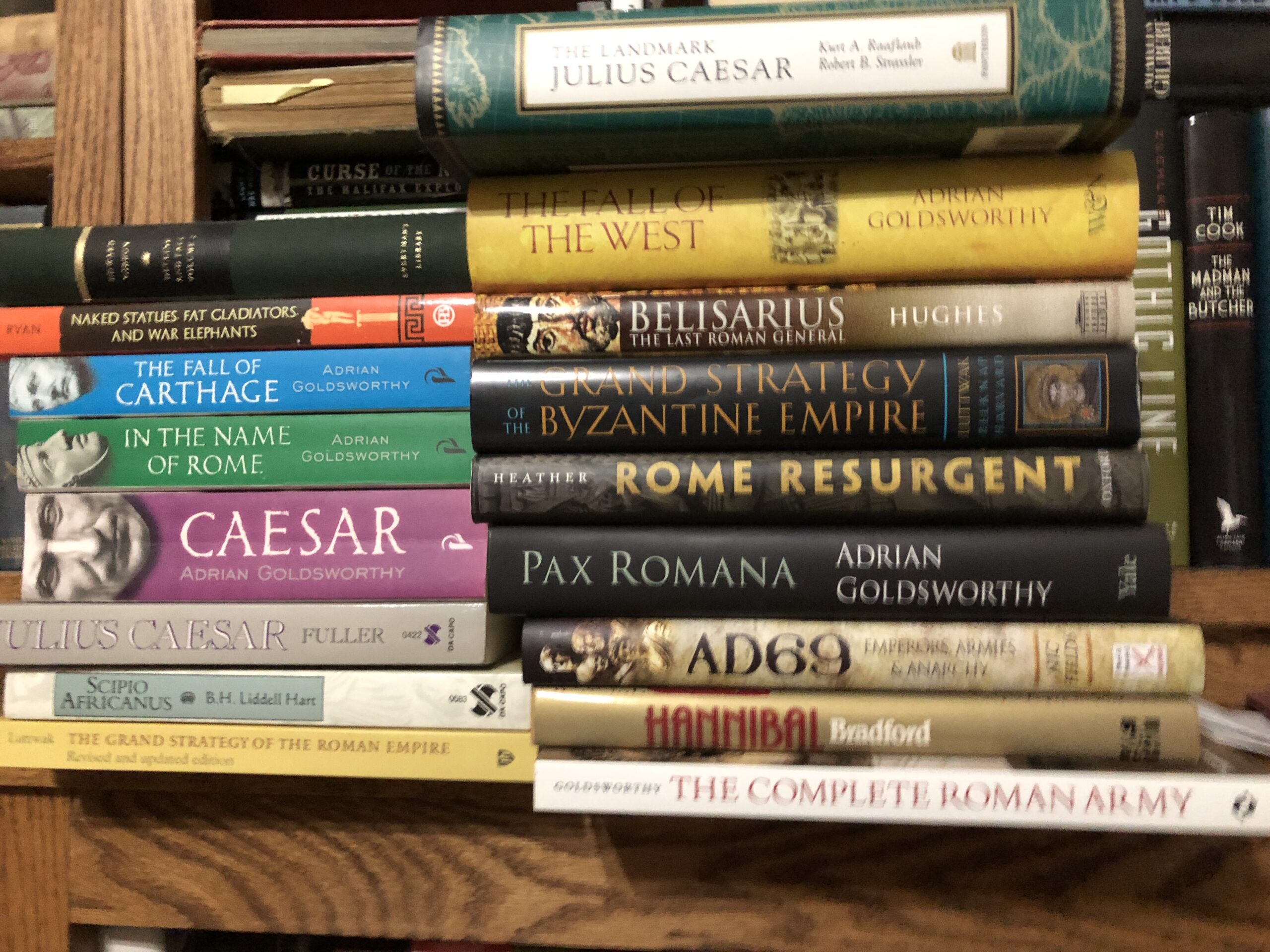
Some books I had handy when that silly social media “how often do you think about Rome” question was being bandied about.

People sometimes ask me, “Rob, how do you read so much?” or “How many books do you read simultaneously?” or “What is your reading plan?” or even “How do you get through so many books, are you a speed reader?” (I’m not).

Readers and Twitter/X followers see how frequently I post my readings or see my recommended books and assume there must be a secret.

There’s no secret.

I read pretty slowly. I take notes, I underline, I highlight, I jot my thoughts in the margins, I pause if I encounter an especially interesting passage or idea.

Years ago, I read How to Read a Book by Mortimer Adler. He described reading a book as being “in conversation” with the author. But reading has the added benefit of allowing you to concentrate deeply, move as fast or as slowly through an argument or idea as you want, and formulate and reformulate your thoughts as you move through the text.

In a given year, I read about 40-50 books cover to cover, read excerpts and chapters of perhaps another 100 or so, and skim many more. I also read psychology papers and other academic texts.

I read multiple books concurrently. Typically 2 or 3 physical books I cycle through, with one I devote most of my attention to. I also have 2 other books I read on the Kindle app on my phone. Waiting in line at the store. In between sets at the gym. Traveling on the train or an uber. All this time adds up. You can spend 5 or 10 minutes scrolling, or read a couple of pages of a good book. I recommend the latter.

What about audiobooks? I like this post from Naval Ravikant:

He’s right.

Reading requires a lot of effort and practice. Hearing language versus reading it engages different mental processes. Reading forces you to move more slowly. If an author explains an idea to you, the constraints of natural conversation mean that you can’t just pause for 10 minutes while you think deeply about what he or she just said and then subsequently resume the discussion. Books enable you to do that. Of course, you can pause on audiobook and think about what the author just said. Often, though, listening to audiobooks is accompanied by other tasks, making it harder to devote 100% of your attention to the ideas being discussed or the story being told.

Listening to audiobooks is easier. And it’s better than nothing. But if you want to seriously engage with ideas and increase the likelihood that you’ll retain knowledge, it’s better to read.

Some people just love audiobooks, but I’ve rarely found them to be a positive experience: either it grabs my attention and I can’t do anything else or it fails to grab my attention and I don’t really retain much of what I’ve heard. Multitasking and I are not compatible.

“But here’s the catch, if you actually try to put this philosophy into practice, you might sell your granny to sex traffickers”

Filed under: Britain, Education, USA — Tags: , , — Nicholas @ 04:00

Ted Gioia explains why (people like) Sam Bankman-Fried drove him away from his formal studies in Philosophy at Oxford:

I abandoned philosophy because of Sam Bankman-Fried, the crypto scammer.

Well, that’s not entirely true. I abandoned my formal study of philosophy because of people like Bankman-Fried.

Unfortunately, they were my professors at the time.

Where do I even begin in telling this?

It’s not easy. That’s why I’ve never given a full account of my years as a philosophy student at Oxford — despite some readers requesting this. I don’t talk about it because the story is complicated.

But Sam Bankman-Fried gives me the excuse — or even the necessity — of digging into this gnarly matter. That’s because the crypto scammer was deeply involved in a philosophical movement that originated at Oxford. It draws on the same tenets I was taught in those distant days.

My teachers didn’t run crypto exchanges, and (to my knowledge) never embezzled anything more valuable than a bottle of port from the common room. Even so, there’s a direct connection between them and Mr. Bankman-Fried.

They were erudite and devoted teachers, but I was disillusioned by what they taught. It eventually chased me away from philosophy, specifically analytic philosophy of the Anglo-American variety.

I had no idea that their worldview would come back to life as a popular movement promoted by the biggest scam artist of the digital age. But I’m not really surprised — because it’s a dangerous worldview with potential to do damage on the largest scale.

The philosophy is nowadays called Effective Altruism. It even has a web site with recruiting videos — there’s a warning sign right there! — where it brags about its origins at Oxford.

But here’s the catch, if you actually try to put this philosophy into practice, you might sell your granny to sex traffickers.


You think I’m joking?

In fact, that’s exactly what you would do. Effective altruists don’t look at the actual actions at hand or their consequences today — hah, that would be too obvious. They only think about long-term holistic results, and hope to maximize pleasure and good feelings in the aggregate:

So it stands to reason that:

  1. Granny is old and doesn’t have long to live, so she can’t experience much pleasure even under the best circumstances.
  2. But the sex traffickers could use Granny to increase the pleasure of many of their customers.
  3. Hence …

I’m not going to spell it out for you, but you can guess where this is heading.

You just better hope that, if you’re ever a grandparent, your progeny aren’t Effective Altruists.

Justin Trudeau’s (latest) very bad week

Filed under: Cancon, Media, Politics — Tags: , , , , , — Nicholas @ 03:00

Paul Wells wonders if Justin Trudeau would even want to stay on as Liberal Party leader for the next election after the more recent awful week he’s had:

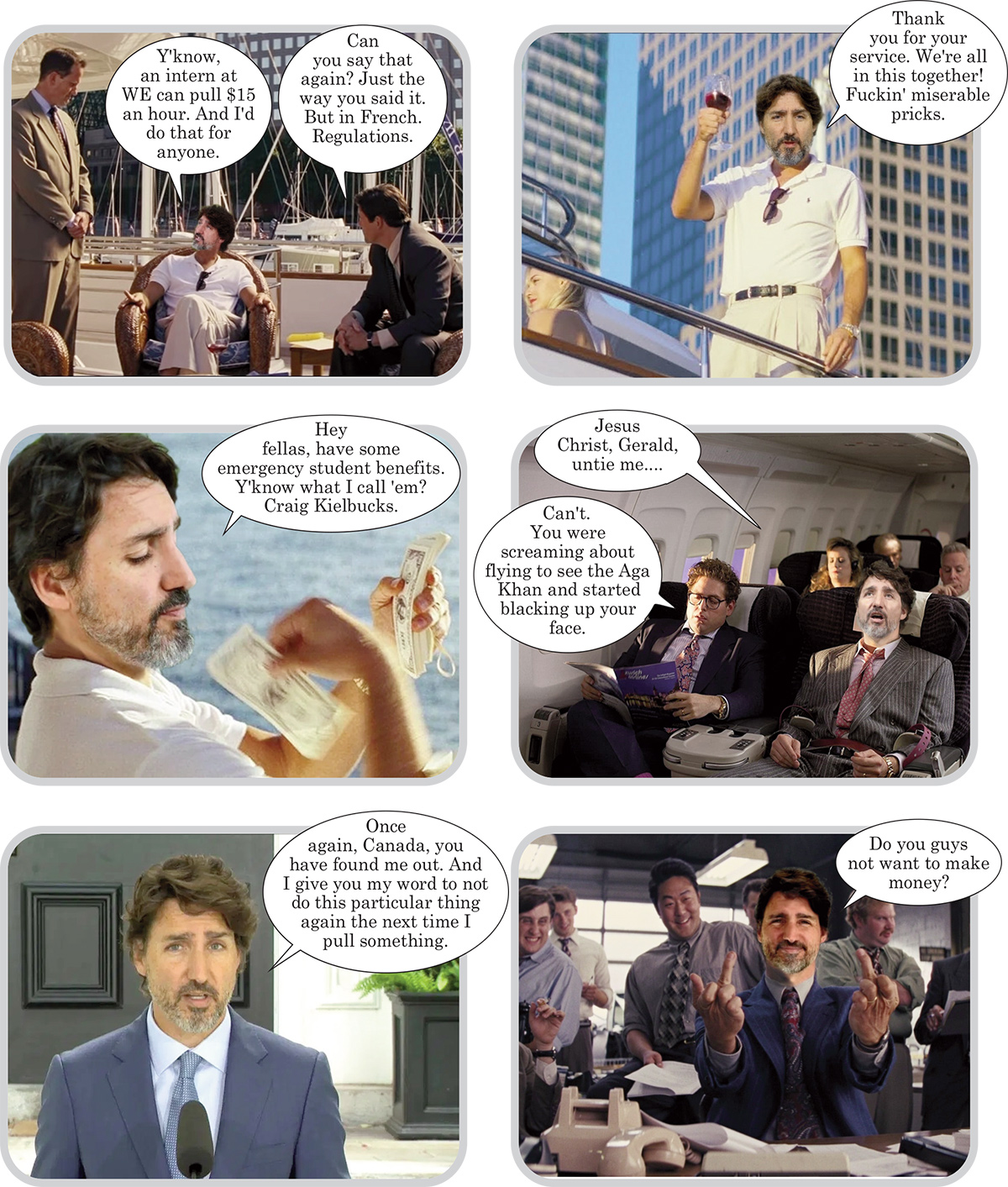
That was fun of Justin Trudeau to act out the message that somebody who spends his days in the Senate is a nobody. Of course, the kind of year he’s having, his bit of theatre came two days after he appointed five new senators. Welcome to the upper chamber, suckers. If you’re really lucky, a flailing prime minister might use you for a punchline.

This felt like the week that Trudeau’s hold on his leadership became precarious. I’ve had people asking me all week whether Trudeau will run again. Of course I don’t know. I guess the only thing that’s new is that if he does stay until the next election, and lead the Liberals into it, I’ll wonder — more keenly than before — why he bothered.

The decision still feels like his alone. The headline-making assaults on his power this week fell well short of what it would take to remove him if he doesn’t want removing. I find Percy Downe a serious and likable man, but he is not gregarious, he doesn’t have networks of people ready to do his bidding, and the truth is that the Senate isn’t a base for getting anything done within the Liberal Party. Hasn’t been for a decade.

As a good Liberal who was working hard long before “hard work” became a Trudeauite slogan, Downe has never forgiven Trudeau for kicking senators out of the Liberal caucus. As a good Prince Edward Islander, he has never forgiven Trudeau for maintaining tolls on the Confederation Bridge between the Island and the mainland while removing tolls on the Champlain Bridge into Montreal. This was a straightforward transfer of wealth from PEI to Central Canada, and turned out to be foreshadowing for last week’s fuel-oil transfer in the other direction. So Downe has a grudge or two to motivate him, and no army to deliver his desired outcome. His preference for Trudeau’s political future is widely shared in the country but he lacks a mechanism for delivering it in real life.

At least Downe has been expressing a clear preference in coherent language. In this he contrasts nicely with Mark Carney. Carney was a successful central-bank governor in two countries, a feat without obvious precedent. But politics is a different line of work. Reading Carney’s interview with the Globe was like watching somebody shake a Ziploc bag full of fridge magnets. In fact I’m pretty sure that when he started talking, he wasn’t planning to deliver any message about party politics.

He’ll “lean in where I can”. He has a list of things he hasn’t ruled out: becoming the next Liberal leader; running for Parliament. Running for Parliament is also on his list of things he hasn’t ruled in. Not ruling things out is, notoriously, not how you actually get into Parliament. I haven’t ruled out becoming a backup dancer for Taylor Swift, and yet I’m not in the new concert film. I checked.

The Army Door Knocker | Pak 35/36 | Anti-Tank Chats

Filed under: Germany, History, Military, Weapons, WW2 — Tags: , , , , , — Nicholas @ 02:00

The Tank Museum
Published 14 Jul 2023

In this video, we look at the Pak 35/36, the German Army’s first anti-tank gun. Obsolete by 1941, it picked up the nickname Heeresanklopfgerat – the army door knocker – after its inability to penetrate tank armour. In spite of this, it carried on in service until 1945. Chris Copson talks you through the gun and its history.
(more…)

QotD: The “German Catastrophe”

Filed under: Books, Germany, Government, History, Quotations — Tags: , , , , , — Nicholas @ 01:00

The obvious frame for this book is what has been fittingly termed the German Catastrophe: the fate of Germany in the late 19th and early 20th century, as viewed from the perspective of German nationalists who were not Nazis — the perspective of people like Ernst Jünger.

Germany had entered modernity without democracy. The Kaiserreich (German Empire) had united the many small German states, aggressively worked to catch up with industrialization, built a state to rival France and Great Britain, and remained authoritarian throughout. Commoners had negligible political influence. They did get social insurance, but not through their own political power but granted top-down, as an appeasement to undermine socialist movements. Civil marriage, secularized state education, prospering state universities and a long series of modernizing laws kept increasing state power. And that meant executive power. There were parties, a parliament and a newly homogenized judiciary, but they had little power to check the executive.

And this entire development was accompanied by a lot of theorizing about this new German nation. Much of this theorizing ended up justifying authoritarianism, by making quickly-spreading myths about how obedience to authority, respect for aristocracy and love for tradition were uniquely German traits that set Germans apart from the French and the Jews and other dubious foreigners. Such myths, and opposition to them, colored the German population’s hard work to get accustomed to industrialization, urbanization, education, rapid population growth, militarization, national media and various culture wars.

This had seemed to work okay-ish while Bismarck, wielding both enormous ruthlessness and enormous political acumen, had navigated Germany through the trials and tribulations of the late 19th century, largely at the expense of France. But in 1890, Emperor Wilhelm II had taken over authority with less ruthlessness and much less political acumen. While his populace remained nearly unable to influence politics, Wilhelm II made critical political mistakes, especially in dealing with other European powers.

These mistakes culminated in the first World War. You know how that one went.

Germany’s defeat led into Germany’s first real democracy. Everyone was very obviously new to this. The right attacked the new state, falsely claiming it had needlessly capitulated. The left also attacked the new state, because it wasn’t Soviet-Union-like enough. There was a lot of political violence. The massive damage incurred in the war, and the restrictions and reparations Germany had accepted in the peace settlement, put massive strains on an already fragile political system. Elections were tumultuous and frequent. Hyperinflation caused a huge crisis in 1923, and the Great Depression of 1929 was another huge disaster for Germany. Overall, the abolition of authoritarianism was widely felt to be a mistake.

This seeming mistake was fixed when Hitler stepped in. And you know how that one went.

Anonymous, “Your Book Review: On the Marble Cliffs”, Astral Codex Ten, 2023-07-28.

November 5, 2023

Hugo Chávez

Filed under: Americas, History, Media — Tags: , , , , — Nicholas @ 05:00

The most recent entry in the Dictator Book Club at Astral Codex Ten looks at former Venezuelan President Hugo Chávez:

Former Venezuelan President Hugo Chávez.
Photo by Roberto stuckert Filho/PR via Wikimedia Commons.

All dictators get their start by discovering some loophole in the democratic process. Xi realized that control of corruption investigations let him imprison anyone he wanted. Erdogan realized that EU accession talks provided the perfect cover to retool Turkish institutions in his own image.

Hugo Chavez realized that there’s no technical limit on how often you can invoke the emergency broadcast system. You can do it every day! The “emergency” can be that you had a cool new thought about the true meaning of socialism. Or that you’re opening a new hospital and it makes a good photo op. Or that opposition media is saying something mean about you, and you’d like to prevent anyone from watching that particular channel (which is conveniently bound by law to air emergency broadcasts whenever they occur).

This might not be the only reason or even the main reason Hugo Chavez ended up as dictator. But it’s a very representative reason. If Putin is basically a spook and Modi is basically an ascetic, Hugo Chavez was basically a showman. He could keep everyone’s attention on him all the time (the emergency broadcast system didn’t hurt). And once their attention was on him, he could delight them, enrage them, or at least keep them engaged. And he never stopped. Hugo Chavez was the marathon runner of dictators.

    He was on television almost every day for hours at a time, invariably live, with no script or teleprompter, mulling, musing, deciding, ordering. His word was de facto law, and he specialised in unpredictable announcements: nationalisations, referenda, troop mobilizations, cabinet shuffles. You watched not just for news value. The man was a consummate performer. He would sing, dance, rap; ride a horse, a tank, a bicycle; aim a rifle, cradle a child, scowl, blow kisses; act the fool, the statesman, the patriarch. There was a freewheeling, improvised air to it all. Suspense came from not knowing what would happen.

    There would be no warning. Soap operas, films, and baseball games would dissolve and be replaced by the familiar face seated behind a desk or maybe the wheel of a tractor … it could [last] minutes or hours. Sometimes Chavez wouldn’t be talking, merely attending a ceremony … One time Chavez decided to personally operate a machine on the Caracas-to-Charallave rail tunnel. A television and radio announcer improvised commentary for the first few minutes, but gradually ran out of things to say as the president continued drilling, drilling, drilling. Radio listeners, blind to Chavez pounding away, were baffled and then alarmed by the mechanical roar monopolizing the airwaves. Some thought it signaled a coup.

In 2012, while he was dying of cancer, Chavez gave “a state of the nation address lasting nine and a half hours. A record. No break, no pause.” Put a TV camera in front of him, and the man was a machine.

If he had been an ordinary celebrity, he would be remembered as a legend. But he went too far. He became his TV show. He optimized national policy for ratings. The book goes into detail on one broadcast in particular, where he was filmed walking down Venezuela’s central square, talking to friends. He remarked on how the square needed more monuments to glorious heroes. But where could he put them? The camera shifted to a mall selling luxury goods. A lightbulb went on over the dictator’s head: they could expropriate the property of the rich capitalist elites who owned the mall, and build the monument there. Make it so! Had this been planned, or was it really a momentary whim? Nobody knew.

Then he would move on to some other topic. An ordinary citizen would call in and describe a problem. Chavez would be outraged, and immediately declare a law which solved that problem in the most extreme possible way. Was this staged? Was it a law he had been considering anyway? Again, hard to tell.

Sometimes everyone in government would ignore his decisions to see if he forgot about them. Sometimes he did. Other times he didn’t, and would demand they be implemented immediately. Nobody ever had a followup plan. They expropriated the mall, but Chavez’s train of thought had already moved on, and nobody had budgeted for the glorious monuments he had promised. The mall sat empty; it became a dilapidated eyesore. Laws declared on the spur of the moment to sound maximally sympathetic to one person’s specific problem do not, when combined into a legal system, form a great basis for governing a country.

But Chavez TV was also a game show. The contestants were government ministers. The prize was not getting fired. Offenses included speaking out against Chavez:

    Chavez clashed with and fired all his ministers at one time or another but forgave and reinstated his favorites. Nine finance ministers fell in succession … it was palace custom not to give reasons for axing. Chavez, or his private secretary, would phone the marked one to say thank you but your services are no longer required. Good-bye. The victim was left guessing. Did someone whisper to the comandante? Who? Richard Canan, a young, rising commerce minister, was fired after telling an internal party meeting that the government was not building enough houses. Ramon Carrizales was fired as vice president after privately complaining about Cuban influence. Whatever the cause, once the axe fell, expulsion was immediate. The shock was disorienting. Ministers who used to bark commands and barge through doors seemed to physically shrink after being ousted … they haunted former colleagues at their homes, seeking advice and solace, petitioning for a way back to the palace. “Amigo, can you have a word with the chief?” One minister, one of Chavez’s favorites, laughed when he recounted this pitiful lobbying. “They know it as well as I do. In [this government] there are no amigos.”

… or taking any independent action:

    [A minister] was not supposed to suggest an initiative, solve a problem, announce good news, theorise about the revolution, or express an original opinion. These were tasks for the comandante. His fickleness encouraged ministers to defer implementation until they were certain of his wishes. In any case they spent so much time on stages applauding — it was unwise to skip protocol events — that there was little opportunity for initiative. Thus the oil minister Rafael Ramirez would lurk, barely visible, while the comandante signed a lucrative deal with Chevron […]

    But upon command, the stone would transform into a whirling dervish … the comandante‘s impulsiveness demanded instant, urgent responses. He would become consumed by a theme. Rice! Increase rice production! The order would ricochet through [the government]. The agriculture, planning, transport, commerce, finance, and infrastructure ministers would work around the clock devising a scheme or credits, loans, cooperatives, mills and trucks to have it ready, at least on paper, for the comandante to unveil on his Sunday show. Thus was born the Mixed Company for Socialist Rice. Then, the next week, chicken! Cheaper chicken! The same ministers would forget about rice while they rushed to squeeze farmers, truckers, and supermarkets so that the comandante could say, on his next show, that chicken was cheaper.

… or, worst of all, not enjoying Chavez’s TV shows enough:

    [Ministers had to] arrange their features into appropriate expressions when on camera or in the comandante‘s sight line. This was tricky when the comandante did something foolish or bizarre because the required response could contradict instinct … Missing a cue could be fatal. During a show the comandante‘s laser-beam gaze swung from face to face, spotlighting expressions, seeking telltale tics. Immediately after a broadcast, Chavez reviewed the footage, casting a professional eye over the staging, lighting, camera angles — and audience reaction.

    The comandante‘s occasional lapses into ridiculous were inevitable. He spoke up to nine hours at a time live on television, without a script … Being capricious and clownish also sustained interest in the show and underlined his authority. No other government figure, after all, dared show humour in public. But on occasion this dissolved into absurdity. Who tells a king he is being a fool?

    Ministers faced another test of the mask in September 2007, when the comandante announced clocks would go back half an hour. The aim was to let children and workers wake up in daylight, he said. “I don’t care if they call me crazy, the new time will go ahead, let them call me whatever they want. I’m not to blame. I received a recommendation and said I liked the idea.” Chavez wanted it implemented within a week — causing needless chaos — and bungled the explanation, saying clocks should go forward rather than back. If ministers realized the mistake, they said nothing, only smiled and clapped […]

    On rare occasions the correct response was not obvious, sowing panic. In a speech to mark World Water Day in 2011, the comandante said capitalism may have killed life on Mars. “I have always said, heard, that it would not be strange that there had been civilisation on Mars, but maybe capitalism arrived there, imperialism arrived and finished off the planet.” Some in the audience tittered, assuming it was a joke, then froze when they saw neighbors turned to stone. To these audience veterans it was unclear if it was a joke, so they adopted poker faces, pending clarification. It never came; the comandante moved on to other topics.

How did a once-great nation reach this point? I read Rory Carroll’s Comandante to find out.

Military “institutional racism” and the Expert Infantry Badge

Filed under: Media, Military, Politics, USA — Tags: , , — Nicholas @ 04:00

Chris Bray on a recent article in which a USAF Colonel lectures other “white colonels” about institutional racism in America’s military services:

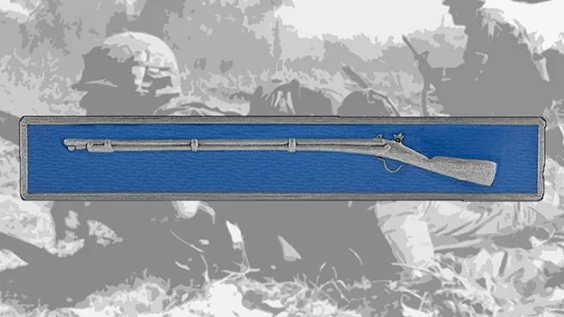
US Army Expert Infantry Badge
Image from armyfacts.com

Thoughts about the Air Force colonel who delivers sanctimonious lectures about institutional racism to his fellow “white colonels”.

In you’re an infantry soldier in the US Army, you can distinguish yourself by earning an Expert Infantry Badge. To do that, you have to qualify as an expert with the rifle, then complete a series of skills tests like “set headspace and timing on a caliber .50 machine gun” and “operate as a station in a radio net with SINCGARS radio single channel”. Then, finally, you have to complete a 12-mile road march. You can read the standards for that event here: carry a rifle and magazines, wear a helmet at all times, carry a rucksack weighing at least 35 pounds, and so on. When the person with the stopwatch says that three hours have elapsed, you’re either standing behind the finish line or in front of it; you either earn the EIB or you don’t.

The test isn’t subjective — the judges don’t award you style points. If you crawl across the finish line in a pool of blood and urine, sobbing for mommy, but you do it in less than three hours, and you still have your rucksack and your rifle and everything else at the end, you get the EIB.

Nor is it weighted. If you’re a fourth-generation VMI graduate with a fine old family name that can be found on the rolls of the Mayflower Society, you get the EIB if you cross the finish line on time. If you’re an E-2 who grew up in a trailer park and barely made it out of high school and doesn’t remember the names of all your so-called stepdads, you get the EIB if you cross the finish line on time. Officers and enlisted work to exactly the same standard. The credential comes from the task, full stop. This fact is the core of every credential you can earn in the military: If you’re authorized to wear the Parachutist Badge, you went to Fort Benning, or whatever they call it now, and jumped out of the plane five times without missing the ground. You did the thing. Doing the thing is who you are, in a growing list of things.

As a set of organizations built on task competence, for plainly measurable tasks that can’t be faked or fudged, the armed forces have been America’s first meritocracy. The first black West Point graduate was commissioned in 1877; the first black Medal of Honor recipient was born into slavery. Even in the segregated military, credentials obtained through task competence bore weight, as the court-martial of Jackie Robinson suggests with its outcome: In 1944, in Texas, a black officer was correct to harshly demand respect from a white enlisted soldier.

If you’ve served in the military, you’ve seen this. In my first posting as an infantryman, my company commander, first sergeant, platoon sergeant, and squad leader were black, a fact that I never heard anyone even mention. Rank, profession, and authority come from doing, without socioeconomic or racial chutes or ladders: If you can fly the plane, you’re a pilot. Up to the boundaries of the flag ranks, politics and identity don’t matter. (Regarding those flag ranks, see the late David Hackworth’s discussion of “perfumed princes”.)

And so the descent of the American military into the performative politics of DEI and equity and Robin DiAngelo books just blindly shits on the core value of the American military, which is that you get the rank and the status for what you do, full stop.

Dear Supreme Court of Canada, “ever get the feeling you’ve been cheated?”

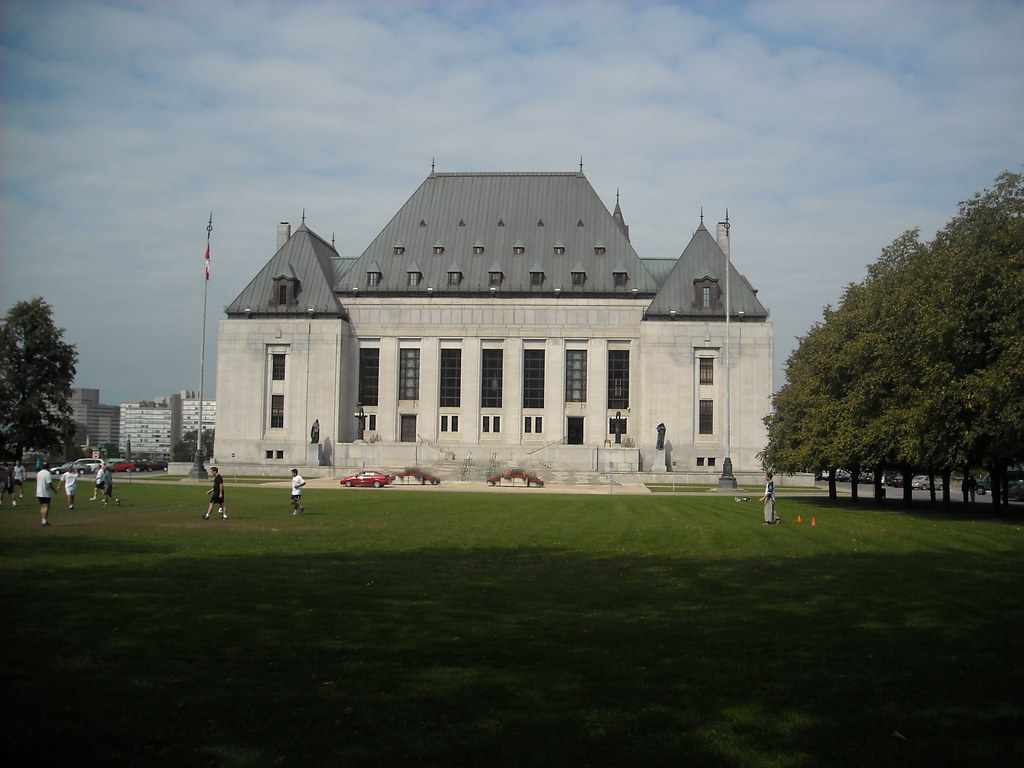
Colby Cosh outlines the arguments the federal government used to persuade a majority of the sitting justices of the Supreme Court of Canada to greenlight Justin Trudeau’s carbon tax tax grab and wonders if they suspect they got fast-talked:

The decision agreeing to this was signed by six of the nine justices of the court: Richard Wagner, Rosalie Abella, Michael Moldaver, Andromache Karakatsanis, Sheilah Martin and Nicholas Kasirer. Today I confront these eminences with the immortal question once asked by Johnny Rotten: ever get the feeling you’ve been cheated?

Last week the Liberal government whose hirelings rhapsodized about the urgent, indivisible, inherently national nature of carbon pricing announced a “temporary” total exemption for fuel oil used for home heating. This has the effect of letting some households in the Atlantic provinces out of a tax that applies to cleaner BTUs in the rest of the country, and the targeted regional nature of this move has been emphasized rather than concealed by Liberal ministers.

Oh, to be sure, it’s temporary. The three-year duration of the exemption just happens to push its expiry past the next federal election. What happens at that point, who knows? And to be sure, the exemption applies to fuel oil for home heating everywhere in Canada where the federal carbon tax applies. It just so happens that the electorally crucial Atlantic is the only place where a significant number of households still depend on the system. The Liberals can perhaps say with a straight face that there is no conflict here with the underpinnings of the arguments that succeeded so beautifully in the Supreme Court.

But if the GGPPA References were re-litigated now, after the attempt to impose the carbon tax and the panicky local retreat, one wonders whether the “national concern” blarney would seem quite so convincing. We are not, in turns out, all in this leaky planetary lifeboat together. The urgency of carbon pricing, it turns out, is not quite paramount and transcendent. Its indivisibility and inherent nationalness are not as promised. The Liberals didn’t want to save the planet quite so much, it seems, as they just wanted to make the rules for their own electoral benefit.

At The Line, Harrison Ruess, who recently switched his home heating solution from a mixed oil and propane to just propane, wonders why his choice to go with the lower-carbon option will end up penalizing him under the latest policy change by the feds:

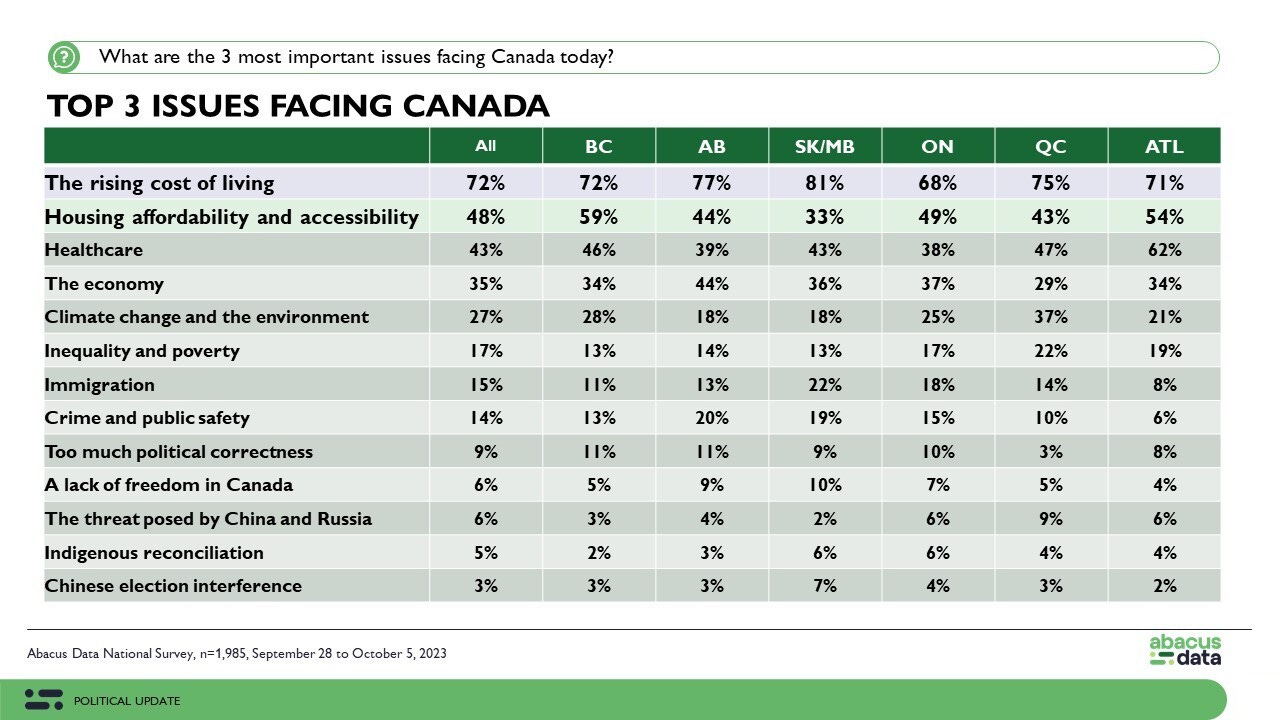
Indeed, in looking deeper at the regional numbers, the concern about the rising cost of living and housing affordability isn’t particularly acute in Atlantic Canada versus other parts of the country. The chart below, provided to me by David Coletto at Abacus Data, and published here at The Line first, reveals just how difficult a position the PM has now staked out for his government. While Atlantic Canadians are somewhat more concerned about housing affordability than average, they are very slightly less concerned than the average Canadian about the overall rising cost of living. In Saskatchewan and Manitoba, for example, the opposite is true: they’re less concerned than average about housing affordability, but more concerned than average about the rising cost of living.

The takeaway to me in looking at this is that all Canadians are worried about costs and affordability.

The other question that jumped to mind is: why only heating oil? Heating oil is useful in places without good access to natural gas pipelines, and that does include much of Atlantic Canada, but also to rural areas everywhere, where other fuels, such as propane or wood pellets, are also used. According to the propane association, there are about 200,000 Canadian homes using propane — of which about 30,000 are in Atlantic Canada.

I can speak to this with some personal experience. When my wife and I purchased our home in semi-rural Ottawa, it had a Frankenstein heating system that used heating oil for part of our home and propane for another. Just this summer we completed a (somewhat expensive) rationalization of our system to combine the two into one larger, though more efficient, propane system.

Having one system will hopefully save us money on maintenance and hydro costs — powering and maintaining one system should cost less than two. It will also save us a couple hundred bucks a year on our home insurance (did you know there’s an extra premium if you have a heating oil tank? Welcome to rural life, dear readers.) Ditching the oil and expanding the propane is also good environmentally, since the carbon impact of propane is considerably less.

But we didn’t get a break from the federal government. We’d only have gotten it if we’d gone the other way, and used the more polluting fuel. Why punish my family for heating our home using the cleaner fuel?

And why not provide an exemption for natural gas? It’s cleaner still. And why not people in cities? They don’t want to freeze either, and we’re all broke. The carbon tax isn’t helping, no matter which fuel you’re using or which part of the country you call home. The ultimate challenge the government will face is that they cannot talking-point their way out of a reality.

Guy Fawkes and The Gunpowder Plot 1605

Filed under: Britain, History, Religion — Tags: , , , , , , , — Nicholas @ 02:00

The History Chap
Published 4 Nov 2022

The story behind Guy Fawkes and the Gunpowder Plot, the audacious plan to kill the king of England. It is also the complicated story behind our annual Bonfire Night celebrations.

In 1605 a group of dissident Catholics came within a whisker of one of the greatest assassination coups in history — blowing up the King of England, and his government as he attended parliament in London. 36 barrels of gunpowder (approximately 1 tonne of explosives) had been placed directly under where he would open parliament. Experts estimate that no one within 300 feet would have survived.

Had it succeeded it would have rivalled 9/11 in its audacity and would have changed English (& arguably world) history forever. But who were the plotters, what were they trying to achieve and how close did they really come to success? Were they freedom fighters or 17th century terrorists? And why is only one conspirator, Guy Fawkes, remembered when he wasn’t even the brains behind the operation?

After years of persecution by England’s Protestants, a small group of Catholic nobles under Robert Catesby (aka Robin Catesby) decided to take matters into their own hands and blow up the king (King James I of England / James VI of Scotland) whilst he attended parliament in London.

Guy Fawkes (aka Guido Fawkes) smuggled 36 barrels of gunpowder into a cellar directly beneath the hall where parliament would meet in the Palace of Westminster. In the early hours of 5th November 1605, he was arrested by guards who had been tipped off about the gunpowder plot. After three days of torture in the Tower of London, Guy Fawkes finally broke and named his fellow conspirators.

The conspirators, under Robert Catesby, had fled London for the English midlands where they hoped to abduct the king’s daughter and organise a catholic rising. Both failed to materialise and Catesby’s small band were surrounded by a government militia at Holbeach House, just outside Kingswinford in Staffordshire. A brief shoot-out resulted in the death of some of the Catholic rebels (including their leader, Catesby) and the arrest of the others.

The surviving gunpowder plotters (including Guy Fawkes) were executed in London at the end of January 1606, by the grisly execution reserved for traitors — Hanged, drawn and quartered (quite literally a “living death”).

The Gunpowder Plot of 1605 was a complete failure but the event is still celebrated on the 5th November every year on Bonfire Night.
(more…)

QotD: The Auftragstaktik principle of the Third Reich

Filed under: Bureaucracy, Germany, History, Military, Quotations, WW2 — Tags: , , , — Nicholas @ 01:00

[The Nazis], being Social Darwinists to the core, applied the military principle of Auftragstaktik to civilian life. “Mission-oriented” tactics means that the overall commanders leave as much as possible to the on-the-spot commanders, be they officers or noncoms, on the theory that properly-trained leaders will have a much better understanding of what needs to be done, and how to do it, than some general back at HQ. It’s the main reason the Wehrmacht could keep fighting so well, for so long, in the face of overwhelming opposition — tasks that would fall to an American company, or a Russian regiment, were often undertaken by a Wehrmacht platoon under the command of a senior corporal.

Obviously civilian life isn’t as goal-directed as the military in wartime, but a similar principle applied — given a vague set of generalized objectives from the top (Kershaw’s famous “working towards the Führer” thesis), everyone at every level was encouraged to move the ball downfield as he saw fit … with the added twist that, in the absence of a clearly defined, military-style chain of command, the various “subordinates” would ruthlessly battle it out with each other, Darwin-style, for bureaucratic supremacy.

Thus the Nazis’ infamous plate-of-spaghetti org charts. I’m not an expert, but I’m pretty sure there were more than a few guys who held wildly different ranks in various different organizations simultaneously. He might be a mere patrolman in the Order Police, but an officer in the SS, a noncom in the SA (you could be in both, at least in the early days), and so forth. I wouldn’t be surprised if there was more than one guy who technically reported to himself, somewhere deep in the bowels of the RHSA [Reich Security Main Office]. You could spend a lifetime trying to sort this stuff out …

Severian, “The Crisis of the Third Decade”, Rotten Chestnuts, 2021-03-18.

November 4, 2023

MKb-42(H) Assault Rifle with ZF-41 scope

Filed under: Germany, History, Military, Weapons, WW2 — Tags: , , , , — Nicholas @ 02:00

Forgotten Weapons
Published 31 Aug 2014

The MKb-42(H), or Maschinenkarabiner-42 (Haenel), was the first production iteration of the German Sturmgewehr. It was chambered for the then-new 8x33mm kurz cartridge, and fired both semiauto and full-auto from an open bolt. Approximately 11,000 of these were made before production changed to the closed-bolt MP43.
(more…)

QotD: The munificent benefits of big government

So, the things that capitalism produces have fallen in price over the past couple of decades. That’s the pure and unadorned free market capitalism that is. The things where we’ve a managed sorta capitalism have still fallen relative to wages. The things where the government is rather more responsible for production – education and healthcare – have risen in price with respect to wages.

This is the argument that government should run more of the economy of course.

No, don’t laugh, it is. Because these things are rising in price is exactly why, so the argument goes, government must regulate and control more, so as to lower the price.

Tim Worstall, “Ain’t Capitalism Great? Price Changes Over The Last 20 Years”, Continental Telegraph, 2019-07-13.

November 3, 2023

Understanding Combined Arms Warfare

Filed under: France, Germany, History, Military, USA, Weapons, WW2 — Tags: , , — Nicholas @ 02:00

Army University Press
Published 24 Mar 2023

Designed to support the U.S. Army Captains Career Course, “Understanding Combined Arms Warfare” defines and outlines the important aspects of modern combined arms operations. This is not a complete history of combined arms warfare. It is intended to highlight the most important aspects of the subject.

The beginning of the documentary establishes a common understanding of combined arms warfare by discussing doctrinal and equipment developments in World War I. The second part compares the development of French and German Army mechanization during the interwar period and describes how each country fared during the Battle of France in 1940. The film concludes by showing how the United States applied combined arms operations in the European Theater in World War II.
(more…)

QotD: The use of Epigraphy and Papyrology in interpreting and understanding the ancient and classical world

… let’s say you still have a research question that the ancient sources don’t answer, or only answer very incompletely. Where can you go next? There are a few categories, listed in no particular order.

Let’s start with the most text-like subcategories, beginning with epigraphy. Epigraphy is the study of words carved into durable materials like stone or metal. For cultures that do this (so, Mesopotamians, Egyptians, Greeks, Romans: Yes! Gauls, pre-Roman Iberians, ancient Steppe nomads: No!), epigraphy provides new texts to read and unlike the literary texts, we are discovering new epigraphic texts all the time. The downside is that the types of texts we recover epigraphically are generally very limited; mostly what we see are laws, decrees and lists. Narrative accounts of events are very rare, as is the epigraphic preservation of literature (though this does happen, particularly in Mesopotamia with texts written on clay tablets). That makes epigraphy really valuable as a source of legal texts (especially in Greece and Rome), but because the texts in question tend to be very narrowly written (again, we’re talking about a single law or a single decree; imagine trying to understand an act of Congress renaming a post office if you didn’t [know] what Congress was or what a post office was) without a lot of additional context, you often need literary texts to give you the context for the new inscription you are looking at.

The other issue with epigraphy is that it is very difficult to read and use, both because of wear and damage and also because these inscriptions were not always designed with readability in mind (most inscriptions are heavily abbreviated, written INALLCAPSWITHNOSPACESORPUNCTUATIONATALL). Consequently, getting from “stone with some writing on it” to an edited, usable Greek or Latin text generally requires specialists (epigraphers) to reconstruct the text, reconstructing missing words (based on the grammar and context around them) and making sense of what is there. Frankly, skilled epigraphers are practically magicians in terms of being able figure out, for instance, the word that needs to fit in a crack on a stone based on the words around it and the space available. Fortunately, epigraphic texts are published in a fairly complex notation system which clearly delineates the letters that are on the stone itself and those which have been guessed at (which we then all have to learn).

Related to this is papyrology and other related forms of paleography, which is to say the interpretation of bits of writing on other kinds of texts, though for the ancient Mediterranean this mostly means papyrus. The good news is that there is a fairly large corpus of this stuff, which includes a lot of every day documents (tax receipts! personal letters! census returns! literary fragments!). The bad news is that it is almost entirely restricted to Egypt, because while papyrus paper was used far beyond Egypt, it only survives in ultra-dry conditions like the Egyptian desert. Moreover, you have all of these little documents – how do you know if they are typical? Well, you need a very large sample of them. And then we’re back to preservation because the only place you have a very large sample is Egypt, which is strange. Unfortunately, Egypt is quite possibly the strangest place in the Ancient Mediterranean world and so papyrological evidence is frequently plagued by questions of applicability: sure we have good evidence on average household size in Roman Egypt, but how representative is that of the Roman Empire as a whole, given that Egypt is such an unusual place?

Outside of Egypt and a handful of sites (I can think of two) in England? Almost nothing. To top it all off, papyrology shares epigraphy’s problem that these texts are difficult and often require specialists to read and reconstruct them due to damage, old scripts and so on. The major problem is that the quantity of recovered papyrus has vastly outstripped the number of trained papyrologists, bottle-necking this source of evidence (also a lot of ancient papyri get traded on the antiquities black market, potentially destroying their provenance, and there is a special level in hell for people who buy black market antiquities).

Bret Devereaux, “Fireside Friday: March 26, 2021 (On the Nature of Ancient Evidence”, A Collection of Unmitigated Pedantry, 2021-03-26.

November 2, 2023

The carbon tax has been murdered, by Justin Trudeau, in the House, with a blatant self-interest

Rex Murphy believes the much-hated carbon tax — the Laurentian Elite’s revenge on working Canadians — has been dealt its mortal blow by the least likely suspect:

Justin Trudeau came into office on the spume of Canadian-level celebrity, built on a persona of ostentatious, idle gestures and token cheer (selfies, socks, costumes), the endless vocalization of woke crackerjack-box slogans and a smile cemented in place that had all the warmth of well-gelled cement. Just style. Style, understood as the adoption of surface mannerisms in place of deeply settled convictions, convictions built on a real attempt to understand Canada, to relate to all its regions, and an appreciation (which does not mean agreement) of the ideas, lifestyles and situations of mainstream Canadians: style adopted as a campaign dynamic.

It’s worth reminding that from the moment of its first swearing-in, the Liberal government has been an administration of show and tactics: tactics have been its policy, tactics have been its governing lifeblood. Policies — in so far as it can be said to have had policies — have been merely (temporary) scaffolding or window displays meant to shore up the tactics. They have not been, as with an honourable government, needful measures for Canadian well-being, shored up not by tactics but by their obvious benefit and their consonance with what Canadians made clear were their concerns.

Canada’s predominant commitment these past eight painful years, the “one ring to rule them all”, the only government commitment held with deepest conviction we have been told, has been combatting global warming. It is different. It is real policy. It is the core principle. It is immutable because its cause is existential. It has been Canada’s passport to an admiring progressive world. Above all it has absolutely glowed with virtue-signalling and superior progressive sensibility. It has been as good as a wristband was at a rock concert years back.

For all of his eight years Trudeau has incessantly promoted and promulgated his single cause. At home he has out-Suzukied David Suzuki, out-Mayed Elizabeth May, and there have been moments when he “out-dared” Greta. Abroad, he has been climate alarmism’s smiling Galahad.

Global warming has been his religion, and what he calls the carbon tax both eucharist and passport to net-zero paradise. To an increasingly skeptical Canadian public, anxious and distrustful of a government regularly racked by scandal and heroic mismanagement, he said (I paraphrase): “I know I’m taxing a necessity — heat for homes in northerly Canada — and I know it must hit the poor first and worst. But it’s to save the world! Saving the world keeps me up at night. And I want Canada to lead the way in saving it. And for that, there must be a tax on energy, on gas and oil, on heating. It must be done. It’s a sacrifice poets will write in praise of in the lower-temperature world we will be key to making happen.”

The tax on carbon dioxide — the great comedians of the Liberal party called it a “tax on pollution” — had to be imposed, even as inflation ravaged the country and further immiserated the already sufficiently immiserate, because Trudeau had a whole world to save. It was the signature element of the signature policy of Trudeau’s showcase government. It was the indispensable girder in building a post-oil-and-gas future for a post-nationalist Canada, the indestructible bridge to a golden net-zero tomorrow for our country. And, incidentally, a great shiny glittering Last Spike to doom Conservative Alberta’s economy and government, and no little whack for Saskatchewan.

This was principle as policy, and policy as principle. For seven plus years.

And now. A few fingers snapped somewhere and suddenly, Mr. Trudeau … cancels the carbon tax. Cancel for one and you must cancel for all.

« Newer PostsOlder Posts »

Powered by WordPress