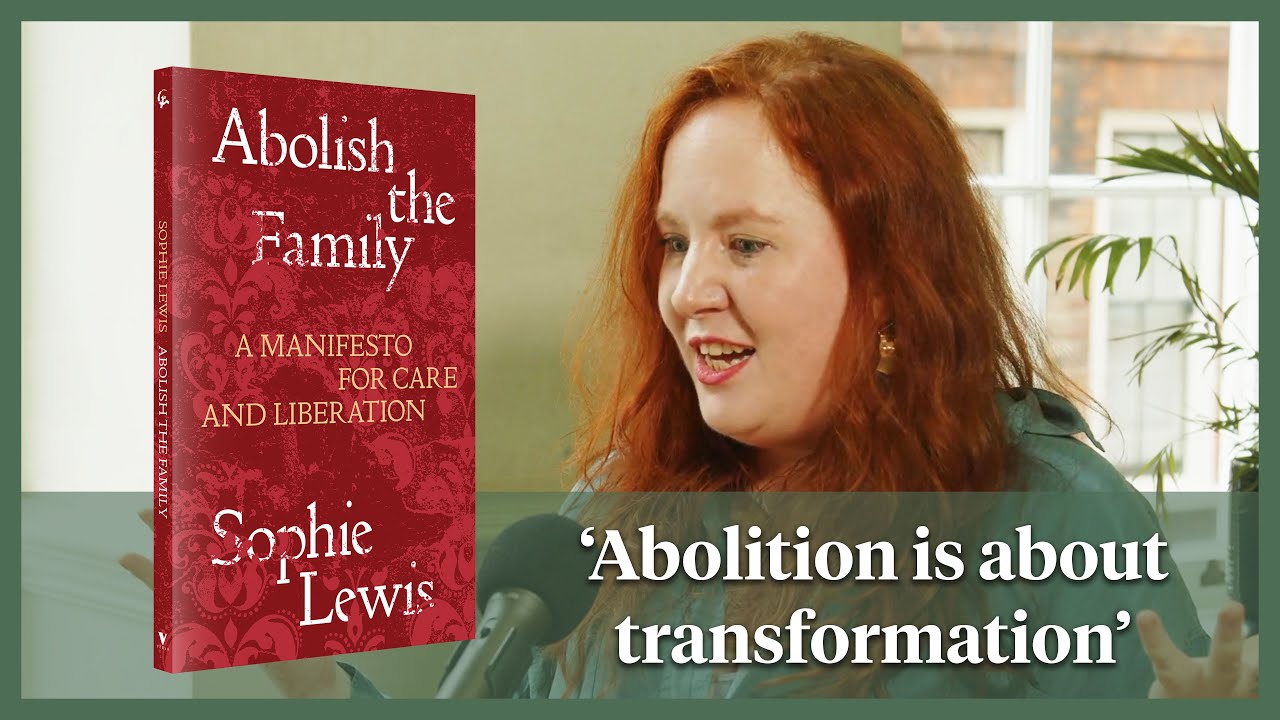
The Australian Labor Party is picking up a long-established Marxist theme of hatred for the nuclear family and actively trying to prevent women from choosing to form families, as Celina discusses before digging deeper into the history of anti-family beliefs:
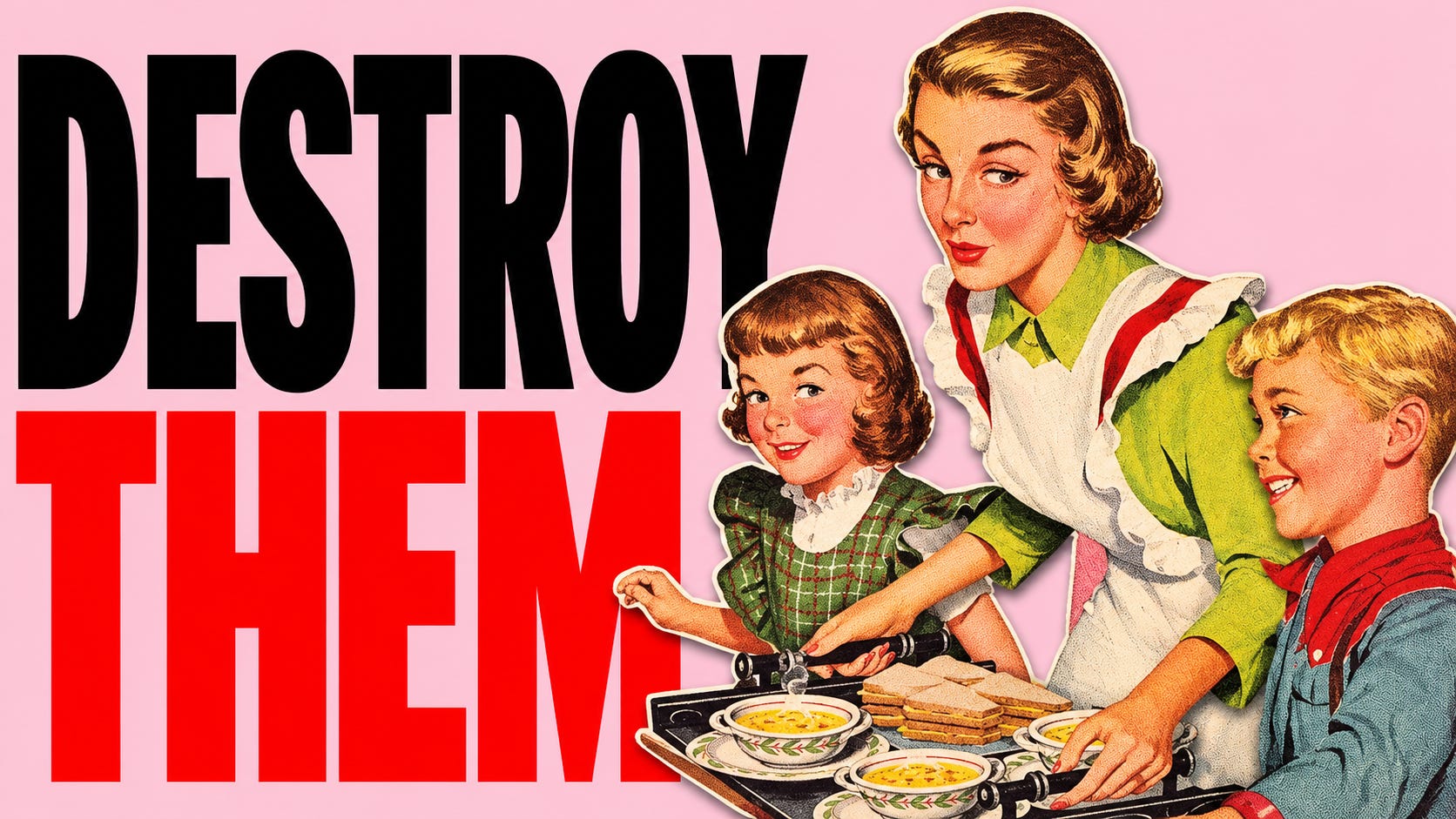
It is inherently evil, wicked and wrong to have children and want to take care of your husband. At least, that seems to be the case according to Labor’s Socialist Left senator Ellie Whiteaker.1
In promoting Labor’s new Digital Duty of Care bill, she was looking for examples of what young women ought to be protected from online, and she decided to single out posts celebrating marriage, motherhood and a traditional division of responsibilities between husband and wife. Whiteaker described this as something women “shouldn’t be exposed to online in 2026”.2
[…]
Marxists had a more fundamental objection to the family. They wanted to change how it functioned and who did the work traditionally done within it. In The Communist Manifesto of 1848, Marx and Engels wrote: “Abolition of the family! Even the most radical flare up at this infamous proposal of the Communists“. They reassured readers that “The bourgeois family will vanish as a matter of course when its complement vanishes, and both will vanish with the vanishing of capital“.3
In The Origin of the Family, Private Property and the State, published in 1884, Engels connected monogamous marriage with property, inheritance and male supremacy. Engels’s account of emancipation required women’s participation in public production and the displacement of the family as the basic economic unit. You could still have love and personal affection, but work that had traditionally, and rightly, belonged within the household would be organised collectively instead. In his own words: “The modern individual family is founded on the open or concealed domestic slavery of the wife“. And: “Within the family he is the bourgeois and the wife represents the proletariat“. So your husband is the class enemy and the fix was spelled out just as clearly: “the first condition for the liberation of the wife is to bring the whole female sex back into public industry, and that this in turn demands the abolition of the monogamous family as the economic unit of society“. And the children? “The care and education of the children becomes a public affair“.4
Lenin argued in A Great Beginning that equal rights meant very little in practice if women were still tied to the stove and the wash-tub. Communal kitchens, dining rooms and nurseries would therefore take over much of the work women had done at home for centuries. Under socialism, feeding a family and caring for children would increasingly become the state’s responsibilities. Here is how Lenin described the woman who keeps a home, she “continues to be a domestic slave, because petty housework crushes, strangles, stultifies and degrades her, chains her to the kitchen and the nursery“.5 Decades earlier, August Bebel, leader of the German Social Democrats, had written in Woman and Socialism that “The private kitchen is as antiquated an institution as the workshop of the small mechanic” and that “The abolition of the private kitchen will come as a liberation to countless women“.6
Moreover, marxist theoretician Alexandra Kollontai went further in her 1921 theses on communist morality. She outright objected to the loyalty family members felt towards one another, which she believed encouraged selfishness at the expense of the collective communist good. The natural and healthy love between parents and children was suspicious because it took precedence over their obligations to communism. Her theses could not be blunter: “The communist economy does away with the family“.7 And: “The family teaches and instils egoism thus weakening the ties of the collective and hindering the construction of communism“.8 A year earlier, in Communism and the Family, she told working mothers that “the workers’ state will come to replace the family” and that they “must learn to understand that there is no more room for the old proprietary attitude which says: ‘These are my children, I owe them all my maternal solicitude and affection …’” Her verdict: “There is no escaping the fact: the old type of family has had its day“.9
Nor did this die with the Soviet Union. In 1970, Shulamith Firestone’s The Dialectic of Sex, a founding text of radical feminism that set out to apply Marx and Engels’s method to the sexes, declared that “unless revolution uproots the basic social organisation, the biological family — the vinculum through which the psychology of power can always be smuggled — the tapeworm of exploitation will never be annihilated“. Her goal, in five words: “The tyranny of the biological family would be broken“.10 And the demand is back in fashion. In 2021, Sophie Lewis, whose book Abolish the Family was published by the left-wing house Verso the following year, wrote that “the family as such, with its exclusions, extortions, and arbitrary rationings of care, is spiritually deleterious for all“, and called for “an end to birth certificates, surnames, inheritance, private insurance, and all privileges afforded by legal marriage“.11, 12
- Barlow, K. (2025, June 28). Exclusive: Labor has first Left-majority caucus. The Saturday Paper. https://www.thesaturdaypaper.com.au/news/politics/2025/06/28/exclusive-labor-has-first-left-majority-caucus
- The Noticer. (2026, November 18). Australian senator reveals Digital Duty of Care will target ‘trad wife’ content. https://www.noticer.news/digital-duty-of-care-trad-wife-censorship/
- Marx, K., & Engels, F. (1969). Manifesto of the Communist Party (S. Moore, Trans.). In Selected works (Vol. 1, pp. 98–137). Progress Publishers. https://www.marxists.org/archive/marx/works/1848/communist-manifesto/index.htm (Original work published 1848)
- Engels, F. (1974). The origin of the family, private property and the state (A. West, Trans.; revised English text). In K. Marx & F. Engels, Selected works (Vol. 3). Progress Publishers. https://www.marxists.org/archive/marx/works/1884/origin-family/index.htm
(Original work published 1884)- Lenin, V. I. (1972). A great beginning: Heroism of the workers in the rear — “Communist subbotniks” (G. Hanna, Trans.). In Collected works (4th English ed., Vol. 29, pp. 409–434). Progress Publishers. https://www.marxists.org/archive/lenin/works/1919/jun/28.htm (Original work published 1919)
- Bebel, A. (1910). Woman and socialism (M. L. Stern, Trans.; 50th ed.). Socialist Literature Company. https://www.marxists.org/archive/bebel/1879/woman-socialism/index.htm (Original work published 1879)
- Kollontai, A. (1977b). Theses on communist morality in the sphere of marital relations. In A. Holt (Ed. & Trans.), Selected writings of Alexandra Kollontai. Allison & Busby. https://www.marxists.org/archive/kollonta/1921/theses-morality.htm
(Original work published 1921)- Ibid
- Kollontai, A. (1977a). Communism and the family. In A. Holt (Ed. & Trans.), Selected writings of Alexandra Kollontai. Allison & Busby. https://www.marxists.org/archive/kollonta/1920/communism-family.htm
(Original work published 1920)- Firestone, S. (1979). The dialectic of sex: The case for feminist revolution. The Women’s Press. https://www.marxists.org/subject/women/authors/firestone-shulamith/dialectic-sex.htm
(Original work published 1970)- Lewis, S. (2022). Abolish the family: A manifesto for care and liberation. Verso. https://www.versobooks.com/products/2890-abolish-the-family
- Lewis, S. (2021, Summer). “The family lottery”. Dissent. https://dissentmagazine.org/article/the-family-lottery/