
Imperial War Museums
Published 8 Jan 2010An American commentator looks at the effects of rationing on the people of England in 1944. The film presents a “typical” family of four (housewife, engine-driver husband, factory-working daughter, schoolboy son) to illustrate the basic rationing system, the workings of “point” systems and other restrictions, and the difficulties the average family faced when eating “on the ration”.
Explore IWM’s film collection: https://film.iwmcollections.org.uk
November 17, 2023
Rationing In Britain
Comments Off on Rationing In Britain
November 12, 2023
The Futile Fight in Hurtgen Forest – WW2 – Week 272 – November 11, 1944
World War Two
Published 11 Nov 2023The struggle for Hurtgen forest, one tiny piece at a time, continues. The Allies have, however, secured Walcheren Island, and also launch Operation Queen to try and reach and cross the Roer River, and further south even launch a new offensive aiming for Metz. Things are not going well for the Americans on Leyte, though, but they’re even worse for the Chinese as both Guilin and Liuzhou fall to the Japanese. As for the Soviets, they are busy making big plans for a gigantic offensive to drive in to Germany when the new year comes.
(more…)
Comments Off on The Futile Fight in Hurtgen Forest – WW2 – Week 272 – November 11, 1944
November 11, 2023
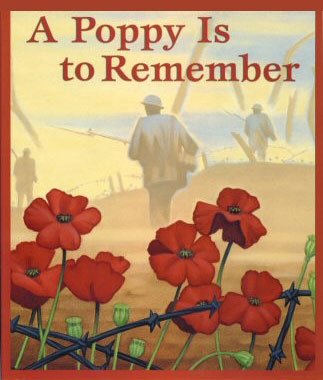
In memoriam
A simple recognition of some of our family members who served in the First and Second World Wars:
The Great War
 Private William Penman, Scots Guards, died 16 May, 1915 at Le Touret, age 25
(Elizabeth’s great uncle)- Private Archibald Turner Mulholland, Argyll & Sutherland Highlanders, mortally wounded 25 September, 1915 at Loos, age 27
(Elizabeth’s great uncle) - Private David Buller, Highland Light Infantry, died 21 October, 1915 at Loos, age 35
(Elizabeth’s great grandfather) - Private Harold Edgar Brand, East Yorkshire Regiment. died 4 June, 1917 at Tournai.
(My first cousin, three times removed) - Private Walter Porteous, Durham Light Infantry, died 4 October, 1917 at Passchendaele, age 18
(my great uncle, who had married the day before he left for the front and never returned) - Corporal John Mulholland, Argyll & Sutherland Highlanders, wounded 2 September, 1914 (shortly before the First Battle of the Aisne), wounded again 29 June, 1918, lived through the war.
(Elizabeth’s great uncle)
The Second World War
- Flying Officer Richard Porteous, Royal Air Force, survived the defeat in Malaya, was evacuated to India and lived through the war
(my great uncle) - Able Seaman John Penman, Royal Navy, served in the Defensively Equipped Merchant fleet on the Atlantic convoys, the Murmansk Run (he may have been on a ship in convoy PQ-17, as we know he spent a winter in Russia) and other convoy routes, was involved in firefighting and rescue efforts during the Bombay Docks explosion in 1944, lived through the war
(Elizabeth’s father) - Private Archie Black (commissioned after the war and retired as a Major), Gordon Highlanders, captured during the fall of Singapore (aged 15) and survived a Japanese POW camp (he had begun to write an autobiography shortly before he died)
(Elizabeth’s uncle) - Elizabeth Buller, “Lumberjill” in the Women’s Timber Corps, an offshoot of the Women’s Land Army in Scotland through the war.
(Elizabeth’s mother) - Trooper Leslie Taplan Russon, 3rd Royal Tank Regiment, died at Tobruk, 19 December, 1942 (aged 23).
Leslie was my father’s first cousin, once removed (and therefore my first cousin, twice removed).
My maternal grandfather, Matthew Kendrew Thornton, was in a reserved occupation during the war as a plater working at Smith’s Docks in Middlesbrough. The original design for the famous Flower-class corvettes came from Smith’s Docks and 16 of the 196 built in the UK during the war (more were built in Canada). My great-grandmother was an enthusiastic ARP warden through the war (she reportedly enjoyed enforcing blackout compliance in the neighbourhood using the rattle and whistle that came with the job).
For the curious, the Commonwealth War Graves Commission the Royal British Legion, and the Library and Archives Canada WW1 and WW2 records site provide search engines you can use to look up your family name. The RBL’s Every One Remembered site shows you everyone who died in the Great War in British or Empire service (Canadians, Australians, New Zealanders, South Africans and other Imperial countries). The CWGC site also includes those who died in the Second World War. Library and Archives Canada allows searches of the Canadian Expeditionary Force and the Royal Newfoundland Regiment for all who served during WW1, and including those who volunteered for the CEF but were not accepted.
In Flanders fields the poppies blow
Between the crosses row on row,
That mark our place; and in the sky
The larks, still bravely singing, fly
Scarce heard amid the guns below.We are the Dead. Short days ago
We lived, felt dawn, saw sunset glow,
Loved and were loved, and now we lie
In Flanders fields.Take up our quarrel with the foe:
To you from failing hands we throw
The torch; be yours to hold it high.
If ye break faith with us who die
We shall not sleep, though poppies grow
In Flanders fields.Lieutenant Colonel John McCrae, MD Canadian Army Medical Corps (1872-1918)
Here is Mark Knopfler’s wonderful song “Remembrance Day” from his Get Lucky album, set to a slideshow of British and Canadian images from World War I through to more recent conflicts put together by Bob Oldfield:
November 10, 2023
Luftwaffe Drilling and US M6 Survival Rifle
Forgotten Weapons
Published 8 Sept 2014Today we’re looking at a pair of military survival rifles. One is a Luftwaffe M30 drilling — the most finely finished and luxurious survival rifle ever issued by a military force. The other is a US Air Force M6 survival gun — spartan and utilitarian — the polar opposite of the M30.
(more…)
Comments Off on Luftwaffe Drilling and US M6 Survival Rifle
November 7, 2023
Swiss Tankbuchse 41 Semi-automatic Antitank Rifle
Forgotten Weapons
Published 29 Oct 2018Originally developed for use in light tanks purchased from Czechoslovakia, the Tankbuchse 41 was a 24x139mm semi-automatic rifle designed by Adolph Furrer of the Waffenfabrik Bern factory. Furrer was also responsible for the LMG-25 and MP41/44 used by the Swiss, and with the TB-41 he once again used the operating system he was most familiar with: a short recoil toggle-locked action. The gun was ready and adopted in 1941, and a total of 3,581 were produced, used in light tanks, lake patrol boats, fortifications, and on wheeled carriages by the infantry.
High explosive and armor piercing projectiles were made, both weighing 3475 grains (225g) and with muzzle velocities between 2800 and 2950 fps (860-900 fps). The armor piercing round could perforate 30cm of perpendicular armor plate at 500m — more than most other contemporary antitank rifles. Designed specifically for rapid fire, the gun fed from six-round magazines, and automatically ejected the magazine when the last round was chambered, so that the crew could reload it without having to run the crank handle. The guns never saw combat use, and by the end of World War Two were being pulled back out of inventory and relegated primarily to fortress use.
(more…)
Comments Off on Swiss Tankbuchse 41 Semi-automatic Antitank Rifle
November 6, 2023
The Army Door Knocker | Pak 35/36 | Anti-Tank Chats
The Tank Museum
Published 14 Jul 2023In this video, we look at the Pak 35/36, the German Army’s first anti-tank gun. Obsolete by 1941, it picked up the nickname Heeresanklopfgerat – the army door knocker – after its inability to penetrate tank armour. In spite of this, it carried on in service until 1945. Chris Copson talks you through the gun and its history.
(more…)
Comments Off on The Army Door Knocker | Pak 35/36 | Anti-Tank Chats
November 5, 2023
QotD: The Auftragstaktik principle of the Third Reich
[The Nazis], being Social Darwinists to the core, applied the military principle of Auftragstaktik to civilian life. “Mission-oriented” tactics means that the overall commanders leave as much as possible to the on-the-spot commanders, be they officers or noncoms, on the theory that properly-trained leaders will have a much better understanding of what needs to be done, and how to do it, than some general back at HQ. It’s the main reason the Wehrmacht could keep fighting so well, for so long, in the face of overwhelming opposition — tasks that would fall to an American company, or a Russian regiment, were often undertaken by a Wehrmacht platoon under the command of a senior corporal.
Obviously civilian life isn’t as goal-directed as the military in wartime, but a similar principle applied — given a vague set of generalized objectives from the top (Kershaw’s famous “working towards the Führer” thesis), everyone at every level was encouraged to move the ball downfield as he saw fit … with the added twist that, in the absence of a clearly defined, military-style chain of command, the various “subordinates” would ruthlessly battle it out with each other, Darwin-style, for bureaucratic supremacy.
Thus the Nazis’ infamous plate-of-spaghetti org charts. I’m not an expert, but I’m pretty sure there were more than a few guys who held wildly different ranks in various different organizations simultaneously. He might be a mere patrolman in the Order Police, but an officer in the SS, a noncom in the SA (you could be in both, at least in the early days), and so forth. I wouldn’t be surprised if there was more than one guy who technically reported to himself, somewhere deep in the bowels of the RHSA [Reich Security Main Office]. You could spend a lifetime trying to sort this stuff out …
Severian, “The Crisis of the Third Decade”, Rotten Chestnuts, 2021-03-18.
Comments Off on QotD: The Auftragstaktik principle of the Third Reich
November 4, 2023
MKb-42(H) Assault Rifle with ZF-41 scope
Forgotten Weapons
Published 31 Aug 2014The MKb-42(H), or Maschinenkarabiner-42 (Haenel), was the first production iteration of the German Sturmgewehr. It was chambered for the then-new 8x33mm kurz cartridge, and fired both semiauto and full-auto from an open bolt. Approximately 11,000 of these were made before production changed to the closed-bolt MP43.
(more…)
Comments Off on MKb-42(H) Assault Rifle with ZF-41 scope
November 3, 2023
Understanding Combined Arms Warfare
Army University Press
Published 24 Mar 2023Designed to support the U.S. Army Captains Career Course, “Understanding Combined Arms Warfare” defines and outlines the important aspects of modern combined arms operations. This is not a complete history of combined arms warfare. It is intended to highlight the most important aspects of the subject.
The beginning of the documentary establishes a common understanding of combined arms warfare by discussing doctrinal and equipment developments in World War I. The second part compares the development of French and German Army mechanization during the interwar period and describes how each country fared during the Battle of France in 1940. The film concludes by showing how the United States applied combined arms operations in the European Theater in World War II.
(more…)
Comments Off on Understanding Combined Arms Warfare
November 1, 2023
The BAR M1918A3 by Ohio Ordnance – Shooting and Mechanism
Forgotten Weapons
Published 13 Jul 2014Today we’re looking at one of Ohio Ordnance’s semiauto M1918A3 BARs – how it shoots, how it works, and what the pros and cons of the military BAR variants were in World War I and World War II.
(more…)
Comments Off on The BAR M1918A3 by Ohio Ordnance – Shooting and Mechanism
October 29, 2023
The Battle of Leyte Gulf – WW2 – Week 270 – October 28, 1944
World War Two
Published 28 Oct 2023This is it — the big showdown between US and Japanese Navies, and the largest naval battle ever fought in terms of total tonnage. American landings on Leyte itself are still in progress, and the Soviets’ Debrecen Operation comes to its end.
(more…)
Comments Off on The Battle of Leyte Gulf – WW2 – Week 270 – October 28, 1944
October 28, 2023
Smith versus Smith: US Army/Marine relations in 1944
World War Two
Published 27 Oct 2023When Marine Corps General Holland “Howling Mad” Smith removed Infantry General Ralph Smith from command in 1944 during the Battle of Saipan, it began a controversy that soon snowballed, threatening to sabotage Army-Marine relations at a time when cooperation was the key to victory.
(more…)
Comments Off on Smith versus Smith: US Army/Marine relations in 1944
October 27, 2023
The Tale of Fat Man and Little Boy
World War Two
Published 26 Oct 2023Here near the end of 1944, we look at the development of the atomic bomb. What different methods of creating a nuclear reaction are being developed? How close are they to development? How does it work? Will they be able to make one in 1945? Will it go boom?
(more…)
Comments Off on The Tale of Fat Man and Little Boy
October 24, 2023
See Inside The M3 Grant | Tank Chats Reloaded
The Tank Museum
Published 30 Jun 2023With a crew of six and a chaotically crowded interior, the Grant was a US-produced WW II tank more used by the British and Indian Armies than anyone else. Join Chris Copson as he explores probably the best preserved example of this rare vehicle – and listen out for the cheese sandwich …
(more…)
Comments Off on See Inside The M3 Grant | Tank Chats Reloaded
October 23, 2023
The RAF’s true workhorse fighter in the Battle of Britain – the Hawker Hurricane
William Loneskie sings the praises of the Hawker Hurricane, the main fighter plane of the Royal Air Force during the Battle of Britain in 1940:
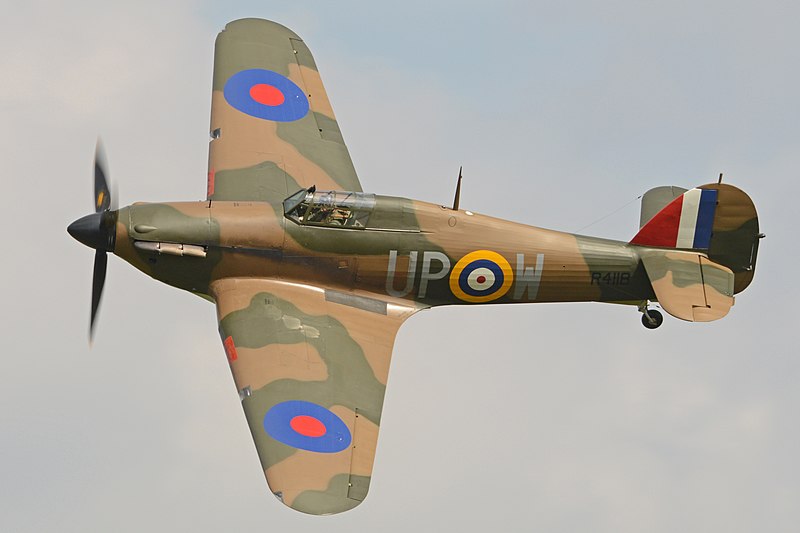
Hawker Hurricane Mark I. This is the only airworthy Hurricane with a genuine Battle of Britain history. Since 2015 she has lodged with the Shuttleworth Collection and is seen displaying at the 2017 Season Premier Airshow at Old Warden, Bedfordshire, UK.
Photo by Alan Wilson via Wikimedia Commons.
In the popular mind it was the Supermarine Spitfire which carried the day for the Royal Air Force during the Battle of Britain. The grace of RJ Mitchell’s design was appreciated by the public as something very special, as it was for the pilots who flew it.
But it was the slower Hawker Hurricane which accounted for most of the German airmen killed in 1940 and destroyed most of their Heinkels, Junkers and Dorniers. Although nearly 200 Hurricanes had been lost in the Battle of France there were 32 squadrons of Hurricanes in the Battle of Britain compared with 19 of Spitfires.
By the time air battles commenced over England in 1940, the RAF had a secret weapon – BAM 100. This was British Air Ministry 100 octane fuel which had been developed and manufactured in the United States, bought for cash by the UK government, and shipped across the Atlantic by tankers. Compared with the previous 87 octane petrol, the new fuel boosted the speed of the Hurricane and the Spitfire by around 30mph. The Luftwaffe pilots were taken by surprise and couldn’t understand where the extra power came from until later in the war German technicians tested fuel from a downed aircraft.
Side by side the Spitfire and Hurricane, both powered by the iconic Rolls-Royce V12 Merlin, were very different. The Spitfire with its elliptical wing and perfect proportions “looked as if it could fly”, as Sergeant Cyril Bamberger of 610 and 41 squadrons said. But the Hurricane, if not quite an ugly duckling, had an ungainly appearance.
While the Spitfire was of all-metal construction, the Hurricane’s structure was a halfway house between fabric covered biplanes, such as the Gloster Gladiator, and all-aluminium monoplanes. An unintended consequence of the Hurricane’s fabric-covered fuselage was that German cannon shells could pass straight through without exploding. Its pilots soon realised that the Hurricane could take a lot of punishment, and the ground crews, the unsung heroes of the battle, could often repair the aircraft on station unlike the Spitfire, which was difficult to produce, maintain and repair.
Getting airborne in a squadron scramble, or landing on a grass airstrip, the Hurricane was safer than its compatriot because Camm had designed its undercarriage to open outwards, not inwards, making its track wider.
In the air the Hurricane shrugged off its ugly duckling appearance and became a killing machine. Flight Lieutenant Peter Brothers of 32 and 257 Squadrons said: “It was a superb combat aircraft … it was a better gun platform than the Spitfire”. Squadron Leader Tom Dalton Morgan said that, although he had flown more hours on the Spitfire, “as a fighting machine I preferred the Hurricane”.
The Hurricane could out-turn a Messerschmitt Bf109. Its turning radius of 785ft compared with 895ft for the German machine and 860ft for the Spitfire. The Hurricane’s thick wing allowed a different configuration of its eight .303 Browning guns giving a closer concentration of fire at a rate of 19 rounds per second.
Comments Off on The RAF’s true workhorse fighter in the Battle of Britain – the Hawker Hurricane


