
The Tank Museum
Published May 24, 2024In 1940, this small but well armoured tank was pretty much all that stood between the German Blitzkrieg and a battered British Army that was retreating to the coast.
Slow, small, and armed only with a machine gun, the A11 Infantry Tank (Matilda I) would achieve great things in its only significant battlefield action – effectively saving the British Expeditionary Force from annihilation.
At Arras on 21st May 1940, Matilda Is and IIs of 4th and 7th Royal Tank Regiment counterattacked the rapidly advancing 7th Panzer Division. In doing so, they successfully halted the German advance and unnerved Hitler so much that he issued an order forbidding further advances — thus giving the British and French chance to organize the Dunkirk evacuation.
In this video, David Willey covers the history of this diminutive and often ridiculed little tank which altered the course of history by saving an entire army.
This video features archive footage courtesy of British Pathé.
September 5, 2024
Matilda I – The Little Tank That Did | Tank Chat #176
September 3, 2024
The End of World War Two – WW2 – Week 314B – September 2, 1945
World War Two
Published 2 Sep 2024The Japanese sign the official document of surrender and the Second World War is over. There are still some Japanese garrisons yet to surrender, but they begin doing so one after the other. However, war is not over — and there is serious foreboding for future events in places like Vietnam and China — where Mao Zedong is meeting with Chiang Kai-Shek, even as Josef Stalin lurks in the background to secure Soviet interests no matter which Chinese regime comes out on top.
00:00 Intro
00:59 Vietnam Declares Independence
04:04 The Importance Of Manchuria
06:28 Japan’s Surrender
11:22 The Final Surrenders
13:18 Casualties
15:50 The End
(more…)
Sten MkII: Just When You Thought It Couldn’t Get Simpler
Forgotten Weapons
Published May 29, 2024The Sten MkI had barely been approved for production when the Sten MkII was born. Initially requested to produce a version of the gun suitable for paratroopers, in March 1941 Harold Turpin redesigned the front end of the Sten to have a quickly detachable barrel and a rotating magazine well (for compact storage). This new model was tests in late June and early July, approved for use, and contracts for it were issued in August 1941.
Named the MkII, this model of the Sten would quickly become the standard, and it was ultimately produced by six major factories (with the assistance of hundreds of subcontractors) on three continents to the tune of 2.6 million examples made. In addition to the barrel removal, the new model has a simpler front sight, simpler stock, and a revised bolt locking notch (upward, instead of downward like on the MkI).
(more…)
September 1, 2024
Can Chiang and Mao Unite China? – WW2 – Week 314 – August 31, 1945
World War Two
Published 31 Aug 2024Mao Zedong takes his first ever journey by plane to go and meet with Chiang Kai-Shek. They begin what will be several weeks of talks and negotiations. However, Chiang is not aware that Josef Stalin is lurking in the background. And the Soviet Red Army is lurking in Manchuria, having defeated the Japanese there, and are giving tacit support to the Chinese Communists, whose power base is very strong in the north. As for Japan, a motley collection of Allied fleets arrives in Tokyo Bay, for Japan’s surrender document is to be officially signed two days from now.
(more…)
August 31, 2024
Forgotten War Ep2 – You Walk, You Walk Or You Die Mate
HardThrasher
Published 30 Aug 2024Please consider donations of any size to the Burma Star Memorial Fund who aim to ensure remembrance of those who fought with, in and against 14th Army 1941–1945 – https://burmastarmemorial.org/
(more…)
August 30, 2024
Sten MkI & MkI*: The Original Plumber’s Nightmare
Forgotten Weapons
Published May 22, 2024The Sten gun was designed by RSAF Senior Draftsman (sorry, Draughtsman) Harold Turpin in December, 1940. He sketched out a simple trigger mechanism on December 2, showed it to Major Reginald Shepherd the next day, and then finished out the rest of the submachine gun design that week. The first prototype gun was completed on January 8, 1941 and it was tested by the Small Arms School that same month. The design was approved for production (alongside the Lanchester) March 7th, 1941 and the first of 300,000 Sten MkI guns was delivered to the British military on October 21, 1941. The MkI and MkI* Stens were all manufactured by the Singer sewing machine company in Glasgow, with three contracts for 100,000 guns each issued in 1941.
The Sten was the British response to a dire need for a large number of cheap infantry weapons, and it served that purpose well. The MkI was quickly followed by a somewhat simplified MkI*, which discarded the unnecessary flash cone and the wooden front grip. An even simpler MkII optimized for mass production followed, along with a MkIII. As the end of the war approached the MkV was introduced which had much improved handling, and it would remain in service until the 1950s, when it was finally supplanted by the Sterling.
(more…)
August 29, 2024
Britain’s empire after WWII
From my readings about the behind-the-scenes negotiations among the western allies even before the United States formally entered the war in late 1941, I’ve always felt that the personal relationship between Winston Churchill and Franklin Delano Roosevelt was at least as important as the formal public proclamations and direct actions of the allies. It’s my belief that Churchill and FDR had a “wink and a nod” agreement for the US to continue supporting the British economy after the end of the war in Europe, probably in exchange for a gradual retreat from formal Imperial control over at least some of the remaining British colonies. This would have made Britain’s immediate postwar experience far less grim economically and politically and allowed the British economy to gracefully switch from full wartime production to fulfilling peacetime business and consumer needs.
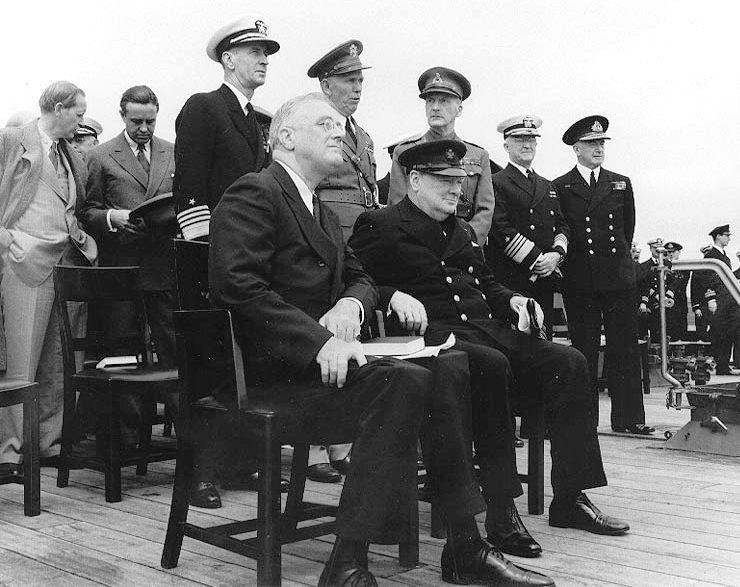
Church services on HMS Prince of Wales, in Placentia Bay, Newfoundland, during the Atlantic Charter Conference. President Franklin D. Roosevelt (left) and Prime Minister Winston Churchill are seated in the foreground. Standing directly behind them are Admiral Ernest J. King, USN; General George C. Marshall, U.S. Army; General Sir John Dill, British Army; Admiral Harold R. Stark, USN; and Admiral Sir Dudley Pound, RN. At far left is Harry Hopkins, talking with W. Averell Harriman.
US Naval Historical Center Photograph #: NH 67209 via Wikimedia Commons.
Of course, with Roosevelt dead (and Truman certainly not “read-in” on any unwritten promises to the British) and Churchill out of office (which was as much of a shock to the Americans as it was to Churchill himself), whatever they may have hoped to do was now so much wishful thinking. Britain had to not just continue wartime rationing after VE and VJ Day, but to actually make it more stringent for nearly a decade just to avoid national bankruptcy … and the withdrawal from imperial outposts had to be done as quickly and as cheaply as possible. This often meant corners were cut, cheeses were pared, and shortcuts availed of, so that the experiences of the former colonies were more fraught with civil disturbances and commercial disruptions than they should have been.
All of this is a very long-winded way to introduce Joshua Treviño’s post at Armas which considers how an American imperial decline may or may not mirror the postwar British experience of de-imperialization:
We can guess that American decline under the present regime will look much like Britain’s. The British case is taken as so normative — of course a nation will decline after its empire is gone — that the normativity goes unquestioned. But this is the worst sort of history, determinative in retrospect, as if the loss of imperium (or more properly, the loss of imperial fiscal stability) set in motion dominoes that fell unstoppably until the latest squalid episode of Keir Starmer’s thought police. That isn’t how human events work, however: all things are contingent. Britain was, in the eyes of several European powers, reduced to a mid-tier power after the catastrophic loss of America at the opening of the 1780s — and a generation later it was the indispensable nation versus French hegemony. There was not any particular reason a comparable recovery ought not have happened in the generation after 1945, even with the loss the of the empire, and even with the great postwar crisis of the pound sterling. This was in fact the high-Tory view as set forth by Enoch Powell, who evolved toward a belief that the empire was a burden on Britain, which could ascend to its destiny and fulfillment by means of the British themselves.
That this did not happen is plausibly much the fault of the Americans, who did two major things — one of them unwittingly — to forestall this sort of recovery. The first act, undertaken with deliberation, was the credible American threat to destroy the United Kingdom’s finances and economy in the 1956 Suez crisis: in no way the act of an ally, and one whose psychological effects upon Britain’s governing elites were as significant as the hard-power effects upon Britain itself. (Though I am not a particular fan of De Gaulle, for reasons that may be discussed here later, he was unquestionably a better steward of the nation than his U.K. counterparts in his conclusion — admittedly coalescing a decade earlier — that a European state could be a major power, or it could be a junior partner to the United States, but not both.) The British regime’s reaction to the episode — to draw so close to the Americans as to abandon the nation’s strategic independence — thereby contributed powerfully to Britain’s subsequent diminishment. That diminishment was not simply in the realm of hard power: it was accompanied by a profound social and governmental malaise that has fluctuated across the decades but has yet to lift. Philip Larkin’s 1969 Homage to a Government captures it well:
Next year we are to bring all the soldiers home
For lack of money, and it is all right.
Places they guarded, or kept orderly,
Must guard themselves, and keep themselves orderly
We want the money for ourselves at home
Instead of working. And this is all right.It’s hard to say who wanted it to happen,
But now it’s been decided nobody minds.
The places are a long way off, not here,
Which is all right, and from what we hear
The soldiers there only made trouble happen.
Next year we shall be easier in our minds.Next year we shall be living in a country
That brought its soldiers home for lack of money.
The statues will be standing in the same
Tree-muffled squares, and look nearly the same.
Our children will not know it’s a different country.
All we can hope to leave them now is money.The superficial read of Larkin here is that he laments deriving purpose from other things closer to home. There is a baseness in the imperialist’s love of mission, and he misses the sublime in, say, the National Health Service. It is a dumb atavism: if the “tree-muffled squares … look nearly the same”, then why does it matter that “the soldiers [are] home”? This interpretation is wrong. What Larkin laments is the loss of the common and noble purpose in the civic partnership that makes the nation, as defined at the outset of Aristotle’s Politics — without which the nation fails to cohere, even if its regime persists. Despite the strenuous efforts of the left and progressivism across the past century, that virtuous end to which the nation has been directed has never been supplanted in its old forms — religion, glory, strength, creation — by any new ones of social programs or millennialist materialism. When Clement Attlee wrote in his 1920 The Social Worker that the Protestant Reformation was to blame for the moral degradation of charity, his solution was not the obvious one (which is to say, the restoration of Catholic England or at least its mores), but to interpose government where religion and its purposes used to be. His 1945 general-election invocation of building “Jerusalem” in England, directly quoting William Blake, logically followed.
But that is not how Jerusalem is built. It remains unbuilt, and the civic effects of the American fixation and what it facilitates redound across time. Nick Cohen accuses the modern British right of Americanizing itself, and that is largely accurate, but contra his indictment, the British left does the same in different ways. What the Americans did in 1956 was not a singular event — rather it was a punctuation on a process that had been unfolding in stages for the preceding forty years or so — but their objects got a vote too. That vote was to submit, a preference shared across right and left alike. That no American regime ever had Britain’s interest fully at heart (a truth with ample reminders, not just at Suez, but in Northern Ireland, in the Falklands, in Grenada, in Iraq, and in Afghanistan) did not alter this course, thereby making a triumph of theory unmoored from fact.
August 27, 2024
Finland’s Prototype Belt-Fed GPMG: L41 Sampo
Forgotten Weapons
Published May 13, 2024During the 1930s, there was interest in Finland in replacing the Maxim heavy machine gun with something handier and more mobile. There were experiments with large drum magazines for the LS-26 light machine gun, but these were not satisfactory. Aimo Lahti began to work on a gas-operated GPMG, but lack of funding and competing priorities led to it having slow progress until the eve of the Winter War. By the time the gun was completed and the first preproduction batch ready for troop trials, the Continuation War was underway.
Twenty eight of the L41 Sampo machine guns were sent out to a variety of units for field testing in the fall of 1942, and the guns were generally well liked, although not perfect. Before improvements and full-scale production could begin, though, the Finnish military was basically distracted by an alternative possibility of procuring MG42 receivers from Germany and building them into complete guns in 7.62x54R. At least one such prototype was completed, and that project caused the L41 program to stall. By the time it might have progressed, the war was going rather badly for Germany and the possibility of getting receivers was basically gone. The L41 never did see further refinement or production, although the trials guns remained in service with their units, in a few cases right until the end of the war.
Mechanically, the L41 is a fascinating hybrid of Bren/ZB and Maxim elements, and incredibly sturdily built. Only seven are know to survive today, six in Finland and this one in the UK. Thanks to the British Royal Armouries for giving me access to it to film for you!
(more…)
QotD: Who were the good guys?
The Valkyrie plot was really a thing that happened (the cognoscenti call it the Schwarze Kapelle), and it’s got all the makings of a great spy thriller … except one: There’s no good guy. Claus von Stauffenberg was a better guy than Hitler, I suppose, but that’s a bar so low it’s subterranean. Von Stauffenberg was a Wehrmacht colonel who’d seen action in pretty much every theater up to that point, including the invasions of Poland and Russia. It’s safe to say that one does not rise to the rank of colonel via combat in the Nazi armed forces without being involved in some shady shit. Indeed, as Wiki informs us, von Stauffenberg was fine with the way things ran in Poland, and initially declined to participate in the resistance out of a sense of personal loyalty to the Führer.
A movie can get away with showing mostly shades of gray, but in the case of the Valkyrie plot, both shades are pretty damn close to black.
Nor was the 2008 movie, starring Tom Cruise, an isolated case. A few years earlier, Jude Law and Ed Harris squared off as dueling snipers in Enemy at the Gates … set during the Battle of Stalingrad. Who do you root for, the Nazi or the Commie? The producers opt for “commie”, obviously, but their attempts to humanize the Jude Law character are embarrassing — even if we accept Law’s character as totally apolitical, no movie featuring a political commissar in a vital supporting role, not to mention “cameos” by Khrushchev and Stalin himself, can fail to remind viewers that everyone involved was awful. Even the most gripping battle scenes (and to be fair, some of them were pretty good) can’t make up for the fact that the world would be a far, far better place if they somehow both could’ve lost.
Those are high-level failures, conceptual mistakes, the kind that professional storytellers simply shouldn’t make. Not only that, though, both movies have unforgivable mistakes in the execution, at almost every level. Tom Cruise, for instance, is comically miscast as Stauffenberg. I’ve written before about how weird it is that casting directors seem to obsess over finding actors who look like even obscure historical figures. Cruise looks a bit like Stauffenberg, I guess, but there’s simply no way a guy with his … ummm … distinctive acting style should be anywhere near a historical drama. Tom Cruise only ever really plays Tom Cruise, so “Tom Cruise dressed up as a Nazi” is really jarring.
And that’s before you consider the accents. Maybe Tom Cruise can’t do a German accent, I dunno. I seem to recall he did an Irish accent in a movie once, and that turned out ok, but again, whatever character he was playing was just “Tom Cruise with an Irish accent.” So maybe if you feel you must cast him as a German, letting him use his “natural” American accent is the way to go. But if you’re going to do that, please, for pete’s sake, make everyone else do an American accent, too. I know Kenneth Branagh can do one. So either cast guys who can do the right accent, or, failing that, who can do each other’s accent. Otherwise you get a huge, distracting mess.
Enemy at the Gates was actually worse: Law, Joseph Fiennes (the commissar), and Rachel Weisz (the love interest) all used their native British accents … but they’re different kinds of British accent, at least in Law’s case. Meanwhile, Ed Harris (the Nazi antagonist) uses the “neutral” American accent, while supporting player Ron Perlman, who is American, does a comically over-the-top Russian … as do the guys playing Khrushchev and Stalin. It’s just weird. In both movies, you’ve got supposedly tight groups of friends (or, at least, co-conspirators) talking to each other in wildly different accents. That kind of thing is bad enough in a movie like Robin Hood, Prince of Thieves, which made no pretenses to historical accuracy; it’s movie-destroying in a supposedly serious, historically-based thriller.
Severian, “Storytelling Fail”, Rotten Chestnuts, 2021-07-13.
August 25, 2024
Soviet Victory in Manchuria – WW2 – Week 313 – August 24, 1945
World War Two
Published 24 Aug 2024The Soviet Red Army completes its conquest of Manchuria and the northern half of Korea this week, although Japanese Emperor Hirohito announced Japan’s surrender already last week. Behind the scenes are machinations going on by Josef Stalin and Mao Zedong that they hope will lead to a Communist China in future. Vietnam might well be going communist right now, though, for the August revolution continues with the Viet Minh taking ever more control.
00:00 Intro
00:34 Recap
00:49 Chiang, Mao, and Stalin
07:32 Soviet victory in Manchuria
09:08 Viet Minh taking control
11:45 Summary
12:31 Conclusion
13:20 Julius Poole memorial
(more…)
After Wittmann’s Tiger Tank Rampage – The Fight back at Villers-Bocage
The Tank Museum
Published May 10, 2024 16 productsMichael Wittmann’s rampage at Villers-Bocage was just the start of a fight that was far from the great victory the Germans would claim it to be. At 0930 on 13 June 1944, in the chaos that followed Wittmann’s fortuitous lunge into the British column, the men of the 4th County of London Yeomanry lick their wounds and set up their defences. They’ve been given the order to hold the Villers-Bocage at all costs — and will soon be fighting for their lives against a superior German force.
By the end of the day, a young Lt. Bill Cotton will have earned the Military Cross and a promotion to Captain. His Sergeant will earn a Military Medal and his Corporal a Distinguished Conduct Medal … In the hype surrounding the career of Michal Wittmann, has the role of Bill Cotton and his troop been overlooked? Was he the real hero of Villers-Bocage?
Watch our video on Wittmann’s Tiger Tank Rampage:
• Wittmann’s Tiger Tank Rampage | Ville…00:00 | Introduction
00:56 | Aftermath of Wittmann’s Rampage
01:48 | Reconnaissance and Reinforcements
03:24 | Lt. Bill Cotton
05:26 | Bayerlein Strikes
07:05 | Three Tigers Taken Out
08:18 | The Heroes of Villers-Bocage
10:42 | Bramall’s Ingenuity
14:48 | The End of the Assault
16:16 | ConclusionThis video features footage courtesy of British Pathe.
#tankmuseum #tankactions #villersbocage
August 24, 2024
Operation Downfall – the planned invasion of Japan in 1946
Wes O’Donnell talks about the thankfully never-launched invasion of the Japanese home islands at the end of the Second World War:
History often hinges on the narrowest of margins.
Entire nations can rise or fall based on decisions made under the pressures of the moment.
But what if those decisions had gone the other way?
What if Archduke Franz Ferdinand had survived the assassination attempt in 1914?
What if John F. Kennedy had lived to complete a second term?
And most intriguingly, what if the United States had not dropped atomic bombs on Hiroshima and Nagasaki in August 1945?
The world would have witnessed Operation Downfall, the Allied invasion of Japan — an operation that, by all accounts, would have been the bloodiest amphibious assault in human history.
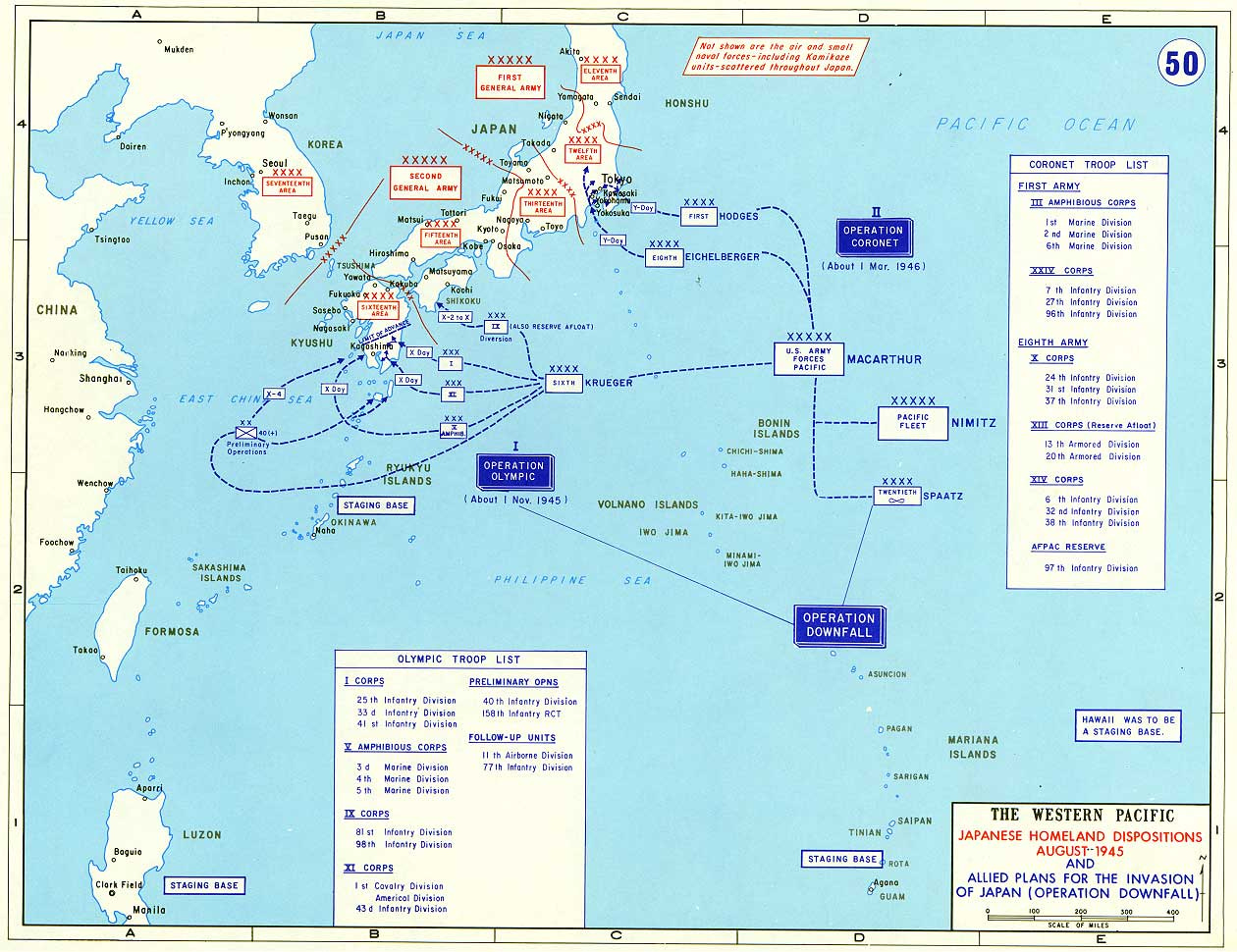
Operation Downfall was the codename for the proposed Allied plan for the invasion of Japan near the end of World War II.
The planned operation was abandoned when Japan surrendered following the atomic bombings of Hiroshima and Nagasaki and the Soviet declaration of war.
The operation had two parts: Operations Olympic and Coronet.
Set to begin in November 1945, Operation Olympic was intended to capture the southern third of the southernmost main Japanese island, Kyūshū, with the recently captured island of Okinawa to be used as a staging area.
Later, in the spring of 1946, Operation Coronet was the planned invasion of the Kantō Plain, near Tokyo, on the Japanese island of Honshu.
Airbases on Kyūshū captured in Operation Olympic would allow land-based air support for Operation Coronet.
The most troubling aspect of Downfall may have been the logistical problems facing military planners.
By 1945, there simply were not enough shipping, service troops, or engineers present to shorten the turnaround time for ships, connect the scattered installations across the Pacific, or build facilities like air bases, ports, and troop housing.
By this point in the war, the War Department had several military leaders that the government trusted to execute a quick end to hostilities.
Unlike the heavy political influence found in today’s wars, these men were given almost total freedom to plan large-scale military operations – Truman’s decision to drop the atomic bombs notwithstanding.
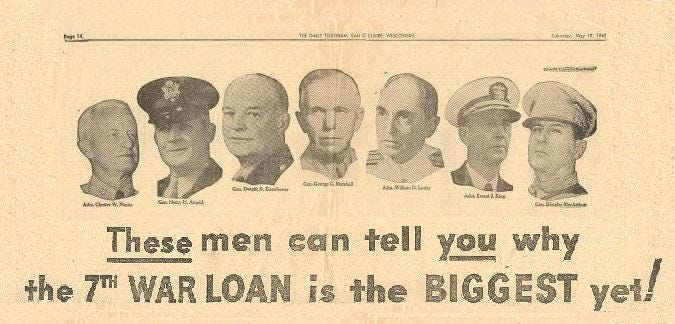
Six men of destiny
Responsibility for planning Operation Downfall fell to some of the most prominent American military leaders of the 20th century: Fleet Admiral Chester Nimitz, General of the Army Douglas MacArthur, and the Joint Chiefs of Staff — Fleet Admirals Ernest King and William D. Leahy, along with Generals of the Army George Marshall and Hap Arnold, who commanded the U.S. Army Air Forces.
These six men, raised in the relatively stable and predictable world of late 19th-century small-town America, carried with them the values instilled by that era.
Arnold and MacArthur were West Point graduates; King, Leahy, and Nimitz came out of the Naval Academy; while Marshall honed his discipline at the Virginia Military Institute, a school renowned for its toughness, even more so than the service academies.
For these leaders, the concepts of duty, honor, and country were more than just words — they were guiding principles.
They approached their roles without a trace of cynicism, supremely confident in their ability and, crucially, their God-given right to steer the course of history, especially in the chaos of war.
August 19, 2024
Evolution of WW2 German Tank Destroyers
The Tank Museum
Published May 3, 2024 19 productsUsed extensively by the German army of World War Two, the “tank destroyer” was developed to counter the increasing dominance of the tank on the battlefield.
Germany would field a massive 18 different types of tank destroyer in World War Two – compared with the 7 or 8 different types used by US, British and Commonwealth forces. One of these in particular, Sturmgeschütz III, would destroy more tanks than any other AFV in the entire conflict.
In this video we look at the development, strengths and weaknesses of German tank destroyers: from the 17 tonne Hetzer to the massive 70 tonne Jagdtiger — the heaviest tracked vehicle of the War.
00:00 | Introduction
00:59 | The First Tank Destroyers
04:14 | Avoiding Close Combat
06:59 | Jagdpanther
12:05 | Jagdtiger
15:31 | Hetzer
18:01 | Stug III
22:51 | ConclusionThis video features archive footage courtesy of British Pathé.
#tankmuseum #jagdpanther #stugiii #hetzer #jagdtiger
August 18, 2024
Hirohito Announces Surrender – War Continues – WW2 – Week 312 – August 17, 1945
World War Two
Published 17 Aug 2024Hirohito broadcasts Japan’s surrender to the world- despite an attempted to coup to prevent it from happening, and much of the world celebrates, but the war isn’t really over. The Soviets are busy invading Manchuria, and there’s revolution in Vietnam and Indonesia.
00:00 Intro
00:22 Recap
00:49 Attempted Coup In Japan
04:12 Hirohito Surrenders
08:54 Japanese Surrender In China
12:05 Soviets In Manchuria
17:52 Revolution In Vietnam
20:33 Summary
21:07 Conclusion
(more…)
August 17, 2024
Forgotten War Ep1 – Witness the Rising Sun
HardThrasher
Published Aug 14, 2024In January 1942 the Japanese Army poured over the border with Burma, and pushed back the Indian and British Armies to the border with Burma. Today we look at how that disaster came about, why and the first phase of the campaign
(more…)


