It is a truth universally acknowledged that, en masse if not individually, E2 has a slight nagging tendency towards anti-French sentiment. For the Brits it’s sort of traditional/historic, dating back to the Hundred Years War and all that (in which the English gloriously won, as they will be sure to note, at Crecy and Agincourt; strangely, at the end of it all, the French owned all of France, including the bits that the English had owned previously) and quite a lot of subsequent ones, mainly fought in Belgium, while for the Americans it seems to be something to do with the fact that they needed French help to run a revolution properly, along with the proximity of uppity Quebeckers and the fact that the French are marginally less prepared than the rest of the world to roll over and be McDisneyfied™; not being one I can’t say definitively. But I digress.
When it comes to military history, this particular bias mostly comes out in references to three weeks in May 1940, and specifically one piece of particularly crap judgement by General Gamelin and one bypassed fortress line. The fact that that the allied participants — France, Britain, the Netherlands and Belgium — have spent most of the time since blaming each other and trying to work out who sold out whom has been allowed to mask the fact that this particular campaign was successful beyond all reasonable expectations for the Germans, and that when the French actually had troops in the right places, they were perfectly capable of fighting the advancing Panzers to a standstill at a tactical or operational level. Visitors to Paris may wish to note that the big — rather bigger than you think until you actually see it in the flesh — structure at one end of the Champs Elysées is called the Arc de Triomphe, and not the Arc de Defaite; it bears an admittedly tedious and tasteless, but indubitably long, list of battles at which the French did rather well. The fact that your school history lessons may have taught you rather more about Paul Revere or Clive of India than about Charles Martel is not relevant in the greater scheme of things.
Albert Herring, “Why neither the French nor the Italians are the worst military nation”, Everything2, 2002-01-07.
August 16, 2019
QotD: It’s not really accurate to call the French “cheese-eating surrender monkeys”
August 12, 2019
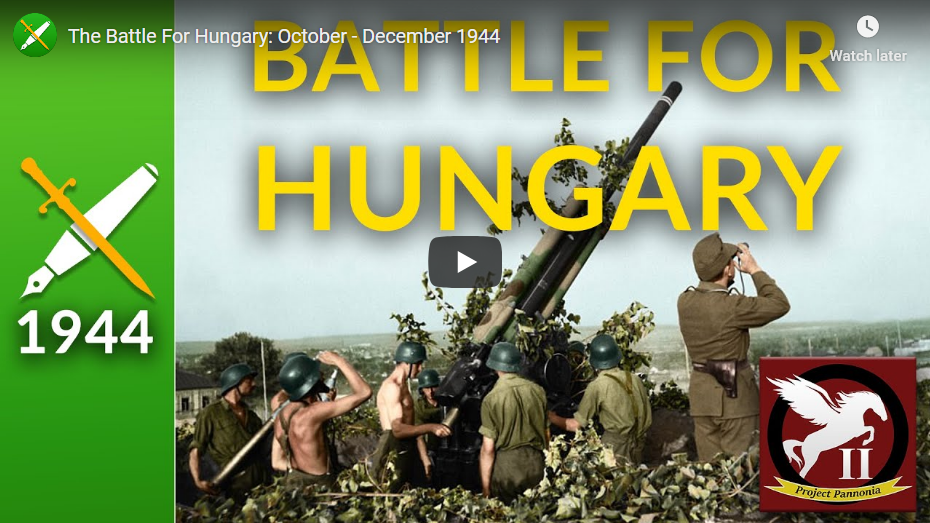
The Battle For Hungary: October – December 1944
Historigraph
Published on 10 Aug 2019Join me in War Thunder! Use my link for a FREE premium aircraft, tank or ship and a three day account boost as a BONUS: https://gjn.link/Historigraph/190810 Also available for free on PlayStation®4 and Xbox One.
If you enjoyed this video and want to see more made, consider supporting my efforts on Patreon: https://www.patreon.com/historigraph
To chat history, join my discord: https://discord.gg/vAFTK2D
I’m indebted to some viewers for helping me out with pronounciation of Hungarian words:
https://www.youtube.com/watch?v=FApWW…
https://www.youtube.com/watch?v=nCG_w…If you are Hungarian, please be charitable as I will still not have the word sounds 100% correct, as I am not a native speaker. I’m not about to put on a bad hungarian accent!
#WarThunder #BattleForHungary #HistorigraphSources:
The Siege of Budapest and the battles that led to it have had precious little written about them (in English!), so the bulk of this video (and the next) comes from one book:
Krisztián Ungváry, Battle for Budapest: 100 Days in World War 2
This is by far the most detailed account of the battle that I could find.
August 11, 2019
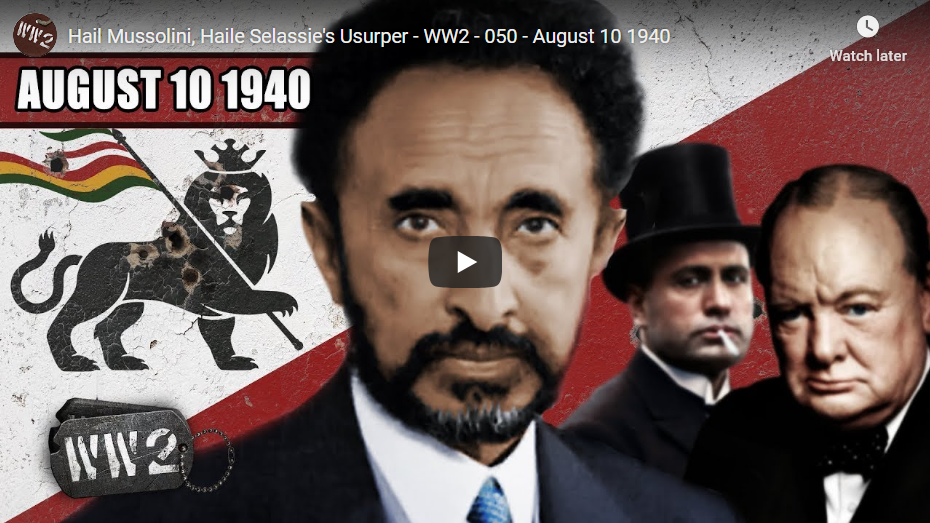
Hail Mussolini, Haile Selassie’s Usurper – WW2 – 050 – August 10 1940
World War Two
Published on 10 Aug 2019This week, the war spreads to Africa, when the Italians invade the British Colony of British Somaliland. While this might seem trivial, it might have tremendous consequences on the remainder of the war.
Join us on Patreon: https://www.patreon.com/TimeGhostHistory
Or join The TimeGhost Army directly at: https://timeghost.tvFollow WW2 day by day on Instagram @World_war_two_realtime https://www.instagram.com/world_war_t…
Join our Discord Server: https://discord.gg/D6D2aYN.
Between 2 Wars: https://www.youtube.com/playlist?list…
Source list: http://bit.ly/WW2sourcesWritten and Hosted by: Indy Neidell
Produced and Directed by: Spartacus Olsson and Astrid Deinhard
Executive Producers: Bodo Rittenauer, Astrid Deinhard, Indy Neidell, Spartacus Olsson
Creative Producer: Joram Appel
Post-Production Director: Wieke Kapteijns
Research by: Indy Neidell
Edited by: Iryna Dulka
Map animations: EastoryColorisations by Norman Stewart and Julius Jääskeläinen https://www.facebook.com/JJcolorization/
Eastory’s channel: https://www.youtube.com/channel/UCEly…
Archive by Screenocean/Reuters https://www.screenocean.com.Sources:
Freepngimg.com
IWM: CH 3484
Sound effect: littlerobotsoundfactoryA TimeGhost chronological documentary produced by OnLion Entertainment GmbH.
From the comments:
World War Two
2 days ago
Last week, we saw how one of our flagship episodes was taken down by YouTube. It turned out that this was a mistake by a YouTube worker who erroneously identified our content as hate speech. While we contacted YouTube immediately to protest, they themselves noticed the mistake before we reached the right people. They have since apologized to us and reinstated the episode. You can watch it here: https://youtu.be/DLN8NHXiMy0. We welcome YouTube’s diligence in fighting against extremist hateful content, especially in light of the current tragic events in the US, and we have accepted their apology. However, this does not change the fact that we still face demonetization of many of our videos, connected to lower recommendation of these videos. This is a problematic situation that we deplore – we continue to believe that the best way to fight ignorance and hatred is by education and that is at the heart of what we do here, unfortunately YouTube’s monetization policies continue to stand in the way of that mission.When the episode went down we saw a surge of support from many of you and we are humbly grateful for our dedicated community. The effort you all have made to share our content and support us on Patreon and timeghost.tv is what makes this show possible, and it’s an honor to have you all here. It is your support, both financially and in spirit that keeps us getting up in the morning to face yet another day of the war. Thank You!
Cheers,
The TimeGhost team
August 9, 2019
Lightweight Experimental Lanchester SMGs
Forgotten Weapons
Published on 14 Jun 2019http://www.patreon.com/ForgottenWeapons
Cool Forgotten Weapons merch! http://shop.bbtv.com/collections/forg…
George Lanchester was the engineer responsible for originally reverse engineering the German MP28 submachine gun for production by the British, under the designation Lanchester. Once he finished that design work, the gun was put into production by the Sterling Engineering Company, and Lanchester went to work for them as part of the manufacturing process. Once there, he began tinkering with improved designs to reduce the weight of the gun – one of its main drawbacks. He created these three prototypes, but went no further, as government officials ordered him to stop when they discovered this work in 1942. By that time the Sten was in production, and continued development of the Lanchester was seen as a waste of time and resources.
The guns remained in the Sterling company’s reference collection, and elements of the final stock design would resurface in a later prototype design in the 60s. Beyond that, these guns were a simple dead end of design.
Many thanks to the Royal Armouries for allowing me to film and disassemble these unique submachine guns! The NFC collection there – perhaps the best military small arms collection in Western Europe – is available by appointment to researchers:
https://royalarmouries.org/research/n…
You can browse the various Armouries collections online here:
https://royalarmouries.org/collection/
Contact:
Forgotten Weapons
PO Box 87647
Tucson, AZ 85754

August 4, 2019
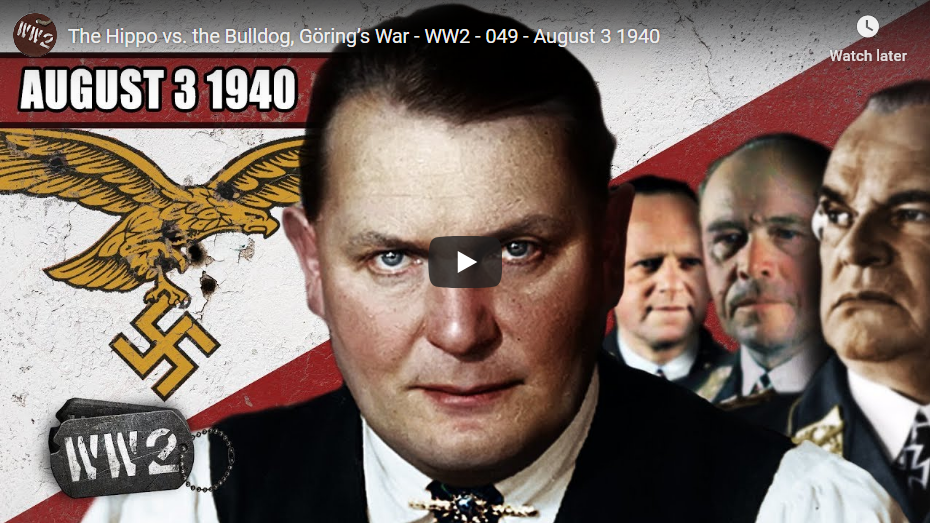
The Hippo vs. the Bulldog, Göring’s War – WW2 – 049 – August 3 1940
World War Two
Published on 3 Aug 2019As the Kanalkampf comes to a close, the Battle of Britain heats up. Hitler wants Britain out of the war. But before the Germans can invade Britain, it will have to deal with the Royal Air Force and the Royal Navy.
Join us on Patreon: https://www.patreon.com/TimeGhostHistory
Or join The TimeGhost Army directly at: https://timeghost.tvFollow WW2 day by day on Instagram @World_war_two_realtime https://www.instagram.com/world_war_t…
Join our Discord Server: https://discord.gg/D6D2aYN.
Between 2 Wars: https://www.youtube.com/playlist?list…
Source list: http://bit.ly/WW2sourcesWritten and Hosted by: Indy Neidell
Produced and Directed by: Spartacus Olsson and Astrid Deinhard
Executive Producers: Bodo Rittenauer, Astrid Deinhard, Indy Neidell, Spartacus Olsson
Creative Producer: Joram Appel
Post-Production Director: Wieke Kapteijns
Research by: Indy Neidell
Edited by: Iryna Dulka
Map animations: EastoryColorisations by Norman Stewart and Julius Jääskeläinen https://www.facebook.com/JJcolorization/
Eastory’s channel: https://www.youtube.com/channel/UCEly…
Archive by Screenocean/Reuters https://www.screenocean.com.Sources:
Colored portrait of Hugo Sperrle by Ruffneck88
Narodowe Archiwum Cyfrowe
IWM: HU 93055, CH 1535, CH 1533, A 18881, HU 76020
301 squadron insignia by Jakub Mikita
303 squadron insignia by MrozoA TimeGhost chronological documentary produced by OnLion Entertainment GmbH.
August 3, 2019
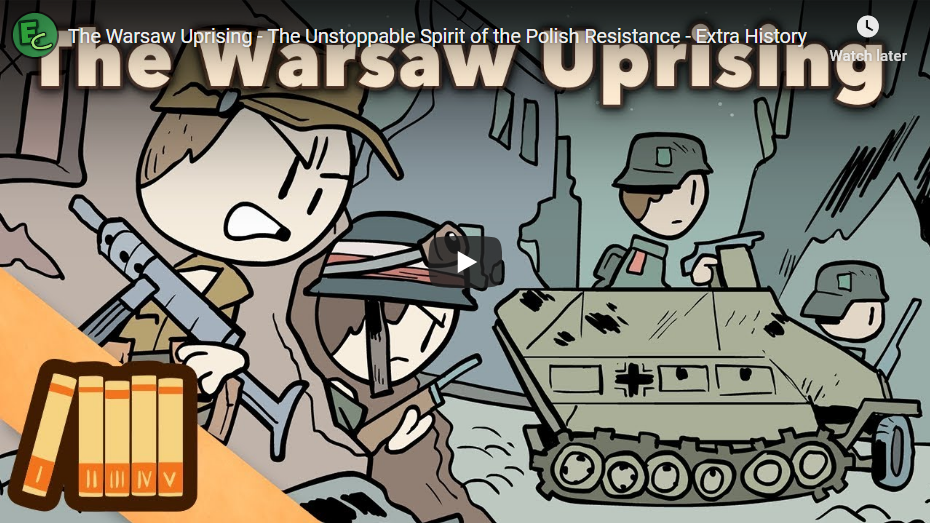
The Warsaw Uprising – The Unstoppable Spirit of the Polish Resistance – Extra History
Extra Credits
Published on 1 Aug 2019Thanks to the Polish National Foundation for sponsoring this video. https://www.pfn.org.pl/
The Polish are determined to make Poland matter on the world stage, and they will not wait for whatever mercies may come from the Russians. So the Home Army stages their own uprising to liberate Warsaw, and for some 60-odd days, their strongest members, the Grey Ranks, tragically held steadfast.
Join us on Patreon! http://bit.ly/EHPatreon
August 2, 2019
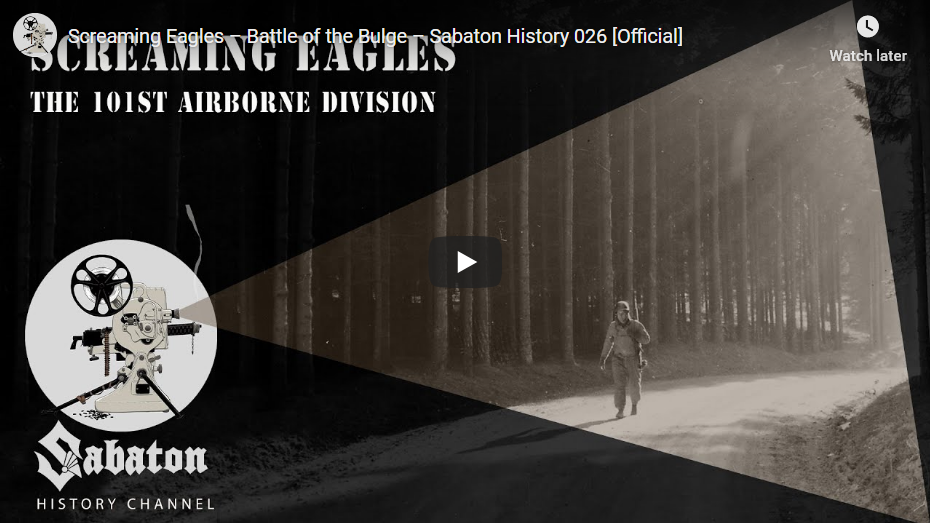
“Screaming Eagles” – Battle of the Bulge – Sabaton History 026 [Official]
Sabaton History
Published on 1 Aug 2019When the Germans launched their last western offensive through the Belgian Ardennes in the winter of 1944, it was up to the American 101st Airborne Division to defend the key city of Bastogne. Surrounded by camouflaged German soldiers and endless artillery bombardments, the 101st, a.k.a the Screaming Eagles, endured.
Support Sabaton History on Patreon: https://www.patreon.com/sabatonhistory
Listen to Coat of Arms (where “Screaming Eagles” is featured):
CD: http://bit.ly/CoatOfArmsStore
Spotify: http://bit.ly/CoatOfArmsSpotify
Apple Music: http://bit.ly/CoatOfArmsAppleMusic
iTunes: http://bit.ly/CoatOfArmsiTunes
Amazon: http://bit.ly/CoatOfArmsAmzn
Google Play: http://bit.ly/CoatOfArmsGooglePlayWatch the Official Lyric Video of “Screaming Eagles” here: https://www.youtube.com/watch?v=kJVkE…
Watch more videos on the Sabaton YouTube channel: https://www.youtube.com/user/Sabaton?…
Listen to Sabaton on Spotify: http://smarturl.it/SabatonSpotify
Official Sabaton Merchandise Shop: http://bit.ly/SabatonOfficialShopHosted by: Indy Neidell
Written by: Markus Linke and Indy Neidell
Directed by: Astrid Deinhard and Wieke Kapteijns
Produced by: Pär Sundström, Astrid Deinhard and Spartacus Olsson
Creative Producer: Joram Appel
Executive Producers: Pär Sundström, Joakim Broden, Tomas Sunmo, Indy Neidell, Astrid Deinhard, and Spartacus Olsson
Maps by: Eastory
Edited by: Iryna Dulka
Sound Editing by: Marek KaminskiEastory YouTube Channel: https://www.youtube.com/channel/UCEly…
Archive by: Reuters/Screenocean https://www.screenocean.com
Music by Sabaton.Sources:
IWM: EA 49214An OnLion Entertainment GmbH and Raging Beaver Publishing AB co-Production.
© Raging Beaver Publishing AB, 2019 – all rights reserved.
July 31, 2019
QotD: Foreshadowing Nuremberg
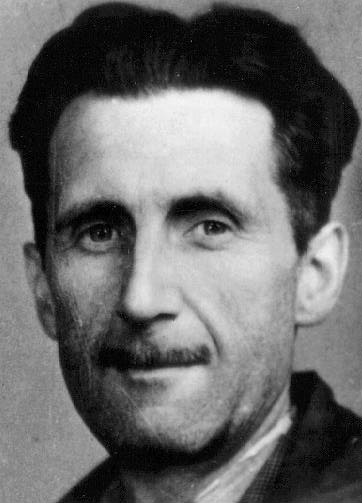
Orwell’s press card portrait, 1943
Mussolini, in “Cassius’s” book, after calling his witnesses, enters the box himself. He sticks to his Machiavellian creed: Might is Right, vae victis! He is guilty of the only crime that matters, the crime of failure, and he admits that his adversaries have a right to kill him — but not, he insists, a right to blame him. Their conduct has been similar to his own, and their moral condemnations are all hypocrisy. But thereafter come the other three witnesses, the Abyssinian, the Spaniard and the Italian, who are morally upon a different plane, since they have never temporized with Fascism nor had a chance to play at power politics; and all three of them demand the death penalty.
Would they demand it in real life? Will any such thing ever happen? It is not very likely, even if the people who have a real right to try Mussolini should somehow get him into their hands. The Tories, of course, though they would shrink from a real inquest into the origins of the war, are not sorry to have the chance of pushing the whole blame onto a few notorious individuals like Mussolini and Hitler. In this way the Darlan-Badoglio manoeuvre is made easier. Mussolini is a good scapegoat while he is at large, though he would be an awkward one in captivity. But how about the common people? Would they kill their tyrants, in cold blood and with the forms of law if they had the chance?
It is a fact that there have been very few such executions in history. At the end of the last war an election was won partly on the slogan “Hang the Kaiser”, and yet if any such thing had been attempted the conscience of the nation would probably have revolted. When tyrants are put to death, it should be by their own subjects; those who are punished by a foreign authority, like Napoleon, are simply made into martyrs and legends.
What is important is not that these political gangsters should be made to suffer, but that they should be made to discredit themselves. Fortunately they do do so in many cases, for to a surprising extent the war-lords in shining armour, the apostles of the martial virtues, tend not to die fighting when the time comes. History is full of ignominious getaways by the great and famous. Napoleon surrendered to the English in order to get protection from the Prussians, the Empress Eugénie fled in a hansom cab with an American dentist, Ludendorff resorted to blue spectacles, one of the more unprintable Roman emperors tried to escape assassination by locking himself in the lavatory, and during the early days of the Spanish Civil War one leading Fascist made his escape from Barcelona, with exquisite fitness, through a sewer.
It is some such exit that one would wish for Mussolini, and if he is left to himself perhaps he will achieve it. Possibly Hitler also. It used to be said of Hitler that when his time came he would never fly or surrender, but would perish in some operatic manner, by suicide at the very least. But that was when Hitler was successful; during the last year, since things began to go wrong, it is difficult to feel that he has behaved with dignity or courage. “Cassius” ends his book with the judge’s summing-up, and leaves the verdict open, seeming to invite a decision from his readers. Well, if it were left to me, my verdict on both Hitler and Mussolini would be: not death, unless in is inflicted in some hurried unspectacular way. If the Germans and Italians feel like giving them a summary court-martial and then a firing-squad, let them do it. Or better still, let the pair of them escape with a suitcaseful of bearer securities and settle down as the accredited bores of some Swiss pension. But no martyrizing, no St Helena business. And, above all, no solemn hypocritical “trial of war criminals”, with all the slow cruel pageantry of the law, which after a lapse of time has so strange a way of focusing a romantic light on the accused and turning a scoundrel into a hero.
George Orwell, “Who are the War Criminals?”, Tribune, 1943-10-22.
July 28, 2019
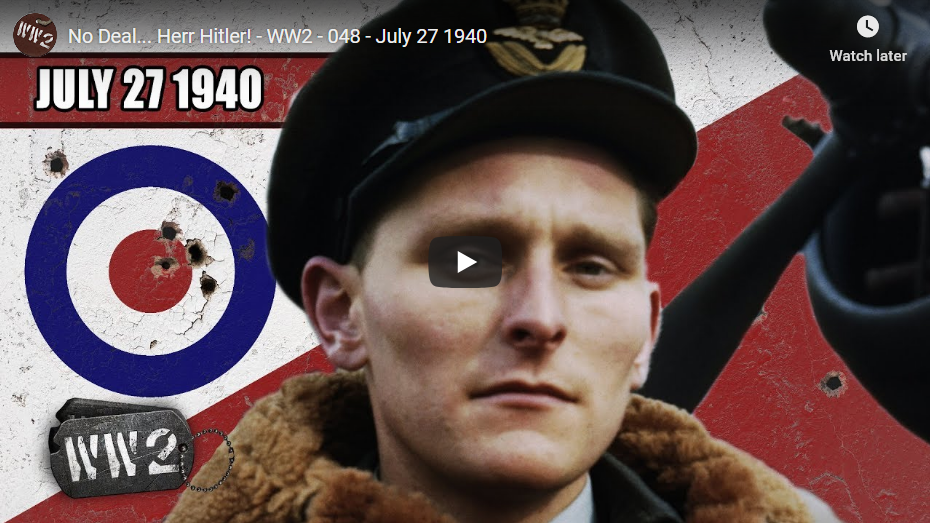
No Deal… Herr Hitler! – WW2 – 048 – July 27 1940
World War Two
Published on 27 Jul 2019Hitler searches for ways to force Britain out of the war, but the British sit safely behind their cliffs, their channel and their Royal Navy. Engaging the navy and invading Britain would require a major air-superiority. As a result, the Germans plan to knock the British out of the skies. This is the Battle of Britain.
Join us on Patreon: https://www.patreon.com/TimeGhostHistory
Or join The TimeGhost Army directly at: https://timeghost.tvFollow WW2 day by day on Instagram @World_war_two_realtime https://www.instagram.com/world_war_t…
Join our Discord Server: https://discord.gg/D6D2aYN.
Between 2 Wars: https://www.youtube.com/playlist?list…
Source list: http://bit.ly/WW2sourcesWritten and Hosted by: Indy Neidell
Produced and Directed by: Spartacus Olsson and Astrid Deinhard
Executive Producers: Bodo Rittenauer, Astrid Deinhard, Indy Neidell, Spartacus Olsson
Creative Producer: Joram Appel
Post-Production Director: Wieke Kapteijns
Research by: Indy Neidell
Edited by: Iryna Dulka
Map animations: EastoryColorisations by Norman Stewart and Julius Jääskeläinen https://www.facebook.com/JJcolorization/
Eastory’s channel: https://www.youtube.com/channel/UCEly…
Archive by Screenocean/Reuters https://www.screenocean.com.A TimeGhost chronological documentary produced by OnLion Entertainment GmbH.
From the comments:
World War Two
1 week ago (edited)
World War Two is a very complex topic, and even with one or more videos a week, there is a lot of information or context that we don’t get to cover on this channel. That’s why are doing series on the interwar years (1919-1939) called “Between Two Wars” on our TimeGhost History channel. We’re currently in 1929, and we’ll be making generally two thematic episodes for each year of the interwar period. If you want to understand what led up to this massive and destructive conflict, do make sure to check the channel out here: https://www.youtube.com/channel/UCLfMmOriSyPbd5JhHpnj4NgCheers,
Joram
Sea Lion: Why not just invade the UK in 1940?
Military History Visualized
Published on 13 Oct 2017Quite often people remark Hitler should just have finished off the UK before attacking the Soviet Union. Well, there are many problems with that assumption.
»» SUPPORT MHV ««
» patreon – https://www.patreon.com/mhv
» paypal donation – https://www.paypal.com/cgi-bin/webscr…Military History Visualized provides a series of short narrative and visual presentations like documentaries based on academic literature or sometimes primary sources. Videos are intended as introduction to military history, but also contain a lot of details for history buffs. Since the aim is to keep the episodes short and comprehensive some details are often cut.
July 26, 2019
“Attero Dominatus” – The Battle of Berlin – Sabaton History 025 [Official]
Sabaton History
Published on 25 Jul 2019The Sabaton song “Attero Dominatus” is about the Soviet advance on Berlin in the last months of World War Two. As the Soviets approach Berlin, two commanders, General Zhukov and General Konev, try their best to be the one to take the centre of the German capital. Meanwhile, thousands of Germans are raped or murdered by the Soviets in retaliation to the atrocities that the Germans committed in the east.
Support Sabaton History on Patreon: https://www.patreon.com/sabatonhistory
Listen to Attero Dominatus (where “Attero Dominatus” is featured):
CD: http://bit.ly/AtteroDominatusStore
Spotify: http://bit.ly/AtteroDominatusSpotify
Apple Music: http://bit.ly/AtteroDominatusAppleMusic
iTunes: http://bit.ly/AtteroDominatusiTunes
Amazon: http://bit.ly/AtteroDominatusAmzn
Google Play: http://bit.ly/AtteroDominatusGooglePlayCheck out the official videoclip for “Attero Dominatus” here: https://www.youtube.com/watch?v=eNlRq…
Listen to Sabaton on Spotify: http://smarturl.it/SabatonSpotify
Official Sabaton Merchandise Shop: http://bit.ly/SabatonOfficialShopHosted by: Indy Neidell
Written by: Markus Linke and Indy Neidell
Directed by: Astrid Deinhard and Wieke Kapteijns
Produced by: Pär Sundström, Astrid Deinhard and Spartacus Olsson
Creative Producer: Joram Appel
Executive Producers: Pär Sundström, Joakim Broden, Tomas Sunmo, Indy Neidell, Astrid Deinhard, and Spartacus Olsson
Maps by: Eastory
Edited by: Iryna Dulka
Sound Editing by: Marek KaminskiEastory YouTube Channel: https://www.youtube.com/channel/UCEly…
Archive by: Reuters/Screenocean https://www.screenocean.com
Music by Sabaton.An OnLion Entertainment GmbH and Raging Beaver Publishing AB co-Production.
Sources:
Colored portrait of W. Wenck by Ruffneck88
Ministry of Defence of the Russian Federation
Photos of Helmuth Weidling from ww2gallery on Flickr© Raging Beaver Publishing AB, 2019 – all rights reserved.
July 21, 2019
Good People on Both Sides? – WW2 – 047 – July 20 1940
World War Two
Published on 20 Jul 2019Peace seems to slowly return to the European mainland, but not for long, as the Germans move their airplanes to the French coast to Battle Britain in the skies while they make invasion plans, and the Soviets are entering the Baltics after ‘elections’ invited them to.
Join us on Patreon: https://www.patreon.com/TimeGhostHistory
Or join The TimeGhost Army directly at: https://timeghost.tvFollow WW2 day by day on Instagram @World_war_two_realtime https://www.instagram.com/world_war_t…
Join our Discord Server: https://discord.gg/D6D2aYN.
Between 2 Wars: https://www.youtube.com/playlist?list…
Source list: http://bit.ly/WW2sourcesWritten and Hosted by: Indy Neidell
Produced and Directed by: Spartacus Olsson and Astrid Deinhard
Executive Producers: Bodo Rittenauer, Astrid Deinhard, Indy Neidell, Spartacus Olsson
Creative Producer: Joram Appel
Post production director:Wieke Kapteijns
Research by: Indy Neidell
Edited by: Marek Kaminski
Map animations: EastoryColorisations by Norman Stewart and Julius Jääskeläinen https://www.facebook.com/JJcolorization/
Eastory’s channel: https://www.youtube.com/channel/UCEly…
Archive by Screenocean/Reuters https://www.screenocean.com.A TimeGhost chronological documentary produced by OnLion Entertainment GmbH.
July 16, 2019
QotD: Wartime atrocities
Orwell’s press card portrait, 1943
I have little direct evidence about the atrocities in the Spanish civil war. I know that some were committed by the Republicans, and far more (they are still continuing) by the Fascists. But what impressed me then, and has impressed me ever since, is that atrocities are believed in or disbelieved in solely on grounds of political predilection. Everyone believes in the atrocities of the enemy and disbelieves in those of his own side, without ever bothering to examine the evidence. Recently I drew up a table of atrocities during the period between 1918 and the present; there was never a year when atrocities were not occurring somewhere or other, and there was hardly a single case when the Left and the Right believed in the same stories simultaneously. And stranger yet, at any moment the situation can suddenly reverse itself and yesterday’s proved-to-the-hilt atrocity story can become a ridiculous lie, merely because the political landscape has changed.
In the present war we are in the curious situation that our “atrocity campaign” was done largely before the war started, and done mostly by the Left, the people who normally pride themselves on their incredulity. In the same period the Right, the atrocity-mongers of 1914-18, were gazing at Nazi Germany and flatly refusing to see any evil in it. Then as soon as war broke out it was the pro-Nazis of yesterday who were repeating horror stories, while the anti-Nazis suddenly found themselves doubting whether the Gestapo really existed. Nor was this solely the result of the Russo-German Pact. It was partly because before the war the Left had wrongly believed that Britain and Germany would never fight and were therefore able to be anti-German and anti-British simultaneously; partly also because official war-propaganda, with its disgusting hypocrisy and self-righteousness, always tends to make thinking people sympathize with the enemy. Part of the price we paid for the systematic lying of 1914-17 was the exaggerated pro-German reaction which followed. During the years 1918-33 you were hooted at in left-wing circles if you suggested that Germany bore even a fraction of responsibility for the war. In all the denunciations of Versailles I listened to during those years I don’t think I ever once heard the question, “What would have happened if Germany had won?” even mentioned, let alone discussed. So also with atrocities. The truth, it is felt, becomes untruth when your enemy utters it. Recently I noticed that the very people who swallowed any and every horror story about the Japanese in Nanking in 1937 refused to believe exactly the same stories about Hong Kong in 1942. There was even a tendency to feel that the Nanking atrocities had become, as it were, retrospectively untrue because the British Government now drew attention to them.
But unfortunately the truth about atrocities is far worse than that they are lied about and made into propaganda. The truth is that they happen. The fact often adduced as a reason for scepticism — that the same horror stories come up in war after war — merely makes it rather more likely that these stories are true. Evidently they are widespread fantasies, and war provides an opportunity of putting them into practice. Also, although it has ceased to be fashionable to say so, there is little question that what one may roughly call the “whites” commit far more and worse atrocities than the “reds”. There is not the slightest doubt, for instance, about the behaviour of the Japanese in China. Nor is there much doubt about the long tale of Fascist outrages during the last ten years in Europe. The volume of testimony is enormous, and a respectable proportion of it comes from the German press and radio. These things really happened, that is the thing to keep one’s eye on. They happened even though Lord Halifax said they happened. The raping and butchering in Chinese cities, the tortures in the cellars of the Gestapo, the elderly Jewish professors flung into cesspools, the machine-gunning of refugees along the Spanish roads — they all happened, and they did not happen any the less because the Daily Telegraph has suddenly found out about them when it is five years too late.
George Orwell, “Looking back on the Spanish War”, New Road, 1943 (republished in England, Your England and Other Essays, 1953).
July 15, 2019
Fire and Ice: The Winter War of Finland and Russia (2006)
DutchRanger
Published on 13 Aug 2013A nice documentary of the winter war.
July 14, 2019
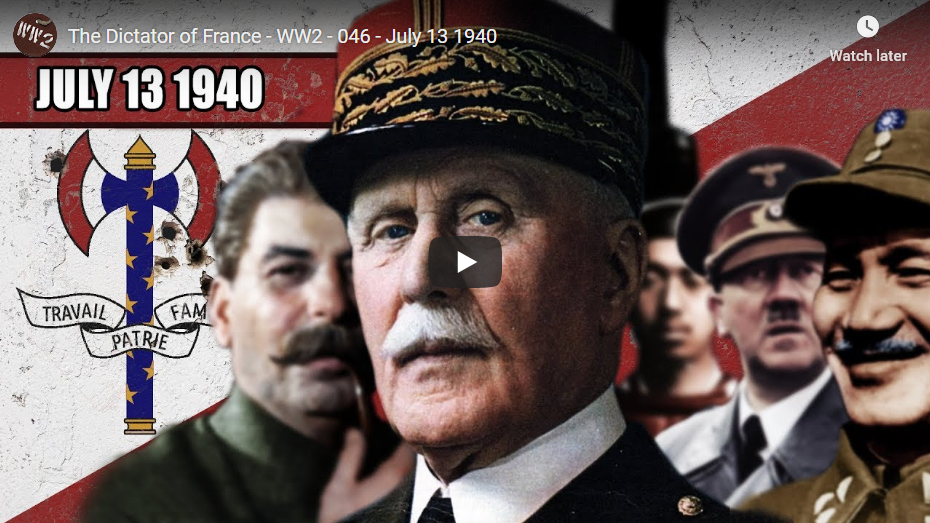
The Dictator of France – WW2 – 046 – July 13 1940
World War Two
Published on 13 Jul 2019The Germans and the French in Vichy consolidate their newly acquired power as the British deal with the remnants of the French navy. The Battle of Britain begins with fighting above the English Channel, a battle with great consequences for the future of Europe.
Join us on Patreon: https://www.patreon.com/TimeGhostHistory
Or join The TimeGhost Army directly at: https://timeghost.tvFollow WW2 day by day on Instagram @World_war_two_realtime https://www.instagram.com/world_war_t…
Join our Discord Server: https://discord.gg/D6D2aYN.
Between 2 Wars: https://www.youtube.com/playlist?list…
Source list: http://bit.ly/WW2sourcesWritten and Hosted by: Indy Neidell
Produced and Directed by: Spartacus Olsson and Astrid Deinhard
Executive Producers: Bodo Rittenauer, Astrid Deinhard, Indy Neidell, Spartacus Olsson
Creative Producer: Joram Appel
Research by: Indy Neidell
Edited by: Iryna Dulka
Map animations: EastoryColorisations by Norman Stewart and Julius Jääskeläinen https://www.facebook.com/JJcolorization/
Eastory’s channel: https://www.youtube.com/channel/UCEly…
Archive by Screenocean/Reuters https://www.screenocean.com.Sources:
– IWM: HU 25966, D 734, HU 104721, D 735,
A 18492, HU 52333, Q 69694, A 18284, AMY 450, MH 4560
– Collection of Adolph B. Miller/COLL1068, USMC Archives & Special Collections
– Lloyd W. Williams Collection (COLL/77), USMC Archives & Special CollectionsA TimeGhost chronological documentary produced by OnLion Entertainment GmbH.
From the comments:
World War Two
3 days ago (edited)
“You either die a hero or live long enough to see yourself become the villain,” could very well describe the life of Philippe Pétain. Or at least, thats what many generally agree on in hindsight. For the people living in France in 1940, it wasn’t that black or white. “Saving France” didn’t necessarily mean fighting from exile, and establishing a French state with approval of the German victors might have seemed like the best option to protect French interests, people and identity. It’s hard to place yourself in the shoes of people who lived through hard times and had to make tough decisions. Thats why we try to report and describe what happened as unbiased as we can. Keep that in mind when commenting, as well as our rules and guidelines.