Quotulatiousness

January 7, 2014

The “politicization” debate about the First World War

Filed under: Britain, Education, History, Media, Politics, WW1 — Tags: , — Nicholas @ 08:54

In sp!ked, Frank Furedi says that the row in Britain over the centennial of the start of World War 1 isn’t really about the war at all:

Somehow, the First World War has come alive. Suddenly, everyone in Britain seems to have strong views about its causes, meaning and the way it is taught in schools and represented by the entertainment industry.

Boris Johnson, the Conservative mayor of London, is certain that the Germans started the war. Michael Gove, the Conservative secretary of state for education, concurs, insisting that the ‘ruthless social Darwinism of the German elites’ and their ‘aggressively expansionist war aims’ made ‘resistance more than justified’. Gove, who believes Britain fought a ‘just war’ back in 1914, has denounced ‘left-wing academics’ and cynical TV shows like Blackadder for mocking Britain’s role in the conflict.

The Labour Opposition has dutifully done what it always does — attack Gove. Labour’s shadow education secretary, Tristram Hunt, said in response to Gove that ‘few imagined that the Conservatives would be this crass’. He also reminded his opposite number that the left played an honourable role in the Great War. Labour activist Sir Tony Robinson, who played Baldrick in Blackadder, also joined the fray, accusing Gove of ‘slagging off teachers’.

This looks and sounds like a debate about the past — but actually, its main drivers are contemporary conflicts over cultural values and political opinions.

Hunt claims Gove is using history for political ends. No doubt he is right. However, Hunt himself, and other Labour-supporting critics of Gove, fail to acknowledge their own complicity in the politicisation of the current debate on the meaning of the First World War. When they depict Gove’s attack on media cynicism about the war as just another example of him ‘slagging off teachers’, what they’re really doing is continuing today’s education debate under the guise of talking about the past.
January 6, 2014

Austria, the “laboratory of the Apocalypse”

Filed under: Europe, History, WW1 — Tags: — Nicholas @ 09:25

Bethany Bell in Vienna writes about Austria just before the start of the war in 1914:

Across the road, a crowd had gathered outside a large, late 19th Century building. I walked over to have a look. It was the Embassy of what was then still Yugoslavia. An official had just pinned to the door two notices about the war that was, at that time, raging in Bosnia. Two men in front of me were talking about the siege of Sarajevo.

I shivered. History suddenly seemed very close.

A few months ago, a Viennese friend frowned as he stirred his coffee. We were sitting in Cafe Griensteidl, in the centre of town.

I’d just told him that, even after 15 years of living here, I’m still haunted by Vienna as it was just before the outbreak of World War One, before the defeat that led to the collapse of the rotting Austro-Hungarian Empire.

“But don’t lots of periods of history feel close in Vienna?” he asked. “You’ve got Mozart and the Baroque, you’ve got the 19th Century and the Ringstrasse, you’ve even got the Flak towers of the World War Two… Why not focus on them?”

I looked around at the cafe with its marble-topped tables and high white ceiling. Among the visitors and tourists, I recognised several senior Austrian civil servants, a couple of foreign diplomats and one of the country’s most distinguished historians.

“It’s partly the idea of cafe society,” I said lightly. “Just think who might have been sitting here back then!”

At the end of the 19th Century, Cafe Griensteidl was at the heart of Vienna’s dazzling intellectual life, patronised by people such as Arnold Schoenberg and Theodore Herzl. Sigmund Freud is thought to have preferred the nearby Cafe Landtmann.

“Ah, you have bought into the romance of fin-de-siecle Vienna!” he exclaimed. “You know that it was encouraged by some of Austria’s leaders after 1945. They wanted people to look back at a period of history they could be proud of — not like World War Two.”

He looked up at the Jugendstil mirror above our table.

“Even this cafe isn’t really genuine,” he said. “The original Griensteidl shut down in 1897 — this place was re-opened in the 1990s.”

“You know better than me that lots of traditions and places have survived,” I replied. “It’s not all fake — just look over there,” and I pointed through the window at the bank opposite. Built by the Modernist architect Adolf Loos, around 1910, the building had caused a scandal because of its severe lack of decoration.

“I think what haunts me is something a bit different,” I said.

“It’s the thought that this exquisite, civilised place didn’t seem to be able to stop its own collapse — and that it unleashed so many destructive ideas and people that tore Europe — and the 20th Century apart.”

The writer Karl Kraus had a phrase for it. In his obituary for Franz Ferdinand, he called Austria the laboratory of the Apocalypse.

My friend smiled wryly. “Ah, yes,” he said, “the Viennese, dancing towards destruction.”

Boris Johnson – Germany started the war

Filed under: Europe, Germany, History, WW1 — Tags: — Nicholas @ 08:29

In the Telegraph Boris Johnson is exasperated by recent comments that try to obscure or minimize the German role in starting the First World War:

It is a sad but undeniable fact that the First World War — in all its murderous horror — was overwhelmingly the result of German expansionism and aggression. That is a truism that has recently been restated by Max Hastings, in an excellent book, and that has been echoed by Michael Gove, the Education Secretary. I believe that analysis to be basically correct, and that it is all the more important, in this centenary year, that we remember it.

That fact is, alas, not one that the modern Labour Party believes it is polite to mention. According to the party’s education spokesman, Tristram Hunt, it is “crass” and “ugly” to say any such thing. It was “shocking”, he said in an article in yesterday’s Observer, that we continued to have this unacceptable focus on a “militaristic Germany bent on warmongering and imperial aggression”.

He went on — in a piece that deserves a Nobel prize for Tripe — to mount what appeared to be a kind of cock-eyed exculpation of the Kaiser and his generals. He pointed the finger, mystifyingly, at the Serbs. He blamed the Russians. He blamed the Turks for failing to keep the Ottoman empire together, and at one stage he suggested that we were too hard on the bellicose Junker class. He claimed that “modern scholarship” now believes that we have “underplayed the internal opposition to the Kaiser’s ideas within the German establishment” — as if that made things any better.

[…]

Hunt is guilty of talking total twaddle, but beneath his mushy-minded blether about “multiple histories” there is what he imagines is a kindly instinct. These wars were utterly horrific for the Germans as well as for everyone else, and the Germans today are very much our friends. He doesn’t want the 1914 commemorations to pander to xenophobia, or nationalism, or Kraut-bashing; and I am totally with him on that.

We all want to think of the Germans as they are today — a wonderful, peaceful, democratic country; one of our most important global friends and partners; a country with stunning technological attainments; a place of incomparable cultural richness and civilisation. What Hunt fails to understand — in his fastidious Lefty obfuscation of the truth — is that he is insulting the immense spiritual achievement of modern Germany.

The Germans are as they are today because they have been frank with themselves, and because over the past 60 years they have been agonisingly thorough in acknowledging the horror of what they did. They don’t try to brush it aside. They don’t blame the Serbs for the 1914-18 war. They don’t blame the Russians or the Turks. They know the price they paid for the militarism of the 20th century.

December 21, 2013

The Ross Rifle

Filed under: Cancon, History, Military, Weapons, WW1 — Tags: , , , — Nicholas @ 10:46

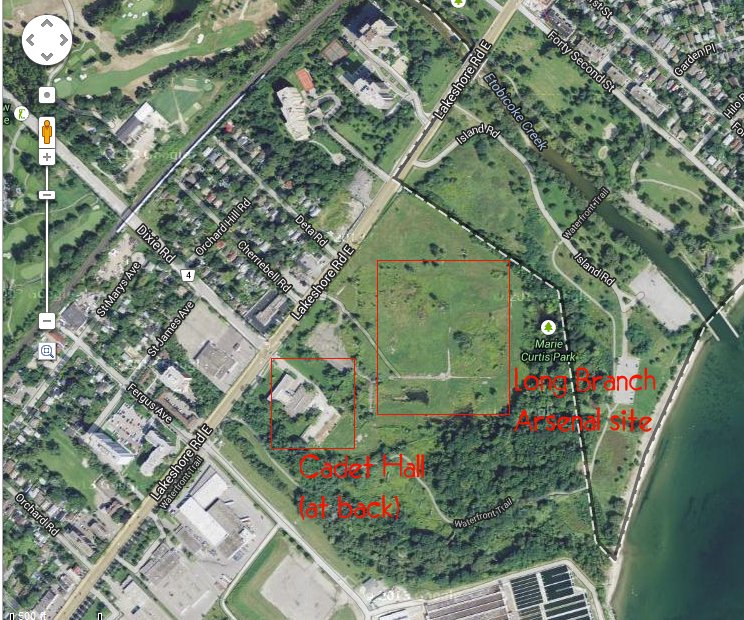
When I was an army cadet, the weapon we trained on was the Lee Enfield, an old but highly reliable British rifle. Our cadet range used Lee Enfields with .22 adapters, but due to an odd quirk of timing, the very first weapon I ever fired was a Lee Enfield .303 … I think it weighed nearly as much as I did at 12. Interestingly, our cadet hall was adjacent to the site where the Long Branch Arsenal had manufactured Lee Enfield rifles during WW2, and the building may have been part of the factory complex.

Long Branch Arsenal site

Lee-Enfield No 4 Mk I (1943)

At the beginning of World War One, the Canadian army was supposed to be equipped as much as possible with Canadian-produced kit, including the infantry rifle. Canadian industrial development meant that we didn’t have factories that could immediately turn out bigger pieces of armament, but rifles were easily within reach. The government’s choice was the Ross rifle, which was already in production and was highly accurate but had a few disadvantages that were not discovered until the first Canadian troops were in Flanders. Wikipedia says:

The Ross rifle was a straight-pull bolt action .303 inch-calibre rifle produced in Canada from 1903 until 1918.

The Ross Mk.II or (“1905”) rifle was highly successful in target shooting before WWI, but the close chamber tolerances, lack of primary extraction and overall length made the Mk.III (or “1910”) Ross rifle unsuitable for the conditions of trench warfare and the often poor quality ammunition issued.

By 1916, the rifle had been withdrawn from front line service, but continued to be used by many snipers of the Canadian Expeditionary Force until the end of the war due to its exceptional accuracy.

The Ross Rifle Co. made sporting rifles from early in its production, most notably chambered in .280 Ross, introduced in 1907. This cartridge is recorded as the first to achieve over 3000 feet per second velocity, and the cartridge acquired a very considerable international reputation among target shooters and hunters.

Lickmuffin, who frequently posts comments here on the blog, recently acquired a “sporterized” version and produced a short video about the rifle:

November 23, 2013

The power of the press in World War One

Filed under: Britain, History, Media, Weapons, WW1 — Tags: , , , , — Nicholas @ 08:55

The current issue of History Today includes an interesting article by Adrian Bingham on the British newspapers (especially the Daily Mail and the Times) during WW1:

When Britain declared war on Germany in August 1914 the widespread feelings of fear, uncertainty and patriotic determination were matched at the offices of the Daily Mail by a sense of vindication. The newspaper had been warning about the German threat for years, perhaps most notoriously when it serialised in 1909 a series of inflammatory articles by the journalist Robert Blatchford, which, when reprinted as a penny pamphlet, sold some 1.6 million copies. The Mail had, moreover, consistently demanded that the Royal Navy be reinforced. It was soon styling itself ‘the paper that foretold the war’. For its critics, the Mail’s irresponsible stoking of anti-German sentiment, driven above all by the paper’s owner, Lord Northcliffe, actually helped to create the conditions that enabled conflict to break out. ‘Next to the Kaiser’, wrote the esteemed editor and journalist A.G. Gardiner, ‘Lord Northcliffe has done more than any other living man to bring about the war.’

[…]

It was not long, however, before Northcliffe became frustrated with the strict censorship imposed on the British press when reporting events in Europe. ‘What the newspapers feel very strongly’, wrote Northcliffe to Lord Murray of Elibank, ‘is that, against their will, they are made to be part and parcel of a foolish conspiracy to hide bad news. English people do not mind bad news.’ Such censorship was particularly worrying when it risked hiding failures in the prosecution and management of the war. Drawing both on the experiences of his visits to the front and on private sources of information from his many correspondents, Northcliffe became increasingly convinced that several men in leading positions were not up to the job, including the prime minister, Asquith, the First Lord of the Admiralty, Winston Churchill, and the Secretary of State for War, Lord Kitchener.

The episode that crystallised this concern, over which Northcliffe put both his and the Mail’s reputation on the line, was the Shell Crisis of May 1915. Northcliffe had received letters from the front claiming that British military operations were being undermined by the lack of the right kind of shell and, after the Allies failed to capitalise on an initial breakthrough at Neuve Chapelle due to a lack of munitions, these criticisms began to be publicly aired. On May 15th, 1915 The Times (also owned by Northcliffe at the time) published a telegram from its respected military correspondent, Lieutenant-Colonel Repington, highlighting the problem and Northcliffe decided to go on the offensive. After some critical editorials, on May 21st the Mail published an incendiary piece written by Northcliffe himself and headlined ‘The Tragedy of the Shells: Lord Kitchener’s Grave Error’. Northcliffe pinned the blame for the shells scandal directly on Kitchener:

    Lord Kitchener has starved the army in France of high-explosive shells. The admitted fact is that Lord Kitchener ordered the wrong kind of shell … He persisted in sending shrapnel – a useless weapon in trench warfare … The kind of shell our poor soldiers have had has caused the death of thousands of them.

This direct public attack on such an esteemed figure at a time of national crisis was shocking and generated fury among many of Northcliffe’s critics. Members of the London Stock Exchange burned copies of both The Times and the Mail and anxious advertisers cancelled contracts. Thousands of readers stopped buying the papers. Northcliffe, though, was undaunted: at this point he was concerned not with circulation but with what he perceived as his national duty. ‘I mean to tell the people the truth and I don’t care what it costs’, he told his chauffeur. It was clear even to Northcliffe’s opponents, moreover, that there were indeed problems with Britain’s munitions supply. Northcliffe was soon vindicated. Although Kitchener survived in the short term, the Liberal government fell at the end of May 1915, to be replaced by a coalition administration: Asquith remained as prime minister, but Lloyd George was appointed as minister of munitions to address the supply problems.

November 11, 2013

“The Canadian Corps … had beaten 47 German divisions since Aug. 8”

Filed under: Cancon, Europe, France, Germany, History, Military, WW1 — Tags: , , , , — Nicholas @ 15:55

In the Globe and Mail, J.L. Granatstein wants us to remember the greatest military achievement of the Canadian Corps in World War One (and it isn’t the battle of Vimy Ridge):

On Aug. 8, 1918, the Canadian Corps had secretly moved into position in front of the French city of Amiens. The German army had been on the offensive since March, and the Amiens sector was rather lightly defended. The Canadians, British and Australians struck this sector a surprise hammer blow in the early morning, a hurricane of artillery fire clearing the way for the tanks and infantry that blasted through the defences. Thousands of Germans surrendered, more were killed and within a few hours, the Canadian advance was almost 15 kilometres. This, wrote the German army’s great strategist, General Erich Ludendorff, was “the black day” of the German Army.

Lt.-Gen. Currie’s troops then moved north to the Arras area, where, at the end of the month, they struck toward and then through the Drocourt-Quéant Line, an immensely strong extension of the Hindenburg Line defended by crack troops. In heavy fighting at high cost, the Corps broke the line, forcing the Germans back behind the Canal du Nord, their last position protecting the key supply point of Cambrai.

[…]

The Germans now were in full retreat, moving eastward as fast as they could go. The Canadians took Valenciennes, smashing the enemy defences with a massive artillery barrage, and then moved into Belgium. By Nov. 11, they were in Mons, the same small town where the men of the British Expeditionary Force had first faced the invading Germans in August, 1914.

The Canadian Corps, more than a hundred thousand strong, had fought its last battles. As Lt.-Gen. Currie noted proudly, it had beaten 47 German divisions since Aug. 8, a quarter of the German forces in the West. The Corps had accomplished this because of its great fighting spirit, its fine leadership at all levels and its effective reinforcement and logistics systems. The cost in lives and in wounded was terrible — 45,000 casualties, 20 per cent of the total of Canadian losses in the entire war — but for once, the campaign had achieved measurable gains on the ground. More than that, the Canadian shock troops had battered the enemy, forced them eastward and obliged them to seek an armistice that was a de facto capitulation. It had scored its greatest victory, the greatest battlefield triumph ever by Canadian troops.

In memorium

Filed under: Britain, History, Military, WW1, WW2 — Tags: , , — Nicholas @ 11:00

A simple recognition of some of our family members who served in the First and Second World Wars:

The Great War

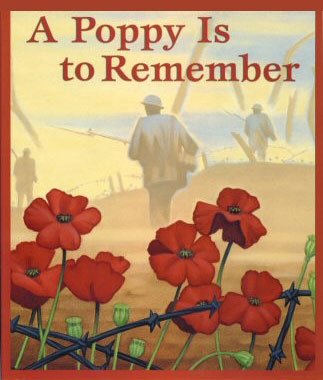
  • A Poppy is to RememberPrivate William Penman, Scots Guards, died 1915 at Le Touret, age 25

    (Elizabeth’s great uncle)
  • Private David Buller, Highland Light Infantry, died 1915 at Loos, age 35
    (Elizabeth’s great grandfather)
  • Private Walter Porteous, Northumberland Fusiliers, died 1917 at Passchendaele, age 18
    (my great uncle)
  • Corporal John Mulholland, Royal Tank Corps, died 1918 at Harbonnieres, age 24
    (Elizabeth’s great uncle)

The Second World War

  • Flying Officer Richard Porteous, RAF, survived the defeat in Malaya and lived through the war
    (my uncle)
  • Able Seaman John Penman, RN, served in the Defensively Equipped Merchant fleet on the Murmansk Run (and other convoy routes), lived through the war
    (Elizabeth’s father)
  • Private Archie Black (commissioned after the war and retired as a Major), Gordon Highlanders, captured at Singapore (aged 15) and survived a Japanese POW camp
    (Elizabeth’s uncle)
  • Elizabeth Buller, “Lumberjill” in the Women’s Land Army in Scotland through the war.
    (Elizabeth’s mother)

In Flanders fields the poppies blow
Between the crosses row on row,
That mark our place; and in the sky
The larks, still bravely singing, fly
Scarce heard amid the guns below.

We are the Dead. Short days ago
We lived, felt dawn, saw sunset glow,
Loved and were loved, and now we lie
In Flanders fields.

Take up our quarrel with the foe:
To you from failing hands we throw
The torch; be yours to hold it high.
If ye break faith with us who die
We shall not sleep, though poppies grow
In Flanders fields.

Lieutenant Colonel John McCrae, MD Canadian Army Medical Corps (1872-1918)

We will remember them

Filed under: Britain, Cancon, History, Military, WW1, WW2 — Tags: , — Nicholas @ 00:01

A Remembrance Day slideshow using Mark Knopfler’s wonderful “Remembrance Day” song from the album Get Lucky (2009). The early part of the song conveys many British images, but I have added some very Canadian images also which fit with many of the lyrics. The theme and message is universal… ‘we will remember them’.

November 10, 2013

Grave robbers of the western front

Filed under: Britain, Europe, France, History, Military, WW1 — Tags: — Nicholas @ 12:05

In the Telegraph, Willard Foxton explains why the growing interest in the centenary of the First World War is also giving a boost to the grave robbers:

Across the UK, there has been a rash of police finds of these First World War explosives, as the online trade in them has boomed. Dealers will often home defuse them, putting themselves and others at risk; some have been maimed doing so. […]

As dangerous as these unexploded devices are, perhaps the ugliest corner of the trade is the sale of other relics — especially dead soldiers’ identification marks. In particular, there’s a premium on British soldier’s spoons, which would often have their owner’s names embossed on them. Helmets can fetch high prices, too — including those bent out of shape by bullets or shells, which gives you some idea of what happened to the poor guy wearing it. As Andy Brockman, a leading conflict archaeologist told me:

“There is a market in all kinds of battlefield memorabilia and in the worst cases this can lead to the sale of identification tags and the removal of personal possessions like spoons and toothbrushes from battlefield burials. These objects can carry identifying marks and their loss can prevent authorities like the Commonwealth War Graves Commission from identifying the soldier concerned, robbing them of the chance of a marked grave.

“When it comes to the illegal removal of equipment and personal possessions from the remains of the missing to feed the collectors market, I would agree with Andy Robertshaw of the Royal Logistics Corps Museum who says that it’s like killing them twice.”

October 24, 2013

The Somme, then and now – “most of these men would be dead 40 minutes after this film”

Filed under: Britain, Europe, France, History, Military, WW1 — Tags: , — Nicholas @ 00:01

Published on 6 Oct 2013

After painstaking research I found a lot of the exact positions that Malins filmed the Battle footage from. I hope to re-edit it soon and make it a bit smoother; also will be going back soon to film where the artillery bombarded Gommecourt.

H/T to Think Defence for the link.

September 16, 2013

British battlefields and the belated preservation effort

Filed under: Britain, History, WW1 — Tags: , , — Nicholas @ 09:02

In History Today, Julian Humphrys talks about the late start in preserving and interpreting the battlefields in Britain:

Few would disagree that battles have played a significant part in Britain’s history. The Norman Conquest after the Battle of Hastings in 1066 caused enormous social, political and cultural change; De Montfort’s victory at Lewes in 1264 led to the earliest forerunner of Parliament; Bruce’s victory at Bannockburn in 1314 helped secure Scotland’s independence from England while the battles of the mid-17th century helped change both the roles of Crown and Parliament and the relationship between the component parts of the United Kingdom. Furthermore the reputations of many great leaders were forged on the battlefield: Cromwell’s victories, for example, gave him both the opportunity and the desire to intervene on the national political stage. But why preserve the battlefields?

Part of the answer lies in the ground itself. Battlefields may contain important topographical and archaeological evidence, which can help us understand the events that took place on their soil. Walk the boggy ground at the foot of the steep slopes of Branxton Hill at Flodden and you’ll quickly understand how in 1513 advancing blocks of Scottish pikemen lost cohesion and momentum and floundered to bloody defeat at the hands of the Earl of Surrey’s English billmen (see James IV: Renaissance Monarch). By locating the fall of shot through metal detecting, archaeological projects at Edgehill (1642), Naseby (1645) and Culloden (1746) have helped us learn more about the dispositions of the armies and the course of the battles, while at Bosworth (1485) it has finally unearthed the actual location of the fighting itself.

[…]

It is sometimes said that Britain lags behind the US, Belgium and parts of France in the care, interpretation and promotion of its battlefields. Many more British schools visit the Western Front than they do the battlefields of the Wars of the Roses or the Civil Wars. There are a dozen First World War museums in and around Ypres alone, headed by the award-winning ‘In Flanders Fields’ museum in the town’s restored Cloth Hall. There are numerous bunkers and preserved or reconstructed sections of trench, over a hundred British and Commonwealth cemeteries, and countless walking tours, self-drive tours, coach tours, cycle tours, even balloon tours to choose from.

Many American Civil War battlefields are carefully tended, painstakingly interpreted and bristling with memorials. The field of Gettysburg (1863) is administered by the US National Park Service; with a staggering 1,300 monuments it has been described as one of the largest collections of outdoor sculpture in the world. But perhaps all this is to be expected, for while its civil war remains America’s most costly conflict and was fought at home, Britain has done much of its fighting abroad. Mention battlefields to a Briton and the chances are they will initially think of somewhere overseas, notably Ypres or the Somme. The Great War was in many ways our national Calvary — the first time that anything more than a relatively small British army took part in a major war, suffering mass casualties as a result. Furthermore much of it was fought just across the Channel within reach of the British visitor, most of whom will know of relatives who fought there.

February 17, 2013

Money talks, fading historical memories edition

Filed under: Britain, Middle East, Military, WW1 — Tags: , , — Nicholas @ 10:42

The British army’s officer training college at Sandhurst (think “West Point” in the American context) has invited a lot of criticism for this decision:

Britain’s top military academy, Sandhurst, has come under fire for renaming a sports hall commemorating a First World War battle after the King of Bahrain.

The Mons Hall — named after the 1914 battle where thousands died — will have its name changed to honour the Bahraini monarch who has given millions in funding to the Army’s officer training college.

The building will now be called King Hamad Hall and will reopen next month after being refurbished thanks to a £3 million donation from the king, who is the patron of the Sandhurst Foundation but is known for brutally repressing demonstrators at home.

Sandhurst has also accepted a £15 million donation from the United Arab Emirates to build a new accommodation block, raising questions about the college’s links with authoritarian Gulf states accused of human rights abuses.

Critics say the Army is betraying the soldiers who gave their lives and that Bahrain and the UAE are trying to avert criticism of their regimes by buying silence with donations.

The 1914 Battle of Mons was the first major battle of the war. Against overwhelming odds, the British Army inflicted 5,000 casualties on the Germans. At least 1,600 British troops were killed.

December 20, 2012

Did the Germans and the British really play soccer at Christmas in 1914?

Filed under: Britain, Europe, France, Germany, History, Military, Soccer, WW1 — Tags: — Nicholas @ 11:14

In the Guardian, Scott Murray and John Ashdown discuss the rather amazing events of Christmas Day, 1914 between the combatants in France:

To borrow (and then misuse) one of the oldest football zingers in the book: in the middle of a fight, a football match broke out. A report in the Guardian on Boxing Day 1914 described how in one region “every acre of meadow under any sort of cover in the rear of the lines was taken possession of for football”. In their letters home, British soldiers told of shaking hands with their German counterparts and swapping cigarettes. A Scottish brigadier described how the Germans “came out of their trenches and walked across unarmed, with boxes of cigars and seasonable remarks. What were our men to do? Shoot? You could not shoot unarmed men.”

While there was undoubtedly continued gunfire along many sections of the front, most soldiers appear to have laid down their arms and called an unofficial truce that day, with fußball uppermost in the minds of many. A letter published on New Year’s Day from a British officer reads: “I hear our fellows played the Germans at football on Christmas Day. Our own pet enemies remarked they would like a game, but as the ground in our part is all root crops and much cut up by ditches, and as, moreover, we had not got a football, we had to call it off.” A letter in the Times, meanwhile, from a major reported that a German regiment “had a football match with the Saxons [regiment], who beat them 3-2”.

One match appears to have started between the Germans and a regiment from Cheshire, one of whom years later explained how a ball suddenly came hurtling over the top from the German side. “I should think there were about a couple of hundred taking part. I had a go at the ball. I was pretty good then, at 19. Everybody seemed to be enjoying themselves. There was no sort of ill-will between us. There was no referee, and no score, no tally at all. It was simply a melee — nothing like the soccer you see on television.”

November 26, 2012

WW1 slang that became part of everyday English

Filed under: Britain, France, Germany, History, Military, WW1 — Tags: , — Nicholas @ 09:47

Jasper Copping lists a surprising number of words that entered the civilian language thanks to the linguistic creativity of soldiers in the trenches during the First World War:

If you’re feeling washed out, fed up or downright lousy, World War One is to blame.

New research has shown how the conflict meant that hundreds of words and phrases came into common parlance thanks to the trenches.

Among the list of everyday terms found to have originated or spread from the conflict are cushy, snapshot, bloke, wash out, conk out, blind spot, binge drink and pushing up daisies.

The research has been conducted by Peter Doyle, a military historian, and Julian Walker, an etymologist, who have analysed thousands of documents from the period — including letters from the front, trench newspapers, diaries, books and official military records — to trace how language changed during the four years of the war.

They found that the war brought military slang into the mainstream, imported French and even German words to English and saw words from local dialects become part of national conversation.

It was a “world” war, so the linguistic additions came from further afield than Belgium or France:

Several Hindi terms, picked up from Indian Army soldiers and already circulating in the regular, professional army, were also disseminated widely.

One of those most used at the front was “cushy” — from khush (‘pleasure’).

Soldiers would describe cushy, or comfortable billets, as well as cushy trenches, in quiet sectors.

The most well known term derived from Hindi though was “Blighty”, from bilati, meaning “foreign”, which, when applied by Indians to Britons, came to be perceived by Indian Army servicemen as the term “British”.

Words even entered the lexicon from the trenches opposite. “Strafe” became an English word, from the German “to punish”, via a prominent slogan used by the enemy: “Gott Strafe England”, while prisoners of war returned with term “erzatz”, literally “replacement”, but used in English to mean “cheap substitute” and spelled ersatz.

November 11, 2012

In memorium

Filed under: Britain, History, Military, WW1, WW2 — Tags: , , — Nicholas @ 11:00

A simple recognition of some of our family members who served in the First and Second World Wars:

The Great War

  • Private William Penman, Scots Guards, died 1915 at Le Touret, age 25

    (Elizabeth’s great uncle)
  • Private David Buller, Highland Light Infantry, died 1915 at Loos, age 35
    (Elizabeth’s great grandfather)
  • Private Walter Porteous, Northumberland Fusiliers, died 1917 at Passchendaele, age 18
    (my great uncle)
  • Corporal John Mulholland, Royal Tank Corps, died 1918 at Harbonnieres, age 24
    (Elizabeth’s great uncle)

The Second World War

  • Flying Officer Richard Porteous, RAF, survived the defeat in Malaya and lived through the war
    (my uncle)
  • Able Seaman John Penman, RN, served in the Defensively Equipped Merchant fleet on the Murmansk Run (and other convoy routes), lived through the war
    (Elizabeth’s father)
  • Private Archie Black (commissioned after the war and retired as a Major), Gordon Highlanders, captured at Singapore (aged 15) and survived a Japanese POW camp
    (Elizabeth’s uncle)
  • Elizabeth Buller, “Lumberjill” in the Women’s Land Army in Scotland through the war.
    (Elizabeth’s mother)

In Flanders fields the poppies blow
Between the crosses row on row,
That mark our place; and in the sky
The larks, still bravely singing, fly
Scarce heard amid the guns below.

We are the Dead. Short days ago
We lived, felt dawn, saw sunset glow,
Loved and were loved, and now we lie
In Flanders fields.

Take up our quarrel with the foe:
To you from failing hands we throw
The torch; be yours to hold it high.
If ye break faith with us who die
We shall not sleep, though poppies grow
In Flanders fields.

Lieutenant Colonel John McCrae, MD (1872-1918)

« Newer PostsOlder Posts »

Powered by WordPress