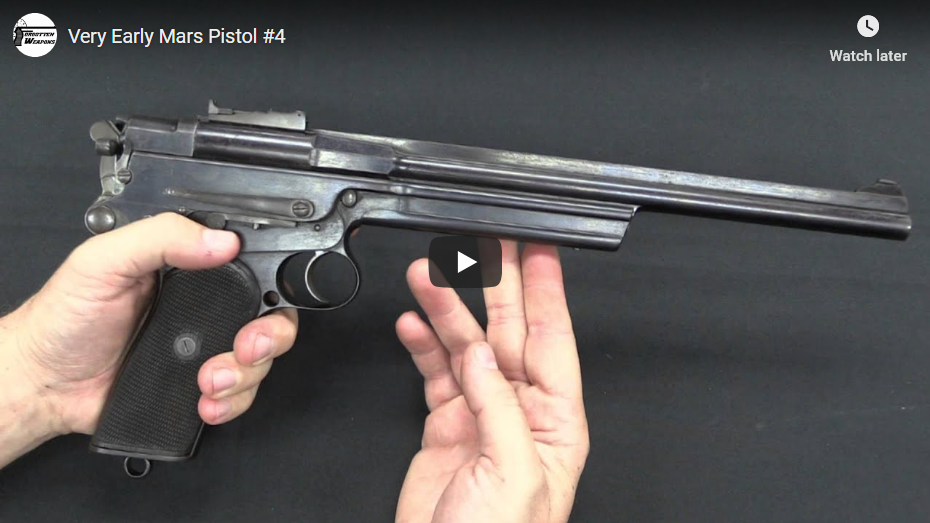
Until the midle of the 20th century, the most powerful automatic pistol made was Sir Hugh Gabbett-Fairfax’s Mars pistol. With the .45 caliber version approaching the energy of a .45 Winchester Magnum, it was quite the accomplishment for a gun designed initially in 1898! Well, RIA has a very early example of the Mars – serial number 4 – coming up for sale. This gun (chambered for the .360 Mars cartridge) has a number of features that differ from the more “typical” Mars pistols (all 80 or so that were ultimately made). These include a very long barrel, a tangent-style rear sight, and a 3-lug bolt instead of the standard 4-lug type. A very cool pistol to have a look at!
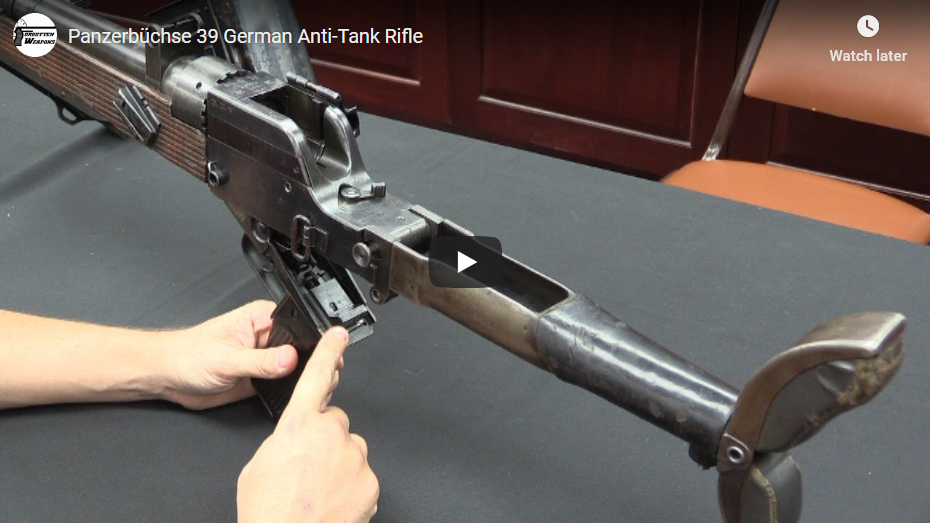
Most countries still had anti-tank rifles in their military inventory at the beginning of WWII – the Solothurn S18-100, the Lahti L39, the Boys AT Rifle, the PTRD and PTRS, and so on. For Germany, this role was fulfilled by the Panzerbüchse 39, a single-shot falling block rifle firing a high velocity 8mm AP cartridge. It was nominally effective in the opening campaigns of the war, but was quickly rendered obsolete as Allied armor improved. German planners has a huge number (25,000) of these on hand for the invasion of Russia, where they expected Russian armor to be vulnerable to them – which was not the case. Most were subsequently converted into Granatbüchse 39 AT grenade launchers, which were then used until the end of the war.
Sold for:
$74,750 (.45 cal example)
$40,250 (8.5mm example)
The Mars pistol was designed by Sir Hugh Gabbett-Fairfax in England in 1898, and only 81 were produced by the time manufacturing ended in 1907. These pistols were chambered for several different cartridges, all of them tremendously powerful for the day (and really not equaled by another self-loading pistol until the Automag).
I first heard of these pistols in one of L. Neil Smith’s first SF novels, and they sounded so over-the-top that I assumed he’d made them up for the story. This is a fascinating piece of hand artillery that I’d be terrified to have pointed at me (but I’d probably be nearly as terrified to shoot).
After yesterday’s look at the history and mechanical details of the Israeli Negev LMG, today we are taking it out the the range.
It certainly is a very pleasant experience to shoot! The recoil is very light, although not as light as in a true constant-recoil system like the new Knight’s LAMG. As you can see in the high speed footage, the bolt carrier clearly does impact the back of the receiver with each shot. Still, it has a simple gas adjustment, a very easy barrel-changing system, excellent sights, and runs well on both magazines and belts.
Many thanks to Movie Armaments Group in Toronto for the opportunity to showcase their Negev for you! Check them out on Instagram to see many of the guns in their extensive collection:
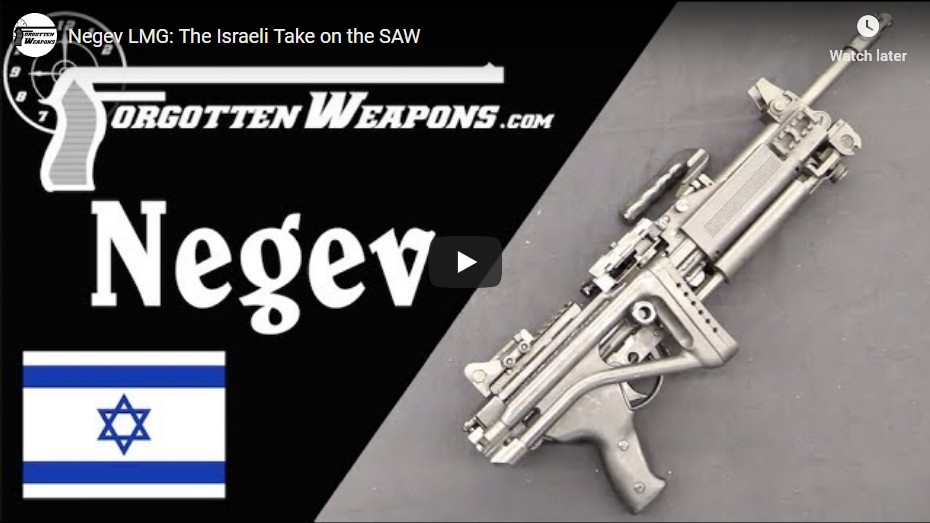
When the Israeli Defense Forces tested the FN Minimi, they found it to be lacking in a few areas, and decided that they could develop a better SAW domestically. Developed in the 1980s, the result was the Negev. Like the Minimi, the Negev is a 5.56mm light machine gun that can feed from either belts or box magazines (Galil mags or AR mags with an adapter), has quick-change barrels, and fires from an open bolt. The Negev has several features the Minimi does not, though, including a semiauto fire control position, optics mounting on the receiver (instead of the top cover), a standard folding stock, and some mechanical improvements internally.
So, let’s dig into this Negev and see how it ticks!
Many thanks to Movie Armaments Group in Toronto for the opportunity to showcase their Negev for you! Check them out on Instagram to see many of the guns in their extensive collection:
The Gyrojet was the closest thing to a commercially successful rocket pistol, although not many were sold before the company went out of business. This is the 13mm pistol version (the most common type of Gyrojet), and fires a 180 grain rocket projectile. It was for sale – with 15 rounds of live ammunition – at the Rock Island Premier Auction in September. Hammer price on it was $5500.
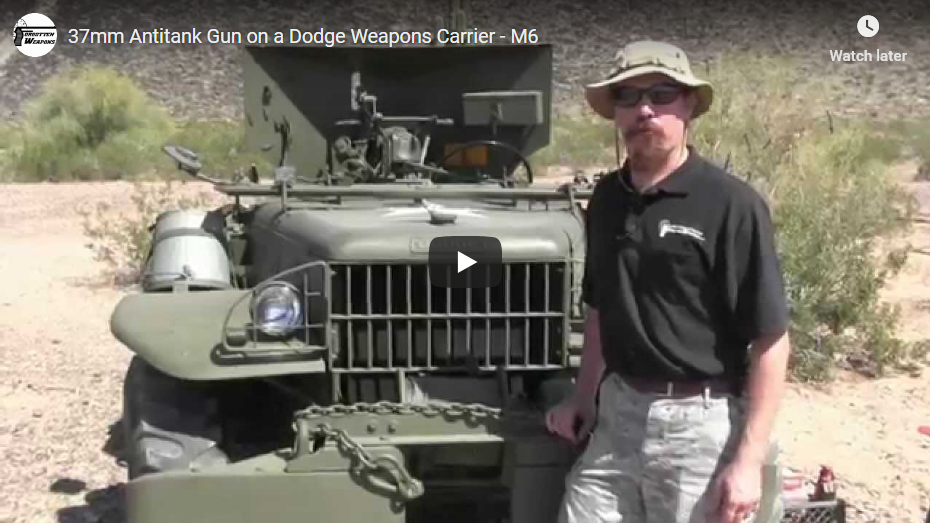
The M6 Gun Motor Carriage was the first American tank destroyer of WWII – a 37mm antitank gun (basically identical to the M3 gun) mounted on the back of a Dodge 3/4 ton weapons carrier. A large armor shield protected the gun crew from small arms fire, but the vehicle was otherwise highly exposed. The truck was powered by a flathead 6-cylinder engine producing 99 horsepower, and had a top speed of 55 mph. The gun was effective and modern in the late 1930s when its design process began, but was underpowered and insufficient by the time the M6 first saw action in 1942/3 in Tunisia.
Not many complete M6 carriages remain in existence today, as they were replaced quickly after their poor showing in North Africa. Most had the guns removed and were converted back into utility trucks, while some were used by the Free French forces and some saw use in the Pacific theater (where the underpowered gun was less of a concern).
Comments Off on 37mm Antitank Gun on a Dodge Weapons Carrier – M6
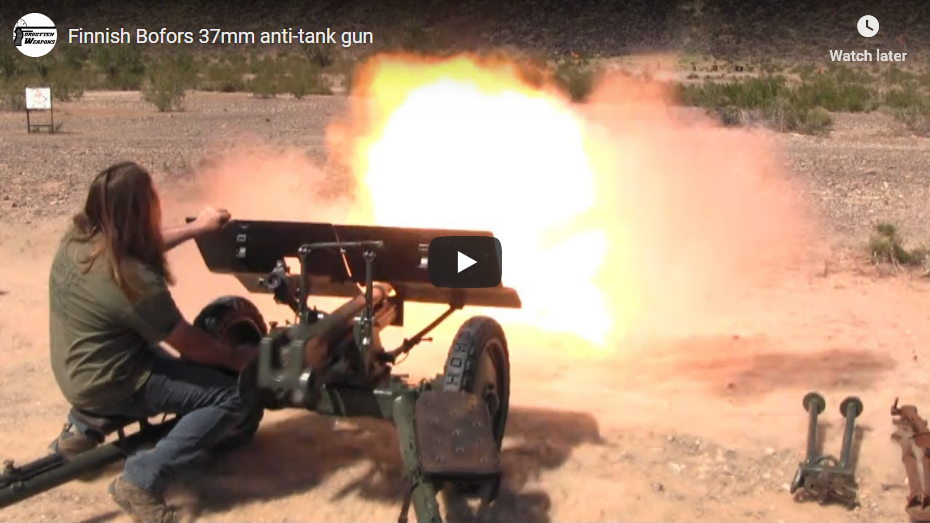
The Swedish Bofors company developed a sophisticated and very high-quality light anti-tank gun in the early 1930s, and found significant commercial success with it. A variety of countries either purchased the guns outright from Bofors or paid for licenses to produce them domestically. These countries included Denmark, Finland, Poland, the Netherlands, and Sweden itself. The largest number were in Poland (1200 or more), and there is speculation that some may have been sold to Spain during the Spanish Civil War (both these guns and a 40mm AA gun which definitely went to Spain were designated wz.36). A significant number were also captured and reused by German and Russian forces during WWII. On the Allied side, some of the guns were sold to the Sudan and used by British forces in North Africa (generally mounted on trucks).
The gun itself was an excellent design, capable of 12 rounds/minute of accurate fire and potent enough to deal with most of the smaller tanks in existence at the beginning of WWII. New tank developments made it obsolete, but it was at least effective against Russian light tanks (BT, T-26, T-28) in the Winter War if not the heavier T-34s. The gun has a sophisticated suspension system to help absorb recoil energy, and fired a 37 x 257mm shell with a 740g projectile at about 825 m/s (26oz @ 2700 fps). The action was semi-automatic, meaning that once fired, the action would recoil on the carriage, and automatically eject the empty case. It would then return to battery with the breech open, ready for a new shell to be loaded (in the video, the ejection mechanism has been disabled to help preserve the brass cases).
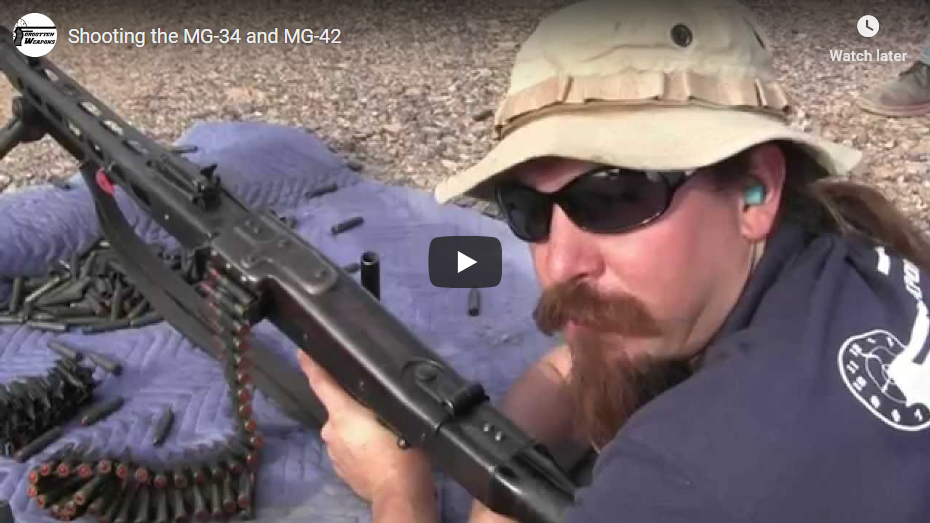
The MG-34 and MG-42 machine guns were the mainstay of German infantry (and vehicle) firepower during World War II, and it will take several videos to properly cover them. For now, we are shooting them both, and explaining how to load, unload, and operate them (including changing barrels on the MG42). Enjoy!
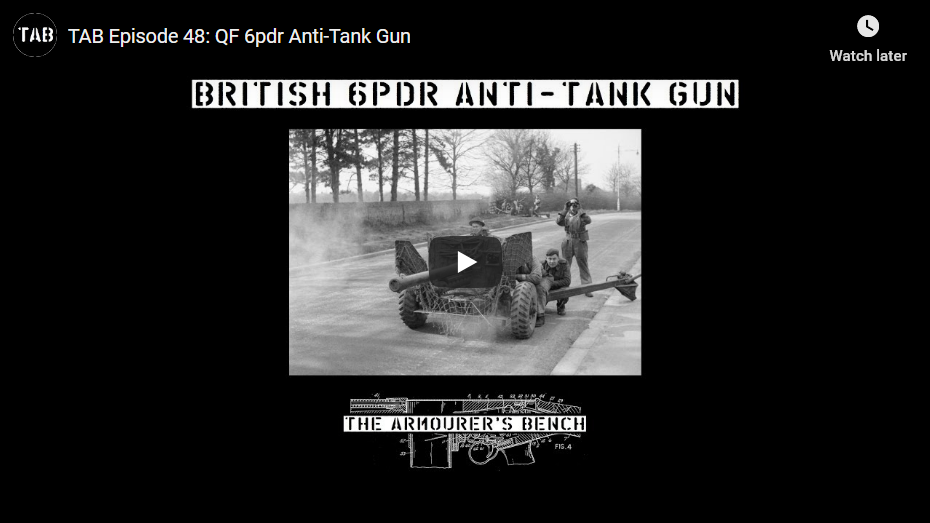
The 6pdr AT Gun was introduced in 1942, joining the lighter 2pdr, the new gun was more capable of dealing with the increasing thickness of Axis armour. The 6pdr first saw action in North Africa and was used throughout the war in Europe and Asia. It also armed a series of British armoured cars, tanks, ships and even aircraft!
If you enjoyed the video please consider supporting our work via Patreon, TAB is a viewer supported, non-monetised channel and any help is very much appreciated!
Check out our Patreon page here: https://www.patreon.com/thearmourersb…
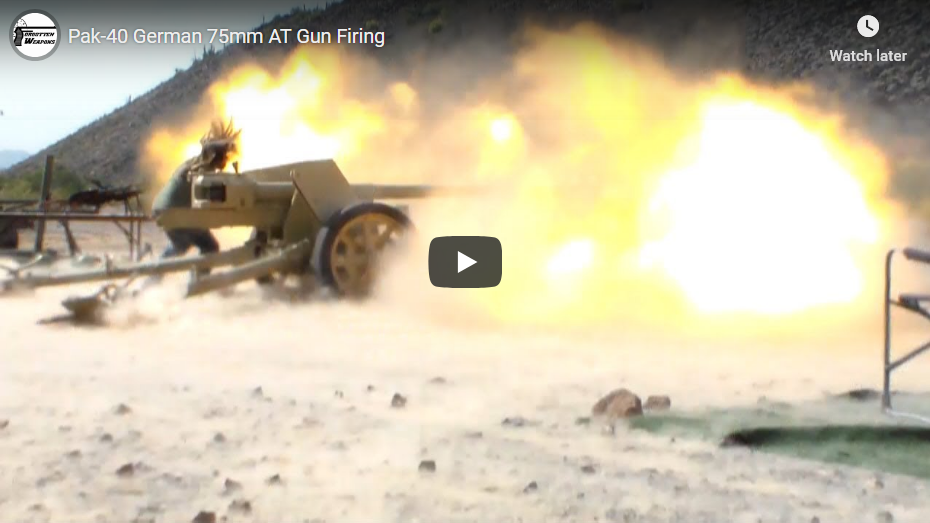
While we normally stick to small arms here, this beast of a gun was just way too impressive for me to not pay attention to. I was at a cannon and machine gun shoot just recently where some folks brought out what is (I believe) the only functional Pak-40 in the United States. And shot it.
The Pak-40 was the backbone of German antitank guns during WWII, and fired a 75mm AP shell out to an effective range of about a mile in a direct-fire role, with enough energy to defeat pretty much any Allied tank except the late-war Russian heavies. It was fairly light weight given its effectiveness, and makes one hell of a concussion when fired.
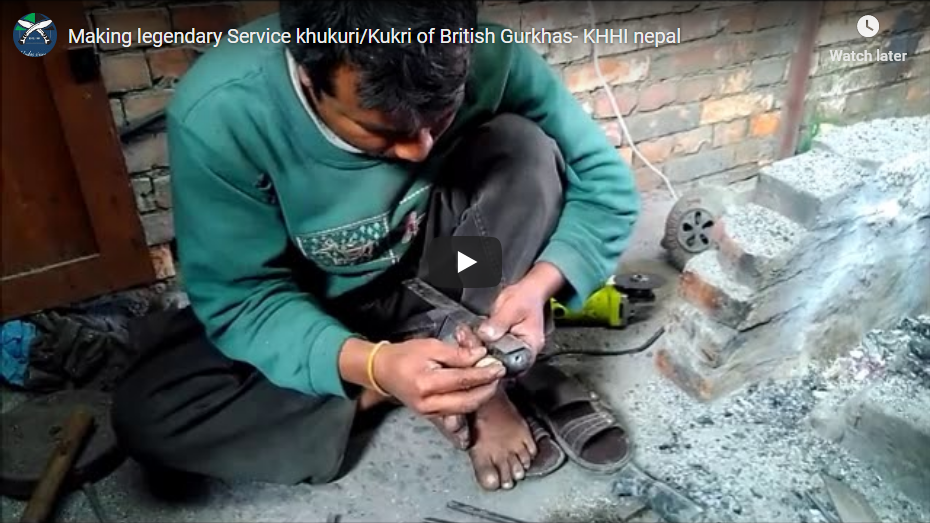
See how a scrap of steel is converted into a piece of mastery craft by our men @ duty. All bear hands, hard labor, years of experience and great skill. Pls enjoy it!!
Is the original 2016-17 British Gurkhas Issue issued to the new recruits as their training, exercise, utility and even as a combat knife.
We take a 1940 Bren gun to the range to demonstrate function, disassembly, and shooting from a variety of positions. For more information, check out http://www.ForgottenWeapons.com .
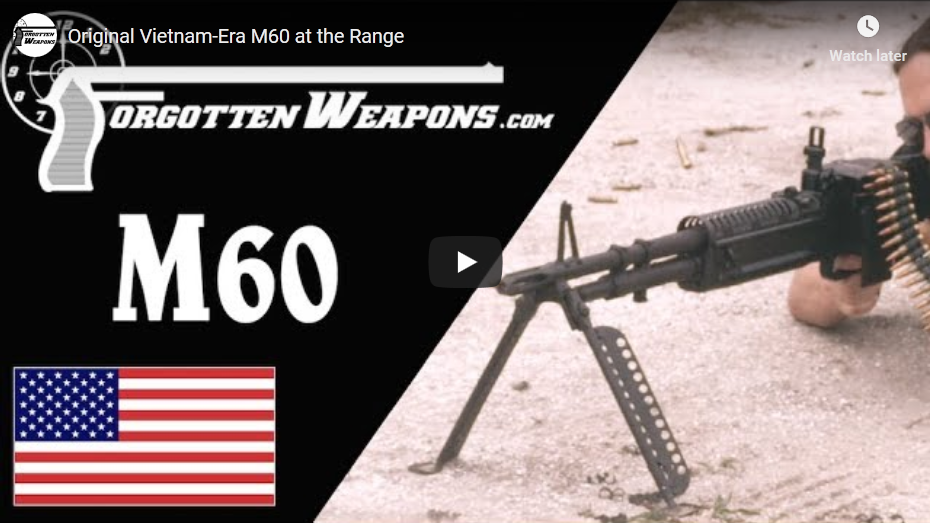
The M60 was the first modern American military machine gun, developed from the operating system of the German FG-42 and the feed system of the German MG-42 in the years after World War Two. It has a rather schizophrenic reputation, being loved by many who used it in Vietnam and hated by many who used it later in its service life. The design had some fundamental flaws, but did offer a far more mobile base of fire than the M1919A6 that it replaced. Today, I am going to do a bit of shooting with an original Vietnam pattens M60, which will act as a baseline for future videos covering the various improvements and modernizations of the platform.
Thanks to the Institute of Military Technology (https://www.instmiltech.com) for giving me the opportunity to bring this M60 on camera for you!
Contact:
Forgotten Weapons
PO Box 87647
Tucson, AZ 85754
Comments Off on Original Vietnam-Era M60 at the Range
On the 26th of August,1346, Philip’s army drew near the English force. The French were strung out for miles. Phillip’s best commanders advised caution: put on those comfy jim-jams the Queen gave you last Christmas, don the royal slippers, get a goodnight’s snooze, and let everyone catch up, then drown the English in a river of their own blood after a light breakfast. But Phillip looked upon the current puny size of the English army, and ordered the attack anyway…