
IT’S HISTORY
Published on 2 Feb 2018Saladin was the famous Muslim leader during the time of the Crusades.
February 3, 2018
Saladin – the Sword of Islam – IT’S HISTORY
Comments Off on Saladin – the Sword of Islam – IT’S HISTORY
January 30, 2018
The Three Teachings – Taoism, Buddhism, Confucianism l HISTORY OF CHINA
IT’S HISTORY
Published on 1 Aug 2015The Three Teachings Taoism, Buddhism and Confucianism have been a backbone of Chinese society and culture since the bronze age. The Three teachings are still intertwined strongly with today’s China. There are different interpretations to China’s chore faiths. Over time, different dynasties favoured different faiths, if only to define themselves against their predecessor. Ultimately though, its all about the philosophy of combining spirituality with every day life. All about the Three Teachings now on IT’S HISTORY.
Comments Off on The Three Teachings – Taoism, Buddhism, Confucianism l HISTORY OF CHINA
January 22, 2018
Khosrau Anushirawan: On Top of the World – Extra History – #5
Extra Credits
Published on 20 Jan 2018Plague had brought an end to Khosrau’s war against Justinian, but Justinian’s nephew soon reignited the rivalry. Khosrau was at the peak of his political power and eager to crush this young upstart personally… but old age had also crept up on him.
Comments Off on Khosrau Anushirawan: On Top of the World – Extra History – #5
January 13, 2018
Actors and public morality
Jonah Goldberg on the differences in the way actors were viewed historically and today:
It may be hard for some people to get the joke these days, but for most of human history, actors were considered low-class. They were akin to carnies, grifters, hookers, and other riffraff. In ancient Rome, actors were often slaves. In feudal Japan, Kabuki actors were sometimes available to the theatergoers as prostitutes — a practice not uncommon among theater troupes in the American Wild West.
In 17th century England, France, and America, theaters were widely considered dens of iniquity, turpitude, and crapulence. Under Oliver Cromwell’s Puritan dictatorship, the theaters were forced to close to improve moral hygiene. The Puritans of New England did likewise. A ban on theaters in Connecticut imposed in 1800 stayed on the books until 1952.
Partly out of a desire to develop a wartime economy, partly out of disdain for the grubbiness of the stage, the first Continental Congress in 1774 proclaimed, “We will, in our several stations, … discountenance and discourage every species of extravagance and dissipation, especially all horse-racing, and all kinds of gaming, cock-fighting, exhibitions of shews [sic], plays, and other expensive diversions and entertainments.”
[…]
The most recent Golden Globes ceremony has already been excoriated for being a veritable geyser of hypocritical effluvia, as the same crowd that not long ago bowed and scraped to serial harasser and accused rapist Harvey Weinstein, admitted child rapist Roman Polanski, and that modern Caligula, Bill Clinton, congratulated itself for its own moral superiority.
The interesting question is: Why have movie stars and other celebrities become an aristocracy of secular demigods? It seems to me an objective fact that virtually any other group of professionals plucked at random from the Statistical Abstract of the United States — nuclear engineers, plumbers, grocers, etc. — are more likely to model decent moral behavior in their everyday lives. Indeed, it is a bizarre inconsistency in the cartoonishly liberal ideology of Hollywood that the only super-rich people in America reflexively assumed to be morally superior are people who pretend to be other people for a living.
I think part of the answer has to do with the receding of religion from public life. As a culture, we’ve elevated “authenticity” to a new form of moral authority. We look to our feelings for guidance. Actors, as a class, are feelings merchants. While they may indeed be “out of touch” with the rest of America from time to time, actors are adept at being in touch with their feelings. And for some unfathomably stupid reason, we now think that puts us beneath them.
Comments Off on Actors and public morality
December 31, 2017
A contrarian view of hijabs, niqabs, and burqas
Western views of full-coverage clothing, including hijabs, niqabs, and burqas, may be concealing a hidden benefit to those who choose to wear such clothes voluntarily:
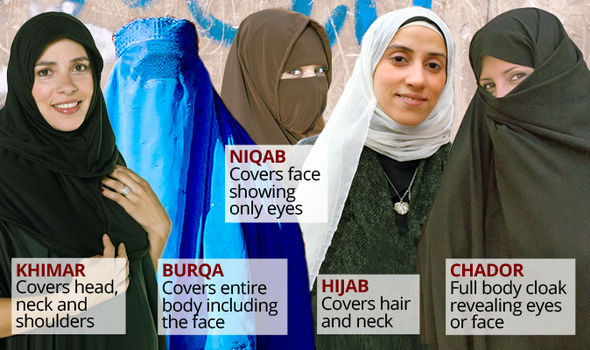
Hijabs, niqabs, and burqas — different sorts of coverings worn by Islamic women — are divisive apparel in the West, associated with patriarchal oppression, cultural outsiders, and even suicide bombers. Yet few accounts actually discuss the experiences of the women wearing the veils, and the freedom and anonymity coverings can afford if worn voluntarily.
Born in Pakistan and educated in America, Rafia Zakaria is the author of Veil, a new book which explores the history and shifting meanings of female coverings in Islamic countries and Western secular society. In a wide-ranging conversation, she talks with Reason‘s Nick Gillespie about the theological underpinnings of veils, their use as a means of controlling female sexuality, and how they have become markers of socio-economic status and virtue signaling.
Veils present a particular conflict for Western feminists. On the one hand, veils — especially burqas — are emblematic of regimes that are particularly oppressive to women. Feminists and others have moved to ban the wearing of veils in public in the name of female empowerment. But if a Muslim women wants to wear one, is she endorsing patriarchy and setting back the women’s rights movement or simply owning her own choices, especially in a culture that might itself be anti-Islamic?
December 30, 2017
The Dark Ages of Sex – All Pleasure is Sin! l THE HISTORY OF SEX
IT’S HISTORY
Published on 21 Sep 2015Sex became a sin in the Middle Ages. Following the promiscuous Ancient Rome and Greece, the Western World was indoctrinated with Medieval concepts of guilt and immorality. Adultery and sex for pleasure became unthinkable. Churches implemented strict rules, breaking them could result in public shaming. The severity of punishments would only increase after the Reformation.
Comments Off on The Dark Ages of Sex – All Pleasure is Sin! l THE HISTORY OF SEX
December 26, 2017
Midwinter celebrations, historically speaking
In the most recent Libertarian Enterprise, L. Neil Smith tries to track down where our traditional Christmas celebrations originated:
Each and every one of those cultures has had a different way, of course, of dignifying what is essentially a middle finger in the face of nature. The earliest such I could find was Zagmuk, the ancient Mesopotamian celebration of the triumph of Marduk over the forces of Chaos.
Or whatever. I suspect the Mesopotamians would have decreed a celebration if it had been Chaos that had won in the second, by a knock-out. Nearby cultures picked the idea up and celebrated their own versions.
All this happened about 4000 years ago.
The Romans had a midwinter holiday, Saturnalia, which involved feasting and giving gifts. Later on, the word became a synonym for abandon and debauchery, but the Romans, by and large, were a pretty puritanical bunch, given to grim tales such as that of Lucius Junius Brutus who had his own sons executed because they sold out to the Etruscans, and Mucius Scaevola who burned his own hand off to prove that Romans… well, would burn their own hands off given half a chance. Nobody ever needed a festive midwinter holiday worse than they did.
Saturnalia started around the eighth century, B.C.
Hanukkah is interesting. I learned about it when I wrote The Mitzvah with Aaron Zelman. These days a lot is made of the “Festival of Lights” and the miracle that occurred when the Jews retook their Temple from a pack of Hellenized Syrians who had left only enough lamp oil behind for a single day. The oil miraculously burned eight days, instead, and that’s what all that ceremony with the Menorah is all about.
There’s another Hanukkah story, of a victory of the Maccabees (a nickname, meaning “hammer” — see Charles Martel) over those same Hellenized Syrians, which is how the Jews got their Temple back. Jews argue over which story is more significant, but it’s pretty obvious to me. It’s equally obvious that they’d find something else to celebrate in the middle of the winter, even if they’d never gotten their Temple back.
Which happened in 165 B.C.
Christmas probably wasn’t celebrated, as such, for a couple of hundred years after the presumed birth of Christ. I say “presumed”, because the whole story — no room in the inn, born in a manger with animals on the watch, shepherds coming to worship, a star shining overhead — was shoplifted, directly from another religion popular in Rome at the time of the early Christians, worship of the warrior-god Mithras.
Speaking of sticky fingers, holidaywise, the Yule log and the Christmas tree were “borrowed” from the norsemen, who were accustomed to hanging dead male animals and male slaves from a tree to decorate it.
Yuck.
There is a midwinter holiday that has come along more recently than Christmas. I have to confess that, to me, Kwanzaa (Est. 1966) represents one of the lamest, most transparent inventions a con-man ever foisted on any segment of the public. It’s basically a holiday for black people who don’t want to celebrate the white peoples’ holiday. On the other hand it’s no lamer than any other excuse for a holiday.
Comments Off on Midwinter celebrations, historically speaking
December 24, 2017
Repost – Atheist’s seasonal dilemmas
David Harsanyi looks at the plight of the non-believer during the Christmas season:
Unlike many of my fellow atheists, however, I’m not a fundamentalist on the issue of nonbelief. Though my rock-ribbed skepticism is, I hope, driven by reason, my unwavering desire to avoid saying “amen” in a group setting is a real driver, as well.
“Aren’t we forgetting the true meaning of Christmas?” Homer Simpson once asked. “You know, the birth of Santa.”
Like Homer, I enjoy the birthday of Jesus — or Santa. So it pains me to witness fellow atheists acting like a bunch of irritating ’80s televangelists and defeating the entire purpose of unbelief by organizing, grousing, wagging their fingers and, worst of all, proselytizing.
Take the billboards popping up in Las Vegas this year that read “Reason’s Greetings” and “Heathen’s Greetings.”
The man behind the billboards claims to only want to make people think — because only atheists can really think, after all. “People that drive by who have an open mind may think to themselves, ‘Maybe I should question some of my dogmatic beliefs,’ ” Richard Hermsen, a local atheist activist, explained.
Granted, atheists have some reason to be annoyed by the general public. A USA Today/Gallup Poll in 2007, for instance, found that more than half of Americans would, under no circumstances whatsoever, vote for an atheist.
No group fared lower than heathens. Not Mormons. Or even the Jews — and we probably killed Christ.
Comments Off on Repost – Atheist’s seasonal dilemmas
December 23, 2017
Repost – “Merry Christmas” versus “Happy Holidays” versus “Happy Midwinter Break”
L. Neil Smith on the joy-sucking use of terms like “Happy Midwinter Break” to avoid antagonizing the non-religious among us at this time of year:
Conservatives have long whimpered about corporate and government policies forbidding employees who make contact with the public to wish said members “Merry Christmas!” at the appropriate time of the year, out of a moronic and purely irrational fear of offending members of the public who don’t happen to be Christian, but are Jewish, Muslim, Hindu, Buddhist, Sikh, Jain, Rastafarian, Ba’hai, Cthuluites, Wiccans, worshippers of the Flying Spaghetti Monster, or None of the Above. The politically correct benediction, these employees are instructed, is “Happy Holidays”.
Feh.
As a lifelong atheist, I never take “Merry Christmas” as anything but a cheerful and sincere desire to share the spirit of the happiest time of the year. I enjoy Christmas as the ultimate capitalist celebration. It’s a multiple-usage occasion and has been so since the dawn of history. I wish them “Merry Christmas” right back, and I mean it.
Unless I wish them a “Happy Zagmuk”, sharing the oldest midwinter festival in our culture I can find any trace of. It’s Babylonian, and celebrates the victory of the god-king Marduk over the forces of Chaos.
But as anybody with the merest understanding of history and human nature could have predicted, if you give the Political Correctness Zombies (Good King Marduk needs to get back to work again) an Angstrom unit, they’ll demand a parsec. It now appears that for the past couple of years, as soon as the Merry Christmases and Happy Holidayses start getting slung around, a certain professor (not of Liberal Arts, so he should know better) at a nearby university (to remain unnamed) sends out what he hopes are intimidating e-mails, scolding careless well-wishers, and asserting that these are not holidays (“holy days”) to everyone, and that the only politically acceptable greeting is “Happy Midwinter Break”. He signs this exercise in stupidity “A Jewish Faculty Member”.
Double feh.
Two responses come immediately to mind, both of them derived from good, basic Anglo-Saxon, which is not originally a Christian language. As soon as the almost overwhelming temptation to use them has been successfully resisted, there are some other matters for profound consideration…
Comments Off on Repost – “Merry Christmas” versus “Happy Holidays” versus “Happy Midwinter Break”
December 20, 2017
QotD: Heaven
I suspect that if people were asked to describe a heaven, they would come up with something very like an eternal cruise on one of those dreadful ships that ruin the appearance and atmosphere of everywhere they dock: five meals a day, a casino, cinema, sauna, swimming pool, dinner at the captain’s table. But such a life would soon pall. Before long there would be quarrels, divisions into factions, and possibly even a murder or two, just for variation. Man is not so much a problem-solving creature as a problem-creating one; and as for his state of mind, he likes change for its own state, even if it be change for the worse. Man will never be entirely sensible.
Theodore Dalrymple, “Dissatisfaction Guaranteed”, Taki’s Magazine, 2016-11-26.
Comments Off on QotD: Heaven
December 18, 2017
Khosrau Anushirawan: Prince of Persia – Extra History – #2
Extra Credits
Published on 16 Dec 2017Kavadh asked his allies in Eastern Rome for help getting Iran back on its feet. The Romans’ replies were not only unhelpful – they were insulting. By the time Khosrau inherited the throne, resentment and war had turned the delicate alliance with Rome into an open rivalry.
Comments Off on Khosrau Anushirawan: Prince of Persia – Extra History – #2
December 17, 2017
QotD: Modern eco-paganism
… consider the emergence of a Nature-worshipping environmentalism that would have been viewed as a crazy luxury in the hardscrabble times of 1800 or even of 1933. The economist and student of theology Robert Nelson calls environmentalism the new religion of the West (a West that nonetheless, outside of places like Poland or the United States, imagines itself to be irreligious) […] The economist and think-tank maven Fred L. Smith, Jr. speaks of “eco-paganism”: “Most environmentalists do not, of course, see themselves as pagans,” he writes. “Yet many do espouse a watered-down form of pantheism which elevates nature to near the status of a deity.” By now the good people of rich and secular places such as Sweden, though contemptuous of the childish absurdity (as most Swedes believe it to be) of their ancestors’ worship of a Lutheran God, have found their transcendent in the worship of Nature, and spend their Sunday mornings devoutly gathering mushrooms and lingonberries in Nature’s forest.
Deirdre McCloskey, Bourgeois Equality, 2016.
Comments Off on QotD: Modern eco-paganism
December 14, 2017
QotD: Terrorism and mental illness
In the West, the conviction that you must kill people in order to receive 72 virgins in paradise would be considered a mental illness. In Islam, it’s a mainstream belief. 89% of Pakistanis believe in genies. But then again genies are present in Islamic scripture. 89% of Tunisians believe in witchcraft. 72% of Iraqis believe in the “evil eye”. 1 in 5 Afghanis have witnessed an exorcism. Half of Pakistanis believe in fairies.
Saudi religious police have a special Anti-Witchcraft Unit and there are actual witch trials. Majorities of Muslims don’t believe that Muslims carried out the 9/11 attacks. 40% of Pakistanis believe that fathers have a right to kill their daughters if they engage in premarital sex. Half of British Muslims think that the Jews are in league with the Freemasons. A third believes that Princess Diana was murdered to stop her from marrying a Muslim.
Ideas and behaviors associated with mental illness in the West are mainstream in parts of the Muslim world which exist in a pre-rational medieval universe brimming with conspiracy theories, paranoid delusions, lack of personal responsibility, erratic emotions and an inability to apply reason to reality.
Western psychiatric benchmarks don’t mean much in the Muslim world where witchcraft is a major problem, Jewish conspiracy theories abound and genies are responsible for psychiatric problems. Killing your daughter or just non-Muslims in general is socially approved behavior. The Muslim world has fundamentally different social norms than we do. And that means very different concepts of sanity.
Misattributing Muslim terrorism to madness is convenient, but meaningless. It’s a way for us to avoid dealing with the difficult questions posed by Islam. And that avoidance is also a form of insanity.
Daniel Greenfield, “Insane Muslim Terrorists”, Sultan Knish, 2016-05-13.
Comments Off on QotD: Terrorism and mental illness
December 11, 2017
Khosrau Anushirawan: Like Father, Like Son – Extra History – #1
Extra Credits
Published on 9 Dec 2017Khosrau Anushirawan ushered in a golden age of Iran, but only after his father Kavadh suffered through the near collapse of the empire. Once he broke free from a controlling minister and radical religious reformer, Kavadh realized that the empire needed to change.
Comments Off on Khosrau Anushirawan: Like Father, Like Son – Extra History – #1
November 26, 2017
Rowan Atkinson in ‘We are most amused’
Kevin
Published on 3 Dec 2008Rowan Atkinson tells the Gospel of John in ‘We are most amused’, broadcast on ITV on November 15th marking Prince Charles’s 60th birthday.
Comments Off on Rowan Atkinson in ‘We are most amused’


