Quotulatiousness

May 14, 2012

“…but the bedrooms are in the railway carriage”

Filed under: Britain, Bureaucracy, Railways — Tags: , , — Nicholas @ 08:08

This is presented as a “bureaucracy run wild” kind of story, but I find it hard to believe that any planning committee — even a British one — would insist that a railway carriage could acquire “grandfather rights”.

When it comes to building a comfortable bungalow, Jim Higgins has got the inside track.

The retired transport manager, 60, has one of the most unique houses in Britain… because it is built around a real railway carriage.

The property in Ashton, Cornwall, is a fully functioning house but bizarrely has the fully restored 130-year-old Great Western Railway car within its walls.

Mr Higgins, 64, originally from Buckinghamshire took over the property from his former father-law Charles Allen who was forced to build it around the railway carriage because bizarre planning regulations meant the train could not be moved.

Mr Higgins said: ‘The railway carriage was lived in by a local woman Elizabeth Richards from 1930.

May 13, 2012

Greek railway dis-economy of scale

Filed under: Economics, Europe, Greece, Railways — Nicholas @ 11:22

It would actually be cheaper to send all Greek train passengers by private taxi than using the public rail network:

The claim that it would be cheaper for Greece to send every rail passenger to their destination by taxi was most recently made in the book Boomerang by Michael Lewis, the Moneyball author.

But it was first made by Stefanos Manos, the former Greek finance minister, in 1992. Manos used the railway system to illustrate what he saw as gross public sector waste.

“I was in favour of the Maastricht Treaty and was supposed to defend it in Parliament,” says Manos, now heading his own party, Drasi.

“I said we should drastically reduce the size of the public sector and its expenditure. And I gave as an example the railway where there were exorbitant wage bills compared to the revenue of the country.”

He says it was an off-the-cuff remark but about right.

“I knew the number of passengers and I made a brief estimate of what it would cost to send them from Athens to the north of Greece and I decided it was quite obvious it would be cheaper to send them there by taxi rather than train.”

It’s not quite true now: two passengers would have to share each taxi. If you got three passengers into each taxi, the government would be saving money.

May 7, 2012

Chicago and the everlasting rail bottleneck

Filed under: Economics, Railways, USA — Tags: , — Nicholas @ 15:36

Chicago is where rail traffic goes to get delayed:

When it comes to rail traffic, Chicago is America’s speed bump.

Shippers complain that a load of freight can make its way from Los Angeles to Chicago in 48 hours, then take 30 hours to travel across the city. A recent trainload of sulfur took some 27 hours to pass through Chicago — an average speed of 1.13 miles per hour, or about a quarter the pace of many electric wheelchairs.

With freight volume in the United States expected to grow by more than 80 percent in the next 20 years, delays are projected to only get worse.

The underlying reasons for this sprawling traffic jam are complex, involving history, economics and a nation’s disinclination to improve its roads, bridges, and rails.

Six of the nation’s seven biggest railroads pass through the city, a testament to Chicago’s economic might when the rail lines were laid from the 1800s on. Today, a quarter of all rail traffic in the nation touches Chicago. Nearly half of what is known as intermodal rail traffic, the big steel boxes that can be carried aboard ships, trains or trucks, roll by, or through, this city.

March 19, 2012

Illinois railfan photographer threatened with being added to terror watch list

Filed under: Law, Liberty, Railways, USA — Tags: , , , — Nicholas @ 11:17

Photography within 550 feet of a railway line is illegal in Illinois, according to a police deputy who likes to make up his own laws:

A man who was taking pictures near a train track in Illinois was confronted by a sheriff’s deputy who informed him that he was breaking the law, so therefore he had no choice but to report the photographer to Homeland Security.

The photographer, who describes himself as a disabled war veteran and former state worker, was left wondering if the deputy had any legal basis for adding him to a terrorist watch list.

[. . .]

RustyBug, who never states which sheriff’s department harassed him, said the deputy told him it was against the law to shoot within 550 feet from train tracks, which is complete hogwash.

RustyBug said he really wasn’t buying it, but he wasn’t sure either, which shows us the importance of knowing the law when it comes to photography because too many cops don’t know the law.

March 8, 2012

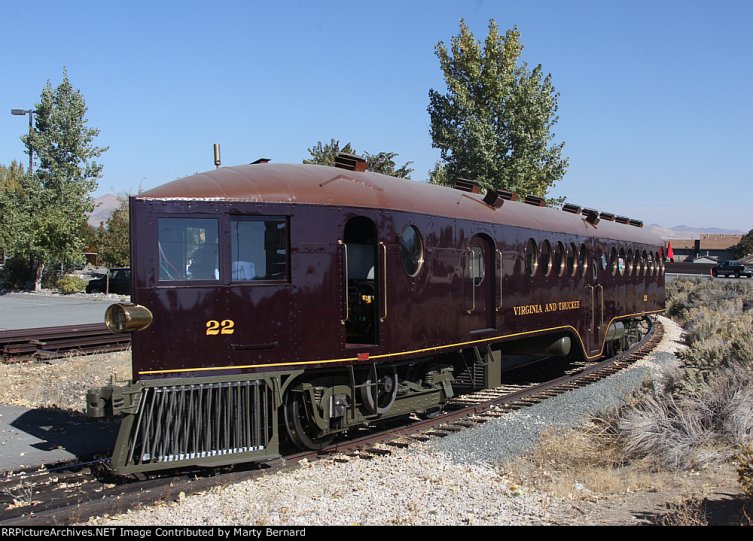
The “SteamPunkiest” railcar ever

Filed under: History, Railways, Randomness, Technology — Tags: , , — Nicholas @ 12:21

A few pictures from RR Picture Archives by Marty Bernard, showing the most Steampunk-appropriate railway vehicle, the McKeen Motor Car. This example is painted in Virginia & Truckee markings:

Click to see full size image at RR Picture Archives

(more…)

March 4, 2012

Passenger rail as the ultimate political luxury good?

Filed under: Economics, Government, Politics, Railways — Tags: , , , — Nicholas @ 00:14

A post at Coyote Blog from last month looks at the eye-popping financial arrangements keeping the New Mexico “Railrunner” passenger service in operation:

Of course, as is typical, the Republic article had absolutely no information on costs or revenues, as for some reason the media has adopted an attitude that such things don’t matter for rail projects — all that matters is finding a few people to interview who “like it.” So I attempted to run some numbers based on some guesses from other similar rail lines, and made an educated guess that it had revenues of about $1.8 million and operating costs of at least $20 million, excluding capital charges. I got a lot of grief for making up numbers — surely it could not be that bad. Hang on for a few paragraphs, because we are going to see that its actually worse.

The equipment used in the New Mexico Railrunner operation looks remarkably similar to what GO Transit runs in the GTA:

Click to see original image at Coyote Blog


Anyway, I got interested in checking back on the line to see how it was doing. I actually respected them somewhat for not running mid-day trains that would lose money, but my guess is that only running a few trains a day made the initial capital costs of the line unsustainable. After all, high fixed cost projects like rail require that one run the hell out of them to cover the original capital costs.

As it turns out, I no longer have to guess at revenues and expenses, they now seem to have crept into the public domain. Here is a recent article from the Albuquerque Journal. Initially, my eye was attracted to an excerpt that said the line was $4 million in the black.

[. . .]

Now it looks like taxes are covering over half the rail’s costs. But this implies that perhaps $10 million might be coming from users, right? Nope, keep reading all the way down to paragraph 11

    The Rail Runner collects about $3.2 million a year in fares and has an annual operating budget of about $23.6 million. That does not include about $41.7 million a year in debt service on the bonds — a figure that include eventual balloon payments.

So it turns out that I was actually pretty close, particularly since my guess was four years ago and they have had some ridership increases and fare increases since.

At the end of the day, riders are paying $3.2 million of the total $65.3 million annual cost. Again, I repeat my reaction from four years ago to hearing that riders really loved the train. Of course they do — taxpayers (read: non-riders) are subsidizing 95.1% of the service they get. I wonder if they paid the full cost of the train ride — ie if their ticket prices were increased 20x — how they would feel about the service?

If all of that wasn’t enough, the financing arrangement has a nasty sting in the tail: in the mid 2020’s, the state will owe two separate payments of over $200 million. Enjoy the subsidized rides now, folks … the payment comes due just in time for your kids to face as they graduate.

March 2, 2012

Britain’s railway engineering heritage

Filed under: Architecture, Britain, History, Railways, Technology — Tags: , — Nicholas @ 00:02

Sarah Bakewell at the Guardian on the wonderful products of the railway building era in Britain:

Once I saw merely bridges, tunnels and stations, and mostly I didn’t even notice these, so busy was I rushing to get over or through them. Now, I see a delicate ecosystem of rivets, cleats, plates, gussets, joggles, spans, arches, ribs of attenuated iron and steel.

Scholars can already study railway archives in repositories all over the country, but Network Rail has just put part of its beautiful archive of Victorian and Edwardian infrastructure diagrams on the web. This amounts to an invitation to anyone, anywhere, to contemplate such images out of sheer curiosity and love of beauty. They give us plans of the high-level bridge at Newcastle upon Tyne, with its columns trailing down the screen like tall sepia waterfalls, and Bristol’s neo-gothic Temple Meads station, in ethereal ink outline. The Forth bridge of 1890 appears side on, elongated and webby as if someone had pulled a string cat’s cradle as far as it would go. Its vertical columns climb visibly week by week; target dates are marked at each level, like the tracking of a child’s growth against a wall.

Maidenhead bridge, designed in brick by Isambard Kingdom Brunel in 1839, has two middle arches spanning the river in great cheetah leaps. They were lower and broader than anything previously constructed in brick, and the Great Western Railway’s directors feared the bridge would collapse: they insisted on the bridge’s temporary timber supports remaining even after it opened. Annoyed, Brunel secretly lowered the supports a bit so they did not actually support anything.

(All links in the original article.)

February 21, 2012

Death on the railways

Filed under: Economics, Government, India, Railways — Tags: — Nicholas @ 11:37

I didn’t realize the extent of the problem in India, as reported in the Guardian:

About 15,000 people are killed each year while crossing the tracks on India’s mammoth railway network, according to a government safety panel that recommended more bridges and overpasses should be built as a matter of urgency.

Most of the deaths occur at unmanned railroad crossings, the panel said in a report. About 6,000 people die on Mumbai’s crowded suburban rail network alone, it said.

Another 1,000 people die when they fall from crowded coaches, when trains collide or coaches derail.

[. . .]

The committee blamed railway authorities for the “grim picture”, saying there were lax safety standards and poor management.

It said local managers were not given adequate power to make crucial decisions and that safety regulations were also breached because of severe manpower shortages.

It does seem odd that one of the world’s most populous countries — once known for chronic over-staffing of government and government-owned organizations — has “manpower shortages” in this critical area.

February 3, 2012

The end of London’s diesel locomotive plant

Filed under: Cancon, Economics, Railways — Tags: , , , , — Nicholas @ 12:10

I’ve updated my earlier post on the labour dispute at London’s EMC plant now that the current owners have announced the closure of the facility.

Update, 5 February: Mike P. Moffatt at Worthwhile Canadian Initiative debunks some of the media coverage of the closure:

After the U.S.-Canada Free Trade Agreement, GM Diesel closed their La Grange, Illinois plant and consolidated their production to the London plant, though kept the head office, research, design, and manufacturing of some components in La Grange. EMD London was a direct beneficiary of the U.S.-Canada Free Trade agreement, something I have yet to hear in the media. The domestic locomotive market, by itself, would not have supported the level of production we have seen over the last two decades.

In 2005, GM Diesel sold the Electro-Motive Division (including the GM Diesel plant in London and the head office in La Grange) to a couple of U.S. private equity firms, who re-named it Electro-Motive Diesel. In 2010, those firms sold EMD to Caterpillar.

[. . .]

We need to keep in mind that:

  1. EMD has always been a U.S. corporation.
  2. The intellectual property from research and design, etc. was from the head office in La Grange, Illinois.

So that leaves “know-how” which Cohn mentions in a follow-up paragraph. On Twitter, Colby Cosh asked: “Cohn talks about “know-how” but (a) know-how isn’t IP and (b) Cat doesn’t seem to have much use for the workers who have it, do they?” Caterpillar, however, did send a number of employees from London to their new plant in Muncie, IN, to train newly hired workers. I am Facebook friends with an EMD worker and I remember him objecting loudly to this last fall. But did Caterpillar really buy EMD so that it could obtain the talents of a dozen guys to teach advanced welding techniques?

There are a lot of narratives to this story, many of them unpleasant. A narrative about a U.S. company buying Canadian IP at 15 cents on the dollar does not pass the sniff test, however.

Update the second, 7 February: Andrew Coyne gets his inconvenient, yucky facts in our lovely flag-waving, anti-capitalist nationalistic fantasy:

EMD never received any subsidies from the federal government; certainly not since Caterpillar bought it. Indeed, looking through the hundreds of pages of “grants and contribution” in the Public Accounts, it may be the only company in the country that didn’t. The Harper visit to which Olive refers was to promote a tax break for the purchasers of locomotives, not the manufacturers. The visit occurred in 2008, two years before the Caterpillar purchase.

It’s not clear how the foreign investment laws could have been invoked to cover a purchase of an American company by another American company, or if they could, why this should be the pretext for “demanding job guarantees.” Presumably if it is wrong for a firm to close a plant or lay off workers, it is just as wrong whether it has recently been the object of a foreign takeover bid or not. Perhaps you will say we should bar all companies from closing a plant. Okay: why would they ever open one? If workers, once hired, cannot ever be laid off, why would they ever be hired?

Of course, there’s always Olive’s suggestion of a punitive tariff, through which the cost of keeping jobs in London locomotive plants could be shared by consumers and businesses across the country. (You’re welcome.) This would recreate the system of foreign branch plants that existed in the days before free trade, small factories producing exclusively for the domestic market. Rather than lament at foreigners stealing our jobs and technology, the nationalists could once again lament at being tenants in our own land.

January 27, 2012

Is VIA Rail an unaffordable luxury?

Filed under: Cancon, Economics, Government, Railways — Tags: , , , — Nicholas @ 00:02

It hurts me to admit that long-distance passenger rail is an expensive relic of the past, and Canada’s government-owned passenger rail corporation is little more than a drain on the budget. I’m a railway fan: I founded a railway historical society, for crying out loud. I love trains, although I rarely get to use them myself. The freight railway business is doing well and it should continue to do so, as it’s generally much more economical for long-haul bulk cargo than any other option. But unlike in Europe, where population density allows passenger railways to remain a key part of the transportation network, distances and population distribution mean passenger railways can only operate profitably in a few areas (Windsor-Toronto-Montreal-Quebec City, and Boston-New York-Washington, for example).

Lorne Gunter says that recent reports about the federal government looking to sell off some or all of VIA Rail make lots of sense:

Bloomberg reported last week that the federal Tory government is quietly contemplating privatizing some or all of VIA Rail. Good. It’s about time, just as it was about time in 1991 when the Tories under Brian Mulroney thought about selling off VIA, or in 2000 when the Chretien Liberals considered it, or 2003 (Liberals again) or 2009 — the first time the current crop of Tories mulled it over.

It’s easy to imagine that every few years, Transport Canada bureaucrats return to the cabinet drawer marked “Keeping the Minister Preoccupied,” extract the file labelled “Secret Plans to Privatize VIA,” blow off the cobwebs and hand it to their latest boss. Then they sit back and wait for the predictable outcry from assorted special interests and from those few central Canadians who do actually use the train regularly.

Most years, VIA spends nearly twice as much as it makes. In 2010, for instance, VIA’s expenses were $536 million, while its revenues were just $274 million. That left a deficit of $262 million that had to be made up by Ottawa. Put another way, for every dollar VIA charges passengers for tickets, taxpayers put in 96 cents.

Shortly after we got married, Elizabeth and I took the train from Toronto to Halifax and had a great time: it was a very enjoyable trip, and we thought of the train ride as part of the vacation, not just a means of transportation. I’ve always wanted to ride The Canadian all the way to Vancouver, but at no point in the last thirty years have I simultaneously had the time available for the trip (four days on the train in each direction) and the money (right now, with a big seat sale going on it’d cost $2,137 for coach seats or $5,253 if we took a cabin). If that’s only half of what the trip would cost at market rates, there’s no way the service could support itself.

So the annual VIA subsidy amounts to an income transfer from people in most of the country who never use a passenger train to people in the central core of the country who prefer to take the train rather than drive their cars from Toronto to Montreal, but wouldn’t do so if they had to pay anywhere close to the full fare for their trips.

Every time I write about the absurdity of keeping VIA rolling, I get letters from people who insist they prefer the train to flying, driving or taking the bus or who believe trains have a lighter environmental impact or who say they can’t afford other modes. Fine, but why is it taxpayers’ duty to split the cost of your unprofitable preferences with you, 50/50?

January 26, 2012

The fate of London’s diesel locomotive plant

Filed under: Cancon, Economics, Media, Politics, Railways — Tags: , , , , , — Nicholas @ 10:38

In the Toronto Star, Martin Regg Cohn (who claims he “is not an anti-globalization crusader”) does his level best to put forward a case for massive government intervention in a labour dispute between Caterpillar and the Canadian Auto Workers:

At the old locomotive plant now owned by U.S.-based multinational Caterpillar Inc., the Canadian Auto Workers union is not even on strike. The CAW has been locked out since New Year’s Day because it refused to sign its own death warrant by agreeing to slash wages in half for most workers from $34 an hour to $16.50.

When a powerful multinational negotiates in bad faith, it becomes a story that governments in Queen’s Park and Ottawa can no longer wash their hands of. To put it in language that resonates with Premier Dalton McGuinty: When a bully tries to humiliate people, you can’t just watch in silence.

When high-paying skilled local jobs can be shredded at the whim of a combative multinational giant, it dramatically undermines all the upbeat rhetoric we hear from McGuinty and Prime Minister Stephen Harper about Canada’s global appeal. It sends a signal that Ontario is not so much open for business as it is closed for unions.

We jump directly from Caterpillar’s demand for wage reductions to an assertion that the company is negotiating in bad faith (I guess, from the union’s point of view, anything other than a wage increase is proof). No indication whether the company’s demand is economically justifed — if sales of the plant’s railway locomotives are as bad as the wage offer implies, then the next step will be closing the plant — just straight over to bad-mouthing the company.

And, of course, it’s merely objective reporting to use pejorative descriptors when discussing the eeeeevil multinational firm. Not content merely to malign the company, he then calls on the Premier to support the union to the hilt:

So what can our anti-bullying premier do?

If I were McGuinty, I would ask myself a simple question: What would Bill Davis do?

The former Tory premier of Ontario wasn’t perfect, but he was always plugged in. He took labour seriously, listened closely to business and wooed foreign investors (remember Renault?). He knew how to leverage the power of the premier’s office to stand up for Ontario’s greater interests.

A phone call to Caterpillar’s corporate braintrust would show that Ontario’s premier is no pushover. If that didn’t work, a phone call to Harper — who is still trying to live down the tax breaks he gave the locomotive factory’s former owners a few years ago — might find a receptive ear.

And finally we get to a good point: the foolishness of governments in giving special tax breaks to certain industries or companies. If it’s in the company’s best interests to locate in your jurisdiction, they’ll probably do it. If you have to bribe them with tax breaks, low-interest or interest-free loans, or other special incentives, then once the incentive runs its course, the company has no further requirement to stay in your location.

Update: In the National Post, Kelly McParland has some suggestions for union leaders:

1. A lot of people (the membership figures suggest it’s the vast majority) think unions are concerned solely with their own members and couldn’t give a bird’s turd for anyone or anything else, including other working stiffs, members of other unions, the fortunes of the company they work for or the customers they deal with. When you display a total lack of interest in others, they generally adopt the same attitude towards you.

[. . .]

4. Union politics might consider moving out of the stone age. The world evolves over time, but unions persist in peddling the same trite bromides as if it’s still the dawn of the industrial revolution. The “us against them” mentality; the pretense that all employers exist to exploit workers and can never be trusted; the assumption that every contract must be succeeded by an even richer one no matter the health of the industry, the economy or the company; the fealty to leftwing political parties — all are symptoms of an exhausted, outdated perspective that has barely changed since “modern technology” meant the telephone.

If unions really want to save themselves, they might take a lesson from the market economy. If no one buys what you’re selling, it’s not because they buyers aren’t bright enough. It’s because people see no value in your product.

Update, 3 February: The plant is being closed. Here’s the official announcement:

Progress Rail Services has announced that it will close Electro-Motive Canada’s (EMC) locomotive production operations in London, Ontario.

Assembly of locomotives will be shifted from the London facility to the company’s other assembly plants in North and South America, which will ensure that delivery schedules are not impacted by the closing of the London facility.

All facilities within EMC, EMD and Progress Rail Services must achieve competitive costs, quality and operating flexibility to compete and win in the global marketplace, and expectations at the London plant were no different.

The collective agreement and cost structure of the London operation did not position EMC to be flexible and cost competitive in the global marketplace, placing the plant at a competitive disadvantage. While the company’s final offer addressed those competitive disadvantages, the gulf between the company and the union was too wide to resolve and as such, market conditions dictate that the company take this step.

January 14, 2012

How much is your time worth?

Filed under: Britain, Economics, Railways, Randomness — Tags: , , , , — Nicholas @ 12:00

In an article about the recently approved high speed train link between London and Birmingham, Tim Harford points out a few oddities in the calculations that supposedly show how beneficial the new railway connection will be:

But it’s not just about forecasts — it’s about the value of time saved because of a faster journey, right?

That’s true. The high-speed link would save about 40 minutes on a journey from London to Birmingham. How much that is worth is an interesting question.

If you have a morning meeting it might mean an extra 40 minutes in bed.

It might indeed, which is priceless. HS2 Ltd told me that they use numbers from the Department for Transport. The DfT apparently values leisure time at about £6 an hour — this, intriguingly, implies that the UK government’s official position is that anyone under the age of 21 is wasting their time earning the young person’s minimum wage and would be wise to chillax in front of the Nintendo.

What about business travel?

Well, business travel is valued at £50 an hour. Unless the business travel in question is commuting, in which case it’s £7 an hour.

What?

Doesn’t make a bit of sense to me, either. Perhaps the idea is that commuting is eating into your leisure time, which is almost valueless apparently, whereas business travel is eating into your employer’s time, which is precious indeed. Complain to the DfT if you don’t like it.

December 10, 2011

QotD: G.K. Chesterton on waiting for a train

Filed under: Quotations, Railways, Randomness — Tags: , — Nicholas @ 13:21

[. . .] And most of the inconveniences that make men swear or women cry are really sentimental or imaginative inconveniences — things altogether of the mind. For instance, we often hear grown-up people complaining of having to hang about a railway station and wait for a train. Did you ever hear a small boy complain of having to hang about a railway station and wait for a train? No; for to him to be inside a railway station is to be inside a cavern of wonder and a palace of poetical pleasures. Because to him the red light and the green light on the signal are like a new sun and a new moon. Because to him when the wooden arm of the signal falls down suddenly, it is as if a great king had thrown down his staff as a signal and started a shrieking tournament of trains. I myself am of little boys’ habit in this matter. They also serve who only stand and wait for the two fifteen. Their meditations may be full of rich and fruitful things. Many of the most purple hours of my life have been passed at Clapham Junction, which is now, I suppose, under water. I have been there in many moods so fixed and mystical that the water might well have come up to my waist before I noticed it particularly. But in the case of all such annoyances, as I have said, everything depends upon the emotional point of view. You can safely apply the test to almost every one of the things that are currently talked of as the typical nuisance of daily life.

G.K. Chesterton, “On running after one’s hat” (1908), republished in Quotidiana, 2007-12-10.

November 1, 2011

Long Island Rail Road: “The scandal isn’t what’s illegal — but what’s legal

Filed under: Law, Politics, Railways, USA — Tags: , , , , — Nicholas @ 12:37

Nicole Gelinas points out that the Long Island Rail Road (LIRR) pension scam is only part of the problem:

Last week, the feds indicted 11 Long Island Rail Road retirees and their alleged associates in a “massive fraud scheme” to steal a billion dollars through fake disability claims. But the bigger outrage is that for decades the LIRR has held state taxpayers and riders hostage — thanks to outdated Washington labor laws.

The first inkling of the scandal came in 2008, when a press report noted that nearly every LIRR worker retired early, getting an MTA pension and a federal benefit. Looking into the anomaly, federal prosecutors unearthed evidence that at least two doctors and other “facilitators” had for years signed off on fake injuries and ailments so that workers could take their pensions.

[. . .]

The state’s fear of an LIRR strike helps drive up the railroad’s costs. Last year, the Empire Center reported, the average LIRR worker pulled in $84,850 — not including benefits.

That’s more than anywhere at the MTA except headquarters — and 23 percent more than subway and bus workers make. Seven of the top 10 people who made more in overtime than they did in regular wages hailed from the LIRR — including one conductor who tripled his $75,390 salary. Plus, workers pay nothing for health benefits.

August 30, 2011

A different kind of flash mob: classical music at a Copenhagen train station

Filed under: Media, Railways, Randomness — Tags: , — Nicholas @ 07:37

H/T to Penn Jillette for the link.

« Newer PostsOlder Posts »

Powered by WordPress