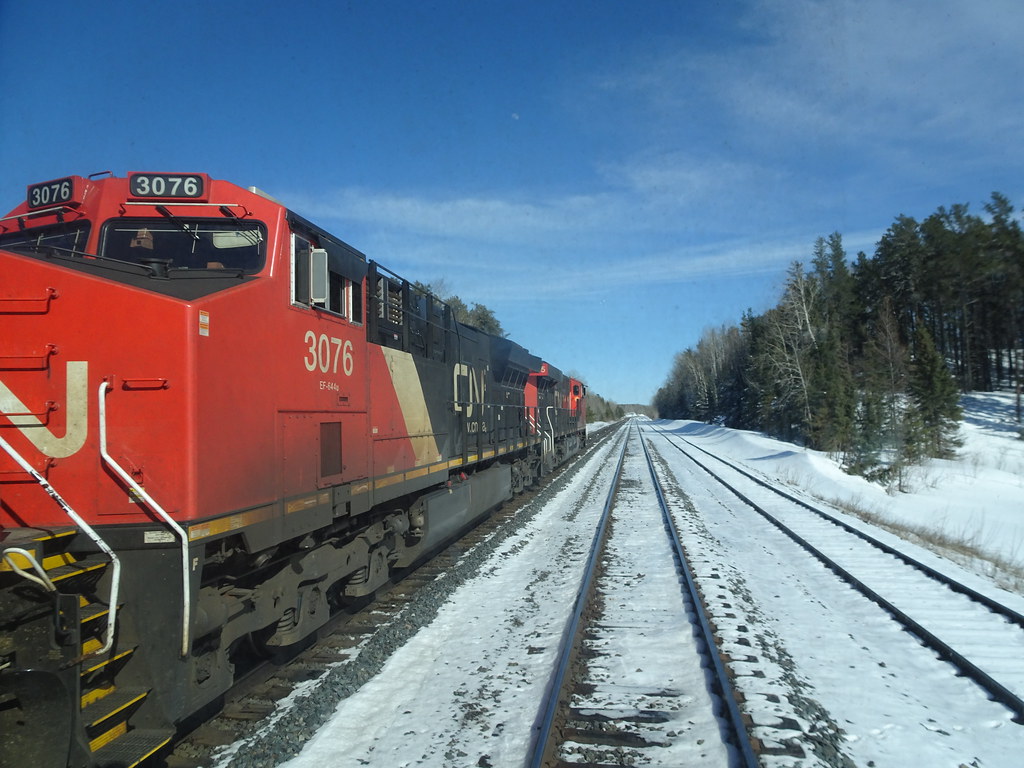
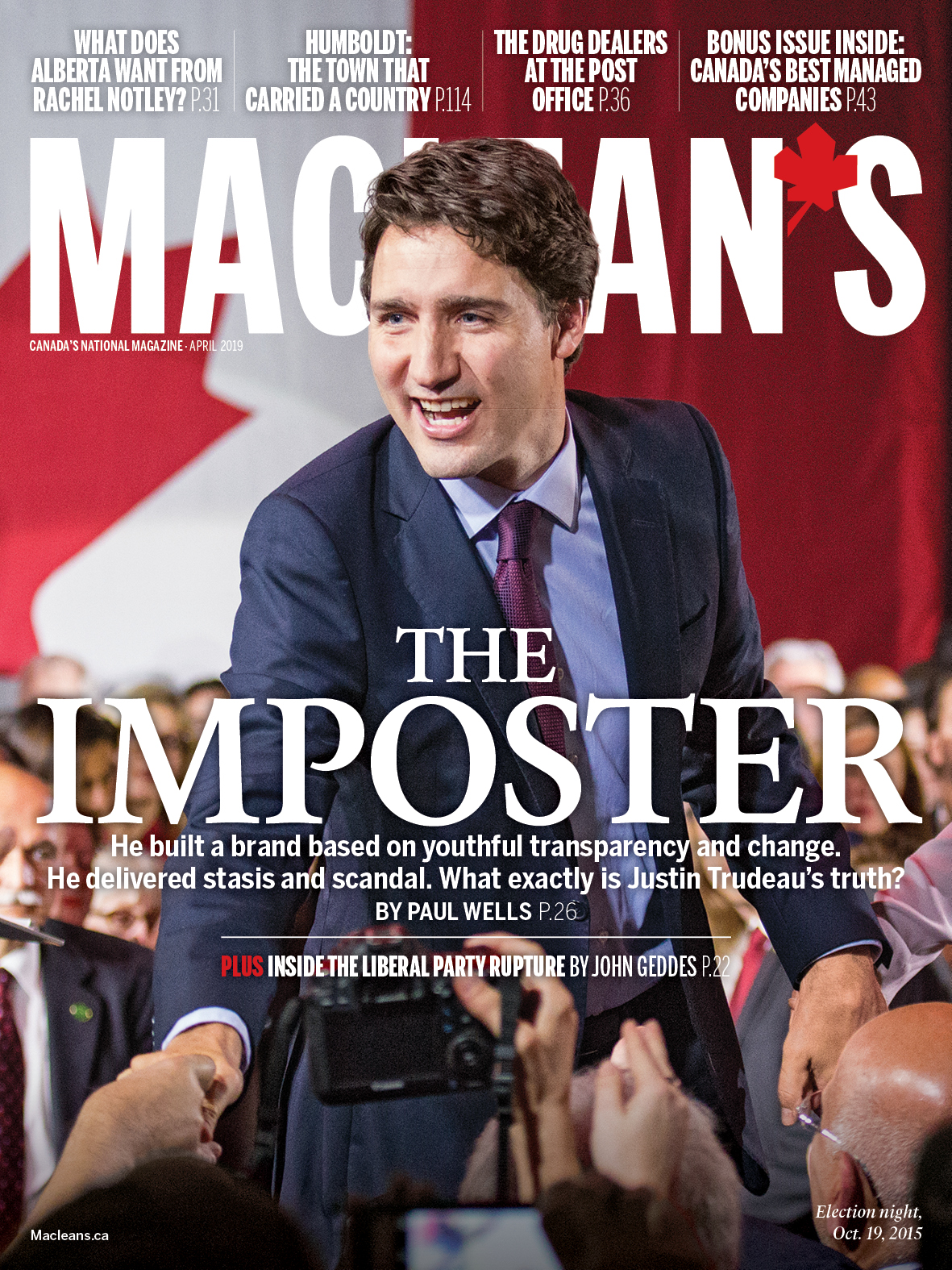
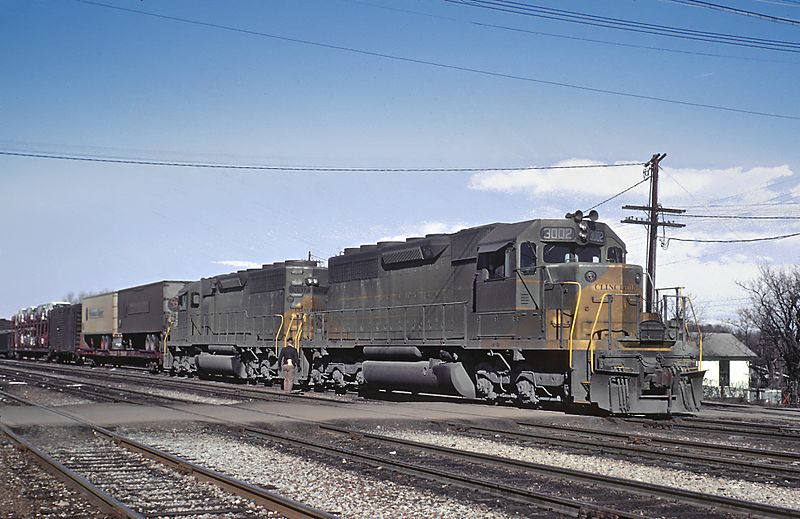
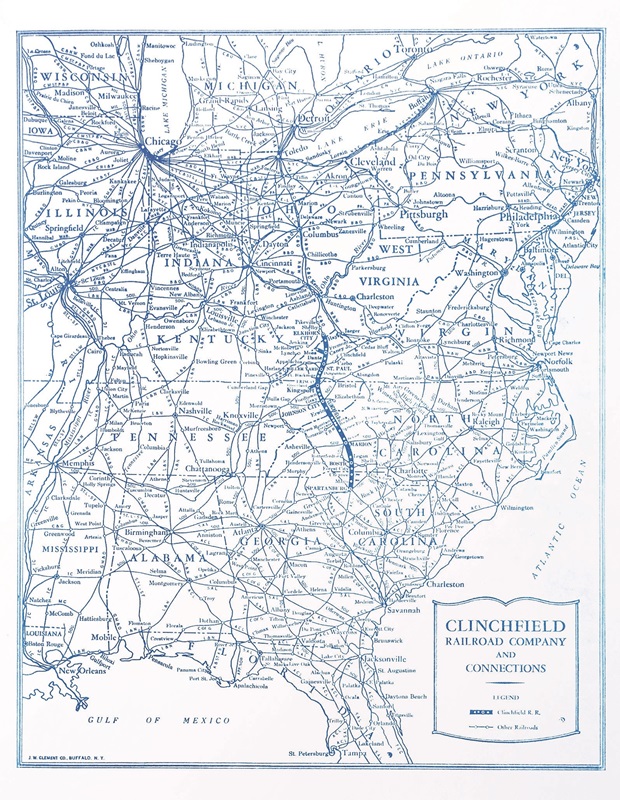
Quotulatiousness

February 25, 2020

“Canada is no longer a viable political construct. It is a dead country walking”

Filed under: Cancon, Economics, Government, Politics, Railways — Tags: , , , , — Nicholas @ 03:00

David Solway outlines some of the serious issues Canada needs to tackle … but many of which are issues that the current federal government is striving to avoid tackling:

Canada is presently in the throes of social and political disintegration. A left-leaning electorate has once again empowered a socialist government promoting all the lunatic ideological shibboleths of the day: global warming or “climate change,” radical feminism, indigenous sovereignty, expansionary government, environmental strangulation of energy production, and the presumed efficiency of totalitarian legislation. Industry and manufacturing are abandoning the country in droves and heading south.

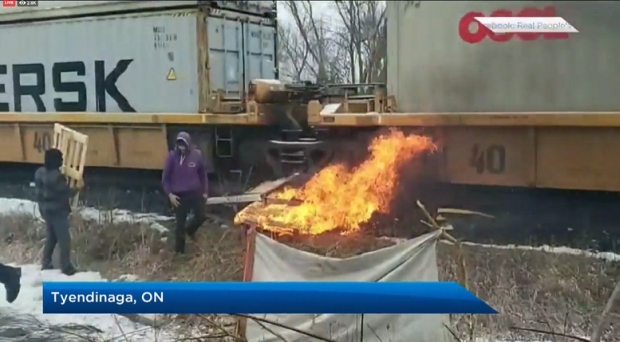
Canada is now reaping the whirlwind. The Red-Green Axis consisting of social justice warriors, hereditary band chiefs, renewable energy cronies, cultural Marxists, and their political and media enablers have effectively shut down the country. The economy is at a standstill, legislatures and City Halls have been barricaded, blockades dot the landscape, roads and bridges have been sabotaged, trains have been derailed (three crude-by-rail spillages in the last two months), goods are rotting in warehouses, heating supplies remain undelivered, violent protests and demonstrations continue to wreak havoc — and the hapless Prime Minister, who spent a weak swanning around Africa as the crisis unfolded, is clearly out of his depth and has no idea how to control the mayhem. No surprise here. A wock pupper politico in thrall to the Marxist project and corporate financial interests, Justin Trudeau is generally baffed out when it comes to any serious or demanding concerns involving the welfare of the people and the economic vitality of the nation. Little is to be expected of him in the current emergency apart from boilerplate clichés and vague exhalations of roseate sentiment.

Still, Trudeau may have been right about one thing when he told The New York Times that Canada had no core identity — although this is not what a Prime Minister should say in public. Canada was always two “nations,” based on two founding peoples, the French and the English, which novelist Hugh MacLennan famously described as “two solitudes” in his book of that title. But it may be closer to the truth to portray Canada as an imaginary nation which comprises three territories and ten provinces, two of which, Quebec and Newfoundland, cherish a near-majoritarian conception of themselves as independent countries in their own right. Newfoundland narrowly joined Confederation only in 1949 and Quebec held two successive sovereignty referenda that came a hair’s breadth from breaking up the country.

Quebec separatists don’t need to do much more than sit back, put their feet up, crack a few beers, and watch Justin Trudeau drive the country toward dissolution. Their job is so much easier now…

It is often noted that America is a nation evenly divided between progressivist and conservative populations, a civil dilemma not easily resolved. But Canada is divided approximately 65-35 by these constituencies, and if one considers that the federal Conservative Party in its present manifestation can fairly be described as Liberal Lite, the breakdown is more like 95-5. This means there is no chance of reconciliation between our political disparities, such as they are, and Canada is doomed to plummet down the esker of every failed socialist experiment that preceded it and, indeed, that is presently on display in various foundering nations around the globe — North Korea, Cuba, Venezuela, and counting.

Trudeau père invoked the War Measures Act in 1970 to quell the Quebec separatist movement, the Front de Libération du Québec (FLQ), after a series of bombings and murders. It is obvious that the son has neither the political smarts nor the strength of character to act decisively against those who are busy reducing an already patchwork country into a heap of shards and rubble. And there we find the proof that, whatever Canada may once have been and whatever the talking heads may incessantly proclaim, Canada is no longer a viable political construct. It is a dead country walking.

H/T to Blazing Cat Fur for the link.

February 24, 2020

Bidding farewell to the rule of law in Canada?

Filed under: Cancon, Government, Law, Politics, Railways — Tags: , , , — Nicholas @ 03:00

John Carpay on the importance of the rule of law in civil society and why we’re at risk of losing it here in Canada:

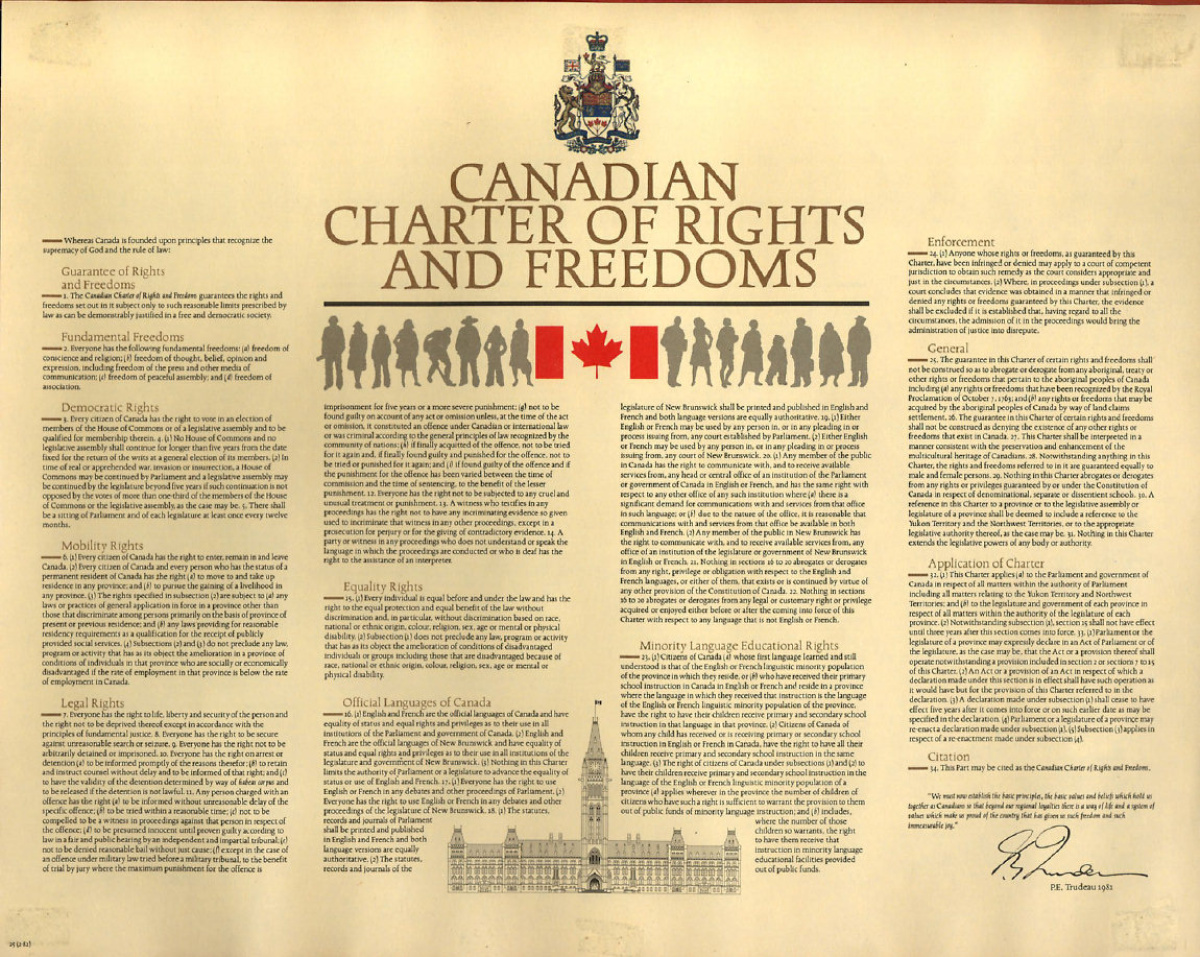
The rule of law is one of the most important legal principles on which Canada is based. Along with the supremacy of God, it is mentioned in the very first words of the Canadian Charter of Rights and Freedoms: “Whereas Canada is founded upon principles that recognize the supremacy of God and the rule of law.”

The rule of law means that we are ruled by laws, not by the whims of a King, or the clamouring of a mob. The rule of law also means that the law applies to everyone, even the King; there can be no exemptions for the King or his favourites.

Countries which practice and uphold the rule of law tend to thrive economically, socially, politically and culturally. Countries which uphold the rule of law become wealthy because people can work, buy, sell and trade in the knowledge that their property and their person are protected by law. Economies thrive when people know that the law will be enforced, and that the law will be applied to everyone, even to the King and his favourites. The rule of law provides investors, foreign and domestic, with confidence to invest their money in business projects.

Conversely, when a country condones law-breaking, investors will put their money elsewhere, and quickly. The world’s poorest and most violent countries are those where politicians are above the law, and the law is not applied equally to all.

The decisions of Canada’s politicians and police to condone – for three weeks or longer – the blockading of railway lines by aggrieved protesters violate the rule of law in at least two ways.

First, our politicians are effectively stating that individuals with strongly held political opinions are entitled to engage in illegal activities, in this case shutting down railway lines. Second, law-breaking is permitted because Prime Minister Justin Trudeau and other politicians sympathize with the protesters’ ideology and demands: the law does not apply to the King’s favourites.

February 23, 2020

Justin’s hidden victory – “… in the fight against global warming, this has to have been Canada’s best two weeks EVER”

As Rex Murphy points out, the nattering nabobs of negativity (okay, he didn’t call ’em that) miss the key benefits of Justin Trudeau’s tour de force of ingenious diplomacy and inaction:

It was at the very heart of Justin Trudeau’s triumph in his first election, that having vanquished the Mordor orcs of Harperland, that the country was going to be served by new thinking and fresh approaches, that anger and conflict would be no more. In an era marked by respectful thinking, exquisitely careful language, above all by the ability to listen, protests would be no more. Concord would reign, all would be sweetness and light.

What few and feeble disputes that might emerge would be defused with a waving of the diversity wand, and a choir drawn from the Liberal backbenches intoning solemnly “this is not who we are as Canadians” before the Centennial Flame on Parliament Hill.

As an ultimate fillip every month a kitten and a ball of wool would be sent to every Canadian household (and Lo, a zen-like tranquillity would settle over the land). To be clear, these would be very progressive kittens, and the wood fair-trade down to the last twisted fibre.

[…]

Looked at in the cool light of reason, in the fight against global warming, this has to have been Canada’s best two weeks EVER. Keep it up and Canada, the whole wide, cold country, can soon declare itself one half-a-continent carbon-emission-free zone. Apocalypse deferred.

How do you spell Hallelujah? Greta Thunberg — Canada has heard you. Find a bamboo raft and come visit us again.

February 21, 2020

Justin Trudeau, Prime Empathizer of Canada

Filed under: Cancon, Government, Law, Politics, Railways — Tags: , , , , , , — Nicholas @ 03:00

The Prime Minstrel channels his inner Bill Clinton, although he just manages to avoid saying that he “feels our pain”:

A strange thing happened Tuesday morning. That strange thing was … an important and interesting exchange on the floor of the House of Commons. It happened during routine proceedings, and not in the Punch-and-Judy exchange of question period. The leaders of the various parties in the House stood and outlined positions on the rail blockades being conducted around the country in support of Wet’suwet’en opponents of B.C.’s Coastal GasLink pipeline.

First came the prime minister. “People are troubled by what they have been witnessing this past week,” he said. Our empathizer-in-chief, the emotional mascot of Confederation, was about to go to work. “Young, old, Indigenous and newcomers are asking themselves what is happening in the country … On all sides, people are upset and frustrated.”

The next three words out of his mouth were: “I get it.” Huh. Is that the sort of thing you say when you’ve actually gotten it? If a friend called you up in a shattered emotional state because he had just lost his job, as people are starting to lose jobs to the Wet’suwet’en solidarity protests, would you say “I get it”?

Beyond this tin-eared reassurance, Trudeau did not have much specific to say, and what there was seemed to contradict itself. “Our government’s priority is to resolve this situation peacefully, but also to protect the rule of law in our country,” he promised. “That is a principle we will always stand up for.” One would have thought the role of a prime minister was to apply the law rather than to “stand up for” it. He gave his usual spiel about the myriad of ways in which the federal government has failed First Nations, again speaking as though someone else were in charge. Certainly very little of it is his own fault: the government he leads has “invested more than any other … to right historic wrongs.”

Trudeau worried aloud that Canada might become “a country where people think they can tamper with rail lines and endanger lives,” but he seemingly renounced the use of force (it’s not “helpful”) against protesters who openly discuss sabotage. What the prime minister means when he talks of the “rule” of something called “law” has been left imperfectly clear.

Chris Selley suggests the government’s fecklessness will continue to prevent any solutions being implemented:

The stupefying weightlessness of Justin Trudeau’s government has never been more evident than in recent days, as it tries to arrange an end to the Mohawk blockade of CN’s main line near Belleville, Ont. At times it seems as if it might just float away, like an improperly tethered bouncy castle in a thunderstorm.

This week has been particularly windy.

[…]

The situation is ludicrous: Because Ontario’s independent provincial police won’t enforce a court injunction, the federal public safety minister seems to be in discussions with B.C.’s solicitor general about whether B.C.’s independent provincial police might back off enforcing a different injunction.

And the worst part of this absurdist theatre festival is how difficult it is to imagine a better alternative. Conservatives continue to call on Trudeau to somehow fix the problem, but the way Canada is set up, it’s really not a federal issue. The RCMP might have some jurisdiction over the railway as federally regulated infrastructure, said University of Toronto law professor Kent Roach, but that hasn’t happened in past cases. It wouldn’t even be up to Trudeau to send in troops: under the Emergencies Act, Roach said, a provincial solicitor-general has to request it.

These are structural issues that any PM will face. Indeed, the biggest difference between the Liberals’ approach to this blockade and the Conservatives’ approach to the 2013 Idle No More protests, which included a 13-day blockade of a CN line in southwestern Ontario, has been one of rhetoric and engagement. The Conservatives talked tougher, but Aboriginal Affairs rebuffed CN’s request to intervene. (Those protesters eventually obeyed a court injunction and left.) The Liberals needlessly tie themselves in knots and insult our intelligence — they know no other way — but they clearly believe it’s their job to broker some kind of resolution.

It’s tough to say which approach is likelier to work. At this point odds seem to favour “neither.” If you have a better, workable idea to get the trains moving, for God’s sake get on the horn to Ottawa.

February 17, 2020

“The rails to hell are laid with good intentions”

In the National Post, Jonathan Kay explains how Canadian governments find themselves in the situation where the basic laws of the land can be flouted at will by a small extremist faction and the police are unwilling to do more than bare peacekeeping duties:

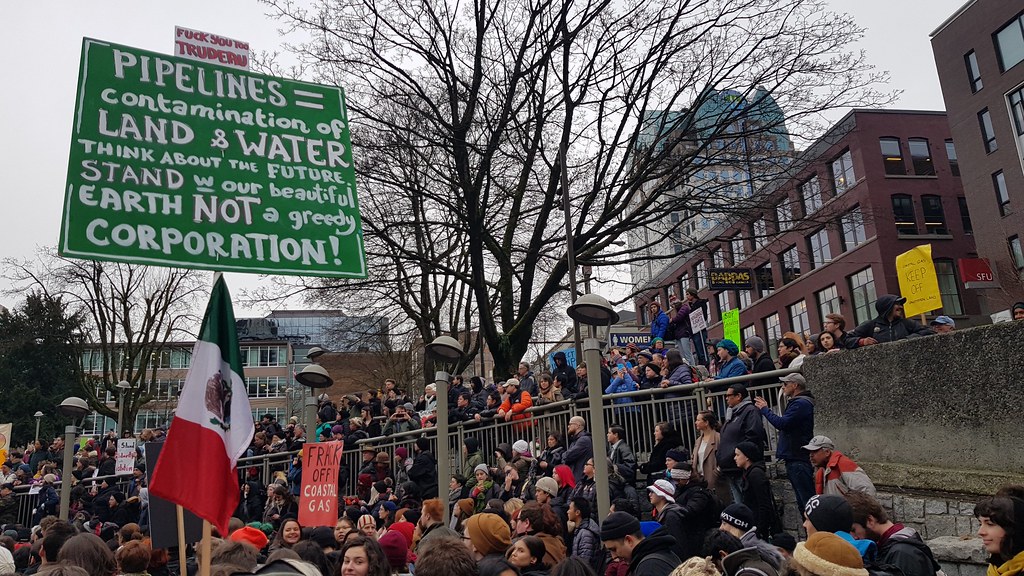
“Vancouver Solidarity with Wet’suwet’en” by jencastrotakespictures is licensed under CC BY-NC-SA 2.0

If you find yourself astounded by the current situation in Canada, whereby protesters have been allowed to shut down a rail network that remains a backbone of passenger travel and industrial transport (and whose coast-to-coast completion in 1885 became a symbol of national unity), it’s useful to revisit the accumulation of symbolic gestures that have steadily destroyed the moral authority of our governments to push back at any assertion of Indigenous rights and grievances. For years, our leaders offered reflexive acquiescence to increasingly expansive claims that Canada remains a white supremacist dystopia, culminating in last year’s campaign to convince us not only that modern Canada is a “genocide” state, but that even the act of expressing disagreement with this description makes you a sort of metaphorical train conductor on the rails to Canadian Dachau. Having publicly tattooed their guilty settler souls with every imaginable hashtag, our leaders now apparently find themselves stopped from restoring the rule of law.

The rails to hell are laid with good intentions. And there is nothing that now signals goodness in Canadian public life more than the land acknowledgment. Certainly, no one can argue with the historical truth that Indigenous peoples populated Canada for thousands of years before the arrival of Europeans. But words have meaning. And the well-understood meaning of these acknowledgments is that Indigenous peoples exercise a sort of broad, vaguely defined moral sovereignty over lands “owned” by Canadian governments, corporations and private citizens — including the lands on which we have constructed roads, rails, ports and legislatures. And since this sovereignty apparently now may be asserted at any time, for pretty much any reason, we have effectively lost the ability to enforce the systematic organization of property rights on which every functional society, Indigenous or non-Indigenous, depends.

The push to recognize Indigenous sovereignty over ancestral lands stretches back generations, an effort rooted in very real constitutional and treaty rights. But what I am describing here is not this formally bounded legal campaign, but rather the more general insistence that the entire country remains stained by original sin, and so must be purified by an open-ended, quasi-spiritual process of “decolonization.” This project began in earnest in 2017 as a counter-reaction to the perceived jingoism of the Canada 150 celebrations. Within the rarified corners of the literary and arts milieus (in which I found myself embedded at the time), decolonization quickly became a sort of state religion, complete with decolonization-themed sensitivity training and confession rituals.

[…]

The people doing the protesting are led by dissidents within one of the affected Indigenous communities, amplified by a critical mass of white environmentalists who are perfectly happy to cherry-pick Indigenous causes based on how well they line up with their own Anti-Racism/Critical Studies term-project requirements. Indeed, there is a certain type of very self-satisfied white Canadian leftist who sees himself as a real-life Lorax. Drawing on antiquated noble-savage stereotypes from the past, these decolonization super-allies cast Indigenous people as their little bar-ba-loot bears. And it just ruins their day when Indigenous leaders refuse to grab their tummies, moan for the CBC cameras, or read their bar-ba-loot scripts.

There is a larger hypocrisy at play here, too. Justin Trudeau and his entourage — currently on world tour, hoping to convince African and Caribbean leaders to hand him the shiny trophy of a UN Security Council seat — don’t take the train much. They fly. So, too, do the provincial politicians passing the buck in equal measure, not to mention the national broadcast journalists offering maudlin profiles of the demonstrators. Forcing ordinary travellers to bear the burden of upholding officially sanctioned upper-middle-class social-justice pieties isn’t “progressive.” It’s reactionary, snobbish elitism with a progressive façade.

February 16, 2020

The Canadian economy taken hostage while the PM swans around the world schmoozing for a temporary Security Council seat

Chris Selley on the state of play in the stand-off between (some) First Nations protesters and their temporary fellow travellers of the various permanent protest class:

“DSC02285” by Bengt 1955 is licensed under CC BY-NC 2.0

The majority of Wet’suwet’en First Nation members support the Coastal GasLink natural gas pipeline project, and they are in an objectively peculiar situation. On the one hand, the RCMP is doing its best to clear away the protesters and let construction proceed. On the other hand, anti-pipeline protesters claiming solidarity with the Wet’suwet’en have created chaos in their name — most notably the total shutdown of CN Rail’s eastern Canadian network, the cancellation of nearly every Canadian passenger train, and the layoffs and untold economic costs that go with that.

If protesters acknowledge the diversity of opinion among the Wet’suwet’en at all, they will defer to the authority of five hereditary chiefs who oppose the project, or observe that the five elected Wet’suwet’en band councils — all of which have signed community benefits agreements — represent a form of settler democracy imposed by the Indian Act.

[…]

Clearly the Wet’suwet’en are a divided community, including on the most basic questions of how they should be governed. It’s a mess. Mind you, look at the state of Canada as a whole.

Just as the RCMP have court authorization to clear protesters and encampments along the pipeline route, the Ontario Provincial Police have court authorization to clear the Mohawk rail blockade near Belleville, Ont. Unlike the RCMP, the OPP refuses to exercise its authority. And we just have to live with that. Conservative politicians are barking at Justin Trudeau to “enforce the law,” but he doesn’t give orders to the OPP, and neither does Ontario Premier Doug Ford, and nor should we want them to.

Still, you might expect senior ministers to have moderately stern words for folks illegally causing economic harm. You might expect the prime minister, at minimum, to be in the country. Instead, Trudeau spent the week swanning around Africa drumming up support for the UN Security Council seat with which he remains unaccountably obsessed, then decamped for the Munich Security Conference, where he was photographed warmly embracing Iranian foreign affairs minister Mohammad Javad Zarif, five weeks after Iran blew an airliner full of Canadians out of the sky over Tehran.

The Little Potato is probably doubly happy to have a valid (in his own mind) excuse for not being in the country at this particular time. He loves being the centre of attention … as long as that attention is friendly. He doesn’t handle situations well if the tempers are higher and the hostility is rising … like much of Canada right now.

The pipeline is a provincial project, not a federal one, but if the OPP won’t end the blockade and the feds aren’t willing to take truly extraordinary measures, then at some point in the foreseeable future it may well make short-term economic sense to give in to their demands. Maybe the feds can buy the pipeline from Coastal GasLink and shut it down.

And what if the Mohawks do lose interest, or are somehow induced to stand down? That now counts as the best-case scenario, and it will have involved shutting down the CN railway for at least a week — maybe two, maybe three — with enormous consequences for people’s livelihoods and the economy as a whole, all in the name of killing a project supported by the vast majority of Indigenous people affected by it. And it will happen again, as many times as any group wants it to, on whatever issue they want it to, for as long as they want it to. Unless someone in power does something unusually bold and concrete in the very near future – and it’s not even clear what that thing would be — we are well on the road as a country to being terminally screwed. In the meantime, we certainly have no lessons on accountable government to give the Wet’suwet’en.

February 15, 2020

Disrupting railways as an activist tactic appears to work really, really well

As Colby Cosh writes, for all the issues Alberta has with the government in Ottawa, nobody seriously suggested messing up the railways to get attention. Perhaps they should have:

“DSC02285” by Bengt 1955 is licensed under CC BY-NC 2.0

It never occurred to us to mess with the rail network in Eastern Canada — to inconvenience the precious commuters of the Golden Horseshoe — as a means of gaining negotiating leverage. Actually, I’m sure some people must have suggested it, but they would have been written off as selfish, dangerous idiots advocating counterproductive tactics.

The economic impact of the rail protests is big, but surely comparable, at the moment, to that of a big storm. Yet because a B.C. Aboriginal community is carrying its fight with the B.C. government to the guts of Canada, the clamour over whether large public works are now possible at all in Canada has instantly achieved new and unfamiliar volume levels.

The Coastal GasLink that is the source of the strife is a provincially regulated work running from Dawson Creek to the coast; unlike the vastly more expensive problems Alberta has encountered, this technically isn’t an issue for the wider federation at all. Except, whoops, it is! Because someone decided to make it one!

The levels of irony dazzle the imagination. The Canadian West was settled by means of passenger rail, which is supposedly one reason it was chosen as a target by the radicals supporting the Wet’suwet’en hereditary chiefs in their pipeline fight. But intercity commuter rail no longer really exists between the West Coast and Hamilton. The West is ultimately as dependent on rail freight as the East, and maybe more so, but it was that commuter inconvenience that gave rise to an immediate sense of national crisis, while Calgary and Saskatoon and Winnipeg snoozed.

And climate-change activists found themselves blocking rail lines in “solidarity” with the Wet’suwet’en, even though the chiefs’ fight is a question of territorial principle rather than carbon sins. This put the greenies in the position of opposing and thwarting actual rail travel. They admit this is anomalous; nobody likes to attach the word “hypocritical” to himself.

One of the protesters pointed out to the Star‘s Alex Boyd how dependence on rail — dependence of the sort that they spend 364 days a year advocating for intra-city commuters — facilitates unlawful, obstructive protest as a means for the self-anointed to “put pressure on decision-makers.” It is a little harder to block paved roads than railroads, and much harder to sabotage them, if it comes to that — which it might have if the police had used force to immediately disperse the protests. For some, this counts as a feature of rail, not a bug.

February 14, 2020

The reaction to the Mohawk blockade near Belleville shows that VIA Rail isn’t a serious company

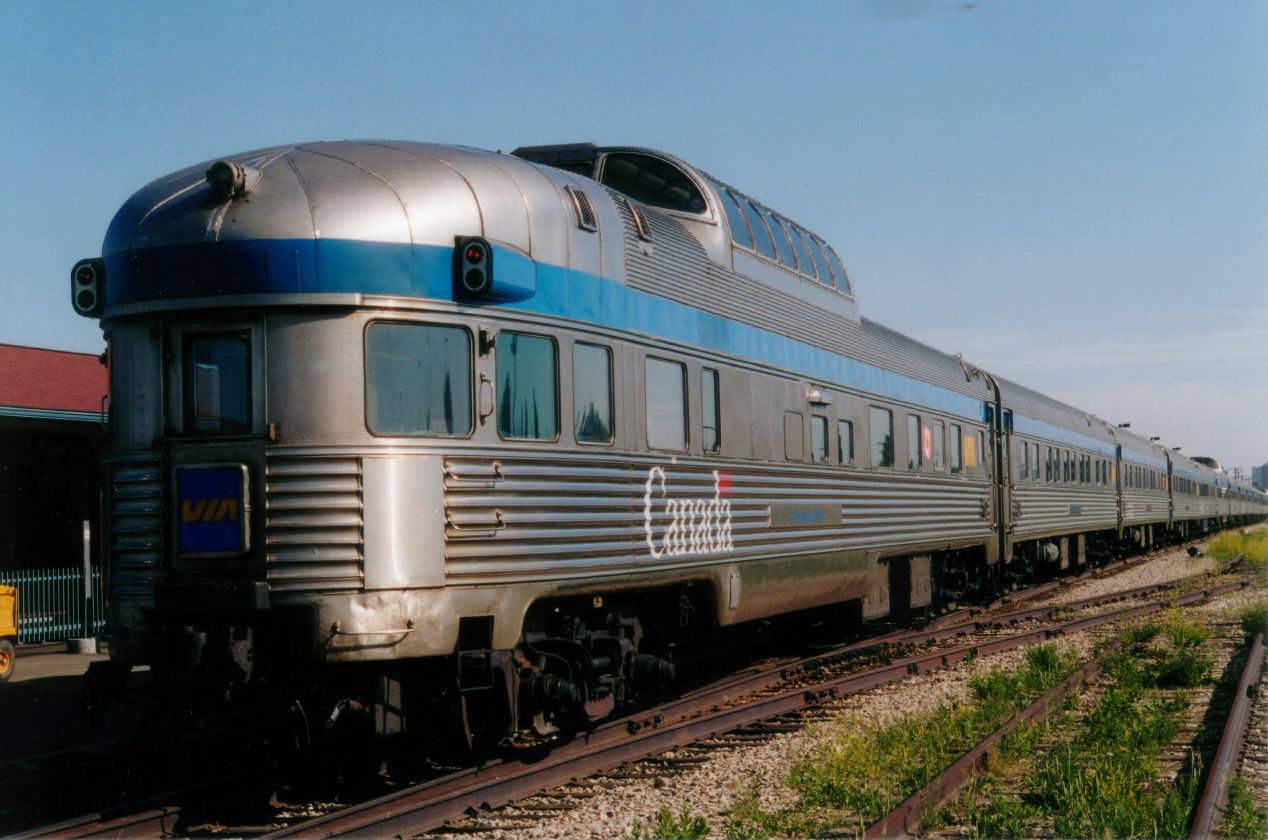
Mohawk protesters began blocking the main CN and VIA line between Toronto and Montreal near Belleville nearly a week ago. The police, having learned so often that the government and the courts won’t back them up, did little to try to get the blockade lifted other than to prevent active confrontations with the First Nations activists. Canadian National announced that they were being forced to park trains all over Eastern Canada as a result of the blockade and that deliveries of goods would be snarled for quite some time even after service is allowed to resume. VIA rail, on the other hand, seems to care not a bit about the thousands of travellers who have been stranded mid-journey and made no apparent efforts to bring in buses or any other arrangements. Chris Selley says this proves that VIA is not an essential service even in their own minds:

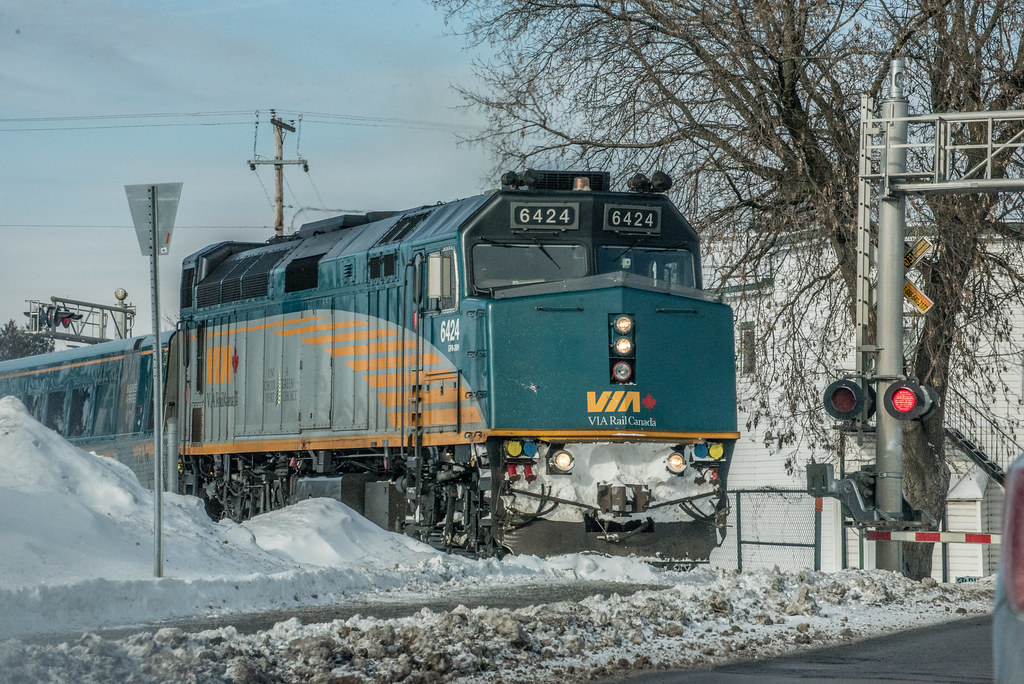
“The 6424” by Stephen Downes is licensed under CC BY-NC-SA 2.0

Of all the bad news to befall VIA Rail this week, with the cancellation of all its trains between Toronto and Ottawa and Toronto and Montreal — that’s roughly 50 per cent of its ridership and 60 per cent of its revenues — the worst news might be just how little news it has made. Mostly, the Mohawk blockade of the CN main line near Belleville, Ont., has been treated as a side story to the anti-pipeline protests and arrests in the British Columbia interior.

That’s what it is in the grand scheme of things: The battle between Wet’suwet’en members and chiefs and the federal government speaks to much larger, existential questions about the future of the Canadian economy, about the Liberal government’s reconciliation agenda, about the very nature of the Canadian federation and the rule of law. This blockade, launched in the name of solidarity with the Wet’suwet’en, just means people have to take the bus, or fly, instead of the train.

But that’s no small inconvenience, no small expense. Canadians in general are not quick to anger, but very few of the VIA refugees interviewed by various news outlets sounded even slightly furious, which they had every right to be. When protesters from the same First Nation blockaded the same set of tracks six years ago, VIA properly exhibited some concern with getting their customers to their destinations and put on replacement buses.

This time around, no buses. No suggestions. No response to media inquiries asking why there are no buses. Just a cancellation notice on the website and a fare-thee-well. At a time when VIA is seeking untold billions from the federal government to build a new Toronto-Ottawa-Montreal route and run vastly more trains, this does not bespeak a company that takes itself very seriously.

[…]

And never mind VIA, what sort of country lets a few people close down a key piece of national infrastructure, in violation of a court injunction — not for an hour or a day, but literally indefinitely? For a time it wasn’t even clear whose job it was to enforce the injunction: On Sunday an Ontario Provincial Police spokesperson told Global News it was up to the CN Police Service. On Tuesday, a CN spokesperson told the National Post it was up to the OPP, and indeed, late Tuesday OPP officers warned protesters to leave or they would be forced out. Perhaps the threat of massive economic disruption finally lit a fire under them: earlier in the day, CN had said it was considering shutting down huge parts of its freight network across the country. Had it just been rail passengers, though, the idea of this side-protest dragging on for weeks or even months seems absurdly plausible.

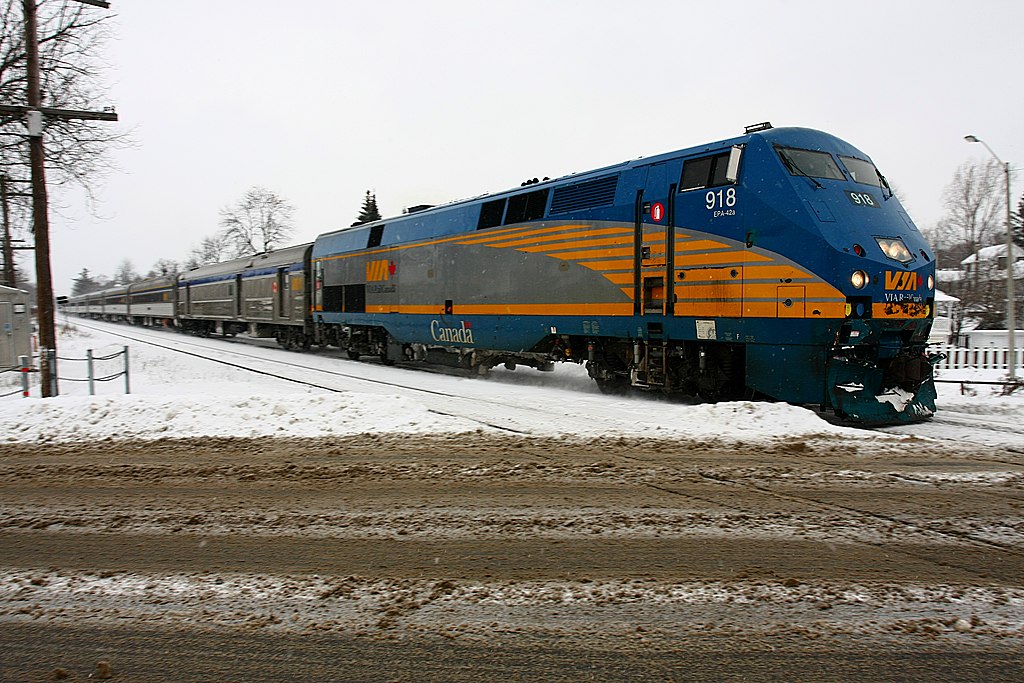
VIA Rail 918, a General Electric model P42DC locomotive, at Belleville, Ontario on 23 December 2008.
Photo by Martin Cathrae via Wikimedia Commons.

While VIA may not be serious, others are extremely serious:

Left-wing blogs have been offering instructions and maps during the #ShutDownCanada protests on how to blockade and destroy train tracks and other pieces of Canada’s infrastructure, according to True North.

Two websites in particular, these being North Shore and Warrior Up, have instructed demonstrators how to damage Canada’s pipelines, roads and railways.

In some of North Shore’s posts, for instance, they told their readers to stand in solidarity with the Wet’suwet’en tribe by destroying train tracks. In this article, the author makes it perfectly clear that he wants to damage Canada’s economy at large.

More absurdly, however, the article then went on to instruct the reader on how to compose a chemical mixture that destroys steel rail tracks — taking particular care to describe how not to leaving fingerprint or DNA evidence.

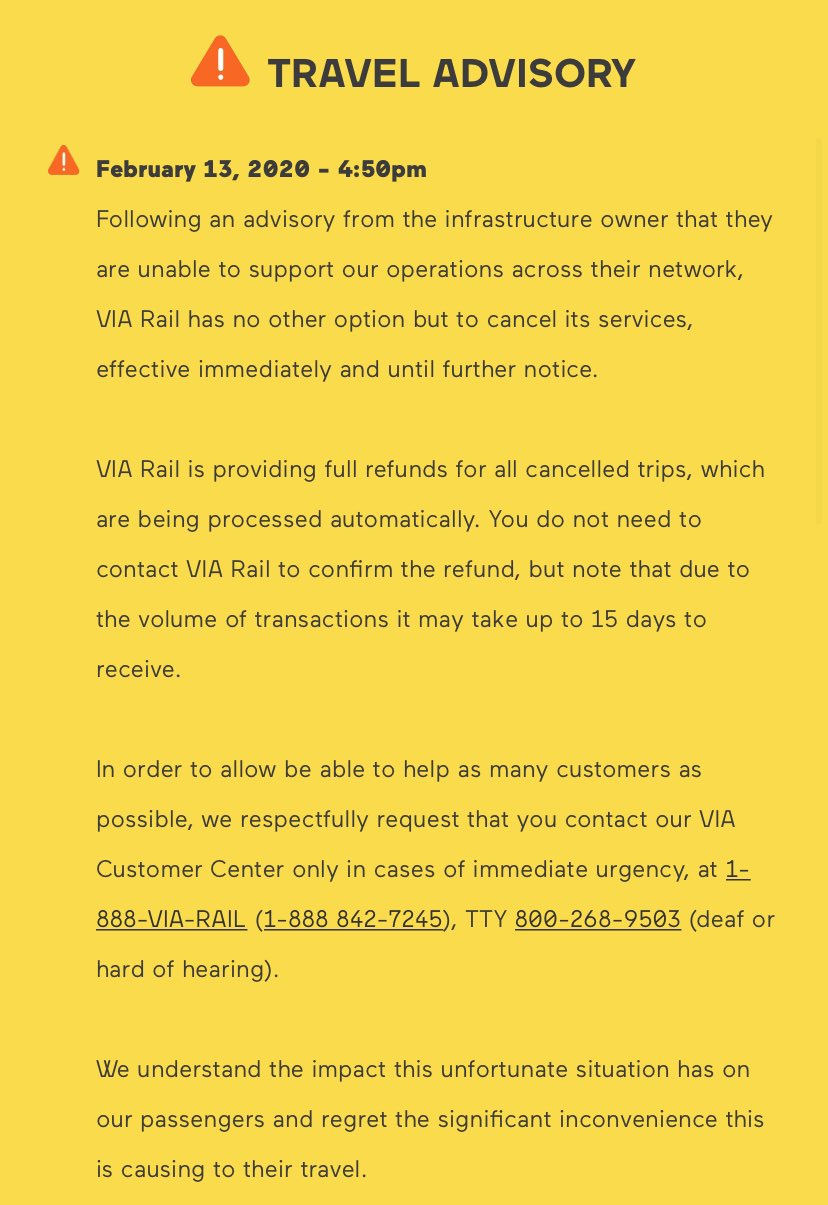
Thursday evening, VIA Rail announced their whole passenger network would be shut down until further notice: Service cancellation notice.

February 6, 2020

Fallen flag – The Nickel Plate Road

Filed under: Business, History, Railways, USA — Tags: , , , — Nicholas @ 03:00

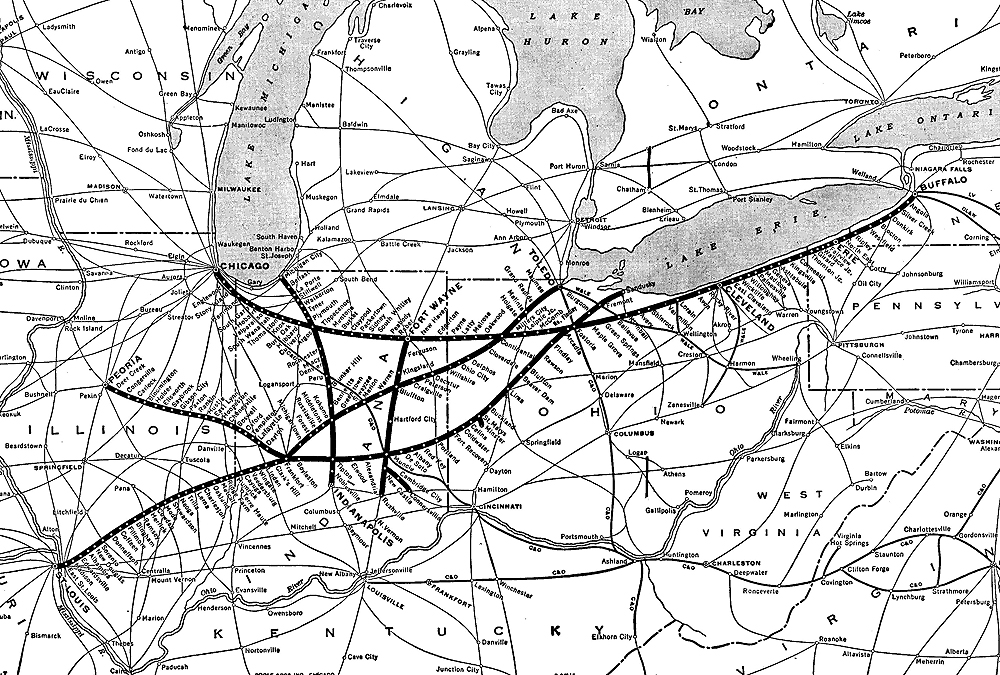
Kevin J. Holland provides a brief look at the history of the New York, Chicago & St. Louis, better known as the “Nickel Plate Road”:

The New York, Chicago & St. Louis opened between Buffalo and Chicago on October 23, 1882, in many spots east of Cleveland just a stone’s throw from rival Lake Shore & Michigan Southern Railway. What would become the Nickel Plate became a Vanderbilt property in January 1883.

Although eclipsed by the Lake Shore’s plush limiteds, NYC&StL from 1893 fielded three unpretentious, reliable Chicago to Buffalo, N.Y., passenger trains, establishing a long-standing pattern of modest passenger service. In 1897, Delaware, Lackawanna & Western entered the picture, conveying NYC&StL cars from Buffalo to Hoboken, N.J.

“The great … Nickel-plated railroad”
When NYC&StL was being surveyed, Editor F. R. Loomis of Ohio’s Norwalk Chronicle waxed enthusiastically on the railroad coming to town referring to it as “the great New York and St. Louis double-track, nickel-plated railroad.” Use of “Nickel Plate Road” proliferated, in newspapers and by the road itself.

In 1914, LS&MS and Nickel Plate were wards of New York Central. Passage of the Clayton Act that same year was intended to bolster the earlier Sherman Antitrust Act, and left NYC with a dilemma. Enter brothers Oris P. and Mantis J. Van Sweringen, self-made Cleveland real-estate developers who purchased acreage from NYC Vice President Alfred H. Smith. “The Vans” as the brothers were known, approached Smith, by then NYC president, to discuss their plans involving land owned by the Nickel Plate. As the Clayton Act’s divestiture deadline loomed, Smith engineered a sale to the Vans of not only the land they sought, but of the entire Nickel Plate Road. Their Alleghany Corporation holding company eventually in­­cluded control of the Nickel Plate, Chesapeake & Ohio, Pere Marquette, Erie, Wheeling & Lake Erie, Chicago & Eastern Illinois, and Missouri Pacific.

The gaunt NYC&StL was ripe for re-equipping under its new owners. Addressing the Vans’ lack of railroad experience, Smith orchestrated John J. Bernet’s move from an NYC vice-presidency to be Nickel Plate’s president. Neglected physical plant and obsolete motive power received needed attention under Bernet, who reincarnated the road into a lean and aggressive contender.

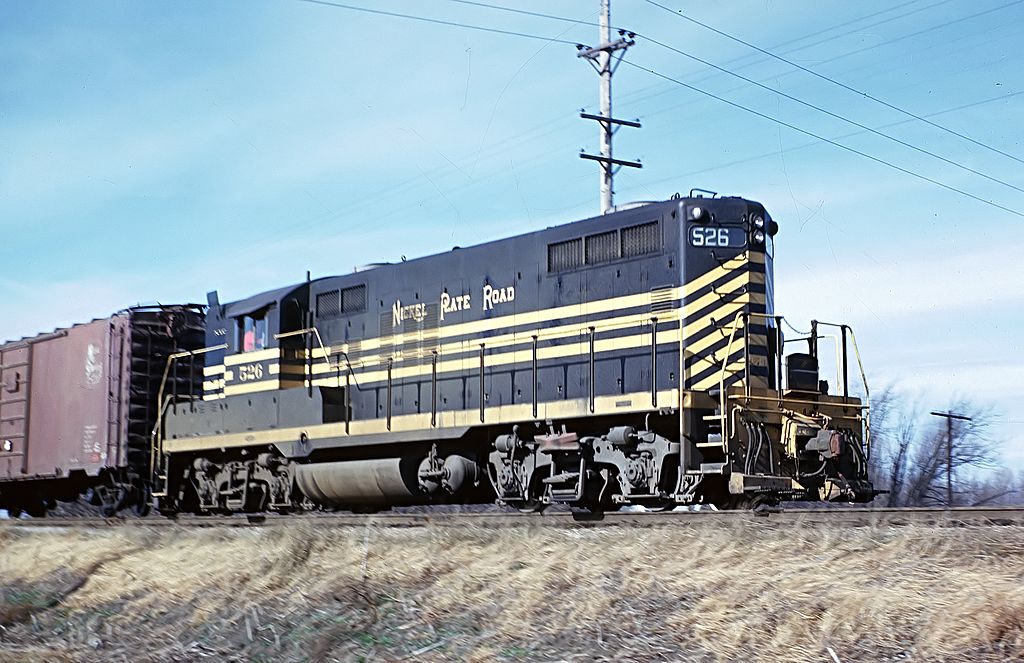
Nickel Plate Road GP9 number 526 switching a way freight at Gibson City, IL on November 24, 1962.
Roger Puta photo from the Mel Finzer Collection via Wikimedia Commons.

January 19, 2020

Travelling SNCF in the age of the smartphone app

Filed under: Business, France, Humour, Media, Railways, Technology — Tags: , , , , — Nicholas @ 05:00

At The Register, Alistair Dabbs reveals some unfortunate truths about the French railway service (the Société nationale des chemins de fer français or SNCF) and its mobile app:

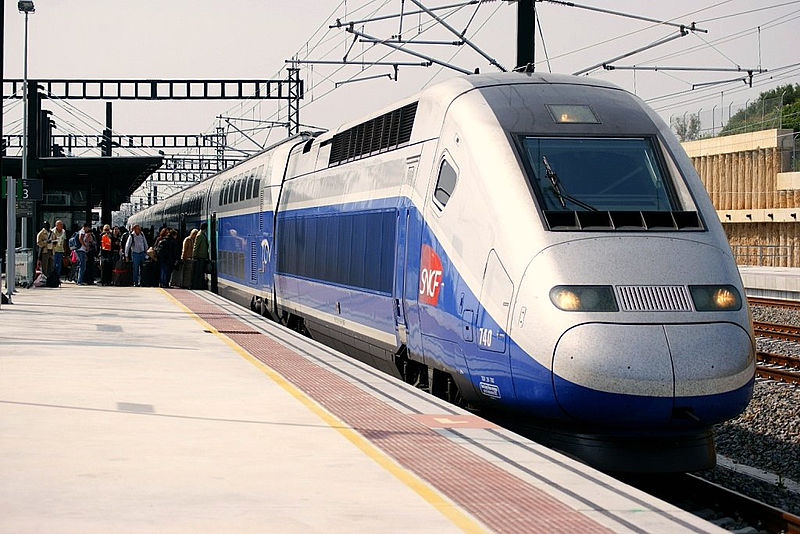
An SNCF Train à Grande Vitesse (TGV) Duplex DASYE (moteur asynchrone, nouvelle generation de duplex) train at Figueres-Vilafant station, 1May 2011.
Photo by eldelinux via Wikimedia Commons.

Actually, the hotel app is rubbish. The booking system is slow, the property information incomplete and some of the buttons don’t do anything at all. From time to time, the app flashes up a notification inviting you to install the app … er, that you’re already running. Much better to book using a proper computer. Still, flashing the screen around got me the Presidential Disability Suite. Franklin D rocked a wheelchair, remember, and I’m a fan.

This, however, pales into insignificance with the tedious and frankly silly collection of smartphone apps I had to juggle to manage my train journey to get here. Yes, it’s my own fault for trying to navigate my way across France on public transport in the midst of a general strike but surely that’s precisely the kind of thing digital communications ought to be able to help you with, don’t you agree?

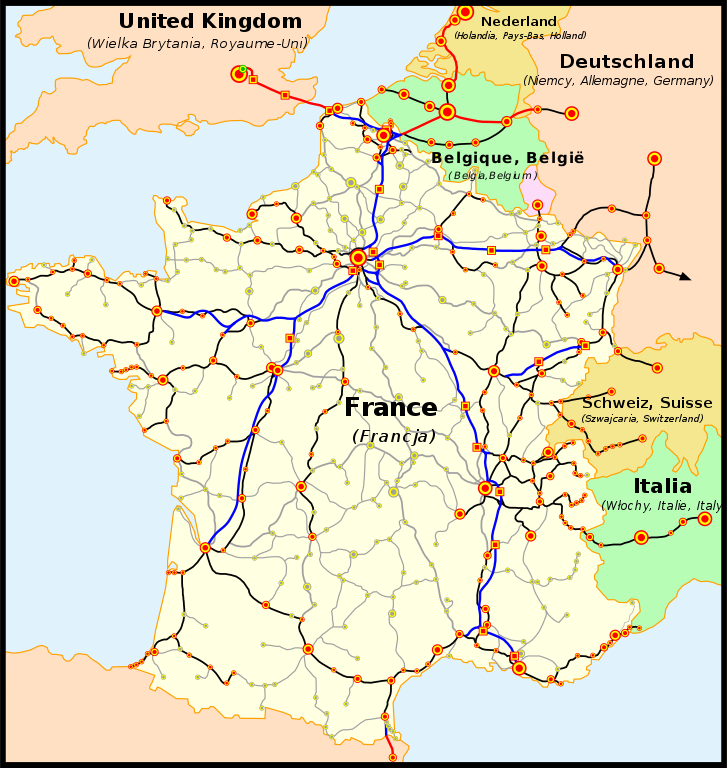
Map of the French railways on which the TGV (LGV: blue; normal tracks: black) and Intercités (grey) SNCF trains run. Only lines going to and from Paris are shown here.
Wikimedia Commons.

The French train company, SNCF, has been doing its best by notifying travellers with bookings every day at 17:00 which of the following day’s trains would be running and which would be cancelled. I’m a lifelong union member myself and I fully support the workers’ rights to … oh buggeration, my TGV’s been rerouted to set off from a city 300km away. Fucking union arsewipes – sack ’em all bastard wankers.

Oh well, I thought, I’ll just have to work out another way. Fire up the SNCF booking app!

A banner at the top informs me that I should seek information about which train services are running by checking its Twitter feed. So I launch the Twitter app. SNCF on Twitter says I should check via the idiotic INOUI brand for TGV bookings. So I launch the INOUI app. This tells me I should check with SNCF or, if I want more information, click on a highlighted link. I click on it: it links to a one-sentence message that tells me there is a strike on and that train services may be affected.

Two hours of thumb-numbing smartphone tomfoolery later, I have worked out my own alternative route via multiple connecting services. This was made more challenging by the SNCF and INOUI apps providing contradictory information about the same journey. Best of all is they can’t agree on where my TGV will actually go. Will it reach its terminus as usual or will it apparently go inexplicably missing from the tracks in the countryside outside Lille? According to SNCF and INOUI, it will do both. It’s Schrodinger’s train.

Just as I go to bed, the Eurostar app sends me a notification reminding me to get to my local station on time tomorrow to catch the TGV that’s been cancelled.

As you can see, my much prolonged, zig-zag route up the country and into Blighty worked, no thanks to these ridiculous apps. It wasn’t all bad: I got to see more French farmland than I expected and experienced first-hand the extraordinarily rich cultural variety of train station beggars that France has to offer the modern rail traveller.

January 7, 2020

“HS2 will make the country worse off and should be stopped as soon as possible”

Filed under: Britain, Economics, Railways — Tags: , , — Nicholas @ 05:00

The British government recently reviewed the ever-escalating sums for the proposed HS2 high speed passenger rail connection that began at some £30 billion, then climbed to £50 billion, then £80 billion, and the latest estimate is up to £110 billion. Even by other countries’ high speed rail boondoggles, that is a breathtaking cost escalation. If, as it should, the government cancels the HS2 project, what happens to the money that was budgeted for the fiasco?

The figures used to justify HS2 were “fiddled” and that the project is most unlikely to deliver value for money — that’s the verdict of Lord Berkeley, the deputy chairman of the recent review into the project. He’s right of course and not solely because he’s repeating what I argued more than a year ago.

HS2 will make the country worse off and should be stopped as soon as possible. The government can mourn the money wasted and go off and do something else. Some suggest the HS2 money should be taken and spent on northern railways. Or as Lord Berkeley himself would prefer, on commuter lines in the Midlands.

But those offering these suggestions are making a very fundamental mistake: the real question is not which project most deserves this slab of funding, but whether the state should be spending this money at all.

This is not to say government should not be involved in funding any big infrastructure — everyone except the most hardcore anarchists accepts that state involvement in the economy is sometimes appropriate. But when it does intervene, it ought to be because there is an ironcast case for the betterment of the general population. That’s equally true whether we are talking about taxing to spend money now, or borrowing on the assumption that future benefits will pay back the debt incurred.

So, where does this leave the HS2 money? At some point it was decided that spending £30 billion, £50 billion, £80 billion or now as much as £110 billion on some nice choo-choos was an idea that justified taxing the public. Now it’s clear and obvious that it isn’t. Deciding afterwards that the government must spend all those billions on something else transport-related is missing the point entirely.

January 3, 2020

Fallen flag – the Pennsylvania Railroad

Filed under: Business, History, Railways, USA — Tags: , , , , — Nicholas @ 05:00

The origins and an outline history of the “Standard Railroad of the World” for Classic Trains magazine by George Drury:

The original Pennsylvania Railroad ran from Philadelphia to Pittsburgh. Much of its subsequent expansion was accomplished by leasing or purchasing other railroads.

Construction began in 1847. Two years later the Pennsy made an operating contract with the Harrisburg, Portsmouth, Mountjoy & Lancaster, and by late 1852 rails ran from Philadelphia to Pittsburgh via a connection with the Portage Railroad between Hollidaysburg and Johnstown, Pa. The summit tunnel was opened in 1854, bypassing the inclined planes and creating a continuous railroad from Harrisburg to Pittsburgh.

In 1857 PRR bought the Main Line of Public Works and in 1861 leased the Harrisburg, Portsmouth, Mountjoy & Lancaster, putting the entire Philadelphia to Pittsburgh line under one management.

PRR also acquired interests in two major railroads, the Cumberland Valley and the Northern Central. The Cumberland Valley was opened in 1837 from Harrisburg to Chambersburg, and it was extended by another company in 1841 to Hagerstown, Maryland. The Baltimore & Susquehanna was incorporated in 1828 to build north from Baltimore. Progress was slowed because of the reluctance of Pennsylvania state officials to charter a railroad that would carry commerce to Baltimore. The line reached Harrisburg in 1851 and Sunbury in 1858. By then the railroad companies that formed the route had been consolidated as the Northern Central Railway. Pennsy acquired majority ownership of the Northern Central in 1900.

The Pennsy expanded into northwestern Pennsylvania by acquiring an interest in the Philadelphia & Erie Railroad in 1862 and assisting that road to complete its line from Sunbury to the city of Erie in 1864. The line to Erie was not particularly successful, but from Sunbury to Driftwood it could serve as part of a freight route with easy grades. The rest of that route was the Allegheny Valley Railroad, conceived as a feeder from Pittsburgh to the New York Central and Erie railroads. The Pennsylvania obtained control in 1868, and in 1874 opened a route with easy grades from Harrisburg to Pittsburgh via the valleys of the Susquehanna and Allegheny rivers. PRR leased the Allegheny Valley Railroad in 1900.

Horse shoe curve near Altoona on the Pennsylvania Railroad, circa 1874.
Photo by W.P. Mange & Co. via the Library of Congress.

But even the mighty can fall, and the PRR fell into difficult times after WW2:

During World War II Pennsy’s freight traffic doubled and passenger traffic quadrupled, much of it on the eastern portion of the system. The electrification was of inestimable value in keeping the traffic moving. After the war Pennsy had the same experiences as many other railroads but seemed slower to react. PRR was slower to dieselize, and when it did so it bought units from every manufacturer.

As freight and passenger traffic moved to the highways, Pennsy found itself with far more fixed plant than the traffic warranted or could support, and it was slow to take up excess trackage or replace double track with Centralized Traffic Control.

PRR was saddled with a heavy passenger business. It had extensive commuter services centered on New York, Philadelphia, and Pittsburgh and lesser ones at Chicago, Washington, Baltimore, and Camden, New Jersey. It had gone through the Depression without going bankrupt.

Pennsylvania and New York Central surprised the railroad industry by announcing merger plans in 1957. The two had long been rivals, and the merger would be one of parallel roads rather than end-to-end. The merger took place on February 1, 1968 — and Penn Central fell apart faster than it went together.

PRR E8A 5803 with Train 72, The Red Bird, passing the Hartsdale, Indiana tower and crossing the NYC and EJ&E on November 26, 1965.
Photo from the Roger Puta collection via Wikimedia Commons.

January 1, 2020

The Day The Gauge Changed

Filed under: Business, Economics, History, Railways, USA — Tags: , — Nicholas @ 02:00

The History Guy: History Deserves to Be Remembered
Published 16 Jun 2018

The History Guy remembers the 1886 Southern Railroad Gauge Change, an important moment in railroad history.

The photographs used in the episode are Public Domain images from the age of steam. As photos of actual events are sometimes not available, I will often use photographs of similar events and objects for illustration.

The economic analysis mentioned in the episode is available here: https://www.hbs.edu/faculty/Pages/ite…

Patreon: https://www.patreon.com/TheHistoryGuy

The History Guy: Five Minutes of History is the place to find short snippets of forgotten history from five to fifteen minutes long. If you like history too, this is the channel for you.

Awesome The History Guy merchandise is available at:
https://teespring.com/stores/the-hist…

The episode is intended for educational purposes. All events are presented in historical context.

#railroad #ushistory #thehistoryguy

December 28, 2019

American railways are simultaneously world-beating and terrible

Filed under: Business, Economics, Government, Railways, USA — Tags: , , , , — Nicholas @ 03:00

That’s because, as Sean Smith and Peter Earle point out, there are two very different entities running on America’s rails:

Burlington Northern Santa Fe (BNSF) locomotive 5399, Kansas City Southern (KCS) 4807, and 1890 westbound on the BNSF Emporia Sub near Timberland Blvd West of Northgate Street in Olathe, Kansas.
Photo by Tyler Silvest via Wikimedia Commons.

American railways are the envy of the world.

Many might shake a collective head at that statement. In the case of passenger rail that is an appropriate reaction. Since it was pieced together – a government-constructed Franken-rail system built of numerous bankrupt railways which were essentially nationalized – Amtrak has been a reliable money sink, losing tens of billions of dollars since 1970.

Any traveler that has used Amtrak to any significant extent has firsthand experience with the crumbling infrastructure, frequent delays, and general unpleasantness that accompanies U.S. passenger rail service. Even the oft-cited bright spot of Amtrak, the “high speed” Acela system (which shuttles between Boston and Washington D.C) pales in comparison when compared to high-end passenger rail systems in Western Europe, Japan, and China.

Bullet trains routinely travel at least 200 mph, whereas Acela trundles along at a pedestrian 84 mph, and there is no indication (and probably no intention) of that gap closing anytime soon.

U.S. passenger rail services in general are money-losing and antiquated versus their global counterparts, an inarguable (and to public transport proponents, embarrassing) fact. Passenger rail is just one part of the story, and serves as an excellent example of how not to manage a rail system. In fairness, efforts to turn Amtrak around (mainly through aggressive cost cutting) do seem to be having an impact, as current year losses total a shade under $30 million. It’s an admirable effort to be sure, but decades of losses, poor service, and general mismanagement cannot be ignored.

The U.S. freight railway system, conversely, is the envy of the world, and this is not hyperbole or chest thumping; the facts back it up. Since the Staggers Act of 1980, which deregulated freight rail, improvements have been substantial. U.S. freight railways carry 81% more ton-miles of freight, and costs have fallen 46%. (It isn’t common for an industry to increase its capacity by 81% while reducing costs by nearly half.) That level of success has even been noted by the Community of European Railway and Infrastructure Companies, which might be surprising, given the common assumption that Europe has a monopoly on rail excellence.

Compared side by side, it seems a conundrum: Amtrak limps along, still relying upon billions of dollars worth of taxpayer-financed subsidies, while U.S. freight railways evince growing profitability and capacity amid rapidly falling costs. Why are U.S. freight rails so profitable when U.S. passenger rail – sometimes traveling the same routes, on some of the same rails – remains a perennial money pit?

New Amtrak Viewliner diner Atlanta deadheading on the eastbound Capitol Limited at Point of Rocks in November 2017.
Photo by Mark Levisay via Wikimedia Commons.

December 26, 2019

James May’s Toy Stories – Peter Snow’s Attic

Filed under: Britain, Railways — Tags: , — Nicholas @ 02:00

Megan T
Published 26 Apr 2015

« Newer PostsOlder Posts »

Powered by WordPress