
A Canadian Broadcasting [Corporation] program also debuted a new term this past week: “non-straight cisgender people.” This is the newly approved newspeak for gay people, parsed through the language of critical queer studies. The proponents of this new language seem eager to retire familiar terms like “gay men” or “lesbians” — perhaps because they suggest that the homosexual experience is rooted in basic human nature and can exist outside the parameters of structural oppression. So they find ways to define us in terms of queer theory, insisting there are only oppressed LGBTQ+ people. That’s also why, for example, so many on the left insist that gay white men had very little to do with Stonewall, which was led, we’re told, by trans women of color, subsequently betrayed by white men, who stole the movement from them. That this is untrue is irrelevant. It’s a narrative which serves to dismantle structures of oppression. And that’s all that matters.
Leading progressive maternity and doula organizations now deploy and encourage a whole array of “gender-neutral language” with respect to sex, birth, labor, and parenting. And so we now have the terms “chest-feeding,” “persons who menstruate,” “persons who produce sperm,” and “birthing person” for breastfeeding, women, men, and mothers, respectively. And instead of a butthole, we have a “back-hole”; instead of a vagina, we have a “front hole.” “Ovaries” and “uterus” are now rendered as “internal organs,” which may strike you as somewhat vague. These may sound completely absurd now, but given the choke hold critical gender theory has on almost all elite organizations, you can be sure you’ll hear them soon enough. They’ll likely be mandatory if you want to prove you’re not a transphobe. It was an objection to one of these terms — “people who menstruate” — that got J.K. Rowling tarred again as a bigot.
Those of us who oppose this abuse of the English language, who try to abide by Orwell’s dictum to use the simplest, clearest Anglo-Saxon words to describe reality, are now instantly suspect. Given the fear of losing your job for resisting this madness, most people will submit to this linguistic distortion. As you can see everywhere, the stigma of being called a bigot sweeps away all objects before it. But the further this goes — and there is no limiting principle in critical theory at all — the less able we are to describe reality. Which is, of course, the point. Narratives, only narratives, exist. And power, only power, matters.
Andrew Sullivan, “China Is a Genocidal Menace”, New York, 2020-07-03.
October 5, 2020
QotD: Language changes to accord with critical studies theory
October 4, 2020
QotD: What everyone always suspected about Washington, D.C.
Ryan Murphy, an economist at Southern Methodist University, “matched up the ‘constellation of disinhibition, boldness and meanness’ that marks psychopathy with a previously existing map of the states’ predominant personality traits, he found that dense, coastal areas scored highest by far – with Washington dominant among them. ‘The District of Columbia is measured to be far more psychopathic than any individual state in the country,’ Murphy writes in the paper.”
That explains an awful lot, now doesn’t it?
Justin Raimondo, “Washington, D.C. – The Epicenter of Crazy”, AntiWar.com, 2018-06-25.
October 3, 2020
QotD: Literal first world problems
Again, I don’t say that these and other modern concerns are invalid. Some are and some aren’t. But it’s good to pause from time to time to be thankful that we’re wealthy enough to have escaped most of the daily, much more horrible concerns that pressed immediately upon our ancestors. It’s appropriate to be grateful that we’re rich enough to worry about, say, what might happen in a few decades to the sea level in a distant country rather than about whether or not our children will die of starvation during the night.
Don Boudreaux, “Quotation of the Day…”, Café Hayek, 2018-05-27.
October 2, 2020
QotD: Price “gouging” in emergencies
In spite of the fact that per capita, there were more emergency responders sent to Puerto Rico and more funds sent to Puerto Rico than Texas, their problem persisted while the Texans very quickly received aid. The answer to the question why is: because of price fixing.
The free market, in seeing the price jump recognized the shortage of supply and responded quickly supplying Texans with an abundance of water cases because of the excessive profit margins – the increased supply eventually caused market competition and the price quickly dwindled to a more reasonable price.
Meanwhile, the market ignored Puerto Rico because the market was asked to ignore them by their own leaders through price fixing. Texans received water, quickly, and at reasonable prices, while Puerto Ricans didn’t.
If water is selling for $99/case, by the end of the day someone will have airlifted water into the region at $50/case, and the next morning water will be selling for $30/case. This will go on for a day or so, and the water crisis is quickly resolved. This was never permitted to happen in Puerto Rico.
Brandon Kirby, “Why Women Generally Aren’t Libertarian”, Being Libertarian, 2018-06-27.
October 1, 2020
QotD: Even so-called “Keynesians” fail to follow Keynes
When wages are flatlining, when the economy needs that bolus of extra demand then, OK, go borrow and spend. Or, in the MMT world, print money and spend. But once you’ve delivered that bolus and the economy has recovered then you must be able to stop that spending – whether delivered by borrowing or printing. That is, a permanent increase in spending is not Keynesian demand management, only a temporary one is.
Tim Worstall, “The Guardian‘s Absurd View Of NHS Funding”, Continental Telegraph, 2018-06-15.
September 30, 2020
QotD: Victimhood culture
Victimhood culture departs from dignity culture in several important ways. Moral worth is in large part defined by the color of one’s skin, or at least one’s membership in a fixed identity group: i.e., women, people of color, LGBTIQ, Muslims, or indigenous peoples. Such groups are sacred, and a lack of deference to them is seen as a sign of deviance. The reverse is true for those who belong to groups that are considered historical oppressors: whites, males, straight people, Zionists. Anyone belonging to an “oppressor” group is stained by their privilege, or “whiteness,” and is cast onto the moral scrapheap.
Claire Lehmann, “The Evils of Cultural Appropriation”, Tablet, 2018-06-11.
September 29, 2020
QotD: Robin DiAngelo’s theory of “White Fragility”
Second, DiAngelo argues that any white person who does not admit to their own racism is blinded by their “white fragility.” In DiAngelo’s words, because white people are, “Socialized into a deeply internalized sense of superiority that we either are unaware of or can never admit to ourselves, we become highly fragile in conversations about race.” This fragility purportedly explains why, “people who identify as white are so difficult in conversations regarding race.”
It’s not difficult to see why the theory of white fragility might catch on. Race is a sensitive subject that many people of all races are uncomfortable discussing. Furthermore, white people publicly accused of racism risk social ostracization and professional ruin. The idea that some white people may be defensive when accused of racism is not surprising. But though some white people may exhibit a degree of what DiAngelo calls fragility, her grandiose theory as applied to all or even most white people has two fatal flaws.
First, DiAngelo’s theory of white fragility is unfalsifiable. It is impossible for someone to prove that they are not fragile, just as it is impossible for someone to prove they are not possessed by a demon. One could play mad libs with racial groups and nouns — “Asian Insecurity,” “Black Hostility,” etc. — and there would be no way for members of those groups to prove they are not insecure or hostile.
More insidiously, DiAngelo frames her theory of white fragility such that any conceivable reaction a white person has when discussing race is purportedly evidence of fragility, and any denial of her theory is interpreted as proof of its validity. For example, DiAngelo writes that,
The mere suggestion that being white has meaning often triggers a range of defensive responses. These include emotions such as anger, fear, guilt, and behaviors such as argumentation, silence, and withdrawal from the stress-inducing situation. These responses work to reinstate white equilibrium as they repel the challenge, return our racial comfort, and maintain our dominance within the racial hierarchy. I conceptualize this process as white fragility. Though white fragility is triggered by discomfort and anxiety, it is born of superiority and entitlement.
In other words, if DiAngelo accuses you of racism or fragility and you disagree with her in any way — through argument, silence, or withdrawal — your reaction is considered proof of your fragility. DiAngelo leaves white readers with only two options. Either acknowledge your fragility, which proves DiAngelo’s theory, or deny your fragility, which according to DiAngelo, also proves her theory. This is a logical fallacy known as a Kafkatrap. If our legal system worked this way, no person accused of a crime would ever be acquitted because their denial would prove their guilt.
David Edward Burke, “The Intellectual Fraud of Robin DiAngelo’s White Fragility“, The Logical Liberal, 2020-06-13.
September 28, 2020
QotD: The proper role of men, according to the SCUM Manifesto
Valerie Solanas, SCUM Manifesto, 1967.
September 27, 2020
QotD: The persuasive power of the newspapers
Or, as we might put it, the reason the left doesn’t sweep the board with the votes of the proletariat is because large numbers of the proletariat think the left either don’t represent them, or are aware that the left are nuts.
Tim Worstall, “This Will Be An Interesting Test – Geordie Greig To Daily Mail Editor”, Continental Telegraph, 2018-06-08.
September 26, 2020
QotD: A visit to Pyongyang Department Store Number 1
What few consumer products he finds are of the very worst quality, with packaging that provides as little information as possible and that destroys all confidence in its contents. Even the material shortage of these products has its uses to the state, however, as they remind the comrade that it is only by the good grace of their leaders that they eat, and when one spends all afternoon queuing for an item that turns out to be unavailable, there is little time or energy left for revolution. Besides, isn’t the desire for consumer goods artificially created by capitalists to enslave the proletariat?
Nowhere is the dishonesty of this last belief (as well as the sheer insanity of modern North Korea) better illustrated than in Daniels’ description of his visit to the creatively-named Pyongyang Department Store Number 1. He wanders into the store without a minder and is dumbstruck by his eventual realization: the entire store is a fake. Although it is a frenzy of activity and is filled with beautifully packaged and artfully arranged consumer goods, no one is actually buying anything. Daniels watches individual “shoppers” go up and down the escalators or exit and re-enter the store in a continuous loop of simulated shopping. At the line for a cash register, cashiers and customers stare aimlessly past each other, unmoving. Under Daniels’ gaze some of them realize they are found out and cast about nervously, wondering what to do next. “I did not know whether to laugh or explode with anger or weep,” he says. “But I knew I was seeing one of the most extraordinary sights of the twentieth century.”
Arnold Beichman, “The Wilder Shores of Marx: Journeys in a Vanishing World”, National Review, 1991-10-21.
September 25, 2020
QotD: “Qu’ils mangent de la brioche!” [“Let them eat cake!”]
In the original French, the Queen allegedly said, Qu’ils mangent de la brioche!, which doesn’t quite translate to “let them eat cake.” Brioche is sweet, eggy bread that tastes only vaguely like cake. The translated English word “cake” made Marie Antoinette seem even haughtier than in French. But it’s beside the point, since Marie Antoinette never uttered “let them eat cake” in any language. There is no historical evidence that she ever uttered that phrase. The story is pure invention. It’s a historical legend that rivals the myth of Nero “fiddling” while Rome burned. And yet this outlandish fabrication has shaped our image of Marie Antoinette for more than two centuries.
Compared to other historical falsehoods, this legend is easy to trace to its source. It was the French philosopher Jean-Jacques Rousseau. In book six of his Confessions, written in 1767, Rousseau wrote of a “great princess” who had, when told that the peasants had no bread, replied with those words cited above, Qu’ils mangent de la brioche! Was Rousseau referring to Marie Antoinette? This is impossible. When he wrote that passage, Marie Antoinette was still a girl living at the Habsburg court in Vienna (under her original name, Maria Antonia Josepha Johanna). Rousseau’s story was entirely made up, probably borrowed from another source. And while his book wasn’t published till 1782, this was still seven years before the French Revolution began. In fact, the first time someone (spuriously) put the words “let them eat cake” in Marie Antoinette’s mouth was a half-century later, in a book published by Jean-Baptiste Alphonse Karr, Les Guêpes.
Matthew Fraser, “Marie Antoinette: Figure of Myth, Magnet for Lies”, Quillette, 2020-06-24.
September 24, 2020
QotD: Gurkha versus Japanese, mano a mano
September 23, 2020
QotD: Don’t blame the Boomers for the “Summer of Love” … most of ’em were too young to participate
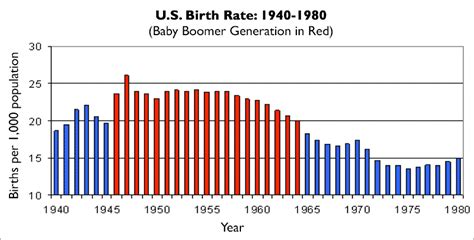
Now, I’m all for bashing the goddamn Boomers, but let’s be fair (since it matters for historical analysis). There’s a common misconception about the Baby Boom. Here, see if you can spot it:
Did you see it? Look closer, and you’ll see that while 1947(-ish) appears to be the peak year in terms of total births, the vast majority of what we call “Boomers” were born after 1950. Let’s do some simple math. The very oldest Boomers were born in 1946. The Summer of Love was 1967. Even if we assume the Summer of Love came out of nowhere — which is impossible, of course, any movement that large had antecedents going back years, probably decades, but let’s assume — that means that any “Boomers” participating were, at most, barely 22 years old. They were just barely 24 when Woodstock came around. Granted that the youngest are the dumbest, and thus can have outsize influence, they still can’t have been largely, let alone solely, responsible for the idiocy of the hippies.
That’s all on the older crowd, the so-called “Silent Generation” — the ones who were old enough to be aware of World War II, but unable to participate directly.
It’s easy to verify. The Port Huron Statement, the founding document of the New Left, was penned by coddled college kids in 1962 — meaning, by kids born, at latest, in about 1942 (its principal author, Tom Hayden, was born in 1939). Here are the Chicago Seven and their dates of birth: Abbie Hoffman (1936), Jerry Rubin (1938), David Dellinger (1915!), Hayden, Rennie Davis (1941),John Froines (1939), and Lee Weiner (1939).
Hoffman, especially, bears scrutiny. Though he’s best remembered as a Yippie — that is, the founder of an ostentatiously youth-oriented movement — he was 31 at its founding. Don’t trust anyone over thirty, right?
1936 to 1946 is only a decade, but it’s crucial. A kid born in 1936 would have vivid memories of World War II and its immediate aftermath — fathers, uncles, and older brothers (and, in more than a few cases, aunts and older sisters) coming home from the service. A kid born in 1946 would have a completely different experience — ask any combat veteran about the first year or two back in the world, versus being home for a decade. Those guys — the kids who saw firsthand the angry young strangers they were supposed to call “Dad” — were the ones who did the real damage in The Sixties(TM), just as it was the almost-but-not-quite frontsoldaten who did the real damage in the Third Reich.
With me? Now hang on to your hats, because here’s where it gets pretty meta: It was the “Silent Generation,” not the Boomers, who did the real damage in The Sixties(TM). That is, the guys who juuuust missed the giant social upheaval that was World War II. The Boomers have done all the damage since The Sixties(TM).
That — The Sixties(TM), which is why I’m using that obnoxious (TM) — is the great social upheaval they juuuust missed. [These people] aren’t old fossils from the flower power years, though many of those fossils are still alive and kicking (including four of the Chicago Seven: Hayden, Davis, Froines, and Weiner). Has anyone heard from Billy Ayers lately? How about Noam Chomsky (born 1928)? I’m sure they have plenty to say … but nobody cares.
It’s not retreads from The Sixties(TM) out there doing this stuff. It’s the people who wish they’d been around for the Summer of Love that are doing it. It’s the people who just know they would’ve ended the Vietnam War, if only they hadn’t been in junior high at the time. This is their Woodstock, not least because they only heard about the original when they arrived for freshman orientation in 1976.
Severian, “Talkin’ ’bout My Generation!”, Rotten Chestnuts, 2020-06-11.
September 22, 2020
QotD: City dwellers and the state
The Z Man, “Never Newark Nights”, The Z Blog, 2018-06-06.
September 21, 2020
QotD: Prohibition and the Temperance movement
… [T]he original Temperance movement started out with the very best of intentions, and was trying to deal with a real problem. In colonial and early-19th-century America, people (men, women and OH HORRORS even children!) drank enough that by modern standards we’d call them alcoholics. Modern Russians drink more, but if they were transported back to that time and place, they’d fit right on in. Part of it was because water was often not safe to drink (tea and coffee were often expensive and hard to get, while beer and other alcoholic drinks were made just about everywhere), part of it was snobbery (only really poor people drank water!) and part of it was because people back then believed that alcohol strengthened and warmed the body.
Two of the good side effects of the Temperance/Prohibition movement were the provision of safe, clean drinking water in American cities and towns, and the modern fruit-juice industry (as a lot of churches went hot-Prohibition, they got uneasy about serving wine at Communion, so they went to work and came up with non-alcoholic substitutes.) Welch’s Grape Juice was started by a pastor who wanted non-alcoholic “wine” for Communion, and caught on, real big.
Eric Oppen, posting to the Lois McMaster Bujold mailing list, 2020-06-18.


