Quotulatiousness

March 4, 2025

“Rare metals” are not really rare at all

Filed under: China, Economics, Government, Politics, Technology, USA — Tags: , , , — Nicholas @ 03:00

On the social media platform formerly known as Twitter, John Ringo explains why the US doesn’t exploit its own vast reserves of “rare metals”:

I love every single time someone goes ‘CHINA HAS A LOCK ON RARE METALS! WE NEED TO ALLY WITH COUNTRY X TO GET RARE METALS! WE NEED RARE METALS!’

The US has huge deposits of pretty much everything we need. Lithium? Got it. Neodymium? Got it. Silver? Spades. Montana’s practically made of it.

The reason we don’t mine it here is the stupid ways our laws are written and allowing the Chinese to play us.

There’s an area in TX that has as much neodymium as the Chinese deposits that supply 98% of the world’s neodymium. (Critical material in rare earth magnets which are in turn critical in … so many things. Drones. Electric cars. Etc.)

There’s even a registered mine. Which was open.

Why is it closed?

The Chinese drop the prices below production cost (dumping) every time they open. Then jack the price and play political games with it when it closes.

There’s a silver mine in Montana (critical in modern solar) which has been trying to open for FIFTEEN YEARS.

Why can’t it open?

Tied up in environmental lawsuits because Congress won’t amend the EPA act that allows anyone to sue for any reason whatsoever and damn having mining or manufacturing WE DON’T NEED THAT WE NEED TO SAVE THE WORLD!

AND SLAVA UKRAINE YOU MAGA BASTARDS! TRUMP IS PUTIN’S COCK HOLSTER! WE NEED TO MANUFACTURE MORE WEAPONS TO SEND TO UKRAINE BUT ONLY IN A PERFECTLY ENVIRONMENTAL FASHION!

‘Environmental’ emphasis on the ‘mental’.

Autarchy is the idea of a country neither importing nor exporting. Just keep everything in the country. Ourselves alone.

A few have tried it from time to time. India did at one point.

Nobody can do it. There’s ‘something’ that you need from outside.

Except the US. We more or less need some tropical stuff. Like coffee, tea, sugar. Palm oil. (Super important in soap.)

But we can, in reality, even dispense with tree rubber. We can make it all from artificial.

Which comes from oil.

And we have enough oil. Thank a fracker. We’ve got enough oil in Southwest Texas to supply the WORLD for a thousand years.

(Touch expensive compared to Persian Gulf. But the price is constantly coming down.)

All we need to do is change laws, and we can almost go it without any other country. Without import or export.

I’m not suggesting we do.

But I am suggesting we dedicate some serious attention to things like China manipulating trade to ensure they have a lock on rare metals.

That we prioritize internal production.

That we decouple critical issues from other countries.

Cause the way the world is going, we’re reaching a point we’re gonna have to go it alone and if we have allies and trade partners, I’d suggest they be in the Western Hemisphere.

Cause those fuckers cross the pond be crazy.

Fifteen years ago, Tim Worstall explained why China’s rare earth monopoly won’t stand up in the long run.

March 3, 2025

Trump and Zelensky in “the most amazing bilateral meeting and press conference of all time”

Filed under: Media, Politics, USA — Tags: , , , — Nicholas @ 03:00

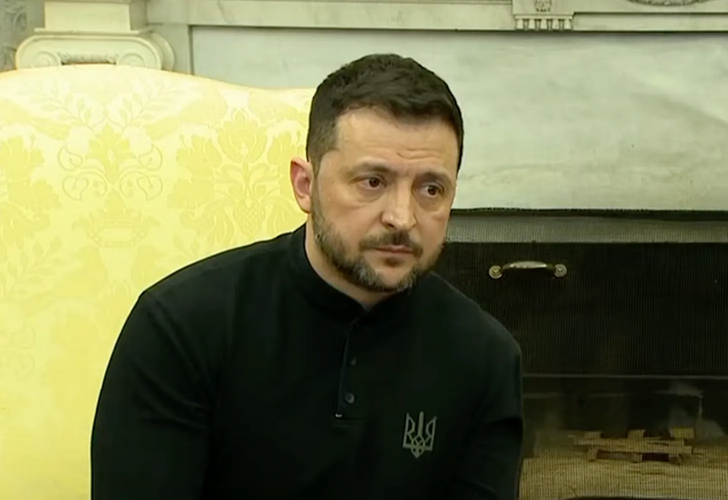
In the free-to-cheapskates portion of his latest post, eugyppius considers the most newsworthy press conference in living memory between US President Donald Trump and Ukrainian President Vladimir Zelensky that went theatrically wrong:

tfw you have no cards.

Since 2022, the Ukrainian President Vladimir Zelensky has been running about the globe in his weird focus-grouped jumpers and combat boots, lecturing all of our parliaments on the unity and mutual interests of Europe, the goodness of democracy, the genocidal evils of Vladimir Putin and the importance of ever more weapons deliveries to his country’s armed forces. In the process, he has become one of the more obnoxious political phenomena in recent memory, and I hope I would be able to see this even if I were firmly convinced that German interests aligned perfectly with Ukrainian interests and that we should do nothing but give the AFU all of our tanks and all of our Taurus missiles and possibly even all of our soldiers to defend our shiny wonderful and deeply liberal European democracy, where we are so free that riot police will bash your head in for protesting Covid restrictions and if you call the wrong cabinet minister a moron the speech crimes battalion will raid your house.

Here in Europe, our political leaders have treated the shouting, remonstrating Zelensky with nothing but egregious reverence, and the man has grown accustomed to his noxious political celebrity. Nothing else can explain the amazing press conference Zelensky and Trump held yesterday, ahead of afternoon plans to sign an agreement concerning Ukraine’s rare-earth minerals. We got to witness nothing less than the near-total meltdown of American and Ukrainian relations, live and in colour. Historians of the Ukraine war will be writing about this press conference for years and decades to come.

The meeting almost didn’t happen at all. Zelensky has been publicly irritated that Trump reversed the American policy of isolating Russia, after the American president opened talks with Vladimir Putin to end the war. Two weeks ago, Trump suggested that Ukraine was at fault for the hostilities, Zelensky said Trump was “living in a [Russian] disinformation space“, and Trump said Zelensky was “a dictator without elections“. Trump’s administration initially planned to cancel Zelensky’s visit to Washington this week, but French President Emmanuel Macron persuaded the Americans to go ahead with it. Imagine how much the man regrets that now. After receiving his verbal beat-down in the Oval Office, Zelensky and the rest of the Ukrainian delegation decamped to the Roosevelt Room, while Trump and his advisers decided that the President of Ukraine “was in no position to negotiate“. White House officials told them to leave before they could even eat lunch.

Foreign relations are typically pounded out in back rooms, out of sight, and that was also the intent here. Somewhere in the midst of the journalists’ questions and Trump’s banter, however, yesterday’s event ceased being a press conference and became at first a subtle unacknowledged negotiation and then a hostile disagreement – one which Zelensky got the worst of.

Mark Steyn examines what was said both before and during the Zelensky-Trump slap fight:

The Beltway rumour is that, on his flight to DC, Zelenskyyyy was telephoned by Victoria Nuland, She-Wolf of the Donbass, plus Susan Rice and Anthony Blinken and advised to get tough with Trump. If true, that’s gotta be the worst episode of “Phone-a-Friend” since the plucky little Ukrainian started playing Who Wants to Be a Billionaire (in Euros)? For all you nuanced diplomatists out there, there is now a rather arcane dispute as to whether Z called the Vice President of the United States a “bitch” or merely interjected “f**king hell”:

    He literally didn’t. He said “suka blyat“, which, like “kurwa mać” in Polish, is an expression of annoyance equivalent to “fucking hell”. Not ideal politics, granted, but not the same.https://t.co/mOgGZN9iwh

    — Ben Sixsmith (@BDSixsmith) March 1, 2025

UPDATE! From Leonid in our comments section:

    If the audio is not altered, it does sound like ‘suka, blyad‘ which is akin to ‘f**king piece of sh*t’. It is not necessarily directed at Vance personally, but I specifically translated this as ‘f**king piece of sh*t’, not ‘f**king hell’ because it can indeed be taken as directed at Vance, too. Obviously, even the milder reading doesn’t absolve Z of being an a**hole.

The Ukrainian ambassador seemed to be the only member of Z’s delegation who grasped how badly things were degenerating: the cameras captured her at one point with her head in her hands. The President booted the guy from the White House and gave the Ukrainian’s lunch to the Oval Office interns. I have always found the American vernacular “oh, the guy totally ate my lunch” incredibly lame, but, if Trump is now proposing to make it literal, I wish he’d started with Keir Starmer. Fortunately, America’s wanker media could be relied upon to agree that, when it comes to Z vs T, “the world” sides with Ukraine.

    World opinion has been swift, loud and mostly unanimous against the childish behavior today of Trump and Vance. The only question now is if other countries realize that the USA they’ve long known, loved and respected is no longer a reliable ally.

    — Aaron Astor (@AstorAaron) February 28, 2025

By “world opinion”, Mr Astor means not China, India, South Africa, Brazil or Saudi Arabia, but the Prime Minister of Luxembourg:

    Luxembourg stands with Ukraine. You are fighting for your freedom and a rules based international order. 🇱🇺🇺🇦

    — Luc Frieden (@LucFrieden) February 28, 2025

From the blissful ignorance of a California congressman:

    My grandfather and the Greatest Generation didn’t fight in World War II to see our country side with murderous thugs like Putin. This is a disgrace. https://t.co/3ZrB8ur2Au

    — Mike Levin (@MikeLevin) February 28, 2025

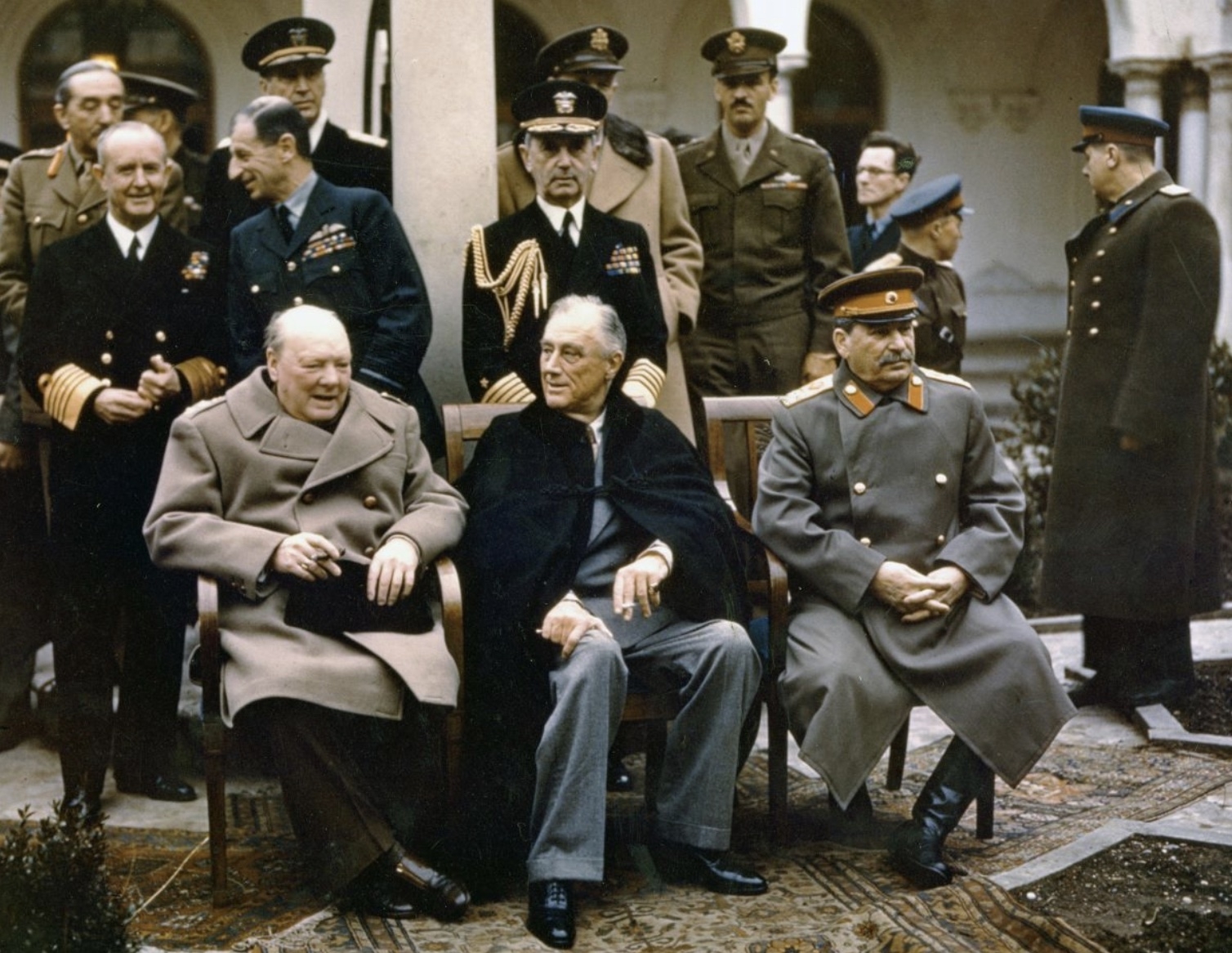
Er, in your extensive researches into World War Two, did you ever happen to come across a photograph of, say, the Yalta summit?

Churchill, FDR, and Stalin at Yalta

Still, if Luxembourgish prime ministers are going through one of their periodic butch phases, I prefer the words of Mr Frieden’s predecessor, Jacques Poos, who a third-of-a-century back, as Yugoslavia was disintegrating, told the Yanks to butt out and declared “The hour of Europe has come!” He was right, kind of: shortly thereafter, Bosnian Serbs began tying Continental peacekeepers to trees.

Mr Frieden, like many other politicians and geopolitical experts, has failed to grasp the essential dynamic of yesterday’s meeting – which is very simple:

Zelenskyyyy needs Trump far more than Trump needs Zelenskyyyy.

March 2, 2025

“We’re saying words that we’re told to say. We’re told how to say them. We’re told where to stand. And then we’re telling people how to vote?”

Filed under: Media, Politics, USA — Tags: , , , — Nicholas @ 05:00

As a natural follow-on to yesterday’s post about Celebrity fatigue, here’s Kat Rosenfield in The Free Press hoping that we can somehow make actors apolitical again:

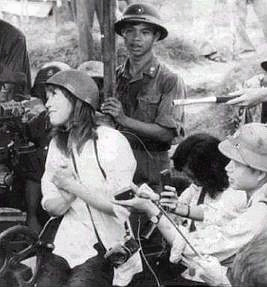
During the Vietnam War, actress Jane Fonda visited North Vietnam and expressed strong support for the regime’s struggle against the United States and South Vietnam.

If I have to listen to an actor talk about politics, let that actor be Gabriel Basso.

You might know Basso from his breakout role in Netflix’s hit series The Night Agent, in which he stars as an FBI agent who works in a secret basement office beneath the White House. But Basso has another White House connection. In 2020, he played J.D. Vance in the big-screen adaptation of Hillbilly Elegy, which was based on the vice president’s memoir about his childhood in Appalachia — which means we now live in a world where the vice president could be Netflix-and-chilling in the White House, watching the man who once played his own younger self doing espionage in the basement of the building he’s sitting in.

In a recent interview, Basso called his entanglement with Vance’s timeline “kind of weird”, which it is — but what’s weirder is that Basso describes Vance himself as “a cool dude”, as if he’s talking about some guy in his Wednesday night bowling league as opposed to one of the most powerful and polarizing political figures in the United States.

This type of comment is typical for Basso, who doesn’t believe actors should embroil themselves in politics. “We’re saying words that we’re told to say. We’re told how to say them. We’re told where to stand. And then we’re telling people how to vote?” he said on a recent episode of the Great Company podcast. “You should be quiet; you should do your job. You should be a jester, entertain people — then shut the fuck up.”

To hear an actor talk like this is especially remarkable in the middle of awards season, when the great and the good of Hollywood use the red carpet as a pulpit to preach their politics, which are reliably blue. Last Sunday, at the Screen Actors Guild Awards, Jane Fonda used her acceptance speech for the Life Achievement Award to rally the crowd to the right side of history. “Make no mistake, empathy is not weak or woke,” she declared. “And by the way, woke just means you give a damn about other people!”

[…]

The entanglement of Hollywood and Washington only intensified in the final weeks of the 2024 election cycle — which included, among other things, a political ad voiced by Julia Roberts, a Democratic National Committee headlined by Oprah Winfrey, and the Avengers literally assembling to campaign for Kamala Harris. The bitter irony, of course, is that despite the entire Hollywood apparatus coming out in support of Harris, all we got was a Trump landslide and the absolutely dire image of a bunch of our favorite actors wearing “White Dudes for Harris” T-shirts.

It’s enough to make you long for the golden age when it was the norm for actors to, as Basso so artfully put it, “shut the fuck up”.

The end of the Ukraine narrative

Filed under: Media, Politics, USA — Tags: , , , , , , — Nicholas @ 03:00

On the social media platform formerly known as Twitter, “Captain Benjamin” outlines the last several years of progressive narrative that may have been totally derailed in the Oval Office the other day:

Zelenskyy walked into the Oval Office wearing an outfit that was reminiscent of the uniforms from Star Trek, he was escorted out a few hours later and the entire liberal consensus that has been the guiding narrative of the West for the last three years was a smoking hot mess, as if struck by several Photon Torpedoes from the Starship Enterprise itself.

It’s forgotten now but the Ukraine War was how the Liberal consensus moved on at breakneck pace from the Covid hysteria without ever having to explain why we had hidden from a cold for the previous two years and spent untold billions doing so.

I still remember being in a newsagent and the woman behind the desk told me that Covid was over and Ukraine was the new thing now, that was how quickly it happened, one mass consensus narrative seamlessly replaced another and the show went on.

Until today when show came off the tracks crashed into the buffers and a million Liberal talking heads exploded in unison as the entire narrative which had served as this strange outlet for their repressed jingoistic and nationalist desires was destroyed.

To me there was always something about the Ukraine War that didn’t pass the sniff test, whether it was Hunter Biden’s links to energy companies there, the way in which valid criticisms of the NATO expansion were shouted down, the mysterious blowing up of the Nordstream pipeline that was never explained.

Or the feverish want to protect Ukraine’s borders while European elites operated an unpopular open borders policy themselves, the billions being funnelled in, the tales of Ukrainians buying up yachts and sports cars.

But most clearly fact that the entire Uniparty Party and the chattering classes were in absolute lockstep about what needed to be down and any disagreement or attempt to question the narrative had you dismissed as a traitor or Putinist.

It was all very reminiscent of the groupthink that had swept the world two years previous during Covid, another unquestionable narrative, with the Uniparty in lockstep and anyone who dared to question it smeared as an anti-vaxxer.

I didn’t support Covid as the narrative had more holes than Swiss cheese and the Ukraine narrative has similarly porous texture, but to see the narrative explode so spectacularly was as much as a shock to me as it was to Zelenskyy who found himself in a hole and just kept digging.

At one-point he shocking seeming to delivered a veiled threat to Trump himself: “During war, everybody has problems, even you, but you have a nice ocean and don’t feel now, but you will feel it in the future.”

A comment that really sent the meeting side-ways, as Trump swiftly told Zelenskyy not to tell him what he should feel, leading to the arguments that scuppered the signing of a deal.

And the essence is that Trump wanted to make a deal, he’d been bragging about it to Starmer the day before, he was going to get a great deal, recoup American loses with rare-earth minerals and the EU could save-face by guarding the American mines as a peace keeping force.

It also meant that America wasn’t getting sucked into a Vietnam in the snow.

Trump doesn’t want to be a war-time President, especially a war he doesn’t think is necessary or good for business, Trump wants to usher in an AI Golden Age, send rockets to Mars, and American living standards to the moon; a 21st Century tycoon economy.

He wants peace for Ukraine and Russia as he knows that thousands are senselessly dying every week, and knows his presidency and the country cannot cope with hundreds of Americans coming home in body bags every month.

And so he wanted to make a deal with Zelenskyy, make a deal with Russia, and America gets paid, it’s a crude outcome but its aligned with reality.

But Zelenskyy doesn’t want that, he wants America men and weapons to win the war and make Russia to pay, while the EU have gassed him up to believe this possible because the EU are clinging to this war as a chance to project the veneer of power that they cannot possibly muster domestically due [to] Populist parties eroding their authority at home.

However, as Trump asked Keir to much nervous laughter, can you take on Russia alone?

America knows without them the EU cannot continue this charade, but more than that the Americans are disgusted with the EU, they view them as a drunk Uncle that has run out of goodwill.

How they are suppressing the free-speech of their citizens, failing to protect their own borders, yet grandstanding off the back of the US defence budget?

These are the questions being asked Stateside about the since Trump took office.

While the America people are questioning why are billions of tax dollars being poured into Ukraine as America goes deeper into debt.

Trump wanted to close the chapter with a deal, Zelenskyy wanted to continue a war he cannot win, and as Zelenskyy realised he wasn’t going to drag America deeper into this war he lost control, and in doing so forgot he wasn’t dealing with the Bidens and petulantly disrespected his new would-be patrons, triggering the mother of all blowbacks in the process.

Trump made it clear that what Zelenskyy was asking for was for America to risk World War 3, and Vance made it clear that everyone knew that Zelenskyy was a creature of the old regime, even highlighting how Zelenskyy campaigned against Trump in Ohio, while Trump reiterated that without the America Zelenskyy holds no cards for future negotiations with Russia.

This dose of reality was too much for Zelenskyy and also for the EU who tweeted up a storm in the aftermath pledging to ‘stand’ with Ukraine, only Starmer staying conspicuously silent.

This wasn’t simply a change of policy direction this was the public evisceration of the sacred cow of the waning Liberal Order by the ascendant Populist Insurgency.

Ukraine has functioned as the binding narrative, and in the Oval Office it faced Total Liberal Death, the fragile myth of the rules based international order being violated by Russia Man Bad and being saved by the Liberal Democratic Alliance Good, no further thinking necessary, had functioned as a very effective distraction from the utter failure that Liberalism had turned into domestically while allowing our elites to cos-play as war heroes on the world stage.

This narrative has now been utterly destroyed.

What comes next is still unknown but what we can clearly see is that the Populist Pax Americana will be a very different beast from the Liberal Pax Americana.

As always my friends, thank you for reading I know this is a very polarising issue, so if resonates please like, share and follow, if not please feel free to point out the flaws in my thinking in the comments.

March 1, 2025

“There were always scapegoats … and they were always driven out one way or another”

Filed under: Britain, Health, Politics — Tags: , , , , , — Nicholas @ 05:00

The second part of Nigel Biggar‘s look at the culture war in Britain includes a look at how the professional approach to young peoples’ gender issues became monomaniacal because nobody involved stopped to think for fear of being ostracized (or fired):

On the gender front, there’s plenty of reason to doubt the intellectual coherence of transgender-self-identification. When a biological male believes that his inner, authentic self is female, what exactly does he think being ‘female’ is? I’m still waiting for someone to persuade me that this doesn’t trade on gender stereotypes that feminists rightly taught us to throw overboard decades ago.


    Observe how that has nothing at all to do with the care of patients, and how it has everything to do with the self-regard and political standing of the managers.


There’s even more reason to doubt that the well-being of young people is well served by taking their asserted genders at face value and allowing them to align their bodies by making irrevocable physical changes. According to Hannan Barnes’ shocking chronicle of the scandal at the Gender Identity Development Service (or GIDS) at the Tavistock Institute here in London, there was widespread doubt among clinicians about young people’s claims of “an inborn ‘trans’ nature”, awareness that these were sometimes correlated with eating disorders and self-harm, and suspicion that they might be caused by abuse or trauma. Furthermore, the long-term effects of using puberty-blockers were “largely unknown”, there was considerable uncertainty about which patients would benefit from them, and the health of some young patients actually seemed to worsen while on them.

Notwithstanding all this, “the clinical team … never discussed as a group what it even understood by the word ‘transgender'”, clinicians “never dream[t] of telling a young person that they weren’t trans”, and they always prescribed puberty-blockers unless the patient actively refused them. What’s more, expressions of doubt by staff were discouraged. “Someone would raise concerns, and someone else would move in to shut it down”, writes Barnes. “Those who persisted in asking difficult questions were not received well … those who spoke out were labelled troublemakers. [According to one witness,] ‘There were always scapegoats … and they were always driven out one way or another'”. “Junior staff looked on and learnt”.

Note the chilling effect.

The Tavistock Institute in London

Barnes’ book bears the title, Time to Think, because she identifies the general problem at GIDS as that of “not stopping to think”. That, of course, raises the question, Why? Barnes gives several reasons. One was the fact that the GIDS was propping up the Tavistock financially and that senior managers had a material interest in not disturbing its assumptions. Another was the unwillingness to offend transgender lobby groups such as Mermaids for “fear of a backlash”. But, most important of all was concern for the ‘progressive’ reputation of the management. According to David Bell, consultant adult psychiatrist at the Trust and whistleblower, “The senior management regarded [GIDS] as a star in our crown, because they saw it as a way of showing that we weren’t crusty old conservatives; that we were up with the game and cutting-edge. That was very important to the management to show we were like that”. Observe how that has nothing at all to do with the care of patients, and how it has everything to do with the self-regard and political standing of the managers. Not for the first time, the basic narcissism of progressive virtue-signaling is exposed.

Update: Added missing URL.

Canada’s “supply management” system – our literal “sacred cow”

In negotiations with the Trump administration to avert the threat of massive tariffs, our political leaders say that “everything” is on the table … except for one teeny-tiny little massive crony capitalist protection racket that we are apparently willing to destroy the entire national economy to preserve:

Unfortunately, Canada’s stubborn intransigence on a significant trade-related issue once again threatens to undermine our position and, with it, the possibility of a deal. I probably don’t have to tell you, but in case you couldn’t guess … yup. It’s the dairy sector.

At this point it should be noted that there are basically two agricultural industries in Canada. One of those industries relies heavily on exports, has thrived under the various free-trade deals Canada has been party to, and is filled with dread at the prospect of U.S. tariffs. Given the obvious significance of the U.S. as an export market for Canadian goods, one doesn’t have to look too far to find all kinds of nervous folks in these industries. For example, nearly $9 billion in agricultural products were exported to the U.S. in 2023 from just Alberta alone. Beef exports represent about a third of that total, and in fact the U.S. and Canada comprise the world’s largest two-way trade in beef and live cattle. There is much at stake here (pardon the terrible pun).

The other agricultural industry in this country, is, of course, the supply managed sector. That’s dairy, as noted above, but also eggs and poultry. The supply managed sectors of the agricultural industry are governed by a system of quotas, price controls, and sky-high tariffs. It’s essentially a legalized cartel system. This sector not only wants nothing to do with free trade, but actually sees free trade as a threat. To them, “tariff” is not a dirty word because they hide behind a shield of tariffs that are far higher than anything Trump has ever threatened or conceived.

Now, it should also be noted that these two sides of the agricultural sector are vastly different in size and importance. Yet, the vocal and irrational demands of the small, sheltered component seem to be the demands that our politicians remain most beholden to. Consider comments made recently by the contenders for the Liberal leadership: during this week’s debate, nearly all of them bent over backwards to declare fealty to supply management, even while expounding upon the existential threat posed by Trump’s tariffs. Even now, it’s clear that our politicians are afraid to pick this fight.

[…]

While that could have been a wake-up call for Canada, we instead went in the other direction. In the aftermath of the U.K. situation, Parliament went ahead and passed Bill C-282, which would enshrine into law the principle that supply management should never be on the table in any trade talks (the bill ended up being bogged down in the Senate and its future is unclear).

It’s naïve in the extreme to think that any trading partner, including and especially the Americans, would simply shrug and say “Well, shoot, that’s too bad. Let’s move onto other issues.” We’re needlessly harming our position even before talks begin.

Celebrity fatigue

Filed under: Business, Media, Politics — Tags: , , , , — Nicholas @ 03:00

I’ve always been pretty disinterested in products and services with celebrity endorsements, but they must have worked well enough as they suddenly seemed to be everywhere. Grant McCracken notes that they seem to have reached their sell-by date recently:

Wayne Gretzky Estates produces wine and other beverages in the Niagara Peninsula. They may be fine products, but I’ve never tried them.

Talented, wealthy, beautiful, admired, they live charmed lives.

Until the last decade or so. Now they take turns doing an Icarus off the high board.

And investors are noticing.

Ann Gehan reports “Investors Drop Celebrity Brands From A-List”.

    Four early-stage investors who previously backed celebrity brands said they are shifting focus to promising products as opposed to celebrity buzz

What are investors noticing?

Well, there was COVID. We all noticed how really irritating celebs were, singing us songs from the well staffed majesty of their magnificent homes. This cost them some standing.

And then there was the presidential elections. Say what you will about Kamala, the celebs who supported her must have worried about a loss.

Right?

Of course not.

Celebrities don’t lose elections. Neither do the politicians they support.

So the election too was costly.

You don’t get famous unless you know how to read the room. Celebs are their own strategists. They can hear what the country wants. They can detect change and adapt.

Until they can’t. And now they can’t.

February 28, 2025

Trump’s done something most of us thought impossible – giving the Canadian Liberals hope for re-election

Filed under: Cancon, Government, Media, Politics, USA — Tags: , , , , , — Nicholas @ 04:00

Canadians were sick to the teeth with Liberal PM Justin Trudeau and itching to throw him out of office … until newly inaugurated US President Donald Trump tossed Trudeau a lifeline:

The BOM and the Little Potato on his way to another Taylor Swift concert.

For President Trump, making America great again in his second term includes tariff threats against Canada, along with talk of turning America’s northern neighbor into the 51st state. What that’s mainly achieved so far is to make Canada woke again.

Prior to January 20, Conservative Party leader Pierre Poilievre had been cruising in the polls, and with elections coming this year in Canada, North America seemed headed for a right-leaning political bromance between a President Trump in Washington and a Trump-lite Prime Minister Poilievre in Ottawa.

That was before Trump got elected and began talking about 25 percent tariffs on Canadian goods (10 percent for energy), which would likely wreck Canada’s economy.

One poll showed that four in ten Canadians see Poilievre and Trump as alike and that is hurting him as “Canadians increasingly associate Poilievre to Trump’s negative rhetoric aimed at Canada,” said Mark Marissen, a Liberal party strategist.

For the first time since 2021, Prime Minister Justin Trudeau’s Liberal Party is ahead of the Conservatives in the polls. If an election were held tomorrow, 38 percent of decided voters would choose the Liberals, while 36 percent would back the Conservatives. This is a massive shift — just six weeks ago, the Conservatives were leading by 26 points.

[…]

“Poilievre’s rhetoric is nothing like Trump’s. He only takes conservative positions when he’s pushed in that direction,” says Nichols. “A Poilievre government is going to be exhausting. He seems behind the curve on a lot of social issues, such as DEI and gender ideology.”

The reality is that the Canadian right generally doesn’t resemble the unruly U.S. version. This, in turn, reflects a more moderate political culture whose roots go back to Canada’s early years as a refuge for loyalists to the British crown fleeing the American revolution.

Eric Kaufman, a professor of politics at the University of Buckingham, argues that Poilievre’s reluctance to mimic Trump reflects the fact that Canadian conservatism has always been “very wet”, with Conservative politicians reluctant to challenge the progressive consensus on culture and identity.

“Poilievre only takes a stand on social issues like DEI and immigration when there’s already overwhelming momentum in the press. He still plays within the safe sandbox of talking about economic issues which is permitted for Conservative politicians in Canada,” says Kaufman.

Taking money from poor people in rich countries to give to rich people in poor countries

Filed under: Britain, Government, Media, Politics — Tags: , , , — Nicholas @ 03:00

Tim Worstall explains how government foreign aid is quite literally anti-democratic (which is why it’s rare for governments to allow the voters any input about the subject):

Obviously we need to start with the observation of Peter, Lord Bauer — foreign aid is nicking money off poor people in rich countries to give to rich people in poor countries. As the sort of people who rule us went to school with those who rule the poor countries — I did, with the President of the Philippines, Bongbong, for example. V different year but still — it’s people nicking our money to spend on making themselves look good to their peer group.

You know, elite virtue signalling.

Yes, of course 0.7% of GDP should be spent upon Official Development Aid. ODA is very important, dont’cha kno’? Every chav in Britain should have near 1% of everything they do collected up and sent off to Ol’ Bongie. Obviously. Couldn’t face an Old Boys dinner without that now, could I?

Now of course that’s not actually quite how it’s put even if that is what it actually is. But just the sometimes the truth slips out from those corridors of power.

    The former head of the Foreign Office has warned Rachel Reeves not to cut Britain’s international aid spending, amid signs the chancellor is willing to raid the development budget to help pay for higher defence spending.

    Simon McDonald, the former lead civil servant at the Foreign Office, said it would damage Britain’s global reputation if Reeves chose to reduce aid as she looks for savings across Whitehall in this year’s spending review.

Reputation? Among whom? Among those who attended Pembroke?

    He told the Guardian: “At times of financial need, development assistance is an easy target for trimming because international assistance is not generally voters’ priority”.

Remember folks, democracy is that we the people decide. We’ve even those out there insisting that all economic decisions must be made via democratic means — that true economic democracy which is to be the new socialism.

But when democracy — in the form of “We don’t give a shit about that” — bumps up against the elite desire to look good at the state banqueting table guess what? Democracy has to git to buggery and the elite get to spend our money their way all the same.

No, really. Look what he’s saying. Voters don’t care. But they must be forced to pay all the same. So much for that vaunted democracy.

QotD: A jaundiced view of the feminist movement

Filed under: Government, History, Law, Liberty, Politics, Quotations, USA — Tags: , , , — Nicholas @ 01:00

The idea of the suffragettes was that women should share in the political business of the menfolk voting on leaders whose main task was deciding matters of crime, taxation, and war, on the grounds that they share in the outcomes and burdens of any bad decisions in that area.

Note that governments, back in the day, did not attempt to act as a nanny, warding off daily harms from unsafe commercial products, or was government in the business of educating the young, nursing the sick, or managing the personal lives of all the children of all ages inhabiting the nation.

The idea of the men who invented feminism was that propelling women into the workforce would increase the tax base, break apart the nuclear family, and increase sales of expensive drugs to promote temporary sterility.

Breaking the family in turn would make women more dependent on the government than on their menfolk, and draw the unreasoning admiration women typically bestow upon their protectors and breadwinners onto the Powers That Be. The fanatical devotion that mothers of convicts show, when they insist forever that their child is innocent, would then be channeled into the ballot box toward whatever demagogue with a vacant smile promised to remove dangerous liberty from the hands of the children, regardless of age, inhabiting the nation.

Pornographers like Hugh Hefner encouraged feminism on the grounds that it would increase vice, and hence the monetary gain from the public sale of vice.

Then, once women were in the workforce, excluding them from the military and other areas where men are better qualified was said to be a sign of hidden bigotry against them. The idea of this bigotry was so stupid that a new word had to be coined to hide its meaning, and that word is “sexism”.

The word “racism” — which at the time had a meaning — was decapitated and the word “sex” — and at the time this word also had a meaning — was sutured onto the neckstump, to produce a new word intended to denounce a nonexistent hatred and contempt felt by men against women.

There have been wars between races and tribes since time immemorial, and hatred between races and tribes. But the war between the sexes is not really a war, because both sides keep flirting with the other, and settling down, and having babies and suchlike.

John C. Wright, “No More Lads”, John C. Wright’s Journal, 2020-01-28.

February 27, 2025

Reining in the ATF

Filed under: Government, Politics, USA, Weapons — Tags: , , , , , — Nicholas @ 03:00

J.D. Tuccille on the ATF’s immediate future with FBI director Kash Patel as the newly appointed acting head of the bureau:

Kash Patel, 9th Director of the Federal Bureau of Investigation.

… it’s impossible to credibly argue that the ATF doesn’t need a shakeup. After all, this is a federal agency that ran guns to criminal gangs in Mexico as part of a bizarre and failed “investigation”, manipulated mentally disabled people into participating in sting operations — and then arrested them, lost thousands of guns and gun parts, killed people over paperwork violations, and unilaterally reinterpreted laws to create new felonies out of thin air (which means more cause for sketchy investigations and stings). The federal police agency obsessively focused on firearms has long seemed determined to guarantee itself work by finding ever more things to police.

But what about putting the same person in charge of both the ATF and the FBI? How does that make sense?

Well, there’s a lot of overlap in the responsibilities of federal agencies. During the ATF’s “Operation Fast and Furious” gunrunning escapade in Mexico, it coordinated — badly — with the FBI, the Drug Enforcement Administration (DEA), and Immigration and Customs Enforcement (ICE). During its 2012 investigation of that fiasco, the Justice Department Inspector General “conducted interviews with more than 130 persons currently or previously employed by the Department, ATF, the DEA, the FBI, and the Department of Homeland Security (DHS)” on its way to identifying “a series of misguided strategies, tactics, errors in judgment, and management failures that permeated ATF Headquarters and the Phoenix Field Division”.

[…]

Done right, you wouldn’t need as many agents for the combined agency, and you would have lower overhead. But — and this is a big concern — done wrong, you’d end up with a supercharged federal enforcement agency with all the hostility to civil liberties its old components embodied when separate, but now with lots more clout.

When he took charge of the FBI, Patel became the leader of an agency that has long served as a sort of political police. Its abuses date back decades and never seem to go away, just to morph into new ways of targeting anybody who criticizes whoever is currently in power.

“The FBI entraps hapless people all the time, arrests them, charges them with domestic terrorism offenses or other serious felonies, claims victory in the ‘war on domestic terrorism’, and then asks Congress for more money to entrap more people,” John Kiriakou, a former CIA officer and whistleblower, wrote in 2021.

That means there’s already a problem that needs to be addressed, or it could infect a combined agency rather than taking the sharp edges off the ATF.

Also troubling is that before his nomination to head the FBI, Patel made comments suggesting he wants to target his own political enemies. He’s backed off those threats, telling the Senate Judiciary Committee he’s committed to “a de-weaponized, de-politicized system of law enforcement completely devoted to rigorous obedience to the Constitution and a singular standard of justice”. But it’s worth watching what he does with his roles at the separate FBI and ATF before combining the two agencies into something more dangerous.

Or maybe the Trump administration won’t take the next step of formally integrating the ATF and the FBI. Self defense advocates have long called for ATF leadership that isn’t actively hostile to gun owners. If all Patel does is rein in the ATF so that Americans get a few years of relief from that agency’s abuses, that’s a victory itself. But eliminating a much-loathed federal agency would be even better.

QotD: The ANC, the Inkatha Freedom Party, and the Zulus during Apartheid

… one underappreciated fact is that [South Africa] was handed over to Leninists. Before reading this book, I think I had in the back of my mind some vague sense, probably absorbed from racist Twitter accounts, that Nelson Mandela had some sort of communist affiliation, but the reality is so much worse than I’d imagined and very curiously unpublicized. Mandela’s African National Congress was a straightforwardly revolutionary communist party during their decades of exile, with leaders constantly flying to the Soviet Union and to East Germany to be wined and dined, and to get lessons on governance from the Stasi.

Those lessons were enthusiastically put into practice — the ANC set up a network of death camps in Angola at which traitors and enemies and just plain inconvenient people were worked or tortured to death. They also founded a paramilitary terrorist army called uMkhonto we Sizwe (MK) that waged a brutal dirty war, supposedly against the apartheid government but actually against anybody they didn’t like. The vast majority of the victims of MK were black people who happened not to support the ANC, especially Zulus in their tribal homeland in what’s now KwaZulu-Natal province, who were subjected to regular massacres in the 80s and early 90s.

The ANC and the MK had a special hatred for the Zulus. In part, because the ANC’s leadership was disproportionately Xhosa, and their ancestors had suffered during King Shaka’s wars of expansion in the 19th century. But this ancient ethnic grudge wasn’t the fundamental problem, and indeed it was later papered over. The real problem was that the Zulus dared to engage in political organization outside the ANC and its subsidiary, the South African Communist Party (SACP). The preferred Zulu political vehicle was the Inkatha Freedom Party (IFP), which was associated with the Zulu monarchy and the traditional amakhosi (chieftains). This made it an independent base of power within black South Africa, and a competing claim on the loyalty of Zulu citizens. The ANC considered this situation unacceptable.

Like many avowedly communist organizations, the ANC was allergic to political competition of any sort. Internally, the party practiced an especially harsh form of democratic centralism — most policy decisions were made by a tiny and incestuous central committee, and members were expected to be totally submissive in the face of party discipline. This extended even to the point of party permission being necessary for senior members to marry. Externally, the party had an entitled attitude common to successful revolutionary organizations from North Korea to Albania — they were the incarnation of the aspirations of the South African people and the vanguard of their brilliant future, so all other political organizations were ipso facto illegitimate. Can you guess what happened when these people were handed power?

John Psmith, “REVIEW: South Africa’s Brave New World, by R.W. Johnson”, Mr. and Mrs. Psmith’s Bookshelf, 2023-03-20.

February 26, 2025

The more DOGE uncovers, the more we see that western governments are really vast graft machines

Filed under: Bureaucracy, Government, Media, Politics, USA — Tags: , , , , , — Nicholas @ 05:00

Elizabeth Nickson discusses the ramifications of all the wasted money uncovered by DOGE in the first month of investigations and what it almost certainly confirms about the actual value taxpayers are getting for their money:

So essentially the entire town of Washington, D.C. has been stealing. The anomalies are those who are not stealing. $4.7 trillion, almost impossible to trace, represents two-thirds of the annual U.S. budget. And if it’s happening in the U.S., it is happening everywhere: France, Canada, the U.K., Germany, where budgetary processes are probably even more opaque than those of the U.S.

How does the Department of Defence have a $35 trillion black hole?

I used to think of people who worked for the government with a kind of veiled contempt or, in a more benign mood, compassion. I thought of them as pity jobs for those without initiative, as jobs paying off lefty campaigners, as a warehouse for the barely competent. In my own dealings with them, I found them punitive and extractive, papering me with demands to spend more and more money to hire more and more of their pet contractors, to get approval. In my working life, looking at the results of their involvement in America’s rural areas, I hated them for the hell they visited on people unable to fight back. They forced bad science on good people, and refused to see reason. They ruined forests, water courses, fisheries, and township after township turned to dustbowl status. The misery in rural sitting rooms in every state in the U.S. was palpable, long lasting; the green Blob ruined families for generations.

But I did not think of them as being embroiled in a theft so large as to be unparalleled in world history.

The level of the theft has now to be dawning on everyone not living off the public purse which is, what, 60%, 70% of us? The anger setting in is soul-deep, and very very powerful. People who live straightened lives, the poorly pensioned, those living off the laughable social security stipend, those waiting for health care, those whose children can’t even dream of an education, of college, of a six-figure salary which is now subsistence in the ruined cities. Those facing cancer treatment because of the vaccine, and don’t have excess funds. Their families, despairing, hurting, broke.

This isn’t going to go away. It affects everyone. Not addressed down to its deepest level, you are looking at a tax revolt, a national strike. A revolution. A real one, not a papered paid-for color revolution, which is what they have been doing to us.

Those living on social security should have five times the pension they do.

Can you count how many of those there are? Can you?

And meanwhile this:

Is this true? To this date, unknown; the digging continues. Look at this ghastly creature. She apparently has an account in the Cayman Islands. Look at her all compassionate and condescending. She started a war that killed 1.5 million people so far. And apparently got rich from it. A mass murderer celebrated at Upper East Side dinner parties.

Memes like this rocket around, and every one is now suspect. At this point who cares if it’s true, it’s truthy, it makes sense that she made out like a bandit, that Alexandra Ocasio-Cortez and Ilhan Omar have millions hidden somewhere. Ocasio can say “I only have $500,000!” all she wants, but we don’t believe her. If the Wall St Journal says it is false, we don’t believe them. Do you actually think they’d have the money sitting in their savings account? No, it would be buried off-shore. The media is not only complicit, it is the principal actor in this scam. It built the fantasy world we live in, where people read The Guardian, the Times and the Globe and Mail and think they’re informed.

No, they are being propagandized. And as a result, no one sane believes anything any legacy newspaper or television or media says anymore. They hid the theft. They did not report on it. No one trusts a thing they say.

Update: Fixed broken link.

Colonialism was so bad … that we have to make shit up about how evil it supposedly was

In the National Post, Nigel Biggar recounts some of the most egregious virtue signalling by western elites over the claimed evils of colonialism … even to the point of inventing sins to confess and obsess over:

Meanwhile, in Australia, there’s the extraordinary career of Bruce Pascoe’s 2014 book, Dark Emu. This argues that Aborigines, far from being primitive nomads, developed the first egalitarian society, invented democracy, and were sophisticated agriculturalists. Such was the morally superior civilization that white colonizers trashed in their racist greed. Named Book of the Year, Dark Emu has sold more than 360,000 copies and was made the subject of an Australian Broadcasting Company documentary.

Yet, it has been widely criticized for being factually untrue. Author Peter O’Brien has forensically dismantled it in Bitter Harvest: The Illusion of Aboriginal Agriculture in Bruce Pascoe’s Dark Emu (2020). And in Farmers or Hunter Gatherers: The Dark Emu Debate (2021) — described by reviewers as “rigorously researched”, “masterful”, and “measured” — eminent anthropologist Peter Sutton and archaeologist Keryn Walshe dismiss Pascoe’s claims.

Which bring us to Canada. The May 2021 claim by the Tk’emlúps te Secwépemc First Nation to have discovered the “remains of 215 children” of an Indian Residential School was quickly sexed up by the media into a story about a “mass grave”, with all its connotation of murderous atrocity. The Globe and Mail published an article under the title, “The discovery of a mass gravesite at a former residential school in Kamloops is just the tip of the iceberg,” in which a professor of law at UBC wrote: “It is horrific … a too-common unearthing of the legacy, and enduring reality, of colonialism in Canada”. Prime Minister Justin Trudeau ordered Canadian flags to be flown at half-mast on all federal buildings to honour the allegedly murdered children. Because the Kamloops school had been run by Roman Catholics, some zealous citizens took to burning and vandalizing churches, 112 of them to date. The dreadful tale was eagerly broadcast worldwide by Al Jazeera.

Yet, almost four years later, not a single set of remains of a murdered Indigenous child in an unmarked grave has been found anywhere in Canada. Judging by the evidence collected by Chris Champion and Tom Flanagan in their best-selling 2023 book, Grave Error: How the Media Misled us (and the Truth about the Residential Schools), it looks increasingly probable that the whole, incendiary story is a myth.

So, prime ministers, archbishops, academics, editors, and public broadcasters are all in the business of exaggerating the colonial sins of their own countries — from London to Sydney to Toronto. Why?

An obvious reason is the well-meaning desire to raise respect for indigenous cultures with a view to “healing” race relations. But that doesn’t explain the aggressive brushing aside of concerns about evidence and truth in the eager rush to irrational self-criticism.

February 25, 2025

Argentina’s experience of life with high tariffs

Marcos Falcone explains how Argentina’s unusually high tariff barriers distort ordinary economic activity for Argentines every day:

When Argentines go abroad, they usually go shopping. Many of the products they want cannot be bought at home, ranging from clothes to smartphones and all kinds of home appliances. Because of this, it has become a tradition to return from a trip with one or two extra suitcases filled with smuggled goods. Did you know that it is more expensive to buy an outdated iPhone in Argentina than it is to fly from Buenos Aires to Miami, stay for three days, and get the newest one?

[…]

Tariffs do not just make it difficult to get phones at home — they can make life dangerous as well. Argentina’s most sold car, which is artificially expensive because of protectionist measures, got 0 (zero) stars on one of Latin America’s most renowned safety tests. Cars in Argentina are not only more expensive than elsewhere in the region, but also markedly less safe.

To achieve these terrible results, the only thing Argentina had to do was enact tariffs, and now the US seems to be heading in the same direction. But in the past, protectionism has caused the same damage in the north as it caused in the south. Back in the first Trump administration, protecting the steel-production industry saved some jobs, but eliminated many more. Tariffs have also hurt businesses that rely on imports within the US and can continue to do so in a world of globally integrated supply chains. More generally, the 1933 Buy American Act, which forces the government to pay more for US-made goods, has been proven to be both ineffective and costly.

There is no escaping the negative effects of blocking outside competition. The more barriers a country enacts, the more damage it causes to itself. If we, as individuals, acted in a protectionist way, we should aim to grow our own food, build our own house, or make our own cars. But how does that make any sense? Economist Robert Solow once said, “I have a chronic deficit with my barber, who doesn’t buy a darned thing from me”. He meant it as a joke, but he had a point: What matters is to create wealth, which can be done both by selling and buying from others.

The revival of protectionism in the US is worrisome. To avoid it, Americans should take a look at the enormous destruction of wealth that tariffs have caused in other countries. Despite President Milei’s recent efforts to lift tariffs and take Argentina out of the “prison” in which it exists, the fact that the country shot itself in the foot decades ago has put it in a very delicate economic position. The US should not follow its path.

« Newer PostsOlder Posts »

Powered by WordPress