Quotulatiousness

September 6, 2023

Some key planks from Scott Alexander’s presidential platform

Filed under: Education, Military, Politics, USA — Tags: , , , , , , , — Nicholas @ 05:00

I was a bit surprised to find that Scott Alexander has decided to toss his hat into not one, but two party primaries for the 2024 presidential nomination:

The American people deserve a choice. They deserve a candidate who will reject the failed policies of the past and embrace the failed policies of the future. It is my honor to announce I am throwing my hat into both the Democratic and Republican primaries (to double my chances), with the following platform:

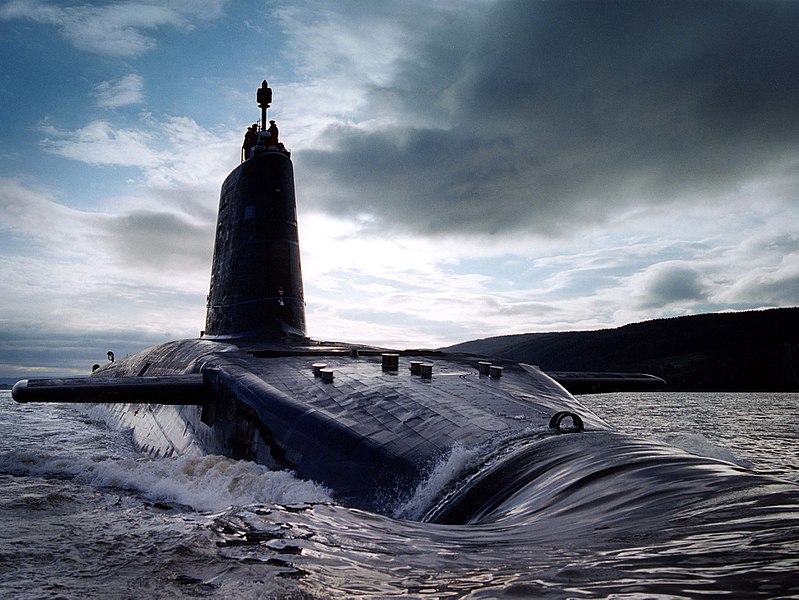
Ensure Naval Supremacy And Reduce Wealth Inequality By Bringing Back The Liturgy

The liturgy was a custom of ancient Athens. When the state needed something (usually a new warship) it would ask for volunteers among its richest citizens. Usually one would step up to gain glory or avoid scorn; if nobody did, the courts were allowed to choose the richest person who hadn’t helped out recently. The liturgist would fund the warship and command it as captain for two years, after which his debt to the state was considered discharged and he was given a golden crown. Historians treat the liturgy as a gray area between voluntary service and compulsory taxation; most rich Athenians were eager to serve and gain the relevant honor, but they also knew that if they didn’t, they could be compelled to perform the same service with less benefit to their personal reputation.

Defense analysts warn that America’s naval dominance is declining:

    Only 25 per cent of America’s 114 commissioned surface combatants (cruisers, destroyers, and littoral combat ships) are less than a decade old. By comparison more than 80 per cent of China’s 141 destroyers, frigates, and corvettes have been commissioned in the past decade. In the same time period, the United States commissioned 30 surface combatants … The nearly 600-ship Navy of the late 1980s deployed only 15 per cent of the fleet on average. Today, with fewer than 300 ships, the US Navy deploys more than 35 per cent to service its global missions, contributing to a material death spiral.

So America is short on warships. But it is very long on rich people with big egos. An aircraft carrier would cost the richest American billionaires about the same fraction of their wealth as a trireme cost the richest Athenian aristocrats. So I say: bring back the liturgy!

The American rich already enjoy spending their money on exciting vehicles — yachts for the normies, rockets for the more ambitious, Titanic submersibles for the suicidal. Why not redirect this impulse towards public service? Imagine the fear it would strike into the hearts of the Chinese when the USS Musk enters Ludicrous Mode in the waters off the Taiwan Strait, with Elon himself at the wheel. Imagine how efficiently the USS Jeff Bezos will deliver its payloads! And does anyone doubt that billionaires – usually careful to avoid taxes — will jump at the chance to do this?

The Athenians had a parallel liturgy for rich people who would select and sponsor theater productions, but I think we can skip this one for now.

[…]

Legalize Lying About Your College On Resumes

Colleges trap Americans in a cycle of burdensome loans and act to reinforce class privilege. I have previously advocated making college degree a protected characteristic which it is illegal to ask people about on job applications. But this would be hard to enforce, and people would come up with other ways to communicate their education level.

So let’s think different: let’s make it legal to lie about your college on resumes (it is already not technically illegal to lie on a resume, but companies can ask for slightly different forms of corroboration which it is illegal to lie on). Everyone can just say “Harvard”, and nobody will have any unfair advantage over anyone else.

Start An Internet-Pop-Up Trade War With The European Union

For too long, Americans have groaned under the weight of foreign cookie-related-pop-ups which they and their elected representatives have no control over. It’s time to fight back.

When I am elected, I will mandate that all American websites serve popups to European Union residents explaining why the GDPR is annoying and why it affects even Americans who have no say in it. If the Europeans want to be able to access Google, Facebook, Twitter, or any other US-based site without clicking “I understand” every time they reload it, they’ll have to pressure their government to do something about GDPR.

Appoint Donald Trump Constitutional Monarch

This would require a constitutional amendment, but I’m sure I could convince enough people.

The British experience suggests that the role of a constitutional monarch is to flaunt how rich they are, get 24-7 news coverage regardless of whether or not they do anything interesting, and have scandals. Donald Trump is the best person in the world at all three of these things

Trump wants to be on top, but is not that interested in governing. Meanwhile, American liberals (by revealed preference) want to continue thinking about him every hour of every day forever, but also don’t want him to govern. Constitutional monarchy would satisfy everyone’s preferences. If Trump is destined to destroy democracy — and everyone agrees that he is — let’s make it happen as gently and non-destructively as possible.

Obviously the royal family can’t participate in regular electoral politics, which means no Trump would ever be able to run for office ever again. This is the only way we are ever getting rid of them, you know this is true, please don’t throw away this chance.

I would support reverse primogeniture-based inheritance — ie the youngest son takes the throne — just so we can have a “King Barron”.

Radical or Ridiculous? | T-14 Armata | Tank Chats #171

Filed under: History, Military, Russia, Technology, Weapons — Tags: , , — Nicholas @ 02:00

The Tank Museum
Published 26 May 2023

In this Tank Chat, David Willey takes a detailed look at a vehicle that has garnered significant interest and controversy — The Russian T-14 Armata. David explores why this vehicle draws so much attention, and how it has taken a radical departure from previous Soviet design philosophy.
(more…)

September 4, 2023

Our own little Cyberpunk Dystopia

Filed under: Cancon, History, Media, Military, Politics, USA — Tags: , , , — Nicholas @ 04:00

Kulak suggests we get comfortable with the tropes of Cyberpunk Dystopias, since we’re already living in one:

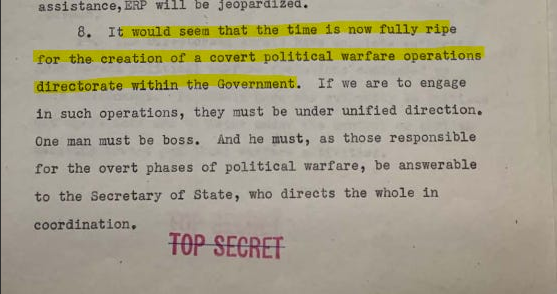
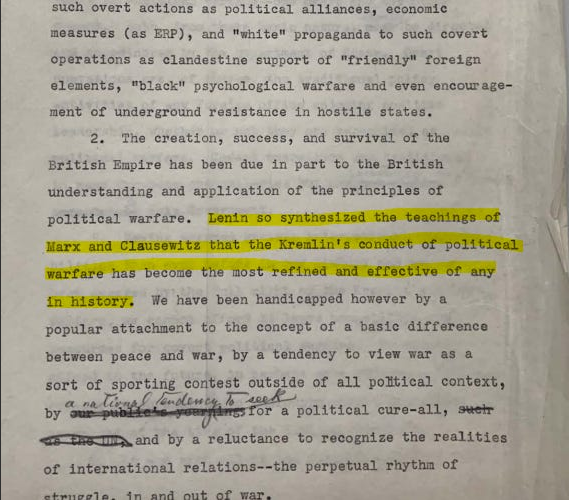
One need not spend long in radical or dissident Right discourse to encounter talk of Psy-ops and demoralization campaigns.

Some of this traces back to Yuri Besmenov’s work on subversion, some to speculation about “Operation Mockingbird” type media manipulation schemes, and some to simply obvious symbolic work being done for seeming for no reason except to horrify, offend, “blackpill”, and create a sense of helplessness amongst regime enemies.

One can point to the massive sentences for Jan 6th protestors, the recent charges of Trump (outside any norm or existing political theory or constitutional theory), or most ridiculous: Dystopia Porn news stories.

I recently heard a story repeated by a commentator of a news story of a trans-woman working with doctors to be amongst the first to receive a womb transplant which would allow a biological male to gestate a baby, this person was excited, completing the South Park plotline (seriously 2005 s09e01 “Mr. Garrison’s Fancy New Vagina” look it up), stating that they were excited that they might be the first trans-woman to get an abortion.

Why would the medical establishment play along and at least pretend to enable this obviously malicious and self-destructive wish? Why would the media bother to report such a crazy person’s putrid desire?? This religious commentator could only describe it as “satanic”, and speculated that it was a psy-op meant to break decent people’s will …

Setting aside the question of intention, and whether it wasn’t “just” medical professionals salivating at a paying guinea pig, and the media looking for clicks that aligned with their propaganda …

Why would it demoralize!?

Abortions happen by the hundreds of thousands annually, and the nightmare of the trans-medical process is visited on thousands of souls more sympathetic than this South Parkian weirdo every year … outside of the immediate outrage, such a bizarre one-off intersection of the two is basically of no broader political import … indeed if one is of the social conservative set one has seen rather major political victories on both fronts, with the overturning of Roe vs. Wade and the end of adolescent gender treatment across wide sections of Europe.

And yet for this one-off story of someone saying they would like to do something evil and stupid … you got outrage and horror and many an invocation of “It’s so over”.

What are the point of Psy-ops? What is the goal of demoralization?

Well as a perfidious leaf I am uniquely positioned to tell you, indeed, indeed one might say my country only exists because of the greatest psy-op in human history …

No not anything to do with Trudeau sr. or the liberal government’s corruption and bribery to keep Quebec from leaving …

The founding Canadian Psy-op occurred in 1812 … carried out by the greatest psychological warfare operative in human history, and Canadian national hero:

General Sir Isaac Brock

According to former President Jefferson, the conquest of Canada was to be “just a matter of marching” … indeed it should have been, the woefully outnumbered British Regulars and under-trained Canadian Militia should have been in no position to hold Upper Canada (now Ontario) and by rights should have lost what is now English Canada to American expansion … The defence of Canada depended on keeping America’s superior numbers on the far side of the St Lawrence/Great Lakes waterway bound up and unable to deploy in force for such an invasion …

… a seemingly hopeless task since they already had a beachhead for such an invasion at Fort Detroit (site of the current, well former, major city).

So Brock went on the attack, marching on Detroit with vastly inferior numbers to even the garrison.

His 1300 men of three different nationalities (British, Canadian, and Native) attacked 2500 unified defenders across the massive Detroit River, in a prepared defensive position.

It should have been suicide … he didn’t lose a single man.

Brock dressed his militia in excess redcoat uniforms of British regulars to make it appear as if he had more professionally trained soldiers … then throughout his maneuvers created the illusion that he had vastly more men than his opponent, marching his men in circles to create the illusion from the walls of the fort that he had thousands more than reality.

He then wrote to his opposite general William Hull begging him to surrender, stating that he did not believe he could control his 3000 Indian allies (in reality just 600) and prevent scalping and war crimes once battle broke out.

Hull wrote back asking for three days to arrange the surrender, Brock gave him three hours.

Once surrendered, Hull’s men spat on him seeing the inferior force they had just turned their guns over to.

At a court martial General Hull was sentenced to be shot, however, President Madison commuted his sentence to mere dismissal from the service … beginning a 200+ year-long tradition of US military retreat and lack of accountability.

In 1945 Canadian forces would repeat this obscene tactic at the battle of Zwolle, when soldier Leo Major single-handedly tricked ~1500 German soldiers into believing they were surrounded by superior forces and retreating.

Ask Ian: Donating Gun Collections to Museums … or Not

Filed under: History, Military, USA, Weapons — Tags: , , , — Nicholas @ 02:00

Forgotten Weapons
Published 24 May 2023

Lots of people put together significant gun collections over a lifetime, and want to see those collections preserved after they pass. This often manifests as looking for a museum that will keep a collection intact and display it — which is unfortunately a nearly impossible goal.

First, it is very rare to find a museum whose mission matches the collection focus of a specific private collection. Firearms cover a vast amount of history even firearms-specific museums are usually fairly narrow in scope.

Second, museums already have all their display space filled. Promising to display a new collection means taking down something they already deemed worthy of display — and promising not to take it down in turn if something more suitable comes along.

Third, even if a museum has space and shares the theme of a collection, they will almost certainly already have examples of many of the items in the collection. If a museum is not allowed to break up and sell off parts of a collection, it simply ensures that many of the items will remain perpetually locked away in a reserve archive.

I would propose that we really need to rethink the idea that museums have a duty to keep everything they acquire. We know that virtually all museums have much more in storage than on display, and forcing duplicate items or pieces unrelated to the museum’s focus to remain in museum property simply ensures that those pieces are kept away from the collecting community. It is the collecting community that does most of the research and publication on firearms history, and this practice undoubtedly hinders research and scholarship. That is not to say we should close museums; certainly not! Museums are extremely valuable for preserving artifacts and making them available to some degree to the public, but they are only one part of the historical community.

If you are a collector who really wants your collection to be displayed in full in a museum, you really only have one option: bequeath the museum enough money to build and maintain a new wing specifically for your collection.
(more…)

September 3, 2023

The War is Five Years Old – WW2 – Week 262 – September 2, 1944

World War Two
Published 2 Sep 2023

Five years of war and no real end in sight, though the Allies sure seem to have the upper hand at the moment. Romania is coming under the Soviet thumb and Red Army troops are at Bulgaria’s borders, the Allies enter Belgium and also take ports in the south of France. A Slovak National Uprising begins against the Germans, and the Warsaw Uprising against them continues, but in China it is plans for defense being made against the advancing Japanese.
(more…)

“This is the world of the Spring and Autumn Annals, and the Zuozhuan

Filed under: China, History, Military — Tags: , , , , — Nicholas @ 03:00

Another anonymous book review at Scott Alexander’s Astral Codex Ten considers the Zuozhuan, a commentary and elaboration of the more bare-bones historical record of the Spring and Autumn Annals:

The first page of the Li Yuanyang edition of Zuo zhuan (16th century).
Wikimedia Commons.

To tell the story of the fall of a realm, it’s best to start with its rise.

More than three thousand years ago, the Shang dynasty ruled the Chinese heartland. They raised a sprawling capital out of the yellow plains, and cast magnificent ritual vessels from bronze. One of the criteria of civilization is writing, and they had the first Chinese writing, incising questions on turtle shells and ox scapulae, applying a heated rod, and reading the response of the spirits in the pattern of cracks. “This year will Shang receive good harvest?” “Is the sick stomach due to ancestral harm?” “Offer three hundred Qiang prisoners to [the deceased] Father Ding?” The kings of Shang maintained a hegemony over their neighbors through military prowess, and sacrificed war captives from their campaigns totaling in the tens of thousands for the favor of their ancestors.

But the Shang faced growing threat from the Zhou, a once-subordinate people from west beyond the mountains. Inspired by a rare conjunction of the planets in 1059 BC, the Zhou declared that there was such a thing as the Mandate of Heaven, a divine right to rule—and while the Shang had once held it, their misrule and immorality had forced the Mandate to pass to the Zhou. Thirteen years later, the Zhou and their allies defeated the Shang in battle, seized their capital, drove their king to suicide, and supplanted them as overlords of the Central Plains.

If the Shang were goth jocks, the Zhou were prep nerds. In grave goods, food-serving vessels replaced wine vessels. Mass human sacrifice disappeared, while bureaucracy expanded. The Shang lacked the state power to administer their surrounding subject peoples so much as intimidate them into line; the Zhou, galvanized by a rebellion not long after the conquest, put serious thought into consolidating their control. While the king remained in the west to rule over the original Zhou lands, he sent relatives and allies east into the conquered territories to establish colonies at strategically important locations, anchoring Zhou rule in a sprawling network of hereditary regional lords bound together by blood, marriage, custom, and ancestor worship of the Heaven-blessed founding Zhou kings.

For generations, the system worked, ensuring military successes at the borders and stability in the interior. The first reigns of the dynasty became a golden age in the cultural imagination for thousands of years. But by the dynasty’s second century, barbarian incursions were putting the state on the defensive, and surviving records hint at waning control over the regional lords and power struggles at court. 771 BC marked a breaking point, when barbarians allied with disgruntled nobles to overrun the royal domain and kill King You of Zhou.

Legend has it that the king was bewitched by his new consort, a melancholy beauty born from a virgin impregnated by the touch of a black salamander. Desperate to make her laugh, the king pranked his lords by lighting the beacon fires intended to summon them in case of invasion. When she delighted at the sight, he kept playing the same trick until the lords got sick of him and stopped coming, which doomed him when the barbarians actually invaded.

But the historical reality seems to be the usual sordid political struggle around a new consort — and heir — threatening the power of the old one. The original queen’s powerful father allied with barbarians to root out the upstart, only to get maybe more than he bargained for. Sure, he put his grandkid on the throne in the end, but the royal house had been devastated. It would never regain the ancestral lands it had lost to the barbarians, the direct holdings that filled its treasury and provided for its armies. The king retreated east into the Central Plains, playing ground of lords that were now more powerful than him. While the royal line remained symbolically important, as holder of the Mandate of Heaven from which all the states derived their legitimacy, the loss of central authority in every other sense would unleash centuries of intensifying interstate warfare and upheaval.

This is the world of the Spring and Autumn Annals, and the Zuozhuan.

The Spring

“Spring and Autumn Annals” is a bit of a redundant translation, since “spring and autumn” was just an old way of saying “year”, and thus, “annals”. And technically, there were multiple Spring and Autumn Annals — every state kept, in addition to court and administrative documents, its own laconic record of each year’s wars, diplomacy, natural phenomena, major rites, and notable deaths. But the state of Lu’s is special, because Confucius was from Lu. He’s said to have personally edited and compiled the extant version of its 242-year-long Spring and Autumn, loading each character with weighty yet subtle moral deliberation. This ensured it a place in the Confucian canon, and its survival where every other state’s annals have been lost to time. The era that it covers is named the Spring and Autumn period after the text, not the other way around.

Taken on its own, though, the Annals is little more than a list of dry facts. For example, the first year reads:

    The first year, spring, the royal first month.

    In the third month, our lord and Zhu Yifu swore a covenant at Mie.

    In summer, in the fifth month, the Liege of Zheng overcame Duan at Yan.

    In autumn, in the seventh month, the Heaven-appointed king sent his steward Xuan to us to present the funeral equipment for Lord Hui and Zhong Zi.

    In the ninth month, we swore a covenant with a Song leader at Su.

    In winter, in the twelfth month, the Zhai Liege came.

    Gongzi Yishi died.

Who is Zhu Yifu? Who’s Duan? What’s all this about “overcoming”? Where does the moral deliberation come in? This canon badly needs meta, and the most notable of the ancient commentaries written for the Spring and Autumn Annals is the Zuozhuan. Ten times as long as the text it’s for, the Zuozhuan is the flesh on the Annals‘ bare bones, one of the foundational works of ancient Chinese literature and history-writing in its own right.

While tradition attributes the text’s authorship to Zuo Qiuming, a contemporary of Confucius, most modern historians date its compilation to the century after. In its extant form, it’s presented interleaved with the Annals, so that after the Annals’ account of each year, with entries such as …

    In summer, in the sixth month, on the yiyou day (26), Gongzi Guisheng of Zheng assassinated his ruler, Yi.

… you have the Zuozhuan’s account of the year, mostly composed of elaborations upon the above entries, such as:

    The leaders of Chu presented a large turtle to Lord Ling of Zheng. Gongzi Song and Gongzi Guisheng were about to have an audience with the lord. Gongzi Song’s index finger moved involuntarily. He showed it to Gongzi Guisheng and said, “On other days when my finger did this, I always without fail got to taste something extraordinary.” As they entered, the cook was about to take the turtle apart. They looked at each other and smiled. The lord asked why, and Gongzi Guisheng told him. When the lord had the high officers partake of the turtle, he called Gongzi Song forward but did not give him any. Furious, Gongzi Song dipped his finger into the cauldron, tasted the turtle, and left. The lord was so enraged that he wanted to kill Gongzi Song. Gongzi Song plotted with Gongzi Guisheng to act first. Gongzi Guisheng said, “Even with an aging domestic animal, one is reluctant to kill it. How much more so then with the ruler?” Gongzi Song turned things around and slandered Gongzi Guisheng. Gongzi Guisheng became fearful and complied with him. In the summer, they assassinated Lord Ling.

    The text says, “Gongzi Guisheng of Zheng assassinated his ruler, Yi”: this is because he fell short in weighing the odds. The noble man said, “To be benevolent without martial valor is to achieve nothing.” In all cases when a ruler is assassinated, naming the ruler [with his personal name rather than his title] means that he violated the way of rulership; naming the subject means that the blame lies with him.

There’s a few too many mythological creatures and just-so stories for the Zuozhuan to be taken entirely at face value, but it’s clear that its creator(s) had access to diverse now-lost records for the era portrayed. For example, some of the events show a two-month dating discrepancy — one of the states used a different calendar, and most likely the creator(s) overlooked the difference when borrowing from sources from that state. While the overall level of historical rigor versus 4th century BC authorial invention remains under heated debate, the Zuozhuan is undeniably the most comprehensive written source on its era that we have.

And importantly, it’s enjoyable.

You can think of the Zuozhuan as the Gene Wolfe of ancient historical works. It’s not an easy read, especially in translation, where names that are visibly distinct in the original (e.g. 季, 急, 姬, etc.) all get unhelpfully collapsed into one transliteration (Ji). The work drops you into a whirl of nouns and events, some of them one-off asides, others part of long-running narrative threads that might only surface again decades of entries later. While a casual readthrough still offers plenty of rewards, putting together all the subtext, references, and connections between entries is an endeavor that’s occupied readers for millennia. Your unreliable narrator remains enigmatic on most of the events he presents, leaving interpretation as an exercise for the reader; when he does speak, either directly or in the voice of the “noble man”, he can raise more questions than he answers. For one, the rule about the naming of an assassinated ruler largely holds in the Annals, but seems to have some notable exceptions.

But if you’re willing to plunge in, the work offers an experience unlike anything else.

The Saalburg: A Roman Fort on the German Frontier

Filed under: Europe, Germany, History, Military — Tags: , , — Nicholas @ 02:00

Scenic Routes to the Past
Published 23 May 2023

A brief tour of the principal buildings in the Saalburg, Germany’s most completely reconstructed Roman fort.
(more…)

September 2, 2023

Trial Run for D-Day – Allied Invasion of Sicily 1943

Real Time History
Published 1 Sept 2023

After defeating the Axis in North Africa, the stage was set for the first Allied landing in Europe. The target was Sicily and in summer 1943 Allied generals Patton and Montgomery set their sights on the island off the Italian peninsula.
(more…)

September 1, 2023

Will the Resistance Smash Nazism or Build Communism? – War Against Humanity 112

Filed under: Europe, France, Germany, History, Italy, Military, WW2 — Tags: , , , , , , — Nicholas @ 04:00

World War Two
Published 31 Aug 2023

The hour of resistance is here. Across Western Europe, armies of resistance fighters rise up to meet the Allied armies and sabotage the Axis war machine. In Slovakia, a secret army fights to restore Czechoslovak independence. But against this hopeful backdrop, the Axis forces strike back hard. And, all around, the spectre of communism strikes fear in the Western Powers.
(more…)

QotD: Process thinking about the Russo-Ukraine war

Filed under: Europe, Military, Politics, Quotations, Russia, USA — Tags: , , — Nicholas @ 01:00

Process thinking has goals, of course, but they’re all interpersonal. The outcomes, small-o, of Process thinking all have to do with relationships within the group. Why are there blacks in ads for camping gear, despite no black person ever having gone camping in the history of the human race? Because the set designer assumes the writer wants it, and the writer assumes that the creative director wants it, and the creative director assumes the client wants it … which he does, but only because he in turn assumes that the creative director wants it, and etc. To return it to politics, it’s all Narrative.

Combining them, consider the Ukraine Narrative as one giant ad campaign. The lack of Outcome-thinking hit all of us from the very moment it became The Current Thing. What, exactly, are we doing in Ukraine?

Note that there is a case to be made. I don’t agree with it, obviously, but I can make one, and of course it’s ruthlessly Outcome-driven: In a world where States have no friends, only interests, it is consistent with Realpolitik to weaken your rivals when it can be done at low cost and minimal risk. We’re doing to Russia what Russia (and China) did to us in Vietnam — they were quite open about aiding their fraternal socialist brothers in the struggle against Capitalism and Western Imperialism.

One can — and of course in this case would — argue that fucking around in Ukraine is neither low-cost nor low-risk, but that too is Outcome-thinking. You can persuade me, an Outcome thinker, with facts and reason. Steve Sailer is almost a caricature of an Outcome thinker at this point, and he’d be just super at demolishing my hypothetical Realpolitik argument for US aid to Ukraine.

But not only do the Process-“thinkers” in [Washington, DC] not have an Outcome in mind, it never crossed their minds to have one in the first place. This is why I keep coming back to Jaynes [Wiki]. We — normal people — keep trying to assign goals to people like Victoria Nuland. The only goals we can come up with, though, are bugfuck insane — she seems to really believe that not only can Ukraine win the current conflict, but that they’ll march all the way to Moscow, Regime-Change everyone, and invite all the Western parasites in to carve up the country …

… nothing else makes sense, but “sense” left the building with Elvis. There is no Outcome. Which is likelier:

  1. that she has some top secret Master Plan in a manila folder in a safe somewhere, that reads “Ukraine captures Moscow; Exxon CEO is on the first flight in”; or
  2. Her behavior seems purposive the way the eerily coordinated gyrations of a school of fish or a flock of birds seems purposive? It looks coordinated, but it can’t actually BE coordinated — it happens too fast for all the individual members to process the signals.

I’ve done a lot of Ukraine shit in the stoyak roundups, and I have never once seen a Victory scenario. The closest even the wildest-eyed optimist comes is very clearly Underpants Gnome shit:

  1. Send Wunderwaffen to Zelensky
  2. ???
  3. Victory!!!

And the third term — the crucial one, Victory — is never ever defined. Let’s assume the Wunderwaffen work and the Big Spring Counteroffensive that they’ve almost literally been advertising, Mad Men-style, goes off flawlessly. What then? At what point do we call off the dogs? Again, unless you seriously believe in Victoria Nuland’s Master Plan — a real document in a real safe, that she got Brandon’s puppeteers to forge his signature on — there simply IS no answer. Their “plan” for “victory” on the battlefield is exactly the same as Bud Light’s “plan” for “victory” with the [Dylan Mulvaney] ads.

It’s all Narrative, all Process. The only outcomes anyone involved considers are all small-o, and they’re all interpersonal. Nobody thinks about battlefield victory — the actual movement of lines on a map, let alone the reality of fighting and dying. But they obsess over being seen to believe in victory. To return to Geo. Orwell‘s commentary:

    Creatives spend perhaps half their time in protracted meetings where the primary activity is herding cats, making sure everyone agrees on the current direction of things … until the direction changes, a couple of hours later.

And everyone is fine with this, because everything of importance happens interpersonally.

I’m going to reuse this quote, but this time quote it in full. Two paragraphs, and they’re long, but extremely important. Here’s the first:

    The art directors and copywriters who dream up what you see in commercials tend to have a few things in common. The copywriters imagine themselves future screenwriters or novelists, the art directors imagine themselves movie directors eventually. For them, every commercial is a little self-contained movie with a plot and characters, even though no one in the real world gives fifty milliseconds of thought to the character of the TV housewife using that new dustbuster. They very seldom discuss sales, in the sense of “Will this sell more widgets?” In fact they mostly loathe “hard sell” advertising, where you emphasize price.

Emphasis mine, because the question “Will this sell more widgets?” is the definition of Outcome thinking. And if you’re trying to herd cats — as anyone who has had to endure this kind of meeting knows — measurable results are the enemy. Because I really want you to consider the answer to the following question: What’s in it for you, personally, if Acme Corp. sells a thousand more widgets?

Unless you’re a salesman on commission, the answer, for all practical purposes, is: Nothing. Maybe a small bump in your end-of-year bonus, if you get a year-end bonus, but that’s the absolute best case scenario: Another hundred bucks on a single paycheck, six months down the line.

And while I’m certainly not going to sneeze at a hundred dollars, consider what that Benjamin cost you. Half the office hates you now, because you were right. You’re smarter than them, you bastard, and now they know it. You showed them up. Oh, and you’ve also alienated the other half of the office, because what should have been a thirty minute meeting stretched for two hours because you stuck to your guns. Thanks, asshole, I got caught in rush hour and didn’t get home until 7:30. I hope you choke on your $100 bonus. (And don’t think you’re going to get any love from the people who agreed with you in the meeting from the get-go, because they’re all jealous they didn’t think of it themselves).

Now consider the second paragraph, that gets to the heart of Process thinking:

    They [“creatives”] favor “conceptual” advertising, where instead of telling you why this cellphone is superior to another, they show you an ironic or cute story involving the cellphone, or maybe you merely show exciting, vibrant people dancing with the thing, with bright colors and music video tropes. This goes back to the recent discussion here of cultural conformity and “mood boards”. Mood boards have been a very big thing in advertising, even more so than twenty years ago. “Look and feel” takes precedence over most things, especially in corporate, nationwide campaigns. For example, you will see Lexus nationwide commercials where the car drives heroically through some surreal industrial or desert landscape, with extreme lighting and lots of flashy cinematography. Local dealer ads for Lexus will concentrate on terms and pricing, and art directors hate doing local dealer car ads. Not artsy enough.

“Conceptual” ads are collaborative ads. With Outcomes, you’re either right or wrong; it either sells more widgets or it doesn’t, but everyone contributes to “mood”. No one can be proven right via sales figures, but no one can be proven wrong, either. Jane sucks at Outcome-driven advertising, because none of her ads moved the sales needle. But Jane is great at “mood boards”; Jane’s a real team player; Jane makes everyone in the meeting feel special. When Jane runs the meeting, we achieve consensus in thirty minutes. When you run the meeting, Mr. Will This Sell More Widgets, it goes on for hours, and we never get the answer — IF we get the answer — until the next quarter’s sales figures come in.

Apply that to the Ukraine Narrative, and test it against Nehushtan‘s heuristics:

    “We have always been at war with Eurasia”: what you have to support turns on a dime and doesn’t have to be consistent with anything that went before.

Check. What you “believe” changes as the “mood board” changes, and the “mood board” changes as the group consensus changes in the pitch meeting. We’re all susceptible to this to some degree — someone with stronger Google-fu than mine can no doubt find that old psych experiment from the Fifties, with something like Müller-Lyer lines. No doubt you recall hearing about it: They planted some kids in the crowd who insisted that the shorter lines were really longer, and since these kids were absolutely adamant in their “belief”, eventually most of the class “agreed” that the shorter lines were actually longer.

That’s all consensus stuff, Process stuff. What does it really cost me to say that the shorter line is actually the longer? If it’ll get Jane to finally shut the fuck up, ok. If Jane happens to be really popular, and especially if I think agreeing with her will get me closer to her panties, then the faster I’m going to agree. And if Jane happens to hold my entire career in her hands, and can get me kicked out of the Cloud, to wander the Cursed Earth among the Dirt People …

    “Two Minutes Hate”: doesn’t matter who or what the target person is, they are always slotted into the same role, given the same attributes, and the same criticisms are made of them.

Severian, “What is Leftism? (and what to call it?)”, Founding Questions, 2023-05-30.

August 31, 2023

The Double Agent Saving London From the V-1 – WW2 Documentary Special

Filed under: Britain, Germany, History, Military, WW2 — Tags: , , , — Nicholas @ 04:00

World War Two
Published 30 Aug 2023

The Germans are assaulting London with waves of V-1 flying bombs. But Eddie Chapman, a career criminal, serial womaniser, and masterful double agent working for MI5’s Double Cross is fighting a secret battle to beat the bombs. When he’s done with that, he pulls the wool over the Reich’s eyes to help Britain beat the Kriegsmarine. This is Agent Zigzag.
(more…)

August 30, 2023

The endless search for the “Easy mode” in military conflict

Filed under: History, Military, Russia, Technology, Weapons — Tags: , , , — Nicholas @ 03:00

CDR Salamander on the search for shortcuts to military excellence, despite literal millennia of evidence that there are no such shortcuts:

As the Russo-Ukrainian War reaches its 20th month, I hope everyone has been sufficiently sobered up to stand firmly against those promoting the “72-hour War” or spin an attractive story about some transformational secret sauce that provides an “easy button” for those tasked to do the very hard work of preparing a nation for war should, and if, it were to come.

See the Battle of Hostomel if you need a recent example of where buying this wishcasting can get you.

There is a reason we have continually railed against this Potomac Flotilla mindset for the better part of two decades here — it is the self-delusion of faculty lounge theories running up against the Gods of the Military Copybook Headings reality what we have thousands of years of experience to reference.

We are not smarter than previous generations. There is no secret weapon or war winning technology — or magic beans — that will allow us to skip past the hard work of a viable strategy backed up by a properly resourced industrial capacity to build, maintain, deploy, and sustain a fighting force on the other side of the Pacific for years if needed.

Not 24-hours. Not 72-hours. Think 72-weeks to 72-months and you have your mind right.

[…]

We do no one any good allowing free run towards the national security version of the prosperity gospel, a branch of the transformationalist cult, and their “name it and claim it” attitude towards solving hard problems.

From LCS to DDG-1000, to optimal manning, to six-sigma supply nightmares, to 100-hour workweeks, to 72-hour war CONOPS, to the “Deter by Punishment,” to “1,000 ship navy,” to the offset of this POM cycle, to counter-historical excuses for … again … not doing the hard work that takes so long to bear fruit that someone else will get credit for it.

Every time we have our top leaders — smart hard working professionals with the best intentions — step up to sound more like this guy — the worse we will all be.

Image result for Carpetbagger Josie Wales

It degrades them and endangers everyone.

We don’t need to sell the utility of small drones being used down to the lowest levels of responsibility — it is demonstrated every day.

What we do need sold is Congress’s need to fund a revitalization of our defense industrial capacity and a focus on the naval and aerospace forces that will do most of the fighting in any expected war west of the International Dateline.

Supported by swarms of drones of all shapes and sizes.

August 29, 2023

A Rare World War One Sniper’s Rifle: Model 1916 Lebel

Filed under: France, History, Military, Weapons, WW1 — Tags: , , — Nicholas @ 02:00

Forgotten Weapons
Published 28 Feb 2018

Unlike Great Britain and Germany, the French military never developed a formal sniper doctrine during World War One — they had no dedicated schools or instruction manuals for that specialty. The three major arsenals did produce scoped sniping rifles, however, with models of 1915, 1916, and 1917 (and a post-war 1921 pattern). We have a model 1916 example here today.

The rifles were completely ordinary off-the-rack Lebels, modified simply to add scope mounts. The 1916 pattern mount used a round peg on the side of the rear sight and a bracket wrapped around the front of the receiver, which allowed the scope to be quickly and easily detached for carry in a separate pouch (similar to what other nations did, to protect the optic from damage when not in use). The rifles were issued only in small numbers (2 per company, or even 2 per battalion) and it was left to the unit commander to decide how to employ them.

This particular scope has some neat provenance of being brought home by a US soldier after the war — it came back wrapped in a period copy of Stars and Stripes magazine. The rifle is of the appropriate type, but the “N” marks on the barrel and receiver indicated French overhaul in the 1930s, precluding it from being the original rifle this scope was mounted on.
(more…)

August 27, 2023

The Liberation of Paris – WW2 – Week 261 – August 26, 1944

World War Two
Published 26 Aug 2023

Paris is liberated by the Allies, a symbolic act that causes the world to rejoice. Something far more important to the course of the war, though, happens this week in Romania. The Allies continue to advance in the south of France and begin a new offensive in Italy, though the Pacific War has quietened down once again.
(more…)

August 26, 2023

OSS “Bigot” 1911 dart-firing pistol

Filed under: History, Military, USA, Weapons, WW2 — Tags: , , , , , — Nicholas @ 02:00

Forgotten Weapons
Published 2 Apr 2012

The “Bigot” was a modification of an M1911 .45 caliber pistol developed by the Office of Strategic Services during WW2. The OSS was a clandestine operations service, the predecessor of the CIA. The Bigot was intended as a way for commandos to quietly eliminate sentries — although we are not sure what advantage it might have had over a silenced pistol. Questionable utility doesn’t prevent it from being a pretty interesting piece of equipment, though, and we had the opportunity to take a look at one up close recently.

http://www.forgottenweapons.com/oss-b…

« Newer PostsOlder Posts »

Powered by WordPress