
So why is it always muddy? The real answer is high explosive shells (particularly, but not exclusively, penetrating high explosive shells). Heavy artillery shells in the First World War were made to penetrate into the ground and then explode, sending up a rain of loose dirt – the idea was to be able to destroy or at least bury trenches and deep bunkers. The explosions were so powerful that they uprooted trees and grass, leaving behind the “blasted moonscape” so common in pictures of the Western Front. All that remained were the deep craters which collected water and turned into often fatal mud-traps (Peter Jackson’s They Shall Not Grow Old (2018), includes a horrific description of one man, unable to assist, having to watch another man sucked under the mud to his death in such a crater).
This kind of terrain – with so much of the ground-cover blasted away – would turn into mud-soaked pits the moment it rained – particularly where water collected in the shell-holes.
That also explains why these post-battle scenes often lack any kind of local terrain features. Powerful explosive shells could annihilate terrain features like forests, roads, hedgerows, fences, fields – even hills and entire villages – with extended bombardments. And without any ground-cover left, almost any rain at all will then reduce the local terrain into a mud-soaked bog, especially if the local soil drains poorly (as it did so famously in Flanders).
The problem with depicting medieval, or even early modern battlefields this way is, of course, that these armies do not possess any weapons which can deliver this kind of destruction. Even as late as the American Civil War, field artillery – even massed field artillery – was simply not that powerful (although some heavy naval and siege guns were beginning to come close). Post-battle photography of Gettysburg – even in the approaches to Cemetery Ridge and around the Wheat Field – areas of fierce fighting – shows not only trees and ground-cover, but even fences and buildings largely intact.
Field artillery firing solid shot from 6 to 20lbs to is simply not strong enough to tear apart the terrain in the way that we often see in popular depictions of historical or fantasy battlefields; as pictured above, the guns doing that in WWI were often firing 1,000+ pound shells, 100 times the weight of shot of a normal ACW cannon (lighter artillery, like the famed French 75 (Matériel de 75mm Mle 1897) still fired lighter shells – the French 75 fired a c. 12lbs shell – but still had far more explosive power due to improvements in explosives; that said, the French 75, a capable field gun, was famously too light for ideal use in the trenches). Massed musketry won’t do it either and so massed arrow or crossbow fire, catapults or whatever else certainly won’t.
(This, as a side note, may go some distance to explaining why First World War commanders were so unprepared for the challenges the new terrain they were creating in turn inflicted on them. Doctrine said that the solution to well-entrenched infantry was to mass artillery against them – blast them out of position. It had never been the case before that such massed artillery would render the ground itself impassible, because the artillery had never before been powerful enough to do so.)
Bret Devereaux, “Collection: The Battlefield After the Battle”, A Collection of Unmitigated Pedantry, 2019-10-18.
November 11, 2022
QotD: WW1 was the first war where the artillery was destructive enough to change the landscape
November 10, 2022
Contemplating the end of brand franchises like Star Wars
Ted Gioia is wondering how Star Wars ends:

Original Stormtrooper Hero Helmet from Shepperton Design Studios + originalstormtrooper.com
Lately, I’ve been wondering how Star Wars ends.
Let me be clear, I’m not worried about how the story resolves, or what happens to the characters. I have zero interest in all that. Darth Vader can win the Nobel Peace Prize, for all I care.
I’m more concerned with how a powerful brand franchise loses its stranglehold on the culture. And it’s not just Star Wars, it’s all those other stories that never achieve closure. I’m talking about Batman and Indiana Jones and James Bond and the Marvel Cinematic Universe (or MCU, for short), and the rest of them.
They all die, sooner or later. But how?
Heroes in capes and colorful costumes seem invincible now, if only because these fictional flâneurs are bigger than anything else in commercial culture. If Spiderman and Batman were real people, they would boast higher incomes and net worth than any flesh-and-blood entertainer in the world. The Marvel Cinematic Universe, which Disney acquired back in 2009, must be worth ten or twenty times the $4 billion they spent back then — total revenues from Marvel brands since then are somewhere around the one trillion dollar mark.
No pop star in history has ever possessed that kind of earning power.
Can these franchises just go on forever? The management team at Disney certainly must hope so, judging by their never-ending slate of Star Wars, Marvel, and other brand extension offerings. No Time to Die isn’t just the name of the 25th James Bond movie, but a promise for the future — why not another 25 films in the series? Or 50 or 100?
But brand franchises do die, or become so tired that few people care anymore. Universal Studios made so much money from Ma and Pa Kettle films that these corny comedies allegedly saved it from bankruptcy in the 1940s, but by 1960 audiences had lost interest in the predictable formulas of the series.
The Carry On films were the most dependable audience draw in British comedy, but after 31 movies the franchise could carry on no longer. A final resuscitation attempt after 14 years not only failed at the box office but was voted the worst British film ever made.
Some franchises not only die, but become genuinely toxic as attitudes evolve — killing, for example, the Charlie Chan franchise, and making it unlikely that Tarzan or the Lone Ranger or many other once lucrative brands will ever enjoy another meaningful payday.
None of this should surprise us, because narratives and protagonists go in and out of fashion like anything else. A story that charmed your grandparents is unlikely to interest your grandchildren.
USMC Winchester 70 Sniper – Vietnam Era
Forgotten Weapons
Published 24 Sep 2016This Winchester M70 was a rifle owned by the captain of the Camp Pendleton rifle team, and as such it is an excellent authentic example of the US sniper rifle of the early Vietnam era. It is chambered for the .30-06 cartridge, with a Winchester heavy target barrel and shorter stock. The scope is a 14x Unertl — quite high magnification, considering that the most recent official issue sniper rifle at the time was the M1D with a 2.2x scope. These rifles were used in a quasi-official capacity in Vietnam, and would ultimately evolving into the official M40 and M40A1 sniper rifles.
(more…)
November 9, 2022
The Big Mac’s “peacekeeping magic” is gone
In The Critic, Christopher McCallion illustrates the irrational optimism that countries having McDonald’s restaurants wouldn’t go to war with one another:

“Toledo, McDonald’s, 1967” by DBduo Photography is licensed under CC BY-SA 2.0 

 .
.
In 1910, Norman Angell wrote his famous book The Great Illusion, which argued that it would be irrational for the European great powers to go to war with one another when their prosperity was so interconnected by mutual trade and investment. The subsequent outbreak of WWI confirmed for many observers that competition for relative power and security trumped the pacific pursuit of reciprocal gains in wealth.
Following the Cold War, however, the sheer scope and intensity of globalization convinced many that a new era of capitalist peace had arrived. Thomas Friedman famously proposed a “Golden Arches Theory of Conflict Prevention”, which claimed that no two countries with a McDonalds had ever gone to war. There were many propitious augurs for a new era of peace: the lines stretched for blocks when McDonalds first opened in Moscow, and even still-nominally Communist China proclaimed, “to get rich is glorious.”
Simply put, the “capitalist peace theory” says that mutual gains from trade reduce incentives for conflict between economically engaged states, making the prosperity of each dependent on the other and producing high opportunity costs for war.
Realists have long countered this theory by claiming that states prioritize relative gains over absolute gains. State X and State Y may both be made wealthier in absolute terms by trading with one another, but if Y’s wealth grows at a faster pace than X, X may fear that Y’s rapidly growing wealth could be translated into a surplus of military power putting X’s security at risk. Realists contend that states will ultimately prioritize security over all other goals for the simple reason that without security, no other goals can be assured, including the pursuit of prosperity. Realists tend to reverse the logic of interdependence, claiming that low barriers to the cross-border flow of goods and capital are effects, rather than causes, of peace.
It appears that the realists are being proven right. On the eve of the unveiling of the Nordstream-2 pipeline between Russia and Europe, Moscow decided to invade Ukraine, which (literally) blew up the multi-billion-dollar project and all its future returns. Even McDonald’s, the golden harbinger of perpetual peace, shuttered its operations in Russia.
An even more important example is provided in East Asia. The US and China, the two largest economies in the world, are engaged in a rapidly escalating economic, technological, and military rivalry. Not only did the US initiate a trade war against China, it has also launched an increasingly severe series of export restrictions on advanced technology to China, clearly designed to halt China’s economic growth and limit its growing military power. America’s attempts to cut China off at the knees are reminiscent of the measures taken early in the Cold War to contain the Soviet Union and isolate it from the other industrial centers of the world.
Macaroni & Cheese from 1845
Tasting History with Max Miller
Published 8 Nov 2022
(more…)
QotD: Was Temujin (aka Genghis Khan/Chinggis Khan) a “great man”?
What had been missing for all that time was Temujin. To buy into the strongest form of “cliodynamics” is to assume that the Steppe always would have produced a Temujin (in part because his impact is so massive that a “general law” of history which cannot predict an event of such titanic import is not actually a functional “general law”). And to be fair, it had produced nearly Temujins before: Attila, Seljuk, etc. But “nearly” here isn’t good enough because so many of the impacts of Chinggis Khan depend on the completeness of his conquests, on a single state interested in trade controlling the entire Eurasian Steppe without meaningful exception. The difference between Temujin and almost-Temujin (which is just basically “Jamukha”) is history-shatteringly tremendous, given that both gunpowder and the Black Death seem to have moved west on the roads that Chinggis opened and the subsequent closure of those routes after his empire fragmented seem to have been a major impetus towards European seaborne expansion.
Moreover, it is not at all clear that, absent Temujin in that particular moment – keeping in mind that Temujin hadn’t appeared in any other moment – that there would have inevitably risen a different Temujin sometime later. After all, for two millennia the steppe had not produced a Temujin and by 1158, the technological window for it to do so was already beginning to close as humans in the agrarian parts of the world (read: China) had already begun harnessing chemical energy in ways that would eventually come to rob the nomad of much of his strength. If Temujin dies as a boy – as he very well might have! – it is not at all clear he’d be replaced before that window closed; his most obvious near peer was Jamukha, but here personalities matter: Jamukha was committed to the old Mongol social hierarchy (this was part of why he and Temujin fell out) and was so unwilling to do the very things that made Chinggis Khan’s great success possible (obliterating clan distinctions and promoting based on merit rather than family pedigree). Jamukha could have been another Seljuk, but he could not have been another Chinggis Khan and in this case that would make all of the difference.
To get briefly into a bit of historical theory, Chinggis is an individual whose actions in life fundamentally altered many of what the “Annales School” of history would call the structures and mentalités of his (and subsequent) times. The Annales school likes to view history through a long duration lens (longue durée) and focus on big shaping structures like climate, geography, culture and so on. The difference between this and cliodynamics is that Annales thinkers propose to describe rather than predict, so it is not fatal to their method if there are occasional, sudden, unpredictable alterations to those underlying structures – indeed those are the moments which are most interesting. But it is fatal to a cliodynamics perspective, which does aim for prediction since “our prediction is absolutely right unless it is completely wrong” hardly inspires confidence and a “general law” of anything is only a “general law” in that it is generally applicable not merely to the past but also to the future.
In short, Chinggis Khan wasn’t a commodity; he couldn’t be replaced by any other Mongol warrior. And figures like that abound through history (for Roman history, it matters greatly for instance that Marius, Sulla, Pompey, Caesar and Octavian had very different personalities when they found themselves in a position to dominate the Republic with military force). Moreover, the figures like that who we think of, generally capital-g “Great Men”, are hardly the only such individuals like that. They’re only the ones we can see. What of, for instance, the old Argive mother – her name lost to history – who killed Pyrrhus of Epirus, considered the greatest general of his generation, with a lucky throw of a roofing tile, both ending his career but also setting in motion a chain of events where the power vacuum left by Epirus would be filled by Carthage and Rome in a way that would bring those former allies (allied against Pyrrhus, in fact) into a shattering conflict which would then pave the way for Roman dominance in the Mediterranean? History must be full of innumerable such figures whose actions created and closed off courses of events in ways we can never know; how do we know that there wasn’t some would-have-been Temujin on the steppe in 100AD but who was killed in some minor dispute so very minor it leaves literally no evidence behind?
(The fancy way of putting the influence of all of those factors, both the big structural ones and the little, subject-to-chance ones, is to say “history is contingent” – that is, the outcomes are not inevitable but are subject to many forces large and small, many of which the lack of evidence render historically invisible.)
Bret Devereaux, “Fireside Friday: October 15, 2021”, A Collection of Unmitigated Pedantry, 2021-10-15.
November 8, 2022
Look at Life — Underwater Menace (1969)
PauliosVids
Published 20 Nov 2018Dealing with the hazardous legacy of World War II.
QotD: Marx was right about “commodification”
Marx was right about three critical things: Commodification, alienation, and class consciousness (again, bearing in mind that “right” in this context means “correct diagnosis”, not “correct in every particular”).
If it helps, you can swap in financialization for commodification. Briefly, it’s the ever-accelerating phenomenon we’ve all observed: burning through social capital in order to make a buck. Things that should not be subject to market forces are not only turned into commodities, but soon become the only commodities, or the only ones that matter.
Consider pretty much everything about the “laptop class”. E.g. the laptop itself. It commodifies time. Now you have the “ability” to work even when you shouldn’t. It is now virtually impossible to leave work at the office. For those of us who are independent contractors, this is a nice bonus — we can invoice every minute of our time, which means we can work as much (or as little) as we want to. For everyone else, though …
See what I mean? It’s simply understood that you’re never off the clock. Throw in the rest of the paraphernalia of laptop-class work — smartphone, social media, etc. — and nobody thinks twice about sending you stuff on a Saturday, a holiday, at your kids’ dance recital, at a funeral, whatever. People still have the residual social habit to say “Oh, gosh, I’m sorry for your loss” when you explain that you couldn’t get to that email because you were at your Mom’s funeral … but not for long, because you can already hear it in their voices: “Yeah yeah, sucks to be you, now will you please get me that TPS report!”
Same way with social media. You will be fired for expressing certain kinds of opinions, even on your “private” accounts, because the assumption is that there is no privacy. You don’t own you. You are a wholly-owned subsidiary of GloboPedo, and while we’re tempted to get outraged at the kinds of opinions for which you will get fired, that’s why those old Leftists — the ones we’re increasingly coming to resemble — would say “I disagree with what you say, but I will defend to the death your right to say it.” The kind of opinion is epiphenomenal; it’s the principle that matters, because you are not a commodity.
Severian, “On Losing the Cold War”, Founding Questions, 2022-07-02.
November 7, 2022
“We are the descendants of good team players”
Rob Henderson considers the Male-Warrior hypothesis:
The male-warrior hypothesis has two components:
- Within a same-sex human peer group, conflict between individuals is equally prevalent for both sexes, with overt physical conflict more common among males
- Males are more likely to reduce conflict within their group if they find themselves competing against an outgroup
The idea is that, compared with all-female groups, all-male groups will (on average) display an equal or greater amount of aggression and hostility toward one another. But when they are up against another group in a competitive situation, cooperation increases within male groups and remains the same among female groups.
Rivalries with other human groups in the ancestral environment in competition for resources and reproductive partners shaped human psychology to make distinctions between us and them. Mathematical modeling of human evolution suggests that human cooperation is a consequence of competition.
Humans who did not make this distinction — those who were unwilling to support their group to prevail against other groups — did not survive. We are the descendants of good team players.
It used to be accepted as a given that males were more aggressive toward one another than females. This is because researchers often used measures of overt aggression. For instance, researchers would observe kids at a playground and record the number of physical altercations that occurred and compare how they differed by sex. Unsurprisingly, boys push each other around and get into fights more than girls.
But when researchers expanded their definition of aggression to include verbal aggression and indirect aggression (rumor spreading, gossiping, ostracism, and friendship termination) they found that girls score higher on indirect aggression and no sex differences in verbal aggression.
The most common reasons people give for their most recent act of aggression are threats to social status and reputational concerns.
Intergroup conflict has been a fixture throughout human history. Anthropological and archaeological accounts indicate conflict, competition, antagonism, and aggression both within and between groups. But violence is at its most intense between groups.
A cross-cultural study of 31 hunter-gatherer societies found that 64 percent engaged in warfare once every 2 years.
Men are the primary participants in such conflicts. Human males across societies are responsible for 90 percent of the murders and make up about 80 percent of the victims.
The evolution of coalitional aggression has produced different psychological mechanisms in men and women.
Just as with direct versus indirect aggression, though, homicide might be easier to observe and track with men. When a man beats another man to death, it is clear what has happened. Female murder might be less visible and less traceable.
Here’s an example.
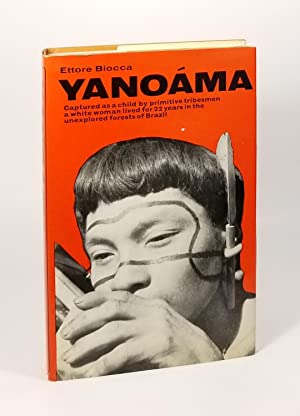
There’s a superb book called Yanoama: The Story of Helena Valero. It’s a biography of a Spanish girl abducted by the Kohorochiwetari, an indigenous Amazonian tribe. She recounts the frequent conflicts between different communities in the Amazon. After decades of living in various indigenous Amazonian communities, Valero manages to leave and describes her experiences to an Italian biologist, who published the book in 1965.
In the book, Helena Valero describes arriving in a new tribe. Some other girls were suspicious of her. One girl gives Valero a folded packet of leaves containing a foul-smelling substance. She tells Valero that it’s a snack, but that if she doesn’t like it she can give it to someone else. Valero finds the smell repulsive and sets it aside. Later, a small child picks up the leaf packet, takes a bite, and falls deathly ill. The child tells everyone that he got the leaf packet from Valero. The entire community accuses Valero of trying to poison the child, and banishes her from the tribe, with some firing arrows at her as she runs deep into the forest.
The girl who gave Valero the poisonous leaf packet formed a win-win strategy in her quest to eliminate her rival:
- Valero eats the leaf packet and dies
- Or she gives it to someone else who dies and she is blamed for it, followed by being ostracized or killed by the community
This is some high-level indirect aggression. Few men would ever think that far ahead (supervillains in movies notwithstanding). For most men, upon seeing a newcomer they view as a potential rival, they would just physically challenge him. Or kill him in his sleep or something, and that would be that.
Point is, this girl would have been responsible for Valero’s demise had she died. But no one would have known. If a man in the tribe, enraged at the death of the small child, had killed Valero, then he would be recorded as her killer. Or if Valero had been mauled by a jaguar while fleeing, then her death wouldn’t have been considered a murder.
Interestingly, the book implies that Valero was viewed as relatively attractive by the men, which likely means the girl who attempted to poison her was also relatively attractive (because she viewed her as a rival). Studies demonstrate that among adolescent girls, greater attractiveness is associated with greater use of aggressive tactics (both direct and indirect) against their rivals.
Inside the Gulag System – WW2 Special
World War Two
Published 4 Nov 2022Even as the Allied powers condemn the German crimes against humanity, their recent victories are in part thanks to the massive system of forced labour built by Joseph Stalin’s Soviet Union. Over one million prisoners work in the Gulag to power the Soviet war economy.
(more…)
Ask Ian: Single Feed vs Double Feed Pistols
Forgotten Weapons
Published 5 Jul 2022Asked by Tyler on Patreon: “Why are there so few double stack/double feed handguns? I can only think of a couple off the top of my head. It makes the worst part of handgun shooting (loading the magazines) a complete non-issue.”
There are a series of interacting considerations when choosing between single feed and double feed.
Single Feed:
– Magazines are less reliable; constricting from two columns to one adds friction (this is magnified as capacity increases)
– Firearms are easier to design; the cartridge is always presented in the same place
– Pistol slides may be slightly narrowerDouble Feed:
– Magazines are more reliable (also less susceptible to a bit of dirt fouling them)
– Guns are harder to design; must accommodate two different feed positions
– Guns must be a bit wider (immaterial in rifles)These elements taken together lead to predominantly single feed magazines in pistols and double feed magazines in rifles, although exceptions exist to both.
(more…)
QotD: The rise of architectural modernism
Many ingenious lovely things are gone
That seemed sheer miracle to the multitude.Professor Curl’s book is particularly strong on the historiographical lies peddled by the apologists for modernism, and on the intellectual weakness of the arguments for the necessity of modernism. For example, architectural historians and theoreticians such as Sigfried Giedion, Arthur Korn, and Nikolaus Pevsner claimed to see in modernism the logical continuation of the European architectural tradition, and Pevsner even recruited such figures as William Morris and C.F.A. Voysey as progenitors of the movement. Pevsner was so enamored of Gropius and the Modernists that he wanted to claim a noble descent for them, as humble but ambitious people were once inclined to find a distant aristocratic forebear. Yet Voysey could hardly have been more hostile to the movement that co-opted him. The Modern Movement, he said,
was pitifully full of such faults as proportions that were vulgarly aggressive, mountebank eccentricities in detail, and windows built lying down on their sides. … This was false originality, the true originality having been for all time the spiritual something given to the development of traditional forms by the individual artist.
Pevsner (to whom, incidentally, Curl pays tribute for his past generosity to young scholars, including himself), with all the academic and moral prestige and authority that attached to his name, was able to incorporate Voysey — unable to speak for himself or protest after his death — into the direct ancestry of modernism, even though the merest glance at his work, or at that of William Morris, should have been sufficient to warn anyone that Pevsner’s historiography made a bed of Procrustes seem positively made to measure.
Theodore Dalrymple, “Crimes in Concrete”, First Things, 2019-06.
November 6, 2022
Allies Launch New Phase in Pacific War – WW2 – 219 – November 5, 1943
World War Two
Published 5 Nov 2022The Allies hit the beaches of Bougainville, largest and last of the Solomon Islands. They create and expand a beachhead there and also win battles there at sea and in the skies. In the USSSR, the Soviets are closing in on Kiev and in the south have isolated the Crimea, but in spite of that, Adolf Hitler issues a new directive that Germany’s focus for the future should be in the west and the threat of an Allied invasion there.
(more…)
QotD: Thatcher and the Falklands
And, even when Mrs Thatcher won her victory, the civilizational cringe of the west was so strong that all the experts immediately urged her to throw it away and reward the Argentine junta for its aggression. “We were prepared to negotiate before” she responded, “but not now. We have lost a lot of blood, and it’s the best blood.” Or as a British sergeant said of the Falklands: “If they’re worth fighting for, then they must be worth keeping.”
Mrs Thatcher thought Britain was worth fighting for, at a time when everyone else assumed decline was inevitable. Some years ago, I found myself standing next to her at dusk in the window of a country house in England’s East Midlands, not far from where she grew up. We stared through the lead diamond mullions at a perfect scene of ancient rural tranquility — lawns, the “ha-ha” (an English horticultural innovation), and the fields and hedgerows beyond, looking much as it would have done half a millennium earlier. Mrs T asked me about my corner of New Hampshire (90 per cent wooded and semi-wilderness) and then said that what she loved about the English countryside was that man had improved on nature: “England’s green and pleasant land” looked better because the English had been there. For anyone with a sense of history’s sweep, the strike-ridden socialist basket case of the British Seventies was not an economic downturn but a stain on national honor.
A generation on, the Thatcher era seems more and more like a magnificent but temporary interlude in a great nation’s bizarre, remorseless self-dissolution. She was right and they were wrong, and because of that they will never forgive her. “I have been waiting for that witch to die for 30 years,” said Julian Styles, 58, who was laid off from his factory job in 1984, when he was 29. “Tonight is party time. I am drinking one drink for every year I’ve been out of work.” And when they call last orders and the final chorus of “Ding Dong! The Witch Is Dead” dies away, who then will he blame?
During the Falklands War, the Prime Minister quoted Shakespeare, from the closing words of King John:
And we shall shock them: naught shall make us rue,
If England to itself do rest but true.For eleven tumultuous years, Margaret Thatcher did shock them. But the deep corrosion of a nation is hard to reverse: England to itself rests anything but true.
Mark Steyn, “The Uncowardly Lioness”, SteynOnline.com, 2019-05-05.
November 5, 2022
The Byzantine Empire: Part 8 – The Breakdown, 1025-1204
seangabb
Published 20 May 2022In this, the eighth video in the series, Sean Gabb explains how, having acquired the wrong sort of ruling class, the Byzantine Empire passed in just under half a century from the hegemonic power of the Near East to a declining hulk, fought over by Turks and Crusaders.
Subjects covered include:
The damage caused by a landed nobility
The deadweight cost of uncontrolled bureaucracy
The first rise of an insatiable and all-conquering West
The failure of the Andronicus Reaction
The sack of Constantinople in 1204Between 330 AD and 1453, Constantinople (modern Istanbul) was the capital of the Roman Empire, otherwise known as the Later Roman Empire, the Eastern Roman Empire, the Mediaeval Roman Empire, or The Byzantine Empire. For most of this time, it was the largest and richest city in Christendom. The territories of which it was the central capital enjoyed better protections of life, liberty and property, and a higher standard of living, than any other Christian territory, and usually compared favourably with the neighbouring and rival Islamic empires.
The purpose of this course is to give an overview of Byzantine history, from the refoundation of the City by Constantine the Great to its final capture by the Turks.
Here is a series of lectures given by Sean Gabb in late 2021, in which he discusses and tries to explain the history of Byzantium. For reasons of politeness and data protection, all student contributions have been removed.
(more…)


