
Liberalism, in its own turn, came out of the accidents of European reformations, revolts, and revolutions, in an existing polity of hundreds of more or less independent political units, such as the Dutch cities in their Golden Age, or the Kleinstaaterei of German polities even after 1648. The success of the accidents made people bold — not necessarily and logically, but contingently and factually. For example, the Dutch Revolt 1568–1648 imparted the idea of civic autonomy against the hegemon of the time, Spain, and by analogy against other hegemons international and local. For another example, the initial successes of the English Civil War of the 1640s made ordinary people think they could make the world anew. For still another example, the Radical Reformation of Anabaptists, Mennonites, Congregationalists, and later the Quakers and Methodists let people take charge of their own religious lives, and by analogy their economic lives. The tiny group of English Quakers made for Lloyd’s insurance, Barclay’s bank, Cadbury’s chocolate. It was in the religious case not the doctrines of Calvinism as such (not the Protestant ethic and the spirit of capitalism) but a flattened church governance that mattered for inspiriting people.
In sum, as one of the Levellers in the English Civil War of the 1640s, Richard Rumbold, said from the scaffold in 1685, “there was no man born marked of God above another, for none comes into the world with a saddle on his back, neither any booted and spurred to ride him.” It was a shocking thought in a hierarchical society. In 1685 the crowd gathered to see Rumbold hanged surely laughed at such a sentiment. By 1885 it was a solemn cliché.
Dierdre McCloskey, “How Growth Happens: Liberalism, Innovism, and the Great Enrichment (Preliminary version)” [PDF], 2018-11-29.
November 30, 2022
QotD: The rise of liberalism
November 29, 2022
In a dangerous and insecure world, the EU appears to feel that the greatest enemy is on the other side of the Atlantic
CDR Salamander on how the EU’s movers and shakers (i.e., mostly not democratically elected leaders) seem to have decided that their one true enemy is the United States:
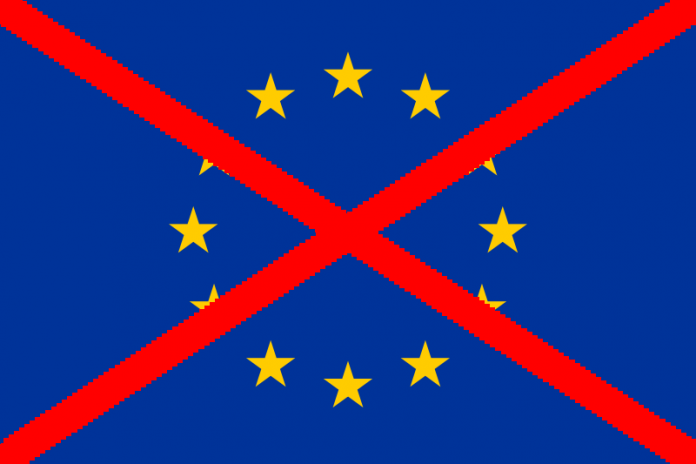
If you are an American who lived on the European Continent, specifically Western Europe, you’re very familiar with an exceptionally sharp strain of anti-Americanism that resides in a significant percentage of their ruling elite – an adult version of the middle school mean girls. Though present in all nations to one degree to another, it is especially acute in Germany and France for slightly different reasons but are all working towards the same goal; degrade American influence in Europe.
The best way for this political and corporate anti-Americanism to find a lever of power is through the the trans-national and anti-democratic modern iteration of the European Union – made even more problematic with the departure of Great Britain who once played a balancing role between the Continental powers as she has for centuries.
Why primarily France and Germany? To start with, this is part of the sibling rivalry between the children of Charlemagne for primacy in Europe that has churned Europe over the last thousand years. The Anglo-Saxons on both sides of the Atlantic kept getting in the way of their return to the struggle.
Their armies under various blood-soaked leaders moved across Iberia to Moscow and back for centuries in order to be THE driver of power in influence on the continent. The European Union, once the “trade association” nose was in the tent, is now seen – fairly – as a mechanism to centralize power so The Smartest People in the Room™ no longer have pesky minor powers and – Buddha forgive – voters getting in their way. Without checks, power only seeks more power for itself. The morphing of the EU is just the latest example.
Not unlike their American counterparts who would like the USA to extract itself from foreign entanglements (NB: as I have written through the years, I am sympathetic/supportive of these efforts), many of the strongest proponents of the EU just want the USA to go home.
The Europeans, while benefiting from the WWII/Cold War leftover presence of the USA, want it to end and the influence that comes with it. If any opportunity to push back against the USA appears, they have their talking points ready to dirty up the reputation and standing of the USA. If that can be done while blaming Eurocrat failures on the USA as well, even better.
You know the Americans, citizens of that mongrel nation whose gene pool is full of religious zealots, failed revolutionaries, slaves, economic refugees, grasping second sons, criminals, and their descendants – spoiled with a continent overflowing with food, water, minerals, forests and open land they don’t even appreciate.
Loud. Fat. Pushy. Americans.
The usual snarled insults cobbled together by smug people who get much of their opinions of the USA by reading The Washington Post or The New York Times. “I know America, I read your newspapers.” That is right after, “I’ve been to America. I spent a week in DC/NYC/Boston/Chicago. I studied a semester at Brown.”
[…]
The smaller European nations don’t trust France and Germany all that much, for good historical reasons. Most of the Europeans in the “new territories” in the east like the USA. They see the Americans as a more reliable guarantee of safety from hostile powers in the East, having a few centuries of experience of the Western European Frankish tribes carving them up for fun and profit – irrespective of local desires. Collectively these nations are not that large in GDP or population – not much more than Italy (for now), but that’s OK. They have the correct geography.
If we shape this relationship correctly, we don’t have to permanently garrison this part of Europe. Poland is already establishing a new paradigm of proper levels of security investment. Once NATO’s eastern front calms down a bit, we can rotate through forces for exercises and training. Perhaps even create some combined training and logistics bases ready to scale up in case of trouble in Mordor. A template we should have put in place in Western Europe decades ago.
Reward positive behavior and let the French and Germans continue their millennium-length struggle – peaceful this time – in the west; keep them frothing in Brussels and Strasbourg while the forward-looking nations try to set up the next thousand years of Western progress in a positive direction.
Perhaps.
November 27, 2022
The Costliest Day in US Marine History – WW2 – 222 – November 26, 1943
World War Two
Published 26 Nov 2022The Americans attack the Gilbert Islands this week, and though they successfully take Tarawa and Makin Atolls, it is VERY costly in lives, and show that the Japanese are not going to be defeated easily. They also have a naval battle in the Solomons. Fighting continues in the Soviet Union and Italy, and an Allied conference takes place in Cairo, a prelude for a major one in Teheran next week.
(more…)
November 25, 2022
The Secret Radio in Auschwitz – War Against Humanity 088
World War Two
Published 24 Nov 2022In Auschwitz the inmates gathering evidence of Nazi crimes score two successes, while the RAF score a direct hit on Goebbels as they set Berlin aflame. In the Pacific the accidental sinking of the SS Suez Maru triggers a Japanese war crime.
(more…)
November 24, 2022
Pavlov’s House, codenamed “Lighthouse” in Stalingrad
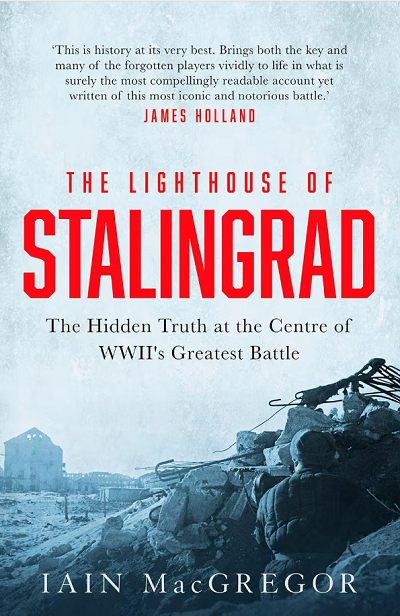
In The Critic, Jonathan Boff reviews The Lighthouse of Stalingrad: The Hidden Truth at the Centre of WWII’s Greatest Battle by Iain MacGregor:
In the summer of 1942, with the German army deep inside the Soviet Union, Adolf Hitler launched Operation Blue, an attack from around Kharkiv in south-east Ukraine across hundreds of miles of steppe towards the oil fields of the Caucasus. Part of the plan required the German Sixth Army under General Paulus to secure the flank by seizing the industrial city of Stalingrad on the banks of the Volga.
By the middle of September Paulus’s troops were fighting their way, street by street, building by building, and sometimes room by room, through a city reduced to ruins by artillery shelling and the bombs of the Luftwaffe. The fighting was ferocious. Although by November most of Stalingrad was in German hands, several pockets of resistance still held out. Meanwhile, the Red Army was secretly massing for a counter-attack in the open terrain on either side of the city.
On 19 November 1942, General Zhukov unleashed a giant pincer attack which quickly overran the Romanian, Hungarian and Italian forces protecting Paulus’s flanks. Within days the German Sixth Army found itself trapped in a giant pocket, cut off from the rest of the German army. Here, in the depths of a Russian winter, nearly 300,000 surrounded men tried to hold out as their supplies of food, fuel, ammunition and medicine dwindled away.
By the end of January 1943, all hope of relief was gone. To Hitler’s disgust, Paulus ordered the remnants of his army to lay down their weapons. Of the 91,000 German soldiers sent into captivity in Siberia, only 5,000 would survive to ever see their homes again. Immense and terrible as the battle was — we will never know exactly how many troops took part, nor how many died, but it is probable that the total of dead, wounded and captured on both sides reached two million — Stalingrad was not the biggest battle of the war, nor even the bloodiest. Nonetheless, it remains, alongside Dunkirk and D-Day, among the touchstones of the Second World War, largely because it encapsulates three linked but distinct stories. Iain MacGregor does a fine job of covering each in his rich study.
First, Stalingrad was one of the most important battles of the war. It marked the high-water mark of the Nazi invasion of the USSR and an end to Hitler’s genocidal dreams of destroying the Soviet Union. Before Stalingrad, and the other crushing defeats the Axis suffered at around the same time in Tunisia and the Solomon Islands, the initiative had always lain with Germany and Japan. Afterwards, the Allies decided where, when and how the war would be fought.
MacGregor establishes this context neatly. He explains with just the right amount of detail why Operation Blue was launched and what it hoped to achieve. He offers a clear discussion of the decisions taken, and mistakes made, on both sides; and he hints at the logistical weaknesses that probably damned the Germans to disappointment from the start.
The strongest point of this book, however, is its description of the street-fighting in the heart of the city around a building known as “Pavlov’s House” (codename Lighthouse: hence the title of the book). Here the German 71st and Soviet 13th Guards rifle divisions fought for months. By focusing on this small area and these two formations, MacGregor is able to dig deep enough into the tactical detail to give us a clear sense of the difficulty, violence and terror of urban warfare, without swamping us with repetitive detail. His descriptions of fighting have a cinematic quality, swooping smoothly from panoramic tracking shots of the initial German charge down towards the waters of the Volga into close-ups of bullet-riddled mannequins fought over in the ruins of a department store.
November 20, 2022
A Conspiracy to kill America’s President? – WW2 – 221 – November 19, 1943
World War Two
Published 19 Nov 2022A torpedo attack against the President; a Marine invasion in the central Pacific that turns very bloody in a hurry; German counterattacks in the Soviet Union; a bombing raid in Italy against a secret weapons site — all of that this week.
(more…)
QotD: The Maginot Line worked
As an aside, the purpose of the Maginot Line was to channel any attack at France through the Low Countries where it could be met head on with the flanks of the French defense anchored on the line to the right and the channel to the left. At this purpose, it succeeded; the failure was that the French army proceeded to lose the battle in the field. It was not the fixed fortifications, but the maneuvering field army which failed in its mission. One can argue that the French under-invested in that field army (though I’d argue the problem was as much doctrine than investment), but you can’t argue that the Maginot Line didn’t accomplish its goals – the problem is that those goals didn’t lead to victory.
Bret Devereaux, “Collections: Fortification, Part III: Castling”, A Collection of Unmitigated Pedantry, 2021-12-10.
November 18, 2022
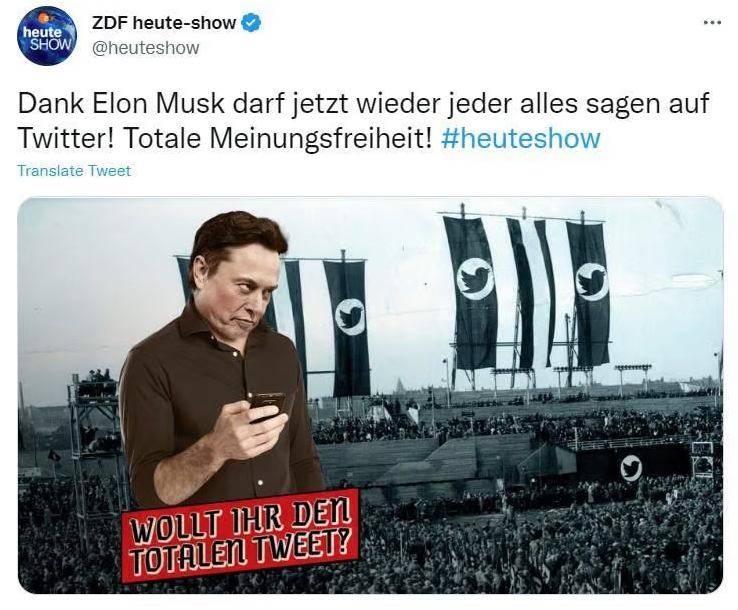
“WOLLT IHR DEN TOTALEN TWEET?“
When German public TV is willing to invoke literal Nazi imagery, you know the Twitter situation has gotten out of hand:
After Germany’s “first” public television network, ARD, compared Elon Musk reducing Twitter censorship to “letting rats out of their holes”, Germany’s “second” public television network, ZDF, has now compared Musk to Nazi Propaganda Minister Joseph Goebbels! (The network’s name Zweites Deutsches Fernsehen literally means “Second German Television”.)
Thus, last Friday, ZDF’s would-be comedy program, the “Heute Show”, posted the below tweet and photoshop.
The Tweet reads: “Thanks to Elon Musk, you’re allowed to say anything again on Twitter! Total freedom of speech! #heuteshow.” The caption, whose color scheme and font invoke Nazi-era propaganda, reads “Do you want total tweet?” It is an allusion to Goebbels’s 1943 speech at the Berlin Sportspalast, in which the Nazi Minister of Propaganda famously shouted, “Do you want total war?” – in response to which audience members leapt to their feet shouting “Yes!” and raising their arms in the Hitler-salute.
The background image appears to show a Nazi Party rally with the swastikas replaced by the Twitter bird logo. Two smaller swastikas are still visible in the lower left-hand corner of the full-size image.
Leaving aside the extreme mental contortionism required to associate freedom of speech with Nazi Germany, if ever there was a don’t-throw-stones-in-glass-houses moment, this was it. For, as so happens, during the Second World War, the founding director of ZDF, Karl Holzamer, himself served in one of the propaganda units that none other than Goebbels’s Ministry of Propaganda embedded with the different divisions of the Germany military.
Holzamer served in a propaganda unit of the Luftwaffe or German air force. As noted in a 2012 article titled “Goebbels’s Soldiers” in the German daily Die Frankfurter Rundschau, Holzamer was embedded with the Luftwaffe during its April 1941 bombing of Belgrade and was “the first” to report on the German subjugation of the Yugoslav capital.
Baltic Peoples Join the SS – War Against Humanity 087
World War Two
Published 17 Nov 2022Hitler forces Himmler to betray his promise of independence for the Baltic states, despite giving the Waffen-SS 40,000 of their young men. Ion Antonescu of Romania decides to save the remaining Romanian Jews to save his own ass.
(more…)
The Model SS41 – A Czech Bullpup Anti-Tank Rifle for the SS
Forgotten Weapons
Published 23 Jun 2017The SS41 was a bullpup, bolt-action antitank rifle manufactured in small numbers by CZ for the SS. Contrary to common assumption, the SS were not a part of the standard German military arms procurement system, and were forced to scrounge for their weapons from other sources. Czech factories were one of the more popular sources, as smaller production lines could escape being integrated into Wehrmacht oversight and were able to contract privately with groups like the SS (the ZK383 as used by the SS is another example of this).
The Model 41 had been in development by the Czech military when the Germans occupied, and it was adapted to the German Patrone 318 cartridge for this production run. That cartridge was also used in the PzB-39, and fired a 220 grain tungsten-cored bullet at 4000 fps — although even this extremely high velocity only allowed it to defeat 30mm of vertical armor at 100m. As with the other antitank rifles of WW2, it would obsolete almost as soon as it was introduced, although it did remain useful for attacking emplaced positions and light armored vehicles (much like the Soviet PTRD and PTRS rifles).
Only a few thousand of the SS41 were manufactured, and they served primarily on the Eastern Front. As a result very few exist in American collections, and this is a particularly excellent example. Thanks to the Institute of Military Technology for allowing me to have access to this very cool AT rifle and bring it to you! Check them out at:
November 16, 2022
The Real Reason for Hitler’s War – WW2 Specials
World War Two
Published 15 Nov 2022The murder of the Jews of Europe is not simply conducted alongside the military and political war aims of the Third Reich. For Hitler and the Nazis, the murder of the Jews of Europe is the military-political aim of the war. It confounds all logic, but in the twisted worldview of Nazi ideology, it makes perfect sense. This is a war on the Jewry.
(more…)
November 14, 2022
The Auschwitz Business Model – War Against Humanity 086
World War Two
Published 10 Nov 2022Hitler commemorates the twentieth anniversary of the failed Beer Hall Putsch, in Auschwitz 50 men are shot in celebration, and Arthur Liebehenschel replaces Rudolf Höss as commandant.
(more…)
November 13, 2022
Kiev Liberated! Celebrations in Moscow! – WW2 – 220 – November 12, 1943
World War Two
Published 12 Nov 2022The Red Army has driven the Axis forces out of Kiev, the third largest city in the USSR. The Allies are also advancing, albeit slowly and at great cost, in Italy, but in the South Pacific, they launch a massive air strike against Rabaul … and what is the result?
(more…)
November 12, 2022
Climate imperialism
Michael Shellenberger on the breathtaking hypocrisy of first world nations’ rhetoric toward developing countries’ attempts to improve their domestic energy production:
What’s worse, global elites are demanding that poor nations in the global south forgo fossil fuels, including natural gas, the cleanest fossil fuel, at a time of the worst energy crisis in modern history. None of this has stopped European nations from seeking natural gas to import from Africa for their own use.
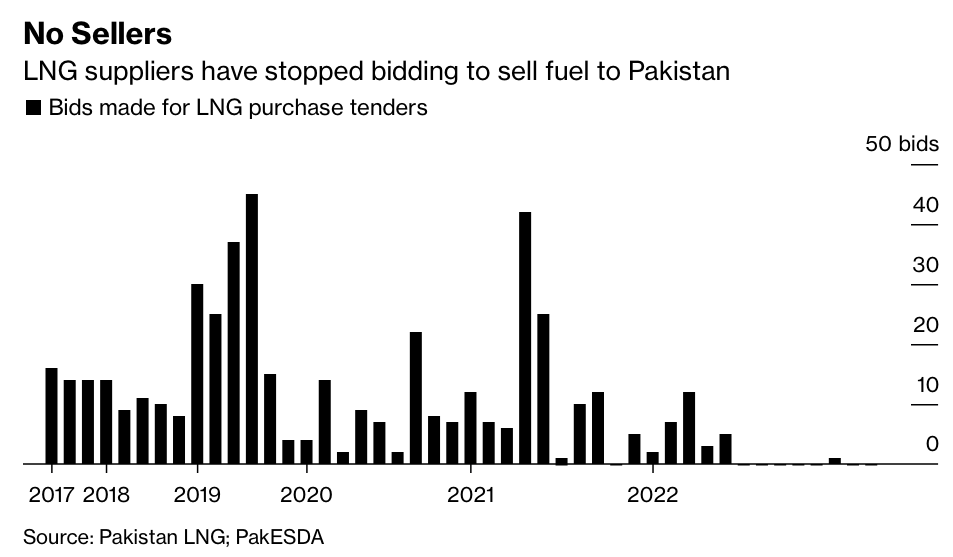
Rich nations have for years demanded that India and Pakistan not burn coal. But now, Europe is bidding up the global price of liquified natural gas (LNG), leaving Pakistan forced to ration limited natural gas supplies this winter because Europeans — the same ones demanding Pakistan not burn coal — have bid up the price of natural gas, making it unaffordable.
At last year’s climate talks, 20 nations promised to stop all funding for fossil fuel projects abroad. Germany paid South Africa $800 million to promise not to burn coal. Since then, Germany’s imports of coal have increased eight-fold. As for India, it will need to build 10 to 20 full-sized (28 gigawatts) coal-fired power plants over the next eight years to meet a doubling of electricity demand.
This is climate imperialism. Rich nations are only agreeing to help poor nations so long as they use energy sources that cannot lift themselves out of poverty.
Consider the case of Norway, Europe’s second-largest gas supplier after Russia. Last year it agreed to increase natural gas exports by 2 billion cubic meters, in order to alleviate energy shortages. At the same time, Norway is working to prevent the world’s poorest nations from producing their own natural gas by lobbying the World Bank to end its financing of natural gas projects in Africa.
The IMF wants to hold hostage $50 billion as part of a “Resilience and Sustainability Trust” that will demand nations give up fossil fuels and thus their chance at developing. Such efforts are working. On Thursday, South Africa received $600 million in “climate loans” from French and German development banks that can only be used for renewables. The Europeans hope to shift the $7.6 billion currently being invested by South Africa in electricity infrastructure away from coal and into renewables.
Celebrities and global leaders say they care about the poor. In 2019, the Duchess of Sussex, Meghan Markle, Prince Harry’s wife, told a group of African women, “I am here with you, and I am here FOR you … as a woman of color.” Why, then, are they demanding climate action on their backs?
The Final Bloody Chapter of Operation Reinhard – War Against Humanity 085
World War Two
Published 9 Nov 2022The genocide of the Jews of Eastern Europe concludes with Operation Harvest Festival — Aktion Erntefest when 42,000 are murdered in the Lublin district.
(more…)


