Quotulatiousness

January 15, 2020

Hundred Years’ War: Battle of Crecy 1346

Filed under: Britain, France, History, Military — Tags: , , , , — Nicholas @ 02:00

Kings and Generals
Published 7 December 2017

The Hundred Years’ War of 1337-1453 between France and England is one of the most crucial conflicts in the history of Europe. It changed the social, political and cultural outlook of the countries involved, influenced the change in warfare, brought the end of feudalism closer. The first phase of this war is called the Edwardian War, and one of the most decisive engagements of this conflict was the battle of Crecy (1346). This series will have 5 videos, so don’t hesitate to like, subscribe and share. And if you want to support us, you can do it on Patreon: http://www.patreon.com/KingsandGenerals or Paypal: http://paypal.me/kingsandgenerals

We are grateful to our patrons, who made this video possible: Ibrahim Rahman, Koopinator, Daisho, Łukasz Maliszewski, Nicolas Quinones, William Fluit, Juan Camilo Rodriguez, Murray Dubs, Dimitris Valurdos, Félix Gagné-Dion, Fahri Dashwali, Kyle Hooton, Dan Mullen, Mohamed Thair, Pablo Aparicio Martínez, Iulian Margeloiu, Chet, Nick Nasad, Jeyares, Amir Eppel, Thomas Bloch, Uri Sternfeld, Juha Mäkelä, Georgi Kirilov, Mohammad Mian, Daniel Yifrach, Brian Crane, Muramasa, Gerald Tnay, Hassan Ali, Richie Thierry, David O’Hare, Christopher Commins, Chris Glantzis, Mike, William Pugh, Stefan Dt, indy, Bashir Hammour, Mario Nickel, R.G. Ferrick, Moritz Pohlmann, Russell Breckenridge, Jared R. Parker, Kassem Omar Kassem, AmericanPatriot, Robert Arnaud, Christopher Issariotis, John Wang, Joakim Airas, Nathanial Eriksen and Joakim Airas.

This video was narrated by our good friend Officially Devin. Check out his channel for some kick-ass Let’s Plays. https://www.youtube.com/user/Official…

The Machinimas for this video is created by one more friend – Malay Archer. Check out his channel, he has some of the best Total War machinimas ever created: https://www.youtube.com/user/Mathemed…

Inspired by: BazBattles, Invicta (THFE), Epic History TV, Historia Civilis and Time Commanders

Machinimas made on the Total War: Attila engine using the great Medieval Kingdoms mod.

Production Music courtesy of Epidemic Sound: http://www.epidemicsound.com

January 14, 2020

The Desert Fox | Rommel’s FIRST Battle in the North African Campaign | BATTLESTORM

Filed under: Africa, Australia, Britain, Germany, History, Italy, Military, WW2 — Tags: , , , — Nicholas @ 04:00

TIK
Published 17 May 2016

Erwin Rommel faces the might of the British Empire. In 3D animation, we’ll see the units, the battlefield and the tactics The Desert Fox uses to overcome the British and Australian forces at Mersa Brega and throw them out of Italian Libya. Except for Tobruk of course! The video covers Erwin Rommel’s arrival in Italian Libya up to the beginning part of the Battle of Tobruk 1941.

This video is Part 2 of the Western Desert Campaign – Part 1 (Operation Compass) is in the link below
https://www.youtube.com/watch?v=b71kd…

Bibliography

Battistelli, Pier Paolo. Erwin Rommel (Command). Osprey Publishing, 2010.
Beckett, Ian F. Rommel: A Reappraisal. Great Britain, 2013.
Beevor, Antony. The Second World War. Phoenix, 2014.
Bickers, Richard Townshend. The Desert Air War: 1939-1945. Endeavour Press Ltd, 2015.
Butler, Daniel Allen. Field Mashal: the Life and Death of Erwin Rommel. Casemate Publishers, 2015.
Dimbleby, Jonathan. Destiny in the Desert: The Road to El Alamein – the Battle that Turned the Tide. Great Britain, 2012.
Liddell Hart, B.H. A History of the Second World War. Pan Books, 2015.
Hastings, Max. All Hell Let Loose: The World at War 1939-1945. HarperPress, 2011.
Jorgensen, Christer. Afrika Korps: Rommel’s 1941 Offensive (Rapid Reads). Brown Bear Books, 2014.
LaFace, Major Jeffrey L. Tactical Victory Leading to Operational Failure: Rommel in North Africa. Pickle Partners Publishing, 2014.
Lyman R. The Longest Siege: Tobruk – The Battle That Saved North Africa. Pan Books, 2011.
Moorehead, Alan. The Desert War: the Classic Trilogy on the North Africa Campaign 1940-43. CPI Group, 2012.
Nash, N. Strafer Desert General: The Life and Killing of Lieutenant General WHE Gott. Pen and Sword Books Ltd, 2013.
Neillands, Robert. The Desert Rats: 7th Armoured Division 1940-45. UK, 2005.
Neillands, Robert. Eighth Army: From the Western Desert to the Alps, 1939-1945. John Murray Publishers, 2004.
Pitt, Barrie. The Crucible of War: Volume 1: Wavell’s Command. Cassell & Co, 2001.
Playfair, Major-General I.S.O. The Mediterranean and Middle East, Volume II, “The Germans come to the help of their Ally” (1941). The Naval & Military Press Ltd, 2004.
Raugh, H. Wavell in the Middle East 1939-1941: A Study in Generalship. USA, 2013.
Reuth, Ralf Georg. Rommel: The End of a Legend. Haus Publishing, 2005.
Thompson, Dennis H. Discarded Victory – North Africa, 1940-1941. Pickle Partners, 2014.
Williamson, Gordon. Afrikakorps 1941-43 (Elite). Osprey Publishing, 2009.

Sir Roger Scruton, RIP

Filed under: Britain, History, Politics — Tags: , , , , — Nicholas @ 03:00

Douglas Murray on the life and work of the British philosopher:

Doubtless there will be some talk in the coming days of “controversy”. Some score settling may even go on. So it is worth stressing that on the big questions of his time Roger Scruton was right. During the Cold War he faced an academic and cultural establishment that was either neutral or actively anti-Western on the big question of the day. Roger not only thought right, but acted right. Not many philosophers become men of action. But with the “underground university” that he and others set up, he did just that. During the ’70s and ’80s at considerable risk to himself he would go behind the Iron Curtain and teach philosophy to groups of knowledge-starved students. If Roger and his colleagues had been largely leftist thinkers infiltrating far-right regimes to teach Plato and Aristotle there have been multiple Hollywood movies about them by now. But none of that mattered. Public notice didn’t matter. All that mattered was to do the right thing and to keep the flame of philosophical truth burning in societies where officialdom was busily trying to snuff it out.

Sir Roger Scruton
Photo by Pete Helme via Wikimedia Commons.

Having received numerous awards and accolades abroad, in 2016 he was finally given the recognition he deserved at home with the award of a Knighthood. Yet still there remained a sense that he was under-valued in his own country. It was a sense that you couldn’t help but get when you travelled abroad. I lost count of the number of countries where I might in passing mention the dire state of thought and politics in my country only to hear the response “But you have Roger Scruton”. As though that alone ought to be enough to right the tiller of any society. And in a way they were right of course. But the point did always highlight the strange disconnect between his reputation at home and abroad. Britain has never been very good with philosophers of course, a fact that Roger thought partly correct, but his own country’s treatment of him was often outrageous. As events of the last year reiterated, he might be invited onto a television or radio programme or invited to a print interview only for the interviewer to play the game of “expose the right-wing monster”. The last interview he did on the Today Programme was exactly such a moment. The BBC might have asked him about anything. They might have asked him about Immanuel Kant, or Hegel, or the correct attitude in which to approach questions of our day like the environment. But they didn’t. They wanted cheap gotchas. That is the shame of this country’s media and intellectual culture, not his.

But if there was a reason why such attempts at “gotchas” consistently failed it was because nobody could reveal a person that did not exist. course Roger could on occasion flash his ideological teeth, but he was also one of the kindest, most encouraging, thoughtful, and generous people you could ever have known. From the moment that we first met – as I was just starting out in my career – he was a constant guide as well as friend. And not just in the big things, but in the small things that often matter more when you’re setting out. Over the years I lost count of the number of people who I discovered that he had helped in a similar way without wanting anyone to notice and expecting no reward for himself.

Theodore Dalrymple describes him as “swimming always against the tide”:

He showed great moral courage throughout his career, swimming against the intellectual tide of his time regardless of the deprecation, insult, denunciation, and even hatred directed at him. For a long time, his very name among much of the British intelligentsia was a byword for political atavism or evil, as if he had been a radical advocate of tyranny and pogroms rather than a defender of freedom and civilized values. At the time of his coming to public notice, much of the intelligentsia refused to believe that a highly gifted and knowledgeable man could also be a conservative. Their own rejection of all that was traditional seemed so self-evidently right to them that they thought that the only possible explanation for someone who valued tradition was obtuseness, moral turpitude — or both.

Scruton’s work was so broad-ranging that the term Renaissance Man seems hardly inappropriate. He published books on Kant and Spinoza, on Wagner’s Tristan and Isolde, on the aesthetics of music and architecture, on animal rights, on wine, on hunting, on the importance of culture, on the nature of God, on man’s relations with animals, and on many other subjects. He wrote novels and short stories of distinction, and two operas. The words of Dr. Johnson’s epitaph for Oliver Goldsmith come to mind: he left scarcely any style of writing untouched, and touched nothing that he did not adorn.

This is not to say that many people, or indeed anyone, would agree with all that he wrote, scarcely to be expected in view of his immense output. He accepted disagreement with equanimity, as the natural and laudable condition and consequence of freedom. Unlike many of his detractors, who affixed labels to him and then believed in their veracity, he was fair-minded to those with whom he disagreed and whose ideas he believed had had a disastrous effect on Western society. In the two editions of his book about thinkers of the New Left, for example, he praised them generously for whatever he considered praiseworthy in them. He paid them the honor of reading their work with attention, trying hard to decipher what it meant (by no means easy, given their frequent resort to high-sounding, multisyllabic verbiage), and refuting what was sufficiently intelligible to be refutable.

January 12, 2020

Fighting Far Away From Home – Allied Advance in Africa – WW2 – 072 – January 11 1941

Filed under: Africa, Britain, China, Europe, Greece, History, Italy, Military, WW2 — Tags: , , , , , — Nicholas @ 04:00

World War Two
Published 11 Jan 2020

Action in Albania. Action in North-Africa. Action in East-Africa. Action in China and action on the Mediterranean. It looks like every belligerent party is amping up its efforts to get a foothold wherever they are. And if your enemy is gaining ground? You just throw more material and men at them.

Join us on Patreon: https://www.patreon.com/TimeGhostHistory
Or join The TimeGhost Army directly at: https://timeghost.tv

Follow WW2 day by day on Instagram @World_war_two_realtime https://www.instagram.com/world_war_t…
Join our Discord Server: https://discord.gg/D6D2aYN.
Between 2 Wars: https://www.youtube.com/playlist?list…
Source list: http://bit.ly/WW2sources

Written and Hosted by: Indy Neidell
Produced and Directed by: Spartacus Olsson and Astrid Deinhard
Executive Producers: Bodo Rittenauer, Astrid Deinhard, Indy Neidell, Spartacus Olsson
Creative Producer: Joram Appel
Post-Production Director: Wieke Kapteijns
Research by: Indy Neidell
Edited by: Daniel Weiss
Map animations: Eastory (https://www.youtube.com/c/eastory)

Colorizations by:
– Dememorabilia – https://www.instagram.com/dememorabilia/
– Julius Jääskeläinen – https://www.facebook.com/JJcolorization/

Sources:
IWM (A 4161), (E 872), (A 4162), (A 9793), (A 13509).
Division Coat of Arms by Noclador
oil barrel by BomSymbols from the Noun Project
can by Anniken & Andreas from the Noun Project

Soundtracks from Epidemic Sound:
– “Arriving in Ancient Rome” – Kikoru
– “Easy Target” – Rannar Sillard
– “Split Decision” – Rannar Sillard
– “Road To Tibet 5” – Rannar Sillard
– “Death And Glory 1” – Johannes Bornlöf
– “The Inspector 4” – Johannes Bornlöf
– “Not Safe Yet” – Gunnar Johnsen

Archive by Screenocean/Reuters https://www.screenocean.com.

A TimeGhost chronological documentary produced by OnLion Entertainment GmbH.

From the comments:

World War Two
3 days ago (edited)
It looks like all fronts are heating up this week. And that the German reaction to the British offensive in North-Africa and the Greek progress in Albania is to move more German troops southward. This week already shows how that potentially threatens Britains position in the Mediterranean. Well, just like the British and Germans, we hope to increase our manpower in 1941. Do your part and expand our community of loyal supporters and history buffs by joining the TimeGhost Army on https://www.patreon.com/timeghosthistory and https://timeghost.tv. The war effort needs you!
Cheers, Joram

January 11, 2020

What does a former royal do?

Filed under: Britain, Government, Media — Tags: — Nicholas @ 05:00

At UnHerd, Douglas Murray discusses membership in the (extended) royal family as a “predicament”:

The royal family at Buckingham Palace for the Trooping of the Colour 2010, 30 June, 2015.
Photo by Robert Payne via Wikimedia Commons.

There is a line in Alan Bennett’s play The Madness of George III which is so good that the makers of The Crown lifted it — without attribution — in their most recent season. The heir to the throne, waiting for Parliament to declare him regent, says that to be Prince of Wales is not a position: “It is a predicament.”

Whether or not that is the case for the current Prince of Wales, it is certainly true for the Sussexes, who have just announced that they are going to step back from public duties in order to become “financially independent”.

Even the most devout republican will recognise that there is something worse than the now-defunct Civil List; something undisguisably worse than members of the Royal Family receiving public subsidy. It is the predicament of Royal privilege.

Such is the cruelty of public life, that people born into a position of undeniable privilege are rewarded — or revenged — by being placed into an impossible situation. If a prince or princess is carrying out public duties, but also having the occasional moment of private enjoyment, they will be lambasted by the press for freeloading and gallivanting on the public’s dime. If they decide to relieve the strains on the public coffers by accepting the largesse of some wealthy individuals, then the same press will attack said royal for freeloading on someone else’s dime, and being caught up with sleazy or shallow celebrity characters.

There is a way out, of course, one demonstrated by Her Majesty the Queen throughout her public life, which has been to doggedly and dutifully carry out an unceasing round of obligations for so many years that in her tenth decade of service, no reasonable person could begrudge her the occasional day off.

But the head of the family is at an advantage. That role is well defined. It is the other royals — especially the “minor royals” — who find themselves in the worst situation. True, there are people — almost everybody else on earth if it comes to that — who are in a materially worse position. But in terms of being born into a difficult role, being born a non-monarch in the royal family must count as among the most impossible to carry out.

In the 1990s, when the Civil List was whittled down, we were given an inkling of how the Sussex situation might play out. Members of the Royal Family, such as the Michaels of Kent, were suddenly expected to strike out on their own; forced to sell their home while the press enjoyed ogling at their embarrassment. When the Michaels had an attic sale, they were attacked for cheapening themselves and the Royal Family by auctioning their possessions. They then attempted to make money through various forms of consultancy and authorship, but every way they turned they were accused of using their position to “cash in”. What else were they to do, though? What other commodity — other than royalty — did they have?

The bubbly 1720s

Filed under: Americas, Britain, Business, Economics, France, Government, History — Tags: , , , , , — Nicholas @ 03:00

In the latest Age of Invention newsletter, Anton Howes looks at Britain’s volatile financial scene in the 1720s:

William Hogarth – The South Sea Scheme, 1721. In the bottom left corner are Protestant, Catholic, and Jewish figures gambling, while in the middle there is a huge machine, like a merry-go-round, which people are boarding. At the top is a goat, written below which is “Who’l Ride”. The people are scattered around the picture with a sense of disorder, while the progress of the well-dressed people towards the ride in the middle represents the foolishness of the crowd in buying stock in the South Sea Company, which spent more time issuing stock than anything else.
Scanned from The genius of William Hogarth or Hogarth’s Graphical Works via Wikimedia Commons.

Over in France, a Scottish banker named John Law had in the late 1710s overseen an ambitious scheme to reorganise the government’s finances. He ran the Mississippi Company, one of the many companies with monopolies on France’s international trade. His scheme was for the company to acquire all of the other similar monopolies, so that it could have a monopoly on all of the country’s intercontinental trade routes. By 1719, the Mississippi Company had swelled into a Company of the Indies, which in turn had purchased the right to collect French taxes, from which it took took its own cut. In exchange for acquiring these monopolies, Law’s new super-monopoly would buy up the French government’s accumulated war debts, allowing repayment on more generous terms. By allowing the state to borrow more cheaply, the scheme was to be a key plank in improving French military might.

Meanwhile, in Britain, a very similar project was afoot. Following the War of the Spanish Succession, one of the things Britain won from France was the asiento – the monopoly on supplying African slaves to Spain’s colonies in America. The asiento was given to the South Sea Company, which had the monopoly on British trade with South America, and which in 1720 began to follow a scheme similar to Law’s. Given developments in France, it would not do for the British state to be left behind in terms of its capacity to take on more debt for war. Thus, with political support, the South Sea Company began to buy up the government’s debt, persuading its creditors to exchange that debt for increasingly valuable company shares.

In 1720, both schemes came crashing down. In the case of Law’s scheme, he had printed paper currency with which people could buy his company’s shares, but in 1720 discovered he had printed too much. When he prudently tried to devalue the company’s shares to match the quantity of paper notes, the devaluation spun out of control. In the case of the South Sea Company, the causes of the crash were a little more mysterious, perhaps even verging on the mundane. One explanation is that too many wealthy investors simply tried to sell their shares so that they would have ready cash to spend on holidaying in Europe, precipitating a minor fall in the share price which then led to a more widespread panic. Regardless, it did not end well. The company itself continued for many years thereafter — it even got involved with whaling off the coast of Greenland — but the collapse of its share price ended its chance to restructure the government’s debts.

January 10, 2020

Brendan O’Neill on “Megxit”

Filed under: Britain, Media — Tags: , , , — Nicholas @ 05:00

He calls the Duchess a “woke Wallis Simpson”:

Prince Harry and Meghan Markle visit Titanic Belfast in March 2018.
Photo from the Northern Ireland Office via Wikimedia Commons.

So Harry and Meghan are stepping back. They’re resigning from The Firm. They’re ducking out of the Sovereign Grant and royal duties and going it alone. They’re going to split their time between the UK and North America – think of all the CO2! – and become more “independent”.

Why? Come on, we all know why. Forget the tripe about them fleeing the racism of the UK tabloids and the nonsense about the first DOC (duchess of colour) not being made to feel welcome in the stiff, white House of Windsor. No, H&M, the most right-on royals in history, are breaking off so that they can foist even more woke bollocks on the plebs without having to worry about receiving a tutting phone-call from Her Maj’s press secretary reminding them that they’re royalty and not virtue-signalling Hollywood celebs.

Megxit, as this royal bombshell is wittily being called, is a striking sign of the times. What Harry and Meghan are doing is virtually unprecedented in the history of the royals. They are jacking in their jobs (I say jobs) as senior royals and pursuing a more “financially independent” path that will allow them to earn, travel and – this is important – jabber on about their pet concerns and causes as much as they like.

Even leaving aside the fact that they won’t actually be financially independent – they’ll still get wads of cash from the Duchy of Cornwall and will still stay in that Frogmore Cottage us British taxpayers just splashed 2.4million quid on – still their move is a startling and concerning one.

What it fundamentally reveals is the incompatibility of the modern culture of narcissism with the values of duty, loyalty and self-negation traditionally associated with royal life. To someone like Meghan, who sprang from celebville, who sees herself as the embodiment of right-on goodness, and who loves nothing more than advertising her eco-virtue and performing her PC credentials, life in the British monarchy was never going to be a good fit.

Yes, the woke agenda Meghan expresses so well shares much in common with the old-world elitism of the monarchical system. Both obsess over inherited characteristics (the woke bang on about race and gender, the monarchy is all about bloodline). Both have a penchant for looking down their noses at the little people. And both have an instinctive loathing for modernity, from Charles’ longstanding conservationism to H&M’s humanity-bashing eco-hysteria.

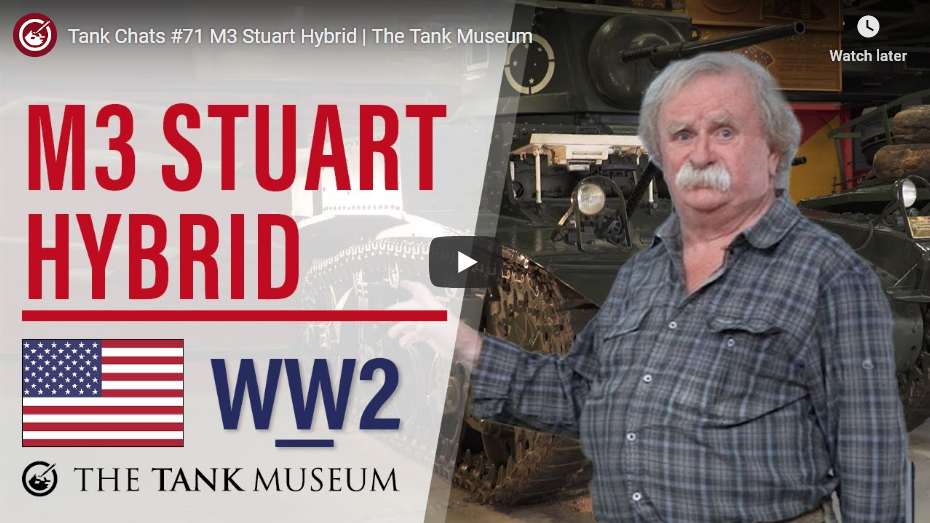
Tank Chats #58 Buffalo & Weasel | The Funnies | The Tank Museum

Filed under: Britain, History, Military, Pacific, WW2 — Tags: , , , — Nicholas @ 02:00

The Tank Museum
Published 28 Oct 2018

Another episode in the Tank Chats Funnies Specials, with David Fletcher looking at the weird and wonderful vehicles of 79th Armoured Division led by Major General Percy Hobart, known as “Hobart’s Funnies”.

The Buffalo, or Landing Vehicle Tracked IV (LVT), is a lightly armoured tracked amphibious carrier. British “Buffaloes” were used in Northern Italy during WW2 and were issued to the 79th Armoured Division in Northwest Europe where they played an important role in the crossing of the Rhine, in 1945. This particular Weasel is amphibious and was used in muddy and wet conditions, rather than directly in water.

Support the work of The Tank Museum on Patreon: ► https://www.patreon.com/tankmuseum

Visit The Tank Museum SHOP: ► https://tankmuseumshop.org/
Twitter: ► https://twitter.com/TankMuseum
Tiger Tank Blog: ► http://blog.tiger-tank.com/
Tank 100 First World War Centenary Blog: ► http://tank100.com/ #tankmuseum #tanks #tankchats

January 9, 2020

Operation Compass 1940-41 | BATTLESTORM North African Campaign Documentary

Filed under: Africa, Australia, Britain, Germany, History, Italy, Middle East, Military — Tags: , , , , — Nicholas @ 06:00

TIK
Published 21 Dec 2015

The most in-depth look at Operation Compass out there! Using animations and detailed maps, let’s find out what happened in one of the greatest British (and Commonwealth) victories of the war and who was responsible for the destruction of the Italian 10th Army. This video covers the start of the North African Campaign up to the Battle of Beda Fomm.

Sources:
Barnett, C. The Desert Generals. Weidenfeld & Nicolson, 2011.
Bierwirth, J. Beda Fomm: An Operational Analysis. Pickle Partners, 1994.
Christie H. Fallen Eagles: The Italian 10th Army in the Opening Campaign in the Western Desert, June 1940. Pickle Partners 1999.
Dimbleby, J. Destiny in the Desert. Britain 2013.
Moorehead, A. The Desert War: The Classic Trilogy on the North Africa Campaign 1940-43. Aurum Press, 2014.
Playfair, I.S.O. The Mediterranean and Middle East Volume 1: Early Successes against Italy [to May 1941]. 1954.
Wahlert, G. The Western Desert Campaign. Australia, 2011.

Music is my own!

Addressing overblown fears of “regulatory divergence” after Brexit

Filed under: Britain, Economics, Europe, Politics — Tags: , , , — Nicholas @ 05:00

Tim Worstall explains why worries about “regulatory divergence” are not very sensible:

So now we get to – having agreed that Brexit is going to happen – having to decide what the new trade deal is going to be. At which point there are all sorts of people insisting that we shouldn’t have regulatory divergence. Yet gaining that regulatory divergence is the very point of our having Brexit. We want to be able to do things differently than the European Union.

Thus this sort of worry is thinking about it the wrong way around:

    Brexit is nearly done, but don’t expect an easy ride on trade. The EU is terrified of regulatory divergence

    We are still very much in the early honeymoon period of the new Government, when flush with a stunning election victory all things seem possible. Even the traditionally hostile Financial Times seems to have been partially won over by the infectious optimism that for now flows through the nation’s veins, warming to some of the opportunities for positive change that Brexit may allow.

    Yet at some stage, with the feelgood mood colliding with harsh realities, there is going to be a comedown. The first of these awakenings is likely to centre on trade.

    In reaching a trade deal with the EU by the end of the year as promised, the Government will either have to compromise on scope for regulatory divergence, …

The point being that since the divergence is the very thing we want it’s not the thing to compromise upon.

Start from the very basics. There is no version of voluntary trade that is worse than autarky. There are versions of trade that are better than simple unilateral free trade. Like, for example, the other people adopting unilateral free trade too.

So, our baseline starting point for any negotiation on trade is that any trade is better than none, but we must measure any specific proposal against the effects of unilateral free trade. If it would be better to have this extra thing then all well and good, let’s have it. But if the conditions attached to that make the overall deal worse than the unilateral position then we should not have it.

For example, UK farm goods gaining tariff and quota free access to the EU would be a nice thing to have. But a likely cost of that is that British consumers would not be allowed tariff and quota free access to the farm goods of the rest of the world. The cost of that second is greater than the benefits of the first – we don’t do it therefore.

On regulation much the same becomes true. The negotiating stance at least. What would be the paradisical effect of a system of perfect regulation? Not that one exists nor ever will but that’s what we need to imagine. Then, anything we’re asked to accept which is worse than this has to be tested for whether what we lose from the restriction is worth what we then gain elsewhere.

Given EU regulation this is always going to lead to the answer “No”.

Martini-Henry I.C.1 Carbine

Filed under: Britain, History, Military, Weapons — Tags: , , — Nicholas @ 02:00

Forgotten Weapons
Published 28 Dec 2014

http://www.forgottenweapons.com

Formally adopted in 1877, the I.C.1 Martini-Henry was formally designated the “Arms Interchangeable, Carbine Breech loading Rifled, with clearing rod Martini-Henry Mk1”. The word “interchangeable” refers to its use for both the artillery and cavalry services, instead of needing a separate design for each, as was typical of military forces at the time. It was chambered for the massive .577/450 cartridge, with a 21.3 inch barrel and an overall weight of 7.5 pounds.

I am shooting it today with 1950s Kynoch ammunition, a batch of which came into the US several years ago and can still be found without much trouble. However, it gave me significant hangfires and split cases, and I would not recommend it.

Theme music by Dylan Benson – http://dbproductioncompany.webs.com

January 8, 2020

Victor Davis Hanson – World War II Leadership

Filed under: Britain, Europe, Germany, History, Military, USA, WW2 — Tags: , , , , — Nicholas @ 04:00

Anang
Published 6 May 2012

If you want to read more about WW2 leadership, read Andrew Roberts Masters & Commanders.

Victor Hanson, a professor emeritus of Classics at California State University, Fresno, lectured to a history class on Masters and Commanders at Hillsdale College. In this fall seminar in classical and military history Professor Hanson examined how leaders, both civilian officials and generals on the battlefield, conducted themselves in wartime. That day’s class focused on Franklin D. Roosevelt and Winston Churchill and how those very different American and British leaders learned to work together to defeat Nazi Germany.

Original link: http://www.c-spanvideo.org/program/29…

January 7, 2020

“HS2 will make the country worse off and should be stopped as soon as possible”

Filed under: Britain, Economics, Railways — Tags: , , — Nicholas @ 05:00

The British government recently reviewed the ever-escalating sums for the proposed HS2 high speed passenger rail connection that began at some £30 billion, then climbed to £50 billion, then £80 billion, and the latest estimate is up to £110 billion. Even by other countries’ high speed rail boondoggles, that is a breathtaking cost escalation. If, as it should, the government cancels the HS2 project, what happens to the money that was budgeted for the fiasco?

The figures used to justify HS2 were “fiddled” and that the project is most unlikely to deliver value for money — that’s the verdict of Lord Berkeley, the deputy chairman of the recent review into the project. He’s right of course and not solely because he’s repeating what I argued more than a year ago.

HS2 will make the country worse off and should be stopped as soon as possible. The government can mourn the money wasted and go off and do something else. Some suggest the HS2 money should be taken and spent on northern railways. Or as Lord Berkeley himself would prefer, on commuter lines in the Midlands.

But those offering these suggestions are making a very fundamental mistake: the real question is not which project most deserves this slab of funding, but whether the state should be spending this money at all.

This is not to say government should not be involved in funding any big infrastructure — everyone except the most hardcore anarchists accepts that state involvement in the economy is sometimes appropriate. But when it does intervene, it ought to be because there is an ironcast case for the betterment of the general population. That’s equally true whether we are talking about taxing to spend money now, or borrowing on the assumption that future benefits will pay back the debt incurred.

So, where does this leave the HS2 money? At some point it was decided that spending £30 billion, £50 billion, £80 billion or now as much as £110 billion on some nice choo-choos was an idea that justified taxing the public. Now it’s clear and obvious that it isn’t. Deciding afterwards that the government must spend all those billions on something else transport-related is missing the point entirely.

Wars of the Roses | 3 Minute History

Filed under: Britain, History, Military — Tags: , , , , — Nicholas @ 02:00

Jabzy
Published 23 Jan 2015

Of course there’s a lot I left out.

And when I say “Lancaster”, it sounds out of place because I had to just record over me continuously saying “Lancashire”.

January 6, 2020

The Nazis, The British Accent, and BBC News

Filed under: Britain, History, Media, WW2 — Tags: , , , — Nicholas @ 04:00

Today I Found Out
Published 29 Apr 2016

In this video:

The British Broadcasting Corporation (BBC) is an institution known and respected the world over for its relative impartiality and objectivity compared to many other news sources, with numerous surveys showing that the BBC is one of the most trusted sources of news in both the UK and the US. But we’re not here to talk about that. We’re here to talk about dinner jackets, Received Pronunciation, the Nazis, and what all of this has to do with the BBC News.

Want the text version?: http://www.todayifoundout.com/index.p…

Sources:

http://www.bl.uk/learning/langlit/sou…
https://books.google.co.uk/books?id=B…
http://www.bbc.co.uk/voices/yourvoice…
https://books.google.co.uk/books?id=Q…
http://news.bbc.co.uk/aboutbbcnews/sp…
https://books.google.co.uk/books?id=c…
http://www.theguardian.com/uk/2008/ap…
https://en.wikipedia.org/wiki/John_Re…

« Newer PostsOlder Posts »

Powered by WordPress