
Behind the veneer of free-market governance is a deep expanse of government involvement in massive areas of the economy, such as the housing market and health care. People don’t make decisions on housing and health-care concerns every day, but when they do, they would benefit from the information that markets provide about whether they can afford a large house or whether a particular drug is worth the price. Government distortion of these key markets has scrambled these signals.
An annual congressional report, “Estimates of Federal Tax Expenditures,” gives insight into how Washington manipulates supply and demand in these sectors. Consider house prices. This year, Washington will pay homeowners $99 billion in forgone taxes to borrow money to purchase or refinance a house or to sell that house and reap the profit. Americans will buy or sell about $600 billion worth of houses this year. Government subsidy, then, represents nearly one-sixth of this market. The federal government also provides a guarantee for most mortgages, thanks to Fannie Mae and Freddie Mac, the two government-supported mortgage companies that benefited for decades from an implicit government guarantee before they got an explicit guarantee during the 2008 financial crisis.
These subsidies have fired the growth of the housing industry. Between 1975 and 1979, the U.S. Treasury paid out $102.6 billion in mortgage-interest breaks in today’s dollars. Between 2015 and 2019, the Treasury will pay out $419.8 billion in such tax favoritism — a more than fourfold rise, nearly ten times the population increase. The hike is particularly extraordinary, considering that in the late 1970s, the annual interest rate on a mortgage was 9 percent, twice what it is today. Taking today’s lower rates into account, Washington has increased the mortgage subsidy more than eightfold.
It’s no surprise that mortgage debt has soared, to $9.5 trillion, from $2.6 trillion in inflation-adjusted dollars in 1981. Back then, mortgage debt constituted 31 percent of our nation’s GDP. Today, it makes up nearly 53 percent. [Dierdre] McCloskey, who thinks that free markets are generally healthy, acknowledges that “there are examples of the price signal not coming through.” The mortgage-interest deduction is “a silly idea,” she says, yet “very hard to change.”
Indeed, government subsidy is a critical factor in whether families can afford to purchase a home, and what kind of home, how large, and in what zip code. The home-mortgage deduction, then, helps determine how people live — yet we barely notice. Few of us consider how the government shapes one of the biggest decisions we’ll ever make, or how the U.S. government’s presence in the housing market maintains the value of our homes.
Nicole Gelinas, “Fake Capitalism: It’s not free markets that have failed us but government distortion of them”, City Journal, 2016-11-06.
September 7, 2018
QotD: Government distortion of the housing market
September 6, 2018
Costs of Inflation: Price Confusion and Money Illusion
Marginal Revolution University
Published on 2 Feb 2017The inflation rate can be somewhat volatile and unpredictable. For example, let’s take the period between 1964 and 1983 in the U.S. The inflation rate jumped around from 1.3% in 1964 to 5.9% in 1970, and all the way up to 14% in in 1980, before dipping back down to 3% in 1983. These dramatic changes, though still fairly mild in the realm of inflation, caught people off-guard.
Peru’s inflation rates in the late 1980s through the early 1990s were on even more of a rollercoaster. Clocking in at 77% in 1986, its inflation rate was already quite high. But by 1990, it had jumped to 7,500%, only to fall to 73% a mere two years later.
High and volatile inflation rates can wreak havoc on the price system where prices act as signals. If the price of oil rises, it signals scarcity of that product and allows consumers to search for alternatives. But with high and volatile inflation, there’s noise interfering with this price signal. Is oil really more scarce? Or are prices simply rising? This leads to price confusion – people are unsure of what to do and the price system is less effective at coordinating market activity.
Money illusion is another problem associated with inflation. You’ve likely experienced this yourself. Think of something that you’ve noticed has gotten more expensive over the course of your lifetime, such as a ticket to the movies. Is it really that going out the movies has become a pricier activity, or is it the result of inflation? It’s difficult for us to make all of the calculations to accurately compare rising costs. This is known as “money illusion” – or when we mistake a change in the nominal price with a change in the real price.
Inflation, especially when it’s high and volatile, can result in some costly problems for everyone. Next up, we’ll look at how it redistributes wealth and can break down financial intermediation.
Trans-partisan planning
At Coyote Blog, Warren Meyer offers a plan to address man-made climate change, pitched to avoid being dismissed as “typical” of one or the other side:
While I am not deeply worried about man-made climate change, I am appalled at all the absolutely stupid, counter-productive things the government has implemented in the name of climate change, all of which have costly distorting effects on the economy while doing extremely little to affect man-made greenhouse gas production. For example:
- Corn ethanol mandates and subsidies, which study after study have shown to have zero net effect on CO2 emissions, and which likely still exist only because the first Presidential primary is in Iowa. Even Koch Industries, who is one of the largest beneficiaries of this corporate welfare, has called for their abolition
- Electric car subsidies, 90% of which go to the wealthy to help subsidize their virtue signalling, and which require more fossil fuels to power than an unsubsidized Prius or even than a SUV.
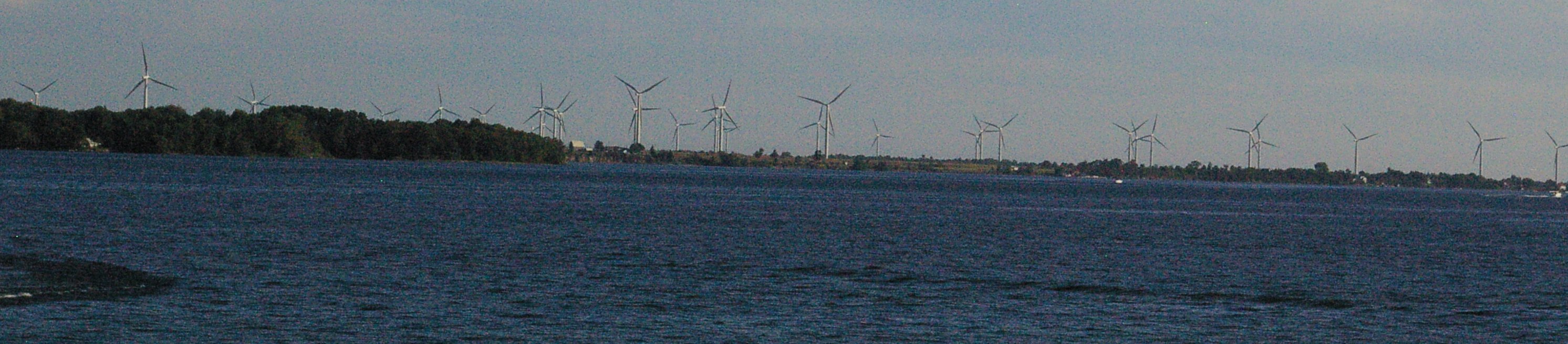
- Wind subsidies, which are promoting the stupidist form for power ever, whose unpredictabilty means fossil fuel plants still have to be kept running on hot backup and whose blades are the single largest threat to endangered bird species.
- Bad government technology bets like the massive public subsidies of failed Solyndra
Even when government programs do likely have an impact of CO2, they are seldom managed intelligently. For example, the government subsidizes solar panel installations, presumably to reduce their cost to consumers, but then imposes duties on imported panels to raise their price (indicating that the program has become more of a crony subsidy for US solar panel makers, which is typical of these types of government interventions). Obama’s coal power plan, also known as his war on coal, will certainly reduce some CO2 from electricity generation but at a very high cost to consumers and industries. Steps like this are taken without any idea of whether this is the lowest cost approach to reducing CO2 production — likely it is not given the arbitrary aspects of the program.
These policy mess is also an opportunity — it affords us the ability to substantially reduce CO2 production at almost no cost.
September 3, 2018
QotD: “Market failure”
It is not too much of an exaggeration to say that markets are considered to fail if and whenever they fail at achieving some ideal, while governments are considered to succeed if and whenever they succeed at achieving anything other than utter chaos and calamity.
Don Boudreaux, “Quotation of the Day…”, Café Hayek, 2016-11-04.
September 2, 2018
Amtrak service and the “takings” clause
Back in August, Fred Frailey reluctantly came to the conclusion that at some point American freight railways are going to have to challenge in court Amtrak’s legislated ability to pre-empt freight traffic on their networks:

Amtrak’s
Eastbound Empire Builder crossing Two Medicine Trestle at East Glacier MT on 20 July 2011.
Photo by Steve Wilson via Wikimedia Commons.
We all know about “taking the Fifth.” It’s our right under the Fifth Amendment to the U.S. Constitution not to be compelled to testify against ourselves. In other words, a court cannot force us to admit to driving 60 mph in a 45-mph zone (or something worse). That amendment has another, less-well-known clause, which says government cannot take away our property without just compensation. Lawyers know this as the “Takings Clause.” The Fifth came to mind the other day as I rode Amtrak’s Empire Builder from Seattle to Chicago. I’ll get to my point, but first the experience.
[…]
All of this did terrible things to our schedule-keeping. By the third morning, as the train approached Devils Lake, N.D., we were more than eight hours late (the next day’s eastbound Builder was even later). But imagine what the Empire Builder does to BNSF’s freights every day. The Amtrak Improvement Act of 1973 reads: “Except in an emergency, intercity passenger trains operated by or on behalf of [Amtrak] shall be accorded preference over freight trains in the use of any given line of track, junction, or crossing.”
BNSF appears totally committed to obedience of this law but doing so devours the capacity of this route. It’s not just that freights give way; whizzing along at a 79 mph versus 55 or 60 for the freights, the Empire Builder eats capacity as if it were two or three freights, Six high-priority Z trains prowl the northern Transcon every day, and I don’t think a single one of them that I observed was moving as we went by. One Z train was sandwiched between two stopped manifest trains, all making way for our Builder.
Obviously, Amtrak pays BNSF for the right to run trains over the freight railroad. But whatever it pays is but a fraction of the cost in delays to its own trains incurred by BNSF. Were the northern Transcon double-tracked all the way, these delays would obviously be minimized. But at $3 million or more a mile, double tracking consumes capital like a dry sponge, and it’s not Amtrak’s capital, either.
So now to my point: Isn’t it fair to say that Amtrak, which the U.S. Supreme Court in 2015 decreed to be an arm of government, is confiscating the property (track capacity) of host railroads? And if it is, shouldn’t the freight railroads be fairly compensated for the delays to their freights caused by the loss of this capacity? Try as I might to say otherwise, I am forced to answer “yes” to both questions.
August 30, 2018
“This is simply drivel. And it’s the standard Green Party phantasm written out again”
Tim Worstall is not impressed with a new study out of Finland which recommends that the United Nations become much more involved in organizing and directing the lives of everyone on the planet … for our own good, of course:

We’ve another of those pieces of environmental drivel on offer to us. Here it’s the considered opinions of some Finnish knownothings on what is necessary to achieve the UN’s Sustainable Development Goals. The basis of which is that we should all prepare to be rather poorer. No, not because the Earth is running out of stuff to make us richer but because our Finnish knownothings are recommending that the UN take charge of things and forcibly make us poorer.
This is perhaps not the correct manner of running the global economy.
[…]
That’s all entirely drivel, of course. Capitalism doesn’t depend upon cheap fossil fuels nor even cheap energy. It’s just an economic system in which we have private property. Including the value added belonging to the people who own the property which adds the value. That’s really all it is too. Profit belongs to the people providing the capital – this is definitional by the way. For that’s what we define profit as, that part of the returns from an activity which go to those who provide the capital.
There is absolutely nothing at all which requires that energy, or any natural resource, be of any particular price nor level of price. All we are saying when we recommend capitalism is that the system seems to work better when those who make a profit get to keep it. Our economic definition of profit being when value of output is greater than the costs of inputs. Who gets those profits is definitional about capitalism. Any and every economic system is trying to produce profits. Because any and every economic system is trying to add value to inputs, trying to create value.
[…]
There’s a remarkable lack of reasoning as to why international trade needs to be limited or regulated. If we’re facing more expensive energy then we should be doing more of it, not less. But then perhaps those doing bio- and physics don’t know that Adam Smith pointed out we’d do better getting the wine from Bourdeaux rather than growing the grapes in Scotland. Or even that David Ricardo launched an entire subset of economics with his observation that trade uses fewer resources than non-trade. I mean, it is possible that they’re just ignorant of the most basic points here, isn’t it?
They’ve also not grasped that good life and economic growth part at all. No one actually producing economic growth – defined, as always, as an increase in the value being produced – does so in order to produce economic growth. They do it in pursuit of their definition of the good life. Economic growth is simply the aggregate of all those people trying to make their own lives better, their pursuit of that good life. The inverse is also true. If we leave people alone to pursue their own versions of the good life then economic growth is what we get. Our bio-p types seem unaware of the laissez faire argument. That we all get richer faster if left alone to our own visions of life?
Now, if this was just a few blokes in the Far North muttering to themselves among the trees of future toilet roll this wouldn’t matter. But this is serious advice to the United Nations? It’s about to become art of how world governance works? Dear God Above, what have any of us one to deserve this?
Try this for example:
A key problem with carbon pricing has been that states, federations, or unions have not implemented it on a sufficiently high level, fearing industrial leakage to less environmentally-regulated countries. For this reason, many economists and politicians hope for global carbon pricing. But if we return to the four examples above, energy, transport, food, and housing, we can see that it would be highly unlikely that even global carbon pricing would guide economic activity in the right direction – at least with sufficient speed and breadth. As a policy tool, carbon pricing lacks the crucial element of coordinating a diverse set of economic actors toward a common goal. Individual actors would have an incentive to decrease carbon emissions, but they would still compete through their own business logics; there would be nothing to ensure that any one business logic would support the transition to sustainability on a systemic level.
Everyone on the planet economises on their carbon emissions because emissions are now more expensive. This does not work to coordinate everyones’ actions about carbon emissions? These people never have considered the role of the price system in coordinating human activities, have they? Not heard a single beanie about Hayek, the Pretence of Knowledge and all that?
August 29, 2018
The Conservative convention, bought and paid for by the friends of supply management
Colby Cosh relates the details of how well stage-managed the Conservative convention in Halifax was … from the point of view of the beneficiaries of supply management:
A copy of a “briefing binder” that the Dairy Farmers of Canada had given to representatives of supply-managed agriculture was carelessly discarded, found by a Calgary delegate named Matthew Bexte, and splattered onto the internet. The contents of the binder describe the strategy and outline the available forces of the supply-management squad. The resolutions being discussed by the convention included one favouring the repeal of expensive tariff protection for Canada’s egg, dairy, and poultry cartels, and the binder lists the particular responses and tactics to be used depending on how far the offending free-trade resolution advanced in the debate.
Which it didn’t. The motion in favour of letting Canadian suckers buy foreign cheese in dangerous unregulated quantities died noisily in a “breakout session,” never even reaching a vote, much less the plenary session of the convention. As the National Post’s uncannily versatile Marie-Danielle Smith documented before the briefing book was leaked, free-trade delegates had already caught the scent of a rat, complaining that the motion had been suppressed through strategic delay by operatives working for party leader Andrew Scheer.
The Dairy Farmers of Canada briefing describes this motion-suppression tactic as “Scenario 2,” calling it a “sub-optimal” outcome: “It buys us (supply-managed farmers) a reprieve, but doesn’t put the issue to rest.” According to the briefing notes, if the motion had passed in the Friday breakout session, that would plunge the world into “Scenario 3.” Under Scenario 3, a Friday evening reception at an Irish pub, with free food and potables, would come into play: quota-sucking farmers and their public-relations goons would have been given a chance to mingle with well-lubricated CPC delegates, with “infographics on a slideshow” pulsing subliminally in the background.
The hope here would be to prevent a devastating “Scenario 5,” in which the destruction of supply management came before the whole CPC assembly for a vote and won it. The prospective talking points accompanying Scenario 5 warn that “Members of the Conservative Party of Canada have sent a clear signal that they do not support Canadian farmers” and they hiss menacingly that “Canadians will remember the position taken by Conservatives today.”
Fortunately, even in the event of a flat-out Scenario 5, there would still be what the book calls the “Safety Net.” The safety net is that annual party conventions are meaningless, expensive balderdash anyway. Or, as the Dairy Farmers of Canada (DFC) book puts it: “The powers of the Leader are far-reaching in preventing a policy from being in the party platform. DFC has been told by the Leader’s office that he will exercise this power … regardless of the outcome at convention.”
Good old Andrew … he knows who put him in his current position and has signalled in advance that he’ll “stay bought”. Too bad for Canadian consumers, but great news for the leeches who benefit from the market distortions of supply management.
August 25, 2018
Mediterranean trade in the Iron Age
Jan Bakker, Stephan Maurer, Jörn-Steffen Pischke, and Ferdinand Rauch look at the relationships between trade and economic growth around the Mediterranean during the Iron Age:
Economists often point out the benefits of trade, yet empirical evidence for these benefits has been hard to come by and tends to be recent. This column goes back to the first millennium BC to analyse the growth effects of one of the first major trade expansions in human history: the systematic crossing of the open sea in the Mediterranean by the Phoenicians. A strong positive relationship between connectedness and archaeological sites suggests a large role for geography and trade in development even at such an early juncture in history.
The effects of free trade inspire a lot of public debate these days, and policies to restrict trade are gaining in prominence. Economists since Adam Smith and David Ricardo have typically pointed out the benefits of trade. Yet empirical evidence for these benefits has been much harder to come by and is much more recent. In particular, empirical economists have tried to demonstrate that more open economies or more integrated markets see faster growth. The relationship between these two variables is not much disputed; the more difficult question is whether this is due to trade causing growth or richer economies being more open.
[…]
To analyse whether this increased trade also caused growth, we exploit the fact that open sea sailing creates different levels of connectedness for different points on the coast. The shape of the coast and the location of islands determineshow easy it is to reach other points, which might be potential trading partners, within a certain distance. We create such a measure of connectedness for travel via sea. Figure 1 shows the values of this measure on a map and demonstrates how some regions, for example the Aegean but also southern Italy and Sicily, are much better connected than others.
We use this measure of connectedness as a proxy for trading opportunities.
Figure 1 Log connectedness at 500km distance
Note: Darker blue indicates better connected locations.
Measuring growth for an early period of human history is more difficult as we have no standard measure of income, GDP, or even population. We quantify growth by the presence of archaeologic sites for settlements or urbanisations. While this is clearly not a perfect measure, more sites should imply more human presence and activity. We then relate the number of active archaeological sites in a particular period to our measure of connectedness.
We find a large positive relationship between connectedness and archaeological sites. The effect of connections on growth in the Iron Age Mediterranean are up to twice as large as the effects Donaldson and Hornbeck (2016) found for US railroads. Although these results are unlikely to be directly comparable, the magnitudes suggest a large role for geography and trade in development even at such an early juncture in history.

Why was Italy so Ineffective in WWII? | Animated History
The Armchair Historian
Published on 27 Jul 2018Potential History’s Video: https://youtu.be/QB2GINNs3Aw
Our Patreon: https://www.patreon.com/armchairhistory
Our Twitter: https://twitter.com/ArmchairHist
Sources:
The Rise and Fall of the Third Reich, William L. Shirer
Fascist Italy’s Military Struggles from Africa and Western Europe to the Mediterranean and Soviet Union 1935-45, Frank Joseph
Hitler’s Italian Allies: Royal Armed Forces, Fascist Regime, and the War of 1940-1943, MacGregor Knox
August 23, 2018
It’s quite possible to spend too much on infrastructure
Tim Worstall on the recent cancellation of two large Chinese infrastructure projects in Malaysia:
A working mantra of our times is that we should all be building much, much, more infrastructure. And that it should be government telling us where and what should be built, even going and building it. All of which rather runs into that brick wall of what is happening with China’s Belt and Road Initiative.
Yes, it’s entirely true that the old Silk Road was a useful and enriching trade route. It’s equally obvious that other trade routes have had the same effect, enriching. That is not though the same as the statement that building a trade link enriches. A trade route which is used does, one that is built still has to be used to enrich anyone other than the constructors who make off with their pay. The measure of whether the Belt and Road Initiative enriches is whether it is used, not whether it is built.
This being something that the planners in China have forgotten. Just as our own home grown ones fail to note our own past problems. The Humber Bridge never even paid back the cost of building it, let alone the interest upon it. Infrastructure doesn’t, necessarily, pay for itself. It is that upon which grand plans fail.
[…]
That it’s too expensive means that it’s not going to make money, not even meet its construction costs. And therefore it shouldn’t be built anyway, should it? Why spend more to build a railway than the benefit to be gained by having a railway? That’s just a waste of resources.
All of which is useful for our own infrastructure fetishists. It’s only if the new stuff is used that it can be worth building it. So, only build that which will be used, not whatever crosses those pretty little synapses of yours. Why, we might even insist that private economic actors put their own money at risk in order to concentrate minds on that very issue, of whether what is to be built will get used. Leave government planning out of it that is, in order to see what is worth building.
August 22, 2018
August 20, 2018
Causes of Inflation
Marginal Revolution University
Published on 24 Jan 2017In the last video, we learned the quantity theory of money and its corresponding identity equation: M x V = P x Y
For a quick refresher:
•M is the money supply.
•V is the velocity of money.
•P is the price level.
•And Y is the real GDP.
In this video, we’re rewriting the equation slightly to divide both sides by Y and explore the causes behind inflation. What we discover is that a change in P has three possible causes – changes in M, V, or Y.
You probably know that prices can change a lot, even over a short period of time.
Y, or real GDP, tends to change rather slowly. Even a seemingly small jump or fall in Y, such as 10% in a year, would signal astonishing economic growth or a great depression. Y probably isn’t our usual culprit for inflation.
V, or the velocity of money, also tends to be rather stable for an economy. The average dollar in the United States has a velocity of about 7. That may fall or rise slightly, but not enough to influence prices.
That leaves us with M. Changes in the money supply are the driving factor behind inflation. Put simply, when more money chases the same amount of goods and services, prices must rise.
Can we put this theory to the test? Let’s look at some real-world examples and see if the quantity theory of money holds up.
In Peru in 1990, hyperinflation came into full swing. If we track the growth rate of the money supply to the growth rate of prices, we can see that they align almost perfectly on a graph with both clocking in around 6,000% that year.
If we plot the growth rates of the money supply along with the growth rates of prices for a many countries over a long stretch of time, we can see the same relationship.
We’ll wrap-up the causes of inflation with three principles to keep in mind as we continue exploring this topic:
•Money is neutral in the long run: a doubling of the money supply will eventually mean a doubling of the price level.
•“Inflation is always and everywhere a monetary phenomena.” – Milton Friedman
•Central banks have significant control over a nation’s money supply and inflation rate.
QotD: Economic refugees wanting to re-create the hell they just escaped from
I can’t tell you now many people I know here in Arizona that tell horror stories about California and how they had to get out, and then, almost in the same breath, complain that the only problem with Arizona is that it does not have all the laws in place that made California unlivable in the first place. They will say, for example, they left California for Arizona because homes here are so much more affordable, and then complain that Phoenix doesn’t have tight enough zoning, or has no open space requirements, or has no affordability set-asides, or whatever. I am amazed by how many otherwise smart people cannot make connections between policy choices and outcomes, preferring instead to judge regulatory decisions solely on their stated intentions, rather than their actual effects.
Warren Meyer, “When You Come Here, Please Don’t Vote for the Same Sh*t That Ruined the Place You Are Leaving”, Coyote Blog, 2016-11-02.
August 19, 2018
Poor whites in the pre-Civil War South
Colby Cosh retweeted this fascinating thread by Keri Leigh Merritt (embed through the ThreadReaderApp):
August 18, 2018
QotD: Adam Smith and Charles Darwin
… today few people appreciate just how similar the arguments made by Smith and Darwin are. Generally, Adam Smith is championed by the political right, Charles Darwin more often by the left. In, say, Texas, where Smith’s emergent, decentralised economics is all the rage, Darwin is frequently reviled for his contradiction of dirigiste creation. In the average British university, by contrast, you will find fervent believers in the emergent, decentralised properties of genomes and ecosystems who yet demand dirigiste policy to bring order to the economy and society. But if life needs no intelligent designer, then why should the market need a central planner? Where Darwin defenestrated God, Smith just as surely defenestrated Leviathan. Society, he said, is a spontaneously ordered phenomenon. And Smith faces the same baffled incredulity — How can society work for the good of all without direction? — that Darwin faces.
Matt Ridley, The Evolution of Everything, 2015.


