
A buddy of mine once joked that the traffic signals, lane markers, etc. in India are the world’s biggest public art installation, since they have exactly the same effect on motorists’ behavior as those butt-ugly steel-and-concrete things your city council keeps insisting on sticking out in front of city hall. Long after I returned from my sojourn in the Raj, friends remarked on my newfound sangfroid. It’s no mystery, I explained to them. Delhi’s a big place, so usually took several autorickshaw rides a day — each and every one of them, by necessity, a dance with the Grim Reaper. As P.J. O’Rourke once quipped back when he was funny, on the Subcontinent it doesn’t even count as a car crash unless there’s probable loss of life involved. Death come for us all, I told my buddies; when my time’s up, my ticket’s gonna get punched regardless.
Severian, “Cars, Bikes, Motorcycles”, Rotten Chestnuts, 2021-07-25.
November 14, 2021
QotD: Traffic in India
November 7, 2021
The Allies Break Through! – WW2 – 167 – November 6, 1942
World War Two
Published 6 Nov 2021After all these months of fighting, the British 8th Army breaks through Erwin Rommel’s Axis positions in North Africa, but the Allies have even bigger plans for that theater of war — a huge invasion of Vichy French North Africa to take place next week. The Soviets also have a plan for a huge invasion to take place very soon near Stalingrad, though the fighting in the city itself sees a lull the second half of this week.
(more…)
November 5, 2021
A United Front Against Nazi Atrocities – WAH 045 – October 1942, Pt. 2
World War Two
Published 4 Nov 2021As the war intensifies on all fronts, the occupied world is aflame with resistance and reprisals. From Paris to Papua New Guinea, Humanity is under attack — but it is also fighting back.
(more…)
November 1, 2021
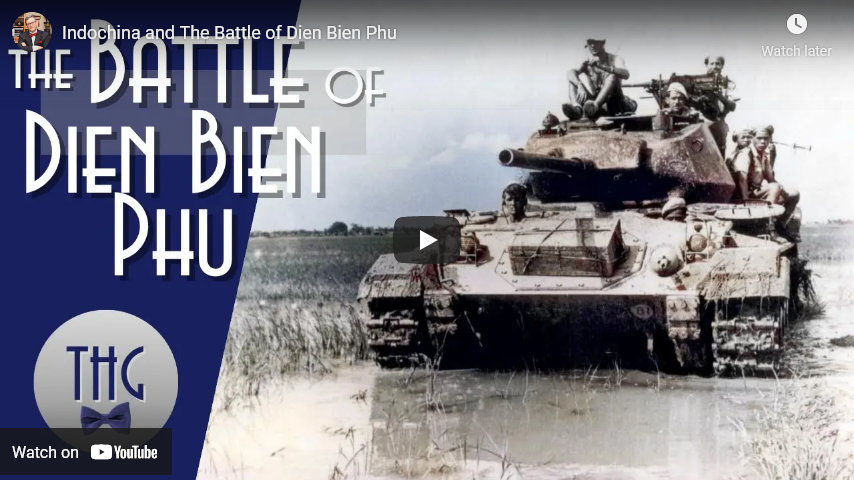
Indochina and The Battle of Dien Bien Phu
The History Guy: History Deserves to Be Remembered
Published 29 Sep 2017The History Guy remembers how decolonization led to proxy war and the Battle of Dien Bien Phu in what is now known as Vietnam.
The episode discusses and presents historical photographs and film footage depicting events during a period of war, which some viewers may find disturbing. All events are described for educational purposes and are presented in historical context.
The History Guy uses images that are in the Public Domain. As photographs of actual events are often not available, I will sometimes use photographs of similar events or objects for illustration.
Patreon: https://www.patreon.com/TheHistoryGuy
The History Guy: Five Minutes of History is the place to find short snippets of forgotten history from five to fifteen minutes long. If you like history too, this is the channel for you.
Awesome The History Guy merchandise is available at:
https://teespring.com/stores/the-hist…The episode is intended for educational purposes. All events are presented in historical context.
#DienBienPhu #militaryhistory #thehistoryguy
October 31, 2021
Nazi General Dies of Heart Attack – WW2 – 166 – October 30, 1942
World War Two
Published 30 Oct 2021The Allies may be on the verge of a breakthrough in North Africa, but they’re losing at sea to the Japanese this week, and the Axis are also advancing in the Caucasus, though the street by street struggle at Stalingrad continues as always.
(more…)
October 27, 2021
Looting WW2 Java Sea Wrecks – “The Biggest Grave Robbery in History”
Historigraph
Published 26 Oct 2021Support on Patreon to help keep the videos coming https://www.patreon.com/historigraph
Come join the historigraph discord: https://discord.gg/cjTaHFNAjS
Buy Historigraph Posters here! historigraph.creator-spring.comFollow me on Twitch for upcoming livestreams! https://www.twitch.tv/historigraph
► Second Channel: https://www.youtube.com/channel/UCpIj…
► Twitter: https://twitter.com/historigraph
► Instagram: https://www.instagram.com/historigraphSources:
[A] Mediacorp documentary on the salvaging: https://www.youtube.com/watch?v=k9iRR…
[B] Footage of the wreck of Prince of Wales, by Nigel Sinclair – https://www.youtube.com/watch?v=YD96F…
[C] Footage of the wreck of Repulse, by Clayton Neilson – https://www.youtube.com/watch?v=T3U_e…[1] https://www.bbc.co.uk/news/world-asia…
[2] https://www.theguardian.com/world/201…
[3] https://www.theguardian.com/world/201…
[4] https://www.theguardian.com/world/ng-…
[5] https://ses.library.usyd.edu.au/bitst…
[6] https://www.reclamet.co.uk/scrap-meta…
[7] https://www.nst.com.my/news/2015/10/n…
[8] https://www.maritime-executive.com/ar…

QotD: China’s single child policy
Another effect is legions of older people with not enough of a younger population to support them, a social security problem that dwarfs any such in the West.
The Chinese solution is likely to be simplicity itself: shoot the punks and let the geezers starve. Either way, it means social upheaval.
J.R. Dunn, “The Myth of China as Superpower”, American Thinker, 2019-01-09.
October 26, 2021
“…watching The Media spin for Brandon; it’s just so Pravda-licious”
Severian manages to find entertainment in the full-blown propagandization of “The Media”, especially during the course of the Wuhan Coronavirus pandemic:
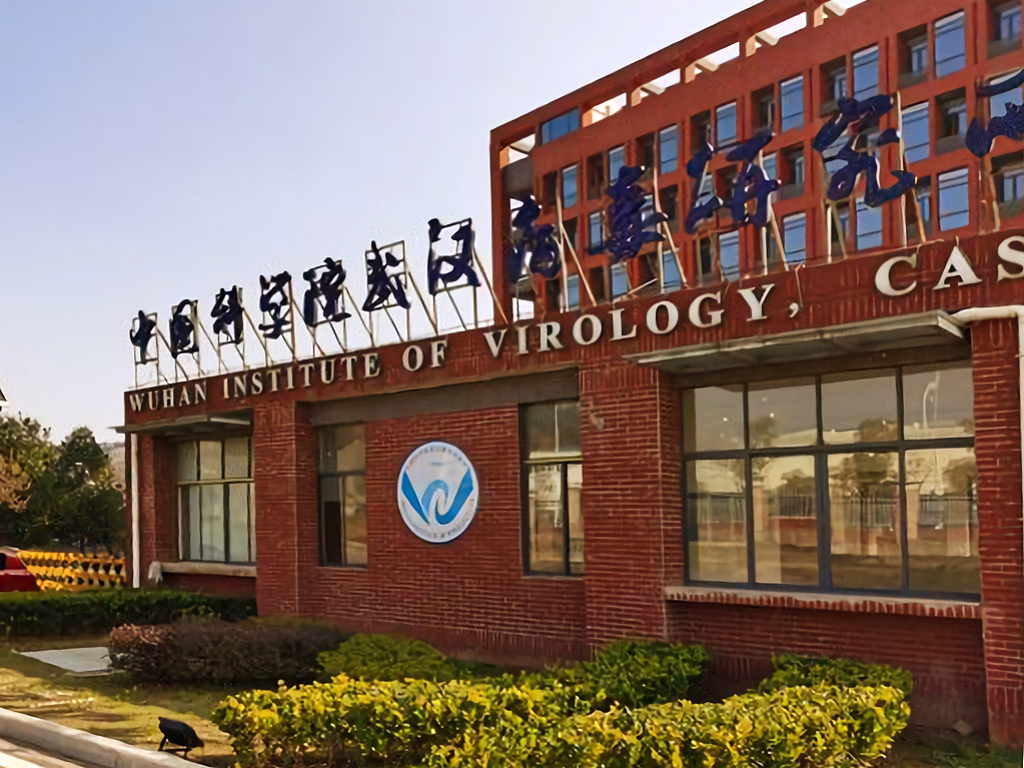
Wuhan Institute of Virology.
Wikimedia Commons.
Back when the Kung Flu nonsense first started, I took it quasi-seriously. Let me clarify: Like America’s greatest philosopher, I assume that everything in the newspaper is 90% bullshit, and I read it because it entertains me. Nonetheless, the bullshit operates on several levels, and it’s important to distinguish between them if you want to extract more than entertainment from it. In the case of Covid, back in the earliest days, I assumed that the bullshit was more top tier — that is, that it was mostly ignorance.
Media people are stupid. We all know that, but unless you’ve been around them (or their inbred, banjo-picking cousins, academics) recently, you probably don’t realize just how stupid they actually are. Remember Michael Crichton’s bit about “Gell-Mann Amnesia“? He said that The Media are so dumb, they routinely get important things not just wrong, but completely backwards: The headline would read the equivalent of “Wet Streets Cause Rain”.
And to be fair to The Media — I know, I know, but again, if you want anything more than a chuckle from the propaganda, you must try — it really did seem to be more ignorance than anything. I’m the kind of guy who needs to pull off a sock every time he has to count past ten, but compared to everyone in The Media I’m Euclid himself. I could see right away that the numbers they were spouting would make Kung Flu exponentially more lethal than even the Black Plague, which would, you know, tend to show up on satellite reconnaissance. And since there’s this thing called “Google Earth” …
But even though I knew right away you’d need to scale back their projections by a factor of about eleventy billion, that wasn’t the end of it, because even doing the necessary mental math to scale it down by eleventy billion — take the cosine, carry the one, divide by zero — it still looked pretty bad. But not “pretty bad” in a factual way. Rather, pretty bad in a second-level bullshit way, the mere propaganda way.
Those were the days, you might recall, when — out of the blue, on a dime — the Official Story changed from “China categorically denies there’s any such thing as germs, much less this particular strain of flu” to “OMG, the Chinese are welding apartment doors shut as people keel over in the streets.” Accompanied, in some cases — and good luck finding those video clips now — with grainy little movies of obvious actors keeling over so hammily, Al Pacino himself would tell them to tone it down. Pravda et al would never have been so crude, but those guys were pros, and as bad as the USSR was, affront-to-basic-intelligence-wise, this is Clown World.
Sure enough, the stories soon came out that China had cornered the market on PPE gear. It was an obvious short con, but remember: Clown World.
This — the CCP cornering the PPE market — soon prompted the third level of Media bullshit, the ideological level. Not content to merely take orders from their Chinese paymasters, the Media, being ideology-addled prize graduates of American “higher” “education”, started taking it upon themselves to lecture us for our own good. Masks, which were once bad, were now good, and if one mask was good, then two were even better! Thus the flood of stories like the one covered at the old RC, where the woman went on about swabbing her eyelids with disinfectant and whatnot. They got their chance to hector us for our own good, and they will never turn that down.
October 24, 2021
Showdown at El Alamein – WW2 – 165 – October 23, 1942
World War Two
Published 23 Oct 2021Could this be the beginning of the big break in North Africa? The Allies have the men, the armor, and the fuel … they just have to deal with the Axis minefields to try and get started. And the Axis are throwing ever more men at Stalingrad as the Soviets grimly hold on. Another roller coaster of a week.
(more…)
October 17, 2021
Stalingrad, Stalingrad, Stalingrad, No Retreat! – WW2 – 164 – October 16, 1942
World War Two
Published 16 Oct 2021The Americans win a naval victory off Guadalcanal and even manage to reinforce the Marines there with the first Army units to arrive, but as the week ends the Japanese launch a major offensive on the island. Meanwhile far across the globe, Adolf Hitler orders that all German offensive operations except those at Stalingrad and in the Caucasus cease. There is plenty to do in Stalingrad, though, because this week all hell breaks loose there.
(more…)
QotD: Like Justin Trudeau, too many western politicians admire China’s “basic dictatorship”
Then there is the Chinese government’s ability to surveil and control their people – for their own good, of course. How many over here would love a Social Credit System, where they can reward and punish people according to government’s priorities, from environmentally-conscious behaviour to public health considerations. In democracies, the people rate their leaders; in China the leaders rate their people. Just imagine how much more effectively our governments and health authorities would be able to to deal with all of us during the current pandemic if they could “see” and “nudge” every individual at every moment and in every situation. The most dangerous virus to come from China recently is not COVID, it’s “socialism with Chinese characteristics” with its siren call of unrestrained power for large sections of our political and economic elites.
Arthur Chrenkoff, “World hearts commies”, The Daily Chrenk, 2021-07-01.
October 15, 2021
Nazis “Restore” Law and Order – WAH 044 – October 1942, Pt. 1
World War Two
Published 14 Oct 2021Resistance against occupation starts rising in the Autumn of 1942. It faces opposition not only from the occupiers, but also from collaborators killing their own countrymen.
(more…)
RV Petrel – The Pac-Man of Wartime Shipwrecks
Drachinifel
Published 13 Nov 2019A quick summation of the excellent work being done by the RV Petrel crew and the Paul Allen Foundation.
Want to support the channel? – https://www.patreon.com/Drachinifel
Want a shirt/mug/hoodie – https://shop.spreadshirt.com/drachini…
Want a medal? – https://www.etsy.com/uk/shop/Drachinifel
Want to talk about ships? https://discord.gg/TYu88mt
Want to get some books? www.amazon.co.uk/shop/drachinifel
Drydock Episodes in podcast format – https://soundcloud.com/user-21912004

October 14, 2021
QotD: Americans’ perception of foreign economic threats
And when it does Americans will learn nothing from their most recent mistake. If people really understood sound economics, they would not continue to make this same mistake again and again.
Robert Higgs, “China — Americans’ Economic Bugaboo du Jour”, The Beacon, 2018-12-19.
October 13, 2021
QotD: The POW/MIA theories from the post-Vietnam War era
It routinely showed up on the “news magazine” shows, and of course there were whole series of movies about it: The Missing in Action flicks with Chuck Norris, Rambo II, I’m sure I’m forgetting a few. And though the “firsthand testimony” for this thesis was always of the “somebody knew somebody who heard from somebody that Lt. Smith suddenly disappeared from a POW camp back in 1968,” there was one seemingly strong piece of archival evidence: The seemingly disproportionate number of soldiers and airmen officially listed as “missing in action”.
And yet … c’mon, man, as a guy who dodged that war probably said back when he could still remember what century he’s living in. Why would the Vietnamese do that? All the mooted explanations — slave labor, selling captured pilots to the Russians for training purposes — didn’t pass the smell test. So a historian started digging into it, and while I read MIA: Mythmaking in America 30 years ago in college, I remember the crux of his argument:
In the war’s early days, the military used a statistic called KIA/BNR — killed in action / body not recovered. Everyone knows Lt. Smith is dead, but since his aircraft was vaporized by a SAM over Haiphong, his remains can’t be returned to his people. As Al notes, though, when a pilot was killed in action, his wife and kids got a puny condolence check from the government and kicked out of base housing. Thus the surviving pilots, acting from noble motives, started fudging. “Well … maybe Lt. Smith’s plane wasn’t vaporized. I might’ve seen a chute. It’s all very confusing; remember I was going Mach 1 at the time, dodging flak …” Mrs. Smith and the little Smiths get to keep drawing a paycheck, keep living on base housing, etc. So the official MIA list grew.
Enter Richard Nixon and that sneaky rat fuck Kissinger. Needing a way to prolong the war while concluding “peace with honor” — that is, to weasel out without seeming too weaselly — they needed a sticking point at the treaty table. The MIA issue was perfect for that. What about Lt. Smith? Of course the Vietnamese government can’t account for him; he was blown to atoms over Haiphong; but there’s his name on the missing list. Perhaps he’s in double secret prison!
And thus “the narrative” — the perfectly understandable-in-context lie that changed KIA/BNR to MIA — became “The Narrative”, that the Vietnamese were, for some unfathomable reason, still hanging on to captured American servicemen. Who knows why those inscrutable Orientals do anything, and what kind of America-hating hippie scum are you to ask questions? Don’t you want to bring our boys back home?
Severian, “Kayfabe”, Rotten Chestnuts, 2021-07-04.


