
World War Two
Published 22 Apr 2023Japan Launches Operation Ichigo in China, their largest offensive of the war … or ever, but over in India things are not going well for the Japanese at Imphal and Kohima. The Allies also launch attacks on the Japanese at Hollandia, while over in the Crimea, the German defenses at Sevastopol are cracking under Soviet pressure.
(more…)
April 23, 2023
The Biggest Offensive in Japanese History – WW2 – Week 243 – April 22, 1944
Comments Off on The Biggest Offensive in Japanese History – WW2 – Week 243 – April 22, 1944
April 21, 2023
Type 94 Japanese 37mm Antitank Gun on Guadalcanal
Forgotten Weapons
Published 30 Dec 2022The Type 94 was the standard infantry antitank gun of the Japanese Army during World Ware Two. It was developed in the early 1930s as tensions with the Soviet Union rose; there had not been much need for Japanese antitank weapons in China. However, high explosive ammunition was also made for the gun, and it was used in an infantry support role with HE in China as well as in the Pacific.
The Type 94 was small and light, and could be disassembled for transportation without vehicles — a very useful capability on islands like Guadalcanal. Against US M3 Stuart light tanks, the Type 94 was a reasonably potent weapon.
Note that the Japanese also had a Type 94 tank gun, which was not the same as this — and did not use the same 37mm cartridge.
(more…)
Comments Off on Type 94 Japanese 37mm Antitank Gun on Guadalcanal
April 19, 2023
The USMC finds a new mission after WW1
Another excerpt from John Sayen’s Battalion: An Organizational Study of United States Infantry (unpublished, but serialized on Bruce Gudmundsson’s Tactical Notebook:
The 1919 demobilization was nearly as traumatic for the Marines as it was for the Army. Their numbers fell from a peak of 75,000 to about 1,000 officers and 16,000 enlisted in 1920. Authorized strength was 17,400. The 15 Marine regiments and at least three, probably four, machinegun battalions existing at the end of November 1918 had withered away to only five regiments and a couple of separate battalions (one artillery and one infantry) by the following August.
Marine commitments, however, remained heavy. The brigades in both Haiti and the Dominican Republic had their hands full suppressing new rebellions. Guard detachments were still needed for Navy bases and Navy ships. The number of men required for the latter duty had fallen by only 10% since 1918. The Marines also had to staff their own bases at Quantico, Parris Island, and San Diego and they had to find men to rebuild the advance base force as well. When these facts were brought to the attention of Congress in 1920 the latter increased the Marine Corps’ authorized strength to 1,093 officers and 27,400 enlisted but then approved funding for only 20,000.
[…]
The bulk of the Corps’ operating forces were still engaged in colonial police work in the Caribbean. However, the new Commandant, Major General John A. Lejeune, was prescient enough to realize that this would not last and that a much more permanent mission would be needed to secure his service’s future. Instead, Lejeune and his advisors concluded that the real mission of the Marine Corps was “readiness”. While this concept might seem trite, one should consider that the United States was and is primarily an insular power. Its standing army in 1920 served primarily as a garrison force and cadre for a much larger wartime citizen army. Little or none of it would be available for immediate use upon the outbreak of a major war beyond the troops already deployed to major US overseas possessions like the Philippines, Hawaii, or the Panama Canal.
Although the Army of 1920 seemed to have little idea about who its future adversaries were likely to be, the Navy had already fingered Japan as its most likely future opponent. Japan had the most powerful navy after the United States and Great Britain and Japanese-American animosity was growing. The Japanese resented the treatment of Japanese immigrants in California. Americans resented Japan’s high handed actions in China. The Japanese saw American criticism of Japan’s China policy as interference in Japan’s rightful sphere of influence. Any war fought against Japan would be primarily naval in character. However, post war disarmament treaties forbade improvements to any American fortresses west of Hawaii. The League of Nations had also mandated most of the central Pacific islands to Japanese control.
If it was to successfully engage the Japanese fleet, or to threaten Japan itself, the United States Navy would need bases in those central Pacific islands. Hawaii was too far away to be useful and the Philippines were too vulnerable to Japanese attack. Only an expeditionary force could seize and hold the central Pacific islands that the Navy needed and that expeditionary force would have to be ready to move whenever and wherever the Navy did. By staying “ready”, requiring only limited reserve augmentation and, being already under the Navy’s control, the Marine Corps would be much better positioned than the Army to provide this expeditionary force, at least during the critical early stages of the next war.*
* Heinl op cit pp. 253-254; Moskin op cit pp. 219-222; and Clifford op cit pp. 25-29 and 61-64.
Comments Off on The USMC finds a new mission after WW1
April 18, 2023
Guadalcanal’s Red Beach Landing: America’s First Offensive in WW2
Forgotten Weapons
Published 24 Dec 2022After (formally) joining World War Two in the wake of Pearl Harbor, the United States endured a series of defeats at the hands of the Japanese. The Philippines garrison fell, Wake Island fell, Guam fell. British possessions in Southeast Asia teetered and fell as well — the campaign was not going well for the Allies.
The first American offensive of the war would come on August 7th, 1942 with the landing of the 1st and 5th Marines at Red Beach on Guadalcanal. Part of a multi-prong assault (the nearby Japanese bases on Tulagi and Gavutu/Tanambogo were also captured at the same time), the attack on Guadalcanal was made to secure the airstrip under Japanese construction there. If the island became an operational Japanese air base, Allied supply shipping to Australia would come under threat, and this could imperil the whole area of operations.
Fortunately for the Marines, US intelligence massively overestimated the Japanese force on Guadalcanal. It was in fact only a few hundred infantry, leading a work force of about 3,000 laborers (mostly Koreans). They thought the US landings were just a small raid, and dispersed into the jungle to wait for the US departure. Instead, the Marines were there to take the airfield and hold it. They were not, however, very well prepared. The Navy suffered a massive defeat in the waters off Guadalcanal the very next night, and would pull out of the area August 9th, leaving the Marines with dangerously low supplies of food, ammunition, and other essentials.
(more…)
Comments Off on Guadalcanal’s Red Beach Landing: America’s First Offensive in WW2
April 16, 2023
4,000 German teens trapped in Tarnopol – WW2 – Week 242 – April 15, 1944
World War Two
Published 15 Apr 2023Thousands of German soldiers, mostly new teenage recruits, are obeying Hitler’s “Fortress Directive” and are surrounded in Tarnopol; it does not go well for them. German forces in Ukraine manage to all pull back across the Dniester, but they are under serious pressure in the Crimea. Meanwhile, in India, the Japanese siege of Kohima continues, and in China they are poised to launch a gigantic offensive.
(more…)
Comments Off on 4,000 German teens trapped in Tarnopol – WW2 – Week 242 – April 15, 1944
April 14, 2023
QotD: The three great strategic sins
The first sin is the sin of of not having a strategy in the first place, what we might call “emotive” strategy. As Clausewitz notes, policy (again, note above how what we’re calling strategy is closest to policy in Clausewitz’ sense) is “subject to reason alone” whereas the “primordial violence, hatred and enmity” is provided for in another part of the trinity (“will” or “passion”). To replace policy with passion is to invert their proper relationship and court destruction.
The second sin is the elevation of operational concerns over strategic ones, the usurpation of strategy with operations, which we have discussed before. This is, by the by, also an error in managing the relationship of the trinity, allowing the general’s role in managing friction to usurp the state’s role in managing politics.
Perhaps the greatest example of this is the Japanese attack on Pearl Harbor; an operational consideration (the destruction of the US Pacific Fleet) and even the tactics necessary to achieve that operational objective, were elevated above the strategic consideration of “should Japan, in the midst of an endless, probably unwinnable war against a third-rate power (the Republic of China) also go to war with a first-rate power (the United States) in order to free up oil-supplies for the first war”. Hara Tadaichi’s pithy summary is always worth quoting, “We won a great tactical victory at Pearl Harbor and thereby lost the war.”
How does this error happen? It tends to come from two main sources. First, it usually occurs most dramatically in military systems where the military leadership – which has been trained for operations and tactics, not strategy, which you will recall is the province of kings, ministers and presidents – usurps the leadership of the state. Second, it tends to occur when those military leaders – influenced by their operational training – take the operational conditions of their planning as assumed constants. “What do we do if we go to war with the United States” becomes “What do we do when we go to war with the United States” which elides out the strategic question “should we go to war with the United States?” entirely – and catastrophically, as for Imperial Japan, the answer to that unasked question of should we do this was clearly Oh my, NO.
(Bibliography note: It would hardly be fitting for me to declare these errors common and not provide examples. Two of the best case-studies I have read in this kind of strategic-thinking-failure-as-organizational-culture-failure are I. Hull, Absolute Destruction: Military Culture and the Practices of War in Imperial Germany (2005) and Parshall and Tully, Shattered Sword: The Untold Story of the Battle of Midway (2005). Also worth checking out, Daddis, “Chasing the Austerlitz Ideal: The Enduring Quest for Decisive Battle” in Armed Forces Journal (2006): 38-41. The same themes naturally come up in Daddis, Withdrawal: Reassessing America’s Final Years in Vietnam (2017)).
The third and final sin is easy to understand: a failure to update the strategy as conditions change. Quite often this happens in conjunction with the second sin, as once those operational concerns take over the place of strategy, it becomes difficult for leaders to consider new strategy as opposed to simply new operations in the pursuit of strategic goals which are often already lost beyond all retrieval. But this can happen without a subordination failure, due to sunk-costs and the different incentives faced by the state and its leaders. The classic example being functionally every major power in the First World War: by 1915 or 1916, it ought to have been obvious that no gains made as a result of the war could possibly be worth its continuance. Yet it was continued, both because having lost so much it seemed wrong to give up without “victory” and also because, for the politicians who had initially supported the war, to admit it was a useless waste was political suicide.
Bret Devereaux, “Collections: The Battle of Helm’s Deep, Part VIII: The Mind of Saruman”, A Collection of Unmitigated Pedantry, 2020-06-19.
Comments Off on QotD: The three great strategic sins
April 9, 2023
New Offensive in the Crimea – WW2 – Week 241 – April 8, 1944
World War Two
Published 8 Apr 2023The Soviets are finally going to try and push the Axis out of Sevastopol and the Crimea. They also continue to drive the Axis back in Transnistria. Over in Burma and Northeastern India, the Japanese have the Allies under siege at not one, but two towns, and are also attacking Imphal from several points, but the Japanese have way bigger future plans up their sleeves in China.
(more…)
Comments Off on New Offensive in the Crimea – WW2 – Week 241 – April 8, 1944
April 6, 2023
Japan is weird, example MCMLXIII
John Psmith reviews MITI and the Japanese Miracle by Chalmers Johnson:
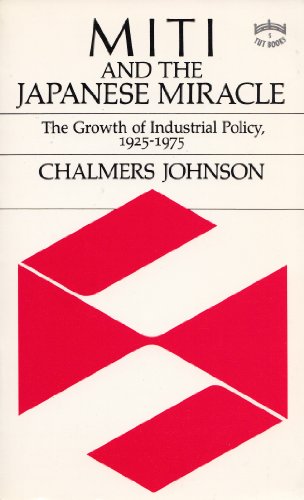
I’ve been interested in East Asian economic planning bureaucracies ever since reading Joe Studwell’s How Asia Works (briefly glossed in my review of Flying Blind). But even among those elite organizations, Japan’s Ministry of International Trade and Industry (MITI) stands out. For starters, Japanese people watch soap operas about the lives of the bureaucrats, and they’re apparently really popular! Not just TV dramas; huge numbers of popular paperback novels are churned out about the men (almost entirely men) who decide what the optimal level of steel production for next year will be. As I understand it, these books are mostly not about economics, and not even about savage interoffice warfare and intraoffice politics, but rather focus on the bureaucrats themselves and their dashing conduct, quick wit, and passionate romances … How did this happen?
It all becomes clearer when you learn that when the Meiji period got rolling, Japan’s rulers had a problem: namely, a vast, unruly army of now-unemployed warrior aristocrats. Samurai demobilization was the hot political problem of the 1870s, and the solution was, well … in many cases it was to give the ex-samurai a sinecure as an economic planning bureaucrat. Since positions in the bureaucracy were often quasi-hereditary, what this means is that in some sense the samurai never really went away, they just hung up their swords — frequently literally hung them up on the walls of their offices — and started attacking the problem of optimal industrial allocation with all the focus and fury that they’d once unleashed on each other. According to Johnson, to this day the internal jargon of many Japanese government agencies is clearly and directly descended from the dialects and battle-codes of the samurai clans that seeded them.
This book is about one such organization, MITI, whose responsibilities originally were limited to wartime rationing and grew to encompass, depending who you ask, the entire functioning of the Japanese government. Because this is the buried lede and the true subject of this book: you thought you were here to read about development economics and a successful implementation of the ideas of Friedrich List, but you’re actually here to read about how the entire modern Japanese political system is a sham. This suggestion is less outrageous than it may sound at first blush. By this point most are familiar with the concept of “managed democracy,” wherein there are notionally competitive popular elections, culminating in the selection of a prime minister or president who’s notionally in charge, but in reality some other locus of power secretly runs things behind the scenes.
There are many flavors of managed democracy. The classic one is the “single-party democracy”, which arises when for whatever reason an electoral constituency becomes uncompetitive and returns the same party to power again and again. Traditional democratic theory holds that in this situation the party will split, or a new party will form which triangulates the electorate in just such a way that the elections are competitive again. But sometimes the dominant party is disciplined enough to prevent schisms and to crush potential rivals before they get started. The key insight is that there’s a natural tipping-point where anybody seeking political change will get a better return from working inside the party than from challenging it. This leads to an interesting situation where political competition remains, but moves up a level in abstraction. Now the only contests that matter are the ones between rival factions of party insiders, or powerful interest groups within the party. The system is still competitive, but it is no longer democratic. This story ought to be familiar to inhabitants of Russia, South Africa, or California.
The trouble with single-party democracies is that it’s pretty clear to everybody what’s going on. Yes, there are still elections happening, there may even be fair elections happening, and inevitably there are journalists who will point to those elections as evidence of the totally-democratic nature of the regime, but nobody is really fooled. The single-party state has a PR problem, and one solution to it is a more postmodern form of managed democracy, the “surface democracy”.
Surface democracies are wildly, raucously competitive. Two or more parties wage an all-out cinematic slugfest over hot-button issues with big, beautiful ratings. There may be a kaleidoscopic cast of quixotic minor parties with unusual obsessions filling the role of comic relief, usually only lasting for a season or two of the hit show Democracy. The spectacle is gripping, everybody is awed by how high the stakes are and agonizes over how to cast their precious vote. Meanwhile, in a bland gray building far away from the action, all of the real decisions are being made by some entirely separate organ of government that rolls onwards largely unaffected by the show.
Comments Off on Japan is weird, example MCMLXIII
April 3, 2023
Goodbye Manstein… Hello Model – WW2 – Week 240 – April 1, 1944
World War Two
Published 1 Apr 2023As the Allies prepare to close in on Germany from all fronts, a shake up of the German military leadership can only achieve so much…
(more…)
Comments Off on Goodbye Manstein… Hello Model – WW2 – Week 240 – April 1, 1944
March 26, 2023
Germany Invades Hungary – WW2 – Week 239 – March 25, 1944
World War Two
Published 25 Mar 2023Germany occupies Hungary this week to prevent any possible Hungarian defection from the war, the Soviets continue pushing back the Axis in Ukraine, pressing them ever more toward Romania, the Japanese advance on Imphal and Kohima continues, but Allied attacks in Italy and Japanese ones on Bougainville come to their ends.
(more…)
Comments Off on Germany Invades Hungary – WW2 – Week 239 – March 25, 1944
March 25, 2023
Beria’s Reward for Ethnic Cleansing – War Against Humanity 100
World War Two
Published 23 Mar 2023Authoritarian regimes on both sides, in the Soviet Union, Nazi Germany, and Imperialist Japan the terror is once again escalating. The bombing war from both sides see continued death of civilians, while Harris of the RAF, Spaatz of the USAAF, and Supreme Allied Commander Eisenhower are getting into a fight about how the bombers should be used for the upcoming D-Day.
(more…)
Comments Off on Beria’s Reward for Ethnic Cleansing – War Against Humanity 100
March 19, 2023
The Japanese Invade India! – WW2 – Week 238 – March 18, 1944
World War Two
Published 18 Mar 2023Operation U-Go, Renya Mutaguchi’s invasion of India, is in full swing this week, as his men aim at Imphal and Kohima; three Soviets Fronts batter their way through the Axis positions all over Ukraine; and there is a huge Allied bombing campaign at Cassino in Italy, which mistakenly kills a lot of Allied soldiers. That’s one busy week.
(more…)
Comments Off on The Japanese Invade India! – WW2 – Week 238 – March 18, 1944
March 16, 2023
Field Marshal Slim’s one and only demotion … from lance-corporal back down to private
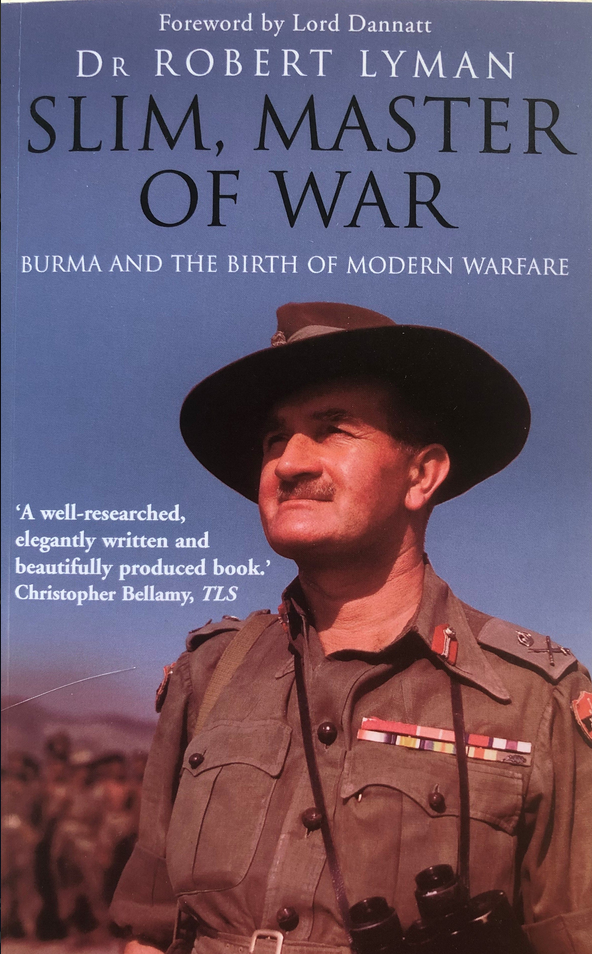
William Slim, arguably the best British general of the Second World War, didn’t have the fastest start to his military career, as recounted in an article by Frank Owen, the editor of the WW2 South East Asia theatre publication Phoenix. This and many others appear in Dr. Robert Lyman’s upcoming book Slim, Master of War:
The General stood on an ammunition box. Facing him in a green amphitheatre of the low hills that ring the Palel Plain, sat or squatted the British officers and sergeants of the 11th East African Division. They were then new to the Burma Front and were moving into the line the next day. The General removed his battered slouch hat, which the Gurkhas wear and which has become the headgear of the 14th Army. “Take a good look at my mug”, he advised. “Not that I consider it to be an oil painting. But I am the Army Commander and you had better be able to recognize me — if only to say “Look out, the old b…. is coming round”.
Lieutenant-General Sir William Slim, KCB, CB, DSO, MC (“Bill”) is 53, burly, grey and going a bit bald. His mug is large and weather beaten, with a broad nose, jutting jaw, and twinkling hazel eyes. He looks like a well-to-do West Country farmer, and could be one. For he has energy and patience and, above all, the man has common sense. However, so far Slim has not farmed. He started life as a junior clerk, once he was a school teacher, and then he became the foreman of a testing gang in a Midland engineering works. For the next 30 years Slim was a soldier.
He began at the bottom of the ladder as a Territorial private. August 4, 1914, found him at Summer camp with his regiment. The Territorials were at once embodied in the Regular Army, and Slim got his first stripe as lance-corporal. A few weeks later he was a private again, the only demotion that this Lieutenant-General has suffered.
It was a sweltering, dusty day and the regiment plodded on its twenty-mile route march down an endless Yorkshire lane. At that time British troops still marched in fours, so that Lance-Corporal Slim, as he swung along by the side of his men, made the fifth in the file, which brought him very close to the roadside. There were cottages there and an old lady stood at the garden gate.
“I can see her yet”, Slim reminisces. “she was a beautiful old lady with her hair neatly parted in the middle and wearing a black print dress. In her hand she held a beautiful jug, and on the top of that jug was a beautiful foam, indicating that it contained beer. She was offering it to the soldier boys.”
The Lance-Corporal took one pace to the side and grasped the jug. As he did, the column was halted with a roar. The Colonel, who rode a horse at its head, had glanced back. Slim was hailed before him and “busted” on the spot. The Colonel bellowed “Had we been in France you would have been shot.” Slim confides, “I thought he was a damned old fool – and he was. I lost my stripe, but he lost his army.” In truth he did, in France in March 1918. Bill soon got his stripe back.
Now in this corner of Palel Plain, one of India’s bloodiest battlefields and the scene of one of his greatest victories, Slim tells the officers and men of the 11th Division, “I have commanded every kind of formation from a section upwards to this army, which happens to be the largest single one in the world.” (At that time, Slim had under his command half a million troops.) “I tell you this simply that you shall realize I know what I am talking about. I understand the British soldier because I have been one, and I have learned about the Japanese soldier because I have been beaten by him. I have been kicked by this enemy in the place where it hurts, and all the way from Rangoon to India where I had to dust-off my pants. Now, gentlemen, we are kicking our Japanese neighbours back to Rangoon.”
Slim commanded the rear guard of the army that retreated from Burma in 1942. He is proud of that. His men marched and fought for a hundred days and nights and across a thousand miles. But this retreat was no Dunkirk. Says Slim “We brought our weapons out with us, and we carried our wounded, too. Dog-tired soldiers, hardly able to put one foot in front of another, would stagger along for hours carrying or holding up a wounded comrade. When at last they reached India over those terrible jungle mountains they did not go back to an island fortress and to their own people where they could rest and refit. The Army of Burma sank down on the frontier of India, dead beat and in rags. But, they fought here all through the downpour of the monsoon, and they saved India until a great new Army – which is this one – could be built up to take the offensive once again. In those days, if anyone had gone to me with a single piece of good news I would have burst out crying. Nobody ever did.”
He tells another story. One day he entered a jungle glade in a tank. In front of him stood a group of soldiers, in their midst the eternal Tommy. Assuming an optimism which he did not feel, Slim jumped out of the tank and approached them. “Gentlemen!” he said (which is the nice way that British generals sometimes address their troops) “Things might be worse!”
“‘Ow could they be worse?” inquired the Tommy.
“Well, it could rain” said Slim, lightly. He adds “And within quarter of an hour it did.”
Comments Off on Field Marshal Slim’s one and only demotion … from lance-corporal back down to private
March 12, 2023
Zhukov hits the Ground Running – WW2 – Week 237 – March 11, 1944
World War Two
Published 11 Mar 2023The Soviets launch not one, not two, but three offensives in Ukraine this week, designed to destroy the entire southern wing of the German forces. The Japanese counterattack against the Americans on Bougainville finally begins after months of preparations, but there are more Japanese attacks elsewhere that get going: the operation to invade India.
(more…)
Comments Off on Zhukov hits the Ground Running – WW2 – Week 237 – March 11, 1944
March 11, 2023
Why Japan Surrendered in WW2: Stalin or the Bomb?
Real Time History
Published 10 Mar 2023
It’s common wisdom that the nuclear bombs dropped over Hiroshima and Nagasaki caused the Japanese surrender at the end of the 2nd World War. However, there has been a fierce historical debate if this narrative omits the role of the Soviet invasion of Manchuria in August 1945 — or if this invasion was actually the main cause for the surrender.
(more…)
Comments Off on Why Japan Surrendered in WW2: Stalin or the Bomb?


