
Quotulatiousness

June 10, 2025

Mark Carney’s big defence spending announcement

Filed under: Cancon, Government, Military — Tags: , , , , , — Nicholas @ 05:00

On Monday Morning, Prime Minister Mark Carney was in Toronto to make a major announcement on Canada’s military spending. After being one of the worst freeloaders in the western alliance, Canada was spending far less on the Canadian Armed Forces than the 2% of GDP we’d promised our NATO partners several years ago. Of course, at the same time that Canada seems to be finally getting serious about defence priorities, the rest of our allies are talking seriously about raising the agreed-upon target to 5%:
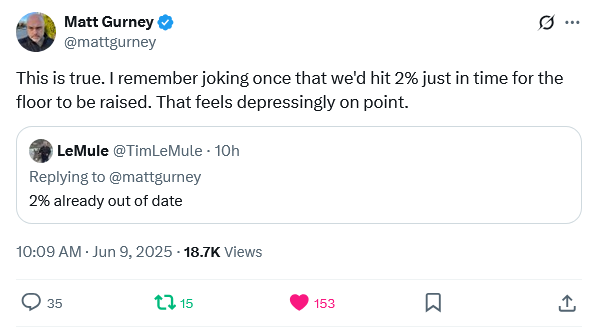
Chris Lambie in the National Post says it’s a C$9 billion bump in direct military spending in this (unbudgeted) year:

Canada’s plan to add more than $9 billion to defence spending this year was praised by military watchers Monday, but they cautioned that the country is shooting at a moving target.

Prime Minister Mark Carney announced the country would meet its commitment in this fiscal year of hitting the two per cent of gross domestic product mark that was agreed upon by NATO countries more than a decade back.

“It’s very encouraging that the prime minister has come out this early in his mandate and made such a strong commitment to defence,” said Vincent Rigby, a former top intelligence adviser to former prime minister Justin Trudeau, who spent 14 years with Canada’s Department of National Defence.

“You’ve gone from the former prime minister talking about the two per cent as a crass mathematical calculation to the current prime minister saying, no, this is actually a serious commitment. We committed to it 10 years ago and even before that. And we have to do it because we owe it to our allies. But we also owe it to the Canadian people. He made it quite clear this is about protecting Canada, protecting our national interests and protecting our values.”

New spending could do a lot to improve crumbling military infrastructure, said Michel Maisonneuve, a retired Canadian Army lieutenant-general who has served as assistant deputy chief of defence staff, and chief of staff of NATO’s Allied Command.

“The housing on bases is horrible,” Maisonneuve said.

He’s keen on Carney’s plan to participate in the $234-billion ReArm Europe program.

“This will bolster our ability to produce stuff for ourselves” while also helping the Europeans to do the same, Maisonneuve said.

“All the tree huggers are going to hate that, but that’s where we are today in the world.”

Carney’s cash injection includes $2.6 billion to recruit and retain military personnel. The military is short about 13,000 people. It aims to boost the regular force to 71,500 and the reserves to 30,000 by the end of this decade.

“There is no way we can protect Canada and Canadians with the strength that we have now,” Maisonneuve said.

Later in the day, Matt Gurney made some preliminary comments on the social media site formerly known as Twitter (I imagine he’ll have more to say in an upcoming Line post):

I’ve had a chance to actually look at some of the details of what was announced today for Canada’s defence. Overall, I am very supportive of everything that’s been announced.

There are some caveats. Or at least notes.

1. The new spending is mostly aimed at flushing out existing capabilities, not adding new ones.

That’s fine! We need to do that, definitely. I just don’t know if the public understands how much money we could sink into the military without actually adding any new capabilities. All we would do is backfill capabilities that we currently claim to have that don’t really exist.

2. Billions of additional dollars are going toward very basic things. More money to retain existing personnel. Apparently more money to build out recruitment. Spending more money to bring equipment and facilities up to state of proper repair.

Same as above. All good! Needed. Smart.

3. Some of what’s being announced today is entirely a matter of how we’re budgeting stuff. Certain existing expenditures are being redesignated as defence expenditures.

That’s okay! Some of our allies count things toward their defence total that we don’t. Everybody cooks the books a little bit, and I have no objection to this.

4. Everything being announced today should have been done years ago.

The only note I really have to add here is how the longer [Mark Carney] is Prime Minister, the harder it gets to explain away some of the shocking inactivity of his immediate predecessor.

5. None of this is going to be enough.

Remember, all we’re doing here is building out existing capabilities so that they are actually real things, not just things that exist on paper. That’s good. But the actual work of recapitalizing, expanding and adapting the military for 21st-century conflict hasn’t really begun yet. Everything announced today is a necessary start to getting that done. But the hard work is still to come.

And so are the really eye-watering numbers.

Of course, there are definite downsides to just opening up the spending taps the way things currently are set up:
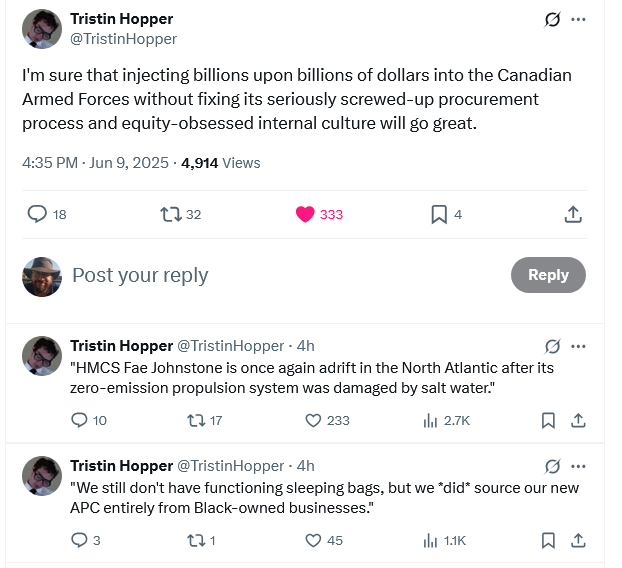
He’s not wrong.

How Moscow Got the Atomic Bomb – W2W 31

TimeGhost History
Published 8 Jun 2025

In 1949, the Soviet Union detonates its first atomic bomb — years ahead of Western expectations. This episode dives into how the USSR mobilized former Nazi scientists, forced Soviet physicists into secret cities, and relied on intelligence from spies like Klaus Fuchs. While Stalin pushes for rapid progress, Beria enforces brutal discipline, and Soviet scientists race to meet an impossible deadline. The nuclear balance of power is about to shift — forever.
(more…)

The limits of female empathy

Filed under: Books, Health, USA — Tags: , , , , , , — Nicholas @ 03:00

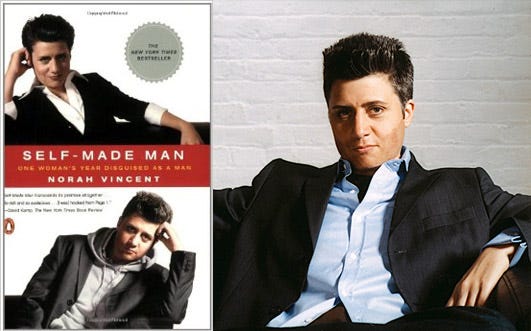
Janice Fiamengo discusses the 2006 book Self-Made Man: One Woman’s Year Disguised As A Man by journalist Norah Vincent. Intended as a kind of exposé of male privilege, her investigations turned into something rather different than she originally intended:

    Many men are lonely. Many don’t like the work they do. Many are unhappily married. They struggle with an at-times overwhelming sex drive. Their encounters with women, romantic or otherwise, often involve rejection and contradictory tests of their masculinity. They are the objects of blame and bigotry in their societies, yet are expected to remain stoic and put women’s needs first.

It’s a strange world in which the above observations — by a woman — are seen as outstanding insights, but it’s the one we’re in.

In 2006, American journalist Norah Vincent published Self-Made Man: One Woman’s Year Disguised As A Man, an under-cover adventure in which the author, a mannish lesbian with big feet, spent close to 18 months periodically disguised as a man named Ned, notching up about 150 episodes in drag.

With breasts flattened, fake stubble on her chin, and a stuffed jock strap in her pants, having hired a tutor to teach her how to pitch her voice low and move like a man, she set out to “infiltrate exclusive all-male environments and if possible learn their secrets” (p. 18). She joined a bowling league, went on dates, did sales calls, spent some weeks at a monastery, and attended a Robert Bly-influenced men’s wilderness retreat.

Expecting to learn something about male power, she found instead “the hidden pain of masculinity and my own sex’s symbiotic role in it” (p. 254). The planned exposé became a feminist mea culpa.

The book got a lot of attention when it was published, and many men expressed gratitude and appreciation for the empathy and insight in Vincent’s work.

Reading the many accolades, I felt sadness, tenderness, and amazement. Wasn’t this a bit much? Was it really so remarkable that a woman could develop sympathy for the opposite sex?

Most men are so unaccustomed to any empathy from a woman, even when it’s mixed with patronizing descriptions and questionable conclusions, that they respond as if to heroism. The woman who cares, even within circumscribed limits, is catapulted into the company of the saints.

Imagine the reaction if a man had masqueraded as a woman for a year or more, and then pretended to understand women (even sympathetically) using a shop-worn ideological framework? Imagine a white person putting on blackface in order to become an expert, even a well-intentioned one, on the need for black self-improvement? There would be howls of outrage and indignant rebuttals, especially by members of the impersonated group.

Not in Vincent’s case. So rare is a woman’s attempt to understand male experiences that she doesn’t need to be consistently sympathetic or accurate.

Even when someone goes beyond temporary male drag, there is a palpable surprise that mens’ lives are not a well-watered garden of male privilege:

Today, of course, there is still always a reason to look away from men’s pain. Feminist-inclined men and women routinely “bathe in male tears“. They claim that discussing men’s issues is misogynistic, and ask “Can White Men Finally Stop Complaining?” No wonder it seems that the only time men can be heard is when women speak for them.

Notably, women who “transition” to male through hormone treatments and surgery are often shocked by the indifference and unkindness they encounter in public, where men are not eager to help and women expect deference. Zander Keig wrote as a trans man in “Crossing the Divide” of a pronounced sense of aloneness: “No one, outside of family and close friends, is paying any attention to my well-being”.

They Live SG-1: Conquest and Paternalism

Filed under: Media, USA — Tags: , , , — Nicholas @ 02:00

Feral Historian
Published 26 Jan 2024

Stargate and SG-1 generally don’t go together, but they’re based on the same underlying premise. Our leaders are lying to us, denying us knowledge of fundamental truths about our world. Truths that can be the difference between freedom and slavery for all of humanity.

Sidenote, this is the first time I’ve shot one of these videos indoors instead of in the mountains. It’s -24 out on the day of recording.

00:00 Intro
01:05 Stargate
03:11 Ruling Class
04:18 Secrets
06:02 Illusions
06:48 Conclusion

QotD: From Witan to Magna Carta

Filed under: Britain, Government, History, Quotations — Tags: , , , , , , — Nicholas @ 01:00

About 1,500 years ago, in Saxon England, the nobles of the realm, the bishops, abbots (and abbesses) and the ealdormen and thegns and others would gather, fairly regularly, in an assembly to advise and, sometimes, to constrain the king. In a very typically English manner, they hit upon the notion that the kings were not, generally, wicked or stupid, but they did too many dumb things just because they could. The reason that kings could, too often, do whatever they wanted was simple: they had an almost unlimited power to levy taxes.

After a few hundred years of trial and error, and given a king who really was wicked and stupid, too, they, the barons as they were then known, went to war with their king and bent him to their will by forcing him to agree to a great charter of their rights. There was a bit of ringing language about no free man being taken except after a trial by a jury of his peers, but, basically, in very typically English fashion, the rights about which the great charter was most concerned were property rights because the barons had learned, over the centuries that only by controlling the pursestrings could they really control the king.

A few hundred years later, one of liberalism’s and democracy’s greatest voices told us that we have three absolutely fundamental, natural rights: to life, to liberty and to property. These rights were not and still are not unlimited. There were and are ways to lawfully and properly deprive a person of his property and his liberty and, in some countries, even his life.

A few centuries after John Locke another philosopher wanted to do away with the right to property: “From each according to his ability, to each according to his need”, Karl Marx wrote, and many, far too many, believed. The only real problem with Marx’s notion is that it requires that humans are perfect … and most of us know how rare that is. Here in Canada, especially since the early years of the 20th century, we have had far too much Marx and far too little Locke.

Ted Campbell, “Democracy is in peril”, Ted Campbell’s Point of View, 2020-06-12.

Powered by WordPress


