
Real Time History
Published 4 Oct 2024In 1953, Iran is at a crossroads. After decades of interference by foreign powers eager to exploit its oil reserves, the government decides it will throw them out and take control of the country’s wealth. But with the super powers’ Cold War paranoia and thirst for oil, it won’t be easy – especially once the CIA gets involved.
(more…)
February 22, 2025
How the US Turned Iran Into a Dictatorship
Comments Off on How the US Turned Iran Into a Dictatorship
QotD: Modern journalism
We Americans are truly blessed by having a mainstream media full of brilliant renaissance men, women, and gender non-specific entities who are masters of so many varied and intermittently useful skills and who are eager to share their knowledge with us benighted souls. The pandemic has revealed that every urban Twitter blue check scribbler, MSNBCNN panelist, NYT/WaPo doofus, and barely legal “senior editor” of a website you never heard of, is a Nobel Prize-winning epidemiologist, a master logistician, and a diversity consultant to boot.
They may all be lousy journalists, but damn it, they are also lousy at other jobs that they didn’t even pretend to train to do.
It’s awesome to see people with zero life experience in any relevant field weighing in as if we shouldn’t just laugh in their pimply faces. Here’s the typical resume of one of these hacks:
- Went to high school, and never went to parties
- Went to college, majored in journalism, and never went to parties
- Went to journalism grad school, and never went to parties
- Works in the media, and goes to Manhattan/Georgetown cocktail parties
This apparently qualifies them to explain to people like us who have actually done something in our lives how stuff is supposed to work.
Kurt Schlicter, “Our Super Smart Elite Shines During This Pandemic!”, TownHall.com, 2020-04-02.
Comments Off on QotD: Modern journalism
February 21, 2025
“… a sea change in American foreign policy priorities”
Theophilus Chilton on how the markedly changed US foreign policies under Donald Trump are roiling the old certainties of so many western “transnational” elites:

Last Friday, an event occurred which represents a sea change in American foreign policy priorities, but the importance of which may have been missed by many. Vice-President Vance gave a speech at the Munich Security Conference. In this speech, he basically pulled no punches, calling out the various Western European governments for their support for mass immigration, their opposition to free speech, and the erosion of democratic functions within their governments. The speech itself presented a stark contrast between the new American administration and the “leadership” that currently exists in most European countries. It represents a decisive rupture between an American executive which is in the process of refuting the influence of a globalist transnational “elite” over its country and European governments which are still firmly ensconced in that elite’s thrall.
The thing is, Vance was pretty much right about everything he said. Mass immigration, especially that part of it coming from Africa and the Muslim world, is absolutely destroying the social fabric of every European nation as well as dragging down their standards of living toward third world levels. Euro governments, in fact, do absolutely hate freedom of speech and apply strictures that medieval monarchies would never have dreamed of instituting. For all their talk about the importance of democracy and the “threat” to it represented by Trump and his administration, Euro countries make an absolute mockery out of the entire concept. Those European slaves of the globalists can grumble and sit there aghast at Vance’s words, but the simple fact of the matter is that he was right in every way in the criticisms he leveled against them.
After all, these are the people who overturn Romanian elections because actual Romanians voted for the wrong person — all to “defend democracy”. These are the people who ban political parties to “defend democracy”. These are the people who let “migrants” stab little girls to death to “defend democracy”. These are the people who arrest Christians for singing hymns on a public street to “defend democracy”. These are the people who do armed midnight raids and throw people into prison for sharing memes on social media to “defend democracy”. You get the picture. Populism and popular sovereignty are such a threat to these regimes because their democracy is a sham, a foil used to give a pretended legitimacy to globalist policies which are destroying the actual people of these various countries.
For all the breathless hyperventilating about Russia “invading Europe” (which it is in no position to do, LOL), the fact is that there is nothing that the Russians could do to the people of Europe that would be worse than what their own governments already subject them to.
What makes this all the more amusing is the excited “nationalism” we’ve been seeing from the lefties and globalists in several of the countries that have been in the Trump/Vance crosshairs over the past month. A good example would be in Canada, in response to the tariff threats that Trump made to try to push the Canadian government into being a little more proactive about securing their side of the border from the fentanyl and illegal aliens that enter the USA. Watching the Canadian government fall all over itself trying to fake an exuberant pride in their Canadian-ness, even as they continue to turn their country into an Indian colony and treat their own White Canadian population like a bunch of expendable paypigs has been enlightening, to say the least. Obviously, what’s driving the reaction is not a genuine love of country or people, but loyalty to the transnational elite that is piqued at recently being disempowered in the USA.
In all of this, it’s important to remember that the enemies here, the people who deserve our ire and derision, are not the peoples of Canada, the UK, the European countries. It is the transnational clique and their progressive Left hangers-on, the same people who were until very recently doing the exact same things to the American people, too. We need to be very clear that regular, everyday Americans and regular, everyday Frenchmen, Germans, Canadians, Italians, and all the rest are on the same side here. We have the same enemy. The European and other peoples are victims of their own governments, first and foremost. I mean, their own governments are now formally making them eat the bugs as part of their anti-human green agenda, just to give one example.
Comments Off on “… a sea change in American foreign policy priorities”
Berlin ’45: City of Spies
World War Two
Published 20 Feb 2025In 1945, Berlin is a city in ruins — but for the world’s spies, it’s a goldmine. As the Soviets, Americans, British, and French carve up the capital, they scramble to seize Nazi secrets, recruit informants, and outmaneuver each other in an intelligence war that will define the Cold War. From stolen blueprints to fabricated reports, Berlin becomes the world’s first battleground of espionage.
(more…)
Comments Off on Berlin ’45: City of Spies
Tech enshittification continues
Ted Gioia notes that even the world’s biggest search engine provider is doing almost everything it can to make your search experiences worse and worse:

Almost everything in the digital world is turning into its opposite.
- Social media platforms now prevent people from having a social life.
- ChatGPT makes you less likely to chat with anybody.
- Relationship apps make it harder for couples to form lasting relationships.
- Health and wellness websites make it almost impossible to find reliable health advice — instead peddling products of dubious efficacy.
- Product review sites now prevent people from reading impartial reviews by actual users of the product, instead operating as pay-for-play vehicles.
- Etc. etc. etc.
You can often tell by the name. PayPal will never pay you a penny, and it’s certainly not your pal. Microsoft Teams only works if you stay away from your team. If you keep using Safari, you will never go on an actual Safari.
But the worst reversal is happening with search engines. They now prevent you from searching.
I’ve known Google up close and personal from the start. I initially found the company quirky and endearing — but those days ended long ago. The company is now clueless and creepy.
Almost every day I read some ugly news story about Google. Here are a few headlines from a typical week:
- “Google ditches promise not to develop AI weapons” (February 12)
- “Millions of Google users alarmed after discovering new AI tool they can’t turn off” (February 14)
- “Google facilitated Russia and China’s censorship requests” (February 15)
- “Google’s new fingerprinting policy sparks privacy backlash as ads become harder to avoid” (February 17)
- “Google data centers used nearly 6 billion gallons of water in 2024” (February 11)
This company goes out of its ways to do mischief. Messing with people is in its DNA.
Meanwhile, its base business is degrading at an alarming rate. The company doesn’t seem to care.
In a strange turnaround, search engines don’t want you to search for anything. That’s because searching leads you on a journey — and Google doesn’t want you to leave their platform.
The search engine was invented as your gateway to the web. The inventors of this technology tried to index every page on the Internet — so that you could find anything and everything.
That was an exciting era. Search engines were like train stations or airports. They took you all over the world.
At Google today, the goal is the exact opposite. You never leave the station.
Techies once described the Internet as a digital highway. But we need a different metaphor nowadays. Web platforms want to trap you on their app, and keep you there forever.
So, instead of a digital highway, we have a digital roach motel. They let the roaches check in — but not check out.
Comments Off on Tech enshittification continues
Firefly and the End of Serenity
Feral Historian
Published 29 Mar 2023Serenity did an admirable job of wrapping up Firefly after the series was cancelled. But the ending, which depends on the idea that exposing government misdeeds forces change, doesn’t work today. Serenity‘s ending is premised on the idea that “sunshine is the best disinfectant” but the last few years have illustrated that we’re dealing with sunlight-resistant corruption these days.
00:00 Intro
00:24 Backstory
01:27 Chimerica
02:08 Unification
03:37 Secrets
05:12 Serenity‘s Ending
Comments Off on Firefly and the End of Serenity
QotD: Why does it cost so much to build modern infrastructure?
But one reason all these things are so expensive is because we’re not doing them on terra nullius. If we start with a bare field a ground source heat pump might well not be that bad an idea. Communal heating systems into an entirely new development, maybe.
But putting ground heat pumps into central London? Can’t do that ‘ere mate, someone’s already built central London right where you want to dig up. HS2 goes right through some of the most expensive — and inhabited by the highly vocal — countryside in the nation. Edinburgh, minor though it is, still has that central London problem.
This also explains why Mercury Comms employed the ferrets. The tubes already existed and fibreoptic could be stuffed down them. They didn’t have to dig up central London, see?
Agreed, this isn’t one of the world’s truly great insights but it is something to keep in mind. The reason building the infrastructure for the next level of civilisation costs so much is because we already have a civilisation. The existence of which gets in the way of the building men …
Tim Worstall, “Why Is Infrastructure So Damn F’n Expensive?”, It’s all obvious or trivial except …, 2024-11-18.
Comments Off on QotD: Why does it cost so much to build modern infrastructure?
February 20, 2025
The Space Race Begins – W2W 006
TimeGhost History
Published 19 Feb 2025The Space Race has begun. As Stalin’s USSR and Truman’s U.S. compete for technological dominance, the Pentagon prepares for a future of missile warfare. Project Diana shatters barriers by bouncing radar off the Moon, proving space can be conquered — whether for exploration or war.
(more…)
Comments Off on The Space Race Begins – W2W 006
Retaking Burma with the Fourteenth Army in 1945
Dr. Robert Lyman discusses the start of the campaign to reconquer Burma from the Japanese led by Lieutenant General Bill Slim and the Fourteenth Army:
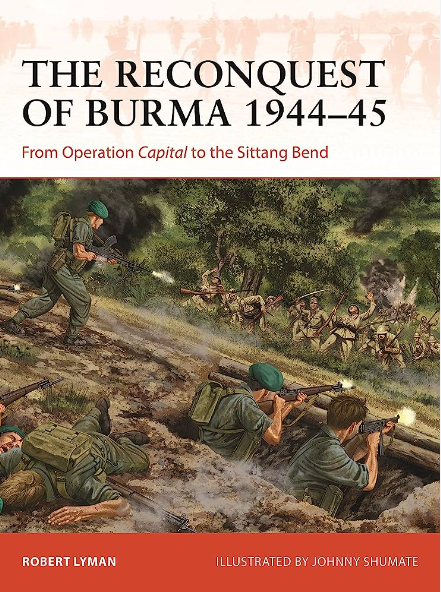
Why Burma? Because in Burma in 1945 a series of marvellous military miracles (is there a synonym starting with “m” for concatenation?) engineered by General Bill Slim and his mighty 14th Army, broke the back of the Japanese Burma Area Army and smashed forever Tokyo’s dreams of an empire in South East Asia. 1945 is worth celebrating!
Even today, few people are aware of just how dramatic these events were, and just how spectacular was the victory wrought by the Indian, British, African, US and Chinese forces in the country.
Indeed, at the start of 1945 few people would have predicted the extraordinary outcome of the developing campaign. If Lieutenant General Sir Bill Slim (he had been knighted by General Archibald Wavell, the Viceroy, the previous October, at Imphal) had been asked in January 1945 to describe the situation in Burma at the onset of the next monsoon period in May, I do not believe that in his wildest imaginings he could have conceived that the whole of Burma was about to fall into his hands. After all, his army wasn’t yet fully across the Chindwin. Nearly 800 miles of tough country with few roads lay before him, not the least the entire Burma Area Army under a new commander, General Kimura. The Arakanese coastline needed to be captured too, to allow aircraft to use the vital airfields at Akyab as a stepping stone to Rangoon. Likewise, I’m not sure that he would have imagined that a primary reason for the success of his Army was the work of 12,000 native levies from the Karen Hills, under the leadership of SOE, whose guerrilla activities prevented the Japanese from reaching, reinforcing and defending the key town of Toungoo on the Sittang river. It was the loss of this town, more than any other, which handed Burma to Slim on a plate, and it was SOE and their native Karen guerrillas which made it all possible.
Crossing the Irrawaddy
(Victoria State Archives)The potential of a Karenni-based resistance raised the possibility, long argued by old Burma hands, of a British armed and trained fifth column operating behind Japanese lines for the purpose of gathering battlefield intelligence and undertaking limited guerrilla action. Slim had long complained about the poor quality of the battlefield intelligence (as opposed to the signals intelligence, about which he was well provided) that he and his Corps commanders received. He was concerned, among other things, about knowing “what was on the other side of the hill”, the product of information provided – where it existed – by effective combat (ground and air) reconnaissance. There was no shortage of organisations attempting to assist in this task – at least twelve – but their coordination was poor and most reported to SEAC or parts of India Command, rather than to 14 Army. Slim dismissed most of these as “private armies” which offered no real help to the task of defeating the enemy on the battlefield. One of the groups, part of Force 136 (i.e. Special Operations Executive, or SOE), which had operated in front of 20 Indian Division along the Chindwin between 1943 and early 1944 under Major Edgar Peacock (and thus known as “P Force”) did sterling work with local Burmese and Karen agents reporting on Japanese activity facing 4 Corps. Persuaded that similar groups working among the Karens in Burma’s eastern hills – an area known as the Karenni States – could achieve significant support for a land offensive in Burma, Slim (to whom Mountbatten transferred responsibility for Force 136 in late 1944 for this purpose) authorised an operation to the Karens. Its task was not merely to undertake intelligence missions watching the road and railways between Mandalay and Rangoon, but to determine whether they would fight. If the Karens were prepared to do so, SOE would be responsible for training and organising them as armed groups able to deliver battlefield intelligence directly in support of the advancing 14 Army. The resulting operation – Character – was so spectacularly successful that it far outweighed what had been achieved by Operation Thursday the previous year in terms of its impact on the course of military operations in pursuit of the strategy to defeat the Japanese in the whole of Burma. It has been strangely forgotten, or ignored, by most historians ever since, drowned out perhaps by the noise made by the drama and heroism of Operation Thursday, the second Chindit expedition. Over the course of Operation Extended Capital some 2,000 British, Indian and Burmese officers and soldiers, along with 1,430 tons of supplies, were dropped into Burma for the purposes of providing intelligence about the Japanese that would be useful for the fighting formations of 14th Army, as well as undertaking limited guerrilla operations. As historian Richard Duckett has observed, this found SOE operating not merely as intelligence gatherers in the traditional sense, but as Special Forces with a defined military mission as part of conventional operations linked directly to a strategic outcome. For Operation Character specifically, about 110 British officers and NCOs and over 100 men of all Burmese ethnicities, dominated interestingly by Burmans (which now also included 3-man Jedburgh Teams) mobilised as many as 12,000 Karens over an area of 7,000 square miles to the anti-Japanese cause. Some 3,000 weapons were dropped into the Karenni States. Operating in five distinct groups (“Walrus”, “Ferret”, “Otter”, “Mongoose” and “Hyena”) the Karen irregulars trained and led by Force 136, waited the moment when 14 Army instructed them to attack.

Comments Off on Retaking Burma with the Fourteenth Army in 1945
Enfield MkII: Better Than the MkI, I Guess
Forgotten Weapons
Published 1 Nov 2024The Enfield MkI had only been in service for two years when the MkII was adopted in March 1882 to resolve some of its problems (and reduce its cost). At the same time, a new cartridge was adopted (the MkIII) with a heeled .477” bullet — also in hopes of resolving some of the problems with the Enfield revolver.
The Enfield used a selective ejection system that was intended to dump empty cases but retain unfired live cartridges. It was a bit finicky, with the live rounds often moving during the ejection process and jamming the system up. The larger heeled bullets were hoped to help stop that — and they were also thought to provide better accuracy in the gun’s Henry type rifling.
Simplifications to reduce cost of the gun included:
Unchecked grips
Smooth holster guides
Simplified geometry on the lower frame and top strap
Semicircular front sightFinally, a number of mechanical changes were made. Small elements were added to the clockwork to prevent cylinder rotation when not firing, and to lock the trigger and hammer when the loading gate was open. A second side plate screw was added to ease disassembly, and the grip attachment redesigned to use the lanyard ring as a screw to hold them in place. A fatal accident with an Enfield led to design of a hammer block safety that was intended to be universally retrofitted to guns in service, but many of the guns already sent out to far corners of the planet were never returned for this work.
In total, 13,102 MkII Enfield revolvers were made between 1882 and 1885, plus one gun each in 1886 and 1887. In 1887, the Webley MkI revolver was adopted to replace it, presumably much to the relief of Ordnance officers across the Empire.
(more…)
Comments Off on Enfield MkII: Better Than the MkI, I Guess
QotD: Those memorable quotes from history
I still don’t know how those people felt, but let me do the Robot Historians of 2334 a solid. In this particular case, guys: It feels stupid. Really, really stupid. Any sane person, watching this, can only marvel at how fucking fake and gay it all is. I wish I could say something more quotable about it (that’s a dirty trick of the History biz, by the way — often the quotes you see are quoted just because some crank had a good turn of phrase. The other sadly common reason is “because the quoted person’s letters are the only ones with handwriting you can read”). But I can’t, so … there it is.
Severian, “We Hold Erection For King!”, Founding Questions, 2024-11-05.
Comments Off on QotD: Those memorable quotes from history
February 19, 2025
Europe’s moral leaders stand strong against grotesque American fascism
You have to hand it to the great and the good of Europe … they sure can find every. last. rake. to step on as they hysterically react to the slightest hint of disagreement or contradiction:
Germany is right. Opposition parties must be forbidden or firewalled. Political criticism must be criminalized. The public sphere must be firmly controlled by government, with guardrails against disagreement and heterodoxy. If we don’t do these things, we might descend into authoritarianism.
Margaret Brennan’s bizarre response to JD Vance’s speech in Munich — free speech? but that’s the weapon the Nazis used to commit the Holocaust! — wasn’t mere ignorance or accident. It’s a maneuver. You’re going to see more of it, in an urgent wave of moral inversion. Case in point, from the New Republic today:
Remember that Vance said things like this:
The good news is that I happen to think your democracies are substantially less brittle than many people apparently fear.
And I really do believe that allowing our citizens to speak their mind will make them stronger still. Which, of course, brings us back to Munich, where the organisers of this very conference have banned lawmakers representing populist parties on both the left and the right from participating in these conversations. Now, again, we don’t have to agree with everything or anything that people say. But when political leaders represent an important constituency, it is incumbent upon us to at least participate in dialogue with them …
I believe deeply that there is no security if you are afraid of the voices, the opinions and the conscience that guide your very own people.
So governments should live in dialogue with the populations they govern; citizens should speak freely; banning or limiting political parties makes society less free and less open. From start to finish, Vance spoke for liberty and openness, for free expression and societies organized through unfettered debate.
The calculated response — the calculated response, a deliberate deflection — is: Oh no, he’s saying we should turn into Nazis! Look at the subhed to the thing in the New Republic: arguing for freedom is aligning ourselves with international fascism.
Openness is genocide. Freedom is fascism. Speech is violence. Free societies arrest people for saying the wrong thing. Free speech — you mean like ADOLF HITLER!?!?
Read the piece in the New Republic, and look closely at Michael Tomasky’s language, which is full of Stasi-adjacent framing: “The Alternative fur Deutschland (AfD) has been declared a ‘suspected extremist’ organization by the German domestic intelligence agency.”
Comments Off on Europe’s moral leaders stand strong against grotesque American fascism
The Korean War 035 – The Battle of Chipyong-ni – February 18th, 1951
The Korean War by Indy Neidell
Published 18 Feb 2025Chinese Commander Peng Dehuai has launched his 4th Phase Offensive, pushing the UN forces back in the center of Korea, and should his forces take Chipyong-ni, they will compromise the entire UN position. Chipyong-ni must hold!
Chapters
00:00 Intro
00:50 Recap
01:21 4th Phase Offensive
03:07 Retreat from Hoengsong
06:27 Chipyong-Ni Must Hold!
08:50 First Relief Attempt
10:22 The Battle of Chipyong-Ni
15:34 Battle Side Notes
17:36 29th Brigade
19:36 Summary
19:59 Conclusion
(more…)
Comments Off on The Korean War 035 – The Battle of Chipyong-ni – February 18th, 1951
A brief nod to the shade of Missouri Representative James Beauchamp “Champ” Clark
I was aware that the greatest Liberal Prime Minister in Canadian history, Sir Wilfred Laurier, had lost an election on the basis of a negotiated free trade deal with the United States, but I was not aware of exactly how that happened. Colby Cosh provides the gory details that got Laurier out of office for good:

Funny thing I noticed: Friday marked the anniversary of the 20th century’s most remarkable explosion in Canadian-American relations, which took place on the floor of the U.S. House of Representatives in 1911. On that day, Feb. 14, Missouri Democratic congressman James Beauchamp “Champ” Clark gave a short speech in defence of a free-trade agreement that had been hammered out between the (Republican) Taft administration and Wilfrid Laurier’s Liberal government.
Clark, a progressive and witty westerner who had already been chosen to become Speaker of the House in April, was widely expected to be the Democratic nominee for president in 1912. He was, in other words, a man who counted. And on the floor of the House, he advocated passage of the free-trade deal on grounds that eventually doomed it: namely, that it was a conscious step toward total American absorption of the Dominion of Canada.
When Clark’s remarks hit the newspapers up north — and no news story hit harder between 1900 and the dawn of the Great War — there was a spasm of anti-American and pro-Empire feeling throughout the country. As any schoolbook will tell you, this helped lead to the defeat of Laurier and the ruin of the trade deal in September 1911’s general election. This gaffe is indeed now what Clark is best remembered for, along with his eventual fumbling away of the 1912 presidential nomination to an unassuming professor named Woodrow Wilson.
When I was an undergraduate, we all had to have it explicitly explained to us that back in Edwardian days, the Liberals were the party of free trade, and the Conservatives the great defenders of tariff protection (although Sir John A. had sometimes sought without success to kick-stark “reciprocity” negotiations with the U.S.). Perhaps the most confusing feature of the 1911 controversy to students of today will be Champ Clark’s idea that the U.S. government would want to lower trade barriers to facilitate eventual annexation of Canada, rather than raising them to mutually punitive levels as a matter of crude antagonism.
Between Confederation and Champ’s time, Americans often just assumed as a matter of course that Canada would fall into their laps without any need for aggression or invasion. We northerners would eventually see that the benefits of American citizenship were more valuable than our romantic imperial attachments, and we would come beat down the door. This was certainly Clark’s own idea, and it created no controversy among Americans themselves when he expressed it.
Of course, in Laurier’s day “liberal” meant something closer to the modern sense of “libertarian” than it does to the current incarnation (or shambling corpse) of that party.
Comments Off on A brief nod to the shade of Missouri Representative James Beauchamp “Champ” Clark
HBO’s Rome – Ep 4 “Stealing from Saturn” – History and Story
Adrian Goldsworthy. Historian and Novelist
Published 28 Aug 2024Vidcaps taken from the dvd collection and copyright belongs to the respective makers and channels.
Transcript
Comments Off on HBO’s Rome – Ep 4 “Stealing from Saturn” – History and Story


