
Rex Krueger
Published 7 Jul 2021Especially in woodworking, the best teachers are those who came before us.
More video and exclusive content: http://www.patreon.com/rexkrueger
(more…)
July 8, 2021
Learn Woodworking by Studying Vintage Furniture
Comments Off on Learn Woodworking by Studying Vintage Furniture
Fallen Flag — the Illinois Central Railroad

Illinois Central Herald from a 1937 Passenger timetable.
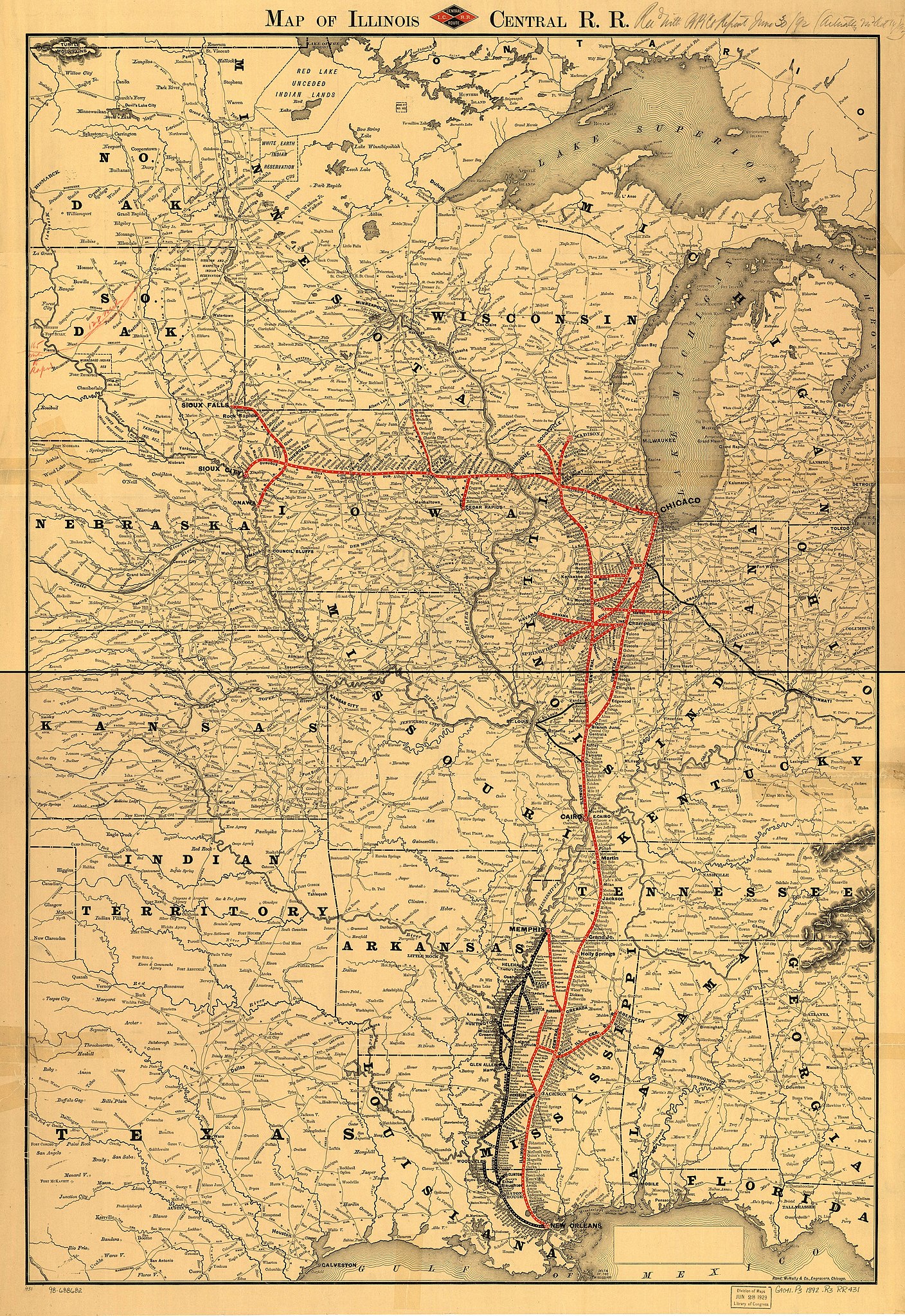
The IC (nicknamed the “Main Line of Mid-America”) was originally incorporated in 1836 to build a rail connection from Cairo to Galena with a branch to Chicago, but didn’t receive federal support until 1850 and the company was finally granted a charter in 1851. The IC was the first “land grant” railroad in the United States, and prominent Illinois politicians were deeply involved in the railroad (Senator Stephen Douglas and future President Abraham Lincoln). The line was completed in 1856 and the “branch” to Chicago rapidly became the busiest portion of the line. After the Civil War, the IC expanded out of Illinois into Iowa and then by acquisition and consolidation eventually reached Louisville, Kentucky and New Orleans, Louisiana with many branches and secondary lines throughout the eastern half of the Mississippi valley. In the 1880s, the IC also expanded north and west, reaching locations in Wisconsin, South Dakota, and Nebraska by the end of the century.
During the 1880s, the IC came under the control of E.H. Harriman and as a result were one of the railroads that were involved in the union actions that ran from 1911 until 1915. The IC and the other Harriman-controlled railways had existing contracts with the individual trade unions representing workers on each line, but the unions hoped to force the railways to recognize a “System Federation” of the separate unions that would negotiate as a single unit. The IC refused and hired strikebreakers to fill the positions vacated by striking union members — including many African-American men who would not normally have been allowed to work in those positions on southern railways. Sporadic violence in 1911 and 1912 resulted in the deaths of at least 12 men and 30 others were killed in a steam locomotive boiler explosion in San Antonio, Texas. It was generally seen as a failure by mid-1912, but the strike didn’t formally end until 1915. The unions tried again in 1922 in the Great Railroad Strike, which was an even larger attempt by the unions to operate as a single bargaining unit, and another ten people were killed during the conflict but it lasted only a couple of months and failed to achieve its aims.
Although the major portions of the system were in place by World War 1, there were some additional lines added through to the 1960s, merging or acquiring control of lines like the Yazoo & Mississippi Valley, the Gulf & Ship Island, the Chicago, St. Louis & New Orleans, the Alabama & Vicksburg, and the Vicksburg, Shreveport & Pacific. George Drury picks up the story in mid-century:
In the 1950s and early ’60s IC purchased several short lines: former interurban Waterloo, Cedar Falls & Northern (jointly with the Rock Island through a new subsidiary, Waterloo Railroad); Tremont & Gulf in Louisiana; Peabody Short Line, a coal-hauler at East St. Louis, Ill.; and Louisiana Midland.
In 1968 Illinois Central acquired the western third — Nashville to Hopkinsville, Ky. — of the Tennessee Central when that financially ailing line was split among IC, Louisville & Nashville, and Southern.
Illinois Central Gulf
Illinois Central and parallel Gulf, Mobile & Ohio merged on August 10, 1972, to create the Illinois Central Gulf Railroad, a wholly owned subsidiary of Illinois Central Industries. GM&O was a likely merger partner for Illinois Central, as it was a north-south railroad through much the same area as IC. As part of the merger, ICG took over three Mississippi lines: Bonhomie & Hattiesburg Southern; Columbus & Greenville; and Fernwood, Columbia & Gulf.
The north-south lines of ICG’s map resembled an hourglass. Driving across Mississippi or Illinois from east to west, you could encounter as many as eight ICG lines. The former IC system converged at Fulton, Ky., and the former GM&O main line was less than 10 miles west of Fulton at Cayce.
[…]
On Feb. 29, 1988, the railroad changed its name back to Illinois Central, having divested itself of nearly all the former GM&O routes it acquired in 1972, when it added “Gulf” to its name. At the end of 1988 the Whitman Corp. (formerly IC Industries) spun off the railroad, which then dropped “Gulf” from the name, and in August 1989 control of the railroad was gained by the Prospect Group, which formerly controlled spinoff MidSouth Rail.
IC managers eventually turned their eyes west, to the Chicago, Central & Pacific, which it had sold in 1985. It saw CC&P’s route as a source of grain traffic and perhaps a way to get some of the coal moving east from Wyoming. In June 1996 IC purchased the CC&P. The line remains active.
In February 1998 Canadian National Railway agreed to purchase the IC, creating a 19,000-mile railroad. CN absorbed IC in July 1999, and IC lost its own identity within the CN system.
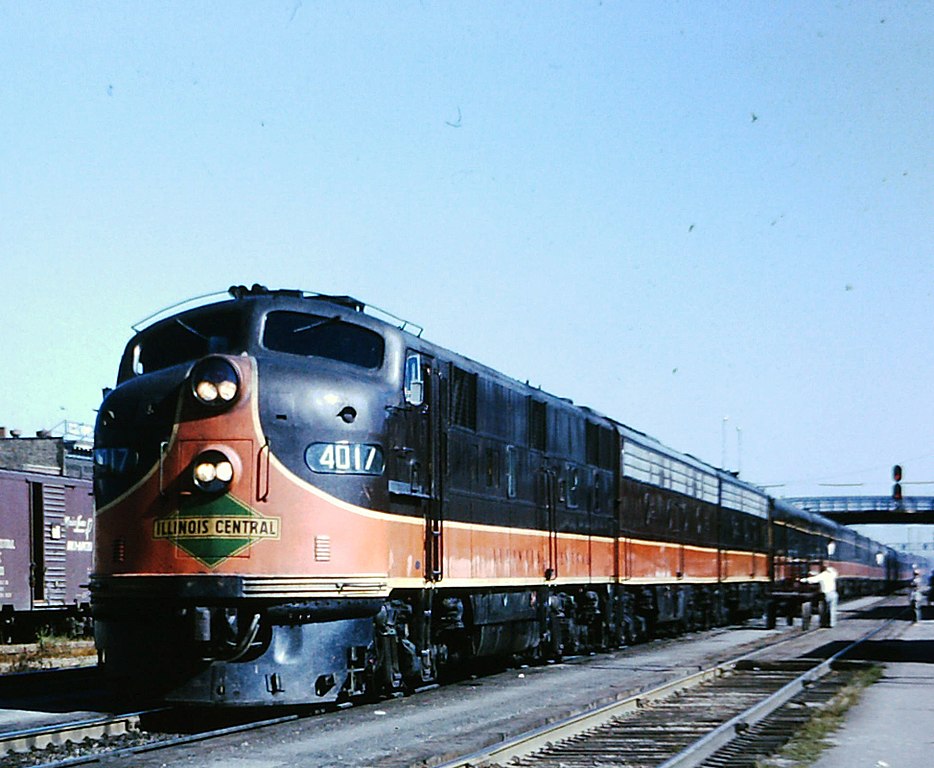
The Illinois Central’s City of New Orleans at Kankakee, Illinois in August, 1964. The train is led by EMD E7 #4017.
Photo by Lawrence and David Barera via Wikimedia Commons.
Comments Off on Fallen Flag — the Illinois Central Railroad
What Is S-P-F LUMBER? (S-P-F Vs. SYP…What’s The Difference?? Lumber Markings/Softwood Varieties)
The Honest Carpenter
Published 21 Mar 2021Much of the lumber you see in stores will be stamped with the letters S-P-F. But what do these letters mean? For that matter, what is SYP and D-FIR? This short video from The Honest Carpenter will explain a few of the most common lumber markings in North America!
S-P-F stands for SPRUCE-PINE-FIR.
These are the three most common softwood lumber varieties in North America. Each wood technically represents a GENUS with several prominent SPECIES below it (like genus Spruce/species White Spruce).
These three lumbers are grouped together in an acronym because they all have very similar qualities, and they are all very good lumber to build homes with!
Also, because spruce, pine and fir are sourced so ubiquitously, and shipped to so many various areas, it’s easier for lumber mills to group them together like this, rather than constantly differentiate them.
S-P-F woods are also commonly called WHITEWOODS, because of their pale color. They tend to have small, regular knot holes, and feel relatively light and airy.
A strong competitor to S-P-F woods is SOUTHERN YELLOW PINE. This yellowish lumber tends to be heavier, and can carry loads across wider spans.
Southern Yellow Pine (or SYP) is also a great wood for making pressure-treated lumber.
Most of our S-P-F lumber comes from Canada (80%).
Douglas Fir (D FIR) is also very popular, and comes out of the Pacific Northwest. It is very strong, resistant to warping, and has a pleasant, almost cedar-like appearance. It is used a lot for timber-framing projects.
Thanks for watching the video! Be sure to visit us at The Honest Carpenter Website:
www.thehonestcarpenter.com

Comments Off on What Is S-P-F LUMBER? (S-P-F Vs. SYP…What’s The Difference?? Lumber Markings/Softwood Varieties)
QotD: Psychopaths
Came across this today. Psychopath “diagnostic criteria”. These are all direct quotes.
- Psychopaths show a disregard for, and violation of, the rights of others.
- They fail to conform to social norms with respect to lawful behaviours.
- They are always deceitful … They are nasty, aggressive con artists.
- They are massively impulsive and fail to plan ahead.
- They show irritability and aggressiveness, as indicated by repeated physical fights and assaults.
- They manifest a reckless disregard for the physical and psychological safety of others.
- They are consistently irresponsible. Repeated failure to sustain consistent work behaviour … are their hallmark.
- They show lack of remorse. They are indifferent to, or rationalize, having hurt, mistreated or stolen from another … It can seem that labelling them as anti-social is a serious understatement.
From Furnham, Adrian. 50 Psychology Ideas You Really Need to Know. London: Quercus Publishing, p. 25. The heading of the chapter is “Seem Sane”. This is the statement at the start of the discussion:
Psychopaths are without conscience and incapable of empathy, guilt or loyalty to anyone but themselves.
Anyway, I just thought I would mention it.
Steve Kates, “Psychopath ‘diagnostic criteria'”, Catallaxy Files, 2021-04-07.
Comments Off on QotD: Psychopaths
July 7, 2021
“Emptied of its resident apparatchiks, Washington would become ‘The Museum State'”
In the latest edition of his newsletter (newsletter@mightyheaton.com), Andrew Heaton considers the pro and con arguments for D.C. statehood:
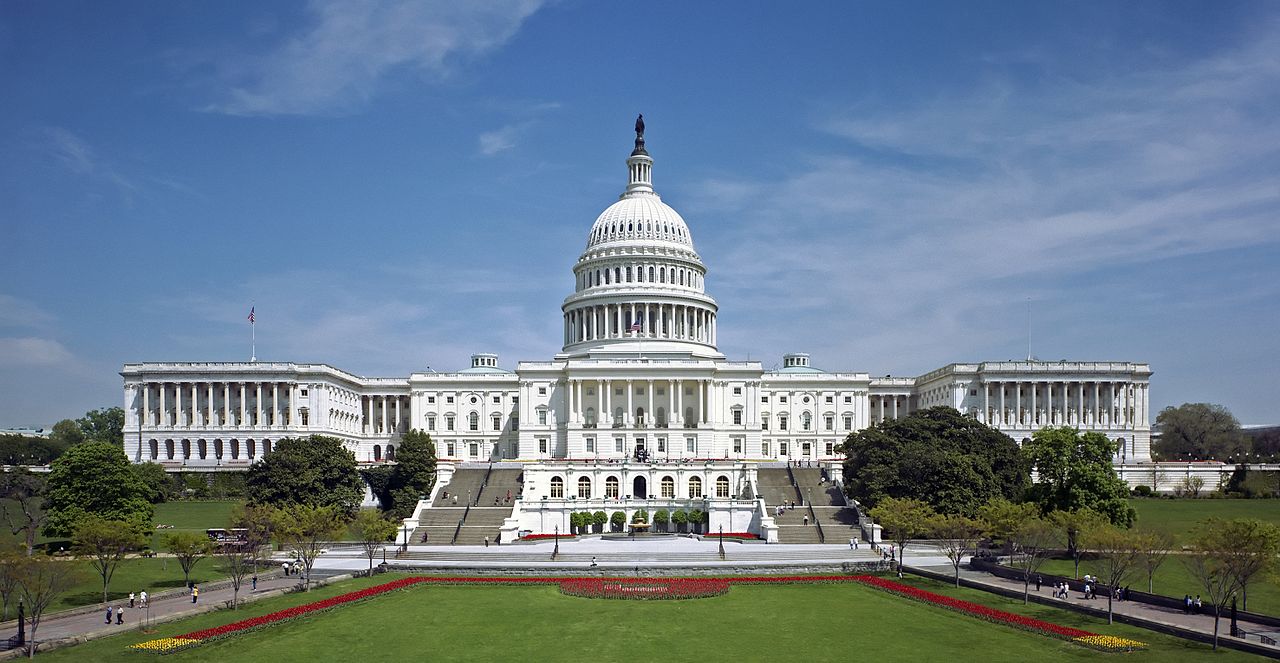
The western front of the United States Capitol. The Neoclassical style building is located in Washington, D.C., on top of Capitol Hill at the east end of the National Mall. The Capitol was designated a National Historic Landmark in 1960.
Photo via Wikimedia Commons.
The rhetorical pros and cons of DC statehood go like this:
PRO: If we truly believe in “no taxation without representation” and representative government, how can we deprive Washingtonians of their own voting representatives? Bla bla bla racism
CON: The power of the federal government is derived from and balanced by that of the states. To make the federal seat a state in its own right is to create an imperial capital, with too much concentrated power. Bla bla bla dead white guy, Dr. Seuss, veterans
I actually happen to agree with both of these positions. Thus I am an advocate of DC statehood, but predicated on the condition that every federal agency is redistributed to other states — possibly even to Canadian provinces. Congress, the White House, and the Supreme Court can all stay — it’s heavy to lug stacks of marble to Cleveland. The Departments of Education, Commerce, High School Reunions, and so on should be redistributed throughout the country so that every state gets access to cushy, air-conditioned federal pensions.
A similar idea has previously been floated by Mitch Daniels (one of America’s six remaining sane Republicans) and more recently by Josh Hawley and Martha Blackburn (who are not). The biggest Democratic counter to the proposal is that the relocation expenses would be astronomical, making agency redistribution impractical.
While I am always pleasantly startled by a Democrat decrying a massive federal spending hike, redistribution of resources, and a national job creation program on the grounds of practicality and balanced budgets, I think the criticism is less valid in a post-Covid remote worker world. If 90% of the federal government operated remotely in 2020, is there any reason we couldn’t just buy some air conditioned warehouses in Iowa to plop the Department of Agriculture into? While the up-front costs would be considerable, the long-term savings would balance out. Buying a townhouse in Georgetown is roughly as expensive as buying a stadium in Idaho. Redistribute the federal agencies, and we can adjust budgets and the salaries of new hires to reflect that.
Emptied of its resident apparatchiks, Washington would become “The Museum State”. All the cavernous federal agencies could be converted into historical exhibits, art galleries — and if we ever ran out of stuff to display — paintball galleries. (Maybe both?) Two new senators, and Elizabeth Holmes Norton can start voting on stuff.
Comments Off on “Emptied of its resident apparatchiks, Washington would become ‘The Museum State'”
Poland’s Forgotten Spy War against the Nazis – WW2 – Spies & Ties 05
World War Two
Published 6 Jul 2021The Polish played a big part in cracking the Enigma codes. From there, the Polish spy and intelligence operation became even bigger.
(more…)
Comments Off on Poland’s Forgotten Spy War against the Nazis – WW2 – Spies & Ties 05
The “Squirrel!” distractions will end when it’s convenient for certain people and groups
Jay Currie considers the constant barrage of distractions that appear to be preventing most people from noticing what is actually going on in Canada:
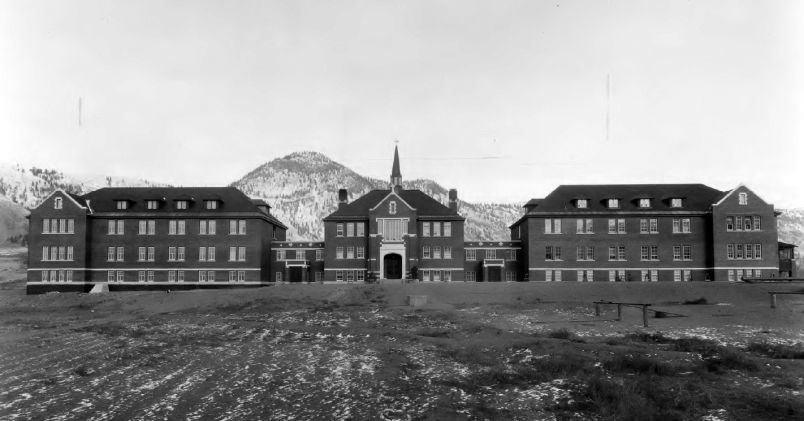
Kamloops Indian Residential School, 1930.
Photo from Archives Deschâtelets-NDC, Richelieu via Wikimedia Commons.
The remarkable thing about all of these little snippets of news is that they seem to be regarded as business as usual. Being taxed by an inflation rate which is well into the double digits does not cut through the COVID hype. Vandalism and arson purportedly in rage over residential school deaths which we have known about for decades attracts very little comment – though many First Nations people are not very happy that reservation churches which have served their communities for years are being burnt. People seem to shrug off the heat wave deaths and ambulance delays.
I expect very little from government at any level. A reasonably sound currency, a degree of public order and emergency services which can deal with the inevitable surges in demand.
The emergency services issue is probably the most easily fixed. Yes, having more para-medics is part of the solution but planning a reponse to these sorts of surge emergencies which tries to avoid the need for an ambulance in the first place is important too. Most of the dead were old, in many cases, very old. It should not be impossible to identify those older people and have a plan for these sorts of emergencies. Something as simple as a “Helpful Neighbour” program on a voluntary basis would be a good first step.
Restoring public order is more complicated. First, you have to have the political will to actually take on the problem. As we saw a couple of years ago, when it comes to people purporting to act on behalf of First Nations/environmental causes that will is absent. But even if the politicians decided that enough was enough there needs to be an investigation and an understanding of how the “spontaneous” vandalism and arson and blockades are driven. That is going to require rooting around in the activist community which will be, to say the least, difficult. The people who are actually creating the public disorder pay close attention to operational and communications security. Suffice to say this stuff is not being organized on a Facebook page.
Restoring order is also going to require a look at who benefits from disorder. To take an example: was it co-incidence that the sad fact of the Kamloops residential school graveyard came up just as the inquiry into Canada’s Winnipeg Lab’s connection to the Wuhan virology lab was heating up? The fact of there being a graveyard had been know for decades. The ground radar was being used to determine the boundaries so a new fence could be built. Yet, somehow, the number of bodies became headline news. I suspect, but cannot prove, that this was no accident. Public order will be restored when disorder is no longer in anyone’s interest.
Comments Off on The “Squirrel!” distractions will end when it’s convenient for certain people and groups
Tank Chats #114 | Luchs | The Tank Museum
The Tank Museum
Published 1 Jan 2021In his latest Tank Chat, The Tank Museum’s Curator David Willey looks at the Luchs, a Second World War German reconnaissance vehicle from the Panzer II family. The Tank Museum’s example is one of only two survivors in the world.
(more…)
Comments Off on Tank Chats #114 | Luchs | The Tank Museum
QotD: Bad language from Down Under
Naive he surely was — and while over his nine-year career at the Eye he might increasingly turn the tables on the Brits, that innocence never wholly disappeared — in one respect he was omnipotent. His slang-laden, all-Australian language burst into the Eye reader’s consciousness fully-formed and quite astounding. By 1968 Bazza was offering freckle puncher, smell like an Abo’s armpit, bang like a shithouse door, dry as a nun’s nasty, point Percy at the porcelain, siphon the python and perhaps the most celebrated, the Technicolour yawn (aka the liquid laugh or the big spit).
[…]
It was also resolutely carnal: in its concentration on defecation and urination, drinking (and the seemingly inevitable vomiting it induced) and copulation (even if Bazza remains the eternal virgin), Humphries either created or collated a vocabulary that would not be rivalled until Viz magazine’s “swearing dictionary” Roger’s Profanisaurus began appearing in 1997.
Rooted, from Amanda Laugesen, director of the Australian National Dictionary Centre at the Australian National University and chief editor of the Australian National Dictionary, focuses on this side of the Australian vocabulary. Rooted comes from root, a euphemism for fuck, both literally, in the context of sex, and figuratively, as in harm, destroy, and so on. It falls into what Laugesen is happy to term “bad language”, even if one might suspect that with her formidable knowledge it is a term she knows perfectly well is a construct of tabloid moralising and empty religiosity. (Perhaps I am hardened by proximity, but I find it sad she feels the need to warn readers they will encounter the language that is the subject of her work.)
Jonathon Green, “Fair dinkum dictionary”, The Critic, 2021-04-08.
Comments Off on QotD: Bad language from Down Under
July 6, 2021
GALAXY QUEST – WTF Happened To This Movie?
JoBlo Videos
Published 7 Feb 2020Hollywood has had its fair share of historically troubled productions. Whether it was casting changes, actor deaths, fired directors, in-production rewrites, constant delays, budget cuts or studio edits, these films had every intention to be a blockbuster, but were beset with unforeseen disasters. Sometimes huge hits, sometimes box office bombs.
In our latest episode we explore the 1999 surprise hit GALAXY QUEST, which had a long road to making it to the big screen. Starring Tim Allen, Sigourney Weaver, Alan Rickman, Sam Rockwell, Tony Shalhoub, Daryl Mitchell, Enrico Colantoni, Justin Long and Missi Pyle, this riff on Star Trek, directed by Dean Parisot, eventually got over its hurdles and made a galactic splash at the box office. Now, if we could just get that sequel …
For more MOVIE NEWS, visit: http://www.joblo.com
#GalaxyQuest #TimAllen #WTFHappenedToThisMovie

Comments Off on GALAXY QUEST – WTF Happened To This Movie?
Conspiracies within conspiracies within conspiracies
In the latest edition of the Libertarian Enterprise, Sean Gabb considers the evolving nature of Wuhan Coronavirus conspiracy theories:

“Covid 19 Masks” by baldeaglebluff is licensed under CC BY-SA 2.0


We have, for the past eighteen months, lived through a fantasy pandemic. If unpleasant, the Virus is not particularly deadly. The number of cases is a product of testing, the number of deaths a statistical fraud. We have had much worse infections in living memory. We never responded to those by locking down whole populations and making hysterical fear an object of state policy. What is happening?
The most likely answer is stupidity. The quality of the people who rule Britain and America has dropped through the floor since about 1990, and it was not that high then. Sadly, though, the rest of the world still believes Britain and America are the pinnacle of civilisation, and so, whatever madness is decided in London and Washington is copied without question almost everywhere else. Take stupidity, add short-term advantage to the usual suspects in politics and business, and we have the Coronavirus Panic.
But arguments from stupidity are boring. They are the equivalent of denying the existence of ghosts and second sight — worthy and true, but unentertaining. Much better is to begin from the assumption that the idiots in charge are not really in charge, but are only front men for the supremely intelligent and supremely effective and supremely wicked Ones-on-High. Do this, and explaining the panic becomes an argument over which conspiracy theory best fits the observed facts.
Until a few weeks ago, my favourite was that the Virus was a bioweapon that had somehow leaked from a Chinese laboratory. It was spotted by the main governments, because they were all working in secret on something similar. This would explain the initial panic. As for the piffling number of deaths, bioweapons are still at the experimental stage, and no one realised until it was too late that modified viruses lose their potency almost at once in the wild. This was my favourite conspiracy theory for over a year. I only went off it when the authorities stopped denouncing it and punishing anyone important who said it was true, and instead announced on television that it might be true. Since the hacks in the mainstream media are just bright enough not to tell the truth even by accident, it was half a minute to give up on a year of enjoyable speculation.
There are other conspiracy theories. Regrettably, most of these border on the respectable. For example, the panic is a cover for clawing back some of the manufacturing outsourced to China since the 1990s. Or it is an excuse for ending the unwise monetary policies of the past decade and inflating away the resulting national debts. These all have an appearance of the probable, and are therefore dull before the first paragraph is read. But, looming over all the others, is the merger of scepticism about vaccines and the Agenda 21 conspiracy.
For those unaware of it, Agenda 21 is boring drivel from the United Nations about not cutting down trees. Behind this, though, is an alleged conspiracy to reduce the human population from seven billion to half a billion. Doing this, apparently, will end all the fanciful scares about global warming, and leave the lucky survivors free to use all the electricity they want without feeling guilty.
The latest version of this theory is that the Virus is a fraud, but justifies injecting people with a vaccine that will make most of them fall down dead, or in some degree sterilise them. There are passionate advocates of the revised theory, all of them begging us to keep away from any of the vaccines on offer. I have so far kept away from the vaccines.
Comments Off on Conspiracies within conspiracies within conspiracies
History Summarized: The Wild West
Overly Sarcastic Productions
Published 7 Sep 2018This video was commissioned by Patron Matthew Ritter. Thanks Matthew! If you would like to support the channel and earn special rewards, check out our Patreon page: www.patreon.com/OSP
Articles referenced — Because Gun Control and Black Cowboys sound incredulous on paper so I can see why you wouldn’t believe me but it’s real and there’s tons of proof:
Gun Control in the West: https://www.smithsonianmag.com/histor…
Black Cowboys: https://www.smithsonianmag.com/histor…MERCH LINKS:
Shirts – https://overlysarcasticproducts.threa…
All the other stuff – http://www.cafepress.com/OverlySarcas…Find us on Twitter @OSPYouTube!
Another article covering gun control in the “Wild West” says:
… enforcement of the anti carry ordinances in Tombstone and Dodge City and other frontier towns like Deadwood, South Dakota that had them were highly selective. In Tombstone, those friendly with the Earps and their buddies got a pass. In Dodge City those friendly with the powers that be and or the Dodge City Gang — which included Wyatt when there — got a pass too on the side of Dodge with the carry ban. That “side” is a rarely mentioned fact. […] The famous sign reading “The Carrying of Firearms Strictly Prohibited” so often used to promote similar laws today was at the entrance to the North incorporated portion where the “decent” Dodge permanent residents sought to exclude riffraff like the drovers and maintain a somewhat puritan lifestyle. Women were not allowed in saloons and singing or dancing was against the law.
The cowboys and other undesirables were supposed to stay below the Deadline according to Wyatt Earp in the book The Old West in Fact and Film: History Versus Hollywood: “Below the deadline, as far as the marshals force was concerned, almost anything went, and a man could get away with gunplay if he wasn’t too careless about lead. North of the railroad, gun toting was justification for shooting on site, if an officer was so inclined, and meant certain arrest.”
Sounds like cut no slack enforcement, but there are simply too many accounts of gun carry on the North side to believe Earp’s account was anything other than his famed self promoting hyperbole. One example is the 1879 gunfight in the Long Branch Saloon between gamblers Frank Loving and Levi Richardson. Loving killed Richardson and a magistrate ruled the killing justifiable self defense. Even so, why was he not charged with illegal gun carry? Possibly because Dodge’s no carry laws and others like it else- where were not put on the books purely for public safety reasons as anti-Second Amendment activists claim …

Comments Off on History Summarized: The Wild West
QotD: Generational dislocation
Grant McCracken, “Gender Watch”, This Blog Sits at the, 2005-03-24.
Update: Link had rotted since I first posted this on the old blog. The link has been updated to the current location. H/T to WarEagle82 for calling this to my attention.
Comments Off on QotD: Generational dislocation
July 5, 2021
Did the CONFEDERACY Have BETTER GENERALS?!?!?!
Atun-Shei Films
Published 4 Jul 2021Checkmate, Lincolnites! Debunking Lost Cause myths – as well as more benign common misconceptions – about the military leadership of the Civil War. Did the South really have all the best battlefield talent? Was the key to Union victory a simple strategy of overwhelming the Confederate army with numbers and resources? Who was better at their job, Ulysses S. Grant or Robert E. Lee?
I’d say watch and find out, but the answer is obviously Grant.
Support Atun-Shei Films on Patreon ► https://www.patreon.com/atunsheifilms
Leave a Tip via Paypal ► https://www.paypal.me/atunsheifilms
Buy Merch ► teespring.com/stores/atun-shei-films
#CheckmateLincolnites #CivilWar #MilitaryHistory
Original Music by Dillon DeRosa ► http://dillonderosa.com/
Reddit ► https://www.reddit.com/r/atunsheifilms
Twitter ► https://twitter.com/atun_shei~REFERENCES~
[1] Andy Hall. “With One Hand Tied Behind its Back” (2013). Dead Confederates Blog https://deadconfederates.com/2013/11/…
[2] G.S. Boritt. Why the Confederacy Lost (1992). Oxford University Press, Page 39-40
[3] Richard E. Beringer. Why the South Lost the Civil War (1986). University of Georgia Press, Page 8-24
[4] Borritt, Page 24-30
[5] Charles Royster. The Destructive War: William Tecumseh Sherman, Stonewall Jackson, and the Americans (1991). Vintage Civil War Library, Page 76
[6] “Lincoln’s Unsent Letter to General Meade”. American Battlefield Trust https://www.battlefields.org/learn/pr…
[7] Eric J. Wittenberg. “A Civil War Witch Hunt: George Gordon Meade, The Retreat from Gettysburg, and the Joint Committee on the Conduct of the War” (2015). Emerging Civil War Blog http://emergingcivilwar.com/2015/07/0…
[8] Report of the Joint Select Committee Appointed to Inquire into the Condition of Affairs in the Late Insurrectionary States, so Far as Regards the Execution of Laws, and the Safety of the Lives and Property of the Citizens of the United States and Testimony Taken (1872). https://quod.lib.umich.edu/m/moa/ACA4…
[9] Andy Hall. “Nathan Bedford Forrest Joins the Kl@n” (2011). Dead Confederates Blog https://deadconfederates.com/2011/12/…
[10] Andy Hall. “Confederate Veterans on Forrest: ‘Unworthy of a Southern Gentleman'” (2013). Dead Confederates Blog https://deadconfederates.com/2013/08/…
[11] Edward Bonekemper. Ulysses S. Grant: A Victor, Not a Butcher (2004). Regnery History, Page 89-92
[12] Mary Boykin Chestnut. A Diary of Dixie (1905). D. Appleton and Company, Page 350
[13] Ernest B. Ferguson. “Catching Up With ‘Old Slow Trot'” (2007). Smithsonian Magazine https://www.smithsonianmag.com/histor…
[14] Bonekemper, Page xii
[15] Bonekemper, Page 308-309
[16] Bonekemper, Page 192-193
[17] Bonekemper, Page 201-203
[18] Justin D. Murphy. American Civil War: Interpreting Conflict Through Primary Documents, Vol. II (2019). ABC-CLIO, Page 331
[19] Bonekemper, Page 121 & 243-245
[20] Elizabeth Brown Pryor. Reading the Man: A Portrait of Robert E. Lee Through his Private Letters (2008) Penguin Books, Page 335
[21] Sean Kane. “Myths and Misunderstandings: Grant as a Slaveholder” (2017). The American Civil War Museum https://acwm.org/blog/myths-misunders…
[22] “Letter from Robert E. Lee to Mary Randolph Custis Lee (December 27, 1856).” Encylopedia Virginia https://encyclopediavirginia.org/entr…
[23] Pryor, Page 144-150
[24] “Ulysses S. Grant and General Orders No. 11”, National Park Service https://www.nps.gov/articles/000/ulys…
Comments Off on Did the CONFEDERACY Have BETTER GENERALS?!?!?!
General George H. Thomas (1816-1870)
One of the references for the latest Atun-Shei Films “Checkmate Lincolnites!” video was an older article in the Smithsonian Magazine outlining the career of one of the best — yet least known — Union generals in the American Civil War:
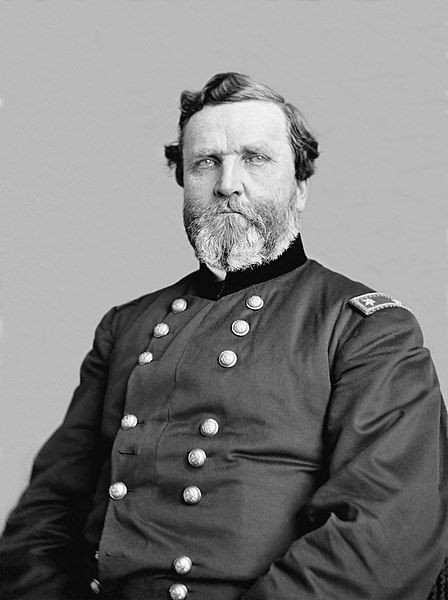
George Henry Thomas (July 31, 1816 – March 28, 1870), the “Rock of Chickamauga”, was a career U.S. Army officer and a Union general during the American Civil War, one of the principal commanders in the Western Theatre.
Image from the Library of Congress Prints and Photographs Division via Wikimedia Commons.
… for Thomas, every battlefield success seemed to stir controversy or the jealousy of ambitious rivals. Unlike other noted generals, he had no home-state politicians to lobby on his behalf in Washington. Ulysses S. Grant, for example, was championed by Illinois congressman Elihu Washburne, and Sherman by his brother, Ohio senator John Sherman. For Thomas, every step upward depended solely on his performance in the field.
In one of the war’s first skirmishes, he led a brigade in the Shenandoah Valley that bested Confederates under Stonewall Jackson. When the dashing Rebel J.E.B. Stuart heard that Thomas was commanding Union cavalry, he wrote to his wife that “I would like to hang him as a traitor to his native state.” Even after that, there was lingering doubt among some Unionists, including Lincoln. Unlike Grant, Sherman, George McClellan and some other ranking Union officers who had broken their military service with years as civilians, Thomas had been a soldier since the day he entered West Point. Yet when his name came up for promotion, the president, restrained by Northern radicals and surrounded in the Federal bureaucracy by Southerners, said, “let the Virginian wait.” But Sherman among others vouched for Thomas, and soon the Virginian was elevated to brigadier general and ordered to organize troops away from Virginia, beyond the Appalachians.
[…]
As Thomas rose, he proved to his men that his addiction to detail and his insistence on preparation saved lives and won battles. His generalship behind the front, before the battle, was generations ahead of his peers. He organized a professional headquarters that made other generals’ staff work seem haphazard. His mess and hospital services, his maps and his scouting network were all models of efficiency; he was never surprised as Grant had been at Shiloh. He anticipated modern warfare with his emphasis on logistics, rapidly repairing his railroad supply lines and teaching his soldiers that a battle could turn on the broken linchpin of a cannon. He demanded by-the-book discipline, but taught it by example. He made no ringing pronouncements to the press. His troops came to understand his fatherly concern for their welfare, and when they met the enemy they had faith in his orders.
In late summer, Rosecrans moved against the Rebel stronghold of Chattanooga, a crucial gateway between the eastern and western theaters of war. Confederate general Bragg pulled out of the town onto the dominating nearby mountains, waiting for Maj. Gen. James Longstreet to bring reinforcements from Virginia. When they came, Bragg threw everything into an assault on Union lines along Chickamauga Creek, just inside Georgia. Thomas’ corps was dug in on the Union left. On the second day of furious fighting, a misunderstood order opened a wide gap on his right. Longstreet’s Rebels crashed through; with the always aggressive John Bell Hood’s division leading, they bent the Union line into a horseshoe.
Rosecrans, certain the battle was lost, retreated into Chattanooga with five other generals and thousands of blue-uniformed soldiers. But Thomas inspired his men to stand fast, and only their determined resistance saved his army from destruction. They held all that afternoon against repeated Confederate assaults, withdrawing into Chattanooga after nightfall. It was the greatest of all battles in the West, and since that day, Thomas has been known to history as the Rock of Chickamauga.
[…]
On December 15, Thomas, unaware that Grant intended to fire him, roared out of his works against Hood. In two days his troops crushed the Rebel army. His infantry, including two brigades of U.S. Colored Troops, smashed into Hood’s troops while the Union cavalry, dismounted with its fast-firing Spencers, curled around and behind the Rebel left. Almost a century later, historian Bruce Catton summed up the battle in two words: “Everything worked.”
Thomas “comes down in history…as the great defensive fighter, the man who could never be driven away but who was not much on the offensive. That may be a correct appraisal,” wrote Catton, an admirer and biographer of Grant. “Yet it may also be worth making note that just twice in all the war was a major Confederate army driven away from a prepared position in complete rout — at Chattanooga and at Nashville. Each time the blow that finally routed it was launched by Thomas.”
Nashville was the only engagement in which one army virtually annihilated another. Thomas B. Buell, a student of Civil War generalship, wrote that in Tennessee, Thomas performed the war’s “unsurpassed masterpiece of theater command and control….So modern in concept, so sweeping in scope, it would become a model for strategic maneuver in 20th-century warfare.” After it, there was no more large-scale fighting west of the Blue Ridge.
Comments Off on General George H. Thomas (1816-1870)


