Forgotten Weapons
Published 26 Dec 2020http://www.patreon.com/ForgottenWeapons
https://www.floatplane.com/channel/Fo…
Cool Forgotten Weapons merch! http://shop.bbtv.com/collections/forg…
The Browning M2 heavy machine gun is one of the longest serving firearms in US military service, and still going strong. Let’s take this one out to the range and find out why!
Contact:
Forgotten Weapons
6281 N. Oracle #36270
Tucson, AZ 85740
July 5, 2021
Browning M2HB .50 BMG at the Range
QotD: Robert Walpole, the first Prime Minister
This month marks exactly 300 years since the Whig statesman Robert Walpole officially became our first prime minister. Not only was the country squire and landowner the first politician to occupy 10 Downing Street, he has also served the longest time at the top: an unbroken 20-year reign dubbed the “Robinocracy”.
Most historians rate Walpole as one of our more successful prime ministers: he stabilised the nation’s finances, saw off Jacobite sedition, and kept the country out of foreign wars, proudly boasting: “There are 50,000 slain in Europe this year and not one Englishman.” But inevitably, there was a downside to Walpole: he was charged by his enemies with corruption.
In fact, considering the spectacular eighteenth-century standards of sleaze, Walpole was — to borrow a phrase coined by Tony Blair — “a pretty straight kind of guy”. True, he spent six months in the Tower of London accused by his political foes of all sorts of malpractice; but he was eventually cleared. True, too, that he built a magnificent mansion, Houghton Hall, in his native Norfolk — but he had legitimately made a fortune in the South Sea Bubble financial crash that ruined so many others (by buying shares when they were low and selling them when they were high). Nevertheless, Walpole was not above sailing close to the wind of propriety, cynically remarking: “Every man has his price.”
Nigel Jones, “Scandal, corruption and collusion: 300 years of British prime ministers”, The Critic, 2021-04-03.
July 4, 2021
Fall Blau Begins, Stalin Caught off Guard Again – 149 – WW2 – July 3, 1942
World War Two
Published 3 Jul 2021It’s that time of the year again — the time when the Axis Powers drive deep into the Soviet Union. Fall Blau is the name of this year’s huge offensive, and it begins this week, making great gains from the very beginning, but the Axis Powers are also making big gains this week in North Africa, taking Mersa Matruh and pushing to within 100 km of Alexandria. Can nothing stop them?
(more…)
Ma Deuce: The Venerable Browning M2 .50 Caliber HMG
Forgotten Weapons
Published 25 Dec 2020http://www.patreon.com/ForgottenWeapons
https://www.floatplane.com/channel/Fo…
Cool Forgotten Weapons merch! http://shop.bbtv.com/collections/forg…
The M2 Browning machine gun was first conceived in 1918, as a request by General John Pershing of the AEF for a large-caliber anti-aircraft and antitank machine gun. John Browning scaled his M1917 water-cooled .30 caliber design up to .50 caliber, and the first prototypes were test fired in November of 1918. Impetus behind the project faltered after the Armistice, but Colt continued to develop the gun during the 1920s and 1930s. It was first adopted in 1922 by the US Coastal Artillery as an anti-aircraft gun, but significant manufacture would not come until World War Two. By this time, the gun’s main role had shifted, from antitank to being an aircraft armament, and some 2 million were made during World War Two, primarily as aircraft guns.
The M2 remains in service today, highlighting the brilliance and longevity of John Browning’s designs.
Contact:
Forgotten Weapons
6281 N. Oracle #36270
Tucson, AZ 85740
QotD: It’s not your money … it’s the GOVERNMENT’S money
To the left any money earned anywhere in the country automatically belongs to the government. This confirms my suspicion that at heart, deep inside, they think of the normal form of government as feudalism. This is because I’ve seen very old land deeds and other documents from when Portugal was a monarchy and it read something like “His Majesty, graciously allows his subject so and so to exert ownership over this parcel of land” the underlying conceit being that the whole land of the whole country belonged to the king, and it was in his purview to hand it out to whomever he pleased for as long as he pleased, while it still belonged to him. (The documents I saw were for things like house plots, not fiefdoms, incidentally.)
The left seems to be going off the same book when they say things like “How will you pay for the tax cuts?” as if the government is OF COURSE entitled to all your money, and if you’re getting some back, that part must be compensated for.
Sarah Hoyt, “The Tragedy of the Squid Farms on Mars”, Libertarian Enterprise, 2018-12-05.
July 3, 2021
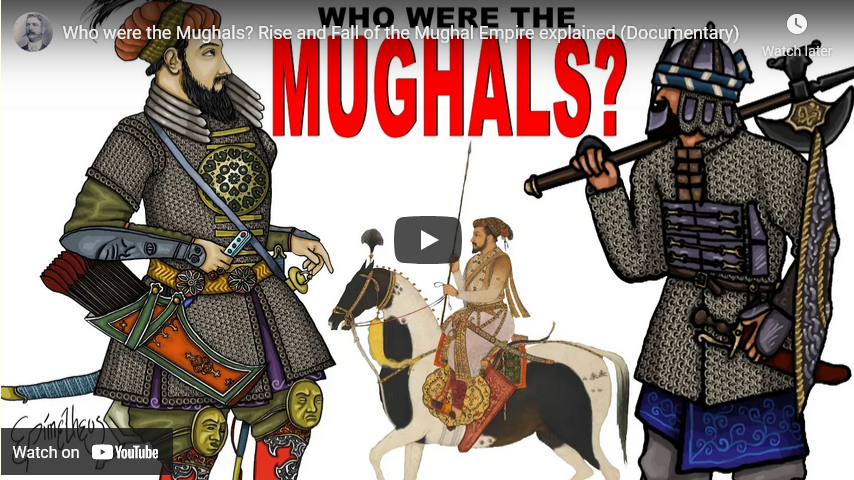
Who were the Mughals? Rise and Fall of the Mughal Empire explained
Epimetheus
Published 20 Oct 2019Who were the Mughals? Rise and Fall of the Mughal Empire explained (Documentary)
The Mughal empire’s history from Babur to the fall in 1857.
This video and others like it are sponsored by my Patrons over on patreon.
https://www.patreon.com/Epimetheus1776
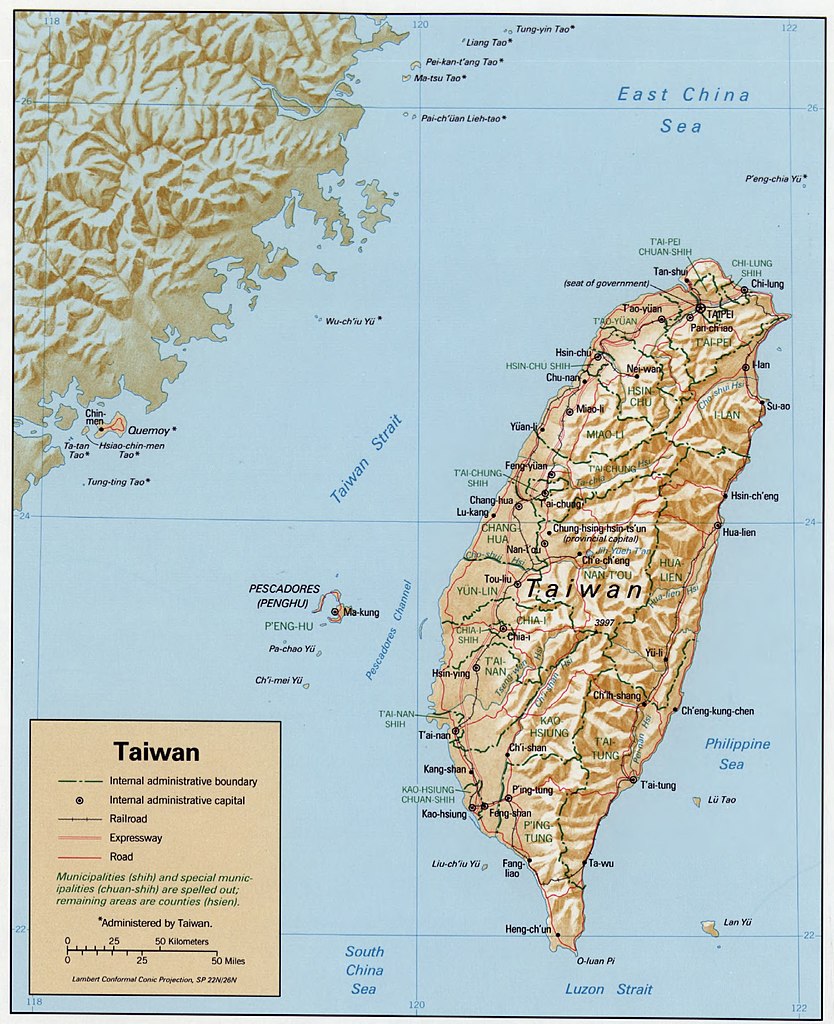
Taiwan, 2021
Admiral Gary Roughead considers the regional situation of Taiwan in 2021:
There has been a spate of recent articles proffering when the People’s Republic of China (PRC) will likely be capable of invading Taiwan. The prognostications are interesting but unhelpful as they distract from the reality of the range of coercive actions the PRC may impose on Taiwan and what could happen now as a result of the PRC increasing pressure and a related military accident or misstep in the vicinity of Taiwan.
The current American penchant to jump to military options to address thorny global problems often casts the Taiwan dilemma in a superficial bilateral or trilateral military context. That aperture must be opened more fully to consider the realities, attributes, and interests of Taiwan, and how those factors will influence the methods and timing of Beijing’s reunification objective. Moreover, those realities, some inconvenient, must underpin new and broader thinking about how to ensure Taiwan’s existence as a vibrant democracy.
[…]
Changing defense strategy to adjust to new circumstances can’t simply discount the realities of today. The interaction of the Air Forces of Taiwan and the PRC in 2020 was extraordinarily high and costly for Taiwan, and maritime and naval considerations will also continue to loom large for Taiwan’s security.
PRC naval force structure both in terms of capacity (numbers) and capability (effectiveness and quality) has grown impressively in the past two decades and some comparisons are worth noting. There are over 330 ships in the PLA Navy and construction continues at an impressive pace. The Chinese Coast Guard numbers 255 ships. The PLA Navy, except for short episodic out of area deployments of small numbers of ships, is concentrated within the First Island Chain. Taiwan’s navy has 86 ships in service, more than half are coastal patrol craft. Its small Coast Guard of 23 ships is not close to being on par in numbers, ship size, or capability as that of the PRC. The U.S Navy stands at 296 ships. The American fleet enjoys a qualitative advantage, but only approximately 60 percent of the U.S. Fleet is assigned to the Pacific, with 11 of those forward deployed to Japan. The remainder are thousands of miles away.
PLA Air Force and Taiwan Air Force aircraft inventories are similarly imbalanced with fighter numbers 600 (Eastern Theater) and 400 respectively. The PLA Air Force’s fighter total is 1,500 and would inevitably backfill shortages and combat losses. The U.S. Air Force combat coded fighters number 1,011. The PRC’s Air Force and Navy regional concentration is reinforced by a Rocket Force of nearly 1,000 intermediate and lesser range ballistic missiles and 300 ground launched cruise missiles.
China’s focus on “informationized” warfare integrates cyber operations into the PRC’s anti-access area denial strategy and architecture. The BeiDou satellite network enables full autonomy in positioning, navigation, and timing (PNT) information for PLA ground, sea, and air forces and is the essential factor in precision weapon employment. Another contributor to precision engagements and overall situational awareness is China’s 120 reconnaissance and remote sensing satellites. A robust People’s Armed Forces Maritime Militia also provides close-in maritime locating information and has and will interfere with U.S., Taiwanese, and other nations’ naval and maritime operations.
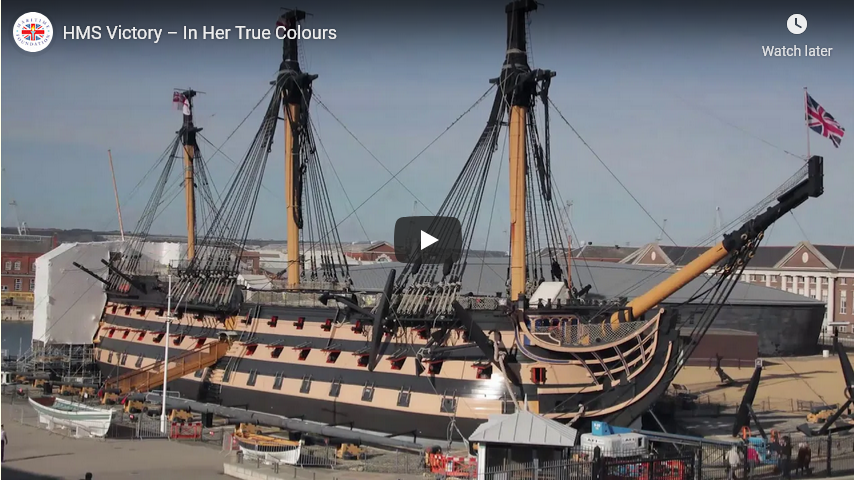
HMS Victory – In Her True Colours
Maritime Foundation
Published 25 Oct 2015HMS Victory – In Her True Colours
Painting HMS Victory – Repainted in the true colours Nelson would have known.
Produced by Maritime Films UK (www.maritimefilmsuk.tv) for the National Museum of the Royal Navy.
QotD: Canada’s Liberal Party
Unlike their supposed analogues, the Democrats in the United States or Great Britain’s Labor Party, Canada’s Liberals are not a party built around certain policies and principles. They are instead what political scientists call a brokerage party, similar to the old Italian Christian Democrats or India’s Congress Party: a political entity without fixed principles or policies that exploits the power of the central state to bribe or bully incompatible constituencies to join together to share the spoils of government.
As countries modernize, they tend to leave brokerage parties behind. Very belatedly, that moment of maturity may now be arriving in Canada. Americans may lose their illusions about my native country; Canadians will gain true multiparty democracy and accountability in government. It’s an exchange that is long past due.
David Frum, “Woe Canada”, New York Times, 2005-04-19.
July 2, 2021
Japan’s Institutionalization of Rape – WAH 037 – June 1942, Pt. 2
World War Two
Published 1 Jul 2021During the occupation of South-East Asia, Japan builds a large system of institutionalised rape to “keep their soldiers happy”. Meanwhile, Allied refugees from Burma find a safe haven in India, but for some, hardship continues.
(more…)
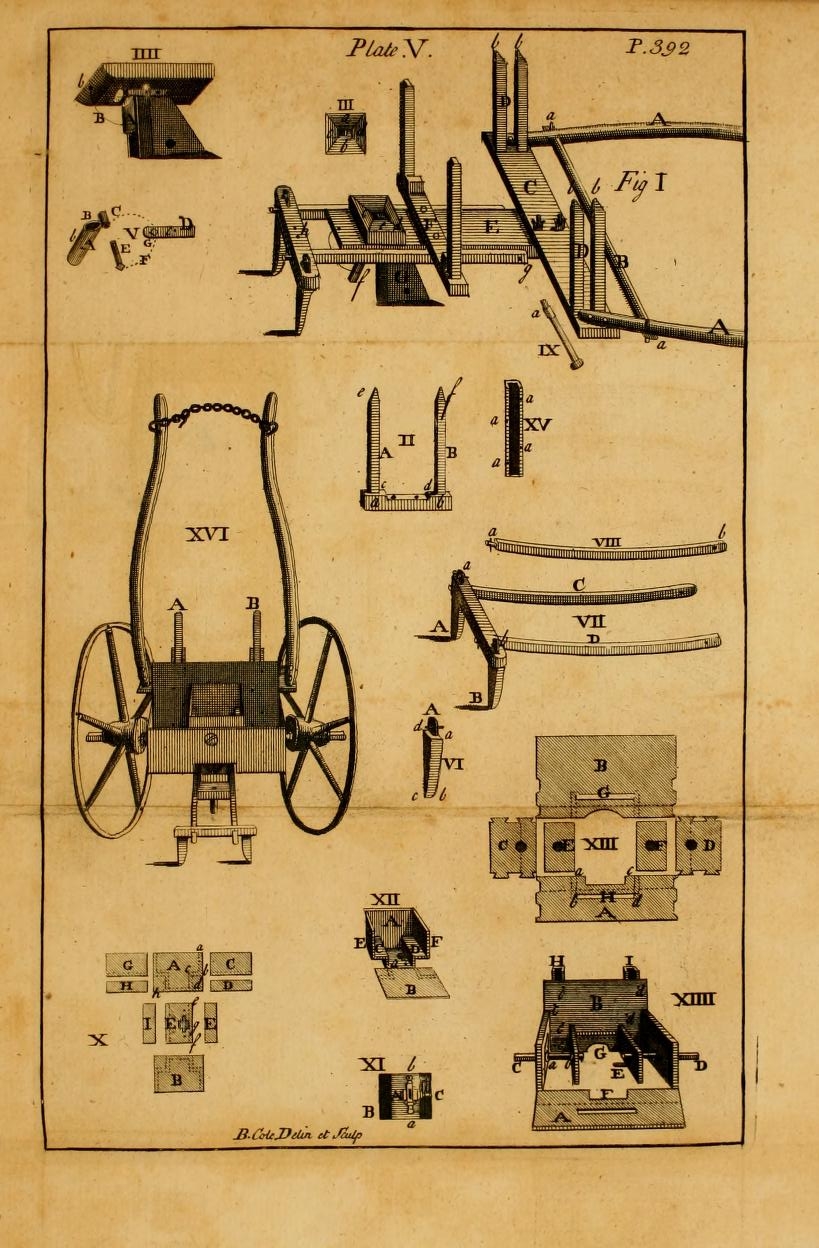
Britain’s “agricultural revolution”
In the latest Age of Invention newsletter, Anton Howes wonders about the almost-forgotten revolution that pre-dated the much better known Industrial Revolution:

Illustration of a seed drill from Horse-hoeing husbandry, 4th edition by Jethro Tull, 1762 (original work 1731).
Wikimedia Commons.
Whatever happened to “the Agricultural Revolution” of seventeenth and eighteenth-century Britain? In recent years I’ve hardly seen the term used at all, and the last major book on the subject was seemingly published twenty-five years ago. It has become almost totally eclipsed by its more famous sibling “the Industrial Revolution”, with its vivid associations of cotton, coal, and exponential hockey-stick graphs.
Yet for all that popularity, nearly every book investigating the causes of modern economic growth complains about the use of The Industrial Revolution. Even one of the pioneers of economic history, T. S. Ashton, who actually wrote the book The Industrial Revolution, complained on the very second page about the term’s inaccuracy. Much like “Holy Roman Empire”, there’s an error in every word. It involved too many series of changes to really be a The, was about so much more than just industry, and was too gradual a process to properly call a revolution. Yet Ashton had to concede that the term had “become so firmly embedded in common speech that it would be pedantic to offer a substitute.” And this was in 1948. In the intervening three quarters of a century, the term has become all the more difficult to dislodge.
I am, like everyone else, guilty of perpetuating the term Industrial Revolution. It’s a useful shorthand for people to at least get a rough idea of what I’m talking about, for me to then refine. Best to start with what people know, or at least what they think they know, and go from there. You may think of the Industrial Revolution as being about cotton, coal, and steam, but the period also saw major developments in every other industry, from agriculture to watch-making, and everything in-between. And so on. My preferred terms, like “acceleration of innovation”, always require at least a paragraph or two of explanation first.
With the term Agricultural Revolution, however, there’s just no need to reference it. Nobody really talks about it, or has anything more than a very vague conception of what it may mean. At best, people recall a few things from decades-old textbooks: names like “Turnip” Townshend or Jethro Tull, and perhaps a smattering of jargon like selective breeding, crop rotation, or enclosures. Even these are widely misunderstood. See last week’s post, for patrons, on how we get almost everything about the enclosure movement wrong. As for the Agricultural Revolution’s timing, who knows? When, over the course of the sixteenth, seventeenth, eighteenth, and maybe even nineteenth centuries is it supposed to have occurred? With the Industrial Revolution, there’s at least a “classic” period of 1760-1830, with a few decades of leeway. That is of course up for debate, and I’m especially keen on pushing it back much earlier, but it’s at least a half-decent starting point. With the Agricultural Revolution, there’s just no baseline at all. The experts themselves can’t agree.
For all that the term Agricultural Revolution has lost its salience, however, early modern changes to the productivity of agriculture were perhaps the most important of all. The ability to support a much larger population is itself a major economic achievement. For all that we obsess over historical measures of GDP per person, we often forget the much earlier and extraordinary increase in just the sheer number of people. In the early seventeenth century England’s population not only recovered to its pre-Black Death peak of about 5 million, but then from 1700 onwards it began to exceed it. By 1800, after just another century, the population of Britain had doubled to 10 million. And this in a period throughout which the country was a net exporter of grain.

How to Edge Joint Two Boards by Hand | Paul Sellers
Paul Sellers
Published 19 Mar 2021Simple things are often hidden in the age of mass information. I put this simple explanation and demonstration together to show you how our fears and doubts are all too often unfounded.
With a little understanding of what’s really happening beneath the plane sole, we can restore methods of working into our daily lives working wood and the result will be new levels of confidence.
——————-Want to learn more about woodworking?
Go to Woodworking Masterclasses for weekly project episodes: http://bit.ly/2JeH3a9
Go to Common Woodworking for step-by-step beginner guides and courses: http://bit.ly/35VQV2o
http://bit.ly/2BXmuei for Paul’s latest ventures on his blog
——————–
Instagram- http://bit.ly/2oWpy7W
Twitter- http://bit.ly/33S7RFa
Pinterest- http://bit.ly/35X5uTf
July 1, 2021
Woodrow Wilson, Isolationism, and the Birth of the Charleston | B2W:ZEITGEIST! I E.20 Harvest 1923
TimeGhost History
Published 30 Jun 2021Wilson won the Nobel Peace Prize for crafting the League of Nations at Versailles, but even he couldn’t bring America out of its isolationism. This season he pours out his disappointment in his first-ever radio address. Optimism still reigns in the world of popular culture though, this season the Charleston is born.
(more…)
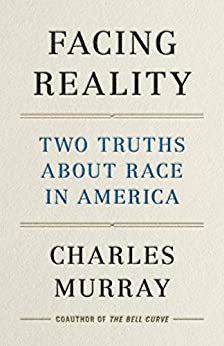
John McWhorter reviews Facing Reality by Charles Murray
In the latest installment from It Bears Mentioning, John McWhorter considers Murray’s latest book to be his weakest:
… Facing Reality is seriously disturbing. Murray gives a great deal of evidence for two points. One is that black people aren’t, on the average, as intelligent as other people. The other is that black people in America are more violent than others.
Those who on some level celebrate the latter as black people getting back at the white man in the only way they can, should know that the facts don’t lend themselves to that vigilante justice analysis. More specifically, black people kill each other more than members of other groups kill each other.
I find the violence point relatively unsurprising. Murray stays agnostic as to what the cause of it is; he proposes no genetic analysis, for example. And really, let’s try this. In the 1960s, a new and powerful fashion in black thought, inherited from the general countercultural mood, rejects championing assimilation to proposing that opposition to whiteness is the soul of blackness. Meanwhile, white leftists encourage as many poor black women as possible to go on welfare, hoping to bankrupt the government and inaugurate a fairer America. Soon, being on welfare in poor black communities is a new normal – hardly the usual, but so common that people grow up seeing not working for a living as ordinary. Then at this same time, a new War on Drugs gave poor black men a way of making half of a living by selling drugs on the black market, amidst a violent culture of gangland turf-policing. This feels more natural to them than it would have to their fathers because 1) the new mood sanctions dismissing traditional values as those of a “chump”, 2) it no longer feels alien to eschew legal employment, and 3) the Drug War helps make it that most boys in such neighborhoods grow up without fathers anyway.
The question might be just how black men amidst these changes would not have embraced violence in a new way.
* * *
The point about intelligence, however, is tough reading. Many will try the usual arguments – that race is a fiction (but while there are gray zones, humans do divide into delineable races genetically), that all races have a range from genuises on down (but the issue is that some races have more geniuses than others), that intelligence tests are “biased” somehow (but no one will specify just how, and this sort of bias is decades gone now).
The data, unless Murray is holding back reams of data with opposite results, cut brutally through all of this. It isn’t that black people are on the bottom on one big test in one big study, but that a certain order of achievement manifests itself in one study after another with relentless and depressing regularity. Asians on top, then come the whites, then Latinos, and then black people.
People will insist that none of this has anything to do with intelligence, but one thing cannot be denied – whatever it signifies, black people have a big problem performing on intelligence tests. The consistency of the results, if it is unconnected to intelligence, is clearly connected to something, or the results wouldn’t be so damnedly consistent.