Quotulatiousness

October 1, 2015

“Siege economics”

Filed under: Britain, Economics, History, WW2 — Tags: , , , — Nicholas @ 04:00

Paul T. Horgan explains why socialist politicians love “siege economics”:

Labour loves siege economies, really adores them. It allows full throated socialism to operate, enabling properly-selected and correctly-motivated state officials to mediate on every commercial transaction between individuals and entities, all in the name of necessity. This is Pitt’s ‘creed of slaves’, using controls to dictate how much can be sold to whom and if it can be sold at all.

Socialists love these economic dictatorships where the function of money as a storage of value and provider of price information is destroyed, where maximum wages and profits are imposed through penal taxation. State ownership of commerce is a given.

Socialists swoon at the thought of regulating demand by rationing supplies to all but a favoured few; it means there is no need for an economic strategy. No need for an interest rate policy if no amount of borrowed money can buy anything. Official inflation is perpetually low when prices are under statutory regulation, despite the inevitable shortages and consequent rise of the black market and the crime of hoarding newly-scarce everyday goods, which requires more Peoples’ Commissars to detect and punish.

Ordinary people who are forced to commit economic crimes just for everyday survival are easier to dominate as their guilt promotes a constant fear of the State and denunciation by their neighbours and friends. Control a person’s economics and you control the person, and socialism is all about the control. And Labour loves to run people’s lives by occupying the commanding heights of the economy to maximise dependency and promote clientelism in the electorate.

This explains why Labour were in their element when Churchill left Atlee, Morrison and Bevin to run the civilian economy while Britain’s greatest warlord used all his energies to create and focus a a domestic military machine and a global coalition to destroy fascism. It is ironic, given modern socialist rhetoric, that the greatest anti-fascist in human history was a Conservative. Perhaps leftists still feel guilt over their fellow travellers’ 1930s pacifism.

June 3, 2015

Winston Churchill I WHO DID WHAT IN WW1?

Filed under: Britain, History, WW1 — Tags: , — Nicholas @ 04:00

Published on 1 Jun 2015

Winston Churchill’s life is actually too big for just one video. Even before World War 1, some biographies about him were published. His career during the Great War saw sheer brilliance like the modernisation of the Royal Navy and utter failure like the Gallipoli Landings. Find out all about Winston Churchill in our portrait.

May 22, 2015

Przemyśl Falls Again – Winston Churchill Gets Fired I THE GREAT WAR Week 43

Filed under: Britain, Europe, France, History, Military, WW1 — Tags: , , — Nicholas @ 05:00

Published on 21 May 2015

The big success of the Gallipoli Campaign never came, thousands of soldiers died and so Winston Churchill is forced to resign. At the same time August von Mackensen is pushing back the Russians and forcing them to hide in Przemyśl fortress – the same fortress they just conquered from the Austro-Hungarians a few weeks earlier.

April 13, 2015

RCAF CF-18 Hornet repainted in “Battle of Britain” theme

Filed under: Britain, Cancon, History, Military, WW2 — Tags: , , , , — Nicholas @ 04:00

The 2015 CF-18 Hornet Demonstration Aircraft is unveiled at a ceremony held at 3 Wing Bagotville in Saguenay, Québec on 27 March 2015. Image: LS Alex Roy, Atelier d'imagerie Bagotville. BN01-2015-0186-005 (click to see full-sized image)

The 2015 CF-18 Hornet Demonstration Aircraft is unveiled at a ceremony held at 3 Wing Bagotville in Saguenay, Québec on 27 March 2015.
Image: LS Alex Roy, Atelier d’imagerie Bagotville.
BN01-2015-0186-005 (click to see full-sized image)

From the RCAF CF-18 Demo Team page:

The CF-18 Demonstration Team will commemorate the 75th anniversary of the Battle of Britain — and the courageous airmen that Prime Minister Winston Churchill dubbed the “few” — during its 2015 show season.

The special design of the demo Hornet, reflecting this theme, will be unveiled at a later date.

The summer of 1940 was a dark time for the Allies. With shocking rapidity, Adolf Hitler’s forces had overrun most of Europe. By mid-June, Allied forces had been pushed off the continent and Nazi forces were at the English Channel, preparing to invade England.

“The Battle of France is over,” said British Prime Minister Winston Churchill. “I expect that the Battle of Britain is about to begin.”

Hitler directed that the Royal Air Force (RAF) — including Canadians and members of other Commonwealth air forces fighting with or as part of the RAF — be eliminated to allow the invasion to take place. The air battle began on July 10, with Nazi attacks on British convoys, ports and coastal radar stations. One of the most savage days was August 13. A few days later Churchill praised the brave airmen in words that have echoed through the decades: “Never in the field of human conflict was so much owed by so many to so few.”

On September 15, the Germans launched a massive attack but, although the fighting was fierce, the RAF, using new tactics, was victorious. Two days later, Hitler postponed the invasion; he never again considered it seriously.

By the end of September, the Battle of Britain was over. It was the first military confrontation won by air power and Germany’s first defeat of the Second World War. More than 2,300 pilots and aircrew from Great Britain and nearly 600 from other nations participated in the Battle.

Of these, 544 lost their lives, including 23 Canadians. More than 100 Canadians flew in the battle, principally as members of the Royal Canadian Air Force’s (RCAF) No. 1 Squadron (later renamed 401 Squadron) and the RAF’s 242 “All Canadian” Squadron. An estimated 300 Canadians served as groundcrew.

It is a great honour for the RCAF and the 2015 CF-18 Demonstration Team to commemorate the dedication and sacrifice of those brave Canadian aircrew and groundcrew who stood up to tyranny and left their mark on history.

February 8, 2015

Refuting the “Golden Age of Television” meme

Filed under: History, Humour, Media, WW2 — Tags: , , , — Nicholas @ 03:00

A few years back, Livejournal user Squid314 took issue with the idea that we’re somehow enjoying a great era of TV programming lately:

As I mentioned in my last entry, I’ve been watching Babylon 5 lately. It’s not a perfect show, but it has one big advantage: it’s consistent and believable.

Contrast this with Doctor Who. Doctor Who is fun to watch, but if you think about it for more than two seconds you notice it’s full of plot holes and contradictions. Things that cause time travel paradoxes that threaten to destroy the universe one episode go without a hitch the next. And the TARDIS, the sonic screwdriver, and the Doctor’s biology gain completely different powers no one’s ever alluded to depending on the situation. The aliens are hysterically unlikely, often without motives or believable science, the characters will do any old insane thing when it makes the plot slightly more interesting, and everything has either a self-destruct button or an easily findable secret weakness that it takes no efforts to defend against.

[…]

So Doctor Who is not a complete loss. But then there are some shows that go completely beyond the pale of enjoyability, until they become nothing more than overwritten collections of tropes impossible to watch without groaning.

I think the worst offender here is the History Channel and all their programs on the so-called “World War II”.

Let’s start with the bad guys. Battalions of stormtroopers dressed in all black, check. Secret police, check. Determination to brutally kill everyone who doesn’t look like them, check. Leader with a tiny villain mustache and a tendency to go into apopleptic rage when he doesn’t get his way, check. All this from a country that was ordinary, believable, and dare I say it sometimes even sympathetic in previous seasons.

I wouldn’t even mind the lack of originality if they weren’t so heavy-handed about it. Apparently we’re supposed to believe that in the middle of the war the Germans attacked their allies the Russians, starting an unwinnable conflict on two fronts, just to show how sneaky and untrustworthy they could be? And that they diverted all their resources to use in making ever bigger and scarier death camps, even in the middle of a huge war? Real people just aren’t that evil. And that’s not even counting the part where as soon as the plot requires it, they instantly forget about all the racism nonsense and become best buddies with the definitely non-Aryan Japanese.

Not that the good guys are much better. Their leader, Churchill, appeared in a grand total of one episode before, where he was a bumbling general who suffered an embarrassing defeat to the Ottomans of all people in the Battle of Gallipoli. Now, all of a sudden, he’s not only Prime Minister, he’s not only a brilliant military commander, he’s not only the greatest orator of the twentieth century who can convince the British to keep going against all odds, he’s also a natural wit who is able to pull out hilarious one-liners practically on demand. I know he’s supposed to be the hero, but it’s not realistic unless you keep the guy at least vaguely human.

[…]

…and then, in the entire rest of the show, over five or six different big wars, they never use the superweapon again. Seriously. They have this whole thing about a war in Vietnam that lasts decades and kills tens of thousands of people, and they never wonder if maybe they should consider using the frickin’ unstoppable mystical superweapon that they won the last war with. At this point, you’re starting to wonder if any of the show’s writers have even watched the episodes the other writers made.

I’m not even going to get into the whole subplot about breaking a secret code (cleverly named “Enigma”, because the writers couldn’t spend more than two seconds thinking up a name for an enigmatic code), the giant superintelligent computer called Colossus (despite this being years before the transistor was even invented), the Soviet strongman whose name means “Man of Steel” in Russian (seriously, between calling the strongman “Man of Steel” and the Frenchman “de Gaulle”, whoever came up with the names for this thing ought to be shot).

So yeah. Stay away from the History Channel. Unlike most of the other networks, they don’t even try to make their stuff believable.

January 23, 2015

Zeppelins Over England – New Inventions For The Modern War I THE GREAT WAR Week 26

Filed under: Europe, France, Germany, History, Military, WW1 — Tags: , , , — Nicholas @ 03:00

Published on 22 Jan 2015

For a decisive advantage on the Western Front, the military commanders of both sides are trying to use technological advances. And so this week, German Zeppelins are flying their first air raids on English towns. Winston Churchill is outlining his ideas for what would later become the tank. Meanwhile at the Western Front, the soldier Adolf Hitler is thinking about how this war is going to continue.

July 31, 2014

Churchill on the news from the Battle of Mons, August 1914

Filed under: Britain, Europe, France, History, Military, WW1 — Tags: — Nicholas @ 08:47

History Today are nearly done digitizing their back-catalogue of articles, including this 1964 article by John Terraine on how the news got back to Britain after the Battle of Mons:

At seven o’clock in the morning of August 24th, 1914, Mr. Winston Churchill was sitting up in bed, working, at his room in the Admiralty. The door opened, and the Secretary of State for War, Field-Marshal Lord Kitchener, appeared.

    “These were the days before he took to uniform, and my recollection is that he had a bowler hat on his head, which he took off with a hand which also held a slip of paper. He paused in the doorway and I knew in a flash and before ever he spoke that the event had gone wrong. Though his manner was quite calm, his face was different.

    I had the sub-conscious feeling that it was distorted and discoloured as if it had been Punched with a fist. His eyes rolled more than ever. His voice, too, was hoarse. He looked gigantic. ‘Bad news,’ he said heavily and laid the slip of paper on my bed. I read the telegram.

    It was from Sir John French: …I forget much of what passed between us. But the apparition of Kitchener Agonistes in my doorway will dwell with me as long as I live. It was like seeing old John Bull on the rack!”

Sir John French’s telegram contained the first information to the British Government of the Battle of Mons, which had taken place on the preceding day:

    “My troops have been engaged all day with the enemy… we held our ground tenaciously. I have just received a message from G.O.C. 5th French Army that his troops have been driven back, that Namur has fallen… I have therefore ordered a retirement… which is being carried out now. It will prove a difficult operation, if the enemy remains in contact…”

The last sentence was electrifying:

    “I think that immediate attention should be directed to the defence of Havre.”

It was the reference to Namur that produced the first shock in Churchill’s mind.

    “We were evidently in the presence of new facts and of a new standard of values. If strong fortresses were to melt like wisps of vapour in a morning sun, many judgments would have to be revised. The foundations of thought were quaking…

    ‘Fortify Havre,’ said Sir John French. One day’s general battle and the sanguine advance and hoped-for counterstroke had been converted into ‘Fortify Havre’.”

The War was now precisely three weeks old. During those three weeks, governments, military leaders and populations had existed in a fog of ignorance and misconception. This was equally true of both sides; but the worst effects were felt by the Allies. Britain had committed her army to the direct support of the French; but almost no-one in Britain understood the nature of the operations to which the French had committed themselves.

June 5, 2014

QotD: Churchill, Roosevelt and de Gaulle

Filed under: Europe, France, History, Quotations, USA, WW2 — Tags: , , , — Nicholas @ 12:08

The central problem of relations with de Gaulle stemmed from President Roosevelt’s distrust. Roosevelt saw him as a potential dictator. This view had been encouraged by Admiral Leahy, formerly his ambassador to Marshal Petain in Vichy, as well as several influential Frenchmen in Washington, including Jean Monnet, later seen as the founding father of European unity.

Roosevelt had become so repelled by French politics that in February he suggested changing the plans for the post-war Allied occupation zones in Germany. He wanted the United States to take the northern half of the country, so that it could be resupplied through Hamburg rather than through France. “As I understand it,” Churchill wrote in reply, “your proposal arises from an aversion to undertaking police work in France and a fear that this might involve the stationing of US Forces in France over a long period.”

Roosevelt, and to a lesser extent Churchill, refused to recognize the problems of what de Gaulle himself described as “an insurrectional government”. De Gaulle was not merely trying to assure his own position. He needed to keep the rival factions together to save France from chaos after the liberation, perhaps even civil war. But the lofty and awkward de Gaulle, often to the despair of his own supporters, seemed almost to take a perverse pleasure in biting the American and British hands which fed him. De Gaulle had a totally Franco-centric view of everything. This included a supreme disdain for inconvenient facts, especially anything which might undermine the glory of France. Only de Gaulle could have written a history of the French army and manage to make no mention of the Battle of Waterloo.

Anthony Beevor, D-Day: The Battle for Normandy, 2009.

May 28, 2014

The “servant problem” of post-Victorian England

Filed under: Books, Britain, History, Media — Tags: , , , , — Nicholas @ 07:36

Before the widespread availability of electricity, no middle class household in England could get by without at least one servant. Even as modern labour-saving appliances (along with proper plumbing) started to take their place in the home, servants were still deemed an essential part of being middle- or upper-class. It may account for some of the fascination with TV shows like Downton Abbey or the earlier Upstairs, Downstairs to modern audiences — they give at least a bit of a glimpse into a very different domestic world. At Bookforum, Daphne Merkin reviews a books that look at the “servant problem”:

Servants is chockablock with incredulous-making details about the exploitative conditions in which household help lived and worked (these included cramped, chilly, and spartan sleeping quarters, endless hours, and the overriding assumption of inferiority), as well as anecdotes of supreme helplessness on the part of the coddled rich, such as the following: “Lord Curzon, whose intellect was regarded as one of the glories of the Empire, was so baffled by the challenge of opening a window in the bedroom of the country house in which he was staying (no servants being available so late at night), that he simply picked up a log from the grate and smashed the glass.” Even after World War II, when homes had begun to be wired for electricity despite the gentry’s insistence on the vulgarity of such improvements and the ideal of the 1950s self-contained (and servantless) housewife was hoving into view, so otherwise gifted a chap as Winston Churchill was unable, according to his valet John Gibson, to dress himself without assistance: “He was social gentry … He sat there like a dummy and you dressed him.” As easy as it is to snicker at such colossal ineptitude on the part of the cultural elite, it is also intriguing to consider how this kind of infantilizing treatment might have facilitated their performance in demanding grown-up roles — like someone playing with rubber ducks in the bath before going out to lead men in a military campaign.

Servants takes the reader from the days of Welbeck Abbey, the home of the eccentric and reclusive Duke of Portland, where upper servants had their own underservants to wait on them, to the gradual erosion of the older forms of domestic service and on up through the new world of do-it-yourself home comforts as devised by technology and a greater show of equality between employer and servant. This world, ushered in with the 1950s, shunned the “badge of servitude” that was conveyed by uniforms, surreal daily routines (whether it meant Ladyships who couldn’t sleep with creases on a pillowcase or Ladyships who insisted on cutting their boiled eggs with a letter opener), and a feudal attitude that took no more cognizance of domestics than it did of the furniture. “It was in the best houses considered quite unnecessary (in fact poor form),” Lethbridge notes, “for servants to knock before entering a room. This was partly because they lived in such everyday familiarity with the family that there was nothing to hide from them and partly because … their presence made no difference whatsoever to whatever was being said or going on.”

[…]

There’s much to think about in both these books — not least the particularly British style of treating domestics, both less casually sadistic and less casually amorous than, say, white Americans’ attitude toward black slaves. Indeed, I suspect that one of the reasons American audiences delight in the travails and triumphs of the gaggle of domestics on Downton Abbey is out of a sense of superiority that the “servant problem” in such acute, institutionalized form isn’t ours. Much as we may envy them all that pampering, we also like to look down our noses at it as going against the democratic and independent Yankee ethos. To this point it’s worth noting that Betty Friedan in The Feminine Mystique referred precisely to “the servant problem” as one of the besetting woes of the upper-middle-class housewives she was looking to liberate, and that our habit of befriending those who clean our kitchens and bathrooms and look after our children can’t disguise the fact that we value their hourly labor less than we value a twenty-minute haircut and that we live largely in ignorance of their thoughts and feelings.

December 18, 2013

Bank of England switching to plastic from paper

Filed under: Britain — Tags: , , — Nicholas @ 09:41

Following the example of Australia (and more recently, Canada), the Bank of England will be printing bank notes on plastic from 2016 onwards:

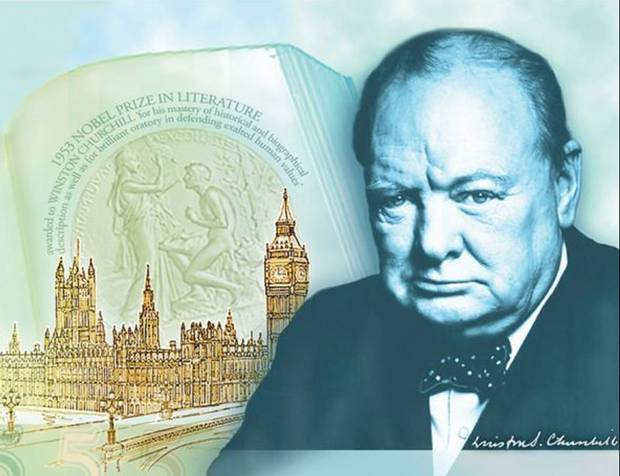
Winston Churchill concept art for 5 pound note

Mark Carney, the governor of the Bank of England, has formally announced that Britain will switch to using plastic banknotes in 2016, ending 320 years of paper money.

After a public consultation in which 87% of the 13,000 respondents backed the new-style currency, the Bank said it would introduce “polymer” notes, as it prefers to call them, in two years’ time, starting with the new £5 note featuring Winston Churchill in 2016 and the Jane Austen £10 a year later.

Speaking at a press conference in the Bank’s Threadneedle Street headquarters, Carney said: “Our polymer notes will combine the best of progress and tradition. They will be more secure from counterfeiting and more resistant to damage while celebrating the history and tradition that is important both to the Bank and the nation as a whole.”

The move follows Carney’s native Canada, where plastic notes are being rolled out, and Australia, where they have been in circulation for more than two decades.

Carney launched a public consultation on polymer banknotes, seen as cleaner and more durable, shortly after arriving at the Bank this summer. However, the Bank’s notes division has been considering plastic money for several years.

I’m still not convinced about the Canadian polymer banknotes: they tend to stick together much more than the paper notes did and they are reportedly susceptible to “fusing” together in high heat.

September 30, 2013

Re-evaluating Neville Chamberlain

BBC News Magazine on the reputation of British PM Neville Chamberlain:

…this derogatory reference reflects the continuing potency of a well-established conventional wisdom assiduously propagated by Chamberlain’s detractors after his fall from the premiership in May 1940. As Churchill is once supposed to have quipped, “Poor Neville will come badly out of history. I know, I will write that history”.

In his influential account The Gathering Storm, published in 1948, Churchill characterised Chamberlain as “an upright, competent, well meaning man” fatally handicapped by a deluded self-confidence which compounded an already debilitating lack of both vision and diplomatic experience. For many years, this seductive version of events remained unchallenged and unchallengeable.

[…]

The Munich agreement, which later came to symbolise the evils of appeasement, was signed 75 years ago, in the early hours of 30 September. At Munich, Britain and France acquiesced in the dismemberment of Czechoslovakia and the transfer of its Sudeten region to Germany in face of Hitler’s increasingly bellicose threats of military action. Chamberlain’s hopes that this humiliating sacrifice would satisfy Hitler’s last major territorial demand and thus avert another catastrophic war were dashed within four months.

After this monumental failure of policy Chamberlain’s name became an abusive synonym for vacillation, weakness, immoral great-power diplomacy and, above all, the craven appeasement of bullies — whatever the price in national honour. Despite his many achievements in domestic policy, therefore, ultimately Chamberlain’s reputation remains indelibly stained by Munich and the failure of his very personal brand of diplomacy.

As he confessed in the Commons at the outbreak of war, “Everything I have worked for, everything that I have hoped for, everything that I have believed in during my public life, has crashed into ruins.”

September 7, 2013

QotD: Truth, rumour, and sketchy footnotes

Filed under: Books, History, Humour, Media, Quotations — Tags: , , — Nicholas @ 00:01

In the Aeneid, Virgil wrote Fama, malum qua non aliud velocius alium, which tranlates as “Rumour, than whom no other evil thing is faster.” Fifteen centuries later, William Shakespeare expounded upon this at great length in Rumor’s prologue to Henry IV, part 2. Two centuries later, Jonathan Swift wrote “Falsehood flies, and the truth comes limping after it.” A century later C.H. Spurgeon said “Falsehood will fly from Maine to Georgia while truth is pulling her boots on,” but it would appear that he was quoting Fisher Ames, who said the same thing thirty years earlier.

Perhaps unhappy with having lifted the quote directly, in 1859 Spurgeon wrote “A lie will go ’round the world while the truth is pulling its boots on.” Eighty years or so after that, Winston Churchill slowed falsehood a bit, and then vastly improved the quote with a different article of clothing when he said “A lie gets halfway around the world before the truth has a chance to get its pants on.”

Within four hundred years, however, truth could not find the airlock. In a stroke of irony, the previous pedigree was lost, which means that not only did all copies of The Yale Book of Quotations go missing, but now falsehood spread throughout the galaxy while truth never left the house. Also, somebody deleted this footnote.

Howard Tayler, Schlock Mercenary, 2012-11-18

April 9, 2013

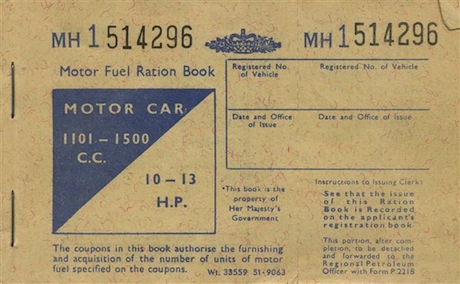
Britain’s wartime rationing was the actual start of the modern welfare state

Filed under: Britain, Bureaucracy, Food, Government, History, WW2 — Tags: , , , — Nicholas @ 08:31

In the Telegraph, Daniel Hannan shows that the wartime coalition government led by Winston Churchill actually laid the groundwork for the post-war “creation” of the welfare state:

British WW2 Fuel ration book cover

It wasn’t the 1945 Labour Government that created the welfare state, that Saturn which now devours its children. The real power-grab came in 1940.

With Britain’s manpower and economy commandeered for the war effort, it seemed only natural that ministers should extend their control over healthcare, education and social security. Hayek chronicled the process at first hand: his Road to Serfdom was published when Winston Churchill was still in Downing Street.

Churchill had become prime minister because he was the Conservative politician most acceptable to Labour. In essence, the wartime coalition involved a grand bargain. Churchill was allowed to prosecute the war with all the nation’s resources while Labour was given a free hand to run domestic policy.

The social-democratic dispensation which was to last, ruinously, for the next four decades — and chunks of which are rusting away even today — was created in an era of ration-books, conscription, expropriations and unprecedented spending. The state education system, the NHS, the Beveridge settlement — all were conceived at a time when it was thought unpatriotic to question an official, and when almost any complaint against the state bureaucracy could be answered with “Don’t you know there’s a war on?”

All quite true, and all quite necessary at the time. Without significant amounts of imported food, Britain could not feed its people. Even with imports, the amount of available food was subject to unpredictable fluctuations as losses at sea interrupted supply and left empty shelves in grocery stores. Although losses were relatively low early in the war (early U boats were unable to stay at sea for long periods, and German bases were a long way from most British trade routes), the writing was on the wall if the war continued for years.

To fight a totalitarian regime, Britain had to emulate some of its methods (ironically, full rationing wasn’t introduced in Germany until much later in the war). For the middle classes, this was an unwelcome intrusion of the state into private affairs, but generally accepted due to the war. For the working classes, in many cases it was actively welcomed. While the rations were small, there was the promise — and generally a fulfilled promise — that some would be made available even in the poorest areas of the country. My mother was nine when the war began, and she remembers seeing more food in the stores of Middlesbrough after rationing was introduced. After the deprivations of the Great Depression, many people in the north and in Scotland were better fed and clothed during the rationing period than they had been for nearly a decade.

Given that information, it should not be surprising that so many people voted for Labour in the 1945 elections: they’d had what they believed to be a live demonstration of the benefits of socialism for six years of war, and didn’t want to go back to the pre-1940 status quo.

December 8, 2012

Jefferson, Lincoln, Churchill, and Yogi Berra

Filed under: Books, History, Media, Politics, Quotations — Tags: , , , — Nicholas @ 11:27

What do these four men have in common? They’re “flypaper figures“: people who frequently are quoted as saying things they never said:

“People will see a quote and it appeals to an opinion that they have and if it has Jefferson’s name attached to it that gives it more weight,” she says. “He’s constantly being invoked by people when they are making arguments about politics and actually all sorts of topics.”

A spokeswoman for the Guide‘s publisher said it was looking into the quote. Mr. Norris’s publicist didn’t respond to requests for comment.

To counter what she calls rampant misattribution, Ms. Berkes is fighting the Internet with the Internet. She has set up a “Spurious Quotations” page on the Monticello website listing bogus quotes attributed to the founding father, a prolific writer and rhetorician who was the principal author of the Declaration of Independence.

[. . .]

Jefferson is a “flypaper figure,” like Abraham Lincoln, Mark Twain, Winston Churchill and baseball player and manager Yogi Berra — larger-than-life figures who have fake or misattributed quotes stick to them all the time, says Ralph Keyes, an author of books about quotes wrongly credited to famous or historical figures.

October 12, 2012

Winston Churchill’s papers now available online

Filed under: Britain, History, Media, WW2 — Tags: — Nicholas @ 09:41

Anna Leach at The Register on the newly available writings of Winston Churchill:

The man who famously stated that the British would “fight them on the beaches” in the event of a German invasion has had some of his less-often quoted words including his private letters (and his receipts for cigars) fully digitised and made available online in the Churchill archive.

Winston Churchill’s private musings, letters to Stalin, doodles and appointments diaries are now on the internet after two years of painstaking digitisation at Churchill College, Cambridge.

The haul of papers documents all areas of the great man’s life and times from the most trivial to the most important.

« Newer PostsOlder Posts »

Powered by WordPress