
Quotulatiousness

June 7, 2024

Nigel Farage’s challenge to the Conservatives

Ed West perhaps goes a bit far in comparing Nigel Farage and his Reform UK to Lenin’s Bolsheviks in the October Revolution, but he’s not wrong about what the rise of Farage’s party might mean to the already dim re-election hopes of Rishi Sunak’s bedraggled clown posse:
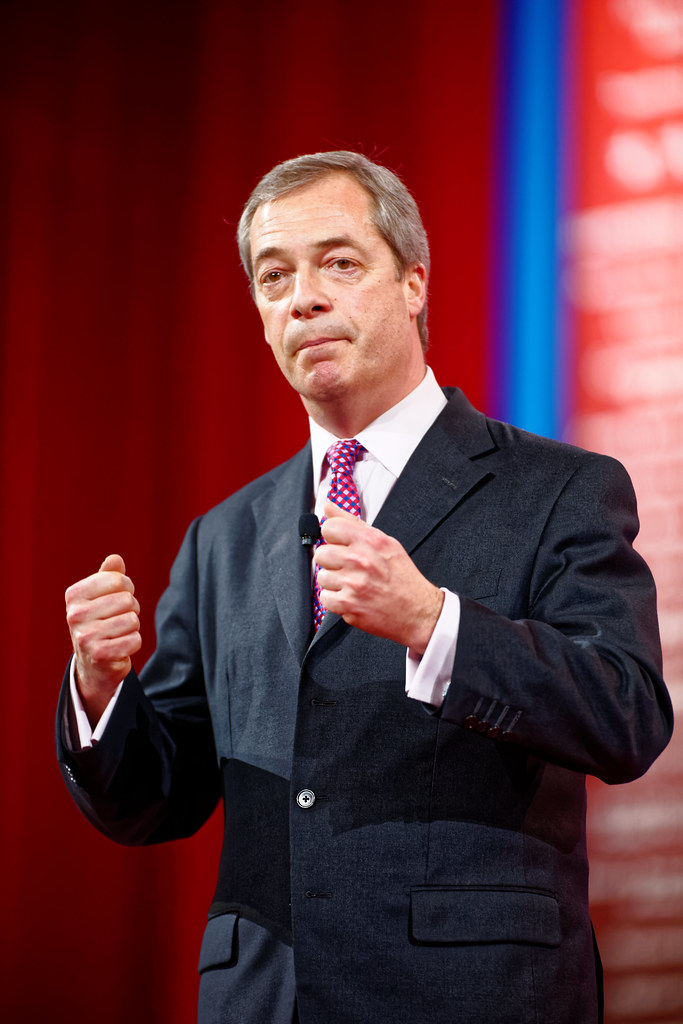
“Nigel Farage” by Michael Vadon is licensed under CC BY-SA 2.0 .

I imagine that the last remaining serotonin emptied from the bodies of the Tory election team when they heard that Nigel Farage was to return as leader of the Reform Party and stand at Clacton.

The likelihood is that Farage will win that seat, and the reception he received was certainly electric. And Clacton is not even among Reform’s top 20 targets, according to Matt Goodwin.

It’s possible that the party could overtake the Tories in some polls, although I doubt that they will beat them on election day. That is certainly Farage’s aim, and as he said on Monday: “I genuinely believe we can get more votes in this election than the Conservative Party. They are on the verge of total collapse … I’ve done it before. I’ll do it again. I will surprise everybody.”

Contrary to the jokes about Farage failing to get elected, or the criticism that he is a “serial loser“, he is arguably the most successful politician of the past decade. He built up a minuscule party of ‘fruitcakes and gadflies’ to win two successive European elections. He made Brexit happen, and then stood his candidates down in a number of seats to ensure the Leave alliance remained united in 2019, securing Boris Johnson a victory.

For which he didn’t get the thanks he felt was due, something he alluded to at Monday’s press conference. From what I understand the Tory establishment treated him with a snooty disdain which many an outsider has experienced with the British upper class. And for those making the old point that Farage’s private school background bars him from being a true outsider, that’s not how high society works. Populist movements claiming to represent the downtrodden or disenfranchised have invariably been led by people from highly educated or privileged backgrounds, whether of the Left or Right.

Farage’s targeted constituency certainly fits that bill. Clacton is the town that Matthew Parris called “Britain on crutches” in a piece warning the Tories not to desert their traditional middle-class voters. But the problem for the party is that, through a combination of authoritarian vibes and very liberal policies, they have managed to lose both. Rather than making moderate, soothing sounds while using the British executive’s immense power to shape the country around their will, they have done the exact opposite.

The Government’s disastrous polling figures are not some great mystery. Conservatives don’t tend to have the same emotional attachment to their party as the Labour family does. They vote Tory because they want them to do three things: cut immigration, put more criminals away, and lower taxes. It’s nothing more complicated than that, and they’ve failed on all three.

It is obviously the former that has provoked the most bitterness towards the party. I’m a great believer in Stephen Davies’s analysis of alignment in politics, and the central issue in British politics is immigration, multiculturalism and diversity. Labour are unquestionably on one side of this issue; the Tories are broadly pro-multiculturalism and, while issuing soundbites critical of high immigration, have raised it to record levels. If both main parties are seen to be on one side, something else will fill that gap in the market. Political parties are amoral bodies seeking voting coalitions, and the side which is most united in aligning its core groups around primary and secondary issues will win.
June 3, 2024

Decoding Nigel Farage’s “hidden agenda” … that isn’t actually hidden at all

Filed under: Britain, Cancon, Media, Politics — Tags: , , , , — Nicholas @ 04:00

I’ve been theorizing that the reason Nigel Farage didn’t plunge immediately into the British election campaign was that he was expecting Rishi Sunak to do his very best Kim Campbell impersonation and utterly destroy the Conservatives as a viable political party. It turns out that that’s pretty much exactly what he’s doing:

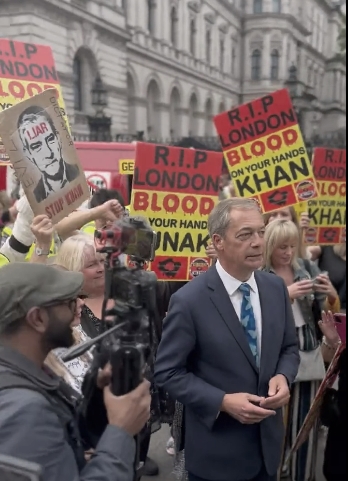
Nigel Farage at the ULEZ protests in London, 30 August 2023.
Image from JoNova.

The biggest question of all, however, is what Farage wants to do after polling day. For months now, a growing band of Conservative MPs have been agitating openly for him to be admitted to the party; even Rishi Sunak now says he “respects” him.

Close friends of Farage believe his real plan is to wait for the Tories to implode, and in the aftermath arrive as a saviour in waiting. “He doesn’t want to be the person who puts the bullet in the back of their heads, why be seen to alienate Conservative voters?” said one, while a second, a senior Tory, said: “Our party needs to be able to come back with people like Nigel, where we basically go back to be that authentic Thatcherite party — his natural home.”

[Reform UK leader Richard] Tice says he wants to destroy and replace the Conservative Party, but when asked if he feels the same, Farage says: “I certainly don’t have any trust for them or any love for them”. So does he want to change it? “I want to reshape the centre-right, whatever that means.”

Asked directly if his friends are right and he wants to join the Tories, he adds: “Why do you think I called it Reform? Because of what happened in Canada — the 1992-93 precedent in Canada, where Reform comes from the outside, because the Canadian Conservatives had become social democrats like our mob here. It took them time, it took them two elections, they became the biggest party on the centre-right. They then absorbed what was left of the Conservative Party into them and rebranded.”

I suggest this sounds a lot like he’s floating a merger. “More like a takeover, dear boy,” he replies, grinning like a Cheshire Cat.

May 26, 2024

Will Rishi Sunak be the British Kim Campbell?

Filed under: Britain, Media, Politics — Tags: , , , , , — Nicholas @ 05:00

The British election is now underway and if the polls are accurate, Rishi Sunak’s Conservatives are in for one heck of a thrashing. If he’s particularly unlucky, he could come close to former Canadian Prime Minister Kim Campbell’s electoral shipwreck in 1993 (losing a Parliamentary majority and being reduced to two seats in the Commons), but perhaps Labour leader Sir Keir Starmer isn’t quite the <sarc>charismatic juggernaut</sarc> that Canada’s Jean Chrétien was:

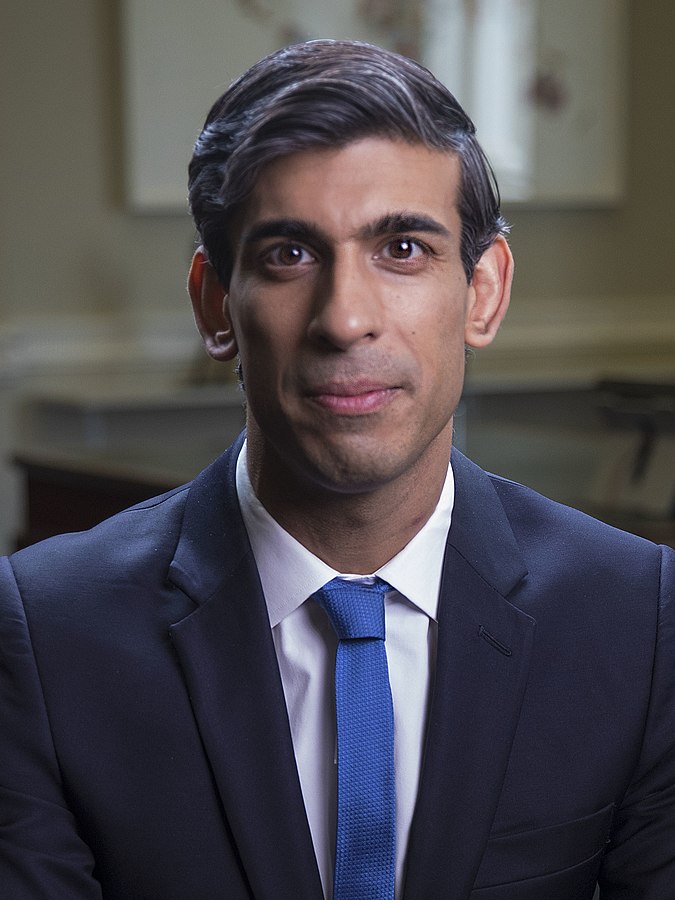
Rishi Sunak shortly after becoming Chancellor of the Exchequer in 2020.

I’m old enough to remember the sense of optimism, hope and promise felt when Tony Blair was elected back in 1997; not by me, obviously, but I could at least appreciate that other people felt that ‘things can only get better’.

Whether you think they did or not, Blair transformed the country in his own image, just as his predecessor Margaret Thatcher had done during her similarly long reign. No one could say the same of the recent fourteen years of Tory-led governments, a period that has been marked by a continual drift away from conservatism both within civil society and in many ways driven by the administration itself.

As I have said one or two times before, you could have woken up from a long coma and had no idea who had been in charge the whole time. It’s an indication of how far the Overton Window has shifted that proposals to limit student-led immigration are considered way out there despite being mainstream only a decade ago – proposals which the Prime Minister backed out of. One of the benefits of being in government should be the ability to shift the terms of debate, but whereas the rest of Europe is mostly turning Right, Britain under the Tories has gone the other way.

In retrospect, and I have definitely said this more than once or twice, the post-Brexit immigration policy was their biggest mistake. It meant the worst of both worlds for the country and for Tory coalition building, alienating both a large section of cautious voters over leaving the EU, and the many cultural conservatives they picked up in 2019 who saw the referendum as a vote on immigration.

In a parallel universe where the government reduced net migration to five figures, there may well have been immediate pain: struggles to fill vacancies, inflationary pressure caused by rising wages, and universities which now cannot survive without using the immigration system as a funding mechanism. But the Tories would have been on 30% rather than 20%; that they aren’t aware enough to understand this is strange, but then they aren’t an ideological party.

Rishi Sunak’s decision to hold the election early is very curious. Perhaps he was worried that enough letters would be handed in triggering a leadership contest; perhaps he feared that Nigel Farage would reappear and make the Reform Party even more of a problem. Perhaps he’s just impetuous and has had enough, but the announcement itself, in pouring rain and drowned out by a New Labour anthem played by a public nuisance, was fitting.

The prime minister is very unpopular, and the Tories are currently polling at catastrophic levels, but there is little enthusiasm for Labour and more people think the country will get worse than better after they are elected.

« Newer Posts

Powered by WordPress


