Quotulatiousness

December 6, 2022

The outcome of the latest Munk Debates

Filed under: Cancon, Media, Politics — Tags: , , , , , , , — Nicholas @ 03:00

Donna Laframboise summarizes what happened last week in the Munk Debates as Matt Taibbi and Douglas Murray spoke in favour of the proposition “Be it resolved, don’t trust mainstream media” while Malcolm Gladwell and Michelle Goldberg argued against:

Last week, an old fashioned public debate took place here in Canada. The topic:

Be it resolved, don’t trust mainstream media.

Journalists Douglas Murray (UK) and Matt Taibbi (US) argued the pro/agree side.

Journalists Malcolm Gladwell (Canada) and Michelle Goldberg (US) argued the con/disagree side.

The event was sponsored by Munk Debates, which has been holding these events since 2008. Before the debate commences, audience members vote. Two hours later, they vote again.

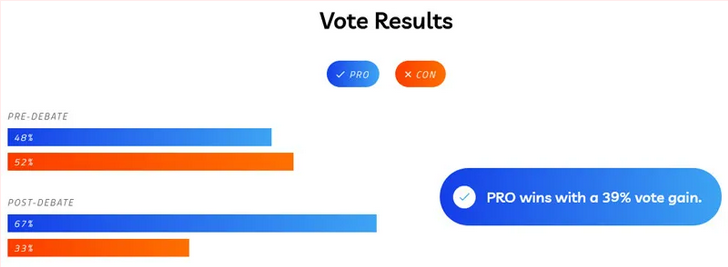
On this occasion, the opinion swing was dramatic. The “don’t trust” side grew by 39% — apparently the largest swing ever in a Munk debate. At the beginning, slightly less than half of the in-house audience held this opinion (48%). Afterward, it was two-thirds (67%).

(When two-thirds of a population agrees on anything, you’re in supermajority territory — a number large enough to change constitutions.)

Here’s the key point: the winning side of the debate placed great emphasis on the scandalous manner in which Canada’s mainstream media covered the Freedom Convoy. Residing as he does in Britain, Douglas Murray had no trouble cutting through the nonsense. In the 3-minute video clip at the top of this post, he says our Prime Minister started by calling protesters names, and ended by invoking the Emergencies Act. Here’s what he says next:

    At such a time, what would the mainstream media do? It would question it. It would question it. The Canadian mainstream media did not.

    The Canadian mainstream media acted as an Amen chorus of the Canadian government. I will give you a couple of examples, but ladies and gentlemen I could go on for hours with examples of this. You had a CBC host describing the Freedom Convoy as a quote feral mob

    Why is this so rancid? Utterly, utterly rancid and corrupt. Because in this country, your media, your mainstream media is funded by the government. A totally corrupted system.

December 2, 2022

Matt Taibbi – “This is not journalism. It’s political entertainment, and therefore unreliable.”

Filed under: Cancon, Media, USA — Tags: , , , — Nicholas @ 05:00

Matt Taibbi posted his opening remarks for the Munk Debate on the topic “Be it resolved: Do not trust the mainstream media”:

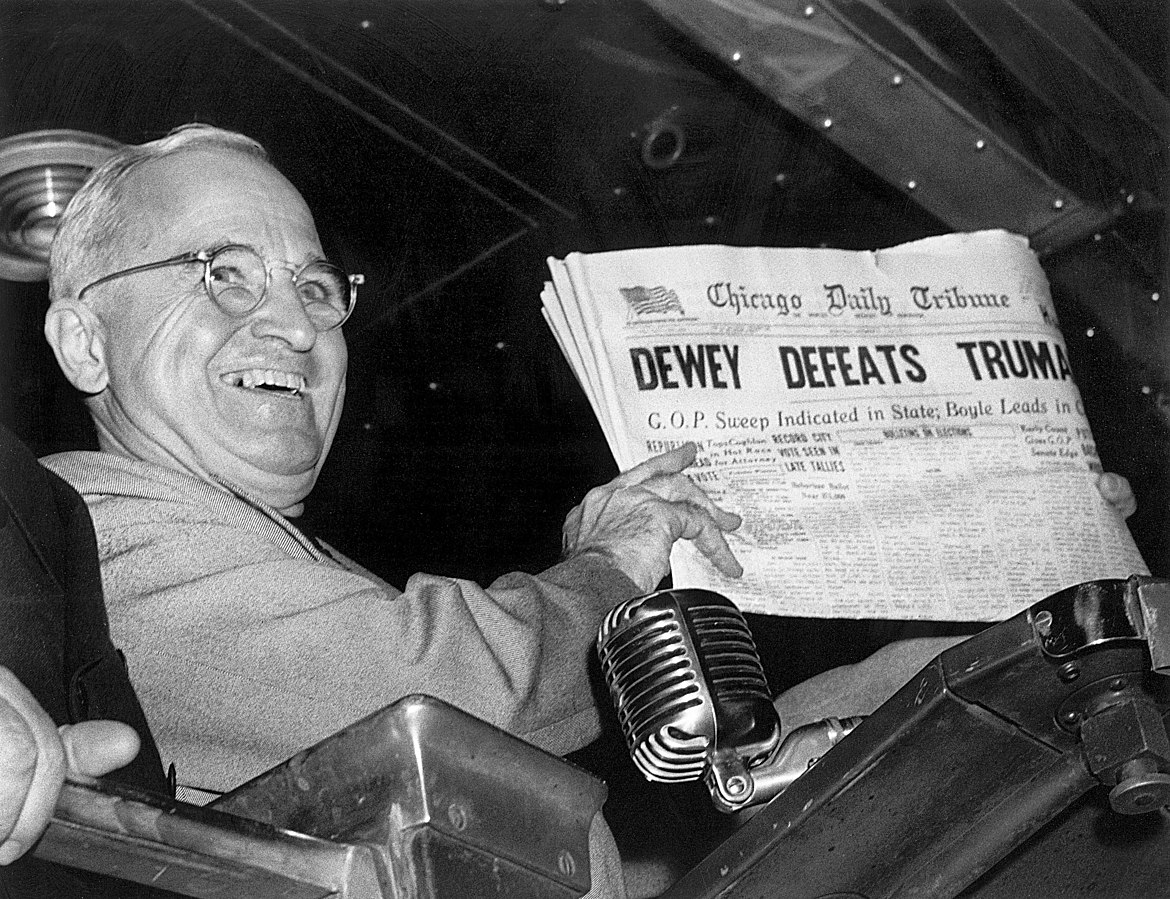
President Harry S. Truman holds up an election day edition of the Chicago Daily Tribune, which – based on early results – mistakenly announced “Dewey Defeats Truman.”
AP Photo/Byron Rollins from November 4, 1948, via Wikimedia Commons

I love the news business. It’s in my bones. But I mourn for it. It’s destroyed itself.

My father had a saying: “The story’s the boss.” In the American context, if the facts tell you the Republicans were the primary villains in this or that disaster, you write that story. If the facts point more at Democrats, you go that way. If it turns out they’re both culpable, as was often the case for me across nearly ten years of investigating Wall Street and the causes of the 2008 crash for Rolling Stone, you write that. We’re not supposed to nudge facts one way or another. Our job is to call things as we see them and leave the rest up to you.

We don’t do that now. The story is no longer the boss. Instead, we sell narrative, as part of a new business model that’s increasingly indifferent to fact.

When there were only a few channels, the commercial strategy of news companies was to aim for the whole audience. A TV news broadcast aired at dinnertime and was designed to be consumed by the whole family, from your crazy right-wing uncle to the sulking lefty teenager. This system had its flaws. However, making an effort to talk to everybody had benefits, too. For one, it inspired more trust. Gallup polls twice showed Walter Cronkite of CBS to be the most trusted person in America. That would never happen today.

[…]

Our colleagues on the other side tonight represent two once-great media organizations. Michelle, the Pew survey says the audience for your New York Times is now 91% comprised of Democrats. Malcolm, the last numbers I could find for the New Yorker were back in 2012, and even then, only 9% of the magazine’s readers were Republicans. I imagine that number is smaller now.

This bifurcated system is fundamentally untrustworthy. When you decide in advance to forego half of your potential audience, to fulfill the aim of catering to the other half, you’re choosing in advance which facts to emphasize and which to downplay. You’re also choosing which stories to cover, and which ones to avoid, based on considerations other than truth or newsworthiness.

This is not journalism. It’s political entertainment, and therefore unreliable.

With editors now more concerned with retaining audience than getting things right, the defining characteristic across the business — from right to left — is inaccuracy. We just get a lot of stuff wrong now. It’s now less important for reporters to be accurate than “directionally” correct, which in center-left “mainstream” media mostly comes down to having the right views, like opposing Donald Trump, or anti-vaxxers, or election-deniers, or protesting Canadian truckers, or any other people deemed wrongthinkers.

In the zeal to “hold Trump accountable”, or oppose figures like Vladimir Putin, ethical guardrails have been tossed out. Silent edits have become common. Serious accusations are made without calling people for comment. Reporters get too cozy with politicians, and as a result report information either without attribution at all or sourced to unnamed officials or “people familiar with the matter”. Like scientists, journalists should be able to reproduce each other’s work in the lab. With too many anonymous sources, this becomes impossible.

November 30, 2022

James Gillray

Filed under: Books, Britain, History, Media, Politics — Tags: , , , , , — Nicholas @ 03:00

In The Critic, James Stephens Curl reviews a new biography of the cartoonist and satirist James Gillray (1756-1815), who took great delight in skewering the political leaders of the day and pretty much any other target he fancied from before the French Revolution through the Napoleonic wars:

During the 1780s Gillray emerged as a caricaturist, despite the fact that this was regarded as a dangerous activity, rendering an artist more feared than esteemed, and frequently landing practitioners into trouble with the law. Gillray began to excel in invention, parody, satire, fantasy, burlesque, and even occasional forays into pornography. His targets were the great and good, not excepting royalty. But his vision is often dark, his wit frequently cruel and even shockingly bawdy: some of his own contemporaries found his work repellent. He went for politicians: the Whigs Charles James Fox (1749-1806), Edmund Burke (1729-97), and Richard Brinsley Butler Sheridan (1751-1816) on the one hand, and William Pitt (1759-1806) on the other. Fox was a devious demagogue (“Black Charlie” to Gillray); Burke a bespectacled Jesuit; and Sheridan a red-nosed sot. But Gillray reserved much of his venom for “Pitt the Bottomless”, “an excrescence … a fungus … a toadstool on a dunghill”, and frequently alluded to a lack of masculinity in the statesman, who preferred to company of young men to any intimacies with women, although the caricaturist’s attitude softened to some extent as the wars with the French went on.

As the son of a soldier who had been partly disabled fighting the French, Gillray’s depictions of the excesses of the Revolution were ferocious: one, A Representation of the horrid Barbarities practised upon the Nuns by the Fish-women, on breaking into the Nunneries in France (1792), was intended as a warning to “the FAIR SEX of GREAT BRITAIN” as to what might befall them if the nation succumbed to revolutionary blandishments. The drawing featured many roseate bottoms that had been energetically birched by the fishwives. He also found much to lampoon in his depictions of the Corsican upstart, Napoléon.

[…]

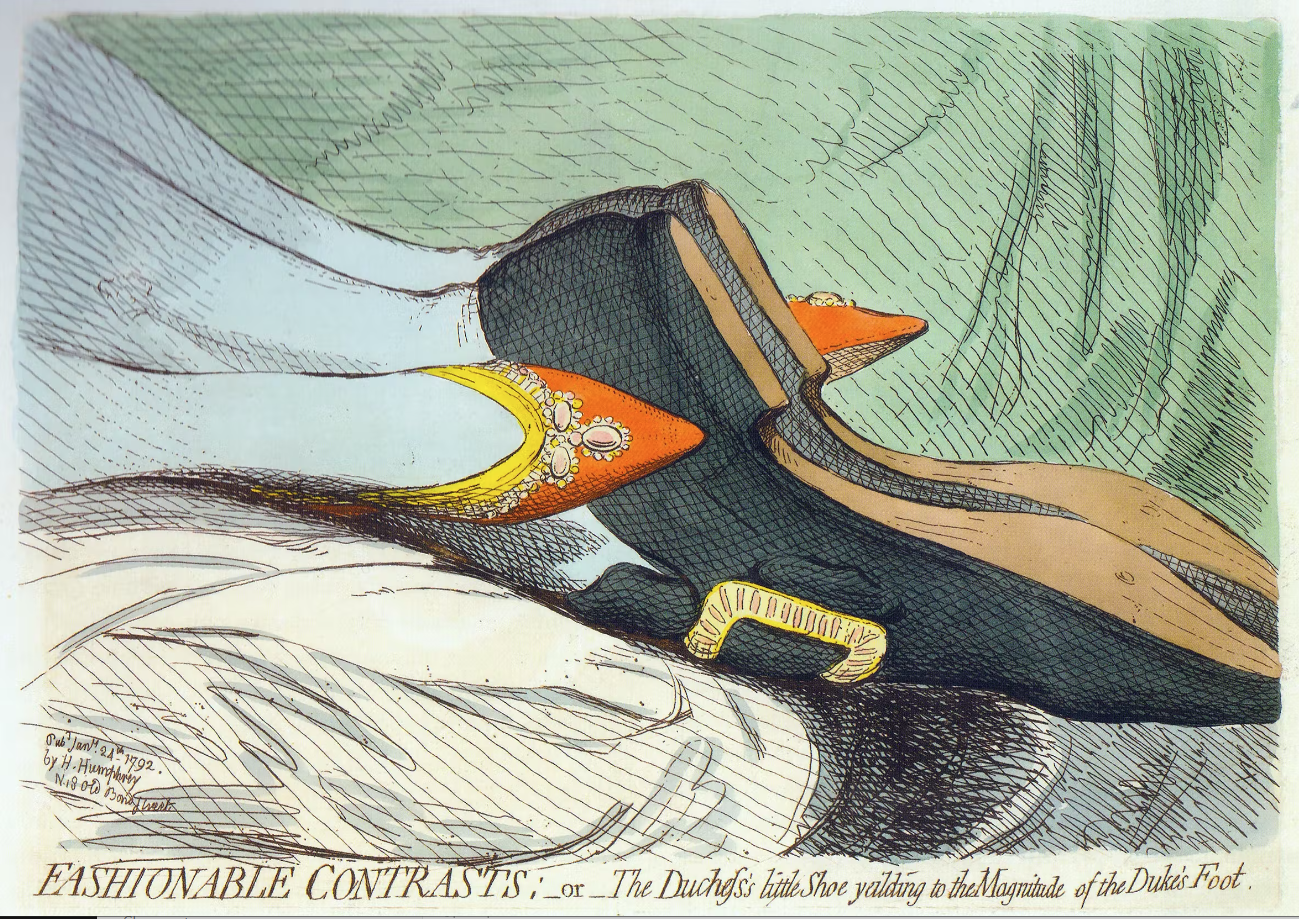
Some of Gillray’s works would pass most people by today, thanks to the much-trumpeted “world-class edication” which is nothing of the sort: one of my own favourites is his FASHIONABLE CONTRASTS;—or—The Duchefs’s little Shoe yeilding to the Magnitude of the Duke’s Foot (1792), which refers to the remarkably small hooves of Princess Frederica Charlotte Ulrica Catherina of Prussia (1767-1820), who married Frederick, Duke of York and Albany (1763-1827) in 1791: their supposed marital consummation is suggested by Gillray’s slightly indelicate rendering, in which the Duke’s very large footwear dwarfs the delicate slippers of the Duchess.

“In 1791 and 1792, there was no one who received more attention in the British press than Frederica Charlotte, the oldest daughter of the King of Prussia, whose marriage to the second (and favorite) son of King George and Queen Charlotte, Prince Frederick, the Duke of York set off a media frenzy that can only be compared to that of Princess Diana in our own day.”
Description from james-gillray.org/fashionable.html

All that said, this is a fine book, beautifully and pithily written, scholarly, well-observed, and superbly illustrated, much in colour. However, it is a very large tome (290 x 248 mm), and extremely heavy, so can only be read with comfort on a table or lectern. The captions give the bare minimum of information, and it would have been far better to have had extended descriptive captions under each illustration, rather than having to root about in the text, mellifluous though that undoubtedly is.

What is perhaps the most important aspect of the book is to reveal Gillray’s significance as a propagandist in time of war, for the images he produced concerning the excesses of what had occurred in France helped to stiffen national resolve to resist the revolutionaries and defeat them and their successor, Napoléon, whose own model for a new Europe was in itself profoundly revolutionary. What he would have made of the present gang of British politicians must remain agreeable speculation.

November 29, 2022

In a dangerous and insecure world, the EU appears to feel that the greatest enemy is on the other side of the Atlantic

Filed under: Europe, France, Germany, Media, Politics, USA — Tags: , , , , — Nicholas @ 05:00

CDR Salamander on how the EU’s movers and shakers (i.e., mostly not democratically elected leaders) seem to have decided that their one true enemy is the United States:

If you are an American who lived on the European Continent, specifically Western Europe, you’re very familiar with an exceptionally sharp strain of anti-Americanism that resides in a significant percentage of their ruling elite – an adult version of the middle school mean girls. Though present in all nations to one degree to another, it is especially acute in Germany and France for slightly different reasons but are all working towards the same goal; degrade American influence in Europe.

The best way for this political and corporate anti-Americanism to find a lever of power is through the the trans-national and anti-democratic modern iteration of the European Union – made even more problematic with the departure of Great Britain who once played a balancing role between the Continental powers as she has for centuries.

Why primarily France and Germany? To start with, this is part of the sibling rivalry between the children of Charlemagne for primacy in Europe that has churned Europe over the last thousand years. The Anglo-Saxons on both sides of the Atlantic kept getting in the way of their return to the struggle.

Their armies under various blood-soaked leaders moved across Iberia to Moscow and back for centuries in order to be THE driver of power in influence on the continent. The European Union, once the “trade association” nose was in the tent, is now seen – fairly – as a mechanism to centralize power so The Smartest People in the Room™ no longer have pesky minor powers and – Buddha forgive – voters getting in their way. Without checks, power only seeks more power for itself. The morphing of the EU is just the latest example.

Not unlike their American counterparts who would like the USA to extract itself from foreign entanglements (NB: as I have written through the years, I am sympathetic/supportive of these efforts), many of the strongest proponents of the EU just want the USA to go home.

The Europeans, while benefiting from the WWII/Cold War leftover presence of the USA, want it to end and the influence that comes with it. If any opportunity to push back against the USA appears, they have their talking points ready to dirty up the reputation and standing of the USA. If that can be done while blaming Eurocrat failures on the USA as well, even better.

You know the Americans, citizens of that mongrel nation whose gene pool is full of religious zealots, failed revolutionaries, slaves, economic refugees, grasping second sons, criminals, and their descendants – spoiled with a continent overflowing with food, water, minerals, forests and open land they don’t even appreciate.

Loud. Fat. Pushy. Americans.

The usual snarled insults cobbled together by smug people who get much of their opinions of the USA by reading The Washington Post or The New York Times. “I know America, I read your newspapers.” That is right after, “I’ve been to America. I spent a week in DC/NYC/Boston/Chicago. I studied a semester at Brown.”

[…]

The smaller European nations don’t trust France and Germany all that much, for good historical reasons. Most of the Europeans in the “new territories” in the east like the USA. They see the Americans as a more reliable guarantee of safety from hostile powers in the East, having a few centuries of experience of the Western European Frankish tribes carving them up for fun and profit – irrespective of local desires. Collectively these nations are not that large in GDP or population – not much more than Italy (for now), but that’s OK. They have the correct geography.

If we shape this relationship correctly, we don’t have to permanently garrison this part of Europe. Poland is already establishing a new paradigm of proper levels of security investment. Once NATO’s eastern front calms down a bit, we can rotate through forces for exercises and training. Perhaps even create some combined training and logistics bases ready to scale up in case of trouble in Mordor. A template we should have put in place in Western Europe decades ago.

Reward positive behavior and let the French and Germans continue their millennium-length struggle – peaceful this time – in the west; keep them frothing in Brussels and Strasbourg while the forward-looking nations try to set up the next thousand years of Western progress in a positive direction.

Perhaps.

November 26, 2022

Britain’s experiment with mass immigration since 2014

Filed under: Britain, Economics, Europe, Media — Tags: , , , , , , — Nicholas @ 03:00

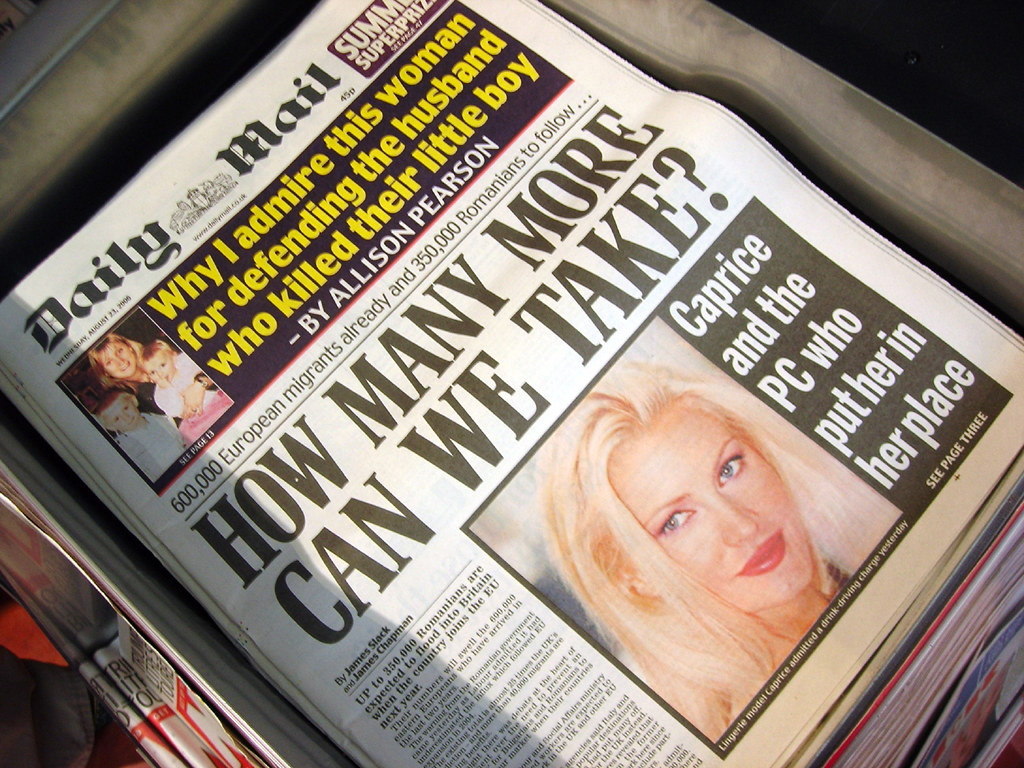
Ed West considers the legacy media’s quick dismissal of conservative concerns about rising immigration from poorer European countries in 2014 with the reality only eight years later:

“Xenophobia” by malias is licensed under CC BY 2.0 .

It was a sort of mini-publicity stunt by Vaz, but all for a good cause: a response to fear mongering by the Right-wing press who warned that we’d be “flooded” by Romanians, and predictions by MigrationWatch that’d we have 50,000 new arrivals a year from the A2 countries (as Romania and Bulgaria were called).

Twitter that day was full of journalists and other public intellectuals laughing about how we were going to be “swamped”. Why would Romanians, after all, want to come here, to this miserable rainy island?

“We’ve seen no evidence of people who have rushed out and bought tickets in order to arrive because it’s the 1st of January,” Vaz concluded.

Various publications, with the ill-founded confidence so often found in the journalist trade, soon declared that the Romanian influx was a conservative fantasy.

“Eastern European invasion comes to nothing”, the Independent declared on the day, just a tad prematurely you might say.

A Guardian commentator suggested the year before that the number of Romanians and Bulgarians arriving might actually fall following accession, and that “all the ‘invasion’ predictions … have more in common with astrology than demography.”
[…]

As it turned out, in the year to September 2015, 206,000 Romanians and Bulgarians took out a National Insurance number, meaning they were registering to work here. By late 2017, there were 413,000 Romanian and Bulgarians living in Britain, suggesting 90,000 had arrived each year since January 2014, while just 6,200 Britons had made the opposite journey.

By mid-2018, there were more than 400,000 Romanians in Britain, making them one of the largest national minorities in England. The real figure is hard to tell, because the British state has lost the capacity or will to count the number of foreign residents, and it may be higher.

[…]

The scale of immigration in the 2000s and 2010s led to the rise of Ukip, the referendum and the political chaos that followed; what follows now we can’t yet say, but no one has seemed to have learned the lesson: that in the 21s century, because of easier travel, smartphones, smuggling networks and establishment communities in the West, the sheer scale of potential migration is astronomical. Yet people often have a very 20th or even 19th century understanding of how much people are able and willing to move, which makes them vastly underestimate the potential numbers arriving.

The Turkish Cypriots of north London are a case in point, the example Paul Collier used in Exodus to show the huge extent of potential migration between countries with different levels of wealth. 

Because of colonial links, North Cyprus had free movement with Britain and so provided a test case: as a result, there are now more Turkish Cypriots in Britain than in Cyprus. In fact, not only did the majority of Turkish Cypriots move, but back in their homeland they become outnumbered by arrivals from a third, even poorer country, mainland Turkey, who are permitted to settle there.

In a theoretical world of open borders, Britons would be outnumbered very quickly; infrastructure would start to buckle under the strain, and governments would find it difficult to increase the necessary number of houses, schools, hospitals and other services for this expanded population, because society would now lack the social capital and cohesion to make the personal sacrifices. People would begin to lose faith in the police, a difficult role in such a transient and diverse society, and politics would become increasingly unstable and aligned along ethnic lines.

November 17, 2022

“The most disturbing concept Freud ever invented – and he had a few, that bloke – is Thanatos, or the ‘death instinct'”

Filed under: Books, Business, Education — Tags: , , , — Nicholas @ 03:00

Ted Gioia on the apparent death wish of the academic publishing industry:

The most disturbing concept Freud ever invented — and he had a few, that bloke — is Thanatos, or the “death instinct”. This is an alleged drive among living organisms to destroy themselves.

Many have disputed that such a thing exists. Instincts preserve life — that’s their evolutionary purpose. The idea of a death instinct is impossible, so the critics claim. It’s like that Peacekeeper Missile or soft rock or marijuana initiative or any of those other two-word combinations of things that don’t belong together.

I’ve often criticized Freud, but I’ve come to accept this Thanatos notion, at least as a sociocultural concept. It explains so many otherwise inexplicable happenings in our society.

Take, for example, academic publishers. They are clearly imbued with a death instinct, no? How else can you explain their self-destructive behavior?

Universities have been publishing books for almost 500 years — dating back to 1534 A.D. when King Henry VIII allowed Cambridge University to set up a printing press. Running one of these publishing outfits is almost a requirement if a college wants to rise in the rankings, but I wonder how much longer this can last. After all, how can you succeed as a publisher if you put so little energy into selling books?

I know one academic publisher that previously sent out two hundred or more review copies of each new book — because they obviously wanted publicity for these titles. Those days are gone. Nowadays their preferred strategy is to send out zero physical copies to reviewers. I’m not exaggerating — I’ve heard it straight from their mouths: their goal is to distribute absolutely no hard copies to media outlets and book critics.

    College students are spending 26% less on textbooks this year. That’s a bloodbath for the publishers. But this is the inevitable result whenever you assume the customer has no choice — because, sooner or later, they actually do.

Okay, I don’t blame the publishers entirely — just consider how rarely the New York Times reviews books from academic presses. You might think the cultural elites in New York would give some support to their fellow travelers in idea-mongering, but no dice. They treat those academic books like they’re toxic.

(By the way, I’m grateful to the Times Literary Supplement over in London, which still takes time to tell me about important scholarly works, most of them ignored in US media. But even that last holdout in Britain feels precarious — I fear they’ve been too contaminated by Yankee values.)

Yankee values? That’s up there with the Peacekeeper Missile.

But the lack of review copies is just one symptom among many. Let’s look at a few others.

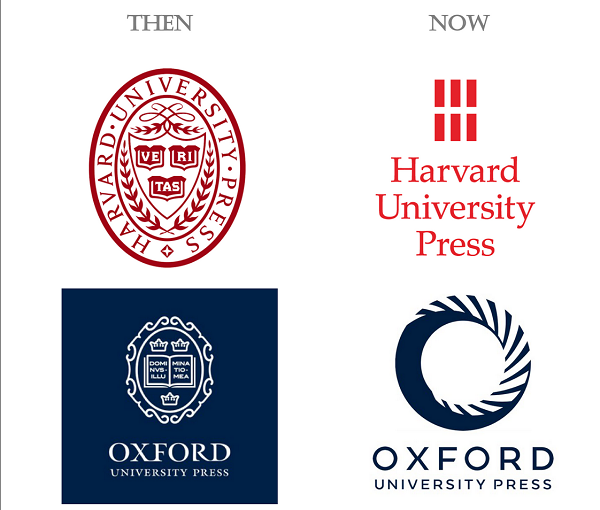
Just consider the flurry of rebranding efforts in academic publishing. As I’ve explained elsewhere, successful organizations rarely redesign their logos or “refresh” their brands. They don’t have time for such nonsense. But even more to the point, when you’re thriving, your logo is part of that success — it’s a sign of your strength, and you just don’t mess with it.

But that’s clearly not the case in academia nowadays.

I could give you countless examples from college campuses — where “rebranding” is more popular than a hot high school football prospect on a recruiting visit. But I’ll settle for two instances:

My only disappointment is that these brand redesigns didn’t come packaged with a new slogan. May I suggest something along the lines of: Information Solutions for a Changing World.

Or maybe, if we can be a bit more boastful: The Ultimate in Handheld Data Storage.

Does anybody still believe in this rebranding malarkey? Surely any reasonable person can see it’s all smoke and mirrors? But that hardly matters, because the brand redesign has tremendous symbolic value.

That’s why they do it.

The road to hell was once paved with good intentions — but nowadays we settle for symbolic gestures. They’re much cheaper than good intentions. And there’s no shortage of symbolic gestures nowadays — more than enough to pave that whole damned highway to hell.

It’s a shame that symbolism doesn’t pay the bills. Or fix problems. And it certainly won’t sell books.

November 16, 2022

“Angertainment is unlikely the sole cause of US political polarisation, but it certainly hasn’t helped”

Filed under: Media, Politics, USA — Tags: , , , , , — Nicholas @ 03:00

At Quillette, Claire Lehmann rounds up the rising distrust/disgust among the American public in their views of the legacy media:

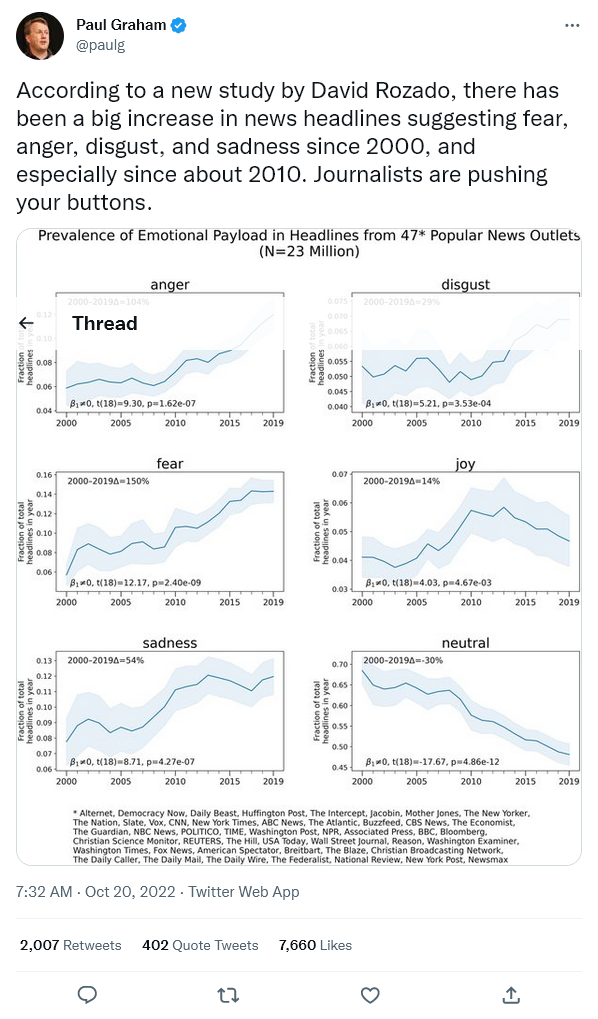
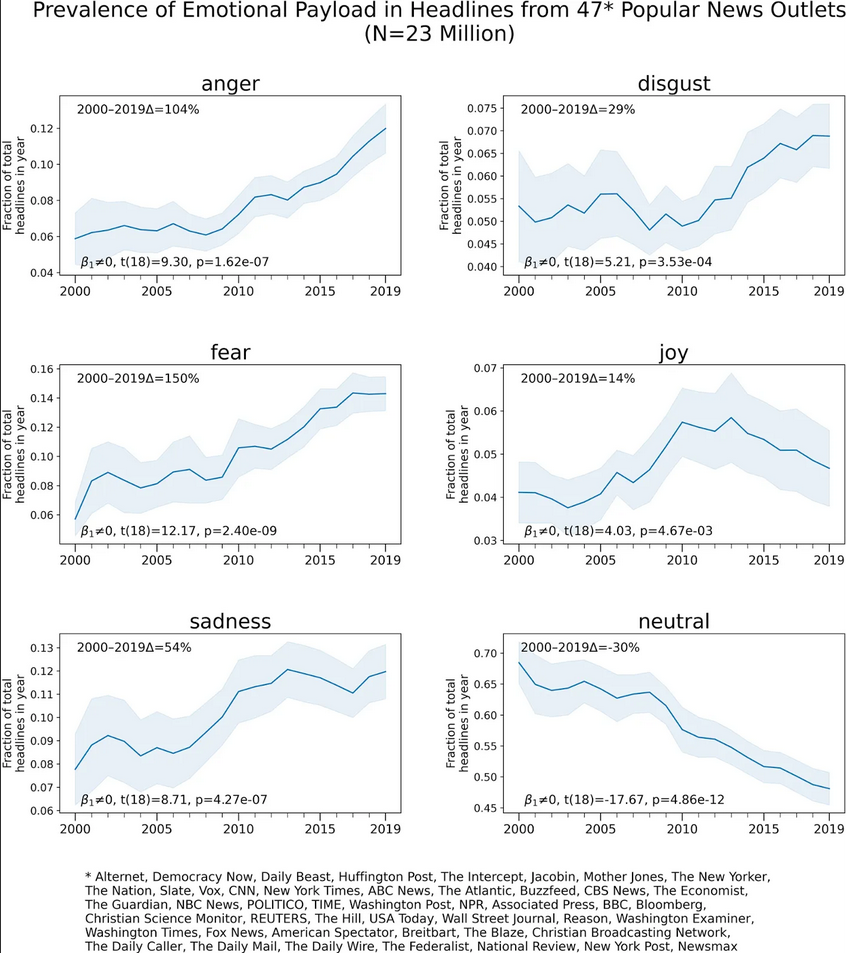
In October, a study published in PLOS One provided some fresh insight into how and why American media has become so dysfunctional. Over the past 20 years, the study reported, headlines that convey anger, fear, sadness, and disgust have been increasing, while headlines conveying neutrality or joy have been in decline. These trends have coincided with a massive drop in trust in news journalism, particularly in the US.

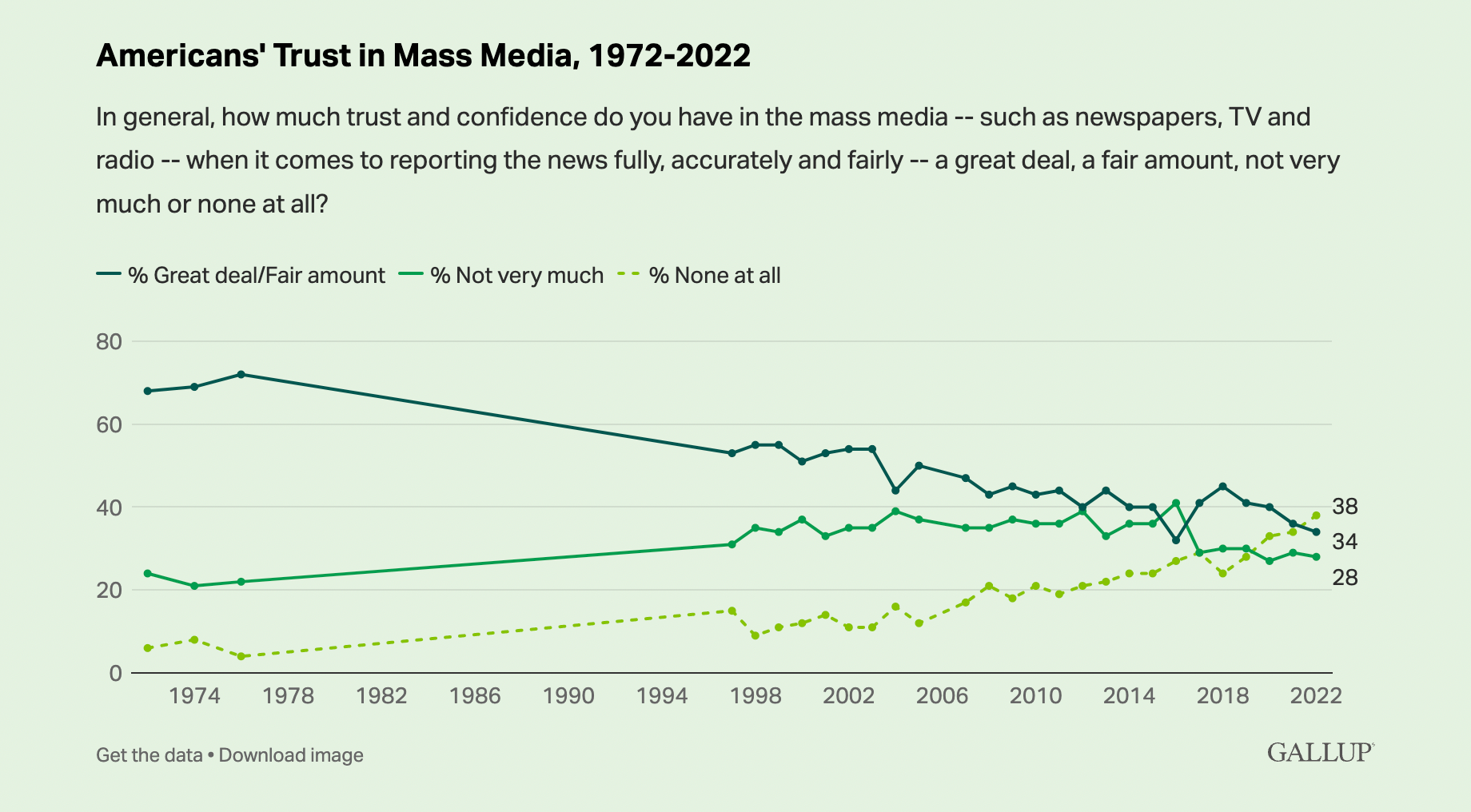
According to Gallop polling, seven percent of Americans say they have “a great deal” of trust in the media, while 38 percent say they have none at all. As angertainment has increased, trust has decreased. As one political tribe provides angertainment for its loyal readers and viewers, the other becomes increasingly alarmed and disgusted. Angertainment may be profitable for journalism in the short-term but over the long-term it trashes the integrity of the profession.

Angertainment is unlikely the sole cause of US political polarisation, but it certainly hasn’t helped. Just as mad cow disease was caused by feeding bovine-meal to cows, angertainment feeds on polarisation which in turn feeds on angertainment. It’s a cannibalistic cycle.

[…]

The incentives for journalism are broken. This is not always the fault of individual journalists, although some strive for truth and accuracy with more sincerity than others. Nor is it solely the fault of media companies, although many of them prioritise profit and engagement over rigour and fairness. It is not even the fault of “Big Tech”, even though social media companies have built the machine on which these broken incentives run.

It’s the fault of all of us. We are the ones who devour angertainment and get high on watching our enemies suffer. We are the ones who want to see various idiots eviscerated and dismembered by the bayonets of Twitter. We are the ones who clamour after content which makes us feel virtuous, complacent, and like we belong. The 20-year incline in headlines denoting fear, anger, disgust, and sadness in American media would not have occurred if audiences had not been rewarding it. In a competitive eco-system, media organisations must adapt to their audiences, feed them what they want, or die. But like the cows feeding on the meat-and-bone meal of other cows, this feedback loop creates the cultural equivalent of a neurodegenerative disease.

I have been just as guilty of this as any other publisher, consumer, or creator of media. But in recent months I’ve largely stepped back from social media, stood outside this machine, and have watched it whir and whizz from the sidelines. It is possible to disengage and reconsider the machine from a safe distance, starving it of fuel. And every day at Quillette I am reminded by my writers and readers and subscribers that it is possible to publish and create journalism that is appreciated for its analytical and aesthetic value, rather than for the artillery it provides in a never-ending culture war. It’s a war in which facts and reputations exist merely as cannon fodder, and where truth is less important than tribe. The media’s incentives may be broken, but we as individuals do not have to be.

November 8, 2022

The inevitable next act of the media subsidy game – “Before long we will be back for more”

Filed under: Business, Cancon, Government, Media, Technology — Tags: , , , , , , — Nicholas @ 05:00

In The Line, Peter Menzies outlines the state of play in the continued efforts of the federal government to pass C-18, a bill that will massively benefit certain media outlets … or convince the “tech giants” to pull out of the Canadian market altogether rather than pay the blackmail:

News Media Canada’s persistent campaigning finally produced its Holy Grail — Bill C-18. All might have been well for Torstar, Postmedia and Le Devoir except that once the flesh was thrown on the bones of the Act, broadcasters that aren’t facing economic peril heard the dinner bell and came running.

The result, according to the Parliamentary Budget Officer, is that Bill C-18 is expected to produce $329 million in annual revenue for Canadian media (for context, that’s less than the Calgary Herald, Edmonton Journal, Edmonton Sun and Calgary Sun were bringing in between them 20 years ago). Of that, $249 million will go to broadcasters, few of whom are on a fiscal ledge and a good many of whom have contributed to the demise of local newspapers. Remarkably, the CBC, already receiving $1 billion in taxpayer funding, will get the most of that cash, followed by CTV (Bell), Rogers, Videotron and others. The newspapers and start ups will have $80 million (a little more than what the Edmonton Journal and Edmonton Sun used to make in combined annual profit) to fight over.

And very few of those previously mentioned startups — run by mostly young and often female innovators — trying to find a sustainable business model for good journalism can expect anything more than a token pay off. No. They will have to go to the little kids table and see what they can find on the children’s menu of subsidies.

It is distressingly obvious that while so many were tricked into believing this was the most progressive Canadian government ever, it is in fact, a slave to the status quo; as staunch a defender of the corporate establishment as the Toronto Club could wish for. With the 21st century and all its opportunities staring it in the face, Justin Trudeau’s government has not only turned its back on innovation, it has put its thumb on the scale in favour of failed business models that long ago ran out of ideas.

Yet there may be a final twist in this tale.

Bill C-18’s particulars are, as Meta/Facebook’s Kevin Chan put it to a Parliamentary committee last week “globally unprecedented”. For all its sins — and for all we know there are a few more skeletons rattling around in its closet — Meta is unlikely to pay up. Sure, it can cover the Canadian shakedown; what it can’t afford though is to pay every other country in the world that makes the same demand. So Meta says it may simply stop serving up news links which, when you think about it, is a better idea in the long run than permanently entrenching its dominant market position

So while the publishers of those blank pages appear to have bullied even the Conservatives into supporting this travesty, they are still left to ponder:

“Imagine if Facebook wasn’t there.”

November 3, 2022

QotD: Why reading the news became less informative and more didactic

Filed under: Media, Politics, Quotations, USA — Tags: , , — Nicholas @ 01:00

One of the small, pervasive changes that makes news stories seem both patronizing and politicized is the increasingly common practice of inserting judgmental adjectives into otherwise descriptive sentences. Telling readers that a statement is “false” while repeating it may be justified, if intrusive, but in other cases it’s an unnecessary tic.

Gone is the assumption that readers are intelligent people who can draw their own conclusions from a compelling presentation of the facts. Journalists now seem to live in fear that their readers won’t think correctly. Take this sentence from an interesting article on the evolution of American Sign Language: “For a portion of the 20th century, many schools for the deaf were more inclined to try to teach their students spoken English, rather than ASL, based on harmful beliefs that signing was inferior to spoken language.” (Emphasis added.)

If you read the article, you are highly unlikely to come to the conclusion that signing is anything less than a full-blown language, not inferior to spoken English. But the article never gives evidence that this incorrect 20th-century belief was harmful. It doesn’t discuss the pluses and minuses of signing, or why one belief was succeeded by another. That’s a different story. In the context of this story, the adjective is unnecessary, distracting, and insulting to the reader’s intelligence.

Virginia Postrel, “Shrinkflation, Disqualiflation, and Depression and more”, Virginia’s Newsletter, 2022-07-28.

November 2, 2022

Bill C-18’s scheme to force payment for online links threatens freedom of expression

Filed under: Cancon, Government, Media — Tags: , , , , , , — Nicholas @ 03:00

Michael Geist considers the ways that the federal government’s Bill C-18 will suppress online freedom of expression in Canada:

“Automotive Social Media Marketing” by socialautomotive is licensed under CC BY 2.0

The study into the Online News Act continues this week as the government and Bill C-18 supporters continue to insist that the bill does not involve payment for links. These claims are deceptive and plainly wrong from even a cursory reading of the bill. Simply put, there is no bigger concern with this bill. This post explains why link payments are in, why the government knows they are in, and why the approach creates serious risks to the free flow of information online and freedom of expression in Canada.

[…]

Why is the government suspending the fair dealing rights of Internet platforms in the bill? Because it knows that the platforms don’t typically use the news in a manner that would be compensable. For example, the platforms may link to the news, feature a headline with the link or sometimes offer a one-or-two sentence summary or quote from the article. These uses are generally permitted under Canada’s fair dealing copyright law rules and do not require a licence or compensation. In other words, claiming that links might qualify for compensation requires setting aside the platforms’ copyright rights which places Canada in breach of its obligations under the Berne Convention, the international treaty that governs copyright law.

The government’s intervention into the final arbitration process is further evidence that it recognizes the weakness of the argument for payments for links. Bill C-18 mandates final offer arbitration, which encourages the parties to provide their very best final offer as part of the process since the arbitrator must select one or the other. Yet Section 39 gives the arbitration panel the right to reject an offer on several policy grounds. Why would such a provision be necessary in a final arbitration system that encourages submitting your best offer? It is only necessary if you fear one side will examine the evidence and proffer a low offer on the grounds that it does not believe that there has been a demonstration of compensable value. That is a real possibility in this case given that there should be no need to compensate for links and there is little else of value. In light of that risk, the government gives the arbitration panel the power to reject offers that do not meet the government’s policy objectives.

[…]

Aside from the obvious unfairness, the broader implications of this policy are even more troubling. Once government decides that some platforms must pay to permit their users to engage in certain expression, the same principle can be applied to other policy objectives. For example, the Canadian organization Journalists for Human Rights has argued that misinformation is akin to information pollution and that platforms should pay a fee for hosting such expression much like the Bill C-18 model. The same policies can also be expanded to other areas deemed worthy of government support. Think health information or educational materials are important and that those sectors could use some additional support? Why not require payments for those links from platforms. Indeed, once the principle is established that links may require payment, the entire foundation for sharing information online is placed at risk and the essential equality of freedom of expression compromised.

To be clear, supporting journalism is important. But Bill C-18’s dangerous approach ascribes value to links where there isn’t any, regulates which platforms must pay in order to permit expression from their users, and dictates which sources are entitled to compensation. This is an unprecedented government intervention into the media and freedom of expression. If the government believes that Facebook and Google should be paying more into Canada, tax them and use the funds for journalism support. If that isn’t enough, create a fund for participation in the news system with mandated contributions similar to the Cancon broadcast world. That may not be ideal, but it would at least keep the system arms length, remove the qualification issues, and reduce the market intervention.

I suspect the government fears that Canadians would easily recognize the risks associated with mandated payments for links and fundamental unfairness with the system envisioned by Bill C-18. It is why it has misled on the inclusion of link payments, rejected the Parliamentary Budget Officer’s estimates on who benefits, and sought to frame Facebook’s concerns as a threat, when the real threat lies in the bill itself. But despite those efforts, make no mistake: Bill C-18 is a law about forcing some platforms to pay for links. It gives the government the power to regulate who pays and which expression is worthy of payment. In doing so, it creates a threat to freedom of expression for all Canadians.

October 31, 2022

“If The Regime doesn’t have their canned narrative ready to go, it’s real news”

Filed under: Media, Politics, USA — Tags: , , , , , , — Nicholas @ 05:00

At Founding Questions, Severian offers some preliminary thoughts on the new field of “Brandonology”, specifically how to determine whether what’s in the legacy media is news or propaganda:

I’m throwing this out there now, because it’s shaping up to be a long-term project and I think we can all contribute to it as needed. But as Brandonology / FNGology is such a new discipline, it’ll help to lay in the foundations.

The first step in analyzing the “news” is determining whether or not it is, in fact, news. “News” here being defined as “an unplanned event — or catastrophic fuckup of a planned event — to which The Regime is forced to react in more or less real time”. Lot of that going around recently, such that we’re spoiled for choice. Pick pretty much any of the shenanigans in Ukraine: The botched assassination of Alexander Dugin; the Nordstream sabotage; the Ukrainian dirty bomb false flag. Those clearly fall into the “catastrophic fuckup of a planned event” category …

… or do they? Because as Z Man pointed out in great detail on his last podcast, all of that stuff seemed to catch The Regime flatfooted. Yeah, somebody planned those things, but that somebody wasn’t Brandon, or anyone close to Brandon, or anyone in position to prop up Brandon. Which is the surest tell for actual news (as defined above) right there: If The Regime doesn’t have their canned narrative ready to go, it’s real news.

The necessity of the canned narrative also allows the keen Brandonologist to anticipate the “news”. For instance, it has obviously started to dawn on The Regime that they’re going to get walloped in the midterms, so they’re trying out narratives as we speak. Z Man identified one I hadn’t seen, something about Brandon “inadvertently” saying something about the debt ceiling that’s supposed to give the Republicans all kinds of ammunition against him. I’m not so sure. I’ll have to look into it, but the fact that it squarely blames Brandon — who The Regime still insists is the very picture of mental acuity and vigor — pings my radar a bit. I think the stuff Her Nibs is rolling out is much likelier the Narrative being developed — she’s outright stating that “the Republicans” are going to engage in massive voter fraud.

Which to normal people is chutzpah beyond belief, but that’s how The Regime rolls. The 2016 election was, of course, full of Russian Hacking™. The 2020 election, by contrast, was the cleanest canvass in human history, and you’re an insurrectionist, a domestic extremist, and of course a racist if you dare to suggest the mere possibility of an American election being tampered with. But wouldn’t you know it, those dastardly Russians are going to rally here in 2022, because you can’t keep a Russian Hacker™ down. They might even hire a few prostitutes to pee on a bed for good measure; that’s how evil they are.

Further complicating the task, though, is that “botched op” thing. We’ve got Brandon et al. on record threatening Nordstream, so you know that was an American caper gone bad … but gone real, real bad, because if The Regime had been fully in the know, there’d have been a whole bunch of Tier Four Stoyak about lousy maintenance on the pipelines for months in advance.

Why aren’t you as angry and afraid as the media wants you to be?

Filed under: Media, Politics, USA — Tags: , , , , — Nicholas @ 03:00

Chris Bray on the unrelenting din of fear porn you get if you pay any attention to the legacy media:

It’s like a magic act where the door to the secret compartment moves slowly and has a spotlight pointed at it, and the audience sees the illusion every time, because it’s literally not an illusion, being right out there in the open, but the magician still pretends that everyone watching is shocked and baffled by the trick.

So. Via Nellie Bowles, writing at Common Sense, this summary of findings from a recent study of the American news media:

Today’s Standard-Issue Explanatory Line™ on Paul Pelosi being attacked in his home is that TRUMP TRUMP TRUMP, toxic far-right rhetoric!!!!! Ten minutes after the shabby break-in at the Katie Hobbs for Governor office was omfg literally Watergate before it evaporated into nothing much, a uniquely strange Berkeley nudist is a far-right puppet with an opening at the bottom for Donald Trump’s hand, steered by hateful rhetoric that incites violence:

[…]

Wouldn’t it be refreshing if the news media focused on a clear description of what happened before they got to the blame and politicization?

There are a dozen obvious things to say about all of this, even if you aren’t Steve Scalise — the double standard, the depiction of ordinary political criticism as “demonization”, the discarding of contradictory evidence to make round pegs fit square holes — and I’m mostly not going to bother saying them in any detail.

But the thing that has to be said is that the people who increasingly hold the attention of their audiences with hyperemotional clickbait, with the obvious manipulation of negative emotions, are warning us about the dangerous effects of hyperemotional rhetorical manipulation in the public sphere.

Ohhhhh, we’re about to LOSE OUR VERY DEMOCRACY! We tremble on the edge of a FASCIST TAKEOVER! And also, toxic rhetoric is bad.

October 30, 2022

The Economist is the most over-rated publication in the English language”

Filed under: Books, Britain, Business, History, Media, WW2 — Tags: , , — Nicholas @ 03:00

I started reading The Economist when I was in college, and became a subscriber for nearly 20 years. Over the last few years, the tone of the articles shifted away from classical liberal toward communitarian or even full-blown socialist cheerleading, so I sadly ended my subscription and haven’t picked up a copy in at least 15 years. According to Ken Whyte in the SHuSH newsletter, things haven’t improved since I stopped paying attention:

The Economist recently said that book publishing in today’s economy resembles book publishing during the Second World War when “paper imports collapsed” and “publishers printed only sure-fire hits”.

The Economist is the most over-rated publication in the English language, especially by itself. I give it marks for its broad range of interests, ability to cover a lot of ground in relatively tight articles, and occasionally solid reporting, but if you’re going to boast incessantly about how smart you are …

… you’d better back it up. The Economist seldom does. It tends to glib, obvious, and sloppy. Most of its articles are written by anonymous b-level freelancers whose best stuff goes to outlets that afford bylines. Their work is edited to a stultifying homogeneity by a haughty grad student with a Financial Times subscription. Or so it reads.

This piece — “Books are Physically Changing Because of Inflation” — is a case in point. Paper imports to the UK were reduced during WW2 but they did not collapse. The problem for the book trade was rationing. The government restricted publishers to 60 percent of their pre-war paper volumes (later falling to 35 percent) and itself used far more tonnage for propaganda than the book industry normally required. Manpower shortages were another factor limiting the production of new titles.

Nor is it true that publishers released “only sure-fire hits”. While much of their paper allotment went to keeping hot-selling books in stock, many bets were placed on new titles and most of them paid. It was wartime and leisure activities were limited. “British publishers found that they could sell virtually any title,” writes Zoe Thomson in The Journal of Publishing Culture.

The article isn’t all bad. It reports that British book publishers are paying 70% more for paper than they were a year ago: “Supplies are erratic as well as expensive: paper mills have taken to switching off on days when electricity is too pricey. The card used in hardback covers has at times been all but unobtainable.”

To cope with the price increases, publishers are printing smaller books on cheaper paper and jamming more words onto the page. Writers are being asked to write shorter and are being held to their word limits.

That reflects the current state of the industry. It’s hardly news, though. SHuSH readers are probably sick of hearing me on rising paper and printing costs, and I’ve just been following what others have written. The cost of printing has more or less doubled since before COVID. Many smaller publishers are already releasing fewer and slimmer titles. If we are headed into a recession, the trend will continue.

October 18, 2022

QotD: The US media and the Democratic Party since 1968

… back in 1968 the Media convinced themselves they held the whip. Between the “Chicago Police Riot” (in reality a bunch of SDS goons finally goading the cops into cracking down) and the Tet Offensive (in reality, a communist catastrophe that all but destroyed the Viet Cong as a fighting force), the Media convinced themselves they truly were the shapers of the nation’s hearts and minds. From then on out, the Media assumed their primary job was not to report the news, but to instruct us how to feel about the news. They anointed themselves as a secular priesthood, and from that moment forward, people went into “journalism” specifically to change the world.

That suited the Democrats’ short-term interests just fine. Then as now, the Democrats were a bunch of fellow-traveling wannabe-totalitarians. The difference, though, is that in 1968 grownups were still in charge of the party. Being intimately familiar with the concept of “useful idiots”, the grownup Dems were happy to encourage the journo-kids’ delusions of grandeur. The kids might not have been able to stir up enough shit to get Hubert Humphrey elected — that would’ve been a tough sell for Josef Goebbels — but they could make life hot for Richard Nixon. In other words, the Democrats thought they held the whip.

1972 should’ve been a wakeup call, but to be fair, all the campaign wonks were still reeling from The Great Magic Party Switch of 1964. Both halves of the failed Democratic ticket from 1968 ran in the 1972 primaries, and so did George Wallace (who actually won more primaries than either Humphrey or Muskie — 6 to 5 and 4, respectively). Which left George McGovern, a goofy hippie from a nothing state who was so bad at politics that he got outflanked as a peacenik by Richard Nixon, the man who was right at that moment actually running the goddamn war. […]

[McGovern’s platform was], in short, “amnesty, abortion, and acid,” a Donald Trump-level linguistic killshot if ever there was one.

The point isn’t that McGovern was a goofy hippie. The point is that McGovern was The Media’s fair-haired boy. Hubert Humphrey was no one’s idea of a steely-eyed realist, but he was a grown-up. When he attacked McGovern as too radical during their primary debates, he was expressing America’s frustration with bratty, coddled, know-nothing college kids and their bong-addled, patchouli-soaked nonsense. But since it was the aforesaid spoiled, stoned college kids who wrote the election coverage …

Viewed from this perspective, Democratic Party politics up to now can be seen as the increasingly desperate attempts of the few remaining grownups to fend off The Media’s increasingly frantic grabs for the whip. Take a gander at these goofballs from 1976. Remember the “Scoop Jackson Democrats” all the National Review types kept gushing about when they needed some Democratic cover for W’s imperial misadventures? “Scoop” Jackson was a real guy, and probably the only adult in the room in 1976. Jimmy Carter, the eventual nominee, could at least fake being a serious, mature human being when he wasn’t being chased by enraged, swimming bunnies. The Jerry Brown of 1976 is the very same Jerry Brown who is putting the finishing touches on the shitholization of California here in 2019, and guess who The Media just loooooooved back in the ’76 primaries?

See also: Every other election through 2016. Sometimes The Media and the Party moved in tandem — e.g. Bill Clinton — but more often it played out like 1988, when the Party had to drag a bland nonentity (Mike Dukakis) over the finish line in the face of a Media darling (Jesse Jackson). This dynamic also explains the weird “enthusiasm gap” of Democratic voters starting in 2000 — nobody actually liked Al Gore or John Kerry, but since W. made The Media lose their tiny little minds, they went all-in on painting those two human toothaches as The Saviors of Mankind.

Severian, “Which Hand Holds the Whip?”, Rotten Chestnuts, 2019-07-17.

October 7, 2022

The “two movies on the same screen” effect: most Canadians see impending collapse but our “elites” think everything’s peachy

Tara Henley contrasts the reality many Canadians are facing day-to-day with the out-of-touch “laptop elites” who, as a class, did great through the last two and a half years and who have no clue at all why anyone would see the state of the country as anything like a collapse:

Pierre and Ana Poilievre at a Conservative leadership rally, 21 April, 2022.
Photo by Wikipageedittor099 via Wikimedia Commons.

There has been much discussion lately about the state of our nation — and whether or not we, as a society, are in decline.

Former journalist and Justin Trudeau speechwriter (and current Substacker) Colin Horgan published a provocative essay at The Line last month, arguing that our country is vulnerable to extremists who believe that “the current system of liberal democracy is inherently corrupt and corrupted, verging on collapse, and that, in the extreme, its downfall can and should be hastened by acts of violence”.

Horgan worries that Conservative leader Pierre Poilievre — who’s been actively speaking to this ambient vibe of distress and dissatisfaction — could accelerate such destabilization.

Poilievre does not say extreme things, Horgan concedes, but Poilievre’s message is “still poison” because “what he telegraphs is the vision of a social order at a tipping point, with the suggestion that it can be easily pushed over”.

In short, Poilievre has tapped into “an Internet language of decline”.

There’s a thriving cottage industry in the Canadian legacy media doing everything they can to tar Poilievre as a Canadian Hitler and to continue the re-typing and re-phrasing of government talking points for the mass market. The government subsidies to “approved” media outlets will help keep the lights on a bit longer as they continue to lose audience share — and trust.

Our quality of life has been eroded for some time now. Wages have been stagnant for decades. Precarious work is the order of the day, both for the working class and professionals. Rents and property prices are through the roof; according to the Globe and Mail, since 2000, domestic home prices have increased by 420 percent. Inflation is high. Gas is expensive. Food costs are up. We are coping with a crisis of social isolation. Our opioid epidemic rages on.

Meanwhile, pandemic policy has benefited the laptop class and harmed the most vulnerable among us. (See lockdowns and school closures, for starters.)

Indeed, there has been extreme winners and losers during the COVID era, which saw a massive transfer of wealth upwards. Billionaires in this country, in fact, saw their wealth increase 68 percent during the pandemic.

Should we be surprised that those on the losing end are expressing their frustration?

[…]

Things have only gotten worse as the pandemic has dragged on and citizens have been hit with high inflation and rising interest rates (while also staring down other looming financial catastrophes).

According to an Angus Reid poll out this week, nine out of ten Canadians have cut their household budgets due to inflation and high prices. And 46 percent of Canadians say their personal finances are worse off now than they were at this time last year.

But if the material conditions in this country are dire, so too is the national mood.

In fact, there is a gaping wound at the centre of our national psyche.

Essential workers have laboured throughout the COVID crisis, endangering their health and that of their families, in order to keep society running. In return for their heroic efforts, the unvaccinated among them — many of whom previously contracted COVID and have natural immunity — have seen themselves ostracized and smeared as racists and misogynists. Their fundamental values have been mocked in the public square, and their basic rights and freedoms, including freedom of expression, have been compromised. Some have lost jobs, social lives and more for declining vaccination.

To comprehend the human toll this has taken, one need only look to the grassroots #TrudeauMustGo campaign on Twitter.

The consequences of vaccine mandates should have been covered in great depth by our national press. But instead, the Canadian media largely fell down on this story, often generating coverage that uncritically reproduced the Liberal party line.

Trust in the Canadian news media is now at its lowest point in seven years.

And judging from the reader mail I get, the Liberals’ decision to turn vaccine mandates into a wedge issue has had significant social consequences — tearing apart families, communities, and workplaces in ways that may take years to recover from.

All told, what we are witnessing is not merely a state of decline. It is a form of collapse. A collapse of the social contract. A collapse of the expectations we grew up with — that if you worked hard and respected the law, you could have a home, a family if you chose, and, crucially, a say in our democracy.

What we are living through is a collapse of life as we knew it in Canada.

What was once a stable, prosperous, diverse democracy is now a nation divided, rife with fear and anger, and financial and social instability.

Not only has our Prime Minister failed to grasp this, but he’s actively stoked tensions.

« Newer PostsOlder Posts »

Powered by WordPress