
World War Two
Published 27 Nov 2021Last week’s counterattack was just the beginning, for the Soviets launch another giant offensive this week. And things look bad for the Axis powers in the south of the USSR. Meanwhile in France, the French scuttle their navy rather than allow it to fall into German hands.
(more…)
November 28, 2021
Bigger Than Uranus? – Mars – WW2 – 170 – November 27 1942
Comments Off on Bigger Than Uranus? – Mars – WW2 – 170 – November 27 1942
November 26, 2021
The modern carrier debate
I recently started reading A Collection of Unmitigated Pedantry, a fascinating historical blog run by Dr. Bret Devereaux. You can expect to see plenty of QotD entries from his blog in future months, as I’ve been delighted to find that he not only has deep knowledge of several historical areas I find interesting, but that he also writes well and clearly. This post from last year is a bit outside his normal bailliwick, being modern and somewhat speculative rather than dealing with the ancient world, classic-era Greece, Republican and Imperial Rome, or the Middle Ages in Europe and the Mediterranean basin:
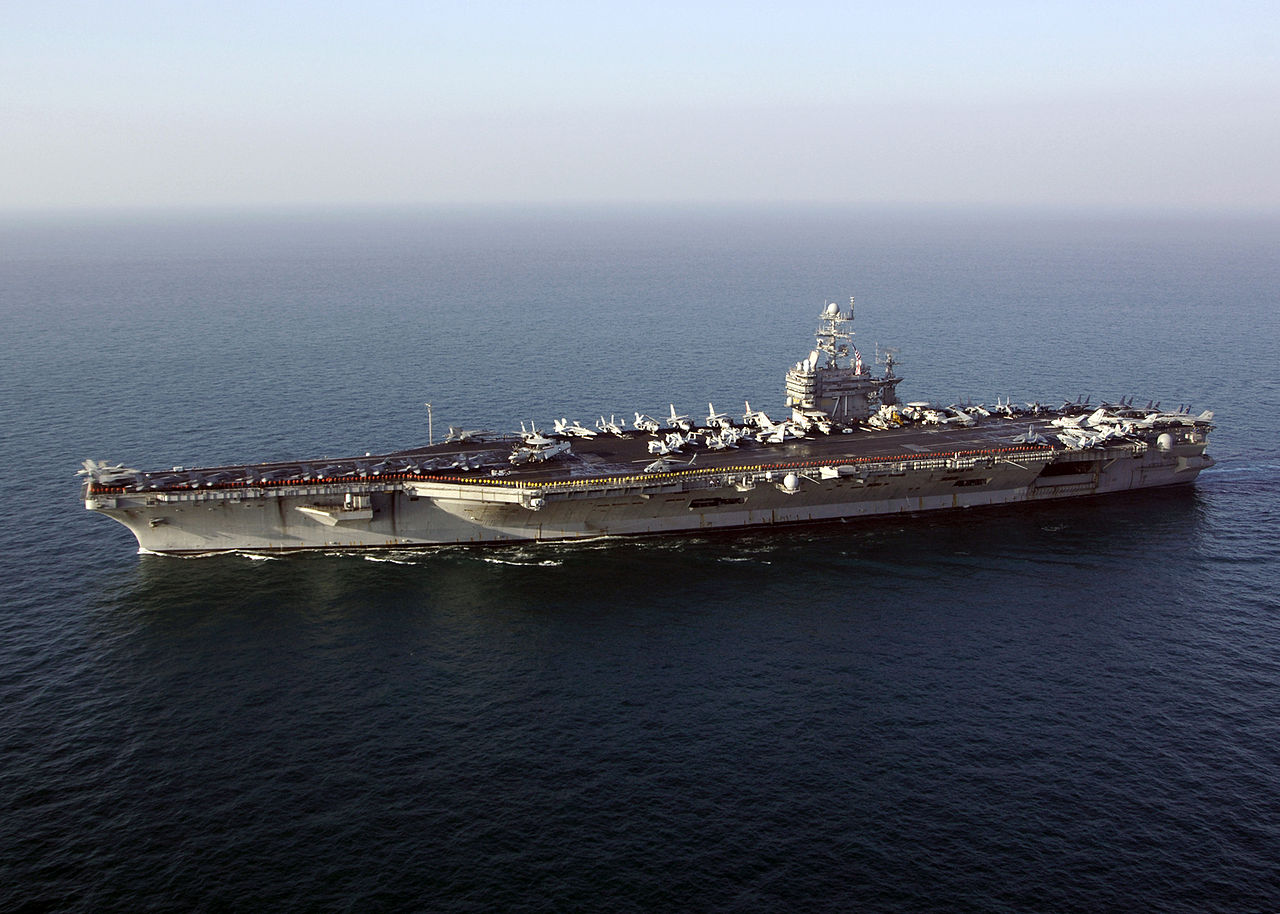
The Nimitz-class aircraft carrier USS Theodore Roosevelt (CVN 71) underway in the Persian Gulf, 3 December 2005.
U.S. Navy photo by Photographer’s Mate 2nd Class Matthew Bash via Wikimedia Commons.
Let’s talk about aircraft carriers for a moment […] There is currently a long-raging debate about the future of the aircraft carrier as a platform, particularly for the US Navy (by far the largest operator of aircraft carriers in the world), to the point that I suspect most national security publications could open companion websites exclusively for the endless whinging on aircraft carriers and their supposed obsolescence or non-obsolescence. And yet, new aircraft carriers continue to be built.
As an aside, this is one of those debates that has been going on so long and so continuously that it becomes misleading for regular people. Most writing on the topic, since the battle lines in the debate are so well-drawn, consists of all-or-nothing arguments made in the strongest terms in part because everyone assumes that everyone else has already read the other side; there’s no point in excessively caveating your War on the Rocks aircraft carrier article, because anyone who reads WotR has read twenty already and so knows all of those caveats already. Except, of course, the new reader does not and is going to read that article and assume it represents the current state of the debate and wonder why, if the evidence is so strong, the debate is not resolved. This isn’t exclusive to aircraft carriers, mind you – the various hoplite debates (date of origin, othismos, uniformity of the phalanx) have reached this point as well; a reader of any number of “heterodox” works on the topic (a position most closely associated with Hans van Wees) could well be excused for assuming they were the last word, when it still seems to me that they represent a significant but probably still minority position in the field (though perhaps quite close to parity now). This is a common phenomenon for longstanding specialist debates and thus something to be wary of when moving into a new field; when in doubt, buy a specialist a drink and ask about the “state of the debate” (not “who is right” but “who argues what”; be aware that it is generally the heterodox position in these debates that is loudest, even as the minority).
Very briefly, the argument about carriers revolves around their cost, vulnerability and utility. Carrier skeptics point out that carriers are massive, expensive platforms that are increasingly vulnerable to anti-ship missiles and that the steadily growing range of those missiles would force carriers to operate further and further from their objectives, potentially forcing them to choose between exposing themselves or being pushed out of the battlespace altogether (this, as an aside, is what is meant by A2/AD – “Anti-Access/Area-Denial” – weapons). The fear advanced is of swarms of hypersonic long-range anti-ship missiles defeating or overwhelming the point-defense capability of a carrier strike group and striking or even sinking the prize asset aircraft carrier – an asset too expensive to lose.
Carrier advocates will then point out all of the missions for which carriers are still necessary: power projection, ground action support, sea control, humanitarian operations and so on. They argue that no platform other than an aircraft carrier appears able to do these missions, that these missions remain essential and that smaller aircraft carriers appear to be substantially less effective at these missions, which limits the value of dispersing assets among a greater number of less expensive platforms. They also dispute the degree to which current or future weapon-systems endanger the carrier platform.
I am not here to resolve the carrier debate, of course. The people writing these articles know a lot more about modern naval strategy and carrier operations than I do.
Instead I bring up the carrier debate to note one facet of it […]: the carrier debate operates under conditions of fearsome technological uncertainty. This is one of those things that – as I mentioned above – can be missed by just reading a little of the debate. Almost none of the weapon systems involved here have seen extensive combat usage in a ship-to-ship or land-to-ship context. Naval thinkers are trying to puzzle out what will happen when carriers with untested stealth technology, defended by untested anti-missile defenses are engaged by untested high-speed anti-ship missiles which are guided by untested satellite systems which are under attack by untested anti-satellite systems in a conflict where even the humans in at least one of these fighting forces are also untested in combat (I should note I mean “untested” here not in the sense that these systems haven’t been through test runs, but in the sense that they haven’t ever been used in anger in this kind of near-peer conflict environment; they have all been shown to work under test conditions). Oh, and the interlinked computer systems that all of these components require will likely be under unprecedented levels of cyber-attack.
No one is actually certain how these technologies will interact under battlefield conditions. No one can be really sure if these technologies will even work as advertised under battlefield conditions; ask the designers of the M16 – works in a lab and works in the field are not always the same thing. You can see this in a lot of the bet-hedging that’s currently happening: the People’s Republic of China has famously bet big on A2/AD and prohibiting (American) carriers from operating near China, but now has also initiated an ambitious aircraft carrier building program, apparently investing in the technology they spent so much time and energy rendering – if one believes the carrier skeptics – “obsolete”. Meanwhile, the United States Navy – the largest operator of aircraft carriers in the world – is pushing development on multiple anti-ship missiles of the very sort that supposedly render the Navy’s own fleet “obsolete”, while also moving forward building the newest model of super-carrier. If either side was confident in the obsolescence (or non-obsolescence) of the aircraft carrier in the face of A2/AD weapons, they’d focus on one or the other; the bet hedging is a product of uncertainty – or perhaps more correctly a product of the calculation that uncertainty and less-than-perfect performance will create a space for both sets of weapon-systems to coexist in the battlespace as neither quite lives up to its best billing.
(I should note that for this brief summary, I am treating everyone’s development and ship procurement systems as rational and strategic. Which, to be clear, they are not – personalities, institutional culture and objectives, politics all play a huge role. But for now this is a useful simplifying assumption – for the most part, the people procuring these weapons do imagine that they are still useful.)
In many ways, the current aircraft carrier debate resembles a fast moving version of the naval developments of the late 1800s and early 1900s. Naval designers of the period were faced with fearsome unknowns – would battleships function alone or in groups? Would they be screened against fast moving torpedo boats or forced to defend themselves? How lethal might a torpedo attack be and how could it be defended against? Would they be exposed to short-range direct heavy gunfire or long-range plunging gunfire (which radically changes how you arm and armor these ships)? With technologies evolving in parallel in the absence of battlefield tests, these remained unknowns. The eventual “correct solution” emerged in 1903 with the suggestion of the all-big-gun battleship, but the first of these (HMS Dreadnought), while begun in 1904 was finished only after the Battle of Tsushima (May 27-8, 1905) had provided apparently startling clarity on the question.
Comments Off on The modern carrier debate
November 25, 2021
History of Venice: Rise to Glory
Epic History TV
Published 14 Dec 2018Listen to or download the music HERE: smarturl.it/epichistoryvenice
Music by https://www.musicdesigngroup.comThanks to Elias Tsiantas for the 3D Venetian galley footage
Thanks to Miłek Jakubiec for the Battle of Marignano imageSupport the channel & get exclusive previews at Patreon:
https://www.patreon.com/epichistorytvWant to learn more? We recommend A History of Venice by the late John Julius Norwich, a great popular historian on all things Mediterranean (as an Amazon Associate I earn from qualifying purchases): http://geni.us/7q71zx
#EpicHistoryTV #HistoryofVenice
Comments Off on History of Venice: Rise to Glory
November 23, 2021
Conquering the Arctic: HMCS Labrador and her air wing, the Piasecki HUP-3 Retriever and Bell HTL-4
Polyus Studios
Published 10 Nov 2021Support me on Patreon – https://www.patreon.com/polyusstudios
In 1954 the Canadian military deployed its first and only icebreaker. With it they would help to secure sovereignty over the Arctic and map the fabled Northwest passage. It was the first deep-draught ship to transit the Northwest Passage and the second vessel ever to accomplish the feat in one season.
HMCS Labrador‘s contributions to opening up sea navigation in Canada’s Arctic were monumental. In four years of operating in dangerous and uncharted waters she never ran aground or was seriously damaged in any way. She explored and charted thousands of kilometres of coastline in some of the least hospitable places in the world. Its faithful helicopters pushed the limits of what was possible with a ship at sea.
While almost forgotten today, HMCS Labrador and her Peasecki HUP-3, and Bell HTL-4 helicopters helped to shape Canadian sovereignty to this day.
0:00 Introduction
0:31 Quest to secure Canadian arctic sovereignty
3:05 HMCS Labrador is built to assert sovereignty over the Arctic
5:19 Bell HTL-4
5:58 Piasecki HUP-3 Retriever
7:12 Deployment history
12:59 HMCS Labrador retired from RCN
13:57 Retirement of HUPs and other uses
14:51 Retirement of HLTs, and other uses
15:17 ConclusionMusic:
Denmark – Portland Cello ProjectResearch Sources:
Footage Sources:
BOLD JOURNEY ROYAL CANADIAN NAVY LABRADOR THROUGH NW PASSAGE – https://youtu.be/B7wOv5s0-F4#Arctic #CanadianAerospace #PolyusStudios
Comments Off on Conquering the Arctic: HMCS Labrador and her air wing, the Piasecki HUP-3 Retriever and Bell HTL-4
November 22, 2021
Geiseric & The Kingdom of The Vandals
History Time
Published 5 Sep 2017A brief look at Geiseric and the Vandals
Further reading:-
Edward Gibbon, The Decline and Fall of the Roman Empire
Walter Goffart, Barbarian & Romans
Peter Heather, The Fall of the Roman Empire
Andrew Merrills, The VandalsMusic:-
Morning Light – “Deep Thoughts” https://www.youtube.com/watch?v=1tXOL…
Peter Gundry – “Víðbláinn” https://www.youtube.com/watch?v=ZnCML…
Kevin MacLeod – “Ossuary 2: Turn” https://www.youtube.com/watch?v=e6jZS…If you liked this video and have as little as a dollar to spare then please consider supporting me on Patreon for more and better content in the future:-
http://www.patreon.com/historytimeUKAre you a budding artist, illustrator, cartographer, or music producer? Send me a message! No matter how professional you are or even if you’re just starting out, I can always use new music and images in my videos. Get in touch! I’d love to hear from you.
I’ve also compiled a reading list of my favourite history books via the Amazon influencer program. If you do choose to purchase any of these incredible sources of information, many of which form the basis of my videos, then Amazon will send me a tiny fraction of the earnings (as long as you do it through the link) (this means more and better content in the future) I’ll keep adding to and updating the list as time goes on — https://www.amazon.com/shop/historytime
I try to use copyright-free images at all times. However if I have used any of your artwork or maps then please don’t hesitate to contact me and I’ll be more than happy to give the appropriate credit.
—Join the History Time community on social media:-
Patreon — https://www.patreon.com/historytimeUK
Instagram — https://www.instagram.com/historytime…
Twitter — https://twitter.com/HistoryTimePete
Comments Off on Geiseric & The Kingdom of The Vandals
November 12, 2021
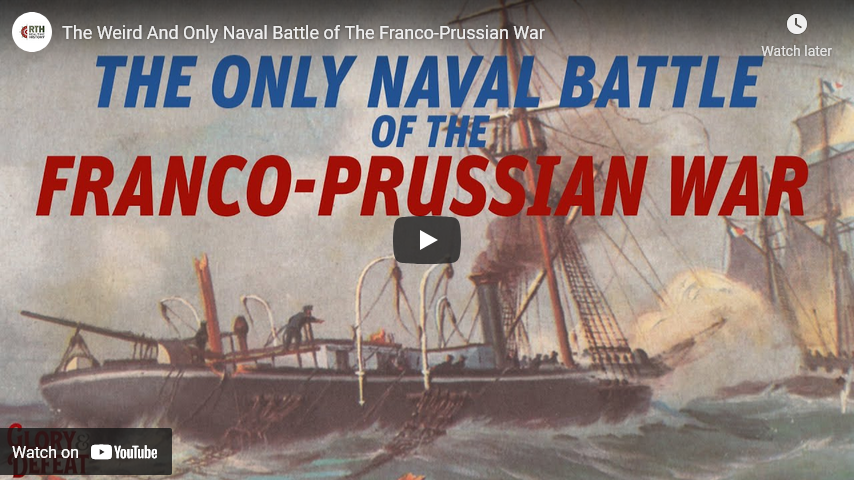
The Weird And Only Naval Battle of The Franco-Prussian War
Real Time History
Published 11 Nov 2021Support Glory & Defeat on Patreon: https://patreon.com/realtimehistory
While the fighting on land continued during the Franco-Prussian War in November 1870, the bizarre and only naval battle of the war took place off the coast of Cuba when the German Meteor and the French Bouvet met in the port of Havana.
» THANK YOU TO OUR CO-PRODUCERS
John Ozment
James Darcangelo
Jacob Carter Landt
Thomas Brendan
James Giliberto
Kurt Gillies
Albert B. Knapp MD
Tobias Wildenblanck
Richard L Benkin
Scott Deederly
John Belland
Adam Smith
Taylor Allen
Jim F Barlow
Rustem Sharipov» OUR PODCAST
https://realtimehistory.net/podcast – interviews with historians and background info for the show.» LITERATURE
Arand, Tobias: 1870/71. Die Geschichte des Deutsch-Französischen Krieges erzählt in Einzelschicksalen. Hamburg 2018Arand, Tobias: “Rogerowski oder Rasumofsky? Überlegungen zur nationalen ‘Meistererzählung’ in Fontanes Kriegsgefangen”, in: Fontane-Blätter 105 (2018), p. 61-86
Bauer, Gerhard u.a. (Hrsg.): Krieg – Macht – Nation. Wie das deutsche Kaiserreich entstand. Ausstellungskatalog Dresden Militärhistorisches Museum der Bundeswehr. Dresden 2020
Bigelow, John: France and the Confederate Navy 1862-1868. New York, 1888
Farret, “Étude sur les combats livrés sur mer de 1860 à 1880”, Revue Maritime et Coloniale, t. 70, no d’édition, 1881, p. 519-522
Gouttman, Alain: La grande défaite 1870-1871. Paris 2015
Pölking, Hermann and Linn Sackarnd: Der Bruderkrieg. Deutsche und Franzosen 1870/71. Freiburg 2020
Radecke, Gabriele/Rauh, Robert: Fontanes Kriegsgefangenschaft. Wie der Dichter in Frankreich dem Tod entging. Berlin 2020
Tümmler, Holger: Großer Atlas des Deutsch-Französischen Krieges 1870/71. Wolfenbüttel 2010
» SOURCES
Fontane, Theodor: Kriegsgefangen. Erlebtes 1870. Neuausgabe Berlin 2020Kriegsgeschichtliche Abtheilung des Großen Generalstabs (Hrsg.): Der deutsch-französische Krieg 1870-71. II.1. Berlin 1878
Kürschner, Joseph (Hrsg.). Der große Krieg in Zeitberichten. Leipzig 1895
Meisner, Heinrich Otto (Hrsg.): Kaiser Friedrich III. Das Kriegstagebuch von 1870/71. Berlin, Leipzig 1926
Roux, Georges: La Guerre de 1870. Paris 1966
Stenzel, Alfred: “Flotte und Küste”, in: Krieg und Sieg 1870-71. Ein Gedenkbuch, hrsg. v. Julius von Plugk-Harttung. Berlin 1895. S. 584-611
“The Naval Duel Near Havana,” Otago Witness, Issue 996, 31 December 1870, p. 11.
» OUR STORE
Website: https://realtimehistory.net»CREDITS
Presented by: Jesse Alexander
Written by: Cathérine Pfauth, Prof. Dr. Tobias Arand, Jesse Alexander
Director: Toni Steller & Florian Wittig
Director of Photography: Toni Steller
Sound: Above Zero
Editing: Toni Steller
Motion Design: Philipp Appelt
Mixing, Mastering & Sound Design: http://above-zero.com
Maps: Battlefield Design
Research by: Cathérine Pfauth, Prof. Dr. Tobias Arand
Fact checking: Cathérine Pfauth, Prof. Dr. Tobias ArandChannel Design: Battlefield Design
Contains licensed material by getty images
All rights reserved – Real Time History GmbH 2021
Comments Off on The Weird And Only Naval Battle of The Franco-Prussian War
November 11, 2021
In memoriam
A simple recognition of some of our family members who served in the First and Second World Wars:
The Great War
 Private William Penman, Scots Guards, died 16 May, 1915 at Le Touret, age 25
(Elizabeth’s great uncle)- Private Archibald Turner Mulholland, Argyll & Sutherland Highlanders, mortally wounded 25 September, 1915 at Loos, age 27
(Elizabeth’s great uncle) - Private David Buller, Highland Light Infantry, died 21 October, 1915 at Loos, age 35
(Elizabeth’s great grandfather) - Private Harold Edgar Brand, East Yorkshire Regiment. died 4 June, 1917 at Tournai.
(My first cousin, three times removed) - Private Walter Porteous, Durham Light Infantry, died 4 October, 1917 at Passchendaele, age 18
(my great uncle) - Corporal John Mulholland, Argyll & Sutherland Highlanders, wounded 2 September, 1914 (shortly before the First Battle of the Aisne), wounded again 29 June, 1918, lived through the war.
(Elizabeth’s great uncle)
The Second World War
- Flying Officer Richard Porteous, RAF, survived the defeat in Malaya and lived through the war
(my great uncle) - Able Seaman John Penman, RN, served in the Defensively Equipped Merchant fleet on the Murmansk Run (and other convoy routes), lived through the war
(Elizabeth’s father) - Private Archie Black (commissioned after the war and retired as a Major), Gordon Highlanders, captured at Singapore (aged 15) and survived a Japanese POW camp
(Elizabeth’s uncle) - Elizabeth Buller, “Lumberjill” in the Women’s Land Army in Scotland through the war.
(Elizabeth’s mother) - Trooper Leslie Taplan Russon, 3rd Royal Tank Regiment, died at Tobruk, 19 December, 1942 (aged 23).
Leslie was my father’s first cousin, once removed (and therefore my first cousin, twice removed).
For the curious, the Commonwealth War Graves Commission the Royal British Legion, and the Library and Archives Canada WW1 and WW2 records site provide search engines you can use to look up your family name. The RBL’s Every One Remembered site shows you everyone who died in the Great War in British or Empire service (Canadians, Australians, New Zealanders, South Africans and other Imperial countries). The CWGC site also includes those who died in the Second World War. Library and Archives Canada allows searches of the Canadian Expeditionary Force and the Royal Newfoundland Regiment for all who served during WW1, and including those who volunteered for the CEF but were not accepted.
In Flanders fields the poppies blow
Between the crosses row on row,
That mark our place; and in the sky
The larks, still bravely singing, fly
Scarce heard amid the guns below.We are the Dead. Short days ago
We lived, felt dawn, saw sunset glow,
Loved and were loved, and now we lie
In Flanders fields.Take up our quarrel with the foe:
To you from failing hands we throw
The torch; be yours to hold it high.
If ye break faith with us who die
We shall not sleep, though poppies grow
In Flanders fields.Lieutenant Colonel John McCrae, MD Canadian Army Medical Corps (1872-1918)
Comments Off on In memoriam
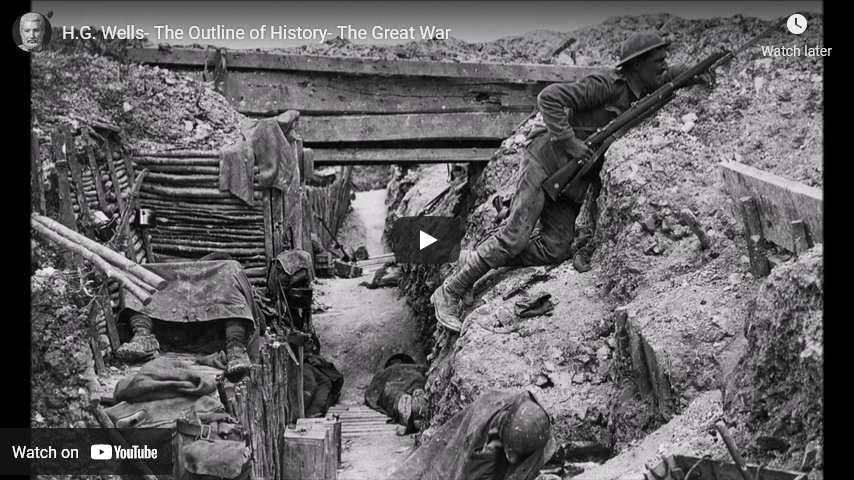
H.G. Wells – The Outline of History – The Great War
Thersites the Historian
Published 5 Mar 2021In this video, we look at H.G. Wells’ coverage of World War I, from the war’s outbreak to the Armistice. Here, we see Wells at his most passionate and he makes a few controversial claims as well as sharing a couple of his personal experiences as a Londoner dealing with German air raids and celebrating the Armistice.
Patreon link: https://www.patreon.com/thersites
PayPal link: paypal.me/thersites
Discord: https://discord.gg/QCaXXFr
Brave Browser: https://brave.com/noa557
Twitter link: https://twitter.com/ThersitesAthens
Minds.com link: https://www.minds.com/ThersitestheHis…
Steemit/dtube link: https://steemit.com/@thersites/feed
BitChute: https://www.bitchute.com/channel/jbyg…
Comments Off on H.G. Wells – The Outline of History – The Great War
November 8, 2021
Look at Life — Rendered Safe (1962)
PauliosVids
Published 20 Nov 2018A look at the work of a bomb disposal squad.

Comments Off on Look at Life — Rendered Safe (1962)
October 31, 2021
Nazi General Dies of Heart Attack – WW2 – 166 – October 30, 1942
World War Two
Published 30 Oct 2021The Allies may be on the verge of a breakthrough in North Africa, but they’re losing at sea to the Japanese this week, and the Axis are also advancing in the Caucasus, though the street by street struggle at Stalingrad continues as always.
(more…)
Comments Off on Nazi General Dies of Heart Attack – WW2 – 166 – October 30, 1942
October 27, 2021
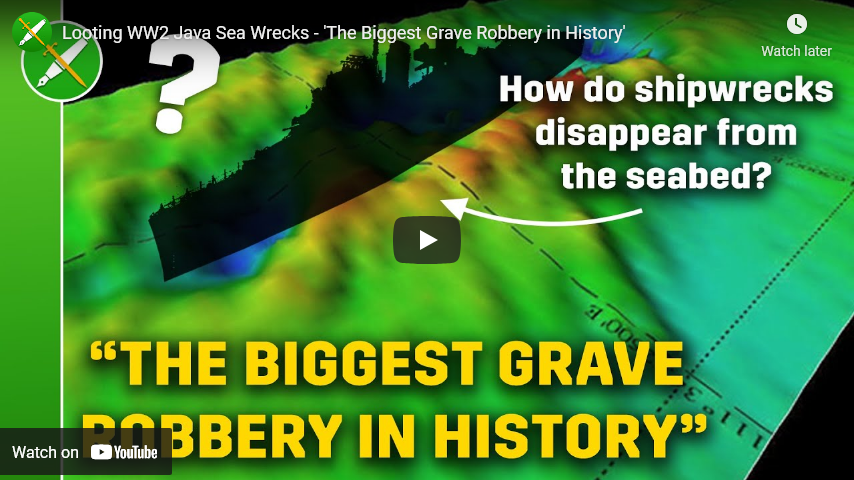
Looting WW2 Java Sea Wrecks – “The Biggest Grave Robbery in History”
Historigraph
Published 26 Oct 2021Support on Patreon to help keep the videos coming https://www.patreon.com/historigraph
Come join the historigraph discord: https://discord.gg/cjTaHFNAjS
Buy Historigraph Posters here! historigraph.creator-spring.comFollow me on Twitch for upcoming livestreams! https://www.twitch.tv/historigraph
► Second Channel: https://www.youtube.com/channel/UCpIj…
► Twitter: https://twitter.com/historigraph
► Instagram: https://www.instagram.com/historigraphSources:
[A] Mediacorp documentary on the salvaging: https://www.youtube.com/watch?v=k9iRR…
[B] Footage of the wreck of Prince of Wales, by Nigel Sinclair – https://www.youtube.com/watch?v=YD96F…
[C] Footage of the wreck of Repulse, by Clayton Neilson – https://www.youtube.com/watch?v=T3U_e…[1] https://www.bbc.co.uk/news/world-asia…
[2] https://www.theguardian.com/world/201…
[3] https://www.theguardian.com/world/201…
[4] https://www.theguardian.com/world/ng-…
[5] https://ses.library.usyd.edu.au/bitst…
[6] https://www.reclamet.co.uk/scrap-meta…
[7] https://www.nst.com.my/news/2015/10/n…
[8] https://www.maritime-executive.com/ar…
Comments Off on Looting WW2 Java Sea Wrecks – “The Biggest Grave Robbery in History”
October 23, 2021
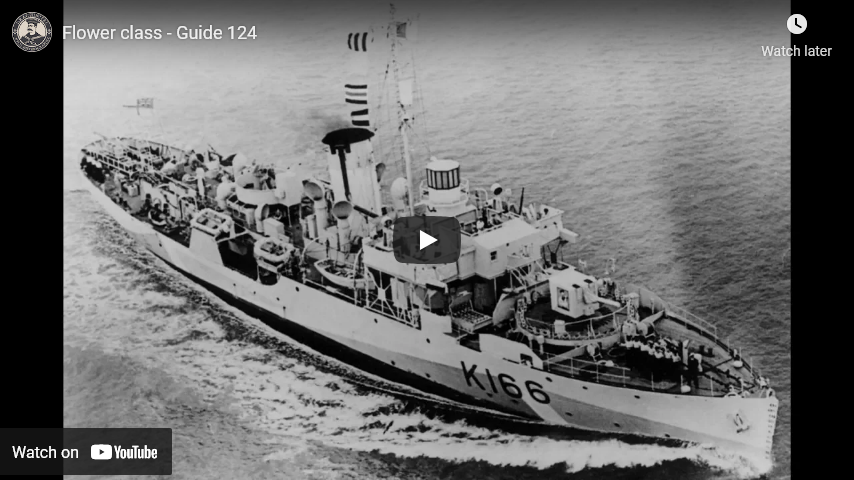
Flower class corvettes – Guide 124
Drachinifel
Published 25 May 2019The Flower class, ASW corvettes of the Royal Navy, are today’s subject.
Want to support the channel? – https://www.patreon.com/Drachinifel
Want to talk about ships? https://discord.gg/TYu88mt
Want to get some books? www.amazon.co.uk/shop/drachinifel
Comments Off on Flower class corvettes – Guide 124
October 22, 2021
The Vehicle That Will Win World War Two – WW2 Special
World War Two
Published 21 Oct 2021The Higgins Landing Craft, Higgins Boat, Landing Craft, or whatever you would like to call it, is one of the most important vehicles of the Second World War — perhaps just as much as tanks, planes, and warships. In a war full of amphibious invasions, landing on beaches in a safer and more efficient way is crucial to victory. So let’s find out the history of this war machine and its use by the World War Two allies.
(more…)
Comments Off on The Vehicle That Will Win World War Two – WW2 Special
October 17, 2021
Stalingrad, Stalingrad, Stalingrad, No Retreat! – WW2 – 164 – October 16, 1942
World War Two
Published 16 Oct 2021The Americans win a naval victory off Guadalcanal and even manage to reinforce the Marines there with the first Army units to arrive, but as the week ends the Japanese launch a major offensive on the island. Meanwhile far across the globe, Adolf Hitler orders that all German offensive operations except those at Stalingrad and in the Caucasus cease. There is plenty to do in Stalingrad, though, because this week all hell breaks loose there.
(more…)
Comments Off on Stalingrad, Stalingrad, Stalingrad, No Retreat! – WW2 – 164 – October 16, 1942
October 11, 2021
City Minutes: The Athenian Empire
Overly Sarcastic Productions
Published 25 Jun 2021Deja Vu? Only slightly! I’m re-imaging City Minutes, and this time the plan is to *Actually Make It Good*! With MULTIPLE CITIES per episode, and HORIZONTAL VIDEO!
I heard your feedback on the first run of the shorts loud and clear — City Minutes Good, Shorts Bad — so this will be the format going forward: networks of cities, with each getting a minute of spotlight.
We’re starting where I always start, in ancient Athens (I wanted to give you the proper version of the pilot), but we’ve got tons of other City Minutes planned!
SOURCES & Further Reading: Thucydides History of the Peloponnesian War, World History Encyclopedia (https://www.worldhistory.org/Athens): “Athens”, “Piraeus”, “Sounion”, “Delos”, “Corcyra”, “The Delian League” parts 3 & 4, and my degree in Classical Studies
Cities by timestamp:
00:00 — Athens
1:00 — Piraeus
2:01 — Sounion
3:03 — Delos
4:05 — Mytilene
5:03 — Korkyra
6:03 — ConclusionOur content is intended for teenage audiences and up.
PATREON: https://www.Patreon.com/OSP
PODCAST: https://overlysarcasticpodcast.transi…
DISCORD: https://discord.gg/osp
MERCH LINKS: http://rdbl.co/osp
OUR WEBSITE: https://www.OverlySarcasticProductions.com
Find us on Twitter https://www.Twitter.com/OSPYouTube
Find us on Reddit https://www.Reddit.com/r/OSP/
From the comments:
Overly Sarcastic Productions
43 minutes ago
Fun linguistic shenanigans: The island of Korkyra (commonly spelled Corcyra when referring to the ancient city) is known today as both Kerkyra and Corfu. The name Corfu comes from an Italianized version of the Byzantine name Korufo.I use the pronunciation of “Korkyra” with an O because it reflects the more common version of the name as listed in ancient accounts — adherence to the original ancient version is also why I’m using Ks in place of any Latinized Cs.
Essentially: I’m spelling everything the ancient way, but using modern Greek phonetics to sound out those words. It’s an uncommon way to go about, but it feels like the right balance of ancient authenticity and modern linguistic continuity.
-B

Comments Off on City Minutes: The Athenian Empire


