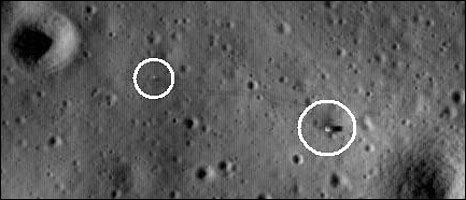
On July 20th, it will have been 40 years since many of us clustered around our tiny black-and-white televisions, watching the first moon landing (or for those of you of conspiracist leanings, a really convincing sound stage in Area 51). Why, after all this time, haven’t we gone further? Why, for that matter, have we not been back to the moon for over a generation? Ronald Bailey explains the real reason:
The Apollo moon landings have often been compared to the explorations of Christopher Columbus and the Lewis and Clark expedition to Oregon. For example, on the 20th anniversary of the first moon landing, President George H.W. Bush declared, “From the voyages of Columbus to the Oregon Trail to the journey to the Moon itself: history proves that we have never lost by pressing the limits of our frontiers.”
But what boosters of the moon expeditions overlook is that the motive for pressing the limits of our frontiers in those cases was chiefly profit. In his report from his first voyage, Columbus predicted that his explorations would result in “vast commerce and great profit.” The extension of commerce was also the chief justification that President Thomas Jefferson gave in his secret message to Congress requesting $2,500 to fund what would become the Lewis and Clark expedition.
Forty years later, as we bask in the waning prestige that the Apollo missions earned our country, we must keep in mind that humanity will some day colonize the moon and other parts of the solar system, but only when it becomes profitable to do so.
Back in 1969, my friend Alan Fairfield and I sat in fascination (at least in the golden memory, they do . . . we were nine: I doubt that we paid as much attention to the broadcast as his mother thought we should). Mrs. Fairfield told us that we’d be able to go to the moon ourselves by the time we were grown up. It didn’t turn out that way, and at the current rate of progress, it may not turn out that way for my grandkids.
But I still hope, one day . . .
(Cross-posted to the old blog, http://bolditalic.com/quotulatiousness_archive/005583.html.)