Journalism is about covering important stories. With a pillow, until they stop moving.
David Burge (@iowahawkblog), Twitter, 2013-05-09.
August 12, 2018
QotD: Journalism
July 14, 2018
May 25, 2018
QotD: Muggeridge’s Law
While Malcolm Muggeridge was the editor of Punch, it was announced that Khrushchev and Bulganin were coming to England. Muggeridge hit upon the idea of a mock itinerary, a lineup of the most ludicrous places the two paunchy pear-shaped little Soviet leaders could possibly be paraded through during the solemn process of a state visit. Shortly before press time, half the feature had to be scrapped. It coincided exactly with the official itinerary, just released, prompting Muggeridge to observe: We live in an age in which it is no longer possible to be funny. There is nothing you can imagine, no matter how ludicrous, that will not promptly be enacted before your very eyes, probably by someone well known.
Tom Wolfe, “Stalking the Billion-Footed Beast: A literary manifesto for the new social novel”, Harpers, 1989-11.
May 17, 2018
John W. Campbell Reshapes Sci-Fi – Pulp! Astounding Stories – Extra Sci Fi
Extra Credits
Published on 15 May 2018Writer-turned-famous-editor of Astounding Stories, John W. Campbell helped usher in the golden age of science fiction, driven by a new authorial understanding of real science and real psychology.
Tom Wolfe “would spend the rest of his days in a golden cage of a book deal”
In the National Post Colby Cosh explains why Tom Wolfe was so significant in the literary world almost from his first published work:
… Tom Wolfe was an educated man: unlike any of the macho novelists he was sparring with, he was entitled to adjoin an honest-to-God PhD to his byline. In the end, he could not escape the prejudices imprinted on him in youth. It is a truth universally acknowledged: a prose artist must excrete a novel to demonstrate his true mettle.
Wolfe described it this way himself in a 2008 interview. “Originally, I was only going to write one novel, to prove to myself and any random doubters that I could do it.” “Random doubters” sounds so dismissive and calm until you remember the amount of work Wolfe was proposing to undertake in order to impress them. He continued: “But that novel, The Bonfire of the Vanities, was such an astounding success… I’m afraid I got swept away.”
Wolfe, I suppose, was too well-raised to utter the word “money” in front of an interviewer. (The explicit subject of all his work, his journalism and fiction, is social status: but social status and money do travel together mighty closely.) Bonfire (1987) became one of the publishing events of the epoch, and he would spend the rest of his days in a golden cage of a book deal. The dabbler in the novel had proved too much: he had proved that the novel really is still in a class by itself as a social phenomenon.
More novels in the vein of Bonfire — deeply researched, socially prescient, full of truculent conservative squareness — followed. I myself would not trade The Right Stuff, Wolfe’s 1979 nonfiction book about the Mercury astronauts, for the whole pile, Bonfire included. (And I say this knowing full well that there is some quantum of sheer bull in The Right Stuff.)
Wolfe continued to insist, returning to the interview already mentioned, that “Nonfiction remains the most important literary genre in American literature of the past 60 years.” He still, 20 years on from Bonfire, felt the need to half-apologize for abandoning non-fiction. My instinct is that it was indeed a mistake, but I am only a consumer of Wolfe, looking back at the corpus from without: none of us readers had to meet Wolfe’s dry-cleaning bills.
May 8, 2018
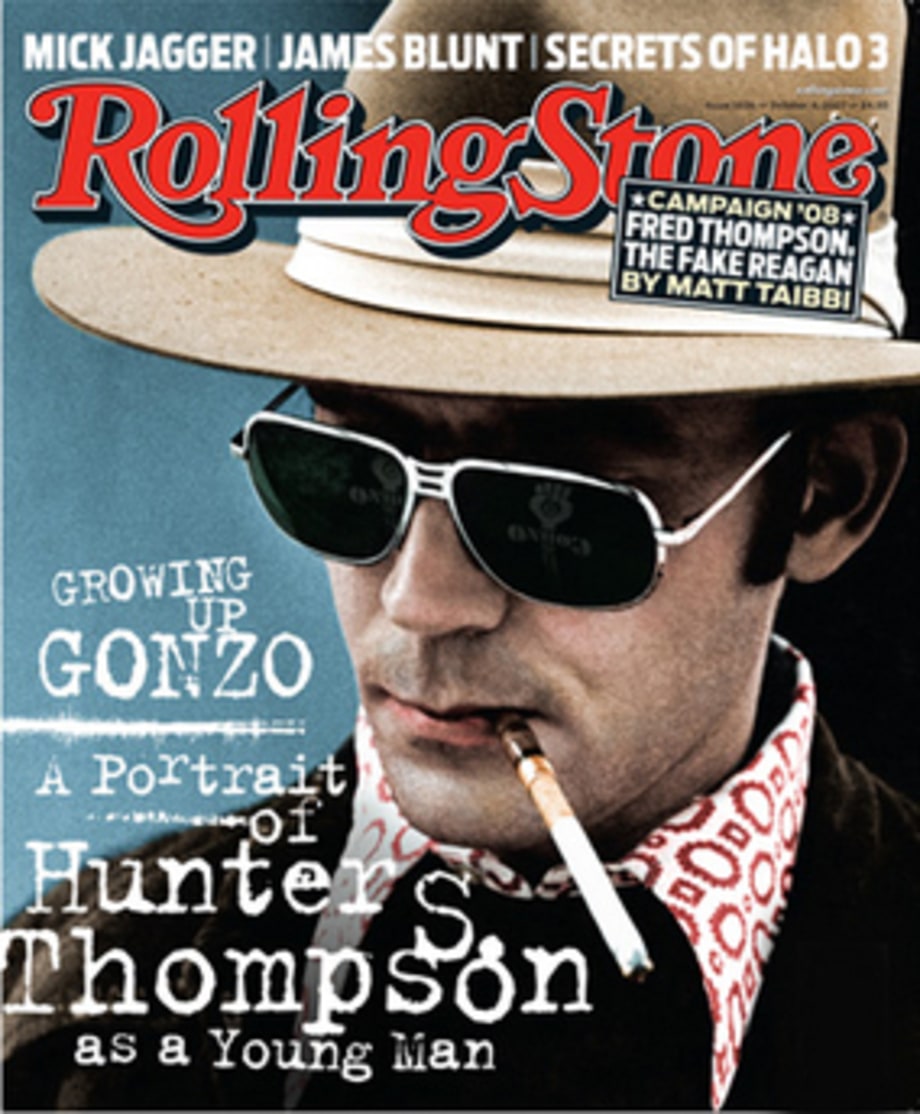
Working at Rolling Stone in the early days
According to Joe Hagan’s Sticky Fingers, the magazine was everything a well-heeled sexual predator could possibly want in a workplace:
Last fall, as the first #MeToo scandals scrolled across the cable news chyron, I happened to be reading Sticky Fingers, Joe Hagan’s superb new biography of Rolling Stone founder Jann Wenner. As Hagan describes the magazine’s early years in the 1960s, just about everyone on the staff — male and female — was having sex with everyone else, under and on top of desks, on the boss’s sofa, wherever the mood struck them. Hagan quotes one writer claiming that Wenner told him that “he had slept with everyone who had worked for him.” Compared with Wenner and the early Rolling Stone crowd, Harvey Weinstein was a wanker.
Did the women of Rolling Stone consent to the goings-on at what today would be regarded as an illegal den of workplace harassment? They appeared to. In the company’s bathroom, women employees scribbled graffiti ranking male staffers for their sexual performance — not, as they do on college campuses today, the names of rapists in their midst. Jane Wenner, Jann’s wife, was known to judge job seekers by “whether a candidate was attracted to her” and, in some cases, to test the depth of their ardor personally. Photographer Annie Leibovitz, who made her name at Rolling Stone, routinely slept with her subjects and was rumored to have had threesomes with the Wenners.
Different as they seem, there’s a direct line between that revolutionary time and our own enraged, post-Weinstein moment. What started out as a clear-cut protest against workplace harassment has mutated into a far-reaching counterrevolution — a revolt against the combustible contradictions that the sexual revolution set in motion 60-odd years ago.
May 7, 2018
QotD: Running for the presidency
One of the most difficult problems for a journalist covering a presidential campaign is getting to know the candidates well enough to make confident judgments about them, because it is just about impossible for a journalist to establish a personal relationship with any candidate who has already made the big leap from “long shot” to “serious contender.” The problem becomes more and more serious as the stakes get higher, and by the time a candidate has survived enough primaries to convince himself and his staff that they will all be eating their lunches in the White House Mess for the next four years, he is long past the point of having either the time or the inclination to treat any journalist who doesn’t already know him personally as anything but just another face in the campaign “press corps.”
There are many complex theories about the progressive stages of a presidential campaign, but for the moment let’s say there are three: Stage One is the period between the decision to run for president and the morning after the New Hampshire primary when the field is still crowded, the staff organizations are still loose and relaxed, and most candidates are still hungry for all the help they can get – especially media exposure, so they can get their names in the Gallup Poll; Stage Two is the “winnowing out,” the separating of the sheep from the goats, when the two or three survivors of the early primaries begin looking like long-distance runners with a realistic shot at the party nomination; and Stage Three begins whenever the national media, the public opinion polls and Mayor Daley of Chicago decide that a candidate has picked up enough irreversible momentum to begin looking like at least a probable nominee, and a possible next president.
This three-stage breakdown is not rooted in any special wisdom or scientific analysis, but it fits both the 1972 and 1976 Democratic campaigns well enough to make the point that any journalist who doesn’t get a pretty firm personal fix on a candidate while he’s still in Stage One might just as well go with his or her instincts all the way to Election Day in November, because once a candidate gets to Stage Two his whole lifestyle changes drastically.
At that point he becomes a public figure, a serious contender, and the demands on his time and energy begin escalating to the level of madness. He wakes up every morning to face a split-second, 18-hour-a-day schedule of meetings, airports, speeches, press conferences, motorcades and handshaking. Instead of rambling, off-the-cuff talks over a drink or two with reporters from small-town newspapers, he is suddenly flying all over the country in his own chartered jet full of syndicated columnists and network TV stars……. Cameras and microphones follow him everywhere he goes, and instead of pleading long and earnestly for the support of 15 amateur political activists gathered in some English professor’s living room in Keene, New Hampshire, he is reading the same cliché-riddled speech – often three or four times in a single day – to vast auditoriums full of people who either laugh or applaud at all the wrong times and who may or may not be supporters……. And all the fat cats, labor leaders and big-time pols who couldn’t find the time to return his phone calls when he was desperately looking for help a few months ago are now ringing his phone off the hook within minutes after his arrival in whatever Boston, Miami or Milwaukee hotel his managers have booked him into that night. But they are not calling to offer their help and support, they just want to make sure he understands that they don’t plan to help or support anybody else, until they get to know him a little better.
It is a very mean game that these high-rolling, coldhearted hustlers play. The president of the United States may no longer be “the most powerful man in the world,” but he is still close enough to be sure that nobody else in the world is going to cross him by accident. And anybody who starts looking like he might get his hands on that kind of power had better get comfortable, right from the start, with the certain knowledge that he is going to have to lean on some very mean and merciless people just to get himself elected.
Hunter S. Thompson, “Fear and Loathing on the Campaign Trail ’76: Third-rate romance, low-rent rendezvous — hanging with Ted Kennedy, Jimmy Carter, and a bottle of Wild Turkey”, Rolling Stone, 1976-06-03.
May 2, 2018
Lovecraft & Howard – Pulp! Weird Tales – Extra Sci Fi
Extra Credits
Published on 1 May 2018Weird Tales was a pulp magazine that started out as a collection of detective stories before getting taken over by writers like H.P. Lovecraft and Robert E. Howard, whose fantastic tales instilled both good and bad tropes that we still see in modern sci fi.
April 26, 2018
Britain drops down a league table that really matters, for a change
Mick Hume on the parlous state of press freedoms in Britain:
Britain prides itself on being an historic home of freedom and the free press. So how come we are languishing in 40th place in the international press-freedom table?
Imagine the crowds singing an updated version of Rule Britannia at the Last Night of the Proms, about how Britain ‘shall flourish great and free / The dread and envy of them all / Except for the 39 freer nations, obvs’.
According to the 2018 World Press Freedom Index, published on Wednesday by Reporters Without Borders (RSF), the UK is now ‘one of the worst-ranked countries in Western Europe in terms of respect for press freedom’.
Its 40th place puts the UK one ahead of Burkina Faso and two clear of Taiwan, and suggests that journalists working in Britain have less freedom to hold the powerful to account than those in such liberal states as South Africa, Chile or Lithuania.
British observers are far more likely to bemoan how far we have fallen down the world rankings in football, another field we claim to have invented. Unlike the glorious irrelevance of football, however, freedom of the press really is a matter of life and death for a democratic society.
The UK’s 40th place is unchanged from 2017. But that is 18 lower than its ranking in the first Index, published in 2002 – and 12 places down on six years ago, before the publication of the Leveson report.
That should give a clue as to the new threats press freedom faces in the UK. Unlike in some other illiberal parts of the world, we are not confronted by old-fashioned government repression and state control of the press. Instead, and especially since the Leveson Inquiry, press freedom in the UK has been threatened by a more underhand assault from allegedly liberal political and cultural elites – backed, to their shame, by the Labour Party leadership and the Corbynite left.
April 25, 2018
Hugo Gernsback – Pulp! Amazing Stories – Extra Sci Fi
Extra Credits
Published on 24 Apr 2018Sci fi “pulp” stories sometimes have a reputation for being cheesy and over-dramatic, but they were extremely important for building up the sci fi genre as something *anyone* could write for AND get paid for — not just famous authors.
April 16, 2018
QotD: The Canadian media
Ezra Levant, who now runs the Rebel Media online empire as a successor to the deceased Sun News TV network, has a long-running joke/critique about a “Media Party” that croons in unison on every public issue. Every time he mentions the “Media Party,” we, the Media Party, all fall into the same cross and scornful mood. We commiserate ironically with all our old co-workers at rival titles or channels about how there’s totally no such thing as a Media Party.
Ezra knows how to market, whatever else you want to say about him. He is out to devour our audiences and show, if mostly by loud assertion, that we in the Party are all lazy and lily-livered. He is not afraid to say that all the parts of the Star-Globe-Post-CBC-Maclean’s ecosystem are inferior to his thingamabob. We don’t compete with each other like he does: we lack the spirit of the feud. We all sense there might actually be some kind of unified, monstrous Star-Globe-Post-CBC-Maclean’s publication one day. And we want to be able to work for it. So even Posties are reluctant to say that the Globe on most days appears to have been edited by a dead Tory prime minister and printed on cobwebs, or that the Star sometimes seems to regard personal nastiness as a social-democratic credential.
The National Post was born in a spirit of newspaper war. If you tried to start such a war today it would seem absurdly counterproductive, almost suicidally stupid; and maybe it was. Now we are all just hanging on for dear life.
Colby Cosh, “Go ahead, hate the media – we deserve it”, National Post, 2016-07-25.
April 6, 2018
Kevin Williamson fired for expressing a view shared by at least 40% of Americans
Katherine Mangu-Ward responds to Williamson’s short tenure at The Atlantic after they found themselves shocked and horrified when it was discovered that he really was an outspoken anti-abortion conservative:
Williamson expressed the view that abortion is murder and should be punished to the full extent of the law (although he also later indicated that he has mixed feelings about capital punishment). I do not share his view. But by declaring Williamson to be outside the Overton window of acceptable political discourse because he believes strongly that abortion is a serious, punishable crime, The Atlantic is essentially declaring that it cannot stomach real, mainstream conservatism as it actually exists in 21st century America.
Williamson uses colorful and sometimes rash language. He didn’t have to detail the grisly form of punishment he would inflict on women who decide to terminate their pregnancies. He chose to do so because he enjoys provoking a reaction. But The Atlantic knew that about him before it hired him.
[…]
It is, of course, the perfect right of The Atlantic‘s editors to publish whomever they wish. Reason staffers are all libertarian, under a big-tent understanding of that term (not to brag, but we are repping the pro-life view). That’s written into our mission as a magazine. But if The Atlantic purports to capture a broad spectrum of American political views, Williamson’s firing is a sign that it hasn’t yet figured out how to do so. And the reader outcry against him (and his rightish heterodox kinfolk at The New York Times) is a sign of a market that has grown increasingly squeamish about a genuinely inclusive journalistic vision.
I have personally been the beneficiary of this doublethink on ideological diversity for years. When institutions recognize the need to have a nonliberal somewhere in their midst, they look across the landscape and discover that the closest thing to conservatism that they can tolerate is a relatively mild-mannered, young(ish), female, pro-choice libertarian. Which is to say, not a conservative at all.
The Atlantic publishes lots of interesting heterodox voices, of course. And I’d like to think I do provide ideological diversity in situations where I’ve been called in. But putting me on a panel is not nearly the same thing as giving the conservative side of the American political spectrum a hearing.
March 23, 2018
Who’s gaslighting who?
Nick Gillespie on the gaslighting of America:
The election of Donald Trump hasn’t just brought a poorly mannered reality TV star into the Oval Office and our newsfeeds. It has also popularized the concept of gaslighting, or tricking rational people into thinking they’re insane. The phrase is a reference to a 1944 movie in which Charles Boyer tries to convince his young bride, played by Ingrid Bergman, that she’s nuts so he can cover up a murder and search for jewels hidden in the house they share (the house’s gas lamps flicker due to Boyer’s late-night searches, hence the title).
Go Google “Donald Trump is gaslighting America” and you’ll find a constantly growing list of stories from outlets ranging from CNN to Teen Vogue to Vanity Fair to Refinery 29. The common thread is some variation on the theme that Trump’s brazen lies, misstatements, and rhetorical sleights of hand are designed to drive us all batshit crazy by contradicting what we plainly see happening to the United States of America. At rock bottom, Trump’s detractors believe there is simply no way that he could have legitimately won the 2016 election, especially against Hillary Clinton, of whom President Obama said, “I don’t think that there’s ever been someone so qualified to hold this office.”
Yet it’s not Donald Trump who is gaslighting us, but Hillary Clinton, whose complete and utter refusal to take responsibility for her loss is at the heart of what’s so weird about contemporary America. You read it here first: Trump is the effect and not the cause of the ongoing mudslide that is the daily news. Ever since about 11 p.m. ET on November 8, 2016, Clinton and her allies in the media have worked overtime to provide increasingly fanciful explanations for her failure to beat the least-credible candidate ever in American history. Sometimes the apologias are conscious, sometimes not, but nobody really wants to accept what happened (in fact, even Trump himself couldn’t believe it for a while, which helps explain why his transition was so incompetent). The result is a non-stop barrage of stories, some more credible than others, that Trump’s win was the result of some sort of sinister machination that has undermined our democracy. Following from this interpretation every aspect of his behavior, from his bro-ing out with Vladimir Putin to his indifferent spelling and capitalization while tweeting, is just one more sign that we are living in a world gone stark, raving mad.
To be fair, Trump trades in delusion, such as his insistence that violent crime is at or near all-time highs, that massive voter fraud was the only reason he lost the popular vote, and that his inauguration was the most-viewed ever. These sorts of patently false statements do indeed constitute attempts at gaslighting. So, too, do his unconvincing denials about a sexual relationship with the porn star known as Stormy Daniels, his doctor’s statement that he only weighs 239 lbs. (giving rise to the “Girther” movement), and his fanciful stories about how Japanese car makers use bowling balls in quality-assurance tests. Against such a backdrop, even the president’s so-far-not-contradicted denial that his campaign colluded with Russia seems like a form of gaslighting. In fact, everything he says seems like it’s intended to drive us insane or at least seriously question basic reality.
March 9, 2018
QotD: Contempt for science
The waging of a “war on science” by right-wing know-nothings has become part of the conventional wisdom of the intelligentsia. Even some Republican stalwarts have come to disparage the GOP as “the party of stupid.” Republican legislators have engaged in spectacles of inanity, such as when Sen. James Inhofe, chair of the Committee on Environment and Public Works, brought a snowball to the Senate floor in 2015 to dispute the fact of global warming, and when Rep. Lamar Smith, chair of the House Committee on Science, Space, and Technology, pulled quotes out of context from peer-reviewed grants of the National Science Foundation so he could mock them (for example, “How does the federal government justify spending over $220,000 to study animal photos in National Geographic?”).
Yet a contempt for science is neither new, lowbrow, nor confined to the political right. In his famous 1959 lecture “The Two Cultures and the Scientific Revolution,” C.P. Snow commented on the disdain for science among educated Britons and called for a greater integration of science into intellectual life. In response to this overture, the literary critic F.R. Leavis wrote a rebuttal in 1962 that was so vituperative The Spectator had to ask Snow to promise not to sue for libel if they published the work.
The highbrow war on science continues to this day, with flak not just from fossil-fuel-funded politicians and religious fundamentalists but also from our most adored intellectuals and in our most august institutions of higher learning. Magazines that are ostensibly dedicated to ideas confine themselves to those arising in politics and the arts, with scant attention to new ideas emerging from science, with the exception of politicized issues like climate change (and regular attacks on a sin called “scientism”). Just as pernicious is the treatment of science in the liberal-arts curricula of many universities. Students can graduate with only a trifling exposure to science, and what they do learn is often designed to poison them against it.
Steven Pinker, “The Intellectual War on Science”, Chronicle of Higher Education, 2018-02-13.
February 2, 2018
Trump Diminishes the Power of the State in Our Heads: Wired Co-Founder Louis Rossetto
ReasonTV
Published on 1 Feb 2018Louis Rossetto, co-founder of Wired magazine, on politics, the dot-com bubble, and his new novel, Change Is Good: A Story of the Heroic Era of the Internet.
—————-
“Trump is a refreshing reminder that the guy that’s in the White House is another human being,” says Louis Rossetto, the co-founder of Wired and author of the new book Change Is Good: A Story of the Heroic Era of the Internet. “The power of the state is way too exalted [and] bringing that power back to human scale is an important part of what needs to be done to correct the insanity that’s been going on in the post-war era.”In 2013, Rossetto was the co-recipient of Reason‘s very first Lanny Friedlander Prize, an award named after the magazine’s founder that’s handed out annually to an individual or group who has created a publication, medium, or distribution platform that vastly expands human freedom. Rossetto is also a longtime libertarian who knew Friedlander personally.
While still an undergraduate at Columbia University, Rossetto co-authored a 1971 cover story in the New York Times Magazine titled “The New Right Credo — Libertarianism,” writing that “[l]iberalism, conservatism, and leftist radicalism are all bankrupt philosophies,” and “refugees from the Old Right, the Old Left and the New Left, they are organizing independently under the New Right banner of libertarianism.”
Reason‘s Nick Gillespie sat down with Rossetto to talk about his new book (the paper version was lavishly designed and crowdfunded on Kickstarter), the 1990s tech boom, and why Trump “diminishes the power of the state” in our heads.
Interview by Nick Gillespie. Edited by Ian Keyser. Cameras by Paul Detrick, Justin Monticello, Zach Weissmueller.
Machinery by Kai Engel is used under a Creative Commons license.
Photo Credits: Chris Kleponis/ZUMA Press/Newscom – Jonathan Ernst/Reuters/Newscom – Abaca Press/Douliery Olivier/Abaca/Sipa USA/Newscom