Quotulatiousness

March 11, 2025

“In many ways, Carney is the technocrat’s technocrat. A bona fide citizen of nowhere”

Filed under: Cancon, Government — Tags: , , , — Nicholas @ 04:00

In spiked, Fraser Myers expresses incredulity that Canadians have “chosen” yet another technocratic globalist as our next Prime Minister to succeed Justin Trudeau:

Then-Governor of the Bank of Canada Mark Carney at the 2012 Annual Meeting of the World Economic Forum in Davos, Switzerland.
WEF photo via Wikimedia Commons.

Canadians have a new prime minister. After a leadership election in the ruling Liberal Party, it’s out with the woke globalist, Justin Trudeau, and in with the woke globalist, Mark Carney.

Extraordinarily, in an age where justified populist rage against an out-of-touch establishment is spreading across the globe, Canadians have ended up with a leader who embodies that very establishment. In many ways, Carney is the technocrat’s technocrat. A bona fide citizen of nowhere.

The new Canadian PM’s CV reads like a parody of an archetypal Davos man. He has been governor of the Bank of Canada, governor of the Bank of England and a United Nations special envoy on climate action and finance. Before he entered the public eye, he worked for Goldman Sachs – in London, Tokyo, New York and Toronto. He has degrees from Harvard and Oxford. Yet he has never once held any form of elected political office. He does not even currently hold a seat in Canada’s House of Commons.

Carney is living, breathing proof that expert credentials are no substitute for sound judgement or political acumen. He has embraced just about every naff and dangerous political trend of our times, never deviating from the Davos script.

Most notoriously, as governor of the Bank of England from 2013 to 2020, Carney became the high priest of Project Fear ahead of the 2016 Brexit vote. He warned before the referendum that a Leave vote would spark an instant recession. It didn’t. He claimed Brexit would make investment in British assets so risky that it could ‘test the kindness of strangers’ should the UK take the leap. Needless to say, this was politically motivated hysteria, not a sober assessment of Britain’s economic prospects outside the EU.

More recently, his endorsement of Labour’s Rachel Reeves as chancellor ahead of the UK General Election also smacked of both dubious judgement and needless political interference. Carney said in autumn 2023 that it was ‘beyond time’ her plans were put into action. Yet since Reeves’s plans were actually put into action, in her first budget in October last year, the UK economy has teetered on the brink of recession, unemployment has risen and government borrowing costs have shot up. Call it the Carney kiss of death.

March 10, 2025

“I, for one, welcome our new unelected globalist technocratic overlord”

With a resounding 99% 85.9% of the voters whose votes were allowed, Maximum Leader Mark Carney has finally been elected to a position for the first time in his adult life:

With the support of most of Justin Trudeau’s team, Carney has been ushered in to continue on with more of Trudeau’s signature economic policies, the ones Carney has been advising Trudeau on since 2020.

Yes, Carney said that he will scrap the capital gains tax changes that have hurt so many small business owners, but that had to go. He also promised to drop the consumer carbon tax but would also increase the industrial carbon tax, a move that will have the same impact on manufacturing industries like steel as Donald Trump’s tariffs.

Few Canadians will know about the discrepancy in Carney’s plan or any others because there has never been a leader in this country elected to such high office with so little vetting. Carney preferred speeches and rallies over news conferences and interviews with U.S. media outlets over Canadian ones because the interviewer would know little about Canadian politics.

When he wasn’t appearing on The Daily Show or the podcast of Trump’s short-lived spokesman Anthony Scaramucci, Carney preferred to speak to friendly liberal media outlets like CBC. While the media narrative is that Carney has reinvigorated the Liberal party and closed the polling gap with Pierre Poilievre’s Conservatives, neither claim is demonstrably true.

While more than 400,000 people signed up as “registered Liberals” to vote in this nomination process, just over 151,000 actually took the time to vote. This is a chance to pick the next prime minister of our country at a time when we are facing a threat to our sovereignty and a threat to our economic future, yet our next PM was chosen by so few people.

By comparison, the last Conservative leadership race saw more than 400,000 people vote with 295,285 ballots cast for Poilievre alone. Sure, it might have been a longer timeline, but the stakes – becoming leader of the official Opposition with no election in sight – were much smaller.

In the National Post Chris Selley doesn’t seem to be a fan of the new unelected leader of the federal government (assuming that Justin Trudeau will actually step down, of course):

Every speaker of note [at the Liberal leadership hootnanny], from the four leadership candidates to outgoing leader Justin Trudeau to former prime minister Jean Chrétien, who held the room in the palm of his hand for what felt like a day and a half, mentioned the need for Canadians to stand together, united and altogether resolute against the threat of Donald Trump’s tariffs.

At the same time, of course, Liberals were insisting that the Conservatives — who have as much or more support nationwide, and until recently had a lot more — are bent on destroying all that’s good and holy about this country. That isn’t really a unifying message.

“Pierre Poilievre just doesn’t get it,” Carney averred in his victory speech. “He is the type of life-long politician … who worships at the altar of the free market without having made a payroll himself. And now … at a time of immense economic insecurity, he would undermine the Bank of Canada. Poilievre has called for the shutting down of CBC at a time when disinformation and foreign interference are on the march. He insults our mayors and ignores our First Nations.”

“A person who worships at the altar of Donald Trump will kneel before him, not stand up to him,” Carney said of Poilievre, who has been raining invective on Trump just as fast as he can in recent days — and indeed someone whom Trump himself denigrated in recent days as “not a MAGA guy”.

Oh, and Carney said “Pierre Poilievre would let our planet burn” — on the same night he promised to axe the consumer carbon tax as a first order of business.

Other than all that, though, we’re in it together. Okey-dokey.

Dan Knight is even less impressed:

And here’s where it gets even better. The polling — oh, the polling. For months, the Liberals have been sinking. Before Trudeau resigned, they were floundering at 24% support. Then, magically, within days of picking a new leader, they skyrocket to 33%? A 9-point jump in the blink of an eye? Wow, what a coincidence! You mean to tell me that the same Canadians who couldn’t be bothered to sign up for a free membership, the same Canadians who have overwhelmingly turned against this party, suddenly decided they’re on board again — just because the party swapped one out-of-touch elitist for another?

No. That’s not how this works. That’s not how enthusiasm works.

This isn’t some grand Liberal resurgence. This is the Liberal-friendly media manufacturing a comeback narrative because their government subsidies depend on it. The same journalists who screamed for years about the Conservative “far-right” threat are now bending over backwards to convince you that Mark Carney is a fresh outside

And you know what? Maybe if they had actually let Ruby Dhalla into this race, they would’ve stood a chance. Seriously. I had to do a double-take when I looked at her policies — supporting small business, tough on crime, actual immigration regulation — I mean, that’s how you win the center. That’s how you stop a Conservative majority and turn it into a minority government. If they had let her run, we’d be having a very different conversation right now.

But what did the Liberals do? Oh, they disqualified her over — get this — campaign finance irregularities. But guess what? They kept the money. That’s right. The party flagged “violations”, kicked her out, and then conveniently pocketed the cash. If that’s not the most Liberal Party thing I’ve ever heard, I don’t know what is.

Can you feel the Carneymentum? It’s supposed to sweep the land from sea to sea to sea … any minute now.

March 9, 2025

Mark “the human snooze button” Carney

Filed under: Cancon, Media, Politics — Tags: , , , , — Nicholas @ 03:00

In the National Post, Chris Selley explains the attraction of a Mark Carney-led Liberal Party to mainstream Canadians:

Then-Governor of the Bank of Canada Mark Carney at the 2012 Annual Meeting of the World Economic Forum in Davos, Switzerland.
WEF photo via Wikimedia Commons.

Ironically I suspect what Poilievre is up against is one of the most basic and powerful forces in Canadian politics: conservatism, but in one of its purest forms, namely suspicion of change — especially in a crisis. Recall that Canada saw 10 elections during the pandemic — one federal and nine provincial. The incumbent parties won eight of them, in some cases even as their health-care and long-term care systems collapsed on their heads and their “pandemic preparedness” folders turned out to contain nothing but some old Calvin and Hobbes cartoons.

No question, there are problems here specific to Poilievre and the Conservatives. The Royal Order of Laurentian Elites nearly fainted when Poilievre started saying “Canada is broken”, but people seemed to calm down about it and engage with it once it became clear most Canadians agreed: 70 per cent, according to a Postmedia-Leger poll last year.

Saying “Canada is broken” nowadays is likely to get you branded a traitor by a mob of people who think Beaver Tails, Tim Horton’s, Molson advertisements and a Tragically Hip playlist comprise a national identity. Canada can be broken and Trump can be a lunatic at the same time, but nationalist outbursts have little time for such nuance.

[…]

Change is unavoidable in the forthcoming election, of course. And by rights, Canadians should want it: Like COVID, Trump’s demands on border security and military spending, and his obviously sincere belief in the power of tariffs — as untethered from reality and sense as these demands are — have exposed massive weaknesses on our part that we should want to fix for our own sake. Poilievre should speak more to us about those fixes.

Mark Carney never made any sense to me as a potential saviour for the Liberals. The most obvious recent event they needed to replicate was Kathleen Wynne’s jaw-dropping majority win in 2014 for the Ontario Liberals, after Dalton McGuinty had driven the party into a pond and left it there to drown. Wynne was a proven, veteran campaigner. Carney is … well, certainly not an “outsider”, but this is his first go at politics, and it certainly hasn’t all been smooth sailing.

But Carney seems set to win the party’s leadership race on Sunday, anyway. He’s boring, and he’s a technocrat, and Trudeau is neither. And neither is Poilievre. A boring technocrat might well look like a safe harbour for a lot of Canadians. Poilievre needs to put a more positive spin on the changes we so desperately need.

March 8, 2025

The Federal Court of Canada rules in favour of Trudeau’s authoritarian instincts and actions

Filed under: Cancon, Law, Politics — Tags: , , , , — Nicholas @ 05:00

Apparently we’ve all been under a delusion that Parliament was the paramount elected body and therefore that the Prime Minister needed to operate within the rules of Parliament. The Federal Court saw it otherwise, as Dan Knight explains:

Arms of the Federal Court of Canada

If you’ve been following this case, you already know what’s at stake: whether Justin Trudeau — Canada’s most brazenly authoritarian Prime Minister in modern history — can shut down Parliament whenever he finds it politically inconvenient. Well, today, the Federal Court of Canada, in all its wisdom, just gave him the green light.

Chief Justice Paul S. Crampton released his decision, and while he acknowledged that the courts do have the power to review the Prime Minister’s use of prorogation, he ultimately ruled that Trudeau didn’t exceed his constitutional authority. That’s right — according to the Federal Court, it’s perfectly fine for a sitting Prime Minister to shut down Canada’s elected legislature while his party scrambles to pick a new leader. It’s fine to suspend oversight at a time when Canada is facing real, tangible threats, including Trump’s tariff war. It’s fine to use a legal loophole to avoid answering for one of the biggest financial scandals in Canadian history — the SDTC affair, which saw millions of taxpayer dollars funneled into thin air.

Let’s be very clear about what happened here. On January 6, 2025, Justin Trudeau stood at a podium and declared that Parliament — Canada’s most important democratic institution — was “paralyzed”. He said it was no longer working, that it needed a reset, and that in the meantime, he was resigning. Oh, and conveniently, during that time, the Liberal Party would be selecting a new leader.

Pause for a second and consider that. He wasn’t just shutting down debate on a single issue. He wasn’t suspending a single bill. He was shutting down Parliament entirely — the very institution meant to hold his government accountable.

Now, the Justice Centre for Constitutional Freedoms (JCCF) immediately called this out for what it was — an unlawful, undemocratic, and unconstitutional seizure of power. They filed a legal challenge, and in that case, they pointed out some pretty basic, irrefutable facts:

First, Parliament was not paralyzed. In the weeks leading up to prorogation, four separate bills had been passed. Does that sound like a government that isn’t functioning? Or does it sound like a Prime Minister who was simply looking for an excuse to silence his critics?

Second, and more importantly, Trudeau wasn’t shutting down Parliament to “reset” anything — he was doing it to save his own party. His government was crumbling. His ministers were resigning. His own caucus was at war with itself. And just as an election loomed over his head, he pulled the plug on Parliament, giving his party a clean slate while robbing opposition parties of their ability to challenge him.

And here’s the part the mainstream media will never report — this move wasn’t just about Trudeau’s political survival. It was also a blatant attempt to escape scrutiny over his government’s refusal to release documents related to the Sustainable Development Technology Canada (SDTC) scandal. If you don’t know what that is, it’s simple: Parliament ordered the Trudeau government to hand over records about how millions of taxpayer dollars mysteriously disappeared into politically connected environmental companies. The Trudeau government refused, defied Parliament, and then shut Parliament down before anyone could hold them accountable.

January 22, 2025

“If this country MAIDs itself in the next 18 months, we at The Line know what slogan belongs on Canada’s epitaph”

The Line‘s editors gathered up the first day’s worth of Donald Trump II – The Trumpening and sifted out the bits particularly relevant to the dysfunctional Dominion to the north:

Donald Trump successfully trolled Canada’s hypersensitive political class about Canada becoming the 51st state of the union. The anguished butthurt still pains them.

What is happening right now was absolutely foreseeable. No one can claim with a straight face that U.S. tariffs could not have been foreseen on January 21, 2025, a full eight years to the day that Donald Trump was inaugurated for the first time. It’s not 2016, anymore. Nobody was blindsided.

Your Line editors wrote plenty of columns over the past decade noting that even if Donald Trump the man were not re-elected, the protectionist and reactionary currents that pushed him to power were still ascendant in America. The Biden admin was a reprieve, an opportunity for Canada to make necessary internal changes to withstand those currents.

And what did this country do with that time?

Jack all.

We at The Line have been scratching our noggins trying to think of single meaningful Canadian reform or improvement to come out of Trump 1. We did nothing to strengthen ourselves internally by an iota. Not a single lesson was learned.

It’s entirely possible that we were inevitably going to be dinged by some U.S. administration and, perhaps, this was not avoidable. No one can fully mitigate all risks. Granted.

But we can certainly do literally anything to address risks that are highly probable. Instead, we have absolutely degraded both our moral and financial capacity to be resilient in the face of economic threats; and that degradation is the direct result of almost ten years of Liberal party priorities, inactions, or choices ranging on files from crime, to market diversification, to being truly useful to our international allies, to failures on interprovincial trade.

This wasn’t unforeseen. We were willfully blind. That’s different.

We ignored the looming threat in part because our government was distracted by COVID. But also also because Canada’s political culture is too immature to make hard decisions, or to have real debates about trade offs or priorities.

Justin Trudeau is the kind of prime minister who would rather run the kind of country that lets him spout off on Jake Tapper about compassion and $10-day-day daycare and dental programs than NATO spending.

What about the scads of taxpayer cash we’ve squandered on things like “superclusters”? What if we had prioritized strategically crucial projects like Northern Gateway or Energy East, instead of letting them die under the mantra of: “no business case”.

Remember when Germany and Japan came asking after our natural gas supplies in the wake of the Russian invasion of Ukraine? What if we had spent oh, say, $13 billion, on fast tracking some kind of natural gas facility to supply our international allies because doing so served a strategic national interest rather than a pure economic one.

We didn’t pull that number from the air, by the way: that’s what Canada subsequently committed to subsidies for EV plants in southern Ontario — something for which there was a scant “business case” before, and virtually none now that Trump has decided to scrap EV subsidies. It’s looking not-great, Bob. Not great at all.

See, that’s the problem with running a low-productivity, highly centralized griftocracy that is more invested in expanding entitlements, symbolic action and emotional gratification than actually doing anything. We are now severely limited in our capacity to respond in the face of serious economic threats. We can talk a good game. We can bluster. We can invest in more symbolic retaliatory action; but we have utterly squandered the internal resilience required to mount a real fight in even a trade war, much less a kinetic one.

And we at The Line can’t help but note the deafening silence from our international allies as well. They think we’ve got it coming, too. Perhaps there’s “no business case” for sticking their necks out on our behalf.

The first time a big new battery plant was subsidized, I thought it was a bad idea. Then it happened again and again. This is exactly why you don’t want your government at any level “picking winners”! Ross McKitrick had a series of tweets discussing this and other noteworthy executive orders issued (thread on Threadreader, but that may not be available for long):

(more…)

January 19, 2025

Mark Carney is a serious man … that doesn’t mean he’d be a good political leader

Filed under: Cancon, Media, Politics — Tags: , , , , — Nicholas @ 05:00

The Line‘s Jen Gerson likes Mark Carney, but she hastens to add that this isn’t necessarily good news for Mr. Carney as she felt the same way about Jim Prentice who was very briefly Premier of Alberta but “demonstrated the political nous of a chicken nugget” and quickly was out of power:

Then-Governor of the Bank of Canada Mark Carney at the 2012 Annual Meeting of the World Economic Forum in Davos, Switzerland.
WEF photo via Wikimedia Commons.

I learned the most valuable lesson from that period of political reporting, one I try to carry with me unto this very day: Never, never let one’s personal feelings about an individual candidate corrupt one’s political analysis. And if you think about it, this is a very important lesson to learn.

I am not a normal person. That which appeals to me is very unlikely to find purchase with sane, feeling voters who hold ordinary jobs and live lives filled with meaningful human connections and real, not-political conversations.

I was thinking about this as I watched Mark Carney announce his intention to run as Liberal leader in Edmonton on Thursday. Carney is a serious man. He has a real CV and a long list of meaningful accomplishments. He’s a man who seems to understand that the “good old times are over”. He’s a man who has navigated several international crises — as he was keen to point out. He’s a man who despises the excesses of both the right and the left. He’s a man who is is focused on building Canada’s economy.

He’s a man who has correctly identified one of the Conservatives’ core weaknesses, their tendency to channel legitimate anger and grievance into thin slogans that offer few substantive plans toward the kinds of significant changes that this country will be required to make. The fact that Carney is making this critique while coming to the fore without offering any substantive plans of his own is only to be expected considering the timeline’s he’s working with, I suppose.

Regardless, Carney is giving Jim Prentice Energy. Jean Charest Energy. Jeb! Energy.

I like him.

[…]

For that matter, if Carney wants to present himself as a strong supporter of Canada, a defender of our sovereignty in the face of America’s re-articulated expansionist ambitions, why did he preempt his leadership launch with an appearance on The Daily Show? What message are we to take from this: that Carney is well liked and respected by the American political milieu that was roundly trounced by Donald Trump?

It doesn’t signal a lot of faith in Canada as a cohesive cultural concept to soft launch your political leadership campaign through a marshmallow chat with an American comedy host. (As an aside, I realize that foreigners aren’t real to Americans, but I’m begging literally any television journalist on a mainstream U.S. network to stop treating our politicians like kawaii pets [Wiki] on loan from a northern Democrat utopia that exists only in their minds. These people can handle hard questions — even about matters that are important to an American audience; like, for example, Canada’s delinquent NATO spending.)

Did Mark Carney not believe that the CBC that I presume he will be campaigning to preserve was up to the challenge of doing the first interview with him? Look, I wouldn’t turn down a chat at Jon Stewart’s table if I got the call, but if the best possible way to reach potential Liberal leadership voters in 2025 is to pop onto American TV, we might as well pack it in, call ourselves 51 and be done with it.

By the way, in case anyone hasn’t yet pointed it out; the average age of a Daily Show audience member is 63. The audience is in steep decline, and it doesn’t even air on any Canadian TV channels anymore. To watch the Carney clip, Canadians have to seek it out on Apple TV or YouTube. Usually the day after because the target demo is usually in bed by 9 p.m. MST now.

January 13, 2025

Muttering something about “manifest destiny” while glancing north

Filed under: Cancon, Media, Politics, USA — Tags: , , , , , — Nicholas @ 05:00

The Line‘s weekly dispatch is, as usual, mostly behind the paywall but the portion visible to cheapskates contains much of interest:

Manifest Destiny, 2025? Big Serge’s updated map for the old US War Plan Red for a military invasion of Canada.

It’s no coincidence that as Canada’s leadership devolved into its own navel, the very-soon-to-be-inaugurated Donald Trump escalated his provocations. This week, Trump threatened to use “economic force” to push Canada to bend the knee. Meanwhile, we cannot help but notice that the idea of a Canadian state is starting to gain significant traction in even moderate and mainstream American conservative circles. Meanwhile, we’ve got Alberta Premier Danielle Smith supping with Kevin O’Leary and Jordan Peterson down in Mar-a-Lago.

Tap tap. May we suggest that you peruse the safety cards tucked into the back of your seat, buckle up, and take note of your nearest emergency exits?

Whether we are talking about some kind of economic union, or a full-blown annexation, the fact that at least some in America are reviving the term “Manifest Destiny” is a possibility that we can no longer afford to dismiss as mere trolling. While we hope that the Trump administration is going to be so bogged down with other policy priorities that “Canada 51” is soon overshadowed, your Line editors have been game theorying out a host of possible scenarios and … none of them look great. If Trump et al get serious about this idea — and, again, we have no way to know if they will get serious about this idea — then we at The Line fear that Canada is in for some serious turmoil in the coming few months.

As I said in an email to Severian the other week, “… Canada will have very little ability to react to whatever Hitler, er, I mean “Trump” will do as soon as he’s inaugurated. It was clear before this that Trudeau cared very little about ordinary Canadians’ lives, but this really is dereliction of duty on a cosmic scale. If Trump does follow through with that huge tariff, the Canadian economy is likely to collapse, as we’re so deeply intertwined with the US on so many levels. Sadly, this might make it even more attractive to Trump, as it would absolutely encourager les autres on a global scale. If the BOM is willing to destroy the economy of his closest trading partner, what might he do to France? Or Germany? Or South Korea?” Back to the dispatch:

To explain our alarm, let’s first look at another news item to cross the desk. This week, Justin Trudeau travelled south to attend the funeral of Jimmy Carter, and stopped at the CNN studios for a quick interview with Jake Tapper on the way through.

On the whole, we think his interview was fine. Look, Trudeau’s been through a lot in the last few days, and considering the circumstances, it’s not reasonable to expect a breakthrough performance. So we’re being a bit unkind to nitpick, but something he said during that interview deserves scrutiny.

Justin Trudeau got far too comfortable with being treated as a progressive superstar, not only among the sycophants with CBC nametags but even on the international stage … perhaps especially on the international stage. Trudeau was always inclined to the performative in everything he did, and he might well only feel fully alive when cameras are rolling. The evidence certainly seems to point in that direction.

The “most prolific Canadian actor” meme was mildly amusing during Trudeau’s first term in office, as he went out of his way to put on elaborate costumes and to perform for the audience. This sort of thing was understandable if not particularly welcome to those who wanted Canada to be taken seriously by our allies and trading partners. It was clichéd to joke about what novelty socks Trudeau was wearing at any given international event … because it was his trademark. As was the clearly diminished respect he got as his time in office went on.

When asked about Trump’s provocations, Trudeau affirmed Canadians’ pride in their own sovereignty by noting — half jokingly, we presume — that we fundamentally define ourselves as “not American”.

Firstly, this is not a particularly diplomatic jibe to be launched at actual ordinary Americans; it made us wince to consider how it must have landed to CNN’s ordinary watching audience.

Secondly, if the only way in which Canadians can define themselves nowadays is “not-American”, Jeez, that’s an extraordinarily thin peg upon which to hang a hat.

This stuff matters.

It is to wince. However, even that pathetic response was better than launching into yet another diatribe about Trudeau’s firm conviction that Canadians are all genocidal white supremacist morons, I guess.

The ability of a population to withstand neighbourly aggression — “economic force”, if you will — depends on two things. The first is internal social cohesion and identity. The second is what the aggressor is willing to do or offer in order to secure capitulation.

In this case, the second part of that equation is outside our control. So we look to the first: does Canada have a strong sense of self right now? Do its leaders command the moral authority necessary to create the social cohesion required to withstand a period of sustained material sacrifice?

If we are “not Americans”, it rather asks the question why aren’t we Americans? And, more crucially, what are we actually willing to give up in order to preserve that independence?

A people can be rallied to make extraordinary sacrifices for a greater ideal, including the ideal of independent nationhood. Look at the sacrifices of blood and treasure made every day in Ukraine, for example.

If necessary, Canadians can band together and survive on lentils and supply managed dairy and eggs for many months or years. We can pull together through a period of inconceivable material hardship — but only if we’re doing it for something. Canadians, as per usual, can talk a big game, but how many of us are willing to suffer a real collapse of our quality of life to preserve a quasi-ironic, tautological, or negative self-identity?

Before Trudeau’s time in office, I wouldn’t have thought to question Canadians’ pride in their country and willingness to defend it. Nearly ten years later, Trudeau and his minions have done a fantastic job of undermining any kind of patriotic enthusiasms in our “post-national state”, haven’t they?

We at The Line don’t believe there is even a vanishingly small chance of the Americans using martial force to secure Canada — and if they choose to amass a brigade at the border on Monday morning, we’re all taking the Pledge of Allegiance by noon, so let’s not grace this fantasy with a lot of real consideration.

I’d love to refute that, but it’s probably true, at least in the more densely populated areas of southern Canada … the US could send a brigade north to Vancouver, another to Calgary, another to Winnipeg, and one to Montreal. Thanks to the lower lakes, it’d take a bit more to secure Toronto and Ottawa but not a lot more. We literally couldn’t stop them, both because our very limited troops are not positioned to stop an invasion from the south and because they’re not even close to being in a ready-to-move condition. Even our local reserves would have to be notified, travel to their local armouries, be issued weapons and the very limited amount of ammunition kept in local storage and by the time they were ready, there’s a foreign flag waving over Queen’s Park and Parliament hill.

Big Serge’s map at the top of this post vastly overstates the number of US troops necessary to secure the major population areas.

However, it is worthwhile to imagine it as a pure thought experiment: what would you really be willing to give up in order to continue to be “not-American”.

Your investment savings? Your property? Your house? Would you sacrifice the life of your child, or your grandchild, to preserve the legal independence of Canada?

We ask this question not because we think it’s going to come to that, but rather because these questions test the integrity of our national concept. They allow us to examine our resilience, and our willingness to withstand an assault of an economic or moral nature. And, folks, we’re just not convinced that our national resilience is very high at the moment.

Well, I’m sure a lot of new Canadians would want the rest of us to defend the place while they take advantage of all the government and corporate positions that need to be “diversified” … surely us evil white supremacists are willing to lay it all on the line for a more diverse society, right?

It was interesting to us to note, this week, that the most powerful moral appeal for the concept of nationhood was proposed in a Globe and Mail oped by Jean Chrétien. While we salute the old patriot, we can’t help but point out that he’s, well, very old — 91, to be precise.

We at The Line have a sneaking suspicion that Canadian patriotism and, more importantly, a willingness to make serious sacrifices to preserve that patriotism, is going to decline precipitously by age cohort in any well-constructed survey of the topic.

Would the young fight to preserve Canada against the Russians or the Chinese? Yes, we think our fellow Canadians could absolutely be called upon to make serious sacrifices to circumvent the rule of autocrats and dictators. But to prevent being subsumed by the — checks notes — wealthiest and most powerful democratic nation on earth (presuming America stays that way)? A nation that shares almost all of our essential values; one that looks and sounds just like us, and would probably provide a better set of opportunities to our kids? The place an increasing number of us are going to do start business and receive timely medical care?

Why?

Why would we do that? Can someone — anyone — please articulate a vision, here? Is anyone in our leadership class even trying?

It’s been noted many times that people are willing to charge even bare-handed into machine guns and cannons for things like “Liberté, égalité, fraternité“, but nobody is going to man the ramparts for “peace and good government”.

We put a lot of the blame for this on Justin Trudeau, and on the identitarian politics that consciously sought to undermine national legitimacy in the pursuit of progressive ends. But, if we’re being honest, we think this complacency of identity predates these social movements by many decades.

The Liberal Party as an institution owns a lot of it for the ways in which the “Natural Governing Party” has tied national identity to its preferred partisan policy options, at the direct expense of more transcendental and bi-partisan national self concepts. The Liberals have usurped “Canada” into a party brand

The national flag is effectively the Liberal Party flag … thanks Mr. Pearson!

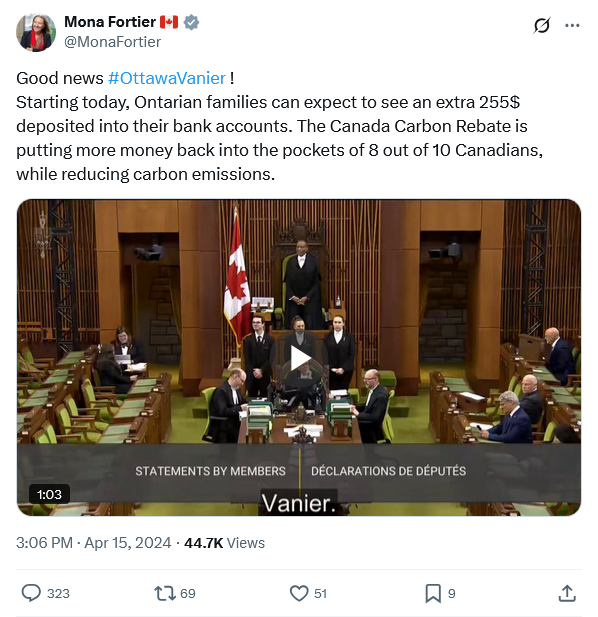
and marshalled the very concept of “patriotism” to build consensus for picayune material entitlements. Trudeau couldn’t even help but do this in his CNN interview with Jake Tapper this week: “We delivered $10-a-day childcare. We’re delivering a dental care program that provides free dental care for people who don’t have coverage. We’re moving forward on a price on pollution that puts more money in the pockets of eight out 10 Canadians.”

We suppose Trudeau found that argument very compelling argument to Americans marvelling at Canada’s inability to meet its basic NATO commitments.

The weird thing is that Trudeau could have deflected a lot of these criticisms by our NATO allies almost painlessly without spending any more money directly on the Canadian Armed Forces“It’s well known that Justin Trudeau has no time for military issues, but it’s surprising that he hasn’t done a few things that wouldn’t increase the actual spending on the CAF, but would be “bookkeeping” changes that would shift some existing government spending into the military category, like militarizing the Canadian Coast Guard. (That is, moving the CCG from the Fisheries and Oceans portfolio into the National Defence portfolio, not actually putting armaments on CCG vessels. Something similar could be done with the RCMP, switching it from Public Safety to National Defence with no other funding or operational changes.) That Trudeau hasn’t chosen to make even these symbolic changes shows that he actively opposes fulfilling the commitment his government has made twice in the last ten years for reasons of his own.”

This tactic has been very electorally effective for the Liberals, no doubt, but it’s also reduced the idea of “Canada” to a smug transactional exchange. “Canada” as nothing more than what provinces and citizens can wheedle out of the commonweal in transfer payments, equalization cheques, and grandiose but poorly executed national program spending. At least we’re better than America, though, right? We’re “not American!” — we’re so much more thoughtful and compassionate, as evidenced by the entitlements we’ve voted for ourselves, secure in the knowledge that the troglodytes to the south will spend and bleed and die for our coddled asses if Russia lobs a missile from the North.

Canada has become a question of what we, citizens, are able to get, rather than one of what we’re willing to give. And we’re smarmy, preachy assholes about it, to boot. (There’s a very famous political quote we could drop in here about what citizens can do for their countries and vice versa, but you’ll know why we aren’t, if you can guess the quote! It would be a little on the nose.)

A nation that is unwilling to make serious sacrifices of blood and treasure to protect its own sovereignty is a nation that is going to cease to be a nation sooner or later — and if we judge Canada by its commitment to its military, ours is a nation that has regarded itself as a quasi-ironic post-modern punchline for many generations now.

January 10, 2025

Even the state-subsidized flappers in the media are glad to see Justin Trudeau go

Filed under: Cancon, Media, Politics — Tags: , , , — Nicholas @ 05:00

In The Line, Andrew MacDougall hits the highs and lows — mostly lows — of Justin Trudeau’s prime ministership since 2015:

Justin Trudeau has always had a strong affinity for the symbolic gesture, especially when the media are around to record it.

And so the Trudeau era ends, not with a bang, but a simper.

Prime Minister Justin Trudeau dialled it up to “peak emotive” on Monday during his resignation speech at Rideau Cottage, even if he was only out to sing the tunes nobody wants to dance to anymore. Not even the appearance of a few prime ministerial tears could convince Canadians this day was anything but long overdue.

Much like how 1980s Hollywood cock rock once struggled to cope with the rawness of early 90s grunge, Trudeau’s cloying, self-obsessed mid-2010s Liberalism has run straight into the buzzsaw of mid-20s proto-populism. Trudeau might still label himself a fighter, but if he ever bothered to look around he would see that precious few people remain in his corner. Canadians have simply grown tired of being told how shit they are by the man they feel has done more than his fair share of putting Canada into the shitter.

Whether that’s a fair assessment of Trudeau’s efforts as a leader is beside the point. As Brutus Freeland has taken to saying, it’s all about the “vibes”. Even the quote-unquote “Trudeau media” is gleefully writing his obituary. That’s how bad things have gotten for Trudeau the man. We’re not in 2015 anymore, Toto.

I’m not sure that Justin Trudeau “does” introspection, but it shouldn’t be hard for him to see how he got here from there. Beginning with hypocrisy.

Trudeau promised to do things differently, but kept many of the same governmental command-and-control measures implemented by the hated Stephen Harper. He promised to stop cramming legislation into budget bills and then treated his own budgets as all-you-can-eat legislative buffets. Trudeau promised to be open by default, but tightened the clamps on government information.

Early talk of “sunny ways” and Conservatives being “neighbours”, not “enemies” masked a hyper-partisan who was all too eager to ascribe ill motive to his political opponents. Whether abortion, guns, convoys or trans rights, there was only ever one “correct” position for Trudeau, and anyone on the other side, no matter how well-reasoned or well-intentioned, was a sinner. In Trudeau’s Canada, everyone was a genocidaire, even if they got their citizenship yesterday and had nothing to do with the historic wrongs of residential schools. Black Lives Matter meant everyone else were racists, whether overt or closeted. Every societal wrong was an opportunity for all of us to “learn a lesson”.

But who the teacher is matters in the giving of lessons. And Trudeau, himself once a teacher, didn’t ever appear to learn any of his own.

January 8, 2025

Canada – “Absurd people facing an absurd political crisis”

Filed under: Cancon, Media, Politics — Tags: , , , , — Nicholas @ 03:00

At Reason, Liz Wolfe shows her worldly sophistication and disdain for her inferiors as she takes on the emotional labour of thinking about Canada for a brief moment:

US President-elect Donald Trump successfully trolled Justin Trudeau about Canada becoming the 51st state of the union.

I cannot believe I am being forced to care about Canada right now. They call their cops Mounties you know. Absurd people facing an absurd political crisis. Let’s dig in.

Prime Minister Justin Trudeau has, over his nine-year reign, become terribly unpopular. He resigned yesterday. This was semiexpected because all relevant opposition parties had vowed to mount challenges to his leadership come late January/early February, and because Trudeau’s finance minister quit last month after the two clashed.

Canadians are pissed off, like so many others around the world, with the high cost of living, which they attribute to Trudeau. Earlier in his term, he prioritized climate change–related initiatives (like a costly carbon tax) and catering to Indigenous groups. He’s prioritized letting in lots of immigrants, which many Canadians have soured on. When the pandemic hit, provincial governments imposed economically ruinous lockdowns, and Trudeau himself imposed a vaccine mandate for all those entering the country, as well as the entire federal work force. The vaccine mandate for all border-crossers, which was in place from October 2021 to October 2022, spurred the Canadian trucker convoy, an occupation of Ottawa that attempted to protest the government to change this freedom-trampling policy. Trudeau’s response was to freeze the bank accounts of people involved, in an attempt to suppress the peaceful dissent.

When he first came to power in 2015, the nepo baby (son of another former prime minister) was widely admired due to his purported good looks and charm. When Donald Trump took office in the U.S. in January 2017, Trudeau quickly positioned himself as a foil to Trump, earning adoration from America’s #Resistance left. Now, those people’s opinions don’t really matter (if they ever did at all), and normal Canadians have seen first-hand the impacts of Trudeau’s policies. He sees the writing on the wall and is attempting to minimize the damage to his party.

“This country deserves a real choice in the next election and it has become clear to me that if I’m having to fight internal battles, I cannot be the best option in that election,” he said in a press conference yesterday. In order to do that, he’s prorogued Parliament — suspending it without dissolving it.

“To allow his party’s thousands of members to choose his successor, a lengthy process that will involve campaigning, Mr. Trudeau suspended Parliament until March 24. A general election is expected to follow,” reports The New York Times. “Holding a party leadership election before a general one is par for the course in countries with parliamentary systems like Canada’s. Suspending Parliament to hold such an election is far less common. By doing so, Mr. Trudeau wards off the likely collapse of his minority government and gives the Liberals time to choose a leader unburdened by his dismal poll numbers.” In other words: Suspending Parliament is a political ploy to stop the bleeding and help his allies stay in power.

This final act seems par for the course for a man who prefers playing politics to crafting sound policy. It’s possible someone more freedom-appreciating will replace him (though I’m pretty sure 90 percent of the population qualifies as more freedom-appreciating than Trudeau). But this comes at a difficult time for Canada, as Trump mulls slapping 25 percent tariffs on all Canadian goods, partially blaming our northern neighbors for an influx of migrants and fentanyl. It remains to be seen whether Trudeau will be replaced with someone better and whether Canadians can dig themselves out of this terrible economic hole that’s been wrought by seemingly endless government spending.

On the social media platform formerly known as Twitter, John Carter links to a thread by Julius Ruechel on the Canadian system of governance:

What Julius Ruechel said:

Nothing about [Canada’s] dysfunctional parliamentary system makes a shred of sense (a thread🧵):

1/ Trudeau “resigned” today. And shut down parliament.

So, now we effectively have a kind of custodial govt for the next few months. Run by Trudeau.

2/ Only now, with parliament shut down, Trudeau and his cabinet continues to run the govt, issue govt contracts, control the treasury, and negotiate on the world stage on Canada’s behalf … but without any parliamentary oversight.

How do you hold a govt to account without a parliament? The police won’t do it — they’ve more than proven that over 9 years of rampant govt corruption and abuse.

3/ The Governor General (who is supposed to ensure that Canada has a functioning government) gave Trudeau the green light to shut down (prorogue) parliament without triggering an election. Even as the country continues to unravel and as Canada’s finances continue to spiral towards an inflationary debt and currency crisis … “go ahead, get your party in order, Canada can wait (paraphrasing)”

4/ What a lovely gift from the Governor General … all so that the same party that could have ousted Trudeau for 9 disastrous years, but didn’t, has time to pick a new leader to continue to govern us.

Remember, Trudeau’s resignation does not automatically trigger an election, only a leadership race within the Liberal Party (lasting a minimum of 3 months during which Trudeau still remains as Prime Minister). The winner of that race emerges to govern the country without having to face a general election open to all Canadians.

Throughout all of this fiasco, there has not been a non-confidence vote to trigger the fall of the govt. The Liberal Party retains its mandate to govern Canada (despite their leadership race) because the other left-wing parties (NDP, Greens, and Bloc Quebecois) continue to prop up Trudeau’s Liberal govt.

And now, with parliament prorogued, the other parties couldn’t trigger a non-confidence vote even if they wanted to. Parliament would need to sit again before that can happen.

5/ In other words, the Governor General (the only one who currently has the power to trigger an election) is keeping Canada in crisis in order to accomodate a political party that has lost all its legitimacy to govern.

But guess who appointed the Governor General … yup, Trudeau.

It gets worse …

6/ Voting in the Liberal leadership race is open to children as young as 14. And to foreign nationals living in Canada that don’t even have citizenship or residency. How is that even legal? What could possibly go wrong?

7/ By shutting down parliament, Trudeau has also effectively shut down the ongoing parliamentary investigation into foreign interference. Based on a govt report, there are at least 11 MPs (plus multiple support staff) who have been compromised yet continue to work in our govt. But, the Liberals have refused to release their names. Or to fire them.

And now, thanks to Trudeau’s prorogation stunt, we won’t know their names ahead of the next election.

8/ The Conservative party is likely to challenge the proroguation of parliament to try to trigger an immediate election. But 7 of Canada’s 9 Supreme Court judges were appointed by … you guessed it again … Trudeau.

9/ And if the Conservatives come to power under Pierre Poilievre when we finally do get another election, the legislation they want to pass requires the Senate to sign off on it.

But 90 of Canada’s 105 senators are appointed by Trudeau, with another 8 open seats that will likely also be filled by Trudeau during this “transition” period. Yes, he still has the power to do that … without parliamentary oversight.

10/ At the 1:15:50 mark of his January 2nd YouTube interview with Jordan Peterson, Pierre Poilievre even openly admitted that (because of the Liberal bias in the Senate) the Conservatives need Canadians to help him pass legislation by becoming much more politically active — specifically he needs them to put pressure on their senators to “motivate” them to support his economic reforms.

That might work in the US where senators are elected. But how do Canadians “put pressure on senators” when Canadian senators are appointed by the Prime Minister and serve for life (until age 75)?

11/ Nonetheless, at the 24:35 mark of the same interview with Jordan Peterson (https://youtu.be/Dck8eZCpglc?si=y268pZaYSBG0gPKR&t=1475), the leader of Canada’s official opposition party, Pierre Poilievre, proudly proclaimed that :

we have … the best system of govt in the history of the world — the parliamentary system. Not the best govt, but the best system of govt.”

How reassuring … 🤦‍♂️

In the National Post, Carson Jerema argues for the abolition of the Liberal Party of Canada, the self-imagined “National Governing Party”:

The corrupting influence of the Liberal party has become all encompassing. When this or that cabinet minister gets uppity about being responsible with public money (Bill Morneau), or about interfering in criminal prosecutions (Jody Wilson-Raybould), they are simply replaced with someone more pliant, until that replacement is no longer useful, and is then kicked to the curb (David lametti, Chrystia Freeland). Ministers who had distinguished, or at least not humiliating, careers before politics, say a Bill Blair or a Marc Garneau, have been reduced to the role of yelping sycophant.

The illness radiates outward turning anything even remotely connected to government into a client or an arm of the Liberal party.

The explosion in the size of the federal bureaucracy, the vast expansion of corporate welfare into preferred Liberal businesses (read, green), Ottawa’s aggressive invasion into what’s left of provincial jurisdiction (dental care, pharmacare, energy and natural resources), has all been conducted for the benefit of the party.

Nothing happens in this country unless it benefits the Liberals. No one is hired, no cavity is filled, no money is invested and no child is educated, without partisan approval. And, it is only approved, if there is some electoral gain, however narrow. The rapid increase in immigration over the past decade could, as it has in the past, create a longterm base of Liberal voters. It is hard to believe the Liberals being as enthusiastic about immigration, if it didn’t have this prospect.

As government grows and grows and grows, it isn’t meeting any sort of public service need, or any ideological end, it is simply patronage on a grand scale. The entire state, and everyone in it has been turned into a beneficiary of the Liberals, all of us, part of the machine. Even Sir John A. Macdonald, fresh off the Pacific Scandal, would be embarrassed by this state of affairs.

All governments advance policies for electoral advantage, but there is something otherworldly about what the Liberals have done. Moreover, when what they do is plainly indefensible, such as dismissing Chinese election interference, or subordinating foreign policy to the preferences of Jew hating-pro-Hamas protesters, they can’t understand why anyone would ever question them. Large segments of the news media are always happy to comply and help the government gaslight the electorate.

January 7, 2025

Justin Trudeau announces his resignation … and a nation rejoices!

Rather than letting Canadians have an election, Justin Trudeau announced that he is resigning as Liberal party leader but that Parliament will be prorogued for long enough for the Liberals to run a full leadership campaign. This means that Trudeau’s replacement will likely be prime minister for roughly as long as it takes for Parliament to come to order after prorogation and not a minute longer. Nice work, Justin!

Full credit to the Babylon Bee for their coverage:

It’s impossible not to feel that Trudeau’s ego has been the biggest player in our national psychodrama over the last few months (years, actually), as it seems inevitable that Trudeau’s hapless successor is going to be the Liberal Party’s version of former PM Kim Campbell, although probably not being reduced to a caucus of two seats in a landslide, as Campbell endured.

The Line‘s immediate response quite properly describes Trudeau as “an absolute Muppet”, and I think that’s pretty unkind … to Muppets:

There was only one major thought that crossed your Line editors’ minds when watching Prime Minister Justin Trudeau’s resignation speech on the porch of Rideau Cottage on Monday morning: “Jesus Christ, the absolute self regard of this fucking Muppet.”

Yes, that’s harsh. We’re even almost sorry about it. And we’ll touch on the humanity of it all in a moment. But for now, like, gosh. This isn’t good.

We are well aware that much of the media will be replete with mopey paeans to the decade-long service of this prime minister, even as he announces his entirely hypocritical plan to prorogue Parliament until March 24 in order to enable his party to assemble a chaotic and hasty leadership race. You’ll get none of that from us here at The Line. Trudeau deserves no such consideration — at least not at the top. From where we sit today, the sheer arrogance of this man, and the party that has enabled him, has just locked the nation into months of parliamentary paralysis in the midst of what is likely to shortly become an economic trade war and a broader international geopolitical realignment.

While we fully expect news of Trudeau’s resignation to lead many of our readers to sound the bells, we share none of their relief. The decision he announced on Monday demonstrates a total lack of respect for voters, an utter disregard for the good of the nation, and a profound obliviousness to the realities of the international environment we are about to find ourselves in.

And while we’d like to give Trudeau some credit for demonstrating an ounce of genuine humility in his resignation speech, too much of it was crammed with statements of breathtaking, overweening egotism; he pegged his decision to leave squarely on internal divisions — a fantastic parting “fuck you” to his caucus that abrogates any attempt at accountability for his own policy or leadership failures.

Trudeau repeatedly justified his decision to ask for the house to be prorogued by noting that Parliament had become dysfunctional, the opposition parties had stalled business of the house on process questions, and the government was in need of a “reset”.

This blithely ignores a few points, including the fact that part of the reason Parliament has been stuck in a procedural quagmire is because Trudeau’s own government has refused to hand over a potentially incriminating dossier that may demonstrate thwacks of taxpayer cash being siphoned off to well-connected businesses and insiders via what the opposition has deemed a “green slush fund”.

This is a matter upon which the Commons’ Liberal speaker ruled against his own party. The Liberals could have stopped the pseudo-filibuster by turning over to Parliament the documents that they are required to turn over. They didn’t.

The very foundations of the Westminster parliamentary system are rooted in the concept of confidence: if you can’t maintain the confidence of the house, you cannot rule Parliament. Prorogation is a procedural tool intended to govern ordinary logistics. It should never be used to circumvent a matter of confidence — and while it was delicious to watch Trudeau squirm on this point during his resignation speech, defending Stephen Harper’s 2008 use of it in order to justify his own, the fact remains that both leaders have now set and affirmed a dangerous norm that undermines one of the foundational democratic concepts of our democracy and how it functions.

When a government finds itself this battered and unpopular, and when a long-serving leader has announced that he’ll step down, while prorogation may be legal, there’s only one politically and even morally right thing to do. There is only one way to “reset” parliament. Only one.

Call an election.

Paul Wells says “The Liberals give themselves three months to save the furniture”:

He was late as usual. He sounded sad. The wind blew his script away. He said more or less what you expected. When his time in office ends at the end of March, he’ll have been prime minister for a few months less than Stephen Harper was. His party has very little chance of recovering, but more than it had yesterday. It would have been so easy to pick his own time, maybe at the end of 2022, but apparently these decisions are hard to make.

Things happen fast. It’s been six weeks, Monday to Monday, since Donald Trump threatened 25-per-cent tariffs on everything Canadian. Three weeks since Chrystia Freeland resigned from cabinet. In two weeks Donald Trump will be sworn in as President of the United States. Justin Trudeau’s resignation is a pure product of this crisis.

I see a straight line from Trump’s Truth Social outburst of Nov. 25 to this week’s events. Trudeau’s circle once thought a second Trump victory would help them make the case against Pierre Poilievre. It’s fair to say the results are not up to their hopes. With Elon Musk continuing his hobby kibbitzing in the politics of countries around the world, Canada will now stand as a warning to governments elsewhere: Trump and his crew can take you down.

Having stalled until he ran out of options, Trudeau will now become incidental to events. There’s a lot going on. Wistful tribute speeches in the House of Commons will have to wait. The Trudeau succession will play out quickly, in four arenas at once: Parliament; the Liberal Party; the electorate; and Canada’s national security. Events in each venue will influence the others.

Some people accuse Trudeau of doubling the national debt during his time in office — from C$612B in 2015 to C$1.2 trillion currently — but as mathematically inclined commentators have noted, Trudeau also successfully engineered the decline of the value of the Canadian dollar so that the actual increase in national debt is less than 55%! Success!

At Spiked, Tom Slater bids farewell to “Canada’s first black prime minister”:

Yes, Justin Trudeau – the man who proved that in these topsy-turvy political times you can be a liberal and an authoritarian, and painfully woke while also having spent much of your youth in black face – has finally resigned.

The writing’s been on the wall for some time now. After historically low poll ratings, came the resignation before Christmas of his deputy, Chrystia Freeland, who clashed with Trudeau about how to tackle president-elect Donald Trump’s imperious threats of a 25 per cent tariff on Canadian goods. In the end, Justin jumped before he was pushed.

After almost a decade in power, he will step down as prime minister and Liberal leader as soon as a successor can be found. Polls suggest that, such is the hole he has left his party in, whoever replaces him will likely face a shellacking in the upcoming election.

Where did it all go wrong? When Trudeau took the reins of his nation back in 2015 – following in the footsteps of his father, Fide … sorry, Pierre – he rode on a wave of popular support and corporate-media swooning.

With the election of another pampered rich kid south of the border a year later, Trudeau was praised in the international media as the anti-Trump – progressive, pro-migration and drop-dead gorgeous, to boot!

Indeed, the next time an establishment scribe slurs Trump supporters as doe-eyed dolts dazzled by celebrity, point them in the direction of the gushing coverage of “hunky” Trudeau, who seemed to govern as if he was in a budget version of The West Wing.

Soon enough, he began carrying on like an unsubtle caricature of a cringe, establishment liberal, chiding women for saying “mankind”, instead of “peoplekind”, and declaring that he was insisting on a 50:50 male-to-female cabinet “because it’s 2015“.

Trudeau is the apotheosis of a hectoring style of politics that assumes voters are terrible bigots in need of lecturing, and women and minorities are perennial victims in need of his paternalistic assistance.

I’m frankly amazed it took the good people of Canada almost 10 years to wipe that smug look off his face.

December 20, 2024

Imagine if Chrystia Freeland had done as well as finance minister as she did emasculating the Prime Minister

Filed under: Cancon, Media, Politics — Tags: , , , — Nicholas @ 05:00

I was no fan of Chystia Freeland but like Mitch Heimpel, I have to admire how artistically she sliced off the Prime Minister’s balls on her way out of cabinet:


Screencap from a CPAC video of Chrystia Freeland speaking in 2022.

One thing that is obvious from the former finance minister’s now infamous Monday morning letter is that she internalized the lessons of Jody Wilson-Raybould and Jane Philpott and Bill Morneau. If you do not immediately put out your version of your demotion or dismissal, it will be done through anonymous leaks to the Parliament Hill Toronto Star or CBC bureau. Ottawa will wonder what really happened. There will be murmurs and whispers about whether you were ever much of a “team player.”

[…]

She left no doubt about what happened, how it happened, or how she feels about it.

In doing so, she did something remarkable. She made it impossible for the PMO’s spinners and issues managers to put the prime minister out to address the media after her letter. He couldn’t answer for anything in the letter without having to answer for everything in the letter. Trudeau may be the most impressive communicator the Liberal party has produced since his father. And he was of no use to the PMO to try and counter Freeland’s narrative on Monday. He could only make matters worse. His one public appearance was in front of a big money Liberal fundraising event, with a pool camera. A bit like an Eastern-bloc gymnast performing before the East German judge.

Even when TIME magazine had him in full blackface, he still addressed the press from the plane. But not Monday.

Never in his almost 10 years as prime minister has Justin Trudeau had a day like that. Supposedly, nominally, the Liberal’s party’s best campaign and communications asset was rendered functionally useless to a television audience. To mix sports metaphors, she beat him in the paint. She drove the lane on him, and he could do nothing. And he did nothing. As of this writing, the prime minister has still not addressed either the media or the country, and is, in fact, cancelling previously scheduled interviews.

And then, Freeland went to the caucus meeting. Anything he wanted to say there, he had to say it to a crowd that could get her version by simply looking over to gauge her reaction. She sank a three pointer on him at the end of the day, just to prove she could.

We can debate her record as finance minister later. Lord knows I have my own qualms with it. But this isn’t about that. Everything else on Monday, the $62-billion deficit and the tanking loonie, are about that.

But her resignation was something unexpected. She bested Justin Trudeau in an air war. She didn’t just beat him, she ran him over. She silenced him.

She may have ended him. That much we still don’t know yet. But she ensured she won’t be remembered for either Disney+ or the “vibecession.”

The first line of her political history is now Chrystia’s Version. And we’ll remember it all too well.

December 19, 2024

Paul Wells – “I found myself telling La Presse, ‘”What the f—k?” has replaced “Hello” as the standard greeting in Ottawa since Monday'”

Filed under: Cancon, Media, Politics — Tags: , , , , — Nicholas @ 03:00

Paul Wells shares some thoughts on the unsettled waters of normally placid (if not catatonic) Ottawa in the wake of Chrystia Freeland’s dramatic resignation on Monday:

Image from Blazing Cat Fur

I want to write 5,000 words of narrative in the wake of Chrystia Freeland’s resignation, but we’re still in the middle of the story. Thoughts kind of pour out. I found myself telling La Presse, “‘What the f—k?’ has replaced ‘Hello’ as the standard greeting in Ottawa since Monday.” We’ll see whether they use that quote.

Here are some thoughts, from different angles. I don’t know whether Freeland’s resignation will blow over, the way Justin Trudeau’s last 20 messes did, because I don’t have a crystal ball, but I think Justin Trudeau hopes it’ll blow over. Because he always hopes it’ll blow over. I hear, as you do, rumours that the PM will resign.

[…]

I resist biography as an analytical tool. People outgrow their backgrounds all the time.

But just about everybody who follows politics has been wondering how Trudeau could fire his most loyal lieutenant by a Zoom call three days before he needed her to deliver a crucial fall economic statement. If the Globe‘s latest story is true, and he told her Mark Carney would take the job without knowing whether Carney will take the job, that’s even wilder. Who does that?

The short answer is, somebody who is used to getting his way. Then you look at Trudeau’s life and you think, why wouldn’t he expect to get his way?

The rich kid always knows the normies will cover for him. If he needs a ride, some kid with stars in his eyes will wave his keys and volunteer. If he’s hung over he can borrow the lecture notes. He shows up in racist makeup to yet another party — forcing every other person in the venue to decide how to respond — and once again nobody stands up to him or makes a fuss. Indeed, when the record of that behaviour threatens his political career decades later, there’ll be plenty of volunteers to criticize anyone who mentions the record, rather than criticizing the guy who acted like that.

He runs for the leadership of a national political party on a platform of “I’ll tell you what I stand for after I win”. He mentions carbon pricing precisely one time at his first national leaders’ debate. He dumps his electoral-reform promise at the first hurdle, and later, when asked about it, he blames the person who asks. He gaslights Canada’s first Indigenous attorney-general for months, but he is not particularly kinder to her replacement, who is ejected from Cabinet because, I don’t know, it’s Wednesday or whatever. He lets a 72-year-old man run for re-election and only after it’s over does he let the guy know he’s getting dumped from Cabinet.

He fires the Clerk of the Privy Council by news release while travelling.

In particular, if there’s anyone in the world he might have expected to tolerate the kind of high-handedness we’re hearing about Friday’s Zoom call, it’s Chrystia Freeland. Her eagerness to endorse him in the immediate aftermath of his latest cockup has been such a reliable feature of Canadian public life it’s devolved into a kind of shtick. SNC-Lavalin, 2019: “she has absolute confidence“. Blackface, six months later: “tremendous confidence“. WE Charity, 10 months after that: “The prime minister has my complete confidence“.

Perhaps only Jagmeet Singh has shown more confidence than Freeland, over the years, in Trudeau’s leadership. Given that record — and his own much longer record of taking advantage of others’ generosity — it’s not too much of a stretch to think that at some point he decided his deputy prime minister was just another easy mark.

Turns out that’s the kind of mistake he only needed to make once.

December 18, 2024

Justin Trudeau at bay

However much you may dislike the man — and there’s just so much to dislike — it’s impossible to write him off no matter how bad the situation may look. In The Free Press, Rupa Subramanya explains to non-Canadian audiences what has been going on in the Deranged Dominion lately:

Justin Trudeau’s government could be at the point of collapse. And a social media post from Donald Trump about tariffs may have set off the latest in a chain of dominoes for Canada’s prime minister.

On November 25, Trump posted on his platform Truth Social that, as one of his first executive orders, he would “sign all necessary documents to charge Mexico and Canada a 25% Tariff on ALL products coming into the United States, and its ridiculous Open Borders”. Four days later, Trudeau flew to Mar-a-Lago to meet Trump for dinner. Although the content of their discussion has not been made public, Trump’s tariff threat may have landed a death blow to Trudeau’s cabinet.

On Monday morning, Trudeau’s most important ally — his number two, finance minister Chrystia Freeland — resigned in a fiery letter directed at her boss, which she posted on X.

“Our country today faces a grave challenge,” she wrote. “The incoming administration in the United States is pursuing a policy of aggressive economic nationalism, including a threat of 25 percent tariffs. We need to take that threat extremely seriously.” She continued: “That means pushing back against ‘America First’ economic nationalism with a determined effort to fight for capital and investment and the jobs they bring”.

The same morning, Trudeau’s housing minister Sean Fraser also announced his departure, saying he wanted to spend more time with his family. This brings the total number of cabinet members who’ve resigned under Trudeau in 2024 to nine. But a walkout from Freeland, his most trusted lieutenant, who was expected to release her fall economic statement Monday, is by far the biggest. That such a loyal servant who has worked for Trudeau since 2015 would resign so publicly shows just how deep the rot is these days. Freeland stood by the prime minister as his popularity began to tank in February 2022 when Canadian truckers protested his harsh Covid vaccine mandates. She even authorized the debanking of those protesters, freezing their bank accounts as a means of punishment [NR: with no legal authority, it must be noted].

Now, her resignation is feeding feverish speculation that the longtime progressive darling could finally be on his way out, amid his sinking popularity and the country’s economic slump. By Monday night, a prominent member of Trudeau’s Liberal Party, Anthony Housefather, went on TV to say the prime minister is “past his shelf life“.

December 17, 2024

Canada’s deputy prime minister heads for the exits

Filed under: Cancon, Economics, Government, Media, Politics — Tags: , , , — Nicholas @ 03:00

After being informed by Justin Trudeau that he no longer wanted her to be the finance minister on Friday, but still apparently expecting her to present the fall economic statement on Monday, Chrystia Freeland instead submitted her resignation from cabinet:

In the National Post, John Ivison calls it her “gangster move” against Trudeau:

Who saw Chrystia Freeland pulling a gun, after Justin Trudeau unsheathed a knife?

The finance minister is an unlikely champion of the Chicago Way, but she has just pulled off a coup that may end up toppling this government.

Just hours before she was due to give her fall economic statement, she quit.

Despite the widespread media speculation about a falling out between Freeland and Trudeau, it’s a good bet that no one was more surprised at the finance minister’s gangster move than the prime minister.

Her resignation letter was savage. She said that on Friday, Trudeau had told her he no longer wanted her as finance minister and offered her another job in cabinet.

She said that she concluded she had no option but to resign because she had lost the prime minister’s confidence.

The casus belli was the multi-billion-dollar affordability package that included a two-month GST holiday and mailing $250 cheques to nearly 19 million working Canadians.

As the National Post reported late Sunday, Freeland had already reversed the government’s position on the rebate cheques that would have cost an estimated $4.68 billion. One person with knowledge of the plans said that the measure will not be in the fiscal update but the government hopes to take another look in the new year, if it can find another party to support it.

Oh, and the financial update Freeland was still expected to deliver after being underbussed by Trudeau? It apparently did get released:

You can always count on the Babylon Bee to find the most accurate and tasteful way to present the news:

December 6, 2024

Liberal cabinet minister accepts “free” Taylor Swift tickets

Filed under: Cancon, Media, Politics — Tags: , , , , , — Nicholas @ 03:00

I’ve often joked that it isn’t surprising that politicians can be bought … what is surprising is just how little it can take. This situation isn’t quite as clear-cut as that, but it looks bad to everyone except Liberal Party insiders:

Former Canadian Defence Minister Harjit Sajjan in happier times (yeah, it’s the only picture I have of the minister).

On Tuesday we learned that federal Liberal cabinet minister Harjit Sajjan will be attending a Taylor Swift concert at BC Place in Vancouver, in a private suite, courtesy of PavCo, the Crown corporation that operates the stadium. The federal government partially funds PavCo, including $116 million earlier this year for improvements to the stadium in advance of the 2026 World Cup.

It’s a textbook conflict of interest. Open and shut. Dead to rights. So much for Sajjan’s political career. Only … not. The only people who seem to disagree that it’s a conflict are federal Liberals and, sorry to say, the office of the Conflict of Interest and Ethics Commissioner — because Sajjan donated $1,500 to a food bank as a gesture to compensate for the coveted opportunity.

“If an item is paid for through a charitable donation, then it would not be considered a gift,” a spokesperson for the commissioner said in response to questions from National Post. “In the case of Minister Sajjan, for example, the original market value of a ticket to a Taylor Swift concert in Vancouver was roughly $600.”

Where do we even begin with this nonsense?

PavCo offered private-box seats to various dignitaries on the understanding they would donate some appropriate amount of money to good causes. Sajjan says he’s proud to have participated.

But you can’t “pay for” a free concert ticket — to use the commissioner spokesperson’s term — by giving money to a food bank. That’s like The Keg offering you a free dinner so long as you pay for it at Montana’s … except food-bank donations, unlike steak dinners, come with tax receipts.

« Newer PostsOlder Posts »

Powered by WordPress