
The first sin is the sin of of not having a strategy in the first place, what we might call “emotive” strategy. As Clausewitz notes, policy (again, note above how what we’re calling strategy is closest to policy in Clausewitz’ sense) is “subject to reason alone” whereas the “primordial violence, hatred and enmity” is provided for in another part of the trinity (“will” or “passion”). To replace policy with passion is to invert their proper relationship and court destruction.
The second sin is the elevation of operational concerns over strategic ones, the usurpation of strategy with operations, which we have discussed before. This is, by the by, also an error in managing the relationship of the trinity, allowing the general’s role in managing friction to usurp the state’s role in managing politics.
Perhaps the greatest example of this is the Japanese attack on Pearl Harbor; an operational consideration (the destruction of the US Pacific Fleet) and even the tactics necessary to achieve that operational objective, were elevated above the strategic consideration of “should Japan, in the midst of an endless, probably unwinnable war against a third-rate power (the Republic of China) also go to war with a first-rate power (the United States) in order to free up oil-supplies for the first war”. Hara Tadaichi’s pithy summary is always worth quoting, “We won a great tactical victory at Pearl Harbor and thereby lost the war.”
How does this error happen? It tends to come from two main sources. First, it usually occurs most dramatically in military systems where the military leadership – which has been trained for operations and tactics, not strategy, which you will recall is the province of kings, ministers and presidents – usurps the leadership of the state. Second, it tends to occur when those military leaders – influenced by their operational training – take the operational conditions of their planning as assumed constants. “What do we do if we go to war with the United States” becomes “What do we do when we go to war with the United States” which elides out the strategic question “should we go to war with the United States?” entirely – and catastrophically, as for Imperial Japan, the answer to that unasked question of should we do this was clearly Oh my, NO.
(Bibliography note: It would hardly be fitting for me to declare these errors common and not provide examples. Two of the best case-studies I have read in this kind of strategic-thinking-failure-as-organizational-culture-failure are I. Hull, Absolute Destruction: Military Culture and the Practices of War in Imperial Germany (2005) and Parshall and Tully, Shattered Sword: The Untold Story of the Battle of Midway (2005). Also worth checking out, Daddis, “Chasing the Austerlitz Ideal: The Enduring Quest for Decisive Battle” in Armed Forces Journal (2006): 38-41. The same themes naturally come up in Daddis, Withdrawal: Reassessing America’s Final Years in Vietnam (2017)).
The third and final sin is easy to understand: a failure to update the strategy as conditions change. Quite often this happens in conjunction with the second sin, as once those operational concerns take over the place of strategy, it becomes difficult for leaders to consider new strategy as opposed to simply new operations in the pursuit of strategic goals which are often already lost beyond all retrieval. But this can happen without a subordination failure, due to sunk-costs and the different incentives faced by the state and its leaders. The classic example being functionally every major power in the First World War: by 1915 or 1916, it ought to have been obvious that no gains made as a result of the war could possibly be worth its continuance. Yet it was continued, both because having lost so much it seemed wrong to give up without “victory” and also because, for the politicians who had initially supported the war, to admit it was a useless waste was political suicide.
Bret Devereaux, “Collections: The Battle of Helm’s Deep, Part VIII: The Mind of Saruman”, A Collection of Unmitigated Pedantry, 2020-06-19.
April 14, 2023
QotD: The three great strategic sins
April 9, 2023
Uncancelled History | EP. 01 Robert E. Lee
Nebulous Media
Published 21 Nov 2022Jonathan Horn joins Douglas Murray on this episode to discuss Robert E. Lee’s infamous legacy. The two dissect his childhood, military career and life after the war. Should Robert E. Lee stay cancelled?
(more…)
April 6, 2023
QotD: The general’s pre-battle speech to the army
Now, there is tremendous debate as to if these speeches were ever delivered and if so, how they were delivered (see the bibliography note below; none of this is really original to me). For my part, while I think we need to be alive to the fact that what we see in our textual sources are dressed up literary compressions of the tradition of the pre-battle speech, I suspect that, particularly by the Roman period, yes, such speeches were a part of the standard practice of generalship. Onasander, writing about the duties of a general in the first century CE, tells us as much, writing, “For if a general is drawing up his men before battle, the encouragement of his words makes them despise the danger and covet the honour; and a trumpet-call resounding in the ears does not so effectively awaken the soul to the conflict of battle as a speech that urges to strenuous valour rouses the martial spirit to confront danger.” Onasander is a philosopher, not a military man, but his work became a standard handbook for military leaders in Antiquity; one assumes he is not entirely baseless.
And of course, we have the body of literature that records these speeches. They must be, in many cases, invented or polished versions; in many cases the author would have no way of knowing the real worlds actually said. And many of them are quite obviously too long and complex for the situations into which they are placed. And yet I think they probably do represent some of what was often said; in many cases there are good indications that they may reflect the general sentiments expressed at a given point. Crucially, pre-battle speeches, alone among the standard kinds of rhetoric, refuse to follow the standard formulas of Greek and Roman rhetoric. There is generally no exordium (meaning introduction; except if there is an apology for the lack of one, in the form of, “I have no need to tell you …”) or narratio (the narrated account), no clear divisio (the division of the argument, an outline in speech form) and so on. Greek and Roman oratory was, by the first century or so, quite well developed and relatively formulaic, even rigid, in structure. The temptation to adapt these speeches, when committing them to a written history, to the forms of every other kind of oratory must have been intense, and yet they remain clearly distinct. It is certainly not because the genre of the battle speech was more interesting in a literary sense than other forms of rhetoric, because oh my it wasn’t. The most logical explanation to me has always been that they continue to remain distinct because however artificial the versions of battle speeches we get in literature are, they are tethered to the “real thing” in fundamental ways.
Finally, the mere existence of the genre. As I’ve noted elsewhere, we want to keep in mind that Greek and Roman literature were produced in extremely militarized societies, especially during the Roman Republic. And unlike many modern societies, where military service is more common among poorer citizens, in these societies military service was the pride of the elite, meaning that the literate were more likely both to know what a battle actually looked like and to have their expectations shaped by war literature than the commons. And that second point is forceful; even if battle speeches were not standard before Thucydides, it is hard to see how generals in the centuries after him could resist giving them once they became a standard trope of “what good generals do.”
So did generals give speeches? Yes, probably. Among other reasons we can be sure is that our sources criticize generals who fail to give speeches. Did they give these speeches? No, probably not; Plutarch says as much (Mor. 803b) though I will caution that Plutarch is not always the best when it comes to the reality of the battlefield (unlike many other ancient authors, Plutarch was a life-long civilian in a decidedly demilitarized province – Achaea – who also often wrote at great chronological distance from his subjects; his sense of military matters is generally weak compared to Thucydides, Polybius or Caesar, for instance). Probably the actual speeches were a bit more roughly cut and more compartmentalized; a set of quick remarks that might be delivered to one unit after another as the general rode along the line before a battle (e.g. Thuc. 4.96.1). There are also all sorts of technical considerations: how do you give a speech to so many people, and so on (and before you all rush to the comments to give me an explanation of how you think it was done, please read the works cited below, I promise you someone has thought of it, noted every time it is mentioned or implied in the sources and tested its feasibility already; exhaustive does not begin to describe the scholarship on oratory and crowd size), which we’ll never have perfect answers for. But they did give them and they did seem to think they were important.
Why does that matter for us? Because those very same classical texts formed the foundation for officer training and culture in much of Europe until relatively recently. Learning to read Greek and Latin by marinating in these specific texts was a standard part of schooling and intellectual development for elite men in early modern and modern Europe (and the United States) through the Second World War. Napoleon famously advised his officers to study Caesar, Hannibal and Alexander the Great (along with Frederick II and the best general you’ve never heard of, Gustavus Adolphus of Sweden). Reading the classical accounts of these battles (or, in some cases, modern adaptations of them) was a standard part of elite schooling as well as officer training. Any student that did so was bound to run into these speeches, their formulas quite different from other forms of rhetoric but no less rigid (borrowing from a handful of exemplars in Thucydides) and imbibe the view of generalship they contained. Consequently, later European commanders tended for quite some time to replicate these tropes.
(Bibliography notes: There is a ton written on ancient battle speeches, nearly all of it in journal articles that are difficult to acquire for the general public, and much of it not in English. I think the best possible place to begin (in English) is J.E. Lendon, “Battle Description in the Ancient Historians Part II: Speeches, Results and Sea Battles” Greece & Rome 64.1 (2017). The other standard article on the topic is E. Anson “The General’s Pre-Battle Exohortation in Graeco-Roman Warfare” Greece & Rome 57.2 (2010). In terms of structure, note J.C. Iglesias Zoida, “The Battle Exhortation in Ancient Rhetoric” Rhetorica 25 (2007). For those with wider language skills, those articles can point you to the non-English scholarship. They can also serve as compendia of nearly all of the ancient battle speeches; there is little substitute for simply reading a bunch of them on your own.)
Bret Devereaux, “Collections: The Battle of Helm’s Deep, Part VII: Hanging by a Thread”, A Collection of Unmitigated Pedantry, 2020-06-12.
April 4, 2023
“We can at least appreciate the irony of an Indian and Pakistani coming to blows over the issue of partitioning Britain”
Ed West on the historical oddity of the three leaders of Eire, Scotland, and the United Kingdom all being of south Asian descent:
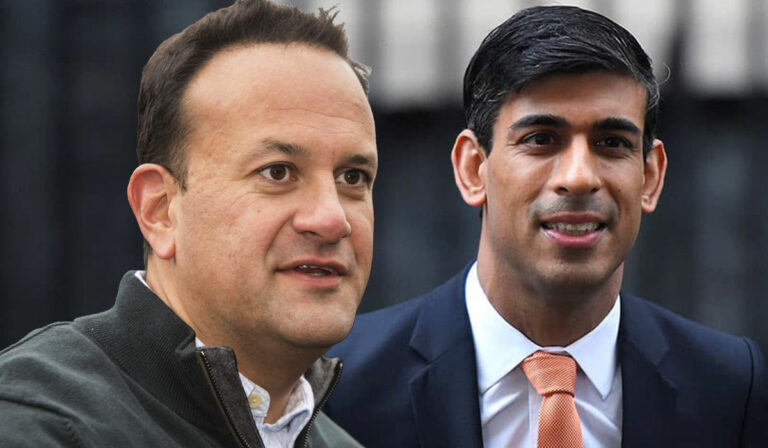
Irish Taoiseach Leo Varadkar and British Prime Minister Rishi Sunak
Composite image from extra.ie
There’s a joke going around Irish WhatsApp that goes like this: “An Irishman, Englishman and Scotsman sit down for a historic summit regarding their ancient grievances.” The image shows the Taoiseach Leo Varadkar, British Prime Minister Rishi Sunak and Humza Yousaf, newly elected First Minister of Scotland.
That three men of South Asian ancestry now lead those three nations is something which even ten years ago would have seemed implausible; a generation further back simply bizarre. And that doesn’t take into account Britain’s most senior directly elected politician, London Mayor Sadiq Khan.
What makes it stranger is that Mr Yousaf, of Pakistani origin, and Sunak, of Indian descent – although both via British East Africa – will be engaged in deciding the future of the Union. As one wit put it, “We can at least appreciate the irony of an Indian and Pakistani coming to blows over the issue of partitioning Britain.”
Yet although both Scotland and England are now led by men with roots in the subcontinent, that is where the comparisons between the two countries end. Yousaf might like to mimic American race talking points, but he presides over a country which is overwhelmingly white and will remain so (although we’re still awaiting the latest census results); the southern kingdom is in contrast now very multiracial, and projected to get more so – a process accelerated by the Tory Government.
Britain has undergone a demographic revolution since the Second World War, a transformation into a multicultural society. Out of the ashes of the British Empire the country’s rules ended up creating a new empire at home, one where this time they could be the good guys. Just like the first British Empire, this one might be called Anglo-Indian, with the two leading parties partly aligning along old divisions between Hindu and Muslim. Like the first empire, this new diverse rainbow of nations entails strict new blasphemy codes, even if now dressed up as hate speech.
Yet this great change has hardly affected Scotland. The two countries have diverged along different paths, and this is perhaps one reason why it may prove hard to hold our multicultural empire together, although it’s a cause liberal defenders of Britishness are loath to admit. Where once the countries were brought together by Protestantism, the English language and empire, now the new “good” British Empire drives them apart, while the English language is a global source of division.
March 30, 2023
The use and mis-use of wargames
Cheating in wargames must be approximately five minutes younger than wargames themselves … famously, the Imperial Japanese Navy didn’t like the outcome of wargaming what became the Battle of Midway and “cheated” by refloating the aircraft carriers shown as sunk in the simulation and Wehrmacht General Paulus ran a wargame that showed Operation Barbarossa would fail and he was also told to ignore the results and ended up in Stalingrad. Lessons can be learned from formal wargames, but as CDR Salamander points out, a wargame outcome can be custom-tailored as the leaders require:
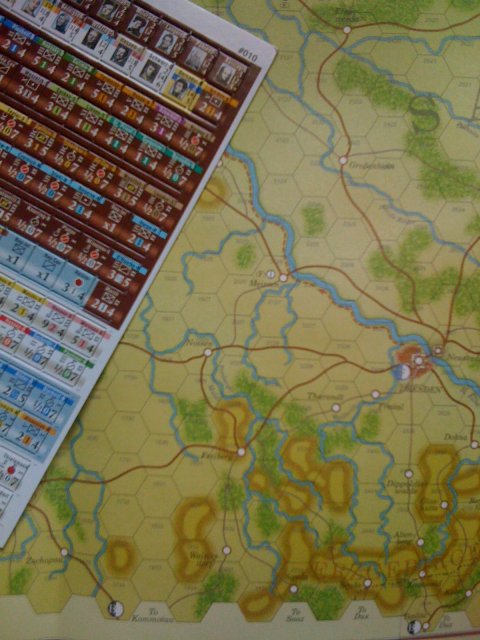
Not this kind of civilian wargame … a real wargame run by professional military staff!
One of the things that will get my eye twitching faster than about anything else is when someone responds to a question or concern with a, “Well, in our wargames …”
Bullshit.
That may work for civilians or under-briefed lawmakers who lack the depth in military matters, but anyone who has run or been part of a wargame knows that you can design one to give you the outcomes you want.
Planning assumptions etc … it is all flexible.
Wargames, done right, don’t tell you the future, but they do help inform gaps in your OPLAN, thinking, or expectations of the enemy … and shortfalls you might have.
At the POLMIL level — where our most senior uniformed and civilian leaders live — you have distinctly different concerns than Tactical, Operational, or — if your Planning Confession separates Strategic from the POLMIL level — Strategic level.
For the senior uniformed leader to make this statement, as if it were a bolt out of the blue, is simply gobsmacking;
A “big lesson learned comes out of Ukraine, which is the incredible consumption rates of conventional munitions in what really is a limited regional war,” General Mark Milley, the chairman of the Joint Chiefs of Staff, told the House Armed Services Committee.
“If there was a war on the Korean peninsula or a great power war between United States and Russia, United States and China, those consumption rates would be off the charts,” he said.
Whose charts? Who made them and using what metrics and dataset?
Yes … that is a lesson for most out there … but it should not be for the CJCS. Hell, I remember certain aspects of updating the OPLAN for Korea a quarter century ago when we beat the drum that, “We don’t have enough ____ and only a few days of ____ before we are combat ineffective.”
This. Is. Not. New.
As we mentioned last July, magazine depth has been a chronic shortfall for a long time.
I have trouble believing that the CJCS is shocked, SHOCKED, that this is an issue.
It isn’t a “lesson learned” — it is a lesson ignored.
One of the easiest, most obvious-to-the-accountants economy any military can make is to scrimp on the inventory of live ammunition … if there’s no war, much of the stored munitions must be disposed of at a cost, and what’re the chances they’ll throw a war before the next election? Plus, if there’s only so much in storage, it’s not economical to have the training allowance of ammunition go up, so you can reduce the resupply levels and free up money in the budget for sexier, more mediagenic toys.
March 13, 2023
Good “peacetime” generals versus good “wartime” generals
“Shady Maples“, a serving Canadian Army officer, explains why the skills and talents that allow an officer to rise to general rank in peacetime have no direct relationship with how that officer will perform in a shooting war:
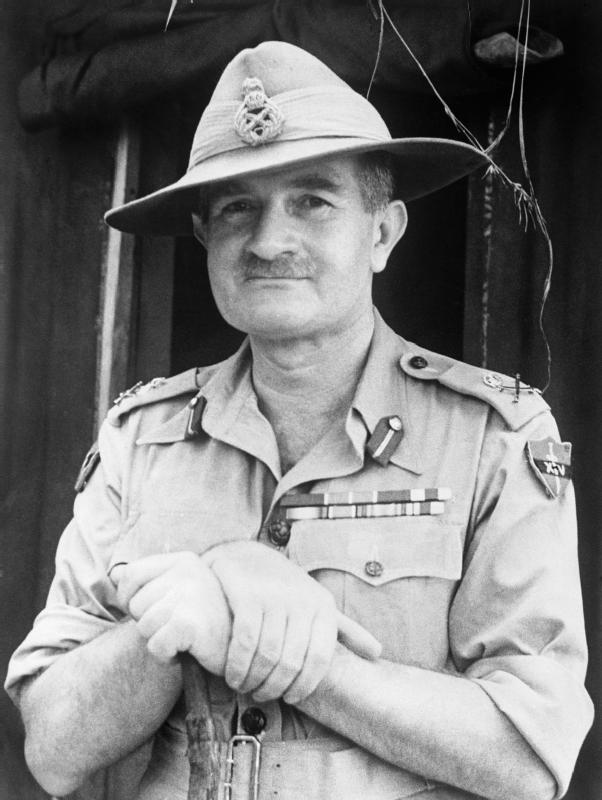
Field Marshal Sir William Slim (1891-1970), during his time as GOC XIVth Army in Burma.
Portrait by No. 9 Army Film & Photographic Unit via Wikimedia Commons.
I am not the first person to make these kinds of observations. Jim Storr has written about peacetime promotion culture in the British Army and Thomas E. Ricks did the same with U.S. Army. Here is an excerpt from Storr:
It appears that many of those whom the British Army promoted in peacetime during the twentieth century were found wanting on the outbreak of war. Promotion to high command in peacetime very much reflects the values of existing senior commanders, themselves largely the products of a peacetime promotion system. To that extent it reflects deeply held values, and has an obvious impact on operational effectiveness in war.
Roughly two-thirds of those who commanded formations in the BEF [British Expeditionary Force] of 1940 were either sacked, retired immediately, or were never given another formation to command in the field.
Ricks describes a similar phenomenon occurring in the U.S. Army during the Second World War. Many senior leaders who had risen during peacetime couldn’t perform under real-world conditions. Under the stern hand of George C. Marshall, then Chief of Staff of the U.S. Army, generals were removed from command at a rate that is unheard of today. Many of those who were fired had glowing records and some went on to redeem their reputations in later commands, which suggests that they had been promoted too soon or too high above their level of competence.
More recently, Russia has been churning through general officers in Ukraine, seemingly desperate to find someone who can achieve Putin’s war aims. If an army systematically promotes its officers above their level of competence in peacetime, then clearly their selection and assessment criteria are not aligned with the actual job requirements.
To illustrate the point, Storr compares careers of Second World War British Field Marshals. The first, Field Marshal John Verreker a.k.a. Lord Gort, was Commander-in-Chief (C.-in-C.) of the BEF during its disastrous efforts in France in 1940.
[Gort] was the epitome of the system: young, highly decorated, charismatic, promoted through and entirely within the system. He was only 51 when appointed CIGS [Chief of Imperial General Staff] … As C.-in-C. of the BEF, he “fussed over details and things of comparatively little consequence” and had a “constant preoccupation with things of small detail”.
After he oversaw the evacuation of British troops from Dunkirk, Gort was removed from command and served out the rest of the war in non-combatant posts. It should be noted that Gort was not a bad soldier. During the First World War, he rose from the rank of captain to acting lieutenant-colonel and in the process earned the Distinguished Service Order (with bar) and the Victoria Cross. It was during the interwar years that Gort ascended from the substantive rank of Major to Field Marshal. Battles may be won with good-enough tactics and a lot of chutzpah, but Gort was unprepared for the complexities of wartime command at the strategic level. He did, however, excel at playing politics.
For contrast, here is Storr’s description of Field Marshal William “Bill” Slim:
[The] 47-year-old Bill Slim was promoted to lieutenant-colonel in 1938, perhaps at the last possible opportunity. Slim had not been to Sandhurst; he had gained his commission “through the back door” and had come from a modest background. The outbreak of the Second World War saw him commanding a brigade in East Africa. Within four years he was commanding the Fourteenth Army in Burma … Slim was obviously not the product of a stable heirarchy in peacetime. His rise to fame came entirely during wartime. He was arguably one of the greatest British generals of the twentieth century. The contrast with Gort could not be more marked.
For his part, Ricks has a takes a wider view of how the post-war U.S. Army made some officers too big to fail:
Korea, Vietnam, and Iraq were all small, ambiguous, increasingly unpopular wars, and in each, success was harder to define than it was in World War II. Firing generals seemed to send a signal to the public that the war was going poorly.
But that is only a partial explanation. Changes in our broader society are also to blame. During the 1950s, the military, like much of the nation, became more “corporate” — less tolerant of the maverick and more likely to favor conformist “organization men”. As a large, bureaucratized national-security establishment developed to wage the Cold War, the nation’s generals also began acting less like stewards of a profession, responsible to the public at large, and more like members of a guild, looking out primarily for their own interests.
It seems like loyalty up became more important than loyalty out.
March 12, 2023
The young British officer’s attitude toward his men
Dr. Robert Lyman has been working on pulling together various newspaper and magazine articles written by Field Marshal William Slim before the Second World War, to be published later this year. I believe this will include everything he included (in shorter form in some cases) in his 1959 book Unofficial History plus many others. In this excerpt from “Private Richard Chuck, aka The Incorrigible Rogue”, Slim recounts taking command of a company of recent conscripts while recuperating from wounds received earlier in WW1:
“Light duty of a clerical nature,” announced the President of the Medical Board. Not too bad, I thought, as I struggled back into my shirt. “Light duty of a clerical nature” had a nice leisurely sound about it. I remembered a visit I had paid to a friend in one of the new government departments that were springing up all over London at the end of 1915. He had sat at a large desk dictating letters to an attractive young lady. When she got tired of taking down letters, she poured out tea for us. She did it very charmingly. Decidedly, light duty of a clerical nature might prove an agreeable change after a hectic year as a platoon commander and a rather grim six months in hospital. Alas, after a month in charge of the officers’ mess accounts of a reserve battalion, with no more assistant than an adenoidal “C” Class clerk, I had revised my opinion. My one idea was to escape from “light duty of a clerical nature” into something more active. Reserve battalions were like those reservoirs that haunted the arithmetic of our youth — the sort that were filled by two streams and emptied by one. Flowing in came the recovered men from hospitals and convalescent homes and the new enlistments; out went the drafts to battalions overseas. When the stream of voluntary recruits was reduced to a trickle the only way to restore the intake was by conscription, and this was my chance.
It had been decided to segregate the conscripts into a separate company as they arrived. I happened to be the senior subaltern at the moment and I applied for command of the new company. Rather to my surprise, for I was still nominally on light duty, I got it. The conscripts, about a hundred and twenty of them, duly arrived. They looked very much like any other civilians suddenly pushed into uniform, awkward, bewildered, and slightly sheepish, and I regarded them with some misgiving. After all, they were conscripts; I wondered if I should like them.
The young British officer commanding native troops is often asked if he likes his men. An absurd question, for there is only one answer. They are his men. Whether they are jet-black, brown, yellow, or café-au-lait, the young officer will tell you that his particular fellows possess a combination of military virtues denied to any other race. Good soldiers! He is prepared to back them against the Brigade of Guards itself! And not only does the young officer say this, but he most firmly believes it, and that is why, on a thousand battlefields, his men have justified his faith.
In a week I felt like that about my conscripts. I was a certain rise to any remark about one volunteer being worth three pressed men. Slackers? Not a bit of it! They all had good reasons for not joining up. How did I know? I would ask them. And I did. I had them, one by one, into the company office, without even an N.C.O. to see whether military etiquette was observed. They were quite frank. Most of them did have reasons — dependants who would suffer when they went, one-man businesses that would have to shut down. Underlying all the reasons of those who were husbands and fathers was the feeling that the young single men who had escaped into well-paid munitions jobs might have been combed out first.
[…]
We had now advanced far enough in our training to introduce the company to the mysteries of the Mills bomb. There is something about a bomb which is foreign to an Englishman’s nature. Some nations throw bombs as naturally as we kick footballs, but put a bomb into an unschooled Englishman’s hands and all his fingers become thumbs, an ague affects his limbs, and his wits desert him. If he does not fumble the beastly thing and drop it smoking at his — and your — feet, he will probably be so anxious to get rid of it that he will hurl it wildly into the shelter trench where his uneasy comrades cower for safety. It is therefore essential that the recruit should be led gently up to the nerve-racking ordeal of throwing his first live bomb; but as I demonstrated to squad after squad the bomb’s simple mechanism, I grew more and more tired with each until I could no longer resist the temptation to stage a little excitement. I fitted a dummy bomb, containing, of course, neither detonator nor explosive, with a live cap and fuse. Then for the twentieth time I began!
When you pull out the safety-pin you must keep your hand on the lever or it will fly off. If it does it will release the striker, which will hit the cap, which will set the fuse burning. Then in five seconds off goes your bomb. So when you pull out the pin don’t hold the bomb like this!’
I lifted my dummy, jerked out the pin, and let the lever fly off. There was a hiss, and a thin trail of smoke quavered upwards. For a second, until they realized its meaning, the squad blankly watched that tell-tale smoke. Then in a wild sauve qui peut they scattered, some into a nearby trench, others, too panic-stricken to remember this refuge, madly across country, I looked round, childishly pleased at my little joke, to find one figure still stolidly planted before me. Private Chuck alone held his ground, placidly regarding me, the smoking bomb, and his fleeing companions with equal nonchalance. This Casablanca act was, I felt, the final proof of mental deficiency — and yet the small eyes that for a moment met mine were perfectly sane and not a little amused.
“Well,” I said, rather piqued, “hy don’t you run with the others?” A slow grin passed over Chuck’s broad face.
“I reckon if it ‘ud been a real bomb you’d ‘ave got rid of it fast enough,” he said. Light dawned on me.
“After this, Chuck,” I answered, “you can give up pretending to be a fool; you won’t get your discharge that way!”
He looked at me rather startled, and then began to laugh. He laughed quietly, but his great shoulders shook, and when the squad came creeping back they found us both laughing. They found, too, although they may not have realized it at first, a new Chuck; not by any means the sergeant-major’s dream of a soldier, but one who accepted philosophically the irksome restrictions of army life and who even did a little more than the legal minimum.
January 27, 2023
QotD: What is Strategy?
(Attentive readers who know their Clausewitz (drink!) will recognize that I am being both broader and narrower than he in how I use the term strategy. Clausewitz terms strategy as “the employment of battles to gain the end of war” which is more nearly what we today mean as operations. In contrast, strategy as it is used today in a technical sense corresponds more nearly to what Clausewitz terms policy, the third element of his “marvelous trinity”. A full exegesis of Clausewitz’ trinity is beyond the scope of this essay, but I wanted to note the differing usages, because I’m going to quote Clausewitz below. And as always, every time Clausewitz gets quoted you must take a drink; it’s the eternal military history drinking game).
At the strategic level of analysis, the first question is “what are your policy objectives?” (although I should note that grand strategy is sometimes conceived as an analytical level above strategy, in which case policy objectives may go there). There’s a compelling argument common in realist international relations theory that the basic policy of nearly all states is to survive, with the goal of survival then suggesting a policy of maximizing security, which in turn suggests a policy of maximizing the military power of the state (which ironically leads to lower the security of other states who then must further increase their military power, a reaction known as the “security dilemma” or, more colorfully, the “Red Queen effect”). I think it is also possible for states to have policy goals beyond this: ideological projects, good and bad. But survival comes first.
From there, strategy concerns itself with the best way to achieve those policy objectives. Is peace and alliances the best way to achieve security (for a small state, the answer is often “yes”)? Would security be enhanced by, say, gaining a key chunk of territory that could be fortified to forestall invasion? Those, of course, are ends, but strategy also concerns itself with means: how do you acquire that defensible land? Buy it? Take it by force? And then – and only then, finally – do you come to the question of “what sort of war – and what sort of conduct in war – will achieve that objective?”
You may note that this is not the same kind of thinking that animates tactics or operations. Military theorists have noticed that for quite some time, often suggesting a sharp separation between the fellows who do operations and tactics (generals) and those who do strategy (typically kings or politicians). As Clausewitz says (drink!), “The political object is the goal, war is the means of reaching it, and means can never be considered in isolation from their purpose … war should never be thought of as something autonomous, but always as an instrument of policy [emphasis mine].” In short, Clausewitz stresses – and leaders have long ignored to their peril – that of all of the factors in war, policy ought to guide action (although no part of the trinity may be neglected).
This creates subordination between the three levels of analysis (to get technical, this is because operations and tactics are part of a side of the Clausewitzian trinity which ought to be subordinate to policy). Operations is subordinate to strategy; an operation which achieves something that isn’t a strategic goal accomplishes nothing. And tactics is likewise subordinate to operations. Thus the thinking pattern should always proceed from the highest questions of strategy down to the prioritization of ends (still strategy), to the means to accomplish those ends (still strategy); only then to the execution of those means (operations) and then to the on-the-ground details of that execution (tactics). Of course what this tripartite division is mean in part to signal is that all three of these stages are tremendously complex; just because tactics is the subordinate element does not mean it is simple!
Bret Devereaux, “Collections: The Battle of Helm’s Deep, Part VIII: The Mind of Saruman”, A Collection of Unmitigated Pedantry, 2020-06-19.
January 26, 2023
QotD: Non-commissioned officers
Your ideal “delta” is something like a lifer noncom in a non-pozzed military. Back in the days, I’m told, new recruits and civilians used to call crusty old gunny sergeants “sir”, to which the gunny would reply “Don’t call me ‘sir’, I work for a living!” That’s the attitude. Those guys with all the stripes on their sleeves aren’t officers because they lack “command presence”; they’re not officers because they don’t want to be officers. They know themselves, and, crucially, they know where they best fit into the organization’s overall mission. “Get in where you fit in” is, in a very real sense, their identity.
Examples of that kind of guy are tougher to find in the historical literature, which is why we need to develop, and pump up, the archetype. […] the ideal is the centurion, the backbone of Marcus Aurelius’ army. A soldier, a Stoic, a leader … but one who knows, and values, his place in the organization above all things.
Severian, “Be a Centurion!”, Rotten Chestnuts, 2020-04-07.
January 25, 2023
Sometimes – rarely – the boss really does embody all those “creative genius” tropes
At The Honest Broker, Ted Gioia considers the impact Steve Jobs had on Apple:
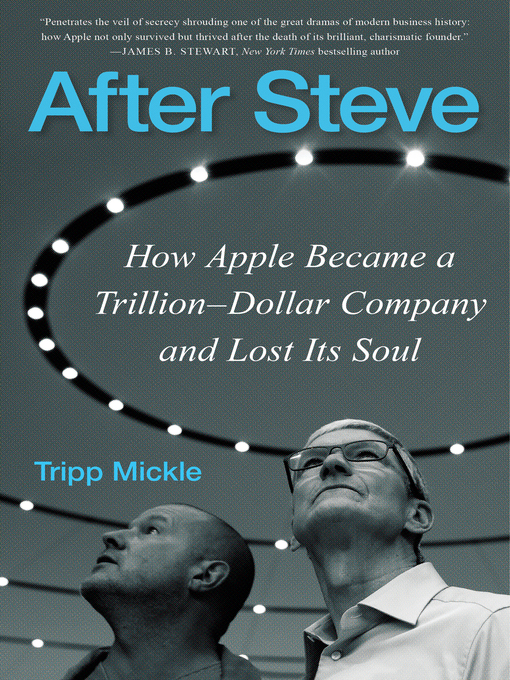
I share these reactions, because many other sectors of our culture (especially music) suffer from a similar malaise. And in most instances, the problems start at the top.
I’ve seen in so many different circumstances how the entire organization takes on the personality of the CEO — for better or worse. I’ve also seen how the replacement of a single individual can turn a bad situation into a great one, and vice versa.
The case of Steve Jobs is fascinating, and perhaps alarming too. He left Apple twice, and both times something similar happened.
In the first instance, Jobs was fired as CEO in 1985. The last thing he did before losing his job was launch the Macintosh computer. When he returned to Apple 12 years later, the single biggest source of revenue for the company was still the Macintosh. After more than a decade, the company was depending on the creativity of the guy they fired.
Steve Jobs died in 2011, and we have now reached the exact same time lag as before. Twelve years have elapsed since Jobs’s final departure, and the last big project he undertook before his death was the iPhone. And now after a dozen years, Apple’s largest source of revenues is still the iPhone. Once again, they are riding the momentum of his creativity, and have done shockingly little to expand his legacy.
By the way, in the interim between the two stints as Apple CEO, Jobs founded NeXT and ran Pixar. Fifteen Pixar films now rank among the 50 highest grossing animated films of all time, and they have won 23 Academy Awards. And because of his sale of Pixar to Disney, the entrepreneur’s widow Laurene Powell Jobs inherited 138 million shares of Disney stock.
That’s pretty good results for the lull in your tech career after you’ve been fired.
I know Jobs has many detractors. And maybe he was a hardass boss. In fact, he almost certainly was a hardass boss. But it’s tough to ignore those results — which not only changed a company but the entire culture of our times.
January 18, 2023
Our western gerontocracy
In The Free Press, Katherine Boyle outlines the death-grip that elderly boomers retain on so many of the levers of our shared society, from government to business to (of course) the legacy media:
“Millennials” by EpicTop10.com is licensed under CC BY 2.0

The tens of millions of Americans that are, like me, millennials or members of the generation just younger, Gen Z, have been treated as hapless children our entire lives. We have been coded as “young” in business, in politics, and in culture. All of which is why we shouldn’t be surprised that millennials are the most childless and least home-owning generation in modern American history. One can’t play house with a spouse or have their own children when they’ve moved back into mom’s, as 17 percent of millennials have.
Aside from the technology sector — which prizes outliers, disagreeableness, creativity and encourages people in their twenties to take on the founder title and to build things that they own — most other sectors of American life are geriatric.
The question is why.
There are many theories — and many would-be culprits. Some believe it’s the fault of the Boomers, who have relentlessly coddled their children, perhaps subconsciously, because they don’t want to pass the baton. Others put the blame on the young, who are either too lazy, too demoralized or too neurotic to have beaten down the doors of power to demand their turn.
Then again, life expectancy is growing among the healthy and elite in industrialized nations, so perhaps this is all just progress and 70 is the new 40. But one can take little solace in the growing life expectancy of the last 200 years when comparing ourselves to more productive generations that didn’t waste decades on extended adolescence.
Every Independence Day, we’re reminded that on July 4, 1776, the most famous founders of this country were in their early 20s (Alexander Hamilton, Aaron Burr) and early 30s (Thomas Jefferson). Even grandfatherly George Washington was a mere 44. These days much of our political class, from Bill Clinton (elected president 30 years ago at age 46) to financial leaders like Warren Buffett (92), and Bill Gates (67) who launched Microsoft 48 years ago, are still dominant three and four decades after seizing the reins of power. CEOs of companies listed on the S&P 500 are getting older and staying in their jobs longer, with the average CEO now 58 years old and staying in his or her role 10.8 years versus 7.2 a decade ago. And our political culture looks even more gray: Twenty-five percent of Congress is now over the age of 70 giving us the oldest Congress of any in American history.
The Boomer ascendancy in America and industrialized nations has left us with a global gerontocracy and a languishing generation waiting in the wings. Not only does extended adolescence — what psychologist Erik Erikson first referred to as a “psychosocial moratorium” or the interim years between childhood and adulthood — affect the public life of younger generations, but their private lives as well.
In 1990, the average age of first marriage in the U.S. was 23 for women and 26 for men, up from 20 for women and 22 for men in 1960. By 2021, that number had risen to 28.6 years for women and 30.4 years for men, according to the Census Bureau, with 44 percent of U.S. women between the ages of 25 and 44 expected to be single in 2030. Delayed adulthood has had disastrous consequences for procreation in industrialized nations and is at the root of declining fertility and all-but-certain population collapse in dozens of countries, many of which expect the halving of their populations by the end of the century.
“Twenty-five is the new 18,” said The Scientific American in 2017, pointing to research that extended adolescence is a byproduct of affluence and progress in society. Which is why the finiteness of a mid-thirties half-life is such a surprise to those in their 20s and 30s. It runs counter to every meme and piece of advice young people receive about building a career, a family, a company and in turn, a country.
The prevailing wisdom in Western nations is that the ages of 18-29 are a time for extreme exploration — the collecting of memories, friends, partners and most importantly, self-identity. A full twelve years of you! Self-discovery aided by platforms built for broadcasting photos of artisanal cocktails and brunch. And with no expectation for leadership because there will be time for that, a generation can absolve oneself of responsibility for their actions. (Tragically, that was never true for half of the population, which is why we have a generation of extremely accomplished older women, who weren’t really aware how difficult it is to become pregnant at 39.)
November 19, 2022
Prelude to Victory: Burma, 1942
Army University Press
Published 11 Feb 2022In late 1941 and early 1942 the Imperial Japanese Army swept through the Asia-Pacific region like a wildfire. The Allies appeared powerless to stop them. With the British Army in Asia reeling, and pushed back to the frontier of India, something had to be done to stem the tide. “Prelude to Victory: Burma, 1942” provides context for Field Marshal William J. Slim and the 14th Army’s struggle to retake Burma from the Japanese.
November 8, 2022
Freeland to NATO? Almost certainly not
CDR Salamander explains why, despite her having good qualities that match some of what the job requires, we shouldn’t be betting any money on Deputy PM Chrystia Freeland taking over the role of Secretary General of NATO:
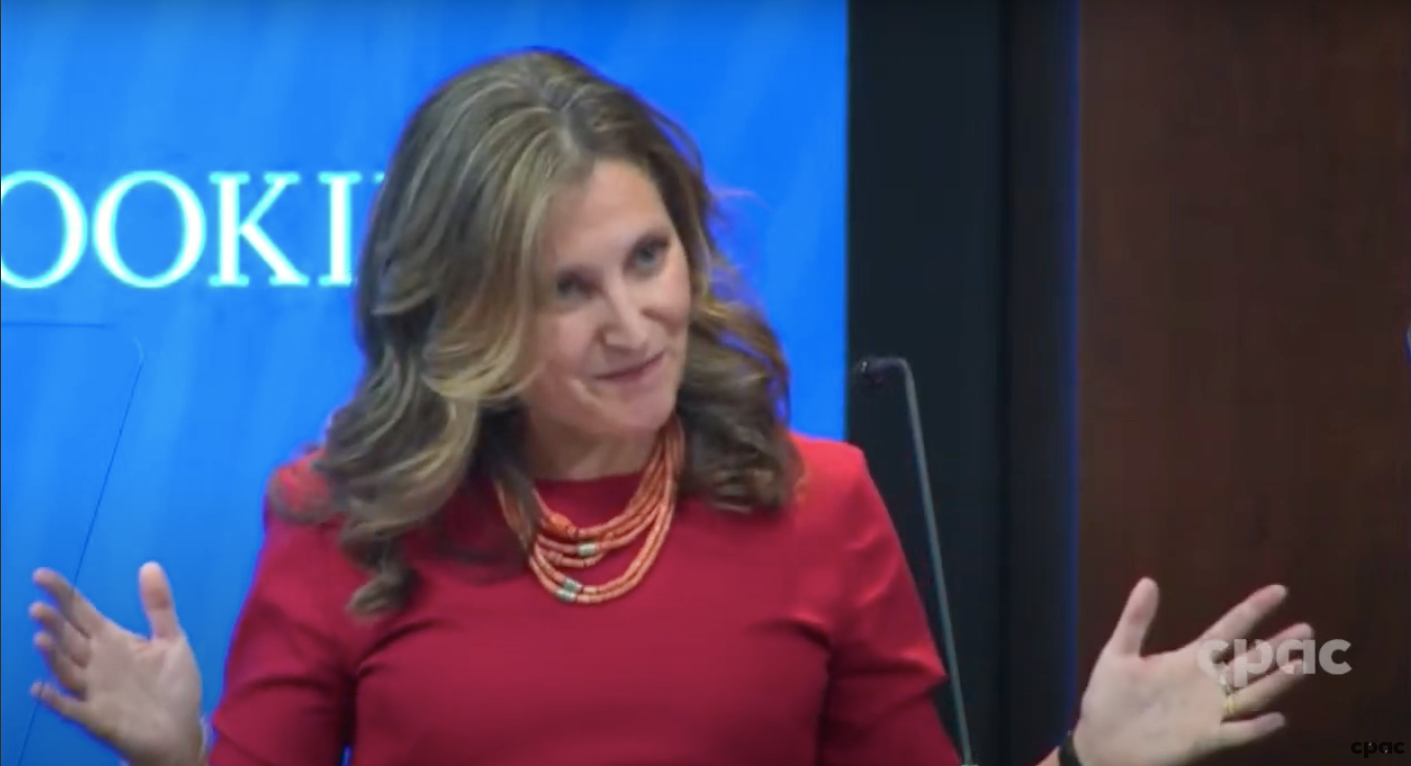
Screencap from a CPAC video of Chrystia Freeland’s speech at the Brookings Institution in October, 2022.
So, via NYT, as a war wages in Eastern Europe and NATO is looking for a new Secretary General, what is the focus?
The behind-the-scenes jockeying for who should succeed Jens Stoltenberg has begun in earnest, with a focus on women.
Here’s the CV:
While the officials cautioned that these are early days, and very often the names that surface first do not survive the bargaining among NATO’s 30 members, they said one prime candidate has surfaced in Washington: Chrystia Freeland, 54, the Canadian-Ukrainian deputy prime minister and finance minister of Canada.
Ms. Freeland, 54, a former journalist (who is married to a reporter for The New York Times), has also been Canada’s foreign minister. Her advantages are considerable: she speaks English, French, Italian, Ukrainian and Russian; she has run complicated ministries; she is good at news conferences and other public appearances; and she would be the first woman and first Canadian ever to run NATO.
The fact that word is on the street that the primary filter here is if someone is XX vs XY would be laughable if not so destructive. There is absolutely nothing wrong with a woman being Secretary General, but that should have nothing to do with the decision. The fact is leading with that as the first criteria, any woman selected as Secretary General this round, would — rightly — always have a shadow over them for this simple fact that they did not get the position on merit — but simply an attempt to signal virtue to … well … fellow members of the woke left in the West, I guess. NATO’s potential enemies will only be encouraged by such an act.
This does nothing for NATO or women — and it degrades both by the process.
That being said, as her name is being floated, let’s look at Freeland. Many US citizens may recognize her from her very undiplomatic interactions with the Trump Administration. It wasn’t just Trump, but something worse that seeps out. Even during the Biden Administration, her not-so-subtle sniffs of standard issue leftist Canadian anti-Americanism crops up on a regular basis. It only gets worse when she deals with Americans to the right of Bernie Sanders.
In NATO, you need someone who is a subtle politician — again with experience working in a vigorous multi-party coalition with highly different views, priorities, and goals. That is why Europeans make such good Secretary Generals. While Canada also has a parliamentary system, it and its parties are VERY different than the European model. Freeland only gets partial credit here.
There is also the issue of temperament. Read the links above. Freeland likes to pick fights, often in public. Worse, she seems to enjoy — again as most standard-issue Canadian leftists do — in making snide comments about the government and people of the alliance’s largest monetary and troop contributing nation — the United States of America.
The Secretary General of NATO has to be someone by temperament and habit seen as a non-partisan person toward the USA so that they can work with American administrations from all political parties. Freeland has significant issues with the American Republican Party in general and American conservatives in particular. That alone should be enough for serious alliance nations from Poland to Great Britain to be against her as a possible candidate. In summary; Freeland does not possess the skills or temperament for the position.
Now is not the time for such frivolity.
The last reason — and the most important reason for me — that Freeland should not be the Secretary General will be recognizable to regular readers here. It has nothing to do with her as a person, but her nation, Canada.
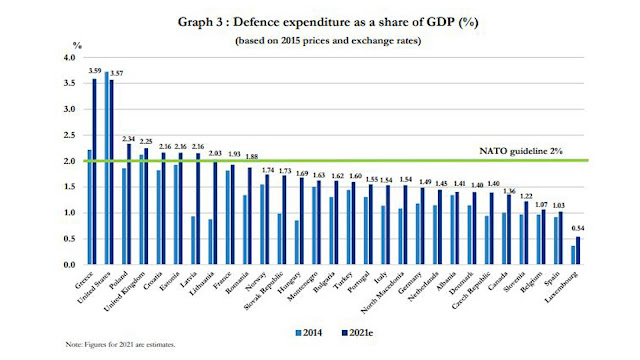
I love Canada and Canadians — but this is not personal, this is business. Serious alliance business. Simply by the numbers, Canada has not earned the position.
Review my post from September if needed, but Canada spends ~1.3% of her GDP on defense. This is WELL below NATO’s 2% minimum. Only Slovenia, Belgium, Spain and Luxembourg spend less.
We are well past being polite to alliance members who refuse to pull their fair share of the burden. Canada simply has not put herself in the position to reward any of her political elite with the position of Secretary General, man or woman.
November 4, 2022
QotD: History while it’s happening
Well, future historian, since I know how much that sucks, I’ll spare you. If you’re plowing through my papers (you’re welcome for all the Slave Leia pictures, by the way) and you get to the “Impeachment of Donald Trump” section, you’ll have something. Maybe nothing interesting, or particularly coherent, but at least it’s something. Professional courtesy.
If nothing else, this impeachment fiasco confirms that we’re ruled by fools. No earth-shattering insight, that, I realize, but there it is. Really it’s just math — since most people in all times and places have been fools, it stands to reason that nearly every human who has ever lived has had a large part of his fate decided by an idiot. This is true even of those blessed to have seen good leadership in action, as even the best men are fools about lots of things. Up to and including the things that make their reputations. George Washington, for instance, was indisputably a great leader, but a terrible general — with Cornwallis trapped on the Yorktown peninsula in Virginia, he had to be talked out of moving the Continental Army north, to reconquer New York. He was one of history’s great captains, but I bet I could take him in a game of Risk.
Severian, “Impeachment Thoughts”, Rotten Chestnuts, 2019-12-19.
October 25, 2022
Canadian Armed Forces recruiting crisis may be “more serious” than we’ve been told so far
Rachel Gilmore on the state of recruiting for the Canadian Armed Forces:
As the Canadian Armed Forces grapples with how to boost recruitment amid growing global dangers, a former chief of the defence staff is warning that the situation might be even worse than the top brass are letting on.
Current Chief of the Defence Staff Gen. Wayne Eyre has warned in recent weeks that, due to recruitment issues, Canada does not have the military “that we need” to tackle future threats — and that readiness within the CAF is “going down”.
“In reality, I believe the case is much more serious than what Wayne has articulated,” said retired Gen. Rick Hillier, speaking in an interview with The West Block‘s Mercedes Stephenson.
The Canadian Armed Forces is supposed to be adding about 5,000 troops to regular and reserve forces, to meet a growing list of demands, but are instead short more than 10,000 trained members – meaning about one in 10 positions are currently vacant.
However, Hillier says the number that he’s hearing suggest the military is down “far greater than 10 per cent”.
“Instead of being at 70,000 people, the Canadian Forces are operating probably somewhere at about 45,000 people — and out of that, there are a significant percentage of them who are not operationally deployable or capable,” Hillier said.
“So the capability of the Canadian Forces, what we rely upon to look after us in Canada and then to represent us and protect our interests around the world and to take our values with them, that part that can do that is minuscule right now, and we need to change it.”


