Quotulatiousness

March 25, 2023

Canada’s ChiCom influence scandal – “All of the damage has been self-inflicted”

Filed under: Cancon, China, Government, Media — Tags: , , , , , — Nicholas @ 05:00

The Trudeau government has been expending a lot of time, effort, and political capital trying to avoid an open scandal. So much, so typical. What isn’t typical for the federal Liberals is just how badly they’re going about doing everything all of a sudden:
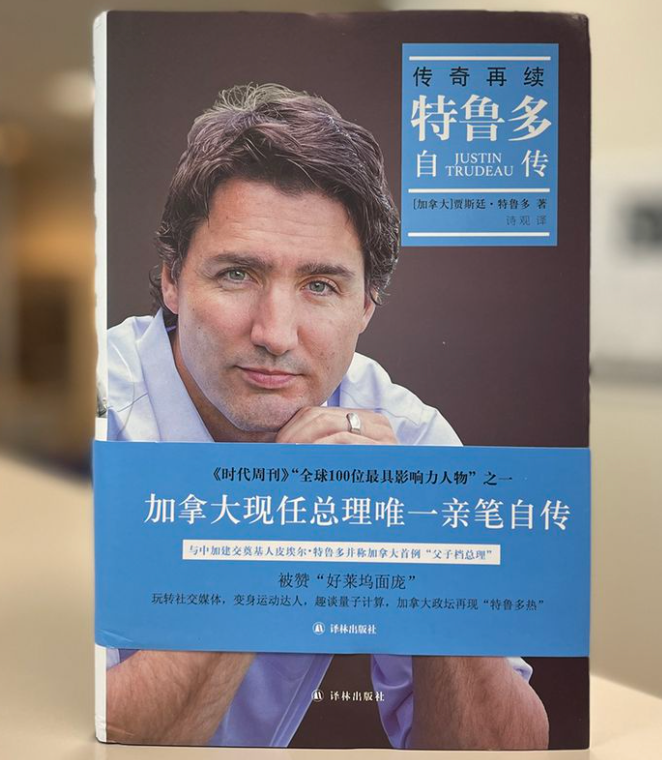
None of this ought to have been a shock, and none of it needed to put the Prime Minister’s Office in its current state of calcified pickle. After all, rumours and off-the-record chats about this stuff have been going around for literally years.

No, how this crew has chosen to handle these stories at every single step has made the scandal worse for themselves. Every. Single. Step. All of the damage has been self-inflicted.

This government is the epitome of an organization that is tactically smart and strategically dumb. Not only has their damage control mirrored the response of the SNC scandal (that ended so well for them), but every misstep has had the result of slowly backing the prime minister into rhetorical traps he has set for himself. This is a government that knows how to win the daily news cycle by losing the game. One that can’t distinguish between legitimate criticism and bad-faith partisan attack — probably because it is so insular and bunker-bound that it sees the world before it divided between loyalists and blood enemies. It’s symptomatic of leadership that is in its final stages of terminal fatigue, and doesn’t yet realize it. These guys cannot help but win themselves to death.

[…]

Imagine, as more stories hit the wire, the government had skipped all of those unnecessary weeks of obfuscation and deflection and simply appointed a special rapporteur to examine the need for a public inquiry. In this counterfactual, let’s also assume that the person he picked isn’t a long-time personal friend. What if Trudeau took allegations of interference seriously at the outset, and his party avoided stunts like skipping committee meetings and filibustering to prevent the testimony of his chief of staff, Katie Telford?

Where would they be today if they hadn’t squandered every iota of credibility and goodwill with the press, the NDP, and his own intelligence services? To put it more directly, what if they hadn’t spent the past few weeks acting as if they had something to hide?

Would they be better off? Maybe?

As an aside, I notice that many of the Liberal proxies are out in force on social media attacking the media and CSIS in an effort to defend the sitting government. I have to ask: how’s that working for y’all? Are you getting the sense that Global News and Sam Cooper and the Globe and Mail have been successfully cowed? Have their CSIS sources stopped leaking? Has Jagmeet Singh been brought to heel?

I’m going to put something out for consideration: Perhaps the denials, obfuscations and attacks are only making the scandal worse. They’re convincing journalists that there’s a real story here while prompting an already pissy collection of national security sources to leak harder.


March 20, 2023

McKinsey, in the backrooms, with a masterplan

Elizabeth Nickson suggests that the vast disruption of life in western societies, the transformation of governments from barely competent to actively tyrannical, and the economic undermining of middle class prosperity may all be linked to one management consulting firm:

The brutalism of government during the last three years was anomalous in western democracies. First of all, it was irrational, it contravened common sense, which almost everyone possesses, and it destroyed millions of household economies and small businesses. It impoverished and starved a billion people in the developing world. It killed the old, brutally, refusing them affection in their last days. It divided us and is still dividing us. The virus was engineered by the government and paid for by the people it was unleashed upon. And then the fiends forced injections upon anyone with a job and a family to feed, via relentless propaganda, where it too contravened basic reason (acquired immunity, tiny effect on people under 70), and then the shot started to kill. And the deaths were ignored, records hidden, and the press was quiescent.

Who did this? This wasn’t normal government behavior. Government is usually just incompetent. At the very least it pretends compassion, is generally well-meaning, its check the voting booth. But now, it’s full-on Satanic. And the voting booth is essentially gone, corrupted by cartels, the CCP, the international left, the profiting UniParty.

But this niggled at me. Who drew up the plan, instituted it in every country, bullied every citizenry, devised the advertising, instituted the protocols? What operation has that level of power, of discipline?

Only one answer: McKinsey. McKinsey innovated and executed the whole damned thing. Mr Google is quite clear. In France, in Canada, in the U.S., in Australia and New Zealand. The cruelty, the ruthless crushing of millions, it was all them. In Canada alone they made $100 million “transitioning” government’s duty of care into a brutal suppression of anyone without elite status.

McKinsey is the international consultancy that lands everywhere that owners want to maximize their income. It is profoundly efficient. It privileges the predator class and institutes a brutal Darwinian system for everyone else.

“We don’t do policy,” said Richard Elder, DC Mckinsey chief. “We do execution.” Sure, buddy, you aren’t at the meeting where they tabletop ICE budgets, game the Chicago Health bureaucracy by Kaiser or how to sell more opioids to teens?

Trudeau had to have taken McKinsey advice when he set planeloads of anonymous black Kevlar-clad mercenaries on Canadian truckers and their supporters. He simply doesn’t have the nerve to do it alone. That action was unprecedented in Canadian history. Even the poodle press thinks McKinsey runs Canada. It has contracts across ministries, its former CEO, Dominic Barton, is Trudeau’s ambassador to China, and he is likely guiding some of the election theft that has been taking place under Trudeau. Whether McKinsey games immigrant ballot harvesting remains to be seen, but it bears its fingerprint.

March 8, 2023

Perhaps the Prime Minister ran out of glitterbomb distractions?

Filed under: Cancon, China, Government, Media, Politics — Tags: , , — Nicholas @ 05:00

In The Line, Matt Gurney speculates on why the federal government needed to be “punched in the face” for literally weeks before finally taking (some) action:

Let’s acknowledge something right at the top: no one really knows what the hell the prime minister proposed yesterday. Not in any specific policy sense, at any rate. But boy, did we ever learn something about how the Liberals are viewing this politically.

After weeks of bobbing and weaving and throwing out fistfuls of increasingly ridiculous chaff, Justin Trudeau has belatedly agreed to a series of actions to probe Chinese electoral interference in Canada. And maybe other interference? We don’t know. We do know it’ll involve NSICOP, which is an acronym in desperate need of an agreed-upon pronunciation, if Monday’s press conference was any guide. NSICOP is a joint House-Senate committee that reviews various matters relating to Canada’s national security and intelligence (read this on its website and you’ll know more than 99.9 per cent of Canadians do about NSICOP). There’s also going to be a splash of the National Security and Intelligence Review Agency (NSIRA), plus a special rapporteur. The special rapporteur will apparently be given broad powers and, should they recommend a full public inquiry, the PM will accept that.

Hell of an endorsement for someone who hasn’t been selected yet. It’s almost like the PM decided he had to make an announcement before he was ready to actually share many details about that announcement, for some reason. Like the announcement itself was the point. Weird, eh? Wonder what that was about. In any case, all we know is it’ll be an eminent Canadian.

Shoutout to all you eminent Canadians out there, I guess. Brush up those cover letters.

Winston Churchill frequently has this attributed to him: “You can depend upon the Americans to do the right thing. But only after they have exhausted every other possibility.” Our Canadian version might be that you can depend on Prime Minister Trudeau to do something, but only after he’s exhausted all of his glitterbombs on distracting public attention.

The way that the Liberals responded wasn’t shocking. They only have a few plays left in their playbook, and we’ve seen something just like this only a few weeks ago. (Which is why I’m wondering if they actually only have the single play left, come to think of it.) The Liberals have responded to the barrage of news stories over Chinese interference exactly the way they did over their controversial gun-control amendments from the fall. First, deny there’s a problem. Then accuse anyone saying there’s a problem of being Donald Trump 2.0 or somesuch. Then just cut right to the chase and call them racist. When that doesn’t work, wait a few days to see if the problem goes away. When it doesn’t — indeed, when it gets worse — that’s when you finally admit that you can’t just yell “DISINFORMING MAGA BIGOTS!” at people and watch as your problem magically evaporates.

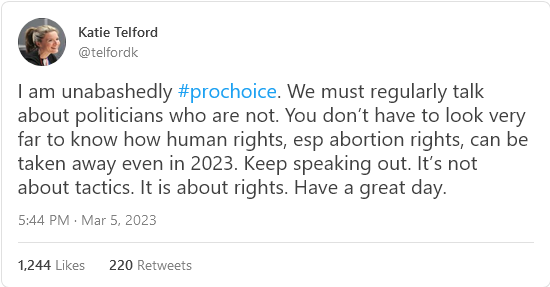
With guns, after everything else failed, they withdrew the amendments (though I imagine they’ll try again, though probably with no better luck). With China interference, it was agreeing to some kind of process. All the unfilled blanks notwithstanding, even the fact that something is being agreed to shows a dawning of political reality in the PMO: ignoring this and hoping the leaks stop if you called enough people racist Trumpers wasn’t going to work. Clearly, sometime in the last few days, the PM and his staff reached the acceptance stage, and concluded that either they had to admit that there was enough here to warrant some kind of serious process, or they could just start randomly talking about abortion in the hopes that people fell for that.

No, no, wait. They tried that anyway.

It would be fascinating to know what specifically led to the mental breakthrough that enabled Monday’s announcement. Weeks of denials, evasions and counterattacks, a day of performatively fretting about abortion, and then, zap!, we’re getting an rapporteur — an eminent one! — and a process. Maybe they looked at some internal polling. Maybe they’re worried about a big scoop that’s yet to land. Or maybe they’re just tired of being on the defensive and figured that the proposals would stand a decent chance of smothering the issue to death with pillows stuffed with bureaucracy and abbreviations.

February 24, 2023

“… they are all weedy, weird sylphs who are essentially un-people, without any wisdom or sense”

Elizabeth Nickson on the current cohort of raised-in-a-vat, cloned “leaders” of most of the western world:

Easily the most destructive cohort in the culture is the financially secure, semi-educated female on the cultural left. She reads nothing but literary fiction, is a book and knitting club member and knows absolutely nothing about the real world. But she is “bold” and “powerful” and never shuts up. Her views are confirmed, amplified and imposed by corporate media, for whom she is the aspirational shopper from whom all wealth flows.

It is the opposite of a virtuous circle. Ignorant protected women of all colors are courted by corporations because she makes 90% of buying decisions (and less fortunate women emulate her). Corporations force the press to slavishly pander to her every stupid whim and deep feel of the month so their adverts work like charms.

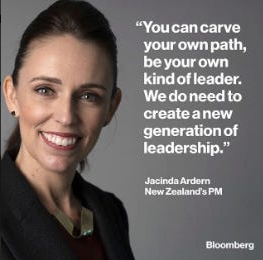
All the above leaders [Jacinda, Trudeau, Nicola, Rishi, and Macron] are manufactured in some MKULTRA facility to appeal to her ignorance, her prejudices, her over-weening self-regard. With the exception of the vegetable in the White House, they are all weedy, weird sylphs who are essentially un-people, without any wisdom or sense. They’ve lived their lives in classrooms and meeting rooms. They serve as pretty, platitudinous ciphers on which to project a profound political ignorance and emotional immaturity.

Our girl, for she has never grown up, has abandoned adult responsibility to luxuriate in narcissism.

She is ruthlessly used by the vicious communist left (as described below) and she has no idea who or what they are. She is the stupidest person on the planet.

And Michelle Obama? If you are thinking of running, think again. Because the hell we will unleash on your ignorant self will make Jacinda tremble with PTSD.

Let someone far less impassioned and far more knowledgeable than me describe Ardern’s humiliating failures below. The damage she caused to her people, to her party, to her country’s economy was as titanic as her ego. Every single other leader listed in the head of this piece is following the same dictated-from-above public policy initiatives. Their fate and that of their citizenry will be the same.

By their fruits ye shall know them.

If you want to know more about the rise and fall of Justin Trudeau’s New Zealand counterpart, Elizabeth’s post includes an extensive discussion of Jacinda Ardern’s career from Dr Muriel Newman of the New Zealand Centre for Political Research.

February 19, 2023

“Enjoy the report”

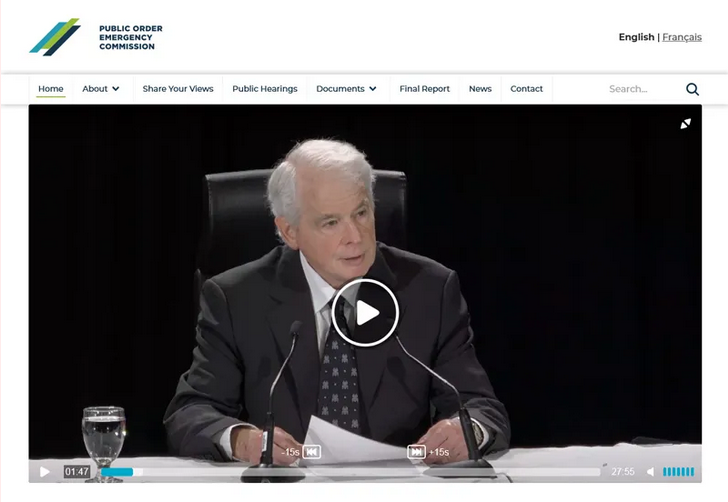
When the Canadian federal government invoked the Emergencies Act in February 2022, it began a legal timer for the government to set up a formal inquiry into the situation that triggered the use of the act which was intended to provide some clarity on whether the government was justified to do so. This inquiry had no legal powers to punish wrongdoing, but was merely supposed to uncover what went on both in public and behind the scenes at this time last year. The head of the commision, Paul Rouleau, was a long-time Liberal who’d once worked for former Liberal Prime Minister John Turner and had been appointed to the judiciary during Jean Chrétien’s premiership. It was perhaps too much to hope that he might return a report that made Trudeau or his government look bad.

Donna Laframboise started the Thank You, Truckers! Substack to record the events of the Freedom Convoy and the reports of participants, supporters, and opponents of the protests. She clearly wasn’t surprised at this outcome from the commission:

“Enjoy the report”. Those were the last words Commissioner Paul Rouleau uttered before rising and leaving the room yesterday. The room in which he cheerfully announced that the Canadian government was justified when it invoked the Emergencies Act against festive, peaceful, working class protesters a year ago.

Which part did he imagine we’d enjoy? The knowledge that there’s absolutely no accountability in our political system? The knowledge that a vast network of supposed checks and balances (funded year in and year out by the sweat of working Canadians) offers us no protection from tyrannical, rogue politicians?

Three months ago I wrote: Let us fervently hope Commissioner Rouleau is a man of integrity. One who understands that this is his moment. History will judge him by what he does here.

[…]

Given the opportunity to help resuscitate the limp, battered carcass of public trust, this gentleman instead extended every benefit of the doubt to the government, to the establishment, to police goons who crossed lines that should never, ever be crossed.

This is very bad news. Because, as Martin Luther King Jr observed 60 years ago, when peaceful protests get shut down some individuals

    will seek expression through violence; this is not a threat but a fact of history.

Many Canadians predicted this result. They had few expectations. They said Commissioner Rouleau was hopelessly compromised by long association with the Liberal Party of Canada. They said that, because the Liberal government had sole discretion to select its own judge, real accountability was never on the table.

The cynics were correct.

In the preview to The Line‘s weekly dispatch, the editors take a less pessimistic view of their initial sampling of the report:

Justice Paul Rouleau’s report on the federal government’s decision to invoke the Emergencies Act was published Friday. It is thousands of pages long. We have not read it all yet. But we have tackled parts of it, with an eye to answering two questions, for ourselves and for our readers. What the hell happened last year — what went wrong? And: do we agree with Justice Rouleau’s decision that that the federal government’s decision to invoke the act was indeed appropriate?

We’ll get to those questions, but let’s say a few things first.

First: if you sat down to read the Rouleau report to find evidence for what you’d already decided, you’ll find it. We believe that Justice Rouleau has written a fair and balanced report. He is clearly struggling, as we were a year ago, to accurately describe and probably even to fully perceive and understand just what “the convoy” was. Line editor Gurney, in reading Rouleau’s efforts to describe how the protest was both a largely peaceful and lawful assembly and also a meeting place for radical extremists, including some dangerous ones, found himself nodding along in recognition of Rouleau’s thought process. This nuance and complexity was precisely what he tried to convey from Ottawa last year.

Second: the same very much applies to political blame. There’s some for everyone here, folks. The federal government comes in for less than some others, but we don’t see in that any bias, but instead a recognition that none of this should have been the federal government’s problem. If the convoy protests had been effectively handled by local and provincial officials, it wouldn’t have been a federal issue at all. This has long been The Line‘s position, but we have also been critical the Trudeau government’s nasty habit of seeing in moments of crisis not a threat to be defused, but instead, a wedge to be eagerly seized upon and exploited. Justice Rouleau is kinder to the Liberals than we are. Perhaps he is simply less cynical. But he did make a point of criticizing Justin Trudeau for inflammatory language, and we were glad of that.

[…]

Third: Justice Rouleau’s finding that the federal government acted appropriately is more conditional and guarded than we think the overall tone of the report, and much of the attendant media coverage, suggests. We’ll get into this in more detail in a minute, but we wanted this front and centre before we start doing the heavy lifting: Rouleau does indeed side with the government, but it’s a pretty nuanced and cautious alignment. A win is a win, and the Liberals got their win here, but Rouleau’s report isn’t an endorsement of how the feds handled anything last year. It would be better for literally all of us if we tried to remember that.

The legacy media’s ability to sway public opinion has waned, but it still has some strength and this was especially so during the lockdowns where people had less opportunity to see for themselves or to talk with others outside the curated gardens of sites like Facebook. If the media had given the Freedom Convoy coverage the same credibility it chose to give to the violent riots, uh, I mean “mostly peacful protests” after the death of George Floyd, the federal government would not have treated the convoy participants and supporters as cavalierly as they did.

Only one federal political party dared to show any significant support for the protest, and the other day PPC leader Maxime Bernier posted a retrospective on the Freedom Convoy to YouTube:

Individual Conservative MPs may have expressed a bit of timid support but were noteworthy by their unwillingness or inability to do anything in Parliament to force the government to at least talk to the protest leaders or give them any benefit of the doubt.

February 7, 2023

Making Canada’s gun laws more illogical, but appealing to urban Liberal voters, regardless of the political cost elsewhere

Filed under: Bureaucracy, Cancon, Government, Law, Politics, Weapons — Tags: , , — Nicholas @ 05:00

In The Line, Matt Gurney recounts the federal government’s political gyrations over their attempt to ban vast numbers of rifles and shotguns owned by law-abiding Canadians:

Classifying guns is complicated. There are a lot of ways to do it. You can do it by the “action”: is it a pump action? A lever action? Is it semi-automatic, or even fully automatic? You can do it by the length of the total firearm, or the length of just the barrel. You can do it by the caliber of the ammunition. You can do it by the type of magazine the firearm uses, and what its capacity is (the magazine is the compartment, which can be removable or integrated with the firearm, that holds the ammunition). You can try and be targeted with your definitions, or you can just go across the board and say “All rifles are allowed but all handguns are banned.” The point here isn’t to argue what the policy should be, but simply to note that whatever your policy is, you have to be able to define it in a way that makes sense.

Canada’s current gun laws date, more or less, to the 1990s. They’ve been changed a bunch of times since, for better or worse, but that’s when the current overall system of firearms legislation began. We came up with three broad categories of firearm then. There are “non-restricted” firearms, which you must be licensed to own, and mostly mean very typical rifles and shotguns, of which millions of licensed Canadians own many millions. There’s also the “restricted” category, which basically meant handguns — either semi-automatic pistols or revolvers. These require extra licensing, more background checks and training, and are subject to much stricter conditions for storage and use. And then there’s the very rare “prohibited” firearms, which are mostly either very compact handguns, or fully automatic weapons, including machine guns, which were owned by Canadians already when the new laws came in almost 30 years ago. These owners were given a special and highly limited rights to retain the firearms they already owned, but not to transfer them to others, except to someone else with a rare prohibited licence, or to a direct descendent. (That last bit was to cover family heirlooms.)

None of the above is as simple as I’ve just described it. Weird absurdities have been part of the system from the outset. The reason for these absurdities was always political. Back in the 1990s, the Liberals, under then-prime minister Jean Chrétien, realized that the categories above would result in certain kinds of rifle (including the AR-15) being classified as non-restricted, and subject to the least onerous controls. Unhappy with the optics of that, and other similar examples, they wrote in exceptions to the way some firearms are categorized. A firearm would be categorized by its technical specifications unless the government specifically ordered it classified as something else, is probably the easiest way to summarize a complicated policy.

Using the AR-15 again, according to the “evergreen” technical definitions we settled on in the 1990s, that’s a non-restricted gun. To avoid awkward political questions, the then-Liberals deemed it a “restricted” firearm, and therefore subject to tighter controls.

There were other similar examples, and they resulted, as noted above, in a lot of absurdities, with very similar guns categorized differently, but since only a relatively small number of firearms were so specially categorized, the system more or less functioned reasonably well for decades. The absurdities were limited enough to be broadly known and adapted to, and the overall system made enough sense to function coherently enough to do a reasonably good job regulating the sale, ownership and use of firearms in Canada. And very successfully: gun crime by licensed gun owners in Canada is, as is well known, quite rare. The system basically worked, and was working.

[…]

But hey, then politics happened. The sunny ways days ended. Liberal fortunes waned. Scandals and baggage and awkward photos of the PM in his younger days accumulated. And suddenly, the Liberals were talking a lot about banning assault rifles. They talked about it even more after the 2019 election reduced them to a parliamentary minority, leaving them dependent on a cluster of urban and suburban ridings in Quebec and Greater Toronto where support for just about any half-coherent sounding gun-control measure is typically high. The Liberals didn’t do much of anything — mostly just talk, as is their style. Then, in early 2020, there was the horrific massacre in Nova Scotia, and within days, the Liberals announced they were banning 1,500 models of assault rifle. (It was actually far fewer — closer to 20 — but the Liberals counted each different version and brand as an entirely different rifle to get to a more-impressive sounding figure. Those fierce opponents of disinformation at work again!)

Anything even close to meeting a broadly shared definition of “assault rifle” was already banned in Canada, of course — it had been classified “prohibited” back in the 1990s. There’s no universally agreed upon definition of an “assault rifle”, but those who know guns could agree in broad terms what it would mean — and in Canada, they were all banned, and had been for decades. So the Liberals, keen to have their lookin’-tough-and-bold moment, started talking about “assault-style” rifles.

Appending “-style” to anything is a gigantic red flag for bullshit, as I’ve noted here before. That somehow failed to deter them, alas, setting the stage for their current woes.

January 11, 2023

“The PM and the public safety minister were lying to the public. That should matter.”

Filed under: Cancon, Government, Law, Politics, Weapons — Tags: , , , — Nicholas @ 05:00

The editors of The Line regretfully return from holidays to start a new year, and the federal government’s gun confiscation bill (not called that, of course) gets both barrels:

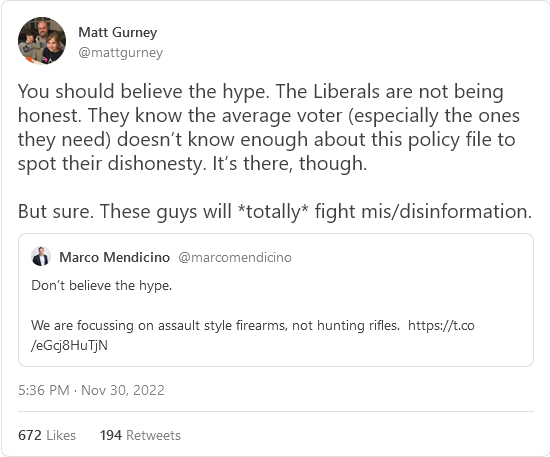
The first item worth mentioning: remember how back in November and December the prime minister and the public safety minister, Messrs. Trudeau and Mendicino, were dismissing any suggestion that they were banning hunting rifles as hype? Or Conservation misinformation? When they were saying that the suggestions were false, and those making them were sowing confusion?

Well! Funny thing happened over the break. The PM, in his year-end interviews, is now admitting that the suggestions were, in fact, right. 

Take this, for example, from his sit down with CTV News (our emphasis added): 

    “Our focus now is on saying okay, there are some guns, yes, that we’re going to have to take away from people who were using them to hunt,” Trudeau said. “But, we’re going to also make sure that you’re able to buy other guns from a long list of guns that are accepted that are fine for hunting, whether it’s rifles or shotguns. We’re not going at the right to hunt in this country. We are going at some of the guns used to do it that are too dangerous in other contexts.”

We’ll skip much analysis here. We think this is dumb policy, and we’ve explained why before, but it’s at least an acknowledgement of what their policy actually is, and very obviously was since the very time it was announced back in November. There’s no room for any confusion or doubt here. The Liberals spent weeks crying LIES! and MISINFORMATION! at people who were accurately describing what they were doing.

You can support the policy being proposed — again, we don’t, but that’s fine — but you can’t excuse this. The PM and the public safety minister were lying to the public. That should matter.

We’ll have more to say on this later. But for now, that’s the update: The Liberals now admit they’re trying to do the dumb thing they spent weeks insisting they weren’t doing.

This is, incredibly, a kind of progress.

Related somewhat to the above: a smart friend of The Line, who cannot be named as this stuff is their day job, told us weeks ago to watch for a schism in the NDP over this issue. For the Liberals, their dumb policy proposal still makes political sense. Well, it probably does — we have some suspicion that the LPC has maxed out the electoral utility of hammering on guns, and may now face more blowback than benefit, but time will tell. Still, the proposal may make sense for the Liberals: they are utterly dependent on urban and suburban women to survive, and the dumb gun proposal apparently resonates with them. And that’s true for part of the NDP’s base, too, but, critically, our friend reminded us, not for all of it.

The federal NDP of today is a strange creature. It’s partly very much a party of the deepest, wokest downtown ridings, but there’s also a big contingent of Dipper MPs from places like northern Ontario and rural parts of Manitoba and British Columbia. Cracking down on guns just plays differently there. When the policy was first announced, this division among NDP MPs didn’t take long to come into public view. Jagmeet Singh, himself very much of the NDP’s woke urban contingent, was quiet for a few days before very clearly and obviously pivoting to oppose the proposed expansion of the banned firearms. The Liberals can afford to write off their last remaining rural, non-urban MPs. The NDP simply can’t.

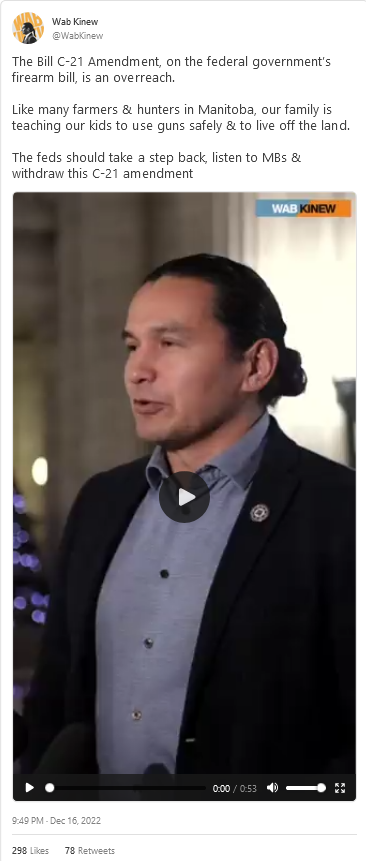
And, our friend told us — again, this was weeks ago, right at the outset — if Singh didn’t get the message pronto, the party would fracture over this … and that Wab Kinew, leader of the Manitoba NDP, would be the leader of the rebels.

We aren’t experts on Kinew, or in internal NDP power dynamics, so we simply thanked our friend for the tip and analysis, and assured them we’d keep an eye on it. And we did.

And wouldja look at that.

Interesting, eh?

Anyway. As of now the Liberals are still talking tough on the amendment. But they need at least one party to work with them to push it forward. We can’t say for sure, but we wonder if the Liberals are comfortable talking tough about it because they now accept they can’t push it forward — at least not any time soon. The Bloc seems wary of getting saddled with this and the NDP, indeed, might split over this issue if Singh were to try.

So we’ll keep watching this, and particularly Mr. Kinew, who may indeed covet Mr. Singh’s job.

To our friend: you were right. Thanks for the tip.

January 5, 2023

Trudeau’s government has paid 30 times as much to consultants McKinsey and Company as the Conservatives did

Filed under: Business, Cancon, Government — Tags: , , — Nicholas @ 05:00

Paul Wells on the amazing profit margins McKinsey and Company must be making thanks to their booming business with the Canadian federal government under Justin Trudeau:

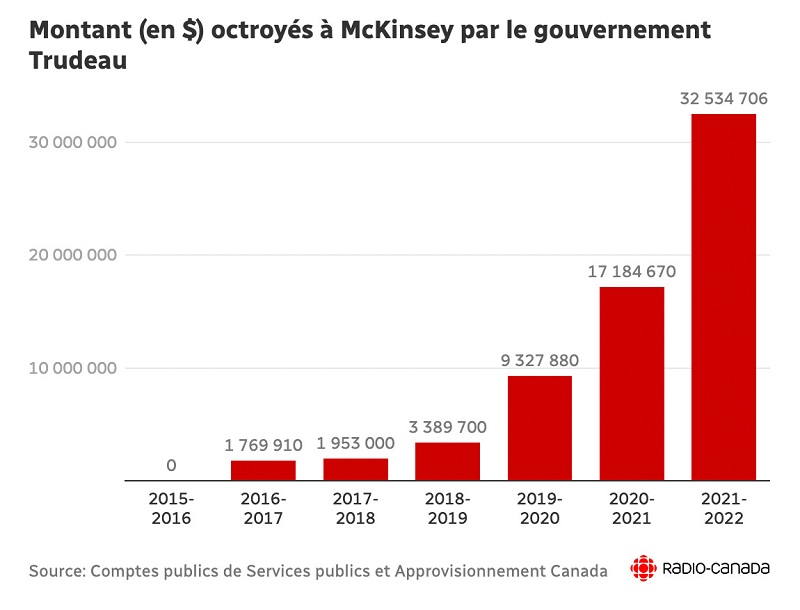
From Radio-Canada, and not yet translated into English at this hour, comes news that the Trudeau Liberals have paid 30 times as much to the global consulting firm McKinsey and Company as the Harper Conservatives did, even though the Liberals have so far spent less time in office than the Conservatives did.

That’s $2.2 million in nine years under Harper, against $66 million in seven years under Trudeau.

And this chart, which I’ve taken from the Rad-Can report, shows the recourse to McKinsey is accelerating: the company’s take from the feds last year was almost as much as its combined take from all previous years.

Rad-Can reporters Romain Schué and Thomas Gerbet write: “What was the firm’s precise role? It’s impossible to know for sure. [McKinsey] refused to answer our questions … And despite our requests, Ottawa didn’t want to share the reports the firm produced.”

This is only the latest evidence of a massive trend in government in Canada’s federal government, in many provinces, and abroad: the contracting-out of complex problems to private firms that charge a premium; are never around when problems arise later; often produce work of questionable quality; and are too often exempt from even the minimal transparency and accountability that’s expected of work done in-house by the regular public service.

We’re seeing that latter point play out in a Commons committee’s attempts to find out how the ArriveCan app came to cost so much. The app was developed by outside contractors (not McKinsey — today’s Rad-Can story is about McKinsey but the use of contractors benefits many firms), and MPs seeking details have so far received only shrug emojis from the Trudeau government.

This increasing resort to secretive external consultancies impoverishes public discussion about ideas for the future. It is brutally demoralizing to the professional public service, which means it pays nasty dividends by making public-service worse ever less attractive to talented people. It allows timid elected officials to buy a backbone, in the form of a commissioned study supporting their preferred option, and the only cost is the burden on public finances, which elected officials plainly soon learn not to worry about.

December 22, 2022

It may have taken most of the year, but Canada finally figured out its Ukraine position

In The Line, Andrew Potter theorizes that the Canadian government finally “got it right” on Ukraine, but only after having exhausted all the other possibilities:

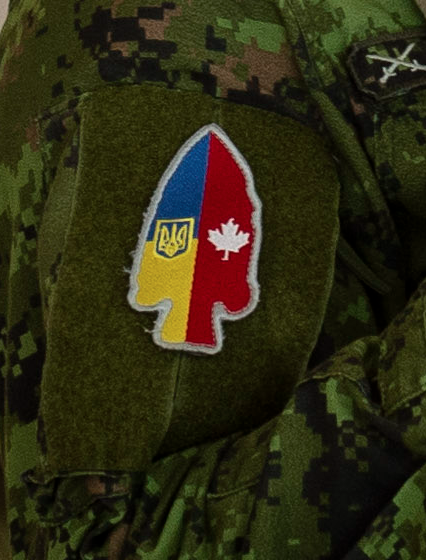
Operation Unifier shoulder patch for Canadian troops in Ukraine.
Detail from a photo in the Operation Unifier image gallery.

When Russia started massing troops on the border in Ukraine this time last year, Canada was one of the first Western countries to close its embassy in Kyiv, moving everyone to Lviv on February 12. Hours after Russia launched its illegal, insane, nihilistic, genocidal full invasion of Ukraine on February 24, all non-Ukrainian employees of our embassy scooted across the border into Poland. 

For months after the invasion, that highly risk-averse attitude infected every aspect of Canada’s approach to helping Ukraine. Whether it was diplomacy (hesitant), military aid (slow and limited), financial support (inadequate) or straight-up moral fortitude (lacking), the Trudeau government made it clear that it would do the least amount necessary, while taking the most credit possible, in supporting Ukraine. 

[…]

The weird thing about Canada’s foot-draggy-as-she-goes approach to helping Ukraine is how little sense it made politically, for both domestic and international audiences. Canada has one of the largest Ukrainian diaspora populations in the world. We were the first Western country to recognize Ukrainian independence in 1991. The deputy prime minister of Canada is half Ukrainian and has been a loud supporter of the country for years. Privately and publicly, our allies were pleading for us to do more. 

Who knows what it was that finally shook some sense into the Trudeau government. Maybe it was Freeland, maybe it was a call from Uncle Joe Biden, maybe it was just a sense in the PMO that, having exhausted all other options, the only thing left to do was the right thing. Whatever it was, over the last three or four months, Canada is finally punching its weight on the global stage on the Ukraine file. In particular, we seem to have finally figured out that the best way to help is to provide the sorts of support that draws on our strengths. 

So for example, while the handful of M777 howitzers we sent were certainly useful (and the ammunition we’re continuing to supply will be well spent) we’re never going to compete with the Americans or Brits when it comes to heavy arms supplies. That’s why, back in October, it was probably more helpful for us to send 400,000 pieces of winter gear and to provide a few million dollars worth of satellite communications to the Ukrainians through Telesat. And it was great to see Canada re-engage with its training commitments to the Ukrainian armed forces through the deployment of 40 combat engineers to train Ukrainian sappers in Poland, to complement our ongoing training of recruits in the U.K. 

December 19, 2022

“[T]he major promoter of the ‘Canada is broken’ thesis over the past few years has been … Justin Trudeau”

Filed under: Cancon, Media, Politics — Tags: , , , — Nicholas @ 05:00

In the free-to-cheapskates exerpt from this week’s Dispatch from The Line, they set up the possible lines of attack for the next federal election:

What was more interesting to us this week were the comments made by Prime Minister Justin Trudeau to thousands of Liberals at a large in-person Christmas party. As one does at any good Christmas party, the PM took the chance to, uh, savage his rivals. To wit: “Canada is not broken … Mr. Poilievre might choose to undermine our democracy by amplifying conspiracy theories. He might decide to run away from journalists when they ask him tough questions. That’s how he brands himself. That’s his choice. But, when he says that Canada is broken, that’s where we draw the line.” (Full video of the speech is available via CTV News).

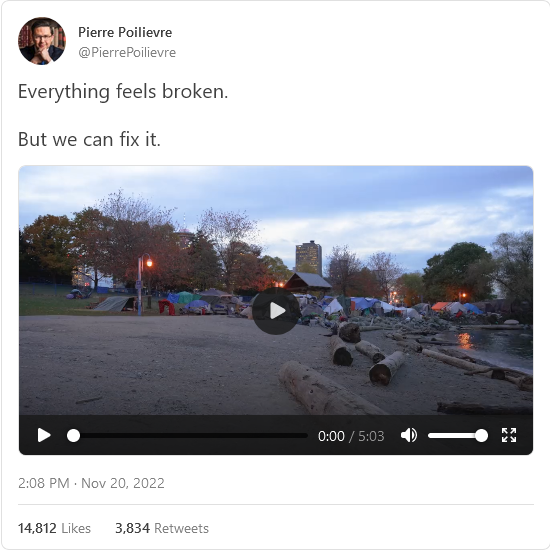
The PM was responding, of course, to a recent line of attack favoured by the Conservatives: that Canada is broken, and we need the Conservatives to fix it.

There are three comments we’ll make in response to this.

The first is strictly an analysis: Trudeau is staking out some interesting rhetorical ground. We aren’t sure this will be the ground on which the next campaign is fought over — God only knows what’ll happen between now and whenever we are next headed to the polls. But if this is the subject of our next “ballot question”, well, that’s just fascinating. “Sunny Ways” vs. “Everything Is Broken and It’s Your Fault.”

How fun! Both men would be able to make an honest pitch for their case. As we’ve written before, the Liberals seem exhausted and spent. They’ve accumulated baggage since their first smiley-faced win back in 2015, and the country has been thoroughly battered by events since then. That suggests that Poilievre, who is at his best when on the attack, could mop the floor with Trudeau.

That said, we don’t take that outcome as a given. First, Trudeau is a damned good politician, better than the Conservatives still give him credit for, and though we are starting to wonder if Trudeau is past the point of no return, we will never count him out. We also think that if the Conservatives make “Things are terrible” the centrepiece of their next campaign, may find that Canadians recoil. Canadian pride is a fragile, brittle thing, and while many of us may feel like things are bad, it’s not clear to us that Poilievre saying so won’t rub a lot of voters the wrong way.

But we honestly don’t know. That’s why it’s fascinating.

The second point is a bit of a reminder: It is worth noting that the major promoter of the “Canada is broken” thesis over the past few years has been … Justin Trudeau. We don’t think we — your Line editors, the media, Canadians in general — should let him take such casual re-occupation of the “Sunny Ways” position, since he’s spent the last five years absolutely dumping on Canada, its history (genocide), its symbols (the flag), and its institutions (the military, amongst others). No one has done more to proclaim Canada broken than Justin Trudeau. Is he now claiming that he’s fixed all the problems he’s spent the last half decade making political hay over?

We mean … the guy won’t even fix his house.

The third point is our own view: of course Canada is broken. And Trudeau has done nothing to fix it.

Now, we have to define our terms here. “Broken” isn’t “destroyed”. We don’t think we’re descending into some kind of post-apocalyptic wasteland. It remains undeniably true that Canada is, in global terms, a nice place to live. Safe. Lots of food. No one is firing missiles at us. Sweet! But, like, gosh, folks. Look around. If the PM really wants to assert that Canada isn’t broken, we’ll agree insofar as it’s not so broken that the average person fears starvation and violent death. Sure. But that average person also probably can’t get a passport, or a family doctor, or timely care in an emergency room, or a house in a big city where the jobs are clustering, or Tylenol for their kids.

December 17, 2022

Canada’s consciously anemic foreign and military policies

In The Line, Matt Gurney explains why Canada consistently fails to “punch above their weight” in foreign and military matters and that it’s not at all accidental:

Canadian politicians have an inputs problem. Maybe that’s actually the wrong way to describe it — the problem is with the outputs. But it’s the inputs they love talking about.

If that all sounds a little vague, maybe this sounds familiar: “Hey there, citizen. Alarmed about Troubling Issue X? Well, don’t worry. We’re pledging $300 million over the next six years to Troubling Issue X. Oh, and Annoying Irritant Y? We’re announcing a task force to report back on that.”

Does Troubling Issue X get solved? Does Annoying Irritant Y get less annoying and irritating? Eh. We probably don’t collect enough stats to even know. The purpose of the announcement isn’t to solve the problem. It’s to announce something and hope people stop paying attention.

Canadian politicians — especially the current federal government — are notorious for announcing the same “new thing” in as many ways and in as many different contexts as they can. They get several hundred dollars of positive press coverage for every actual dollar spent on whatever the announced spending is supposed to be devoted toward. If they can recycle announcements from months past into a new set of announcements, you’re pretty much guaranteed they’ll do it. Announcing spending is, one must assume, what gets people to cast their votes for the party announcing the spending.

A lot of what looks like policy failure in Canadian foreign and military affairs only looks like a failure when you forget that accomplishing something wasn’t the point. Being photographed and videotaped saying you’ll accomplish something was the point. And the announcement itself accomplishes that!

This was true even before the Trudeau government started handing out bushel baskets of money to various Canadian newspapers, TV networks, magazines, and other legacy media entities. What was once merely praise is now bought sychophancy from the (literally) paid media.

On the military side of things, the Canadian Armed Forces are an organization the government grudgingly funds, but only enough to look good for the self-same media:

It’s not that Canada accomplishes nothing on the world stage. We accomplish things. Sometimes we even play an outsized role — Canada did, for instance, perform well and above expectations in Kandahar. The odd exception aside, though, when it comes to foreign policy generally and especially with defence policy, successive Canadian governments have set a very clear target: we will do, technically, more than nothing. We won’t often do much more than that. But we’ll do enough to not get kicked out of the club of allied nations.

Why do we want to be in the club? Not because we feel any sense of duty or obligation to lead and take on any real burden. But because being in the club makes us safer, and it would, after all, be embarrassing to get kicked out.

It’s important to remember that Canada is, by any standard, a rich country. We could be an actual force for good and stability on the world stage if we wanted to. We could build a bigger fleet and patrol more places, more often — we’d be welcome! We could have a bigger army and lead more peacekeeping missions, or contribute more to NATO. A bigger air force, likewise, could contribute more to our allies, especially in Europe in these unsettled times. In a parallel universe where we did these things, we’d then be able to say with a straight face that the purpose of Canada’s navy was contributing to the safety and security of the seas, the purpose of our army was to assist allies and provide peacekeepers to help end international crises, and the purpose of our air force was to project power and bring support to threatened allies.

In the world we actually live in, though, the purpose of the navy is to technically have a navy that technically does things, the purpose of the army is to technically have an army that technically does things, and the purpose of the air force … you see where this is going, right?

Our navy does things! It shows up places, and patrols areas. But only as much as necessary to technically tick that box. The army is in much the same condition; with a growing number of domestic commitments sapping its strength and budget, even its ability to assist with disasters at home is largely maxed out, but we send a few hundred soldiers here and there, thereby allowing ourselves to proclaim that we’ve … sent soldiers somewhere. The air force, as was just reported this week, can’t even really do even that much this year. The exhausted force is skipping the very modest — a half-dozen fighter jets — annual mission to Europe. The air force is just too burnt out to sustain even that tiny mission.

This is a big and growing problem. Canada, again, is rich enough to make a difference in global security affairs, if we chose to make different choices with how we spend our money. We have made the opposite choice. We field just enough of a military to be able to make just enough difference to avoid being accused of being total deadbeats, and no more.

Can it fight? Eh, maybe a bit. Can it make a difference? Depends how you define “difference”, I guess. Does it make the world and our allies safer? In a way? Can it keep Canadians safe at home? Sort of.

This isn’t a failure of our policy. This is our policy. We show up with as little as possible for as brief a time as possible, but gosh, do we ever talk about the showing up. 

December 6, 2022

The outcome of the latest Munk Debates

Filed under: Cancon, Media, Politics — Tags: , , , , , , , — Nicholas @ 03:00

Donna Laframboise summarizes what happened last week in the Munk Debates as Matt Taibbi and Douglas Murray spoke in favour of the proposition “Be it resolved, don’t trust mainstream media” while Malcolm Gladwell and Michelle Goldberg argued against:

Last week, an old fashioned public debate took place here in Canada. The topic:

Be it resolved, don’t trust mainstream media.

Journalists Douglas Murray (UK) and Matt Taibbi (US) argued the pro/agree side.

Journalists Malcolm Gladwell (Canada) and Michelle Goldberg (US) argued the con/disagree side.

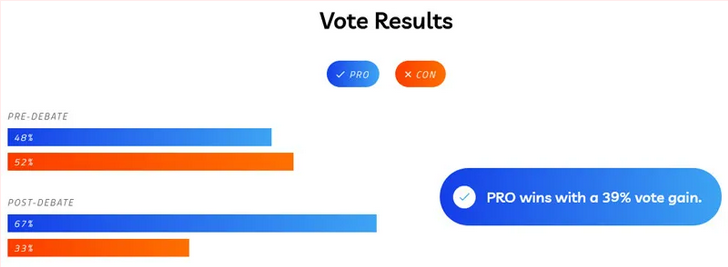
The event was sponsored by Munk Debates, which has been holding these events since 2008. Before the debate commences, audience members vote. Two hours later, they vote again.

On this occasion, the opinion swing was dramatic. The “don’t trust” side grew by 39% — apparently the largest swing ever in a Munk debate. At the beginning, slightly less than half of the in-house audience held this opinion (48%). Afterward, it was two-thirds (67%).

(When two-thirds of a population agrees on anything, you’re in supermajority territory — a number large enough to change constitutions.)

Here’s the key point: the winning side of the debate placed great emphasis on the scandalous manner in which Canada’s mainstream media covered the Freedom Convoy. Residing as he does in Britain, Douglas Murray had no trouble cutting through the nonsense. In the 3-minute video clip at the top of this post, he says our Prime Minister started by calling protesters names, and ended by invoking the Emergencies Act. Here’s what he says next:

    At such a time, what would the mainstream media do? It would question it. It would question it. The Canadian mainstream media did not.

    The Canadian mainstream media acted as an Amen chorus of the Canadian government. I will give you a couple of examples, but ladies and gentlemen I could go on for hours with examples of this. You had a CBC host describing the Freedom Convoy as a quote feral mob

    Why is this so rancid? Utterly, utterly rancid and corrupt. Because in this country, your media, your mainstream media is funded by the government. A totally corrupted system.

December 5, 2022

“… when confronted, our self-proclaimed warriors against fake news and misinformation are just lying about what they’re doing”

Filed under: Cancon, Government, Law, Media, Politics, Weapons — Tags: , , , , — Nicholas @ 05:00

From the free-to-cheapskates excerpt from this weekend’s dispatch from The Line:

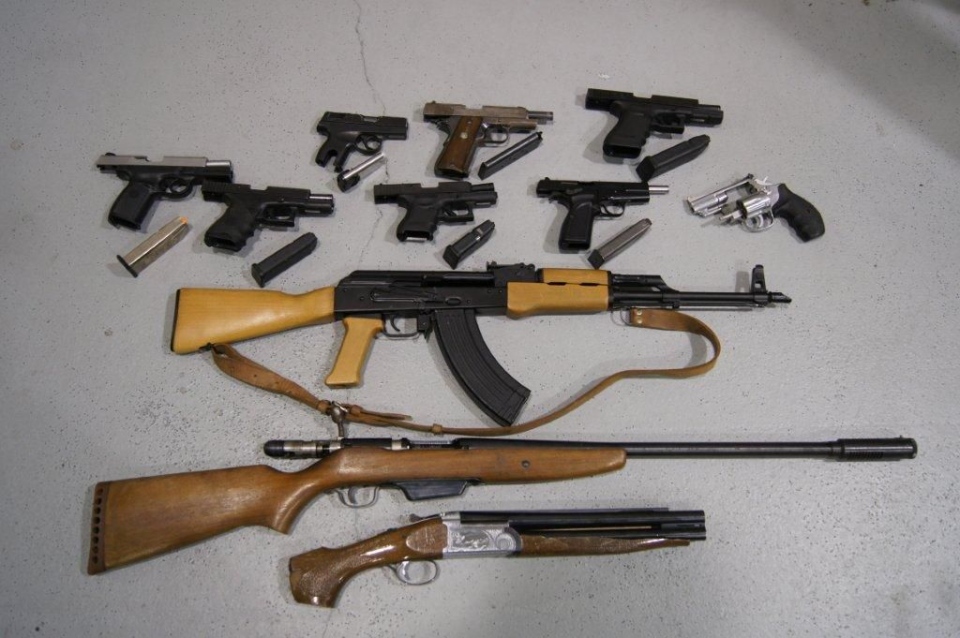
A typical haul of weapons confiscated by Toronto Police Services in 2012. Most of these guns are in the “restricted” or “prohibited” category of Canadian firearms and would not be available for legal purchase by anyone who had not gone through a rigorous RCMP background check and passed multiple training courses. Almost certainly none of them came from a legal owner.

We hate this as much as you do, but we must discuss guns with you again. We think the Liberals have screwed up, and we aren’t sure yet they realize it. (But they’re probably clueing in.)

You know why we’re suspicious? The Liberals are extremely good at marketing. A depressing amount of the time, it’s all they’ve got. They can take the smallest morsel of accomplishment and make it the centrepiece of a coordinated nation-wide grassroots mobilization campaign and fundraising drive. They have memes and other social shareables ready to go. Cabinet ministers release cringe videos captured by staffers who probably realize, in the very moment of their filming, that they’ve wasted their God-given potential on … this. 

Outcomes? The hell with those. Let’s talk about those inputs, baby! In both official languages. 

But this time? When the Liberals have actually embarked on what would be the most significant overhaul of our firearms laws in a generation? Not only have they not said boo. They’re going out of their way to deny that they’ve done anything. Or, when confronted, our self-proclaimed warriors against fake news and misinformation are just lying about what they’re doing.

So either they don’t know what they’re doing (very possible), regret what they’ve done (also very possible) or it’s a confused mix of both (our working theory).

But let us explain. And forgive us, but things will get a bit technical. (We’ll keep it as simple as possible, but guns are complicated.) 

Canadian firearms policy has generally tried to classify firearms by their technical specifications. Three broad categories were created by the major reforms of the 1990s. “Prohibited” firearms essentially were machine guns, automatic assault rifles of the kind used by modern militaries, and easily concealed short-barrelled handguns; prohibited licences were issued in the 1990s to a relatively small number of individuals who already owned such firearms and their immediate descendants (to cover family heirlooms), but prohibited firearms otherwise are not available to the public. “Non-restricted” firearms were the very common rifles and shotguns suited (and frequently used) for hunting or target shooting sports, and require the least onerous level of licensing (but still, you do need a licence that involves background checks and vetting). In the middle we had “restricted” firearms — mostly handguns — that require a special licence beyond the normal licence, requiring extra training and conditions. 

These broad categories do not always reflect the reality of how the laws actually shaped up. The prohibited and restricted categories were often stretched by meddling politicians to apply more broadly than they ought to have, so that politicians (mainly Liberals) could claim to be “tough on guns” in particular instances. But these three categories have been generally stable for a generation, and functioned well, more or less. Perfectly? No. But our gun-control laws worked for the public at large, which is why violent gun crime by licensed individuals is rare despite a relatively high rate of firearms ownership in Canada.

You wouldn’t think it given all the political controversy, but Canadian gun control has been a fundamentally successful public-policy program, for decades. The very real problem we have with gun violence in this country is overwhelmingly committed with illegal guns smuggled in from the United States, and fall outside the scope of our gun-control system, which works well doing what it is supposed to do: licensing lawful gun owners, regulating the legal uses of guns and regulating, as well, the lawful hunting and shooting sports industry. 

For all its success as public policy, though, the system didn’t work for the Liberals politically. So they decided to get cute. And that’s where their problems began.

November 29, 2022

Prime Minister Justin Trudeau, expert projectionist

Filed under: Cancon, Government, Law, Liberty, Media, Politics — Tags: , , , — Nicholas @ 03:00

Donna Laframboise on part of Prime Minister Justin Trudeau’s performance last Friday at the Public Order Emergency Commission’s hearings in Ottawa:

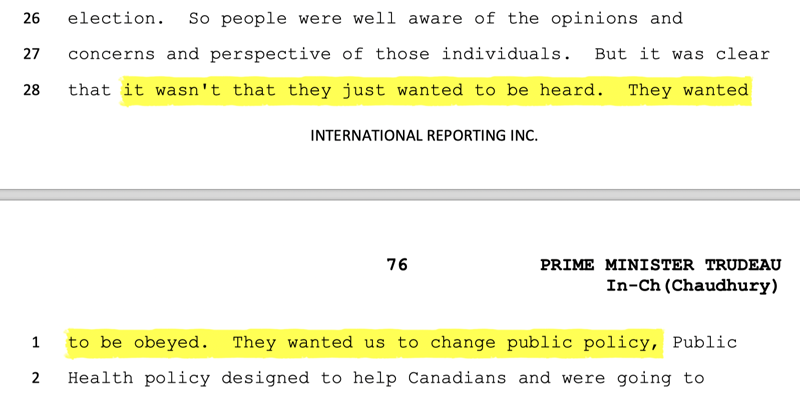
There’s a concept in psychology known as projection – accusing others of your own shortcomings. Last week Canada’s Prime Minister, Justin Trudeau, told an Emergencies Act hearing that Freedom Convoy protesters didn’t just want to talk. They wanted, he said, to be obeyed.

That was a strange word for him to use. About people he’d never spoken to. Yet it sums up his own posture rather nicely: Don’t bother trying to change my mind. I’m in charge, you must obey. Conversation over. Case closed.

According to Mr. Trudeau, the Freedom Convoy didn’t deserve a face-to-face meeting with his government because it wanted to change public policy. How terrible that free people, in a free country might want some influence over the increasingly draconian COVID rules they were required to follow. How unreasonable for them to come to Ottawa in an attempt to communicate the depths of their desperation.

A Prime Minister who received less than 33% of the votes cast during the federal election a mere four months earlier chose to thumb his nose at these protesters. Get lost, peasants. You will not be changing public policy.

[…]

We need to recognize what has happened here. The same federal officials who meet with corporate lobbyists by the thousands refused to have a single meeting with the truckers.

This, ladies and gentleman, is the state of Canada’s democracy.

November 25, 2022

“… no Canadian should trust any government enough to settle for a ‘trust me’ on matters this serious”

Filed under: Cancon, Government, Law, Liberty, Media, Politics — Tags: , , — Nicholas @ 05:00

Matt Gurney at TVO Today on the likely outcome of the Public Order Emergency Commission’s deliberations after testimony ends on Friday with whatever Prime Minister Justin Trudeau is planning to say:

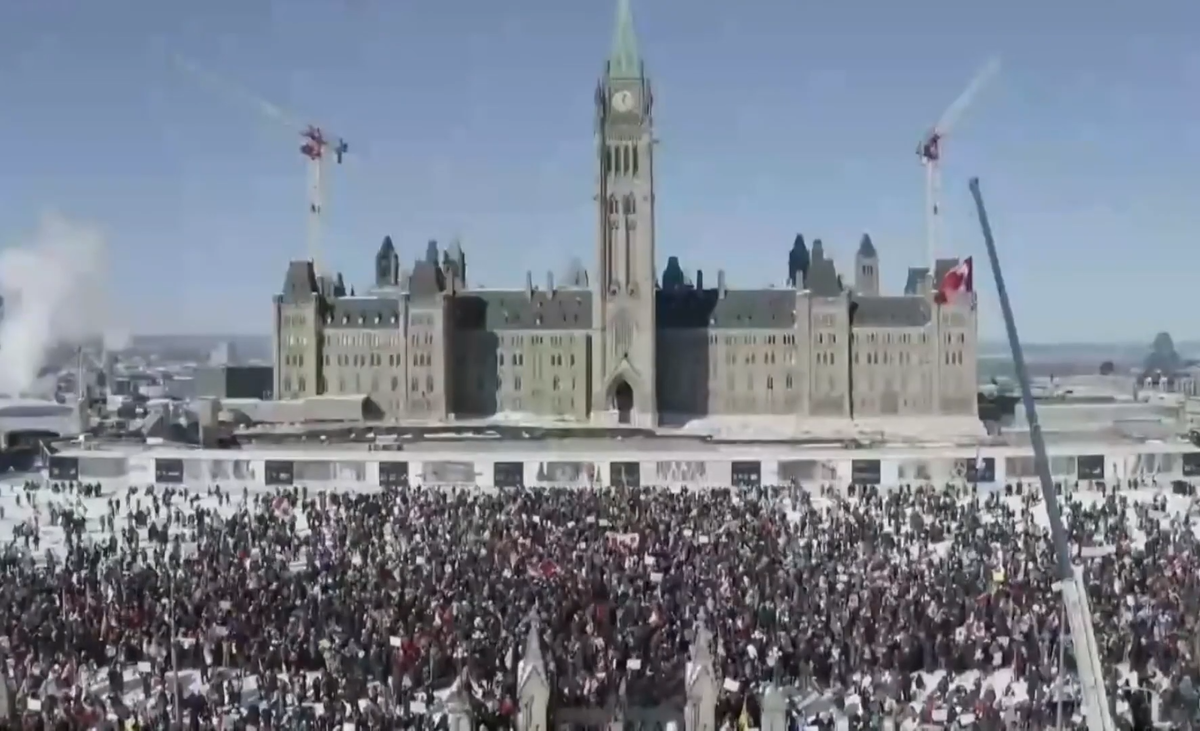
A screenshot from a YouTube video showing the protest in front of Parliament in Ottawa on 30 January, 2022.
Photo via Wikimedia Commons.

We can’t simply outsource decision-making to federal agencies, particularly intelligence services! The federal cabinet has the right to disagree with CSIS’s conclusions, especially as it may consider a broader range of information. That’s why we elect leaders. That’s democracy.

But a democracy is supposed to empower the people. We are citizens, not subjects. And there is something very worrisome in Vigneault’s comments. He noted that he had information that informed his decisions — information that cannot be publicly disclosed. This apparently includes legal opinions that the federal government has not disclosed (citing attorney-client privilege) and also, reportedly, classified information.

Attorney-client privilege is important. So is secrecy on matters of national security. Both of these things are essential for a society to function. But, in this case, they are corrosive to democracy and public faith in the federal government.

The Trudeau government’s case for invoking the Emergencies Act isn’t a slam dunk. It’s not bulletproof. I’ve been swayed by some of its arguments and some of the testimony and documents that have been produced. But it hasn’t sealed the deal. And if its final argument hinges on legal advice and classified information, that’s … awful. That’s just a terrible situation. That would amount, in effect, to Trudeau saying, “We can’t tell you why we did this incredibly rare and controversial thing, but trust us.”

No.

That’s it. Just no.

I don’t trust this government. That’s partially, I grant, a criticism of this particular government, which I am not a fan of. It is often high-handed, arrogant, and incompetent, and I do not trust it won’t try to duck criticism by hiding dirty laundry behind privilege and secrecy. Its conduct over the past seven years in office simply has not earned it any benefit of the doubt.

But there’s a deeper truth here: no Canadian should trust any government enough to settle for a “trust me” on matters this serious. That’s not how a democracy is supposed to work. Bluntly, if that’s how your democracy is working, it isn’t working or a democracy.

« Newer PostsOlder Posts »

Powered by WordPress