Quotulatiousness

September 21, 2019

Justin Trudeau will magnanimously forgive Canadians for their systemic racism

Filed under: Cancon, Media, Politics — Tags: , , , , — Nicholas @ 03:00

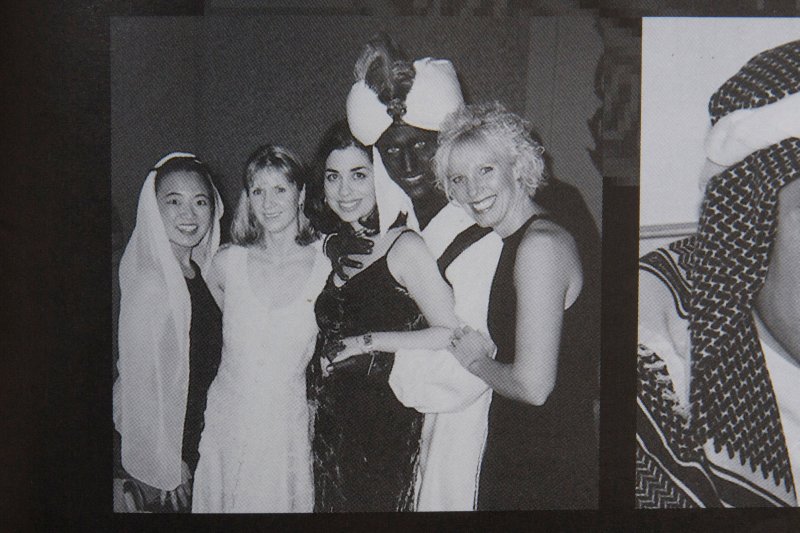
It’s mighty generous of him, after all, it was our racist country’s culture that forced him to wear “skin-darkening make-up” in a totally innocent moment of amusement (or was it three totally innocent moments of amusement?). Andrew Coyne says Justin is no racist … but he is a sanctimonious fraud:

Justin Trudeau with dark makeup on his face, neck and hands at a 2001 “Arabian Nights”-themed party at the West Point Grey Academy, the private school where he taught.
Photo from the West Point Grey Academy yearbook, via Time

If you thought this affair meant an end to the Trudeau brand of conspicuous moral preening — if you thought the rank hypocrisy of lecturing his opponents for their sins against tolerance, even as he was concealing much worse in his past, would deter or even shame him — think again. He seems merely to have exchanged one hypocrisy for another, asking meekly for the forgiveness he has been so unwilling to extend to others.

Which is really what all this is about. It isn’t the insensitivity, or the self-absorption, or the hypocrisy, that will leave the most lasting impression: it’s the calculation, the fakery, the synthetic emotion, the sly manipulation. The prime minister has proved adept at deploying the jargon and cliches of the identitarian left (“microaggressions,” “intersectionalities,” and “ally” all featured highly in the Winnipeg press conference) in moments of maximum political danger: recall his earlier non-denial of having groped a young female reporter, this time as a 28-year-old: “men and women often experience situations differently.”

Is he a racist? No. He is a fraud. The racial masks he wore to conceal his identity 20 years ago are but one in a series: from blackface to feministface to sunnywaysface. If it were just a matter of comparing his youthful errors to his record on racial issues, his partisans might have a point. Certainly the Conservatives, with their record of having exploited fears of Muslims, or asylum-seekers, or God help us, the Global Migration Compact, are in no position to point fingers.

But the character and credibility of a leader is a much broader matter than one issue. It informs every part of his record, the whole of his platform. The leader we saw dissembling so skillfully this week in Winnipeg is the same one who lied to the public, repeatedly, about the SNC-Lavalin affair; who made solemn and explicit promises on electoral reform and balanced budgets he had no intention of keeping; who ran roughshod over Parliament in exactly the same ways he had most decried in his predecessor.

Oh, and: he is the same leader who boasted after the fact of having personally selected a “scrappy tough-guy senator from an Indigenous community” as his opponent for the charity boxing match that would launch his career because he would make “a good foil.” Even on race, that the current occupant of the Prime Minister’s Office is a sanctimonious fraud it is surely at least as significant as that his government sponsors anti-racism seminars.

August 4, 2019

A sure-fire way to reduce monarchist sentiments – Royal celebrity slacktivism

Filed under: Britain, Cancon, Media — Tags: , , , , , — Nicholas @ 03:00

Chris Selley offers some friendly advice to His Royal Highness the Duke of Sussex:

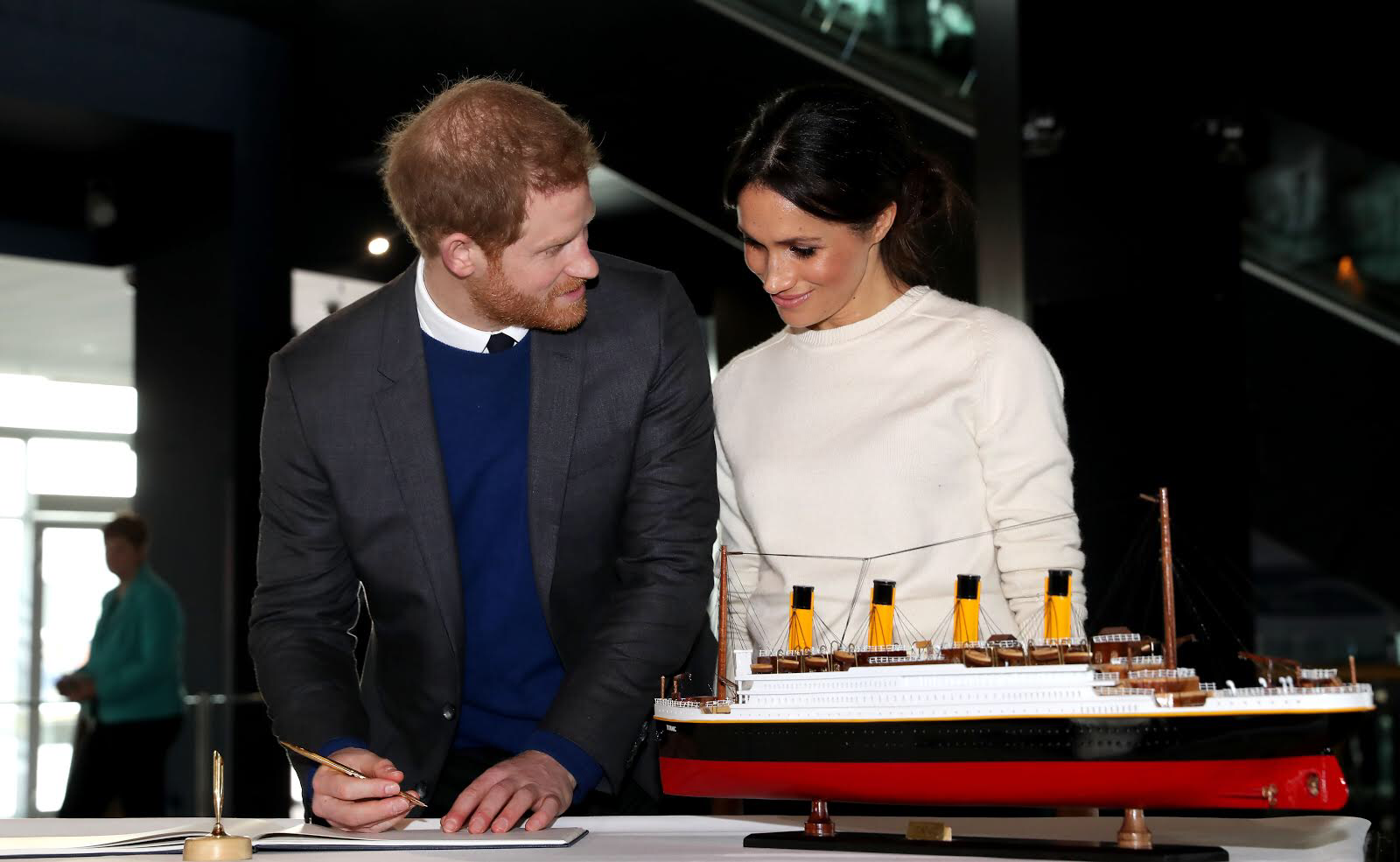
Prince Harry and Meghan Markle visit Titanic Belfast in March 2018.
Photo from the Northern Ireland Office via Wikimedia Commons.

Despite what some scandalized British headlines have suggested, Prince Harry, Duke of Sussex, has not claimed to be helping to save the world from climate change by only planning to get his 37-year-old wife pregnant one more time. “Two, maximum!” he tells primatologist Jane Goodall in an interview-cum-rambling discussion in the current edition of British Vogue, which was guest-edited by Meghan, Duchess of Sussex. It was in the context of some store-bought Harry musings about the perils facing planet Earth and its future inhabitants — “this place is borrowed,” etc. — but it was presented more as a half-joke than as an earnest plan to help out the biosphere.

Good thing, too, because not long after those headlines landed we learned Harry was off to Sicily for a massive Google-sponsored climate change celebrity gabfest. Needless to say, he didn’t row there. Italian media reported more than 100 private jets and several superyachts had delivered the actors, singers, supermodels and tech magnates. All reportedly had to sign non-disclosure agreements about what went on, which is a brilliant new innovation in climate-change slacktivism: “Our climate change discussions were not only important enough to justify heroic eruptions of carbon dioxide, but so important that we can’t tell you anything about them.”

Some think it’s petty to criticize climate activists for their own emissions. I was recently taken to task by myriad correspondents, many of whom were not Liberal partisans, for suggesting that a family long weekend surfing on Vancouver Island was a strange look for a prime minister trying to sell Canadians on a carbon tax with the very future of the planet, he argues, hanging in the balance. Honestly it baffles me. Is the idea that celebrity advocacy for decarbonized lifestyles will inspire so many other people to adopt them that we should forgive the celebrities’ own excesses? If people actually take their environmental cues from the likes of Leonardo DiCaprio, Harry Styles, Naomi Campbell and Orlando Bloom — all were reportedly in Sicily — then surely they would be far more inspired if the celebrities actually made half a personal effort.

But there will always be films, and they will always need actors, and there will always be pop music, and it will always need singers, and fame being what it is, a lot of the actors and singers will always end up being insufferable flakes. The monarchy Harry’s dad and brother are front of the line to lead isn’t nearly so immutable. No other Western royal family has managed to maintain such a conspicuously opulent lifestyle while maintaining head-of-state status and widespread affection not just on its home soil — where class remains a dominant social divider — but in many very different realms all over the world.

Whatever you think of the Royals, it’s quite an accomplishment. And a significant part of the recipe has been eschewing intellectualism and the unfortunate flights of fancy that can come with it. Prince Charles will be Britain’s (and Canada’s) first university-graduate monarch. In contrast, by some accounts, 10-year-old Elizabeth Windsor was home-schooled to the tune of just seven-and-a-half hours a week. As Ben Pimlott explains in his landmark biography of her, the goal was first and foremost to prevent her emerging as a “blue stocking” — i.e., as a female intellectual.

July 28, 2019

QotD: Anglo-Italian relations, 1922-1940

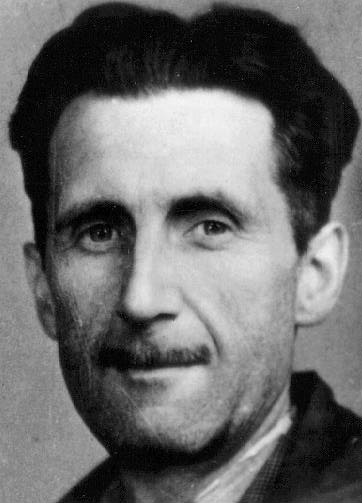
Orwell’s press card portrait, 1943

The history of British relations with Mussolini illustrated the structural weakness of a capitalist state. Granting that power politics are not moral, to attempt to buy Italy out of the Axis — and clearly this idea underlay British policy from 1934 onwards — was a natural strategic move. But it was not a move which Baldwin, Chamberlain and the rest of them were capable of carrying out. It could only have been done by being so strong that Mussolini would not dare to side with Hitler. This was impossible, because an economy ruled by the profit motive is simply not equal to rearming on a modern scale. Britain only began to arm when the Germans were in Calais. Before that, fairly large sums had, indeed, been voted for armaments, but they slid peaceably into the pockets of the shareholders and the weapons did not appear. Since they had no real intention of curtailing their own privileges, it was inevitable that the British ruling class should carry out every policy half-heartedly and blind themselves to the coming danger. But the moral collapse which this entailed was something new in British politics. In the nineteenth and early twentieth centuries, British politicians might be hypocritical, but hypocrisy implies a moral code. It was something new when Tory M.P.s cheered the news that British ships had been bombed by Italian aeroplanes, or when members of the House of Lords lent themselves to organized libel campaigns against the Basque children who had been brought here as refugees.

When one thinks of the lies and betrayals of those years, the cynical abandonment of one ally after another, the imbecile optimism of the Tory press, the flat refusal to believe that the dictators meant war, even when they shouted it from the house-tops, the inability of the moneyed class to see anything wrong whatever in concentration camps, ghettos, massacres and undeclared wars, one is driven to feel that moral decadence played its part as well as mere stupidity. By 1937 or thereabouts it was not possible to be in doubt about the nature of the Fascist régimes. But the lords of property had decided that Fascism was on their side and they were willing to swallow the most stinking evils so long as their property remained secure. In their clumsy way they were playing the game of Machiavelli, of “political realism”, of “anything is right which advances the cause of the Party” — the Party in this case, of course, being the Conservative Party.

All this “Cassius” brings out, but he does shirk its corollary. Throughout his book it is implied that only Tories are immoral. “Yet there is still another England,” he says. “This other England detested Fascism from the day of its birth… this was the England of the Left, the England of Labour.” True, but only part of the truth. The actual behaviour of the Left has been more honourable than its theories. It has fought against Fascism, but its representative thinkers have entered just as deeply as their opponents into the evil world of “realism” and power politics.

“Realism” (it used to be called dishonesty) is part of the general political atmosphere of our time. It is a sign of the weakness of “Cassius”s position that one could compile a quite similar book entitled The Trial of Winston Churchill, or The Trial of Chiang Kai-shek, or even The Trial of Ramsay MacDonald. In each case you would find the leaders of the Left contradicting themselves almost as grossly as the Tory leader quoted by “Cassius”. For the Left has also been willing to shut its eyes to a great deal and to accept some very doubtful allies. We laugh now to hear the Tories abusing Mussolini when they were flattering him five years ago, but who would have foretold in 1927 that the Left would one day take Chiang Kai-shek to its bosom? Who would have foretold just after the General Strike that ten years later Winston Churchill would be the darling of the Daily Worker? In the years 1935-9, when almost any ally against Fascism seemed acceptable, left-wingers found themselves praising Mustapha Kemal and then developing tenderness for Carol of Rumania.

George Orwell, “Who are the War Criminals?”, Tribune, 1943-10-22.

June 27, 2019

“Raise our taxes!” cried the hypocritical virtue signallers

Filed under: Economics, Government, Media, Politics, USA — Tags: , , — Nicholas @ 05:00

We’ve been over this ground before. Some very rich people are getting fawning media coverage for their “selfless”, “virtuous” demand that the government raise their taxes. Except they’re far from selfless: they’re demanding that other people be forced to pay more tax, but they’re very much not putting their own money where their bleating mouths are. Most governments are happy to accept more money from you than your formal tax liabilities:

… are all very eager to accept your contributions. But most people don’t take advantage of this mechanism, especially the ones garnering headlines for their “altruism”. Because they’re virtue signalling, and almost certainly don’t actually want to be taxed more. Don’t believe what people merely say they want, watch what they actually do (economists call this “revealed preference“). Hypocrites, the lot of them.

June 9, 2019

People who call for higher taxes are almost always hypocrites

Filed under: Britain, Cancon, Economics, Government, Politics — Tags: , , — Nicholas @ 03:00

And the numbers prove it:

There are many people who tell us that taxation in the UK is too low. Just think of all the gorgeously bureaucratic things that could be done if only the government had more money! Then there’s the number of people who actually do pay more tax on the basis that they think the government should have more money. The second being a rather smaller number than the first.

Which does bring us to that basic point that economists do insist upon making. Revealed preferences are a much better guide to what people do in fact believe than are expressed. Or, as folk wisdom has it, talk is cheap. That many shout that taxes should be higher – usually to insist that them over there should be taxed more – is interesting and amusing. But the actual number of people who really believe taxes should be higher is the number of people who voluntarily offer up more of their own hard earned to the government.

Which means that, according to the aggregate views and actions of the population of Britain taxes last year were too low by exactly the amount of £11,069. Everyone else is just virtue signalling:

    Donations to the Treasury have dwindled in recent years, however, even as the country’s debt remains relatively high. There were just 14 donations and bequests to reduce the national debt in the 2018-19 tax year, totalling £11,069, the UK Debt Management Office said.

That is the revealed preference of us all in aggregate.

It’s not just the UK where the number of people demanding higher taxes don’t actually put their own money where their mouths are — it’s true in Norway, the USA, and even the City of Toronto.

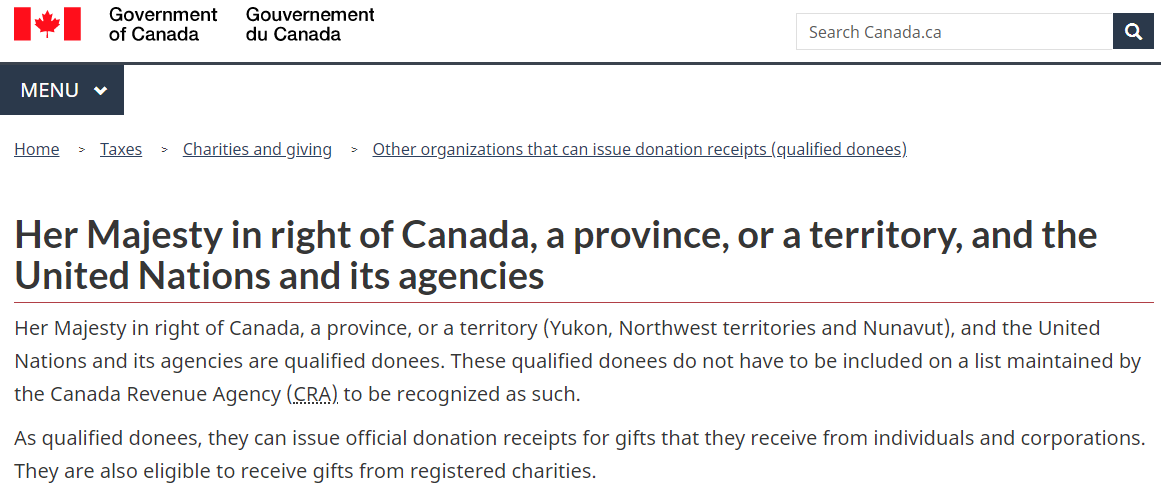
For ultra generous Canadians, Her Majesty will happily accept your donations here. To prove that you’re even more devoted to the challenge, you can even forego the tax credit, too!

March 10, 2019

Canada’s “feminist” Prime Minister

Filed under: Cancon, Politics — Tags: , , , , — Nicholas @ 05:00

In the Post Millennial, Ali Taghva recounts the apparently awkward interactions between Prime Minister Justin Trudeau and outgoing Whitby MP Celina Caesar-Chavannes:

Prime Minister Justin Trudeau allegedly screamed at Liberal MP Celina Caesar-Chavannes when she originally informed him that she would not be seeking re-election this coming October.

According to a Globe and Mail article, the MP informed Trudeau that she would not be seeking re-election around the same time as Jody Wilson-Raybould’s resignation.

She allegedly told the PM that political life had seriously harmed her family life, and in response, according to Ms. Chavannes, the Prime Minister grew hostile and yelled at her. Specifically, he allegedly claimed that the MP did not appreciate him, especially when he had provided her with so much.

“He was yelling. He was yelling that I didn’t appreciate him, that he’d given me so much,” Caesar-Chavannes said.

A full week later, Caesar-Chavannes attempted to approach the PM again, and once more was met with “anger and hostility” before Mr. Trudeau allegedly stormed out of the room after staring her down, according to the Globe and Mail article.

Highlighting the cross-partisan importance behind Ms. Caesar-Chavannes public outcry, she finished her statements by noting that she did not drink “the Kool-Aid and then sign my name in blood to this party politics thing. Maybe politics is not for me because I clearly don’t follow what the handbook says I’m supposed to do,”

This Globe and Mail article follows a Tweet in which the MP publically called out the Prime Minister for his use of open leadership in speeches, while allegedly ignoring her.

[…]

Justin Trudeau himself has yet to publicly comment on the matter. In 2018, he famously said, “when women speak up, it is our duty to listen to them and to believe them.”

January 19, 2019

The Lancet‘s new guidelines are a great leap forward … to worse-than-WW2 rationing

Filed under: Britain, Environment, Food, Health, Media — Tags: , — Nicholas @ 13:17

A new initiative by The Lancet and EAT, a billionaire’s pro-starvation advocacy group, involves new food guidelines that may leave Britons feeling a tiny bit … hungry:

The Lancet has got into bed with EAT to transform the global food supply. EAT is a campaign group run by a Norwegian billionaire who flies around the world in a private jet telling people to eat less meat to save the planet. The Lancet‘s interest is in getting people to live off lentils for the good of their health.

How much less meat do these people think we should be eating? Much, much less. Less than a sausage a week would be the pork ration in their brave new world.

As “Captain Nemo” commented on David Thompson’s blog:

“It appeared that there had even been demonstrations to thank The Lancet for raising the sausage ration to seven grams a week. And only yesterday, he reflected, it had been announced that the ration was to be REDUCED to seven grams a week…”

My apologies to Orwell.

January 16, 2019

Justin Trudeau is against using refugees as political props … at least when others do it

Filed under: Cancon, Liberty, Middle East, Politics — Tags: , , , — Nicholas @ 03:00

Politicians traffic in hypocrisy, example seven million and three:

There were no good reasons to make a big show of [Rahaf Mohammed] Alqunun’s arrival, in other words, and plenty of good reasons not to. Furthermore, Justin Trudeau has been very clear about what he thinks of using refugees as political props. He was at his most thespian back in 2015 when it was alleged Stephen Harper’s office had been sifting through applications from Syrian asylum-seekers in search of potential photo ops.

“That’s DIS-GUST-ING,” Trudeau hissed at a campaign stop in Richmond, B.C. “That’s not the Canada we want; that’s not the Canada we need to build.”

In the end, though, there was Foreign Affairs Minister Chrystia Freeland with her arm draped around Alqunun, announcing that this “brave new Canadian” would not be taking questions. Luckily, Freeland herself had arrived equipped with some crimson talking points.

“I believe in lighting a single candle,” she said. “Where we can save a single person, where we can save a single woman, that is a good thing to do. … And I’d like to also emphasize, this is part of a broader Canadian policy of supporting women and girls in Canada and around the world.”

“Canada is a country that understands how important it is to stand up for human rights, to stand up for women’s rights around the world,” Trudeau chimed in.

It would be well-nigh impossible to argue against hearing, at the very least, Alqunun’s claim for asylum. But at this point, she is certainly also a political prop — a living symbol of the Liberal view of Canada’s place in the world, and an always-welcome opportunity for self-congratulation.

November 6, 2018

QotD: Architectural modernism

Filed under: Architecture, Books, History, Quotations — Tags: , , , , — Nicholas @ 01:00

In this scholarly, learned but also enjoyably polemical book, Professor Curl recounts both the history and devastating effects of architectural modernism. In no field of human endeavour has the idea that history imposes a way to create been more destructive, or more importantly destructive: for while we can take avoiding action against bad art or literature, we cannot avoid the scouring of our eyes by bad architecture. It is imposed on us willy-nilly and we are impotent in the face of it. Modern capitalism, it has been said, progresses by creative destruction; modern architecture imposes itself by destructive creation.

As Professor Curl makes clear, the holy trinity of architectural modernism — Gropius, Mies and Corbusier — were human beings so flawed that between them they were an encyclopaedia of human vice. They spoke of morality and behaved like whores; they talked of the masses and were utter egotists; they claimed to be principled and were without scruple, either moral, intellectual, aesthetic or financial. Their two undoubted talents were those of self-promotion and survival, combined with an overweening thirst for power.

Their intellectual dishonesty was startling and would have been laughable had it not been more destructive than the Luftwaffe. When they claimed to have no style because their designs were imposed on them by history, technology, social necessity, functionality, economy etc., and like Luther proclaimed they could do no other (which soon became the demand that others could do no other also), they remind me of the logical positivists who claimed to have no metaphysic. But if no given style or metaphysic is beyond the choice of he who has it, to possess a style or a metaphysic is inescapable in the activity of artistic creation or thought itself. And even my handwriting has a style, albeit a bad one.

In like fashion, as this book makes beautifully clear, the modernists were adept at claiming both that their architecture was a logical development to and aesthetic successor of classical Greek architecture and utterly new and unprecedented. The latter, of course, was nearer the mark: they created buildings that, not only in theory but in actual practice, were incompatible with all that had gone before, and intentionally so. Any single one of their buildings could, and often did, lay waste a townscape, with devastating consequences. What had previously been a source of pride for inhabitants became a source of impotent despair. Corbusier’s books are littered with references to the Parthenon and other great monuments of architectural genius: but how anybody can see anything in common between the Parthenon and the Unité d’habitation (an appellation that surely by itself ought to tell us everything we need to know about Corbusier), other than that both are the product of human labour, defeats me.

Theodore Dalrymple, “Architectural Dystopia: A Book Review”, New English Review, 2018-10-04.

March 10, 2018

Remy: I Like it, I Love it

Filed under: Government, Humour, Politics, USA — Tags: , , , , — Nicholas @ 04:00

ReasonTV
Published on 8 Mar 2018

After years of complaining about Washington’s fiscal irresponsibility, Remy is finally in office and ready to make a change.
———-

Parody written and performed by Remy
Produced and Edited by Austin Bragg
Music tracks and backing vocals by Ben Karlstrom

LYRICS:

Spent four to eight years complaining about all the cash we spend
Asking for your vote and money, we need limited government

About how these deficits are costing us a trillion a pop
But vote for me, I’ll be as stingy as a GameStop

And then I got elected and took over DC
Cutting back on all spending is what I would do you’d think

But I like it, I love it, I want some more of it
A wall so tall you can’t climb above it
Don’t know what it is about the spending that I covet but
I like it, I love it, I want some more of it

The Founding Father Daddies tried to teach me currency
Now my spending list is longer than a CVS receipt
Now I’m keeping old programs and taking out loans
I’m scrapping spending caps and I’m cranking out drones

I’m adding more spending, I’m throwing a parade
My list is shovel-ready (so is most of what I say)

Cuz I like it, I love it, I want some more of it
I talk a lot, it turns out I’m bluffing
Don’t know what it is about the spending that I covet but
I like it, I love it, I want some more of it

February 5, 2018

QotD: The Age of Hypocrisy

Filed under: Europe, Germany, History, Quotations — Tags: , , , — Nicholas @ 01:00

Hitler (one cannot mention him without the subliterates mouthing, “Reductio ad Hitlerum!” — not realizing that they are quoting Leo Strauss) was the great enabler. He gave cover to all lesser evils, including the greater of the lesser ones; and thereby retired all the prattling politicians from the Age of Hypocrisy, which he closed. Now all the baddies seemed good, by comparison, and everyone needed a baddie of his own, or they would get one assigned from Berlin.

The Age of Hypocrisy re-opened, of course, with Hitler’s death, when political discourse again softened. (Hypocrisy is the padding on the madhouse walls.) But for a twelve-year run in Germany, and shorter periods wherever their shadow fell, Hitler’s Nazis erased hypocrisy.

This is what Karl Kraus meant, when he said that the Nazis had left him speechless. For decades he had exposed the lies and deceitful posturing not only of politicians in the German-speaking world, but among their immense supporting cast of journalists and fashion-seeking intellectuals. He was the greater-than-Orwell who strode to the defence of the German language, when it was wickedly abused. He identified the new “smelly little orthodoxies” as they crawled from under the rocks of Western Civ — the squalid, unexamined premisses that led by increments to the slaughterhouse of Total War. He was not, even slightly, a revolutionist; he had no argument against anyone’s wealth or status, even his own. Rather, through savage satirical humour, with language untranslatably precise, impinging constantly upon the poetic, he undressed the false.

He had seen the First World War coming, in the malice spreading through the language; in the smugness that fogged perception; in the lies that people told each other, to preserve their amour-propre; in the jingo that lurked beneath the genteel. After, he saw worse.

David Warren, “The decline of requirements”, Essays in Idleness, 2016-06-07.

January 18, 2018

Live in Toronto? Feel undertaxed? Here’s your easy solution to give the city more of your money

Filed under: Cancon, Government — Tags: , , , — Nicholas @ 03:00

Chris Selley points out that in addition to your opportunity to pay more than your fare share of federal tax (Her Majesty, in right of Canada, is always happy to accept any amount you wish to donate), Toronto taxpayers are able to use a simple form to donate money to the city:

Click to see full-size image.

So here’s a proposal: Torontonians who consider themselves undertaxed should give the city the difference. Every time you get a property tax bill, you get a little blue insert inviting contributions of up to $50,000 to the program of your choice or just into general revenues. Say your house is worth $750,000. Your bill should be around $4,962, or 0.66%. If you think Mississauga’s rate (0.85 per cent) or Brampton’s rate (1.05) per cent is more appropriate, then just cut the city a cheque for the difference ($1,413 or $2,913, respectively), send it back in the envelope provided and watch for your tax receipt. There are a lot of progressive homeowners in this city. It wouldn’t take much before we were talking about real money.

Is this likely to happen? Certainly not. The inserts date from 2010, when council cancelled the vehicle registration tax. A parade of deputants to budget committee said they didn’t want the money back; council gave them an easy way to give it back; almost nobody did, and almost nobody does now. The grand total of voluntary contributions under the property tax envelope program in 2016 was $81,320.77, and one of those donations was for $50,000.

Total contributions to city programs are of course much larger. The Toronto Public Library (which I support, however modestly) issued tax receipts for $3.4 million in donations in 2016, the zoo for $1.1 million. But the city itself only issued $1.35 million in total tax receipts, even as many of us beg it to take more of our money and spend it on council-approved priorities.

It might not be fair to pay more than your neighbour. But when you tell pollsters you want to be taxed more, political strategists don’t believe you. And when Doug Ford can win 33 per cent of the vote after four years of his brother as mayor, it’s tough to say they’re misguided. You can wait for a critical mass of your fellow citizens to come around to your worldview, or you can nudge the process along with your pocketbooks. Your money is as good as anyone else’s.

December 26, 2017

QotD: Most consumers say they want local-grown food, but won’t pay the costs to get it

Filed under: Business, Food, Quotations, USA — Tags: , , — Nicholas @ 01:00

Food grown locally, on small-lot farms without modern chemical assistance, is really expensive. The complex modern food-supply chain that ensures restaurants and food processors can get the same consistent mix of staple ingredients year-round also relentlessly beats down the price of food, sourcing wherever supply is cheapest, redistributing temporary local abundance to a steady global diet of everyday low prices. This is also not such a terrible way to eat; it is the foundation of much of our modern prosperity. But it is not local, artisanal, organic. It is global, industrial, indifferent. It has to be, both because organic inputs are much more expensive, and because trying to separate and track all the food so that restaurateurs can be sure of provenance and process would mean abandoning many of the efficiencies that make the stuff so cheap.

And Americans expect cheap. Cheap, after all, is what makes it possible for us to spend so much money at restaurants; if we had to pay all the workers $20 an hour and ensure that all our meat and produce had been farmed in the latest and most approved 19th-century methods, few of us could afford to have weekly dining out in our budget. Restaurants might be more authentic, delicious, moral places. They would also be much emptier ones.

Reading the Tampa Bay Times article, you get the sense that many of these restaurateurs tried to provide an authentic farm-to-table experience and found that customers were not willing to pay what it would cost — in money or variety — to have one. People are probably willing to pay some premium for that kind of food, but the premium is probably closer to 10 to 15 percent than it is to the sky-high sums that it would actually cost to rely on those sorts of farms, those sorts of methods. So the restaurateurs inevitably sold them what they were happily willing to pay for: food from an industrial supply chain, with a side of moral satisfaction.

It’s hard to be too angry at consumers. To be sure, they probably should have known that you couldn’t really buy organic, locally sourced food year-round at just a smidge more than you’d pay for a regular meal. After all, the average American spent half their income on food in 1900, while the modern American now spends a paltry 12 percent, even including a lavish helping of restaurant meals. That should give us some sign that local, artisanal food is not going to be cheap. But most Americans are not economic historians.

But it’s not even that easy to be mad at the restaurants. They’re in a viciously competitive business where most places don’t survive. In a competitive equilibrium where so many people want to be told they’re eating farm-fresh food — and so few people seem willing to pay for it — many of them probably feel that their choice is “lie or die.”

Megan McArdle, “Dining Out on Empty Virtue”, Bloomberg View, 2016-04-15.

December 8, 2017

But what about “whataboutism”?

Filed under: Media, Politics, USA — Tags: , , , , , — Nicholas @ 05:00

Megan McArdle on the folks who automatically resort to “what about x”:

Last week, as you may have noticed, Republicans passed a tax bill. As you may also have noticed, Democrats were aghast. Passing a bill like that on straight party lines! Using a parliamentary maneuver to push through something that could never have survived a filibuster! How could Republicans be so brazen, so immoral, so fiscally irresponsible?

Those of us who remembered saying many of the same things during the passage of Obamacare had to beg them to stop. I mean, we could have been seriously hurt, laughing that hard.

But when I pointed this out, the good citizens of Twitter informed me over and over that this was mere “whataboutism.”

Whataboutism is defending some indefensible action by pointing to some equally indefensible action that was supported, or at least not condemned, by your opponents. (Whataboutism is usually defined as a version of the tu quoque fallacy, attacking the questioner rather than answering the question. It’s also a red herring.) After lobbing a few “What about you?” grenades, you use the resulting chaos to duck uncomfortable questions.

It is a favorite tactic of our president, whose campaign platform was “What about her emails?” Every time someone brings up the FBI investigation that is creeping closer to the highest echelons of his staff, he is fond of asking, apropos of nothing, why Hillary Clinton’s not in jail.

May 24, 2017

QotD: The evil of political correctness

Filed under: Britain, Politics, Quotations — Tags: , , — Nicholas @ 01:00

PC [political correctness] represents, in essence, the institutionalisation of dishonesty, of deception, where people are given carte blanche to behave in an immoral way — ‘erect those fences, release the dogs, deport those people’ — but are encouraged to make it all seem nice and ‘non-hostile’. It brings to mind Wilde’s observation in his essay ‘The Soul of Man Under Socialism’, that ‘the worst slave-owners were those who were kind to their slaves, and so prevented the horror of the system being realised by those who suffered from it, and understood by those who contemplated it’. So today, the worst people in politics are those who are nice about the individuals they repress, whether it’s British politicians whose policies keep migrants in degrading limbo in Calais yet who insist everybody use nice words when talking about those migrants, or American army officials who kill Afghans yet demand that their soldiers write only PC, gay-friendly messages on the bombs that do the killing (as, remarkably, happened during the Afghan War).

Some apologists for PC describe it as simply ‘being nice’: ‘institutionalised politeness’. There’s nothing remotely nice about PC. It is the friendly slave-owner; it suppresses open, honest discussion; it obfuscates the divisions and tensions in modern society through stymying the expression of certain ideas; it is the ornate lid on a society which, however civil we make our speech, remains fractured, sometimes tense, packed with clashing interests that will never be resolved by niceness. Whether PC is being used as a glossy cover for brutal policies, as in the case of Calais, or is being used to justify anew old racial and gender divisions, as it does when it demands that we recognise and celebrate the alleged differences between blacks and whites and between men (competitive) and women (consensual), PC is a tool of censorship and conservatism, its chief accomplishment being the repression of difficult words and ideas in the name of pacifying public life.

Brendan O’Neill, “The Calais migrants and the moral bankruptcy of PC”, Spiked, 2015-08-03.

« Newer PostsOlder Posts »

Powered by WordPress