
World War Two
Published 23 Nov 2023What if I told you that a new conflict will sweep the globe in less than a year? It will open not with gunshots but with silent, shadowy espionage. The man who will kick off the Cold War is a quiet Canadian pilot, millionaire, and spymaster. A trusted aide to Churchill and FDR. I bet you haven’t heard this name before: William Stephenson.
(more…)
November 24, 2023
The Man Who Started the Cold War
Comments Off on The Man Who Started the Cold War
October 14, 2023
A Jacobite spy for Bonnie Prince Charlie
In the latest Age of Invention newsletter, Anton Howes talks about the career of John Holker of Manchester, cloth manufacturer, who joined the army of Prince Charles Edward Stewart in 1745, and eventually became an expert in industrial espionage:
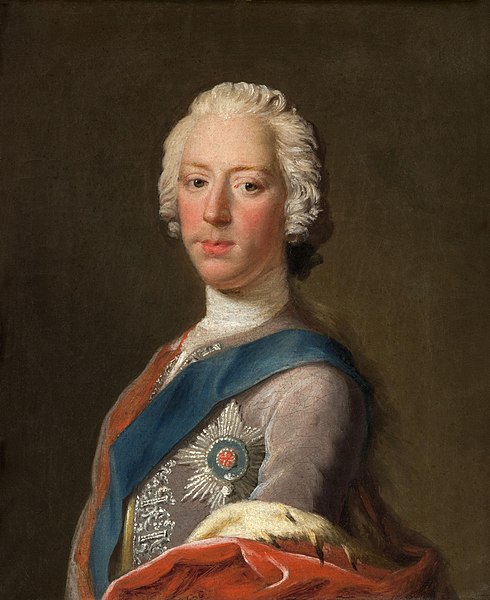
Prince Charles Edward Stuart, 1720 – 1788. Eldest Son of Prince James Francis Edward Stuart.
Portrait by Allan Ramsay, National Galleries Scotland via Wikimedia Commons.
I’ve lately been reading about one of history’s greatest spies — not a James Bond-like agent with licence to kill, but a master of industrial espionage, John Holker.1
Holker was originally from Manchester, in Lancashire, where he was a skilled cloth manufacturer in the early eighteenth century, his specialty being calendering — a finishing process to give cloth a kind of sheen or glazed effect. But Holker was also a Catholic and a Jacobite — a believer in the claim of the Catholic descendants of the deposed king James II to be the rightful rulers of Great Britain, instead of the Hanoverian George I and George II who had only succeeded to the throne because they were Protestants. In 1745 James II’s grandson Charles, also known as Bonnie Prince Charlie — likely the “Bonnie” who lies over the ocean in the famous song — landed in the Scottish Highlands and raised the royal standard. Charles’s uprising defeated the British troops stationed in Scotland, captured Edinburgh, and then marched down the west coast of England, capturing Carlisle and entering Lancashire.
To Holker, who had been born in the same year as the last Jacobite rebellion in 1719, the arrival of Charles in Manchester must have seemed like a once-in-a-generation opportunity. He and his business partner instantly joined Charles’s troops and he was appointed a lieutenant. But Manchester was the last place to provide many eager volunteers for the uprising, and when Charles reached Derby he lost heart and turned around. Holker and his business partner ended up being left to garrison Carlisle as Charles and his force retreated into Scotland to hunker down, and they were soon captured by the British troops sent to quash the uprising. They were then, as officers, sent to Newgate prison in London to sit with their legs bound in irons and await trial and certain execution.
But they never made it to trial. In the first demonstration of Holker’s extraordinary talent for espionage, they escaped. Holker had been allowed visitors in prison, so had drawn on London’s crypto-Jacobite circle to smuggle in files, ropes, and information about the prison and its surroundings. They managed to file through the leg-irons and window bars, climbed up the gutters onto the prison roof, and then used planks from the cell’s tabletop to cross onto the roof of a nearby house. In the event, they disturbed a dog guarding the house, and so Holker hid in a water-butt and became separated from the others. He eventually found refuge at a crypto-Jacobite’s house, then escaped into the countryside before managing to make his way to France.
In France, Holker joined his fellow veterans of the failed uprising of ‘45, becoming a lieutenant in a Jacobite regiment of the French army. He fought for the French in the Austrian Netherlands — present-day Belgium — against the Hapsburgs, the Hanoverians, the Dutch, and the British. Even more extraordinary, however, was that when Bonnie Prince Charlie wanted to go in secret to England in 1750, it was Holker who went with him as his sole companion and guide. Although Charles failed to persuade his supporters in England to rise up in rebellion on their own, Holker managed to get the prince secretly and safely to London and back.
By the time Holker reached his early thirties he had been an industrialist, rebel, prisoner, fugitive, soldier, undercover agent, and even spy-catcher: he successfully identified a spy for the British in Charles’s circle, even if Charles failed to heed his warning. But in 1751 Holker’s career took yet another turn when he was recruited by the French government as an industrial spymaster.
Holker’s chief task was to steal British textile technologies.
1. Unless otherwise stated, I’ve drawn much of my information on Holker and the industries that the French attempted to copy from John R. Harris, Industrial Espionage and Technology Transfer: Britain and France in the 18th Century (Taylor & Francis, 2017), particularly chapter 3.
Comments Off on A Jacobite spy for Bonnie Prince Charlie
October 13, 2023
Elvira, the Party Girl Double Agent
World War Two
Published 11 Oct 2023She’s the gambler with a hotline to the Abwehr. The party girl tearing up the London social scene. Now she’s doing her bit to hold back the Panzer divisions and pave the way for D-Day. This is the story of Elvira Concepcion Josefina de la Fuente Chaudoir, Double Cross’s most flamboyant double agent.
(more…)
Comments Off on Elvira, the Party Girl Double Agent
One of the reasons Israel was surprised by the Hamas attacks
In UnHerd, Edward Luttwak explains why Israeli intelligence was deceived leading up to the Hamas terror attacks last week:
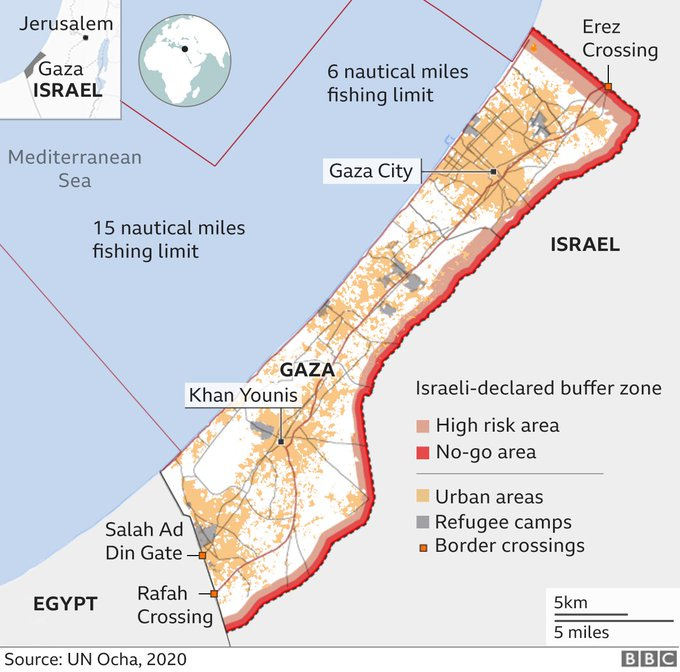
The last major news item about Gaza before the first news of Hamas’s surprise attack was the September 22 announcement that 17,000 Gazans would immediately receive permits to work in Israel, with that number set to rise to 20,000. All understood the likelihood of a permit-holder smuggling in a bomb, or perhaps stabbing an Israeli fellow worker, but that seemed a risk worth taking.
Hamas, after all, had stopped launching rockets against Israel, and appeared to be focused on containing the influence of Islamic Jihad — Hamas’s only remaining competitor after its suppression of the PLO, and one which is financed by Iran to propagate Shi’ism in Gaza. This obvious rivalry was skilfully exploited by Hamas to deceive the Israelis into thinking that it was no longer launching rockets because, as an emphatically Sunni organisation, it wanted to join the Sunni reconciliation with Israel that was already a fait accompli from Morocco to Bahrain.
Once again, as so many times before, Israel’s leaders were deluded into thinking that a Palestinian leadership had some concern for the welfare of its own people, as opposed to its ideological aim: “Palestine” for the nationalist PLO (which always included Christians), and Islamic supremacy for Hamas. The latter’s leaders have frequently explained that Islamic rule must be imposed not just on Israel but on the entire world, and that Palestinian nationalism is un-Islamic twice over — because it includes Christians, and because any nationalism intrinsically subverts Islamic unity.
With Hamas seemingly on a path to reconciliation, only the much smaller Islamic Jihad was still assembling and launching rockets. But most of those attempts were pre-empted by Israeli strikes, guided by precise intelligence supplied by a seemingly reliable agent network. Almost certainly, Hamas itself supplied the “actionable” information passed on by those agents. This efficiently blinded Israeli intelligence, which has plenty of expertise in detecting double agents peddling false information, but could hardly suspect agents who were supplying highly accurate information.
This was the first Israeli failure: its intelligence analysts did not realise that the silence of Hamas was not due to inactivity, but to planning that they could not detect. Such silence was far from normal, and it should have inspired efforts to find out what was going on. But it did not.
On top of that, there was a separate failure which was purely military. Even if intelligence reported that all was well and that Gaza was on the path to peace, military planners should not have yielded to such optimism — for a very specific Israeli reason. Since the Israeli armed forces rely on reservists, who must be recalled to duty and kitted out before they can fight, as opposed to an enemy that can switch from peace to war instantaneously, military planners must be professional pessimists no matter what. They must always be mindful of the minutes needed to broadcast an alert, of the hours that even soldiers in situ need to prepare for action, and the full 24 hours required to mobilise the reservists.
At Spiked, Frank Furedi is angered by the widespread victim-blaming being shared on social media to pretend that the Hamas terror attacks were somehow “legitimate” and the atrocities committed against civilians somehow “okay”:
The assault on southern Israel last weekend was more than an atrocity. This callous and systematic murder of civilians was nothing less than a 21st-century version of a barbaric pogrom. The videos recorded by Hamas operatives as they slaughtered people serve as a frightening testimony to human depravity. They more than match the numerous beheading videos that glorified the barbarism of Islamic State and other terrorist organisations in recent decades.
Seeing the Hamas-orchestrated pogrom was gut-wrenching. But what I have found almost as disturbing are the smug voices of those in the West who say that Israel is responsible for Hamas’s barbarism. That it brought this horror on itself.
Ever since Hamas operatives embarked on their depraved killing spree, self-styled “progressives” have been queuing up to tell anyone who will listen that the evil Zionists had it coming. Not even this week’s reports of Hamas’s massacre of babies have given them pause for reflection. Their victim-blaming is echoed by numerous Western Muslim organisations and even by some mainstream politicians. They too say that Israel had it coming. With his usual smug complacency, former Greek finance minister Yanis Varoufakis declared in an interview that he would never denounce Hamas for these atrocities. Pointing the finger at Israel, he stated that “the path to ending the tragic loss of innocent lives – both Palestinian and Israeli – begins with one crucial first step: the end of the Israeli occupation and apartheid”.
Varoufakis’s apologism for atrocities against Jewish men, women and children appears civilised compared with the response of the West’s Palestine-solidarity campaigns. Many of them have actively celebrated this pogrom. One speaker at an “All Out for Palestine” protest outside the Israeli consulate in New York seemed to think that the systematic murder of 260 young people at the Supernova music festival provided excellent “comedy” material. “As you might have seen, there was some sort of rave or desert party where they were having a great time”, he said, “until the resistance came in electrified hang gliders and took out at least several dozen hipsters”. The rabble assembled outside the Israeli consulate responded to this “joke” about the mass murder and kidnapping of “several dozen hipsters” with gales of laughter.
Time and again, these atrocities are excused and their victims are dehumanised. Dr Mennah Elwan, an NHS medic, tried to excuse Hamas’s assault on innocent Israeli civilians by claiming that these youngsters fleeing for their lives were not civilians at all, because “there are no civilians in Israel”. She then said of the revellers that “if it was your home, you would stay and fight”.
On Saturday, while the pogrom against Jewish people was still unfolding in Israel, Somali-American journalist Najma Sharif felt the need to remind her followers on X: “What did y’all think decolonisation meant? Vibes? Papers? Essays? Losers.” That she associates a blood-soaked pogrom with the objectives of the “decolonisation” movement in Western universities is revealing.
Indeed, Sharif was far from alone in framing this pogrom as an instance of decolonisation. This view has been systematically promoted by Hamas apologists. Maggie Chapman, a Green member of the Scottish parliament, responded to public disquiet over the Hamas attack by posting: “The oppressed are fighting back for their rights … Don’t let the Western media fool you into thinking it’s terrorism, this is decolonisation.” It is worth noting that Chapman is deputy convenor of the Scottish parliament’s human-rights committee. How long before she argues that perpetrating a pogrom is the human right of the oppressed?
The “decolonisers”, whether they realise it or not, are sending an unambiguous message to the world: “This is no time to be squeamish; after all, they are only Jews.”
Comments Off on One of the reasons Israel was surprised by the Hamas attacks
October 11, 2023
How Britain Broke Hitler’s Brain
World War Two
Published 10 Oct 2023In a re-upload of one of our D-Day 24 Hour videos, Astrid introduces you to the war’s most effective counter-espionage and deception programme, The Double Cross system. Today she’ll talk about their operations before and during D-Day and introduce you to some of the most important double agents. Their mission: fool the Führer.
(more…)
Comments Off on How Britain Broke Hitler’s Brain
October 5, 2023
The Soviet Spies who Kickstarted the Nuclear Arms Race
World War Two
Published 4 Oct 2023Last episode we saw Klaus Fuchs steal details of the American atomic bomb for the Soviet Union. But he’s only one component of a much bigger conspiracy. Today, Astrid introduces you to the mysterious web of Soviet atomic spies. Their work changed our world forever.
(more…)
Comments Off on The Soviet Spies who Kickstarted the Nuclear Arms Race
September 30, 2023
The Man Who Stole the Atomic Bomb
World War Two
Published 29 Sep 2023In the New Mexico desert, a secret team of scientists is working flat out to develop atomic bombs. It’s the most important American military project in history. But one of those scientists lives a double life. Klaus Fuchs has decided to betray his country and share America’s most secret technology with the Soviet Union. But is he the only person who has turned traitor?
(more…)
Comments Off on The Man Who Stole the Atomic Bomb
September 7, 2023
How Britain Helped the Communist Revolution – War Against Humanity 113
World War Two
Published 6 Sep 2023Fight the Nazis or fight your countrymen? From Marshal Tito’s Partisans in Yugoslavia to the ELAS fighters in Greece, that is the animating question among the Balkans resistance movements. For many, the question is already answered. It is Mihailović and his Chetniks and EDES, EKKA, and the Greek royalist government who must be out-maneuvered first. British foreign policy has so far failed to change this state of affairs, can Churchill get his SOE officers to stop these civil wars?
(more…)
Comments Off on How Britain Helped the Communist Revolution – War Against Humanity 113
August 31, 2023
The Double Agent Saving London From the V-1 – WW2 Documentary Special
World War Two
Published 30 Aug 2023The Germans are assaulting London with waves of V-1 flying bombs. But Eddie Chapman, a career criminal, serial womaniser, and masterful double agent working for MI5’s Double Cross is fighting a secret battle to beat the bombs. When he’s done with that, he pulls the wool over the Reich’s eyes to help Britain beat the Kriegsmarine. This is Agent Zigzag.
(more…)
Comments Off on The Double Agent Saving London From the V-1 – WW2 Documentary Special
August 27, 2023
6 Strange Facts About the Cold War
Decades
Published 27 Jul 2022Welcome to our history channel, run by those with a real passion for history & that’s about it. In today’s video, we will be exploring 6 odd Cold War facts.
(more…)
Comments Off on 6 Strange Facts About the Cold War
August 26, 2023
OSS “Bigot” 1911 dart-firing pistol
Forgotten Weapons
Published 2 Apr 2012The “Bigot” was a modification of an M1911 .45 caliber pistol developed by the Office of Strategic Services during WW2. The OSS was a clandestine operations service, the predecessor of the CIA. The Bigot was intended as a way for commandos to quietly eliminate sentries — although we are not sure what advantage it might have had over a silenced pistol. Questionable utility doesn’t prevent it from being a pretty interesting piece of equipment, though, and we had the opportunity to take a look at one up close recently.
Comments Off on OSS “Bigot” 1911 dart-firing pistol
August 25, 2023
Fortress Britain with Alice Roberts S01E03
Fortress Britain with Alice Roberts
Published 16 Apr 2023
Comments Off on Fortress Britain with Alice Roberts S01E03
August 17, 2023
Dieppe – One Day in August – Ian Fleming, Enigma and the Deadly Raid – Part 1
WW2TV
Published 29 Nov 2020In less than six hours in August 1942, nearly 1,000 British, Canadian and American commandos died in the French port of Dieppe in an operation that for decades seemed to have no real purpose. Was it a dry-run for D-Day, or perhaps a gesture by the Allies to placate Stalin’s impatience for a second front in the west?
Canadian historian David O’Keefe uses hitherto classified intelligence archives to prove that this catastrophic and apparently futile raid was in fact a mission, set up by Ian Fleming of British Naval Intelligence as part of a “pinch” policy designed to capture material relating to the four-rotor Enigma machine that would permit codebreakers like Alan Turing at Bletchley Park to turn the tide of the Second World War.
In this first show we will look at how the raid has been written about in previous books and the research David undertook and as importantly why he did it. In a future show, we will look at filming in Dieppe itself and explain the sequence of events.
(more…)
Comments Off on Dieppe – One Day in August – Ian Fleming, Enigma and the Deadly Raid – Part 1
July 30, 2023
The Grave of the Man Who Never Was: Operation Mincemeat
Tom Scott
Published 7 Nov 2016In a cemetery in Huelva, in Spain, is the grave of Major William Martin, of the British Royal Marines. Or rather, it’s the grave of a man called Glyndwr Michael, who served his country during World War 2 in a very unexpected way … after his death.
(more…)
Comments Off on The Grave of the Man Who Never Was: Operation Mincemeat
July 24, 2023
QotD: The Duke and Duchess of Windsor after the abdication
The author laces his chapters with some memorable phraseology. Of the wedding of David and Wallis in France on 3 June 1937, we are reminded, “Only the most cynical could have begrudged the pair their happy ending, although it remained ambiguous as to who was the dashing prince and who the swooning maiden.” With another coronation in the offing this year, [The Windsors at War author Alexander] Larman dwells on that of George VI (known hitherto at Bertie) at Westminster Abbey on 12 May 1937. All the time, we are reminded that the new king loathed the debonair confidence of “the king across the water”, fearing that if he made a hash of the kingship he never wanted, his scheming elder brother might return. This is one theme that runs throughout Larman’s fine scholarship.
We are reminded that the king’s much-rehearsed coronation speech was a success. “Millions of his subjects sat at home listening to the broadcast, willing him to succeed whilst knowing of his stammer and the difficulties that even speaking a few short sentences publicly had caused him … Yet fortunately for the coronation ceremony, the king’s nerves seemed to vanish on the day, aided by his sincere religious faith: another characteristic absent from his brother’s life.”
[…]
One trait that runs through this important book is the personal weakness of the Duke and the compelling strength of his bride. Larman makes it plain that both Baldwin and Chamberlain were aware that it was Wallis who was passing state secrets to German intelligence, although her husband also expressed sympathies for Hitler’s regime. Cecil Beaton, photographer of the David-Wallis wedding in France, noted in his diary that the Duchess “not only has individuality and personality, but [she] is a strong force”. Even as he praised her intelligence and admiration for the Duke, Beaton offered the judgement that she “is determined to love him, though I feel she is not in love with him” — an interesting reflection on the woman for whom her husband had abandoned his throne. In 2015, Andrew Morton dwelt in great detail on Wallis’s treachery in 17 Carnations: The Windsors, The Nazis and The Cover-Up.
Throughout Larman’s compelling read, we are offered evidence of how tone-deaf the Duke was to international protocol, the interests of Britain and the sufferings of others. Anthony Eden, as Foreign Secretary, observed how the pair felt they should be “treated abroad by ambassadors and dignitaries, rather as they would a member of the royal family on a holiday”. This came to a head when friends of the Duke organised a visit to Germany over 11–23 October 1937. They met several leading Nazis, including Hess, Goebbels (who called the Duke “a tender seedling of reason”) and Göring, as well as renewing their acquaintance with Ribbentrop, still then ambassador to Britain. It was Ribbentrop, according to Morton’s book, who had sent Wallis 17 carnations daily “each one representing a night they had spent together”.
On the penultimate day, the Windsors met Hitler at Berchtesgaden. Larman reasons that the visit was as much to show that the Duke and his bride were still relevant in the wider world, as to form a bond with the Führer to avoid future war. As with many public figures of the era, David feared communism far more than fascism, for which he saw the best antidote in an alliance with Germany. We are left wondering whether the Duke observed in Hitler’s authoritarian state all that he admired and wished for Britain, but was now denied.
A subtext to The Windsors at War is just how much anxiety David caused the King, his younger brother, during the run up to war and during it. For most of the period, the Duke badgered for money, confirmation of his status and a royal title for Wallis. Whilst the first was forthcoming, amounting to a financial settlement of £25,000 a year (generous by any standards, considering the Windsors spent their days sofa-surfing and sponging off their rich friends), neither of the latter were. Chamberlain was forced to write that “in addition to letters of protest he had as Prime Minister … all classes stood against him. In addition to the British not wanting him to return, residents of Canada, New Zealand and America wished him to remain in exile”.
Yet, writes Larman, the Duke would not simply “languish in exile and be denied the opportunity to contribute his thoughts on the international situation. This arrogance made him both unpredictable and, with the outbreak of war drawing closer, dangerous. At a time when it was crucial that the loyalties of prominent public figures were transparent, his inclinations remained opaque”.
Peter Caddick-Adams, “The other one”, The Critic, 2023-04-18.
Comments Off on QotD: The Duke and Duchess of Windsor after the abdication


