
Forgotten Weapons
Published Mar 9, 2015The Type 92 was the final iteration of a machine gun that began as the Model 1897 Hotchkiss HMG made in France. The Japanese army purchased many of these guns, and then produced their own slightly refined version. These in turn were replaced by the updated Type 3 (1914) heavy machine gun, and finally the Type 92 (1932). A lightened upgrade to the Type 92 was prototyped (the Type 1, 1941), but never went into production. Mechanically, the Type 92 is very much like a scaled-up Type 11 light machine gun, using 30-round strips to feed. Despite being generally derided today, these machine guns were very reliable, accurate, and effective. This particular one happens to have a 7mm Mauser barrel in it, from a South American contract.
http://www.forgottenweapons.com
Theme music by Dylan Benson – http://dbproductioncompany.webs.com
November 12, 2024
Type 92 Japanese HMG
November 11, 2024
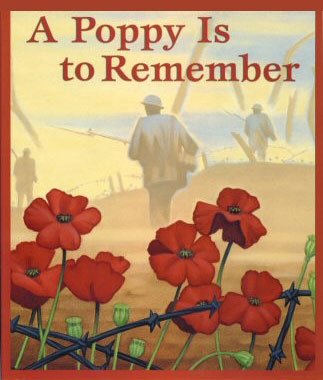
In memoriam
A simple recognition of some of our family members who served in the First and Second World Wars:
The Great War
 Private William Penman, Scots Guards, died 16 May, 1915 at Le Touret, age 25
(Elizabeth’s great uncle)- Private Archibald Turner Mulholland, Argyll & Sutherland Highlanders, mortally wounded 25 September, 1915 at Loos, age 27
(Elizabeth’s great uncle) - Private David Buller, Highland Light Infantry, died 21 October, 1915 at Loos, age 35
(Elizabeth’s great grandfather) - Private Harold Edgar Brand, East Yorkshire Regiment. died 4 June, 1917 at Tournai.
(My first cousin, three times removed) - Private Walter Porteous, Durham Light Infantry, died 4 October, 1917 at Passchendaele, age 18
(my great uncle, who had married the day before he left for the front and never returned) - Corporal John Mulholland, Argyll & Sutherland Highlanders, wounded 2 September, 1914 (shortly before the First Battle of the Aisne), wounded again 29 June, 1918, lived through the war.
(Elizabeth’s great uncle) - John Eleazar (“Ellar”) Thornton, (ranks and dates of service unknown, served in the Royal Garrison Artillery, the East Surrey Regiment, and the Essex Regiment (dates of service unknown, but he likely joined the RGA in 1899). Put on the “Z” list after the war — recall list. He died in an asylum in 1943.
(my grandfather’s eldest brother) - Henry (Harry) Thornton, (uncertain) Lancashire Fusiliers. (We are not sure it is him as there were no identifying family or birth date listed. Rejected for further service.)
(my grandfather’s second older brother)
The Second World War
- Flying Officer Richard Porteous, Royal Air Force, survived the defeat in Malaya, was evacuated to India and lived through the war.
(my great uncle) - Able Seaman John Penman, Royal Navy, served in the Defensively Equipped Merchant fleet on the Atlantic convoys, the Murmansk Run (we know he spent a winter in Russia at some point during the war) and other convoy routes, was involved in firefighting and rescue efforts during the Bombay Docks explosion in 1944, lived through the war.
(Elizabeth’s father. We received his Arctic Star medal in July, 2024.) - Private Archie Black (commissioned after the war and retired as a Major), Gordon Highlanders, captured during the fall of Singapore (aged 15) and survived a Japanese POW camp (he had begun to write an autobiography shortly before he died)
(Elizabeth’s uncle) - Elizabeth Buller, “Lumberjill” in the Women’s Timber Corps, an offshoot of the Women’s Land Army in Scotland through the war.
(Elizabeth’s mother) - Trooper Leslie Taplan Russon, 3rd Royal Tank Regiment, died at Tobruk, 19 December, 1942 (aged 23).
Leslie was my father’s first cousin, once removed (and therefore my first cousin, twice removed). - Reginald Thornton, rank and branch of service unknown, hospitalized during the war with shellshock and was never discharged back into civilian life. He died in York in 1986.
(my grandfather’s youngest brother)
My maternal grandfather, Matthew Kendrew Thornton, was in a reserved occupation during the war as a plater working at Smith’s Docks in Middlesbrough. The original design for the famous Flower-class corvettes came from Smith’s Docks and 16 of the 196 built in the UK during the war (more were built in Canada). My great-grandmother was an enthusiastic ARP warden through the war (she reportedly enjoyed enforcing blackout compliance in the neighbourhood using the rattle and whistle that came with the job).
For the curious, the Commonwealth War Graves Commission the Royal British Legion, and the Library and Archives Canada WW1 and WW2 records site provide search engines you can use to look up your family name. The RBL’s Every One Remembered site shows you everyone who died in the Great War in British or Empire service (Canadians, Australians, New Zealanders, South Africans and other Imperial countries). The CWGC site also includes those who died in the Second World War. Library and Archives Canada allows searches of the Canadian Expeditionary Force and the Royal Newfoundland Regiment for all who served during WW1, and including those who volunteered for the CEF but were not accepted.
In Flanders fields the poppies blow
Between the crosses row on row,
That mark our place; and in the sky
The larks, still bravely singing, fly
Scarce heard amid the guns below.We are the Dead. Short days ago
We lived, felt dawn, saw sunset glow,
Loved and were loved, and now we lie
In Flanders fields.Take up our quarrel with the foe:
To you from failing hands we throw
The torch; be yours to hold it high.
If ye break faith with us who die
We shall not sleep, though poppies grow
In Flanders fields.Lieutenant Colonel John McCrae, MD Canadian Army Medical Corps (1872-1918)
Here is Mark Knopfler’s wonderful song “Remembrance Day” from his Get Lucky album, set to a slideshow of British and Canadian images from World War I through to more recent conflicts put together by Bob Oldfield:
November 10, 2024
WW2 in Numbers
World War Two
Published 9 Nov 2024World War II wasn’t just the deadliest conflict in history — it was a war of unprecedented scale. From staggering casualty numbers to military production and economic costs, this episode breaks down the biggest statistics that defined the global conflict.
(more…)
November 9, 2024
History of SAW (Squad Automatic Weapon) use in the US Army
Forgotten Weapons
Published Jul 26, 2024The first squad automatic weapon used by the US Army was the French Mle 1915 Chauchat, which was the primary LMG or automatic rifle for troops in the American Expeditionary Force in World War One. At that time, the Chauchat was a company-level weapon assigned where the company commander thought best. In World War Two, the Chauchat had been replaced by the BAR, and one BAR gunner was in each 12-man rifle platoon. The BAR was treated like a heavy rifle though, and not like a support weapon as light machine guns were in most other armies.
After Korea the value of the BAR was given more consideration and two were put in each squad instead of one, but the M14 replaced the BAR before it could gain any greater doctrinal importance. The M14 was intended to basically go back to the World War Two notion of every man equipped with a very capable individual weapon, and the squad having excellent flexibility and mobility by not being burdened with a supporting machine gun. The M60 machine guns were once again treated as higher-level weapons, to be attached to rifle squads as needed.
After Vietnam, experiments with different unit organization — and with the Stoner 63 machine guns — led to the decision that a machine gun needed to be incorporated into the rifle squad. This led to the request for what became the M249 Squad Automatic Weapon, and its adoption in the 1980s. At last, the American rifle squad included an organic supporting machine gun.
Today, the USMC is once again going back to the earlier model with every rifleman carrying the same weapon, now an M27 Individual Automatic Rifle. The Army may also change its organizational structure with the new XM7 and XM250 rifle and machine gun, but only time will tell …
(more…)
November 7, 2024
Forgotten War Ep4 – Rise of the Chindits
HardThrasher
Published 4 Nov 2024Please consider donations of any size to the Burma Star Memorial Fund who aim to ensure remembrance of those who fought with, in and against 14th Army 1941–1945 — https://burmastarmemorial.org/
(more…)
October 28, 2024
History of the Krummlauf Device: Hitler’s Folly (One of Many)
Forgotten Weapons
Published Jul 7, 2024Today we are taking a look at the backstory of the famously recognizable Krummlauf device, the curved barrel attachment for the StG-44. It is really a perfect example of how German late-war desperation weapons took shape. It went from an idea nobody actually wanted to an impossible development program in the chaos of the German defeat.
You can see my previous video on an example of the Krummlauf (from 2014) here:
https://youtu.be/HSsFiS2VoxgAnd definitely check out Garand Thumb‘s video shooting an original one here:
https://www.youtube.com/watch?v=cO2Gu…
(more…)
October 27, 2024
The Great Demobilization: How the Allied Armies Were Sent Home
World War Two
Published 26 Oct 2024After the war, the Allies face the new challenge how to bring home the tens of millions of troops they have deployed across the globe. Today Indy examines this massive logistical effort, looking at the American Operation Magic Carpet, the British government’s slow but steady approach, and the devastation that Soviet troops returned home to.
(more…)
October 18, 2024
Operation Keelhaul: The Allies’ Final War Crime
World War Two
Published 17 Oct 2024After the war, millions of Soviet citizens are left over in Germany. Some of them are traitors, some are prisoners, some women and children. Stalin wants them back and the Western Allies are happy to help.
(more…)
October 17, 2024
Historian Reacts to Canada and the Scheldt Campaign
OTD Military History
Published 8 Oct 2024My reaction to the @LEGIONMAGAZINE’s video on the Battle of the Scheldt. This campaign was one of the toughest ever fought by Canada in World War 2.
Canada and the Scheldt Campaign from Legion Magazine
• Canada and the Scheldt Campaign | Nar…
(more…)
October 14, 2024
Quality v Quantity? | Panzer IV v M4 Sherman | Tank V Tank – Normandy, 1944
The Tank Museum
Published Jun 14, 2024Normandy, 1944: in the dense bocage countryside, two tanks, the US-built M4 Sherman and the German PzKpfw IV go head-to-head in the fighting around the Allied bridgehead. Both are similar in capabilities but which will prevail?
In this film, Chris Copson compares the armour protection, firepower and mobility of the two designs, and we recount the events of a specific engagement fought at Mouen near Caen on 28th June, 1944.
00:00 | Intro
01:45 | Meet the Tanks
03:08 | Armour
07:37 | Firepower
12:19 | Mobility & Operation
13:29 | Tank Crews
16:37 | Summary
17:15 | Mouen, Normandy, 28 June 1944
23:10 | ConclusionThis video features archive footage courtesy of British Pathé.
#tankmuseum
October 13, 2024
Occupation of Germany, Plunder and Enslavement?
World War Two
Published 12 Oct 2024The Allies’ occupation of Germany was marked by competing visions for its future, ranging from France’s focus on security to the Soviet push for reparations. This episode dives into the complex negotiations that determined Germany’s borders, industrial disarmament, and economic management, all of which would shape Europe’s post-war order and fuel the East-West divide.
(more…)
October 11, 2024
QotD: Fascists are inherently bad at war
For this week’s musing, I wanted to take the opportunity to expand a bit on a topic that I raised on Twitter which draw a fair bit of commentary: that fascists and fascist governments, despite their positioning are generally bad at war. And let me note at the outset, I am using fascist fairly narrowly – I generally follow Umberto Eco’s definition (from “Ur Fascism” (1995)). Consequently, not all authoritarian or even right-authoritarian governments are fascist (but many are). Fascist has to mean something more specific than “people I disagree with” to be a useful term (mostly, of course, useful as a warning).
First, I want to explain why I think this is a point worth making. For the most part, when we critique fascism (and other authoritarian ideologies), we focus on the inability of these ideologies to deliver on the things we – the (I hope) non-fascists – value, like liberty, prosperity, stability and peace. The problem is that the folks who might be beguiled by authoritarian ideologies are at risk precisely because they do not value those things – or at least, do not realize how much they value those things and won’t until they are gone. That is, of course, its own moral failing, but society as a whole benefits from having fewer fascists, so the exercise of deflating the appeal of fascism retains value for our sake, rather than for the sake of the would-be fascists (though they benefit as well, as it is, in fact, bad for you to be a fascist).
But war, war is something fascists value intensely because the beating heart of fascist ideology is a desire to prove heroic masculinity in the crucible of violent conflict (arising out of deep insecurity, generally). Or as Eco puts it, “For Ur-Fascism there is no struggle for life, but, rather, life is lived for struggle … life is permanent warfare” and as a result, “everyone is educated to become a hero“. Being good at war is fundamentally central to fascism in nearly all of its forms – indeed, I’d argue nothing is so central. Consequently, there is real value in showing that fascism is, in fact, bad at war, which it is.
Now how do we assess if a state is “good” at war? The great temptation here is to look at inputs: who has the best equipment, the “best” soldiers (good luck assessing that), the most “strategic geniuses” and so on. But war is not a baseball game. No one cares about your RBI or On-Base percentage. If a country’s soldiers fight marvelously in a way that guarantees the destruction of their state and the total annihilation of their people, no one will sing their praises – indeed, no one will be left alive to do so.
Instead, war is an activity judged purely on outcomes, by which we mean strategic outcomes. Being “good at war” means securing desired strategic outcomes or at least avoiding undesirable ones. There is, after all, something to be said for a country which manages to salvage a draw from a disadvantageous war (especially one it did not start) rather than total defeat, just as much as a country that conquers. Meanwhile, failure in wars of choice – that is, wars a state starts which it could have equally chosen not to start – are more damning than failures in wars of necessity. And the most fundamental strategic objective of every state or polity is to survive, so the failure to ensure that basic outcome is a severe failure indeed.
Judged by that metric, fascist governments are terrible at war. There haven’t been all that many fascist governments, historically speaking and a shocking percentage of them started wars of choice which resulted in the absolute destruction of their regime and state, the worst possible strategic outcome. Most long-standing states have been to war many times, winning sometimes and losing sometimes, but generally able to preserve the existence of their state even in defeat. At this basic task, however, fascist states usually fail.
The rejoinder to this is to argue that, “well, yes, but they were outnumbered, they were outproduced, they were ganged up on” – in the most absurd example, folks quite literally argued that the Nazis at least had a positive k:d (kill-to-death ratio) like this was a game of Call of Duty. But war is not a game – no one cares what your KDA is if you lose and your state is extinguished. All that matters is strategic outcomes: war is fought for no other purpose because war is an extension of policy (drink!). Creating situations – and fascist governments regularly created such situations. Starting a war in which you will be outnumbered, ganged up on, outproduced and then smashed flat: that is being bad at war.
Countries, governments and ideologies which are good at war do not voluntarily start unwinnable wars.
So how do fascist governments do at war? Terribly. The two most clear-cut examples of fascist governments, the ones most everyone agrees on, are of course Mussolini’s fascist Italy and Nazi Germany. Fascist Italy started a number of colonial wars, most notably the Second Italo-Ethiopian War, which it won, but at ruinous cost, leading it to fall into a decidedly junior position behind Germany. Mussolini then opted by choice to join WWII, leading to the destruction of his regime, his state, its monarchy and the loss of his life; he managed to destroy Italy in just 22 years. This is, by the standards of regimes, abjectly terrible.
Nazi Germany’s record manages to somehow be worse. Hitler comes to power in 1933, precipitates WWII (in Europe) in 1939 and leads his country to annihilation by 1945, just 12 years. In short, Nazi Germany fought one war, which it lost as thoroughly and completely as it is possible to lose; in a sense the Nazis are necessarily tied for the position of “worst regime at war in history” by virtue of having never won a war, nor survived a war, nor avoided a war. Hitler’s decision, while fighting a great power with nearly as large a resource base as his own (Britain) to voluntarily declare war on not one (USSR) but two (USA) much larger and in the event stronger powers is an act of staggeringly bad strategic mismanagement. The Nazis also mismanaged their war economy, designed finicky, bespoke equipment ill-suited for the war they were waging and ran down their armies so hard that they effectively demodernized them inside of Russia. It is absolutely the case that the liberal democracies were unprepared for 1940, but it is also the case that Hitler inflicted upon his own people – not including his many, horrible domestic crimes – far more damage than he meted out even to conquered France.
Beyond these two, the next most “clearly fascist” government is generally Francisco Franco’s Spain – a clearly right-authoritarian regime, but there is some argument as to if we should understand them as fascist. Francoist Spain may have one of the best war records of any fascist state, on account of generally avoiding foreign wars: the Falangists win the Spanish Civil War, win a military victory in a small war against Morocco in 1957-8 (started by Moroccan insurgents) which nevertheless sees Spanish territory shrink (so a military victory but a strategic defeat), rather than expand, and then steadily relinquish most of their remaining imperial holdings. It turns out that the best “good at war” fascist state is the one that avoids starting wars and so limits the wars it can possibly lose.
Broader definitions of fascism than this will scoop up other right-authoritarian governments (and start no end of arguments) but the candidates for fascist or near-fascist regimes that have been militarily successful are few. Salazar (Portugal) avoided aggressive wars but his government lost its wars to retain a hold on Portugal’s overseas empire. Imperial Japan’s ideology has its own features and so may not be classified as fascist, but hardly helps the war record if included. Perón (Argentina) is sometimes described as near-fascist, but also avoided foreign wars. I’ve seen the Baathist regimes (Assad’s Syria and Hussein’s Iraq) described as effectively fascist with cosmetic socialist trappings and the military record there is awful: Saddam Hussein’s Iraq started a war of choice with Iran where it barely managed to salvage a brutal draw, before getting blown out twice by the United States (the first time as a result of a war of choice, invading Kuwait!), with the second instance causing the end of the regime. Syria, of course, lost a war of choice against Israel in 1967, then was crushed by Israel again in another war of choice in 1973, then found itself unable to control even its own country during the Syrian Civil War (2011-present), with significant parts of Syria still outside of regime control as of early 2024.
And of course there are those who would argue that Putin’s Russia today is effectively fascist (“Rashist”) and one can hardly be impressed by the Russian army managing – barely, at times – to hold its own in another war of choice against a country a fourth its size in population, with a tenth of the economy which was itself not well prepared for a war that Russia had spent a decade rearming and planning for. Russia may yet salvage some sort of ugly draw out of this war – more a result of western, especially American, political dysfunction than Russian military effectiveness – but the original strategic objectives of effectively conquering Ukraine seem profoundly out of reach while the damage to Russia’s military and broader strategic interests is considerable.
I imagine I am missing other near-fascist regimes, but as far as I can tell, the closest a fascist regime gets to being effective at achieving desired strategic outcomes in non-civil wars is the time Italy defeated Ethiopia but at such great cost that in the short-term they could no longer stop Hitler’s Anschluss of Austria and in the long-term effectively became a vassal state of Hitler’s Germany. Instead, the more standard pattern is that fascist or near-fascist regimes regularly start wars of choice which they then lose catastrophically. That is about as bad at war as one can be.
We miss this fact precisely because fascism prioritizes so heavily all of the signifiers of military strength, the pageantry rather than the reality and that pageantry beguiles people. Because being good at war is so central to fascist ideology, fascist governments lie about, set up grand parades of their armies, create propaganda videos about how amazing their armies are. Meanwhile other kinds of governments – liberal democracies, but also traditional monarchies and oligarchies – are often less concerned with the appearance of military strength than the reality of it, and so are more willing to engage in potentially embarrassing self-study and soul-searching. Meanwhile, unencumbered by fascism’s nationalist or racist ideological blinders, they are also often better at making grounded strategic assessments of their power and ability to achieve objectives, while the fascists are so focused on projecting a sense of strength (to make up for their crippling insecurities).
The resulting poor military performance should not be a surprise. Fascist governments, as Eco notes, “are condemned to lose wars because they are constitutionally incapable of objectively evaluating the force of the enemy”. Fascism’s cult of machismo also tends to be a poor fit for modern, industrialized and mechanized war, while fascism’s disdain for the intellectual is a poor fit for sound strategic thinking. Put bluntly, fascism is a loser’s ideology, a smothering emotional safety blanket for deeply insecure and broken people (mostly men), which only makes their problems worse until it destroys them and everyone around them.
This is, however, not an invitation to complacency for liberal democracies which – contrary to fascism – have tended to be quite good at war (though that hardly means they always win). One thing the Second World War clearly demonstrated was that as militarily incompetent as they tend to be, fascist governments can defeat liberal democracies if the liberal democracies are unprepared and politically divided. The War in Ukraine may yet demonstrate the same thing, for Ukraine was unprepared in 2022 and Ukraine’s friends are sadly politically divided now. Instead, it should be a reminder that fascist and near-fascist regimes have a habit of launching stupid wars and so any free country with such a neighbor must be on doubly on guard.
But it should also be a reminder that, although fascists and near-fascists promise to restore manly, masculine military might, they have never, ever actually succeeded in doing that, instead racking up an embarrassing record of military disappointments (and terrible, horrible crimes, lest we forget). Fascism – and indeed, authoritarianisms of all kinds – are ideologies which fail to deliver the things a wise, sane people love – liberty, prosperity, stability and peace – but they also fail to deliver the things they promise.
These are loser ideologies. For losers. Like a drunk fumbling with a loaded pistol, they would be humiliatingly comical if they weren’t also dangerous. And they’re bad at war.
Bret Devereaux, “Fireside Friday, February 23, 2024 (On the Military Failures of Fascism)”, A Collection of Unmitigated Pedantry, 2024-02-23.
October 7, 2024
Handguns in the US Army in World War Two
Forgotten Weapons
Published Jun 28, 2024Was the 1911 an emotional support totem or a viable combat weapon? Or both? American soldiers had a bit different take on handguns than soldiers of many other armies, and I think it stems from the American identity with the frontier — the Wild West was well within memory for many people when World War Two broke out. So today, let’s look at the American take on handguns during that war …
https://utreon.com/c/forgottenweapons/
http://www.floatplane.com/channel/For…Cool Forgotten Weapons merch! http://shop.forgottenweapons.com
October 4, 2024
Gustloff VG1-5 Nazi Last Ditch Rifles
Forgotten Weapons
Published Nov 20, 2015The Volkssturmgewehr Gustloff, more commonly (albeit incorrectly) known as the VG1-5, was one of the few semiautomatic Volkssturm weapons produced at the end of WWII. I have discussed these rifles before, but wanted to take advantage of the opportunity to take a close look at two more examples of the type.
Mechanically the Gustloff uses a system quite unusual in rifles — gas delayed blowback. Chambered for the 8×33 Kurz cartridge, there are 4 small gas vent holes in the front half of the barrel which vent gas into a chamber in the front muzzle plug. Pressure in this chamber acts to keep the slide closed, thus delayed the opening of the action. A nearly identical system is used in the much later Steyr GB pistol.
One of these in particular still has its original sling, which is a neat feature (the other clearly was issued with a sling but has lost it). In total 10,000 of these were manufactured, but they were not able to make a significant impact to prolong Germany’s war effort.
October 3, 2024
D-Day 80th Anniversary Special, Part 2: Landings with firearms expert Jonathan Ferguson
Royal Armouries
Published Jun 12, 2024This year marks the 80th anniversary of D-Day, the Allied invasion of France which took place on 6th June 1944. From landing on the beaches of Normandy, the Allies would push the Nazi war machine and breach Hitler’s Atlantic Wall.
To commemorate this, we’re collaborating with IWM to release a special two-part episode as Jonathan will look at some of the weapons that influenced and shaped this historic moment in history.
Part 2 is all about the pivotal landings, including allied efforts to aid in its success.
0:00 Intro
0:25 Twin Vickers K Gun
2:03 Pointe du Hoc
2:45 Water off a DUKW’s back?
3:50 Magazines x3
4:07 Usage & History
5:50 Bring up the PIAT!
7:00 Dispelling (Or Projecting via Spigot) Myths
7:55 PIAT Firing Process
9:50 PIAT Details
10:31 Usage in D-Day
13:19 Pegasus Bridge
15:05 MG 42
15:41 Defensive Machine Gun
16:37 1200 RPM
17:35 Replaceable Barrel
19:08 Usage in D-Day
21:37 Sexton Self-Propelled Gun
21:33 Artillery in D-Day
22:15 Run-In Shoot
22:40 The Need for Mobile Artillery
23:25 Usage in D-Day
24:21 17-Pounder Gun
25:11 Function & Usage
26:05 Usage in D-Day
28:00 IWM at HMS Belfast
30:27 Outro
(more…)


