
Despite its profound effects on American society – and the modern romanticization of the era as one of speakeasies, flappers, and pinstriped gangsters – Prohibition had surprisingly little resonance within the U.S. Army.
There are two primary reasons for this. First, the Army had been living under various forms of prohibition long before the 18th Amendment’s ratification. In 1832, during the Black Hawk War, Illinois militiamen consumed their entire two-week issue of whiskey by the campaign’s second day. When Black Hawk attempted to surrender that day, the drunken militia instead attacked, and in the ensuing “Battle of Stillman’s Run” Black Hawk and his roughly fifty warriors routed the 275 militiamen. Consequently, Andrew Jackson’s Secretary of War Lewis Cass eliminated the whiskey ration.
As the temperance movement gained increasing influence, in 1890, Congress banned “intoxicating beverages” to enlisted men at military posts located in states, territories, or counties with local prohibition laws. The Army considered beer and light wines to be non-intoxicating, however, and allowed their sale and consumption at the post commander’s discretion. Congress subsequently expanded Army prohibition with the so-called Canteen Act of 1901, which forbade “the sale of, or dealing in, beer, wine or any intoxicating liquors by any person in any post exchange or canteen or army transport or upon any premises used for military purposes by the United States.” When America entered World War I, Congress extended alcoholic prohibition beyond the Army’s post boundaries. The Selective Service Act of May 1917 prohibited intoxicating beverages “in or near military camps” – which the War Department implemented by establishing a prohibition zone five miles wide around each post – and made it illegal to sell to any serviceman in uniform. (The Army once again skirted the bill’s intent by permitting beverages with less than 1.4 percent alcohol-by-volume). Thus, the 18th Amendment had little legal impact on the US. Army.
More importantly, perhaps, was the fact that like millions of their civilian counterparts, most officers and enlisted men simply chose to ignore the Volstead Act’s enforcement of Prohibition. When General Pershing became Army Chief of Staff, each day after leaving the War Department he enjoyed staying up late with his aides, drinking, talking about his youth, and joking. Once when he and George Marshall were traveling on a train together and enjoying a bottle of Scotch, Pershing suggested they offer some to Senator George Moses in the next car. Pouring a little into a glass, they proceeded to where Pershing thought Moses was sleeping in a Pullman. “Senator Moses,” whispered Pershing as he scratched a berth’s closed green curtain. When there was no answer, Pershing raised the curtain, only to discover not Senator Moses, but an angry woman who cried: “What do you want?” Pershing dropped the curtain and bolted down the aisle like a frightened schoolboy, pushing Marshall ahead of him and spilling the scotch. “I had a hard time keeping out of his way,” Marshall said, “because he was running up my back. But we got to the stateroom and got the door shut. Then he just sat down and laughed until he cried.” Finally, wiping his eyes, Pershing noticed a little Scotch remained in the glass and mischievously suggested Marshall return and try it again. Not on your life, Marshall replied. “Get another aide.”
Benjamin Runkle, “‘What a Magnificent Body of Men Never to Take Another Drink’: The U.S. Army and Prohibition”, Real Clear Defense, 2019-01-16.
November 10, 2021
QotD: Pershing and Prohibition
November 7, 2021
The Allies Break Through! – WW2 – 167 – November 6, 1942
World War Two
Published 6 Nov 2021After all these months of fighting, the British 8th Army breaks through Erwin Rommel’s Axis positions in North Africa, but the Allies have even bigger plans for that theater of war — a huge invasion of Vichy French North Africa to take place next week. The Soviets also have a plan for a huge invasion to take place very soon near Stalingrad, though the fighting in the city itself sees a lull the second half of this week.
(more…)
Apparently we need to block the “Random Penguin & Schuster” merger to protect the 0.001%
In the most recent SHuSH newsletter from Kenneth Whyte, the US Department of Justice case against allowing the proposed merger of Penguin Random House and Simon & Schuster is examined in some detail:

On Tuesday, the US Justice Department (DOJ) filed suit to block Penguin Random House from purchasing its rival, Simon & Schuster, for $2.18 billion. It promises to be a fascinating case, in part because there’s so much at stake for the two firms involved, and also because of the unusual angle from which the DOJ is attacking the file.
As one of two US agencies responsible for enforcing antitrust law (the other is the Federal Trade Commission), the DOJ believes the proposed deal, struck last year, would leave Penguin Random House, already the world’s largest publisher of consumer books, “towering over its rivals”. The combined entity would have revenues more than twice its next closest competitor, and “outsized influence over who and what is published, and how much authors are paid for their work”.
Bertelsmann, owner of Penguin Random House, and Viacom, owner of Simon & Schuster, promise to fight the DOJ in court. They acknowledge that the Big Five Publishers, a grouping that also includes Hachette, HarperCollins, and Macmillan, will be a Big Four after the merger, but maintain that these firms plus new publishing entrants, such as Amazon, and an abundance of small and midsize publishers will provide sufficient competition for authors and books. “The publishing industry is, and following this transaction will remain, a vibrant and highly competitive environment,” they said in a joint statement.
So far, so ordinary corporate behaviour. Who or what do we need to protect, beyond hoping to maintain something vaguely resembling a competitive marketplace for books? A tiny sub-set of authors:
With this suit, the DOJ is taking a narrower approach. One test of whether a merger results in illegal market dominance is spelled out in the Horizontal Merger Guidelines jointly issued by the DOJ and the FTC: it asks if the combined firm would be in a position to increase its profits by imposing a price cut — a small but significant and lasting price cut — on one of its suppliers. In other words, if the new and enlarged Penguin Random House is better able than the old Penguin Random House to squeeze one supplier on one product line, the merger is illegal.
To apply this test to the deal, the DOJ needs to identify which supplier and which product line is vulnerable if the firms are allowed to merge. It has a range of options. Book publishing is a complicated marketplace, with many suppliers and product lines. Publishers sell books to retailers, and market books to consumers; they buy distribution services, printing, advertising, editorial services, and so on. The DOJ might have argued that a merged Penguin Random House-Simon & Schuster would have the muscle to make its printers or copyeditors reduce their rates. Or that it could force retailers to accept smaller cuts of sales revenue.
Instead, the DOJ put its chips on the discreet line of business in which authors supply manuscripts to publishing houses. Its complaint says that the combined firm would have the power to improve its profits by significantly and permanently lowering the advances it pays to authors for the rights to publish their books.
Advances, notes the DOJ, provide the bulk of author income at the Big Five publishing houses (few authors earn out their advances and collect further royalties). Were Penguin Random House and Simon & Schuster to combine, there would be nothing to deter it “from imposing a small, but significant, and non-transitory decrease in advances”. And if it did so, the complaint maintains, authors would have nowhere to turn. The DOJ ignores the existence of the other three members of the Big Five. It admits that the US has 3,000 small and mid-size houses but, these, according to the complaint, are economically irrelevant, mere “farm teams” for the big houses. Self-publishing, it adds, is not a serious alternative.
That may sound like the DOJ is suing to stop this merger on behalf of the writing community, a heartwarming notion, but it’s not. The lawsuit is primarily concerned with a small subset of writers: those who produce “anticipated top-selling books”. According to the complaint, there exists a small but definable market for “anticipated top-selling books”. It represents a distinct line of commerce, as required under the Clayton Act, and that is the real focus of the complaint.
The DOJ is going to war for sellers of “anticipated top-selling books”, the .001% of the publishing world.
Its lawyers foresee a time when Penguin Random House-Simon & Schuster will target John Grisham and his ilk with lower advances, and John Grisham will have no choice but to accept. So far as the DOJ is concerned, that is how this merger fails the Horizontal Merger Guidelines, and why it is illegal. The phrase “anticipated top-selling books” appears 29 times in a 26-page document.
November 6, 2021
QotD: Michael Bellesisles
Bellesisles, you might recall, is the guy whose revolutionary revisionist thesis was that the Founders weren’t really all that enthusiastic about guns, and didn’t own that many, and that whole 2nd Amendment thing was just an afterthought. Yeah, right. That one was written conclusion first, and since no remotely objective look at the evidence could ever possibly support it, he resorted to making lots of “evidence” up. But the reaction of the rest of the profession was interesting: They lauded Bellesisles to the skies. He won the Bancroft Prize for his work, which is the biggest one you can get in American history. Now, I’m sure you’re saying “of course they praised him, he was telling them exactly what they wanted to hear!”, and you’re right …
… but only to a point. Because eggheads are — as you might imagine — the pettiest, most envious bunch of little bitches this side of a junior high cheerleading squad, there’s no piece of research so meticulous, no conclusion so solid, that someone isn’t going to tear into it in one of the professional journals, for base personal reasons if no other. Lest you think I’m kidding, I personally know of a woman at a big league school whose husband was seduced, and her marriage ruined, by an open, obnoxious lesbian colleague, all because she, the hetero, had dared to question some of the lesbian’s work at a conference in their mutual field.
That’s the level of pettiness we’re dealing with here. And I can’t say for absolute certain that Bellesisles received no criticism whatsoever; he doesn’t work in my field, so even though I was certain that Arming America was bullshit of the purest ray serene, it wasn’t my problem, professionally speaking. But whatever, point is, in my fairly well-informed opinion, merely “telling them what they want to hear” doesn’t account for the entire profession ignoring the huge, blinking, neon red flags surrounding Arming America. Rather, I suggest it’s more of a Pauline Kael thing.
I actually kinda pity Kael — much like John Montagu, the 4th Earl of Sandwich, she was a fairly big wheel back in her day, but if she’s known at all now, it’s for something entirely peripheral to her life’s work. In Kael’s case, it’s her declaration that it was impossible for Richard Nixon to have won in 1972, since “nobody I know voted for him” (it was one of the biggest blowouts in American electoral history). The Arming America thing is, I think, like that — nobody in academia owns a gun, or knows anyone who owns a gun, or knows anyone who knows anyone who owns a gun. So, yeah, they know all the scary statistics about how there are sixty gorillion more guns than people in America, but all of that iron belongs to the Dirt People, far away over the horizon. They’d never in a million years even be in the same zip code as someone who thinks Arming America was absurd on its face. Hence, it never occurred to them to question it.
It helped that Bellesisles was telling them what they wanted to hear, no doubt, but the main reason nobody challenged it was that they lacked the cognitive toolkit to even consider the possibility he might be wrong.
Severian, “Are They Trying to Lose?”, Rotten Chestnuts, 2021-07-15.
November 5, 2021
The New York Times identifies the next big threat to humanity – “Muskism”
In Thursday’s NP Platformed newsletter, Colby Cosh outlines the “evidence” amassed in a recent New York Times essay blaming Elon Musk for, well, everything:
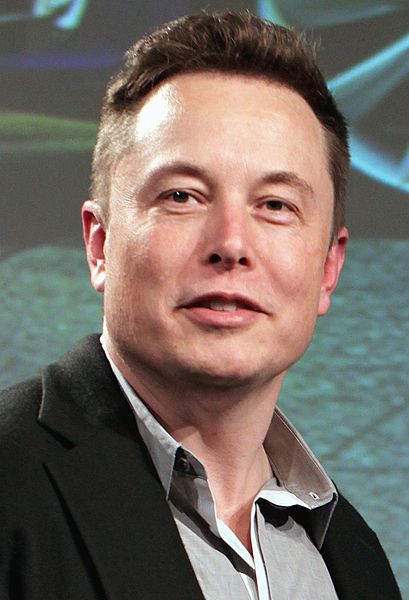
Elon Musk at the 2015 Tesla Motors annual meeting.
Photo by Steve Jurvetson via Wikimedia Commons.
Lepore commences by describing Bill Gates’s 66th birthday party, for which a bunch of rich people — including Amazon’s Jeff Bezos — were helicoptered to a private beach from a nearby yacht. Neither Elon Musk, thought to be the world’s richest person, or Mark Zuckerberg, founder of newly rebranded Facebook, were present at the party. Zuckerberg was busy illuminating plans for his “metaverse”, which Lepore describes as “a virtual reality,” wherein you wear “a headset and gear that closes out the actual world.”
Here’s where Lepore goes from this: “The metaverse is at once an illustration of and a distraction from a broader and more troubling turn in the history of capitalism. The world’s techno-billionaires are forging a new kind of capitalism: Muskism.”
In literally the next sentence, Lepore admits that the subject of her essay, Elon Musk, immediately and publicly made fun of the Facebook “metaverse” plans. We are on the third paragraph of the essay, and Lepore has already: a) blamed Elon Musk for an A-hole billionaire party he didn’t attend, because he was busy with his engineering and manufacturing projects; and b) applied the new coinage “Muskism” to a virtual reality project that actual Musk loudly criticized. Somehow this essay has severed its own hydrocephalic head twice over, within 500 words.
It gets worse from there as Lepore attempts to complete her mission of denouncing Muskism, which she describes as an “extreme extraterrestrial capitalism.” She quickly has to admit that Bill Gates, who is mostly spending a computing fortune on global philanthropy these days when he’s not lifting off from yachts in choppers, doesn’t have one single freaking thing to do with absolutely any of this. NP Platformed was an editor back in the day, so we notice that the intro of Lepore’s essay is at this point not only detached from its body, but has been left to rot several miles away. Gates-Musk-Bezos-Zuckerberg: they’re all tentacles of the same menacing Muskist octopus here, as in so much newspaper and magazine commentary, and abuse flung in their general direction will suffice to condemn all.
Lepore’s accusation against Musk turns out to be … that he likes some classic science fiction but doesn’t always concur with the politics of its authors. Musk has called himself a “utopian anarchist of the kind best described by Iain Banks,” but Banks was “an avowed socialist.” Gasp! Banks (1954-2013), the Scottish science fiction author best known for the Culture series, was a particular kind of U.K. “libertarian socialist” who believed strongly in spacefaring as a step toward post-scarcity life for sentient beings. His politics are easily misunderstood by Americans, who don’t have this particular kind of weirdo, and the interstellar “Culture” he envisioned was never intended to be admired unironically. In other words, that part of Lepore’s essay is as mangled and obtuse as the rest.
November 4, 2021
Fallen Flag — the Milwaukee Road
 This month’s Classic Trains fallen flag feature is the Milwaukee Road (MILW) by George Drury. As with most major US railways, the Milwaukee Road was a long-term collection of different railway lines, some merged for obvious economic benefit and others taken over to reduce competition, but the first of the components that eventually evolved into the Milwaukee Road system was the 1847 Milwaukee and Waukesha Railroad. This line was incorporated to connect the Wisconsin city of Milwaukee to the river traffic along the Mississippi River, and the corporate name was changed even before construction began to the Milwaukee and Mississippi Railroad to more adequately convey the purpose of the line. The first segment opened in November 1850 connecting Milwaukee and Wauwatosa, a distance of five miles, then to Waukesha a few months later, then to Madison, but not extending all the way to the river at Prairie du Chien until 1857.
In that year, another of the frequent financial crises of the era struck and the company struggled on for two years, but eventually went into receivership in 1859. New owner the Milwaukee and Prairie du Chien Railroad took possession in 1861. After the Civil War, the company was merged with the Milwaukee and St. Paul and in 1874 the combined railroad became known as the Chicago, Milwaukee and St. Paul with the completion of a new line connecting with Chicago.
In the next few years the road built or bought lines from Racine, Wis., to Moline, Ill.; from Chicago to Savanna, Ill., and two lines west across southern Minnesota. The road reached Council Bluffs, Iowa, across the Missouri River from Omaha, in 1882, and reached Kansas City in 1887. In 1893 the CM&StP acquired the Milwaukee & Northern, which reached from Milwaukee into Michigan’s upper peninsula.
In 1900 the Chicago, Milwaukee & St. Paul was considered one of the most prosperous, progressive, and enterprising railroads in the U.S. Its lines reached from Chicago to Minneapolis, Omaha, and Kansas City. Secondary lines and branches covered most of the area between the Omaha and Minneapolis lines in Wisconsin, Iowa, and Minnesota. Lines covered much of eastern South Dakota and reached the Missouri River at three places in that state: Running Water, Chamberlain, and Evarts. Except for the last few miles into Kansas City and operation over Union Pacific rails from Council Bluffs to Omaha, the Missouri River formed the western boundary of the CM&StP. (“Milwaukee Road” as a name or nickname did not come into use until the late 1920s; “St. Paul Road” was sometimes used as a nickname, but the railroad’s advertising used the full name).
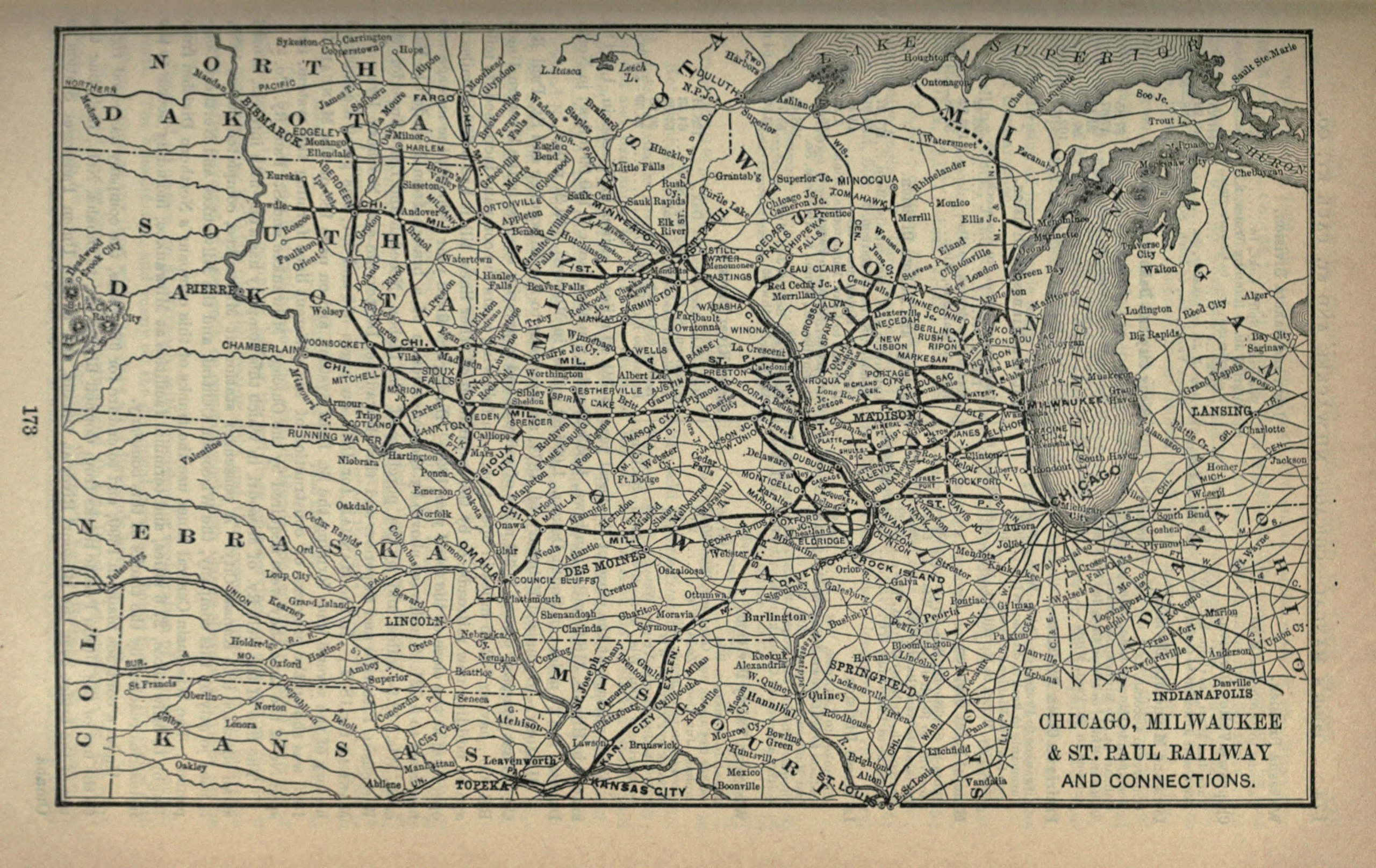
The Chicago, Milwaukee and St. Paul Railway in 1893.
Poor’s Manual of the Railroads of the United States via Wikimedia Commons.
The battle over control of the Northern Pacific and the Burlington in 1901 made the Milwaukee Road aware that without its own route to the Pacific it would be at its competitors’ mercy. At the same time the Milwaukee Road was experiencing a change in its traffic from dominance by wheat to a more balanced mix of agricultural and industrial products. Arguments against extension westward included the possibility of the construction of the Panama Canal and the presence of strong competing railroads: Union Pacific, Northern Pacific, and Great Northern. Arguments for the extension banked heavily on the growth of traffic to and from the Pacific Northwest.
In 1901 the president of the Milwaukee Road dispatched an engineer west to estimate the cost of duplicating Northern Pacific’s line. His figure was $45 million. Such an expenditure required considerable thought; not until November 1905 did Milwaukee’s board of directors authorize construction of a line west to Tacoma and Seattle.
In 1905 and ’06 the Milwaukee Road incorporated subsidiaries in South Dakota, Montana, Idaho, and Washington. The Washington company was renamed the Chicago, Milwaukee & Puget Sound Railway, and it took over the other three companies in 1908. It was absorbed by the CM&StP in 1912.
The extension began with a bridge across the Missouri River at Mobridge, 3 miles upstream from Evarts, S.D. Roadbed and rails pushed out from several points into unpopulated territory. The work went quickly, and the road was open to Butte, Mont., in August 1908.
Unfortunately for the Milwaukee, the Pacific extension was much more expensive to build than the initial estimates (it jumped from $45 million in the 1901 survey to $60 million in 1905), eventually weighing down the company books with $257 million in debt and worse, the traffic estimates for the new line turned out to be wildly optimistic. The difficulties of operating steam locomotives across the extension in winter pushed the railway toward electrification as an efficiency and cost-saving move. Beginning in 1914, sections of the line were converted to overhead catenary power until a total of 645 route-miles were being operated with electric locomotives, reportedly saving the company over a million dollars per year.

A Milwaukee “Little Joe” electric locomotive hauling a freight train along the Pacific extension in 1941. The “Little Joe” locomotives were originally built for the Soviet Union in the late 1940s but the US government cancelled the export license as relations with the Soviets deteriorated and the Cold War escalated. The Milwaukee Road bought 12 of the 20 from General Electric for $1 million during the Korean War.
Wikimedia Commons.
Despite the savings through electrification, the Pacific extension drove the company into bankruptcy in 1925, re-emerging as the Chicago, Milwaukee, St. Paul and Pacific Railroad, but the new company also had to declare bankruptcy during the Great Depression. Trustees ran the railroad for ten years until renewed civilian traffic after World War 2 allowed normal operations to resume. As with most North American railroads, the good times didn’t last and by the late 1950s, the Milwaukee’s management were looking for a merger partner to help cut costs and shed unprofitable branch lines. Unlike the rival merger of of Northern Pacific, Great Northern, Burlington Route, and the Spokane, Portland and Seattle Railway into Burlington Northern, the ICC blocked a merger between the Milwaukee Road and the Chicago and North Western. The ICC also blocked a later application for the Milwaukee to be included in the Union Pacific/Rock Island merger.
With declining business, deferred maintenance issues on most lines, and some self-induced financial issues caused by selling off rolling stock and leasing it back (which exacerbated car shortages leading to further reductions in business), the company had no funds to replace the failing “Little Joe” locomotives on the Pacific extension, so electrification was abandoned in 1974. George Drury sums up the mistakes that led to the end:
Over the decades, the road’s management had made too many wrong decisions: building the Pacific Extension, not electrifying between the two electrified portions, purchasing the line into Indiana, and in the 1960s choosing Flexivans (containers with separate wheels/bogies that required special flatcars) instead of conventional piggyback trailers.
After several money-losing years in the early 1970s, the Milwaukee voluntarily entered reorganization once again on December 19, 1977. The major result of the 1977 reorganization was the amputation of everything west of Miles City, Mont., to concentrate on what became known as the “Milwaukee II” system linking Chicago, Kansas City, Minneapolis-St. Paul, Duluth (on Burlington Northern rails from St. Paul), and Louisville (but no longer Omaha).
By 1983 the Milwaukee’s system consisted of the Chicago–Twin Cities main line; Chicago–Savanna–Kansas City; Chicago–Louisville (almost entirely on Conrail and Seaboard System rails), Milwaukee–Green Bay; New Lisbon–Tomahawk, Wis.; Savanna–La Crosse, along the west bank of the Mississippi; Marquette to Sheldon, Iowa, and Jackson, Minn.; Austin, Minn.–St. Paul; and St. Paul–Ortonville, Minn., plus a few branches.
Three roads vied for what remained of the Milwaukee: the Chicago & North Western, financially none too solid itself; Canadian National subsidiary Grand Trunk Western, with an eye toward creating a route between eastern and western Canada south of the Great Lakes; and Canadian Pacific subsidiary Soo Line.
QotD: The “Righteousness Fallacy”, California style
The Righteousness Fallacy (also known as the fallacy of good intentions) is described by author Dr. Bo Bennett as the idea that one is correct because their intentions are pure.
It recently occurred to me that California is a perfect example of this fallacy. Consider these three facts about the Golden State:
- California spends about $98.5 billion annually on welfare — the most in the US — but has the highest poverty rate in America.
- California has the highest income tax rate in the US, at 13.3 percent, but the fourth greatest income inequality of the 50 states.
- California has one of the most regulated housing markets in America, yet it has the highest homeless population in American and ranks 49th (per capita) in housing supply.
That politicians would persist with harmful policies should come as little surprise. The Nobel Prize-winning economist Milton Friedman once observed the uncanny proclivity of politicians “to judge policies and programs by their intentions rather than their results”.
In his book Capitalism and Freedom, Friedman described the danger of such thinking.
[The threat comes] from men of good intentions and good will who wish to reform us. Impatient with the slowness of persuasion and example to achieve the great social changes they envision, they’re anxious to use the power of the state to achieve their ends and confident in their ability to do so. Yet … Concentrated power is not rendered harmless by the good intentions of those who create it.
Jon Miltimore, “Data Show California Is a Living Example of the Good Intentions Fallacy”, Foundation for Economic Education, 2019-01-09.
November 2, 2021
Election day in Virginia
Mark Steyn writing about the Tuesday state elections being held in Virginia, which certainly seemed to become much more competitive as larger concerns about the school system energized a lot of parents, and a Republican-in-name-only group plays dirty tricks on the Republican candidate for governor:
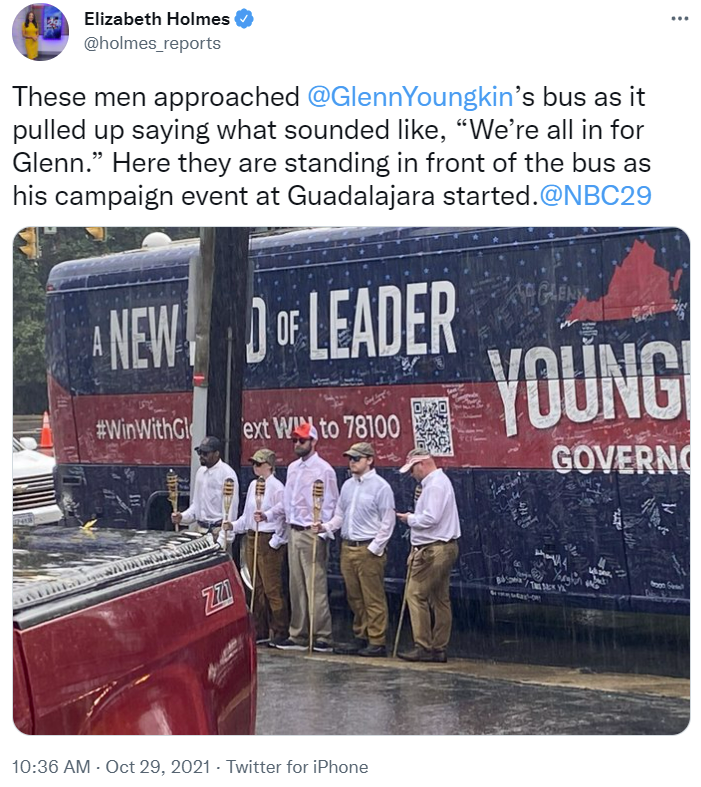
“Republican” group trolls Republican candidate in the Virginia election campaign, October 2021.
Tuesday is what less evolved societies than Virginia still quaintly call “Election Day”. The Democrat candidate, the unlovely Clinton bagman Terry McAuliffe, claims that “we are substantially leading on the early vote”. In the fullness of time he will also be substantially leading on the late vote, if he isn’t already.
That leaves the votes on Voting Day up for grabs. The Republican candidate, Mr Youngkin, is a squish of no fixed beliefs who will govern as Mitt did in Massachusetts or Pataki did in New York. But he has been handed a winning issue that he would probably not have chosen save for public outrage — the state of Virginia schools in an age of “critical race theory” and trans-mania. It’s bigger even than an education issue: The left is so boundlessly ambitious that it is abolishing biological sex, and if it gets away with it will leave an awful mountain of human wreckage in its wake, bigger even than its other innovations.
Every Virginian should vote on Tuesday — because Youngkin’s campaign is a classic example of Milton Friedman’s dictum: in politics you don’t wait for the right people to do the right thing, you create the conditions whereby the wrong people are forced to do the right thing. That is what parents at school-board meetings have been doing, and they deserve to be rewarded for it.
Virginia is a state where a rapist gets transferred to another school because he/she belongs to a protected class, rapes again, and, when you protest the anal rape of your daughter by a known rapist, you’re the guy who gets thrown to the ground and arrested. Whether one finds the foregoing objectionable shouldn’t really be a Republican/Democrat thing, but such is the moral depravity of the cultural heights that Dems are all in on the convicted sodomizer and only squaresville low-status GOP candidates can muster even pro forma objections. So in 21st-century Virginia insouciance about schoolgirl anal rape is now a partisan thing.
Of course, it remains to be seen whether the state’s election system is sufficiently honest to reflect fairly that public outrage. If at, say, 10pm on Tuesday night Youngkin is narrowly ahead but you wake up on Wednesday morn to find McAuliffe has been the beneficiary of all the 3am votes, well, Republicans will be forgiven for suspecting that “fortifying” the “two-party system” into something rather more streamlined is here to stay.
I say that as an immigrant who never feels more foreign than on America’s hideously chaotic yet oddly purposeful election nights. But then in Northern Virginia a quarter of the population is now foreign-born, and half of those arrived in the last twenty years. That’s a remarkable statistic for a so-called “Old Dominion”. Demography is destiny, and in an ever more tightly circumscribed public discourse there are decreasing opportunities even to raise the topic.
November 1, 2021
Indochina and The Battle of Dien Bien Phu
The History Guy: History Deserves to Be Remembered
Published 29 Sep 2017The History Guy remembers how decolonization led to proxy war and the Battle of Dien Bien Phu in what is now known as Vietnam.
The episode discusses and presents historical photographs and film footage depicting events during a period of war, which some viewers may find disturbing. All events are described for educational purposes and are presented in historical context.
The History Guy uses images that are in the Public Domain. As photographs of actual events are often not available, I will sometimes use photographs of similar events or objects for illustration.
Patreon: https://www.patreon.com/TheHistoryGuy
The History Guy: Five Minutes of History is the place to find short snippets of forgotten history from five to fifteen minutes long. If you like history too, this is the channel for you.
Awesome The History Guy merchandise is available at:
https://teespring.com/stores/the-hist…The episode is intended for educational purposes. All events are presented in historical context.
#DienBienPhu #militaryhistory #thehistoryguy

If it wasn’t Black Magic, perhaps it was … Orange Magic!
In the weekly book post at Ace of Spades H.Q., OregonMuse reports on the case of poor Gary Lachman who is still apparently suffering the aftereffects of the Trump Years:
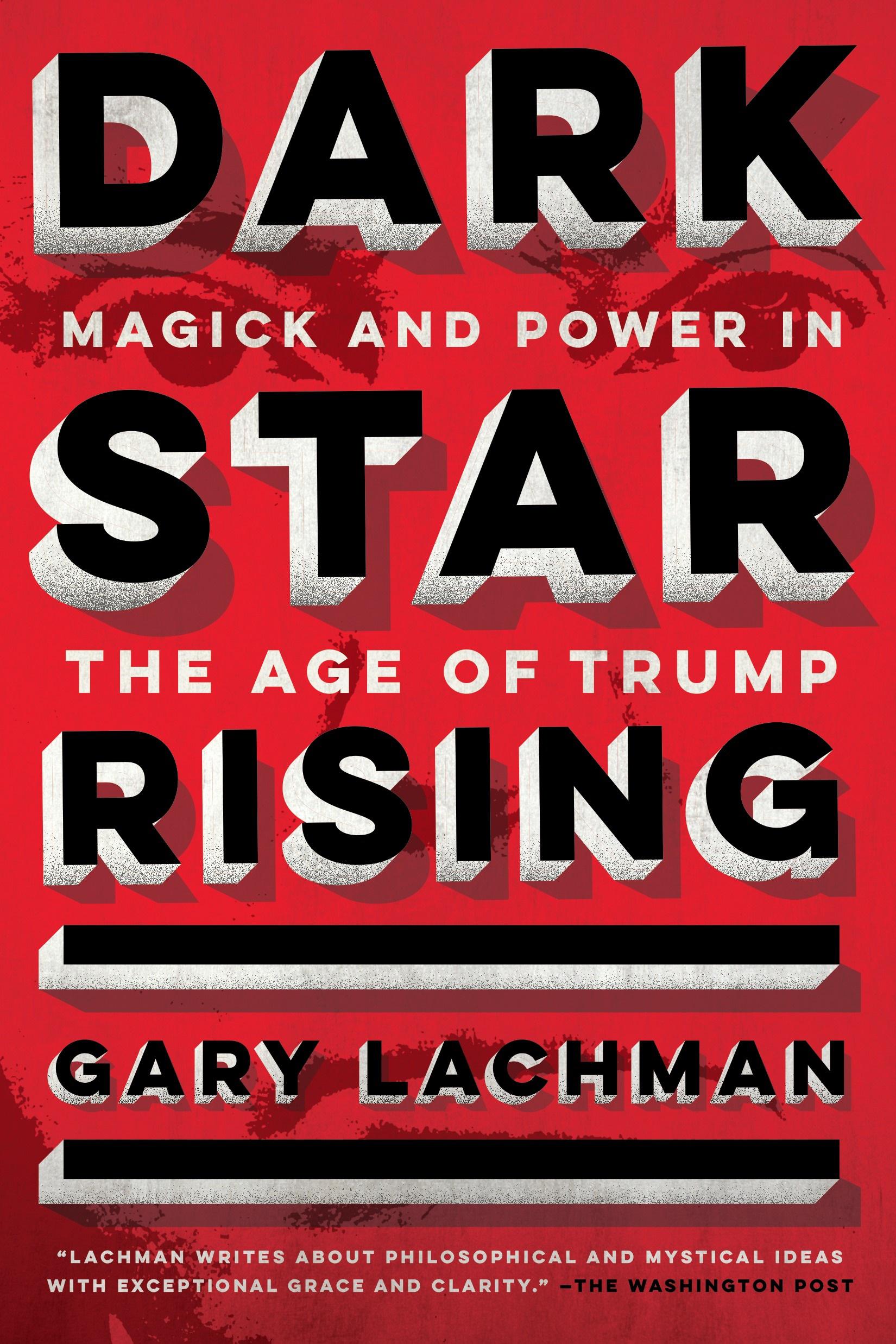
Author Gary Lachman is a man whom Donald Trump evidently broke very, very badly. Trying to process the reasons why the Bad Orange Man is living rent-free in his head 24/7, he came up with Dark Star Rising: Magick and Power in the Age of Trump, a book wherein he argues that there can be only one explanation for Trump’s astonishing election victory in 2016 and his domination of the political landscape: dark magic.
Get a load of this:
Within the concentric circles of Trump’s regime lies an unseen culture of occultists, power-seekers, and mind-magicians whose influence is on the rise. In this unparalleled account, historian Gary Lachman examines the influence of occult and esoteric philosophy on the unexpected rise of the alt-right.
AHAHAHAHAHAHAHAHA!!! You know this is going to be good:
Did positive thinking and mental science help put Donald Trump in the White House? And are there any other hidden powers of the mind and thought at work in today’s world politics? In Dark Star Rising: Magick and Power in the Age of Trump, historian and cultural critic Gary Lachman takes a close look at the various magical and esoteric ideas that are impacting political events across the globe. From New Thought and Chaos Magick to the far-right esotericism of Julius Evola and the Traditionalists, Lachman follows a trail of mystic clues that involve, among others, Norman Vincent Peale, domineering gurus and demagogues, Ayn Rand, Pepe the Frog, Rene Schwaller de Lubicz, synarchy, the Alt-Right, meme magic, and Vladimir Putin and his postmodern Rasputin.
As I said, Trump really, really broke this guy. And including Pepe the Frog in the same rogues’ gallery as Norman Vincent Peale is particularly choice.
There is only one way to fight the magic of the Bad Orange Man and his Evil Legions of Darkness: with magic of your own. Fortunately, there is a book that tells you how to do just that. I’m talking about Magic for the Resistance: Rituals and Spells for Change by Michael Hughes:
The resistance is growing, and it needs your help. This book provides spells and rituals designed to help you put your magical will to work to create a more just and equitable world … Magic for the Resistance offers a toolkit for magical people or first-time spellcasters who want to manifest social justice, equality, and peace.
Includes spells for: Racial justice, women’s rights, LGBTQ+ rights, antifascism, environmentalism, immigration, refugee support, nonviolence.
Apparently not included are spells for: setting fire to federal buildings, destroying small businesses, throwing Molotov cocktails at cops, beating up old men in wheelchairs, and shouting down public speakers who are saying things you don’t like.
Although, I guess they don’t really need magic to do those things.
Hughes is the creator of the internationally viral Mass Spell to Bind Donald Trump and All Those Who Abet Him, the largest and longest-running magical working in history.
We laugh at this, but considering the trajectory of the 2020 election, who knows, maybe it worked.
Britain’s Last Ditch: Wartime Changes to No4 Lee Enfield
Forgotten Weapons
Published 14 Jul 2021http://www.patreon.com/ForgottenWeapons
https://www.floatplane.com/channel/Fo…
Cool Forgotten Weapons merch! http://shop.forgottenweapons.com
When we think of “last-ditch” rifles, we normally think of 1945 and the very end of World War Two. For the British, however, the lowest ebb of the war was in 1941 and 42, and it is during that period that the Lee Enfield was at its crudest. British ordnance instituted a number of simplifications to maximize weapons production. In particular:
– Walnut replaced with kiln-dried birch and beech for furniture
– Two-groove barrels replacing five-groove ones
– A vastly simplified 2-position flip sight in place of the original fine micrometer style
– Simplified bolt release, designated the No4 MkI* (which was only produced in the US and Canada)
– Aluminum buttplates
– Much reduced standards of fit and finish, leading to really ugly machine marks and haphazard markings.Most of these changes would be walked back later in the war as Britain’s footing became more solid, but they make a very interesting period of changes for the collector to study.
Contact:
Forgotten Weapons
6281 N. Oracle 36270
Tucson, AZ 85740

October 31, 2021
Nazi General Dies of Heart Attack – WW2 – 166 – October 30, 1942
World War Two
Published 30 Oct 2021The Allies may be on the verge of a breakthrough in North Africa, but they’re losing at sea to the Japanese this week, and the Axis are also advancing in the Caucasus, though the street by street struggle at Stalingrad continues as always.
(more…)
Meta?
In The Line Matt Gurney wonders what Zuckerberg is up to with the corporate re-naming:

My favourite reaction to Facebook rebranding as “Meta”.
Mark Zuckerberg, Facebook’s founder, chairman and CEO, has unveiled the newly rebranded company’s plans for the “Metaverse” — a combination of online environments that can be experienced in augmented and virtual reality. (The company’s new name, Meta Inc., reflects the new focus, but the major brands the company owns, including Facebook itself, will retain their current names under the now-renamed parent company.)
We can’t ignore the fact that Facebook is rolling out its bold plan at a moment when the company is on the receiving end of much negative attention over its business practices and corporate values, if any. Facebook is as much a global supervillain as a company, or at least the overall coverage would suggest as much. No, we definitely can’t ignore that, and we won’t — look for a specific analysis of that part of the whole puzzle in this week’s full version of the The Line‘s dispatch feature later today.
But for this column, just for now, let’s briefly set aside Facebook’s major political and cultural problems, and actually try to assess Metaverse on its own merits. What the hell is the company trying to do here, and will anyone go for it?
The what of Metaverse is intriguing. Zuckerberg announced the concept in a promotional video, but that’s mostly marketing. The Guardian tried to concisely sum up what is being proposed, and I probably won’t do better, so let’s just crib their summary:
The metaverse is where the physical and digital worlds come together. It is a space where digital representations of people – avatars – interact at work and play, meeting in their office, going to concerts and even trying on clothes.
At the centre of this universe will be virtual reality, a digital world that you can already enter via Facebook’s Oculus VR headsets. It will also include augmented reality, a sort of step back from VR where elements of the digital world are layered on top of reality – think Pokémon Go or Facebook’s recent smart glasses tie-up with Ray-Ban.
Virtual reality isn’t a new technology — I first tinkered around with a VR headset as a child probably 25 or 30 years ago at a downtown Toronto convention centre. It was incredibly rudimentary, but the core concept has basically stayed the same: a user puts on a virtual reality headset that puts a screen (or two separate ones) before their eyes, and those screens provide visual stimuli that, when combined with audio through a headset or earbuds, can create a very convincing simulation of … basically anything. There are a series of virtual reality video gaming systems on the market today; I own one of the lower-capability versions, a PlayStation VR, running off a Playstation 4 console. Though one of the less powerful modern VR systems, it’s still surprisingly capable of completely tricking your brain. My wife and I once spent an amusing evening doing a virtual rollercoaster ride, and even sitting in a chair in my basement, you’d swear you could feel the motion of the car going up and down the tracks.
All the bafflegab about a “metaverse”? Wes Fenlon believes it’s all bullshit:
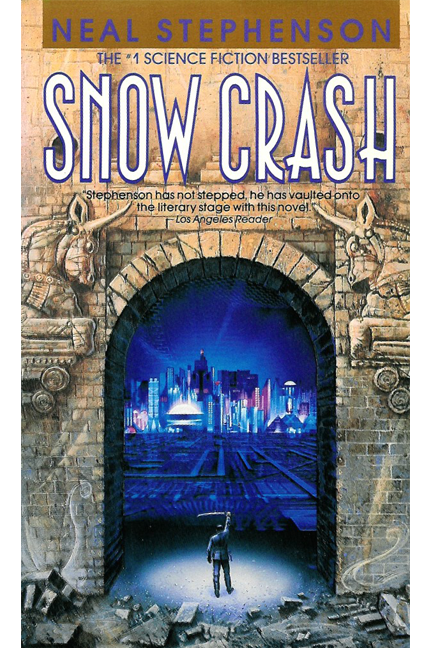
We have Neal Stephenson’s 1992 novel Snow Crash to thank for popularizing avatars as our digital personas, from early internet message boards to full-body VRChat. We also have Snow Crash to blame for the absolute hell we find ourselves in today, as every tech billionaire on the planet slobber all over themselves as they declare the metaverse — the next phase of human culture!! — is within reach. Games, NFTs, crypto, VR, AR, the blockchain, they’re all wrapped up in this idea of a virtually-integrated society in which our Fortnite costumes will carry over to our Onlyfans accounts and we will never, ever have to log off.
The absurdity of it makes me want to scream, or maybe die, or maybe just spoon out the part of my brain that knows what an NFT is. But there’s one thing that keeps me going:
The absolute gleeful, cackling, deep-in-my-bones certainty that it’s all complete bullshit.
If you also know deep in your heart that the metaverse is a big fat steaming load of billionaire nerd pabulum, I hope reading these words provides you with a wave of vindicating comfort. You’re not crazy. I know it can feel like that when the people peddling these things seem so convinced that they’re the future, like they know something you don’t. Don’t fall for it. Watching people spend $69 million in fake money to buy a JPEG should make you feel like you’re living in an age of unparalleled nonsense.
That feeling isn’t going to go away. For the next decade we’ll all be asking ourselves if the whole world’s gone mad at least once a week. But the good news is that the metaverse and the tech industry’s very expensive obsession with trying to make it a reality will be a schadenfreude generator the likes of which we’ve never seen before.
We will all become the living embodiments of the one true expression of being online in the 21st century:
The metaverse is bullshit because it already exists, and it’s called the internet
When Epic’s Tim Sweeney and Facebook’s Mark Zuckerberg talk about the metaverse, they’re primarily drawing from the foundational visions of cyberspace created by science fiction authors like William Gibson and Neal Stephenson. Their books in the ’80s and early ’90s looked at what computers were capable of at the time and imagined them decades in the future, just abstract enough to let our imaginations run.
Here’s Gibson’s description of cyberspace in Neuromancer (1984):
A consensual hallucination experienced daily by billions of legitimate operators, in every nation… A graphic representation of data abstracted from the banks of every computer in the human system. Unthinkable complexity. Lines of light ranged in the nonspace of the mind, clusters and constellations of data. Like city lights, receding.
And here’s a snippet of Stephenson’s description of the metaverse in Snow Crash (1992):
Your avatar can look any way you want it to, up to the limitations of your equipment. If you’re ugly, you can make your avatar beautiful. If you’ve just gotten out of bed, your avatar can still be wearing beautiful clothes and professionally applied makeup. You can look like a gorilla or a dragon or a giant talking penis in the Metaverse. Spend five minutes walking down the Street and you will see all of these.
Both novels were prescient and profoundly influential. Alongside movies like Tron, they shaped ’80s and ’90s depictions of what it would look like to be inside a computer, from rudimentary early VR to movies like The Matrix. In 2012, Michael Abrash — who has worked at Microsoft, id Software, Valve, and Oculus — wrote that his game development career “all started with Snow Crash.”
QotD: We’re still trapped in Heinlein’s “Crazy Years”
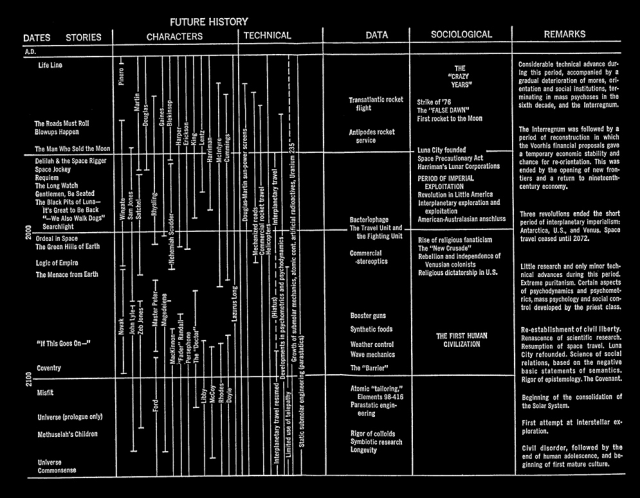
Looking forward from the year 1940, when the timeline was first formed, it was reasonable, even conservative, guesswork to predict the moon landing by the 1980’s, forty years later, since the first powered flight by the Wright Brothers had been forty years earlier. Heinlein’s Luna City founded in 1990 a decade or so later, with colonies on Mars and Venus by 2000. Compare: a submersible ironclad was written up as a science romance by Jules Verne in 1869, based on the steam-powered “diving boat” of Robert Fulton, developed in 1801. In 1954 the first atomic-powered submarines — all three boats were named Nautilus — put to sea. The gap between Verne’s dream and Rickover’s reality was eight decades, about the time separating Heinlein’s writing of “Menace from Earth” and its projected date.
Looking back from the year 2010, however the dates seem remarkably optimistic and compressed. We have not even mounted a manned expedition to Mars as yet, and no return manned trips to the Moon are on the drawing boards.
One prediction that was remarkably prescient, however, was the advent of “The Crazy Years” described as “Considerable technical advance during this period, accompanied by a gradual deterioration of mores, orientation, and social institutions, terminating in mass psychoses in the sixth decade, and the interregnum.”
He optimistically predicts a recovery from the Crazy Years, the opening of a new frontier in space, and a return to nineteenth-century economy. Full maturity of the human race is achieved by a science of social relations “based on the negative basic statements of semantics.” Those of you who are A.E. van Vogt fans will recognize our old friends, general semantics and Null-A logic cropping up here. Van Vogt, like Heinlein, told tales of a future time when the Non-Aristotlean logic or “Null-A” training would give rise to a race of supermen, fully integrated and fully mature human beings, free of barbarism and neuroses.
Here is the chart [full size version here]. Note the REMARKS column to the right.
What Heinlein failed to predict was that the Crazy Years would simply continue up through 2010, with no sign of slackening. Ladies and gentlemen, we live in the Crazy Years.
John C. Wright, “The Crazy Years and their Empty Moral Vocabulary”, John C. Wright, 2019-02-18.
October 29, 2021
The “third wave of anti-racist activism”
In Quillette, Jared Marcel Pollen reviews John McWhorter’s new book Woke Racism: How a New Religion Has Betrayed Black America:
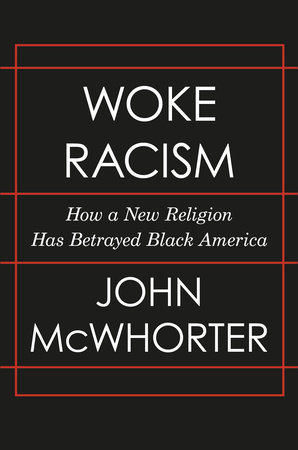
McWhorter identifies three waves of anti-racist activism in the United States, the first of which was the fight against slavery and legalized segregation. The second was the struggle against racist attitudes, which sought to instill the idea that racial prejudice was a moral defect. The current strain of anti-racist activism constitutes a “third wave”, and like any movement in an advanced stage, it is characteristically decadent. The Elect’s ideology, like so much contemporary social justice, is a grotesque contest of elite moral exhibitionism, inordinately preoccupied with policing speech and regulating behavior. It is fundamentally performative and, above all, pretentious, in both the etymological sense of the word (to pretend) and in its common usage (attempting to impress).
This approach to battling racism tends to appeal to well-educated white people afflicted by a guilty conscience. The only remedy for them — the load-bearing pillar of white America’s new moral responsibility — is a declaration of one’s own “privilege”. This, McWhorter assures us, is not progress or even compassion, it is a form of self-help. “The issue,” he writes, “is not whether I or anyone else thinks white privilege is real, but what we consider the proper response to it.” [Italics in original.] Privilege is indeed real, and making oneself aware of it is morally important, but when employed as a cudgel, it becomes a monstrous prop.
Encouraging black people to see themselves as perpetual victims, while assigning to white people the task of becoming enlightened enough to recognize their own inherent and irredeemable racism creates a culture of soft-bigotry, furnished by polite lies and low expectations. “White people calling themselves our saviors,” McWhorter writes, “make black people look like the dumbest, weakest, most self-indulgent human beings in the history of our species, and teach black people to revel in that status and cherish it as making us special.”
This endless condescension is writ large in DiAngelo’s work, and we can see it in the training seminars now required by many companies, in which things like “logic” and “punctuality” are ascribed to “Whiteness”. Do the people running these seminars really believe that black people can’t be rational and on time? Do they think that science and math are things that only white kids are good at? And, McWhorter asks, if black students perform poorly on standardized tests, is it fair to assume that the test is racist, and should therefore be discontinued, as the Elect now propose? Would it not be better to ensure that those students have access to resources and tutoring? Far from helping anyone, these distortions of essence and aptitude actually hurt the advancement of what is now commonly referred to as “racial equity”.
The goal of third wave anti-racism is ostensibly concerned with “dismantling” racist “structures”, but it is actually an attempt to narrow the discourse and limit the range of honest thought in pursuit of a phony consensus. This is achieved through a ruthless evangelism, which McWhorter manages to condense as follows:
Battling power relations and their discriminatory effects must be the central focus of all human endeavor, be it intellectual, moral, civic, or artistic. Those who resist this focus, or even evidence insufficient adherence to it, must be sharply condemned, deprived of influence, and ostracized.
For support, McWhorter offers a spate of scandals and PR nightmares that would signal, to an alien observer, a kind of collective insanity or Salem-esque panic. One of the salient and most stupefying examples is the case of Alison Roman, a (now-former) food critic at the New York Times. Roman ran into trouble when she criticized two of her contemporaries — model and food writer Chrissy Teigen, and life coach Marie Kondo — for their hypocritical commercialism. Despite coming from different ethnic backgrounds and cultural milieux (Teigen is half-white and half-Thai and was born in America; Kondo was born and raised in Japan), both are assimilable as “people of color” according to the progressive Weltanschauung, so Roman’s criticism placed her under suspicion. What reason could a white New York Times journalist have for criticizing two non-white celebrities, other than sublimated bigotry?
A few days later, singer Lana Del Rey responded to criticisms of her music’s use of sexual themes by pointing out that plenty of other artists, including Nicki Minaj and Beyoncé, also sing about sex. Del Rey was immediately attacked by social media mobs, who denounced her in an endorphin-rush of self-righteousness. These two cases make the Elect’s devotion to rooting out racial bias seem like a protean neurosis, which sees racism even when it isn’t there.


