… possibly the most dangerous barbarians live in the West. These, by being born there, assume they are Westerners by inheritance or osmosis. They also regard Western civilization as “found”, its goodies a stash waiting to be used or distributed. Nor do they trouble themselves as to its provenance, for there has always been plenty more where the stash came from.
For these barbarians Western civilization and its associated quest for God or Truth are a bothersome impediment, a “white man’s culture”, a hundred year old relic ideology nobody bothers with, some irksomely judgmental superfluity that gets in the way of fun and spreading the fruits to arrivals at the border and various victim groups.
For the barbarian the only reality is appearances. Cargo cultists, for instance, believe that function comes from form. If they build something which resembles an airport then gift giving airplanes will arrive there to bring goodies. The 21st century barbarian completely lacks the attitude of Roger Bacon, who lived in the 13th century. Bacon knew that the truth was not a “white man’s” culture — in fact in his day nearly all learning came from the East — but believed the truth was nature’s culture; baked into reality; another word for what used to be called God. Of barbarian ignorance Bacon wrote:
Many secrets of art and nature are thought by the unlearned to be magical. … The empire of man over things depends wholly on the arts and sciences. For we cannot command nature except by obeying her.
In today’s post-Western environment, we’ve forgotten Bacon’s adage.
Richard Fernandez, “Sword and Sorcery”, Belmont Club, 2014-06-23.
May 8, 2015
QotD: The barbarians in our midst
May 7, 2015
Understanding photography: aperture, shutter speed, and ISO
At LifeHacker, Thorin Klosowski has a quick visual reminder of how the basic photography concepts of aperture, shutter speed, and ISO setting impact the photo you want to take:

April 28, 2015
Professor: New UK railway signalling system is hackable … while he’s also selling anti-hacking gear
At The Register, John Leyden offers a bit of doubt that Professor David Stupples can really be said to be an impartial observer:
The rollout of a next generation train signalling system across the UK could leave the network at greater risk of hack attacks, a university professor has claimed.
Prof David Stupples warns that plans to replace the existing (aging) signalling system with the new European Rail Traffic Management System (ERTMS) could open up the network to potential attacks, particularly from disgruntled employees or other rogue insiders.
ERTMS will manage how fast trains travel, so a hack attack might potentially cause trains to move too quickly. UK tests of the European Rail Traffic Management System have already begun ahead of the expected rollout.
By the 2020s the system will be in full control of trains on mainline routes. Other countries have already successfully rolled out the system and there are no reports, at least, of any meaningful cyber-attack to date.
Nonetheless, Prof Stupples is concerned that hacks against the system could cause “major disruption” or even a “nasty accident”.
ERTMS is designed to make networks safer by safeguarding against driver mistakes, a significant factor historically in rail accidents. Yet these benefits are offset by the risk of hackers manipulating control systems, Prof Stupples, of City University London, warned.
April 27, 2015
April 25, 2015
There’s a reason SF writers tend to invent ways to travel interstellar distances quickly
At Real Clear Science, Ross Pomeroy sings the praises of an early publication by the pre-Nobel academic Paul Krugman:
Paul Krugman is a Nobel Prize-winning economist, a respected professor at Princeton University, and an outspoken liberal columnist for the New York Times. But first and foremost, he is a huge nerd, and proud of it.
Back in the sweltering summer of 1978, Krugman’s geekiness prompted him to tackle a matter of galactic importance: the economics of interstellar trade. Then a 25-year-old “oppressed” assistant professor at Yale “caught up in the academic rat race,” Krugman crafted his “Theory of Interstellar Trade” to cheer himself up. Krugman’s jocularity is evident throughout the paper, which was published online in 2010, thirty-two years after he stamped it out on a typewriter. Early on in the article, he even pokes fun at his chosen profession:
“While the subject of this paper is silly, the analysis actually does make sense. This paper, then, is a serious analysis of a ridiculous subject, which is of course the opposite of what is usual in economics”
The key problem with interstellar trade, Krugman writes, is time dilation. When objects travel at velocities approaching the speed of light — roughly 300,000 kilometers per second — time moves more slowly for them compared to objects at rest. (For a great explainer of this effect, which is tied to Einstein’s theory of special relativity, check out this video.) So the crew of a space-faring cargo ship might experience only ten years while thirty years or more might pass for the denizens of the planets they’re traveling between. How then, does one calculate interest rates on the cost of goods sold? Trading partners will undoubtedly be many light-years apart and trips will last decades, so this is a vital issue to resolve.
Since the speeds of vessels will undoubtedly vary, but both planets should be moving through space at close enough velocities where time dilation wouldn’t be a factor, Krugman contends that the interest costs should be tabulated based on the time shared by the two planets. But what about those interest rates? Won’t they differ? Not necessarily, Krugman argues. Competition should lead them to equalize amongst interplanetary trading partners.
April 24, 2015
Junk science watch – lie detectors
Gavin McInnes on the polygraph machines and their questionable accuracy:
I met Doug Williams in August while developing a pilot for a TV show about myth busting. He’s the most vocal critic of polygraph machines in the world and authored the book From Cop to Crusader: My Fight Against the Dangerous Myth of “Lie Detection.” Williams’ history in law enforcement brought him from the Oklahoma City Police Department to the White House where he served under Johnson and Nixon as a communications advisor (Johnson was cool, Nixon was a dick). He has issued thousands of polygraph tests over the years and even helped make the test part of federal law.
Doug started to realize the whole thing was a scam in the late 1970s and since then has devoted his entire life to giving everyone else the same epiphany. Unfortunately, the government doesn’t see it the same way and on May 12th, his trial will begin for the crime of “train[ing]… customers how to conceal misconduct and other disqualifying information.” He was busted by two undercover federal agents who took his course and decided the class had gone from simply “debunking” to “aiding and abetting.” The Feds are trying to say that Williams is hampering investigations, but all he’s doing is proving these machines don’t work by presenting evidence. 60 Minutes did the same thing in a 1986 episode where three out of three experts failed their own test. People are losing their jobs and going to prison based on the findings of a machine that appears to be totally unreliable. The only thing he’s hampering here is the abuse of power. The irony is, if it’s possible to beat a polygraph, it clearly isn’t a reliable piece of equipment. If it’s not possible to beat, his courses are irrelevant. You can teach someone to trick a police radar all you want. It’s still going to clock you if you’re going over the speed limit. This seems like common sense yet the state has won cases like this before. In 2013, an electrician named Chad Dixon was sentenced to 8 months in jail for helping people beat the machine.
April 21, 2015
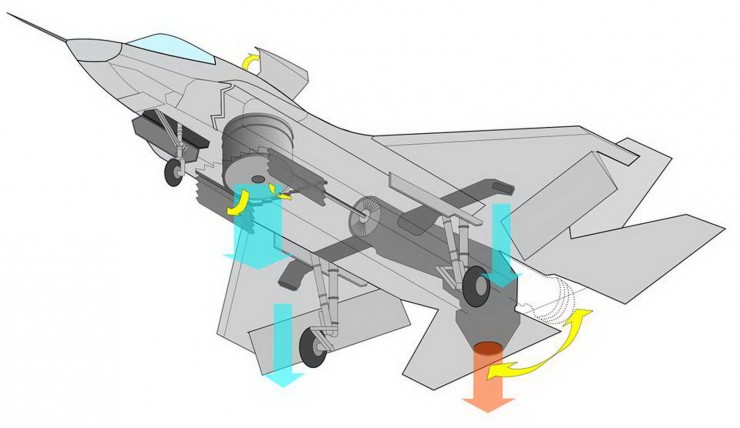
US Navy and Marine Corps to go all-drone after F-35
In the USNI News, Sam LaGrone says the F-35 is the last piloted strike fighter the US Navy and USMC will ever “buy or fly”:
Secretary of the Navy Ray Mabus said the Lockheed Martin F-35 Joint Strike Fighter (JSF) will be “almost certainly will be, the last manned strike fighter aircraft the Department of the Navy will ever buy or fly,” signaling key assumptions in the Navy’s aviation future as the service prepares to develop follow-ons to the Boeing F/A-18E/F Super Hornet.
“Unmanned systems, particularly autonomous ones, have to be the new normal in ever-increasing areas,” Mabus said. “For example, as good as it is, and as much as we need it and look forward to having it in the fleet for many years, the F-35 should be, and almost certainly will be, the last manned strike fighter aircraft the Department of the Navy will ever buy or fly.”
To address the emerging role unmanned weapon systems, Mabus announced a new deputy assistant secretary of the Navy for unmanned systems and a new Navy staff position — alongside warfare directorates like surface and air warfare — N-99.
The positions were created “so that all aspects of unmanned – in all domains – over, on and under the sea and coming from the sea to operate on land – will be coordinated and championed,” Mabus said.
Unmanned aerial vehicles are currently part of the Navy’s N2/N6 Information Dominance portfolio as primarily information, surveillance and reconnaissance (ISR) platform while undersea and surface unmanned systems are owned by a myriad of agencies.
April 20, 2015
The Wright Brothers – early practitioners of lawfare
David Warren casts his thoughts into the air, but a hundred years ago the Wright Brothers’ lawyers would have been doing their legal damnedest to bring him back down to earth in a hurry:
Work on powered, controlled flight in the United States was far behind that in France, or England, but fell farther behind thanks to the Wright brothers. Fixated on the problem of converting invention into wealth, they pursued rival aviators around the USA with teams of lawyers. Their numerous, voluminous, cumbersome lawsuits were based on often fanciful patent claims, emerging from their own intensely secretive research.
One thinks for instance of the great aviator, Louis Paulhan (first to fly London to Manchester), who arrived with two Blériot monoplanes and two Farman biplanes to give flying demonstrations across the USA. Amazed at the workings of the American judicial system, but ignoring legal injunctions to prevent them from flying their machines, they took every prize at the Los Angeles Air Meet in January 1910, setting new records for altitude and endurance.
The Wrights were present, there as elsewhere, though never competing. They and their gaggle of lawyers followed Paulhan and the other foreigners around the country, serving them with process papers, and demanding unbelievably huge sums to call off their dogs, in vile and obvious attempts at extortion. And then they’d hit the local impresarios with additional suits to impound all the cash from ticket sales, &c. Truly: vicious and contemptible men.
To avoid fines or imprisonment in backwoods American jurisdictions, the visitors took to giving their demonstrations entirely for free, but still the lawsuits kept coming. Finally they gave up and went home.
And there’s even a maple-flavoured sidelight in the story:
Part of the reason for Canada’s early advances in aviation (first flight of the Silver Dart at Baddeck in Cape Breton, with its ingenious ailerons, &c) was the migration of American inventors, such as the brilliant motor-mechanic Glenn Curtiss, to safe territory away from the corrupt and unpredictable U.S. courts.
This, I suspect, was among the reasons that the spectacularly inventive Scotchman, Alexander Graham Bell, re-located from his grand mansion in Washington, DC. At first he went north, back to Canada (where he had settled before), only for the summers; but soon he was staying through the winters, too. Not only in flight, but in all the many other areas of his pioneering work (he invented the telephone, &c), he was afflicted with lawsuits from American cranks, with those dollar signs twirling in their eyes and the slick lawyers lining up behind them, ready to exploit a patent regime wide open to political manipulation. For apart from the beauty of the Bras d’Or landscape, Bell was back under the protection of British Common Law.
April 14, 2015
Patently ridiculous, in one image

H/T to Veronique de Rugy, who explains that much of the increase in “patents for trivial and non-original functions” can be traced back to the creation of one particular court.
April 12, 2015
Unprintable words about printers
It’s coming up to the deadline for getting our tax returns in to the CRA, so I’d asked my friend Clive to come over this weekend to do my books in preparation for taking all the paperwork in to my accountant. It seemed like a pretty straight-forward thing — all I had to do was to print off all my various invoices and other documents for which I didn’t already have a hard-copy.
But I had somehow forgotten about the Satanic nature of printers.
Elizabeth and I each have a printer attached to our respective computers, so even if one failed to co-operate, we have the other one to fall back on. And this turned out to be a good thing, as the HP Officejet 6310 printer I use with my laptop started having paper feed issues on Saturday. As in, it couldn’t manage to pull even a single sheet of paper out of the stack. Well, damn, but at least there’s Elizabeth’s Canon printer I can use instead.
I disconnected the HP and moved her printer over to my workspace (the kitchen table, actually). But first I had to download the drivers for it. Having downloaded the drivers, I prepared to print the first of the documents I needed … and the damned Canon developed a similar paper feed problem. It just would not feed paper from the paper bin to the print-head.
A couple of hours go by, as I frantically try to fix one or the other of the two busted printers. It’s now after 5, and I’m running out of options and patience. I decide to go down to our local Staples and buy a new printer because that tax return deadline is looming.
In Staples, I vent a bit of my frustration over printers to a staff member, and she agrees that one of the few genuine pleasures in life is hoofing a printer out the window. After we compared notes on distance and impact zones, I asked for her recommendation for a cheap printer that would at least let me print off what I need for Clive to work with today. She warned me against my first choice, as it only came with “starter” ink cartridges, while a slightly older model using the same cartridges comes with full-sized ones instead … and was $30 cheaper, to boot. She made the sale.
I got the printer home, set it up and … discovered that the printer’s display panel didn’t work. And it was now too late to get the unit back to the store for a replacement. So, early Sunday, as soon as the store opens I’ll be on their doorstep with the faulty printer. I hope the next one will at least print something.
The Great Firewall of China has a new capability
At The Register, Shaun Nichols talks about the new, weaponized Great Firewall of China:
China has upgraded the website-blocking systems on its borders, dubbed The Great Firewall, so it can blast foreign businesses and orgs off the internet.
Researchers hailing from the University of Toronto, the International Computer Science Institute, the University of California Berkeley, and Princeton University, have confirmed what we’ve all suspected: China is hijacking web traffic entering the Middle Kingdom to overpower sites critical of the authoritarian state.
Typically, connections to web servers in the People’s Republic must pass through the nation’s border routers, which may inject malicious JavaScript into the fetched web pages. This code forces victims’ browsers to silently and continuously fire requests at selected targets.
These sites may end up being overwhelmed and crash as a result — a classic denial of service — meaning no one in the world can access them.
It is a clear case of China engineering a way to knock arbitrary websites off the internet for everyone, it seems.
Such an attack was launched last month at California-based GitHub.com, which was hosting two projects that circumvented the Great Firewall’s censorship mechanisms, and GreatFire.org, a website dedicated to fighting China’s web blocking. GitHub mitigated the assault to mostly stay online.
This weaponized firewall has been dubbed the Great Cannon by the researchers, and typically hijacks requests to Baidu’s advertising network in China. Anyone visiting a website that serves ads from Baidu, for example, could end up unwittingly silencing a foreign site disliked by the Chinese authorities.
April 4, 2015
Measured for Transport, 1962
Published on 23 Dec 2013
Archive film, moving a new power station transformer by rail to Blaenau Ffestiniog Wales.
H/T to Roger Henry for the link.
April 3, 2015
Updating the old saying “where there’s muck, there’s money”
According to this story in the Guardian, a typical city of one million people poops out $13 million in (potentially recoverable) precious metals every year:
Sewage sludge contains traces of gold, silver and platinum at levels that would be seen as commercially viable by traditional prospectors. “The gold we found was at the level of a minimal mineral deposit,” said Kathleen Smith, of the US Geological Survey.
Smith and her colleagues argue that extracting metals from waste could also help limit the release of harmful metals, such as lead, into the environment in fertilisers and reduce the amount of toxic sewage that has to be buried or burnt.
“If you can get rid of some of the nuisance metals that currently limit how much of these biosolids we can use on fields and forests, and at the same time recover valuable metals and other elements, that’s a win-win,” she said.
A previous study, by Arizona State University, estimated that a city of 1 million inhabitants flushed about $13m (£8.7m) worth of precious metals down toilets and sewer drains each year.
The task of sifting sewage for microscopic quantities of gold may sound grim, but it could have a variety of unexpected benefits over traditional gold mining. The use of powerful chemicals, called leachates, used by the industry to pull metals out of rock is controversial, because these chemicals can be devastating to ecosystems when they leak into the environment. In the controlled setting of a sewage plant, the chemicals could be used liberally without the ecological risks.
April 2, 2015
How do we measure prosperity? Badly
At Coyote Blog, Warren Meyer points out that we do not have a useful way to measure prosperity:
GDP growth and unemployment reduction are terrible measures. Just to give one example, these measures looked fabulous in WWII. But the average person living in the US had access to almost nothing — they couldn’t buy anything under rationing, they couldn’t travel for leisure, etc. GDP looked great because we were building stuff and then blowing it up, the economic equivalent of digging a hole and filling it in (but worse, because people were dying). And unemployment looked great because we had drafted everyone and sent them off to get shot.
[…]
How do we take into account that even if a person has the same income as someone in 1952, they are effectively wealthier in many ways due to access to medical procedures, travel, entertainment, electronic devices, etc?
Somehow we need to measure consumer capability — not just how much raw money one has but what can one do with the money? What is the horizon of possibilities? Deirdre McCloskey tends to eschew the term capitalism in favor of “market-tested innovation.” I think that is a pretty powerful description of our system. But if it is, we really are only measuring the impact of productivity and cost-reduction innovations. How do we measure the wealth impact of consumer-empowerment innovations like iPhones? Essentially, we don’t. Which, by the way, may be one reason our current crappy metrics say we have growing income inequality. With our current metrics, Steve Jobs’ increase in wealth is noted in the metrics, but the metrics don’t show the rest of us getting any wealthier by the fact that we can now have iPhones (or the myriad of competitors the iPhone spawned). The consumer surplus from iPhones undoubtedly dwarfs the money Jobs made, but it doesn’t show up in any wealth calculations.
April 1, 2015
Fossil fuels are not going away anytime soon
Matt Ridley on the piously hoped-for breakthroughs in renewable energy sources … that still seem as distant as they did decades ago:
The environmental movement has advanced three arguments in recent years for giving up fossil fuels: (1) that we will soon run out of them anyway; (2) that alternative sources of energy will price them out of the marketplace; and (3) that we cannot afford the climate consequences of burning them.
These days, not one of the three arguments is looking very healthy. In fact, a more realistic assessment of our energy and environmental situation suggests that, for decades to come, we will continue to rely overwhelmingly on the fossil fuels that have contributed so dramatically to the world’s prosperity and progress.
In 2013, about 87% of the energy that the world consumed came from fossil fuels, a figure that — remarkably — was unchanged from 10 years before. This roughly divides into three categories of fuel and three categories of use: oil used mainly for transport, gas used mainly for heating, and coal used mainly for electricity.
[…]
So those who predict the imminent exhaustion of fossil fuels are merely repeating the mistakes of the U.S. presidential commission that opined in 1922 that “already the output of gas has begun to wane. Production of oil cannot long maintain its present rate.” Or President Jimmy Carter when he announced on television in 1977 that “we could use up all the proven reserves of oil in the entire world by the end of the next decade.”
That fossil fuels are finite is a red herring. The Atlantic Ocean is finite, but that does not mean that you risk bumping into France if you row out of a harbor in Maine. The buffalo of the American West were infinite, in the sense that they could breed, yet they came close to extinction. It is an ironic truth that no nonrenewable resource has ever run dry, while renewable resources — whales, cod, forests, passenger pigeons — have frequently done so.
[…]
As for renewable energy, hydroelectric is the biggest and cheapest supplier, but it has the least capacity for expansion. Technologies that tap the energy of waves and tides remain unaffordable and impractical, and most experts think that this won’t change in a hurry. Geothermal is a minor player for now. And bioenergy — that is, wood, ethanol made from corn or sugar cane, or diesel made from palm oil — is proving an ecological disaster: It encourages deforestation and food-price hikes that cause devastation among the world’s poor, and per unit of energy produced, it creates even more carbon dioxide than coal.
Wind power, for all the public money spent on its expansion, has inched up to — wait for it — 1% of world energy consumption in 2013. Solar, for all the hype, has not even managed that: If we round to the nearest whole number, it accounts for 0% of world energy consumption.