
Overly Sarcastic Productions
Published on 12 Apr 2019More from Matt & Ilya on “That Works”: https://bit.ly/2D0A6qk
More about steel from Shadiversity:
— “When Was Steel Invented” https://bit.ly/2uSwcvh
— “The Riddle of Steel” https://bit.ly/2G6TB28
— “The Oldest Steel Sword” https://bit.ly/2VvWVZZCORRECTION from 12:10 — The back of a Katana after differential hardening process is a lower-carbon STEEL, but it is still Steel rather than Iron. My mistake. The higher-carbon content Martensite forms the cutting edge, and low-carbon steel forms the spine.
BLUE’S BOOK: Philosophicalphridays.com
PATREON: https://www.Patreon.com/OSP
April 13, 2019
April 10, 2019
Theodore Dalrymple on obesity
His latest in the New English Review:
It hardly requires me to point out that obesity has become a greater threat to the health of the human population in most parts of the world than famine. There was a wonderful cartoon recently in the British magazine, The Oldie, which captured this perfectly. A mother is taking a plate of food away from her child, who is protesting. “Think of the obese millions!” she says to him. When I was young, of course, we were told to finish what was on our plate and to think of the starving millions. Being a precocious little brat, I used to ask how eating what I did not want would help them. Let us just say that the reply was seldom well-reasoned, either in form or content.
It has now become an almost unassailable orthodoxy, at least in medical journals, that obesity is an illness in and of itself: that is to say, it does not merely have medical consequences, but — even without those consequences — is a disease. To be fat is, ipso facto, to be ill, in the same sense as to have Parkinson’s disease is to be ill.
Nor, according to the modern orthodoxy, is obesity to be considered the natural consequence of bad or foolish individual choices, a lack of self-control. That would be to blame the victim. The fat person is in effect the vector of forces that play upon him or her, without any contribution on his or her part.
This is an idea of long gestation. Reading an old text on obesity, published in 1975, and edited by one of my medical mentors, I came across the following quote from a paper written in 1962:
I wish to propose that obesity is an inherited disorder and due to a genetically determined defect in an enzyme: in other words that people who are fat are born fat, and nothing much can be done about it.
This is like saying that addicted people are born to be addicted, and until doctors discover a technical means of stopping their addiction, they might as well make no efforts on their own behalf. No doubt the people who adhere to this view – that obesity and addiction are illnesses simpliciter – think they are being generous but in fact they are forging psychological manacles. No doubt the fat woman in the bakery was at some level trying to prove to herself that obesity was a fatality and not under any possible individual control.
But is the theory in accord with the scene I have described above? In fact, the scene might lead us to a more nuanced or less categorical view of the problem of obesity (and, by extension, of other social problems) than we might at first adopt.
Comments Off on Theodore Dalrymple on obesity
April 8, 2019
QotD: Why does US healthcare cost so much?
This is a hotly debated question in health care policy. Here’s my rough stab at it: the 1970s inflation interacted particularly badly with two pre-existing policy choices: the tax deduction for employer-sponsored health insurance, and Medicare.
Start with employer-sponsored health insurance, which is, as everyone knows, tax advantaged relative to salary, because your employer can deduct it as an expense, but you don’t have to show it as income on your taxes.
This was an incredibly dumb decision, but in the defense of the folks who made it in the 1940s, at the time, health insurance wasn’t very expensive, because the health care system couldn’t do all that much (and the female labor that ran hospitals was cheap due to discrimination, or in the case of nuns, basically free).
Come the 1970s, inflation started causing a problem called “bracket creep”. Back then tax brackets weren’t indexed for inflation, so as inflation went up, folks got pushed into higher and higher tax brackets, even though the buying power of their salary had stayed the same, or [had] gone down. This was great for the government (and is a big reason our deficits were not disastrous in the 1970s), but it was terrible for people, and led to the tax revolts that helped put Reagan in office.
But I digress. The point is that bracket creep made non-taxed benefits much more attractive relative to salary, so insurance started getting more generous. That process has continued for decades. Insurance used to be “major medical” that covered big ticket items like hospital stays. Now we expect it to cover the cost of going to the doctor for the sniffles. Well, if you insulate people from those costs, they will incur more of them.
Effectively, this raises demand for health care services. But the US system, decentralized and litigation-happy, is very bad at controlling the supply side. End result: high costs.
The other thing that happened is Medicare. The original legislation called for reimbursing services at “reasonable and customary rates”. This was a gold mine for doctors and hospitals. In New York, for example, doctors used to be forced to do charity care as the price of their admitting privileges at prestigious city hospitals. Once Medicare came into the picture, there was no need for that! Or to economize on beds; you could always find someone to fill them. Eventually, Medicare tried to crack down (http://reason.com/archives/2011/12/13/medicare-whac-a-mole), but by then, it was damned hard to cut physician and hospital incomes, in part because they had made decisions based on their — like building new hospitals with all private rooms — that couldn’t be undone. Our cost base is permanently higher, and politically, we have shown no will to slash provider incomes. So even though our growth rate is about average for the OECD, we’re growing from a much higher level.
Megan McArdle, “Ask Me Anything”, Reddit, 2017-04-10.
Comments Off on QotD: Why does US healthcare cost so much?
April 5, 2019
QotD: Debunking the “MSG is harmful” myth
The story of MSG is a true tragedy. The negativity associated with this delicious amino acid is due to a spurious study from 1968 that linked MSG with the “Chinese Restaurant Syndrome.” This study connected that gut-bomb feeling you sometimes get after eating Chinese food to MSG, despite the fact that the typically cheap Chinese food prepared in American restaurants is fatty and served in large portions, and (like any restaurant), the food can be spoiled. My mom theorizes that lots of MSG was used to cover up the fact that, say, shrimp was a day past its prime, and that the sick feeling was due to the food but got blamed on the MSG. There’s never been a scientifically rigorous study that’s linked MSG with any negative effects. MSG should be used frequently and added to anything that needs the flavor drawn out, especially soups. But it enhances virtually anything it touches: Once, eating pizza at home, a friend scanned my spice rack and saw a jar with white powder whose label, in my grandfather’s messy scrawl, read what looked like “MS6.” He sprinkled it on his pizza and came to find me, telling me that whatever MS6 was, it was the most amazing thing he’d ever tasted. Yes, MSG makes even pizza better.
Caitlin PenzeyMoog, “Salt grinders are bullshit, and other lessons from growing up in the spice trade”, The A.V. Club, 2017-04-06.
Comments Off on QotD: Debunking the “MSG is harmful” myth
April 3, 2019
QotD: Veganism has its drawbacks
Evangelical vegans will tell you that following a purely ‘plant-based’ diet is not only morally commendable, it’s also much better for your health. But if my experience is anything to go by, the opposite is true.
I felt absolutely fine for the first few days. I didn’t miss meat at all, certainly not in terms of taste or flavour. The only thing I really felt an absence of was eggs. Since I embarked on my mammoth weight-loss project, eggs have become a dietary staple for me: nothing fills me up as well or gives me quite as much long-lasting energy as an egg.
I also found I had to eat larger portions to feel full — and I felt hungry again after a shorter period of time. But even that didn’t bother me, since what I was eating was so wholesome.
No, the real issue became apparent after the third or fourth day. Not to put too fine a point on it: wind.
My stomach was, quite literally, in ferment. All those legumes and pulses and generalised vegetable matter appeared to have turned into a giant internal compost heap. It wasn’t too bad in the mornings; but by early afternoon I was like a cow who had overdosed on clover.
At first, I palmed the outcome off on our three dogs. But after a while the problem became so severe that even they could not be expected to account for the frequency and potency of aromas emerging from my lower digestive tract.
One of the key arguments of vegans against livestock farming is the harm animals cause to the planet through the amount of methane they produce; if my experience was anything to go by, a vegan human is capable of producing just as much, if not more. I was a one-woman global warming hazard.
My children, of course, thought it was hilarious. But from my point of view, it was not only unpleasant and occasionally embarrassing, it was also incredibly uncomfortable. I felt bloated, soggy and sluggish, and began to dread meal times.
Following the advice of the nutritionist, I took to soaking nuts, oats and seeds overnight. But it made no difference. If anything, the problem began to get worse. The more healthy vegan food I put into my body, the worse my stomach problems became.
As for the much-vaunted ‘vegan glow’, no sign. Instead, my skin felt dry and dehydrated, and there was a distinctly greyish tinge to my complexion. But still, I persisted.
Sarah Vine, “Going vegan sent me off my trolley! Exhausted, irritable and don’t even start of the tummy troubles – SARAH VINE’s bid to join the health revolution left her VERY green around the gills”, Daily Mail, 2019-02-22.
Comments Off on QotD: Veganism has its drawbacks
April 2, 2019
James May’s Things You Need To Know – Series 2 – Episode 5 – Engineering (S02E05)
Uninsulated Crimp
Published on 10 Apr 2013James May gives a straightforward guide to some of science’s big ideas, explaining everything from evolution and Einstein to engineering and chemistry.
Comments Off on James May’s Things You Need To Know – Series 2 – Episode 5 – Engineering (S02E05)
The not-so-ancient extinction of Madagascar’s megafauna
At The Conversation, Nick Scroxton, Laurie Godfrey, and Stephen Burns discuss their new theory on the megafauna extinction in Madagascar just over a thousand years ago:
Giant 10-foot-tall elephant birds, with eggs eight times larger than an ostrich’s. Sloth lemurs bigger than a panda, weighing in at 350 pounds. A puma-like predator called the giant fosa.
They sound like characters in a child’s fantasy book, but along with dozens of other species, they once really roamed the landscape of Madagascar. Then, after millions of years of evolution in the middle of the Indian Ocean, the populations crashed in just a couple of centuries.
Scientists know that over the past 40,000 years, most of Earth’s megafauna – that is, animals human-size or larger – have gone extinct. Woolly mammoths, sabre tooth tigers and countless others no longer roam the planet.
What’s remarkable about the megafaunal crash in Madagascar is that it occurred not tens of thousands of years ago but just over 1,000 years ago, between A.D. 700 and 1000. And while some small populations survived a while longer, the damage was done in a relatively short amount of time. Why?
Over the last three years, new investigations into climate and land use patterns, human genetic diversity on the island and the dating of hundreds of fossils have fundamentally changed scientists’ understanding of the human and natural history of Madagascar. As two paleoclimatologists and a paleontologist, we brought together this research with new evidence of megafaunal butchery. In doing so we’ve created a new theory of how, why and when these Malagasy megafauna went extinct.
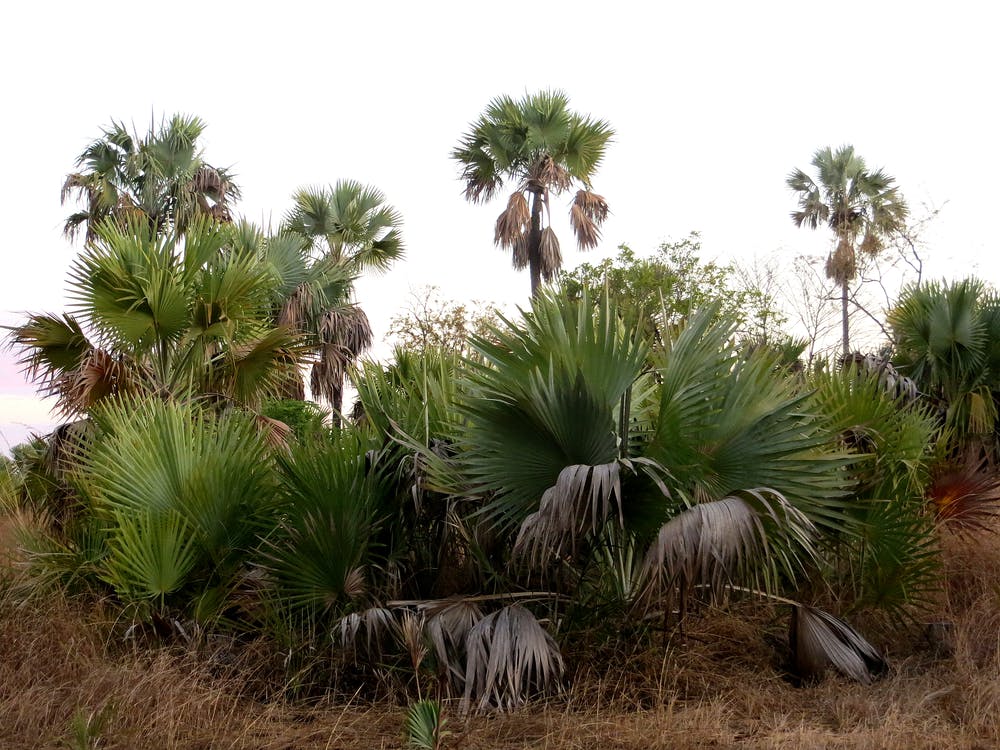
Many of the forests that originally existed on Madagascar are now replaced by more open, human-modified landscapes, like this palm savanna at Anjohibe.
Laurie Godfrey, CC BY-ND
Comments Off on The not-so-ancient extinction of Madagascar’s megafauna
March 31, 2019
Irish Potato Famine – Lies – Extra History
Extra Credits
Published on 30 Mar 2019Writer Rob Rath talks about all the cool stories and facts we didn’t get to cover in the Irish Potato Famine series.
Join us on Patreon! http://bit.ly/EHPatreon
From the comments:
Extra Credits
1 day agoRecommended reading:
The Great Hunger, by Cecil Woodham-Smith
The Graves Are Walking: The Great Famine and the Saga of the Irish People, by John Kelly
Podcast: Irish History PodcastSay hi to Rob’s newest family member!
4:43 – what exactly was the blight?
7:35 – flags, flags, flags
9:20 – difference between “British” and “English”
10:26 – the psychology behind low-balling numbers
18:52 – we couldn’t do an episode on the Battle of Mrs. McCormick’s Cabbage Patch 🙁
22:57 – what’s next on Extra History!
23:27 – Walpole fact!
Comments Off on Irish Potato Famine – Lies – Extra History
March 30, 2019
QotD: Organic spices are a racket
There’s a whole other piece to be written about organic spices, but the short version is that demanding organic spices is never going to be good for the farmers growing them. The U.S. standards for organic products amounts to ridiculously expensive and oftentimes unnecessary practices for small farmers who just don’t have the resources to do it. There are plenty of ways to arrive at ethical treatment of animals and land that are not part of our complicated organic laws. And that’s not to mention the people who demand organic products but will also freak out at the sight of a bug or won’t buy something that’s even a little bit misshapen or with a tiny brown spot on it. You can have pesticides or you can have pests.
Caitlin PenzeyMoog, “Salt grinders are bullshit, and other lessons from growing up in the spice trade”, The A.V. Club, 2017-04-06.
Comments Off on QotD: Organic spices are a racket
March 26, 2019
QotD: Salt
My grandfather used to say this all the time, and it’s true. Salt brings out the flavor of the food, full stop. There are a great variety of salts, but the reality is they’re all the same mineral. Coloration in salt comes from the minerals near the salt as it forms. There’s nothing inherently better about colored salts, but the marketers selling you that stuff will try to convince you otherwise. I’ve seen pink salt promoted as an “alternative” salt that doesn’t cause blood pressure issues. That’s a lie. My advice is to buy kosher salt or the chunkier white salt if you like the crunchiness. If you really like the mild flavoring of gray salt, that’s fine, just know that it’s sold at a higher cost for what comes down to the same thing as my box of salt I can get for a couple bucks. And one more thing: All salt is sea salt.
Salt grinders are bullshit
I’m not done with salt yet: Don’t put your salt in a grinder. All you’re doing is making your salt smaller than it was before. Unlike pepper, which is actually processed in the grinder, salt does not need to be ground and is not fresher after coming out of a grinder. It’s just smaller. Use a shaker.
Caitlin PenzeyMoog, “Salt grinders are bullshit, and other lessons from growing up in the spice trade”, The A.V. Club, 2017-04-06.
Comments Off on QotD: Salt
March 24, 2019
Trust in scientific findings decreasing among the general public
In Scientific American, Louise Lief discusses the problem of rising public distrust of science:
We live in a moment when preventable infectious diseases like measles are spreading because parents distrust vaccines, and scientists at government agencies are being told not to use terms like “evidence-based.” The president dismisses the findings of a National Climate Assessment by more than 300 scientists and 13 federal agencies that warns of massive economic and environmental damage totaling hundreds of billions of dollars, crop failures, disrupted supply chains and multiple threats to human health, saying, “I don’t believe it.”
But when I argued in favor of the proposition (Resolved: “Science writers are responsible for building public trust in science”) during a debate at the National Association of Science Writers’ 2018 annual conference last fall, the majority of science writers and science journalists present voted that building public trust in science was not the responsibility of science writers.
[…]
Kathleen Hall Jamieson, director of the Annenberg Public Policy Center at the University of Pennsylvania’s Annenberg School for Communication also tackled the science trust question at the NASW conference, and researchers at Cardiff University have traced credibility and accuracy problems to press releases from scientists’ own academic institutions.
If a problem is discovered or a study is retracted, said Jamieson, the scientist or scientific journal needs to explain to journalists and the public how the error was discovered, what the problem is, and what steps are being taken to ensure it doesn’t happen again.
Scientists often make it hard for journalists to cover these three interrelated issues, she says. Scholarly journal publication protocols may cause scientists to write one article on the problem they’re investigating, and a second or third article on processes and solutions, resulting in coverage that emphasizes problems and shortchanges corrective action.
For their part, researchers at Cardiff University found that press releases from scientists’ own academic institutions about their work were a significant source of exaggerated claims and spin, even though most scientists can approve their wording.
Their study of press releases from 20 leading British universities on health-related science news found that when the press releases exaggerated, it was likely the news stories would too.
An analysis of 41 news articles on randomized controlled trials based on 70 press releases showed only four articles that contained exaggerated claims not included in the press release or journal abstract. Interestingly, they also found the hype and spin intended to tempt the media did not result in more news coverage.
H/T to Blazing Cat Fur for the link.
Comments Off on Trust in scientific findings decreasing among the general public
March 23, 2019
The NHS, Britain’s “national treasure”, gets panned by other EU patients who’ve experienced non-NHS care
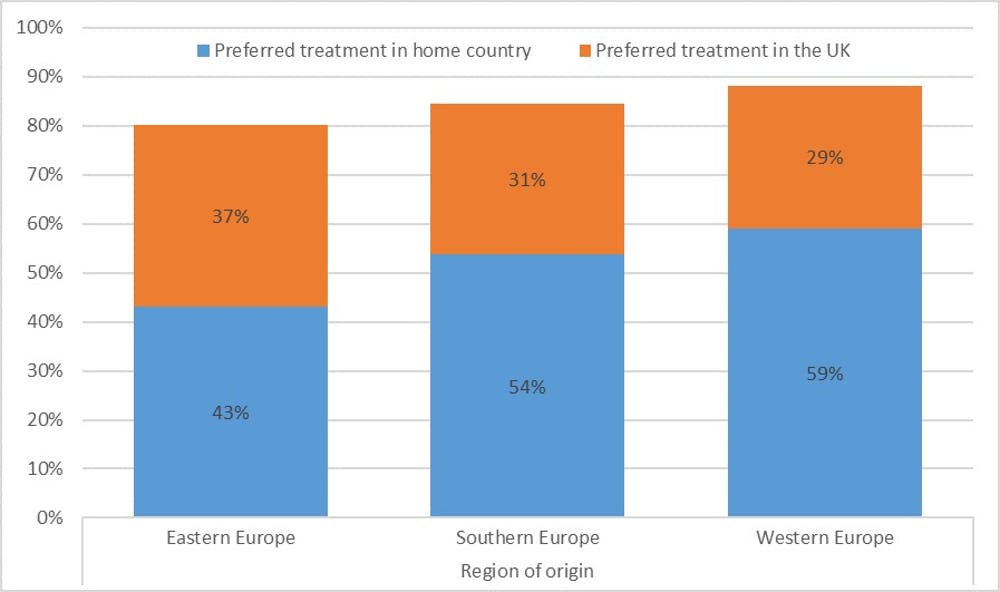
In The Conversation, Chris Moreh, Athina Vlachantoni, and Derek McGhee report that — contrary to British myth-making — the National Health Service isn’t the envy of the civilized world:
Britain’s National Health Service is often described as a “national treasure”. And it is a sentiment those on the left and the right of the political divide agree on. The British public are so proud of the NHS, they made it the central theme of the opening ceremony of the 2012 London Olympic Games.
But this pride has also been coupled with fears that the universal healthcare provided by the NHS might be taken advantage of by patients from outside the UK. A few months after the Olympics, the then health secretary, Jeremy Hunt, felt the need to clarify that “we are a national health service, not an international health service”. The 2015 election-winning manifesto of the Conservative party made this point even clearer when it pledged to “tackle health tourism” and “recover up to £500m from migrants who use the NHS”.
But our research shows that while the NHS may be a national treasure to British people, EU migrants would rather be treated in their countries of origin. As a 38-year-old woman from Germany put it: “Sorry, NHS? No thanks.” And the reasons for rejecting the NHS? A 25-year-old man from the Netherlands says it’s because the “NHS is slow and the medical care mediocre”. Or, at least, it “is rather poor compared to healthcare in my country,” says a 45-year-old woman from Germany.
But why should British people worry about what EU migrants think of their health service? What EU migrants think and choose is important because they are familiar with at least two European healthcare systems. They have the information and personal experience that most British citizens do not. There is a lot to be learnt from them.
Comments Off on The NHS, Britain’s “national treasure”, gets panned by other EU patients who’ve experienced non-NHS care
March 22, 2019
Debunking Stephen Jay Gould
Several years back, I linked to a David Friedman post on a study that contradicted a key argument in Stephen Jay Gould’s book The Mismeasure of Man. While I’ve read a few of his books, it’s been nearly 15 years since I last read anything by him … by now I only have a vague recollection of what he wrote, but his works were quite popular at the time. Much more recently Russell T. Warne looked at different problems in Gould’s work that are much more damaging to his reputation:
Stephen Jay Gould, the famous 20th century paleontologist, published his most celebrated work, The Mismeasure of Man, in 1981. Gould’s thesis is that throughout the history of science, prejudiced scientists studying human beings allowed their social beliefs to color their data collection and analysis. Gould believed that this confirmation bias was particularly powerful when a scientists’ beliefs were socially important to them. […] The Mismeasure of Man provides a great deal of evidence that scientists’ pre-existing beliefs color their judgment — but not in the way he intended. Rather, the book is a perfect example of the sin it purports to expose in others. Gould’s Marxist political beliefs made him attack intelligence research because he saw it as a threat to his egalitarian social goals. Ironically, it was this allegiance to ideology over data that made Gould himself a classic examplar of a biased scientist.
[…]
Most criticism of The Mismeasure of Man was confined to the recherché world of psychologists who study intelligence. However, a new debate opened up in 2011 when a team of anthropologists argued that Gould’s analysis of the data on cranium measurements from 19th century scientist Samuel George Morton was flawed. Gould cast Morton as a racist who fudged his data to match his beliefs about white racial superiority because of a supposed larger skull capacity. Instead, the anthropologists argued, it was Gould who manipulated the data to support his biases.
This ignited a series of follow-up articles in the scholarly literature by authors taking a variety of positions regarding Morton’s data and Gould’s interpretations. Weisberg believed that the re-analysis was flawed and Gould was mostly correct. Kaplan and his colleagues claimed that Morton’s interpretations were flawed, but that Gould was incorrect in believing that he could discern Morton’s actions and motivations. Finally, Mitchell believed that Morton’s data were accurate and that the interpretations were colored by the racism of the era, but the claim that Morton subtly manipulated the data was a fiction created by Gould.
Though still unresolved, the debate shows that a critical analysis of specific sections of The Mismeasure of Man is warranted. After writing an article about Lewis Terman, an important developer of early intelligence tests, I decided that a 23-page section of The Mismeasure of Man would be a valuable section of the book to analyze. This section is Gould’s description and analysis of the Army Beta test, one of the tests that Terman helped create. The Army Beta was used in World War I to screen illiterate recruits for military service.
Having read some of the primary scholarly work about the Army Beta, I knew that some of Gould’s claims were inaccurate. However, I was unprepared for the level of pervasive deception that I encountered when I carefully checked Gould’s claims against the historical record. Moreover, I discovered overwhelming evidence that any pretense of Gould being “objective” — even if defined as “fair treatment of data” — is a farce. In The Mismeasure of Man, Gould elevates his biases to the status of uncontestable facts and to great lengths to hide the truth from his readers.
Comments Off on Debunking Stephen Jay Gould
Understanding the Great Depression
Marginal Revolution University
Published on 23 May 2017In this video, we examine the causes behind the Great Depression with the help of the aggregate demand-aggregate supply model.
In 1929, the stock market crashed and an air of pessimism swept across America — making bank depositors nervous. What would you do if you thought your money might not be safe with the bank? You’d probably want it back in your own hands. What happened next? A run on the banks.
Along with the Stock Market Crash of 1929, it’s one of the iconic moments of the early days of Great Depression. However, the Great Depression was an incredibly complex downturn in which the economy experienced a series of aggregate demand shocks. By the end of this video, you’ll walk away with a better understanding of the many factors behind the Great Depression and how to apply the AD-AS model to a real-world scenario.
Comments Off on Understanding the Great Depression
March 11, 2019
Misery was
exurb1a
Published on 10 Mar 2019Goodbye to closed-source human history. Maybe.
The Fifth Science Paperback ► https://tinyurl.com/y5zj33s5 (you may need to change your region accordingly: .co.uk, etc)Sample story from the book (The Lantern) ► https://youtu.be/um6cGuJ4mNE
The Fifth Science Treasure Hunt:
Minimal clues will be provided in the videos below. If you happen to live in one of these countries, then all the very best of luck finding the books. They’re not hidden elaborately, just out of sight of passers-by. If you need to do any heavy lifting, trespassing, or scale walls, you’re definitely in the wrong place. Hint: strange fonts and geography.
England ► https://youtu.be/HQDeKPNUF4U
Germany ► https://youtu.be/qfKd134AETo
Bulgaria ► https://youtu.be/XLLaa7G97B8
I also make horrendous music ► https://soundcloud.com/exurbia-1
Help me to do this full-time, if you’re deranged enough ► https://www.patreon.com/exurb1r?ty=h
The rest of my books ► https://tinyurl.com/ycnl5bo3Incidentally:
So, one of the many issues I didn’t get around to yelling at you about was the line between ‘genetic disorder’ and an individual’s unique features. I’ve mentioned before I’m more or less blind in one eye and this is almost definitely a result of a mutation in my family line. And you know, given the option, I’m not sure if I’d have it removed. Or, I’d need to give it a very, very long think.
There are plenty of lovely and bizarre anomalies specific to individuals, and it’s not for me to say – or even speculate really – where the line should be drawn when it comes to one day potentially making alterations to our descendants. I’m not a public educator, philosopher, scientist, or policy maker. Just an idiot with a USB microphone. I’m not the person to talk about this stuff. So I hope you’ll forgive my glossing over of it.
Comments Off on Misery was


