
Quotulatiousness

September 29, 2015

Universities, alcohol, women, and consent

Filed under: Health, Law, Politics, USA — Tags: , , , , — Nicholas @ 04:00

At Simple Justice, Scott Greenfield includes a poster from Southeast Missouri State University that nicely summarizes both the institutional infantilization of university students and the current double standard on booze and consent rules:
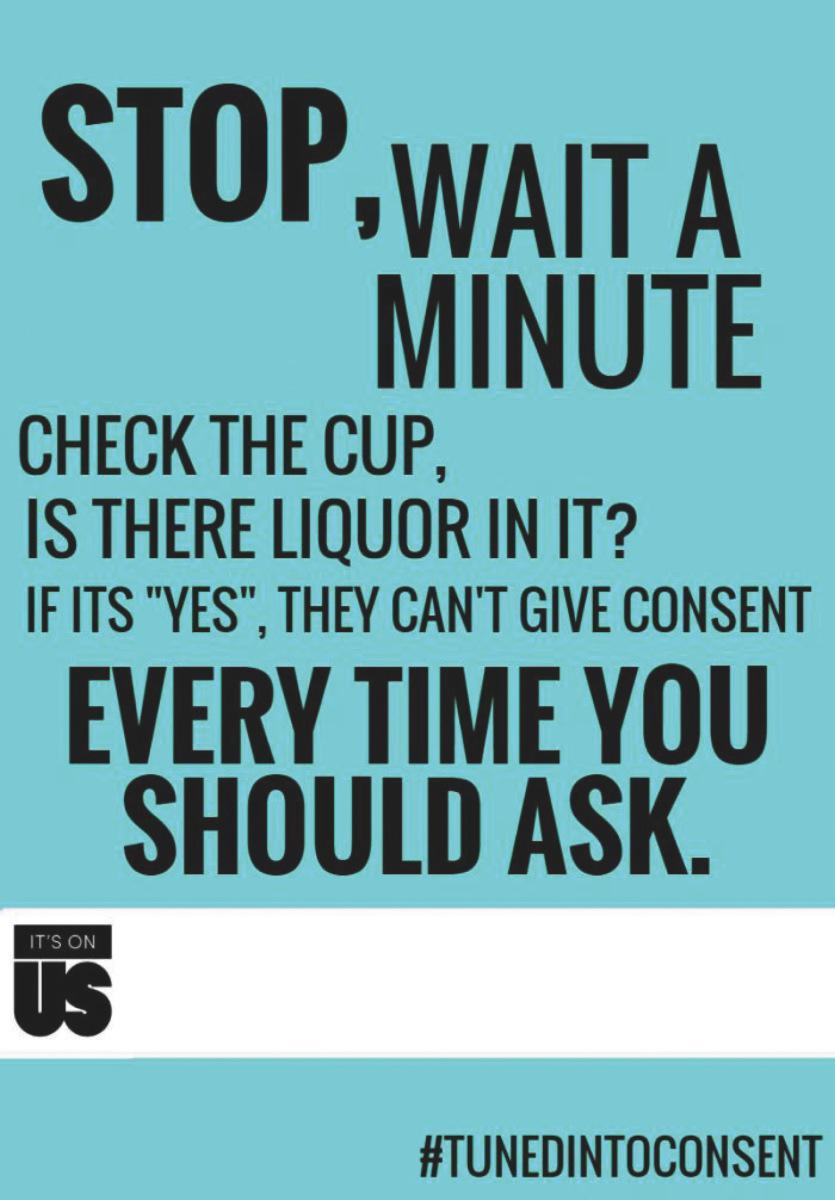
University students, booze and consent

There is universal agreement that any female (though not male) who has passed out is incapable of giving consent to sex. But as the spectrum of reaction to alcohol or drugs comes closer to the sober end, it becomes increasingly problematic. The word used to describe a woman who cannot consent is “incapacitation.”

What is incapacitation? That’s impossible to say. It usually described by either specific instances of conduct (“if she’s puking her guts out, that means she’s incapacitated”), which offers no guidance when she’s not puking her guts out, or when she’s done puking her guts out, or before she’s puking her guts out.

The underlying rationale is that a woman who is so drunk that she cannot formulate knowing, intentional and voluntary consent, cannot consent to sex. This is a dubious standard, as the incapacity to consent doesn’t mean she would not consent, but that she cannot consent.

To put this in context, consider a person who fully consents, enthusiastically desires to engage in conduct, but wasn’t specifically asked beforehand. This person can truthfully assert that it was non-consensual under the Affirmative Consent standard, because she never overtly expressed consent.* The objective standard is not met, although the subjective standard is fully met.

The problem is reminiscent of drunk driving, which was determined by the objective inability to perform the tasks necessary to safely drive a car before the law turned to Blood Alcohol Content as a proxy, an inadequate measure but a convenient one for law enforcement to prove. Sexual incapacitation suffers from a lack of definition and no objective basis.

What is clear about incapacitation is that it’s not when there is “liquor in the cup,” or when “she has touched alcohol,” any more than it would be a crime for her to thereafter get behind the wheel of a car. Yet, the notion that any alcohol (or drugs, which don’t seem to find their way onto posters or flyers as much) per se vitiates consent is spreading and being used as the hard and fast line.

September 22, 2015

A unique genetic population in the Dominican Republic

Filed under: Americas, Health, Science — Tags: , , , — Nicholas @ 03:00

BBC Magazine on the extraordinary lives of the Guevedoces, children who suddenly develop male sexual characteristics at puberty:

The discovery of a small community in the Dominican Republic, where some males are born looking like girls and only grow penises at puberty, has led to the development of a blockbuster drug that has helped millions of people, writes Michael Mosley.

Johnny lives in a small town in the Dominican Republic where he, and others like him, are known as “Guevedoces“, which effectively translates as “penis at twelve”.

We came across Johnny when we were filming for a new BBC Two series Countdown to Life, which looks at how we develop in the womb and how those changes, normal and abnormal, impact us later in life.

Like the other Guevedoces, Johnny was brought up as a girl because he had no visible testes or penis and what appeared to be a vagina. It is only when he approached puberty that his penis grew and testicles descended.

[…]

So why does it happen? Well, one of the first people to study this unusual condition was Dr Julianne Imperato-McGinley, from Cornell Medical College in New York. In the 1970s she made her way to this remote part of the Dominican Republic, drawn by extraordinary reports of girls turning into boys.

When she got there she found the rumours were true. She did lots of studies on the Guevedoces (including what must have been rather painful biopsies of their testicles) before finally unravelling the mystery of what was going on.

When you are conceived you normally have a pair of X chromosomes if you are to become a girl and a set of XY chromosomes if you are destined to be male.

For the first weeks of life in womb you are neither, though in both sexes nipples start to grow.

Then, around eight weeks after conception, the sex hormones kick in. If you’re genetically male the Y chromosome instructs your gonads to become testicles and sends testosterone to a structure called the tubercle, where it is converted into a more potent hormone called dihydro-testosterone This in turn transforms the tubercle into a penis. If you’re female and you don’t make dihydro-testosterone then your tubercle becomes a clitoris.

September 16, 2015

External Benefits

Published on 18 Mar 2015

What can the flu teach us about economics and externalities? In this video, we go over how vaccines produce positive externalities that help people stay healthy. When someone receive the vaccine, they pass along the positive benefits of the vaccine to others, generating positive externalities. However, when someone gets a vaccine, they bear all of the costs and only reap some of the benefits of the vaccine. The social value is larger than the private value, resulting in an an undersupply of flu shots. One solution to this problem is a Pigouvian subsidy — a subsidy on a good with external benefits.

September 14, 2015

An Introduction to Externalities

Published on 18 Mar 2015

What are externalities and what are the different kinds of costs? And what does this have to do with the rise of “superbugs”? This video is an introduction to externalities, including the concepts of private cost, external cost, and social cost. Using the example of antibiotics and viruses, we take a look at how costs are passed along to different members of society beyond the producer and consumer. We’ll use a chart to illustrate how to calculate the effects of a Pigouvian tax, and we provide definitions for the other key terms that will be used throughout this video series.

September 13, 2015

Teaching microaggressions

Filed under: Health, Politics, USA — Tags: , , , , — Nicholas @ 04:00

At Ace of Spades HQ, Ace sums up the deepest problem with the movement to find microaggressions everywhere and in everything:

The idea is that just as cognitive therapy teaches people to not make a big deal out of trivialities (like teaching people who have a phobia about elevators to learn to not be afraid of elevators), microagression brain-programming is a malicious form of cognitive therapy teaching people the exact opposite — to fear this, hate that, fly off the handle about this other thing, and generally carry on like a lunatic about things that sane people do not even think about.

And just as the good form of cognitive therapy can make a hysteric or neurotic a well-functioning individual, so can the insidious form of it turn a well-functioning individual into a hysteric or neurotic.

I think it’s 100% right and I’m glad someone had the guts to say so.

Colleges and progressives generally are teaching young people how to be mentally ill.

September 8, 2015

Pessimism and doom-mongering still sells books and movies

Filed under: Books, Environment, Health, Media, Science — Tags: , , , — Nicholas @ 04:00

Gregg Easterbrook reviews The End of Doom by Ronald Bailey:

Outside your window, living standards are rising, crime is declining, pollution is down, and longevity is increasing. But in pop culture, we’re all doomed. The Hunger Games films have been box-office titans, joined by World War Z, Interstellar, The Book of Eli, Divergent, The Road, and other big-budget Hollywood fare depicting various judgment days. Over in primetime, the world is ending on The Walking Dead, The Last Ship, The 100, and Under the Dome.

The same outlook obtains in nonfiction literature. Books that foresee doomsday — Collapse by Jared Diamond, The End of Nature by Bill McKibben, The Coming Plague by Laurie Garrett among them — win praise from commentators and sell briskly. Books contending that things basically are fine don’t do as well. One might think that optimism would be marketable to contemporary book buyers, who live very well by historical standards, but it doesn’t seem to work that way. Readers prefer material that depicts them dwelling in the final generation. Perhaps declining religious belief in Armageddon has been replaced by an expectation of some natural-world version of the event.

Into this adverse market steps The End of Doom by Ronald Bailey, an impressively researched, voluminously detailed book arguing that the world is in better shape than commonly assumed. Bailey deflates doomsday by showing that human population growth does not mean ecological breakdown; that food supply increases faster than population and probably always will; that, far from depleted, most resources are sufficient to last for centuries; that air pollution in the United States is way down; and that cancer is in decline.

Specialists will argue about some of the studies Bailey cites to support these contentions. So much environmental research exists today, for example, that one can find a study to prove practically anything. But in the main, Bailey’s selection of research is fastidious and convincing.

Bailey spends too much time, though, on discredited trendy bleakness from the 1960s and 1970s — such as Paul Ehrlich’s global-famine predictions and the 1972 Club of Rome report. One can practically hear dead horses saying, “Stop flogging me.” The End of Doom redeems itself with a clever chapter on how precautionary principles boil down to this rule: never do anything for the first time. “Anything new is guilty until proven innocent,” Bailey writes, but he goes on to chronicle how many new ideas denounced as dangerous turned out instead to make life less risky.

September 6, 2015

How the Division of Knowledge Saved My Son’s Life (Everyday Economics 3/7)

Filed under: Economics, Health — Tags: , , , — Nicholas @ 03:00

Published on 24 Jun 2014

In this video, Professor Boudreaux explains how the specialization of knowledge helped his two-year old son overcome a life-threatening illness. The science of medicine has enjoyed significant progress since the 19th century thanks to the vast size of the market and demand for health care services. Despite his foresight, Adam Smith never could have imagined the degree of expertise held by some of today’s medical specialists.

September 5, 2015

The subtle lure of “research” that confirms our biases

Filed under: Health, Science — Tags: , , , , — Nicholas @ 02:00

Megan McArdle on why we fall for bogus research:

Almost three years ago, Nobel Prize-winning psychologist Daniel Kahneman penned an open letter to researchers working on “social priming,” the study of how thoughts and environmental cues can change later, mostly unrelated behaviors. After highlighting a series of embarrassing revelations, ranging from outright fraud to unreproducible results, he warned:

    For all these reasons, right or wrong, your field is now the poster child for doubts about the integrity of psychological research. Your problem is not with the few people who have actively challenged the validity of some priming results. It is with the much larger population of colleagues who in the past accepted your surprising results as facts when they were published. These people have now attached a question mark to the field, and it is your responsibility to remove it.

At the time it was a bombshell. Now it seems almost delicate. Replication of psychology studies has become a hot topic, and on Thursday, Science published the results of a project that aimed to replicate 100 famous studies — and found that only about one-third of them held up. The others showed weaker effects, or failed to find the effect at all.

This is, to put it mildly, a problem. But it is not necessarily the problem that many people seem to assume, which is that psychology research standards are terrible, or that the teams that put out the papers are stupid. Sure, some researchers doubtless are stupid, and some psychological research standards could be tighter, because we live in a wide and varied universe where almost anything you can say is certain to be true about some part of it. But for me, the problem is not individual research papers, or even the field of psychology. It’s the way that academic culture filters papers, and the way that the larger society gets their results.

September 4, 2015

Slate: Testosterone changes the brain

Filed under: Europe, Health, Science — Tags: , , , , — Nicholas @ 05:00

Perhaps it’s not just a social construct after all:

However much we’d like to think of gender as a social construct, science suggests that real differences do exist between female and male brains. The latest evidence: a first-of-its-kind European study that finds that the female brain can be drastically reshaped by treating it with testosterone over time.

Research has shown that women have the advantage when it comes to memory and language, while men tend to have stronger spatial skills (though this too has been disputed). But due to ethical restrictions, no study had been able to track the direct effect that testosterone exposure has on the brain — until now. Using neuroimaging, Dutch and Austrian researchers found that an increase in this potent hormone led to shrinkage in key areas of the female (transitioning to male) brain associated with language. They presented their findings at last week’s annual meeting of the European College of Neuropsychopharmacology in Amsterdam.

August 26, 2015

Organic food recalls on the rise

Filed under: Bureaucracy, Business, Food, Health, USA — Tags: — Nicholas @ 05:00

It must be a trend if even the New York Times is reporting on the increasing number of food safety recalls involving organic food:

New data collected by Stericycle, a company that handles recalls for businesses, shows a sharp jump in the number of recalls of organic food products.

Organic food products accounted for 7 percent of all food units recalled so far this year, compared with 2 percent of those recalled last year, according to data from the Food and Drug Administration and the Department of Agriculture that Stericycle uses to compile its quarterly report on recalls.

In 2012 and 2013, only 1 percent of total units of food recalled were organic.

Kevin Pollack, a vice president at Stericycle, said the growing consumer and corporate demand for organic ingredients was at least partly responsible for the increase.

“What’s striking is that since 2012, all organic recalls have been driven by bacterial contamination, like salmonella, listeria and hepatitis A, rather than a problem with a label,” Mr. Pollack said. “This is a fairly serious and really important issue because a lot of consumers just aren’t aware of it.”

August 20, 2015

One of the slickest marketing campaigns of our time

Filed under: Environment, Europe, Food, Health, USA — Tags: , , , , — Nicholas @ 04:00

In Forbes, Henry I. Miller and Drew L. Kershen explain why they think organic farming is, as they term it, a “colossal hoax” that promises far more than it can possibly deliver:

Consumers of organic foods are getting both more and less than they bargained for. On both counts, it’s not good.

Many people who pay the huge premium — often more than 100% — for organic foods do so because they’re afraid of pesticides. If that’s their rationale, they misunderstand the nuances of organic agriculture. Although it’s true that synthetic chemical pesticides are generally prohibited, there is a lengthy list of exceptions listed in the Organic Foods Production Act, while most “natural” ones are permitted. However, “organic” pesticides can be toxic. As evolutionary biologist Christie Wilcox explained in a 2012 Scientific American article (“Are lower pesticide residues a good reason to buy organic? Probably not.”): “Organic pesticides pose the same health risks as non-organic ones.”

Another poorly recognized aspect of this issue is that the vast majority of pesticidal substances that we consume are in our diets “naturally” and are present in organic foods as well as non-organic ones. In a classic study, UC Berkeley biochemist Bruce Ames and his colleagues found that “99.99 percent (by weight) of the pesticides in the American diet are chemicals that plants produce to defend themselves.” Moreover, “natural and synthetic chemicals are equally likely to be positive in animal cancer tests.” Thus, consumers who buy organic to avoid pesticide exposure are focusing their attention on just one-hundredth of 1% of the pesticides they consume.

Some consumers think that the USDA National Organic Program (NOP) requires certified organic products to be free of ingredients from “GMOs,” organisms crafted with molecular techniques of genetic engineering. Wrong again. USDA does not require organic products to be GMO-free. (In any case, the methods used to create so-called GMOs are an extension, or refinement, of older techniques for genetic modification that have been used for a century or more.)

August 17, 2015

Food fears and GMOs

Filed under: Environment, Food, Health, Media, Politics, Science — Tags: , , , — Nicholas @ 03:00

Henry I. Miller and Drew L. Kershen on the widespread FUD still being pushed in much of the mainstream media about genetically modified organisms in the food supply:

New York Times nutrition and health columnist Jane Brody recently penned a generally good piece about genetic engineering, “Fears, Not Facts, Support GMO-Free Food.” She recapitulated the overwhelming evidence for the importance and safety of products from GMOs, or “genetically modified organisms” (which for the sake of accuracy, we prefer to call organisms modified with molecular genetic engineering techniques, or GE). Their uses encompass food, animal feed, drugs, vaccines and animals. Sales of drugs made with genetic engineering techniques are in the scores of billions of dollars annually, and ingredients from genetically engineered crop plants are found in 70-80 percent of processed foods on supermarket shelves.

Brody’s article had two errors, however. The first was this statement, in a correction that was appended (probably by the editors) after the article was published:

    The article also referred imprecisely to regulation of GMOs by the Food and Drug Administration and the Environmental Protection Agency. While the organizations regulate food from genetically engineered crops to ensure they are safe to eat, the program is voluntary. It is not the case that every GMO must be tested before it can be marketed.

In fact, every so-called GMO used for food, fiber or ornamental use is subject to compulsory case-by-case regulation by the Animal and Plant Health Inspection Service (APHIS) of USDA and many are also regulated by the Environmental Protection Agency (EPA) during extensive field testing. When these organisms — plants, animals or microorganisms — become food, they are then overseen by the FDA, which has strict rules about misbranding (inaccurate or misleading labeling) and adulteration (the presence of harmful substances). Foods from “new plant varieties” made with any technique are subject to case-by-case premarket FDA review if they possess certain characteristics that pose questions of safety. In addition, food from genetically engineered organisms can undergo a voluntary FDA review. (Every GE food to this point has undergone the voluntary FDA review, so FDA has evaluated every GE food on the market).

The second error by Brody occurred in the very last words of the piece, “the best way for concerned consumers to avoid G.M.O. products is to choose those certified as organic, which the U.S.D.A. requires to be G.M.O.-free.” Brody has fallen victim to a common misconception; in fact, the USDA does not require organic products to be GMO-free.

August 13, 2015

A potential breakthrough in Alzheimer’s and Parkinson’s research

Filed under: Health, Science — Tags: — Nicholas @ 03:00

At New Scientist, a report on some very hopeful research findings:

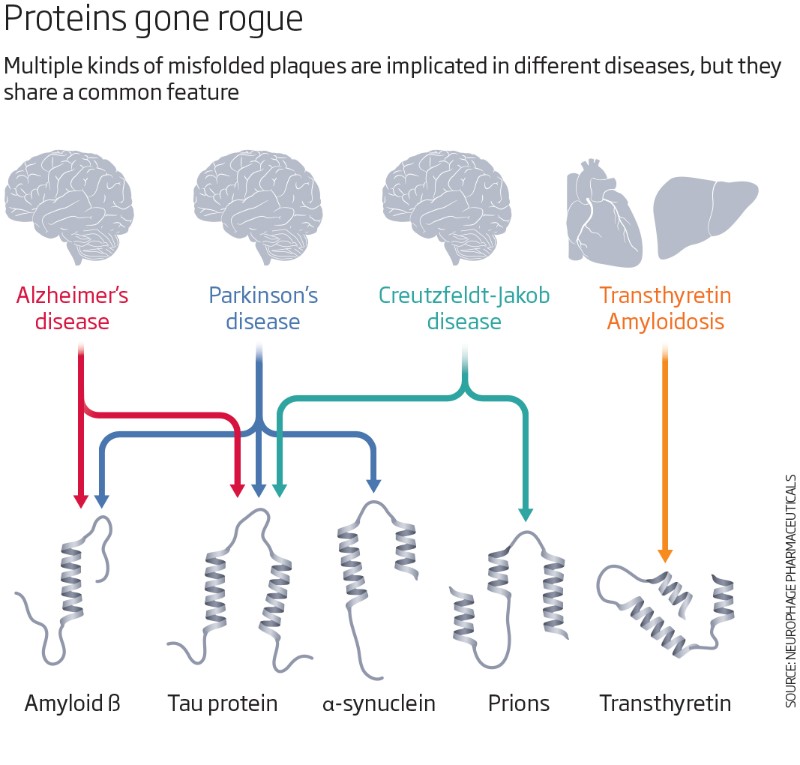
A virus found in sewage has spawned a unique drug that targets plaques implicated in a host of brain-crippling diseases, including Alzheimer’s disease, Parkinson’s disease and Creutzfeldt-Jakob disease (CJD).

Results from tests of the drug, announced this week, show that it breaks up plaques in mice affected with Alzheimer’s disease or Parkinson’s disease, and improves the memories and cognitive abilities of the animals.

Other promising results in rats and monkeys mean that the drug developers, NeuroPhage Pharmaceuticals, are poised to apply for permission to start testing it in people, with trials starting perhaps as early as next year.

The drug is the first that seems to target and destroy the multiple types of plaque implicated in human brain disease. Plaques are clumps of misfolded proteins that gradually accumulate into sticky, brain-clogging gunk that kills neurons and robs people of their memories and other mental faculties. Different kinds of misfolded proteins are implicated in different brain diseases, and some can be seen within the same condition.

Proteins gone rogue

The Hockey Stick of Human Prosperity (Everyday Economics 1/7)

Filed under: Economics, Health, History — Tags: , — Nicholas @ 02:00

Published on 24 Jun 2014

In this series, Professor Don Boudreaux explores the question economists have been asking since the era of Adam Smith — what creates wealth? On a timeline of human history, the recent rise in standards of living resembles a hockey stick — flatlining for all of human history and then skyrocketing in just the last few centuries. Without specialization and trade, our ancient ancestors only consumed what they could make themselves. How can specialization and trade help explain the astonishing growth of productivity and output in such a short amount of time — after millennia of famine, low life expectancy, and incurable disease?

August 6, 2015

Jeb Bush shows his true colours: “I’m not sure we need a half a billion dollars for women’s health issues”

Filed under: Health, Media, Politics, USA — Tags: , , — Nicholas @ 05:00

Ace explains why Jeb’s little mind fart is such a huge gift to the Democrats:

Talking about defunding Planned Parenthood Jeb Bush, the presumptive GOP nominee, went just a bit off message about the whole baby parts for sale in violation of federal law thing and mused….

    “The argument against this is … it is a war on women and you are attacking women’s health issues,” he said. “You could take dollar for dollar — although I’m not sure we need a half a billion dollars for women’s health issues — but if you took dollar for dollar, there are many extraordinarily fine organizations, community health organizations that exist.”

Emphasis mine and everyone elses.

DUDE. NO! BAD JEB! BAD!

So the GOP actually had a reasonable plan, this wasn’t about budget root canal and saving a few bucks, it was about not funding illegal and immoral acts, even indirectly. And hey, we’re going to send this money to decent and honest places that actually, you know, help improve women’s health.

Pretty solid for the GOP.

But instead, Jeb for some reason thought this would be a good time to toss out there the idea that he, and by extension the party he seeks to lead, really just want to stick it to poor women.

Fantastic work!

Well, he did issue a statement saying that’s not what he meant. I’m sure Hillary and every Democratic candidate will be sure to include that correction in the four million ads they’re going to run with the, “although I’m not sure we need a half a billion dollars for women’s health issues” sound bite. So no big whoop.

Your party has already been castigated — extensively — for the “War on Women” they’ve apparently been waging for years … so you just casually drop in an aside that totally justifies all the accusations? Man, that’s a serious day’s work in this election campaign! I’m not sure even his brother George could have malapropped his way quite so convincingly.

« Newer Posts — Older Posts »

Powered by WordPress

