Quotulatiousness

October 16, 2013

QotD: Shylock on revenge

Filed under: Media, Quotations, Religion — Tags: , , , — Nicholas @ 00:01

Hath not a Jew eyes? Hath not a Jew hands, organs, dimensions, senses, affections, passions; fed with the same food, hurt with the same weapons, subject to the same diseases, heal’d by the same means, warm’d and cool’d by the same winter and summer as a Christian is? If you prick us, do we not bleed? If you tickle us, do we not laugh? If you poison us, do we not die? And if you wrong us, shall we not revenge? If we are like you in the rest, we will resemble you in that. If a Jew wrong a Christian, what is his humility? Revenge. If a Christian wrong a Jew, what should his sufferance be by Christian example? Why, revenge. The villainy you teach me, I will execute, and it shall go hard but I will better the instruction.

William Shakespeare, The Merchant of Venice, Act III Scene 1.

September 16, 2013

“This is Britain. And in Britain you can wear what you want.”

Filed under: Britain, Liberty, Religion — Tags: , , — Nicholas @ 09:14

In the Telegraph, Dan Hodges defends the right of women to wear whatever they want:

The debate about “The Veil”, is neither necessary, nor is it complex. In fact, it’s very, very simple. This is Britain. And in Britain you can wear what you want.

Obviously there are practical exceptions. I can’t turn up to my local swimming pool and jump in with my clothes on, for example. When I tweeted about this earlier today a number of people asked: what about people going through airport security? And in that instance obviously veils should be removed. In the same way that when I pass through security, my shoes occasionally have to be removed. But that doesn’t alter the basic fact that if I still want to wander round in my pair of battered Adidas Samba, I’m free to do so. And any women who wishes to wear a veil is free to do that too.

“You can’t wear hoodies in shopping centres, or crash helmets in banks”, some people have pointed out. Fair enough. When the nation is trembling from an onslaught of Burka-clad steaming gangs I may reassess my view. But until then the rule remains; we are a free society, and we are free to wear the clothing of our choice.

I understand those who express concern about the cultural implications of veils. Indeed, I share them. My wife and I regularly drive through Stamford Hill to see relatives. When we do, we invariably reflect on the local Hasidic Jewish community, and how great it is that London is so rich culturally. But it’s noticeable that all the women, (and indeed the men), are essentially dressed in the same way. That’s great to look at from the outside, and reflects a strong sense of heritage and identity. Yet it also reflects conformity. And conformity is a bad thing. It stifles personal identity, and by extension freedom.

But from my point of view, that’s just tough. If I were to advocate passing a law that said Hasidic Jewish women should be banned from going out unless they’re dressed in bright, vibrant colours, I’d rightly be regarded as having lost my mind. And it’s no different to advocating we should start punishing women who decide to go out in a veil.

September 12, 2013

Stirring up opposition to the Charter of Quebec Values

Filed under: Cancon, History, Politics, Religion — Tags: , , , , , — Nicholas @ 08:23

In Maclean’s, Paul Wells gives a bit of sovereigntist history and brings us up to date on the proposed Charter of Quebec Values:

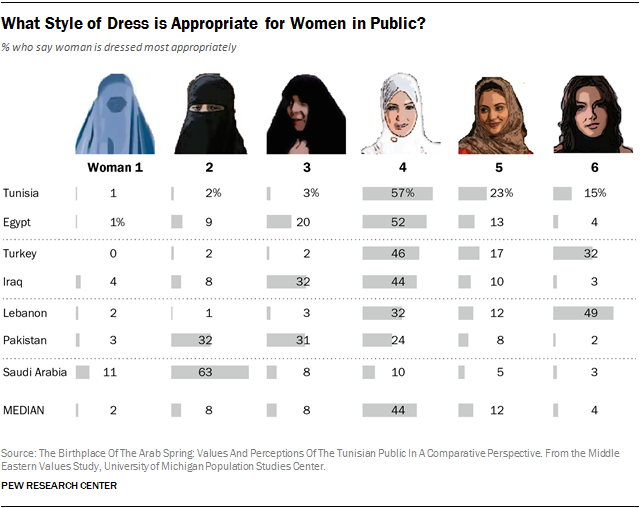
When Bernard Drainville, another minister in today’s post-cosmopolitain PQ government, released the text of his proposed Charter of Values — complete with handy wall charts showing the articles of clothing (Veil! Kippah!) that will heretofore be banished from public servants’ bodies while at work — he had the handy effect of smoking out two federal party leaders who have been equivocal until now. The Liberal, Justin Trudeau, has opposed the charter since the PQ started putting up trial balloons nearly a month ago. The New Democrat, Thomas Mulcair, has most of his seats in Quebec, and had resisted comment until now. So, mostly, had the Prime Minister, Stephen Harper, although he did tip his hand when asked about the PQ plan in Toronto: “Our job is making all groups who come to this country, whatever their background, whatever their race, whatever their ethnicity, whatever their religion, feel home in this country and be Canadians. That’s our job.”

On Tuesday the trial balloons became official government policy. The NDP and Conservatives came out unequivocally against the PQ. Speaking for the government, Jason Kenney suggested a possible federal court challenge.

This, too, happens to be one of the tactical tricks Jean-François Lisée cooked up during the long years before he entered electoral politics. In his 2000 book Sorti de secours, Lisée suggested the PQ cook up some scheme that would be rejected by the rest of the country, so Quebecers would feel insulted and want to secede.

Such a plan would depend for its success on a clear distinction between Quebec public opinion and the actions of national parties. So far it’s not going well for the PQ. Mulcair and Trudeau are Quebecers whose parties hold 66 of the province’s 75 seats. The Bloc Québécois did not hurry to embrace Marois’s scheme. Every Montreal mayoral candidate opposes it, as does the Quebec Federation of Women.

The inspiration for the PQ’s decision to retrench is purely electoralist. It is a reaction to 30 years of failed efforts to make the sovereignty movement every Quebecer’s fight. Forced generosity having failed the PQ, the party is falling back on cynicism and pettiness. It’s make-or-break for the entire sovereignty movement, and I’m pretty sure Marois, Lisée and Drainville just broke it.

September 4, 2013

QotD: Quebec and religious minorities

Filed under: Cancon, Law, Liberty, Quotations, Religion — Tags: , , — Nicholas @ 00:01

As this blog has pointing out for many years now, too many for these tired old eyes, at its core Quebec nationalism is an ethnic nationalism. By their nature ethnic nationalists are bigots. Certainly the sort of bigotry that emanates from the pure laine wing of the PQ is fairly tame. This is Canada and even our fanatics have a dullness about them. Still bigotry is bigotry. Tyranny is tyranny. Telling people what they can wear in the workplace, regardless of any objective public health and safety concerns, is tyranny. A private employer may discriminate at his leisure. The government cannot. It must represent all its people.

Our tax dollars, for Quebec is the great mendicant of modern Canada, are financing a policy of religious bigotry. Some conservatives might welcome this decision as it seems, on the face of it, to be going after the burqa. The ban, however, is on all religious headware. At the moment it applies only to the public sector, which is vast in Quebec, but knowing the statist inclinations of the PQ it will soon apply to the private sector as well.

To borrow from Churchill, this is worse than a crime, it’s a mistake.

Quebec is not an appealing place for ethnic and religious minorities. It’s why so many flee to Ontario when they receive their citizenship papers. Expect a second Exodus from La Belle Province should this Charter of Quebec Values come into force. Just as talented Anglos were driven from Montreal and the Eastern Townships in the 1970s, we’ll soon have waves of Sikhs arriving in Toronto. I will be delighted to greet them. There is a large community here in the Imperial Capital and they are peaceful and productive. If Quebec wants to put their bigotry ahead of economic common sense, let them. Then let us cut the equalization life line that has propped up these statist and bigoted policies for over forty years. First they discriminated against the English. Then the Jews. Now the time comes for all the others who are not of the blood.

Richard Anderson, “Quebec Values”, The Gods of the Copybook Headings, 2013-09-02

August 9, 2013

The cult of Apple

Filed under: Business, Media, Religion, Technology — Tags: , , — Nicholas @ 08:24

In Wired, Brett T. Robinson talks about the similarities of the “Apple cult” to religious beliefs:

Technology ads provide parables and proverbs for navigating the complexities of the new technological order. They instruct the consumer on how to live the “good life” in the technological age.

Like all advertising, Apple’s ads perform a vital educational function in consumer society. The advertisements are allegorical, rhetorical attempts to domesticate foreign and abstract concepts, making them accessible and attractive to everyday adherents.

In fact, they resemble medieval morality plays in their personification of good (Mac) and evil (PC). As such, the ads contain a moral — or, more explicitly, they propose a morality customized for the conditions of the age.

Media technology has acquired a moral status because it has become part of the natural order of things. Luddites, those who have sworn off new technologies, are the new heretics and illiterates. Technology is an absolute. There is no turning back or imagining a different social order. Challenge is acceptable as long as it remains within the confines of the technological order. Apple may challenge Microsoft. Samsung may challenge Apple. But the order must not be challenged.

The impact of digital culture, then, is epistemic; it insinuates a moral system based on its own internal logic.

[…]

In the Apple story, the brand cult began offline, with users meeting in real, physical locations to swap programs and ideas. Now, the Apple community is more diffuse, concentrated in online discussion groups and support forums. However, Apple product launches and conferences remain sacred pilgrimages where Apple fans can congregate, camp, and live together for days at a time to revel in the communal joy of witnessing the transcendent moment of the new product launch.

The reverence once reserved for holy relics and liturgy has reemerged in the technology subculture. The shared experience of living in a highly technological era provides a universal ground for a pluralistic society. There may be many different devices, but only one Internet.

Technology has become the new taken-for-granted order that requires our fidelity. Obedience to the new order is expressed in the communication rituals that take place every day in the use of computers, music players, and smartphones — devices that bind individuals together. From the farthest satellite to the nearest cellphone, the mystical body of electricity connects us all. Personal technology has become “the very atmosphere and medium” through which we mediate our daily lives.

July 16, 2013

The authoritarian wing of the same-sex marriage campaign

Filed under: Law, Liberty, Religion, USA — Tags: , , , , — Nicholas @ 10:28

A. Barton Hinkle wonders if gay couples can live and let live:

It was a great day when the Supreme Court struck down the federal Defense of Marriage Act and threw out a California case that could have undermined gay marriage in the Golden State. On that day, gay and lesbian citizens won something profoundly important: acknowledgment of the right to live as they choose, without interference from others who think they know better.

Now the question is: Will gay and lesbian citizens acknowledge that everybody else has the same right? Some certainly will. But others are challenging the notion – and thereby undermining the case for their own hard-won victory.

David Mullins and Charlie Craig, for instance. The gay Colorado couple have filed a discrimination complaint against the owners of Masterpiece Cakeshop, who declined for religious reasons to make them a wedding cake. The Colorado attorney general’s office has taken their side. So, regrettably, has the ACLU.

And they have company: Similar complaints have been brought against bakeries in Oregon, Indianapolis, and Iowa; a Hawaiian bed-and-breakfast; a Vermont inn; a Washington florist; a Kentucky T-shirt company; and more. As gay marriage gains ground, cases such as these likely will flourish.

As they do, they will lend credence to the otherwise ludicrous assertion by social conservatives that there is a “homosexual agenda.” It will remain absurd to suggest gay people are trying to turn straight people gay. Changing other people’s sexual orientation has always been a conservative project, not a liberal one. But it will cease being absurd to suggest that requests for tolerance are actually demands for approval – and that those who claim to celebrate diversity actually insist upon ideological uniformity.

July 12, 2013

Satanists and the Texas abortion debate

Filed under: Media, Politics, Religion, USA — Tags: , , , , — Nicholas @ 09:03

Kathy Shaidle finds the Satanists aren’t at all what she expected them to be:

At the height of all the #HailSatan hilarity on the left side of Twitter, a single thunderclap of a Tweet shut down the party pronto:

    Unfortunate to see Satan’s name used in such a diabolical manner. Another example of what ‘Satanism’ doesn’t represent. #HailSatan”—@UKChurchofSatan

It was that utterly breathtaking inclusion of the word “diabolical” that got me thinking like a liberal: that is, that the @UKChurchofSatan Twitter account had to be fake, set up specifically to mock the proceedings, in the tradition of “Clint’s Empty Chair.”

My suspicions were confirmed when I saw that, according to their profile, @UKChurchofSatan was following precisely 666 others on Twitter. Cute.

Their profile didn’t display the address of an official website, either. Not a good sign.

But I kept scrolling down. @UKChurchofSatan had sent out over 150 Tweets — wishing followers happy bank holiday weekends and re-Tweeting Richard Dawkins and Ricky Gervais — dating back through March.

It was legit.

Unlike messages regularly spewed out by the right and the left, the Church’s Tweets were models of old-fashioned decorum even when they were responding to critics, written in that anachronistic, typing-with-a-quill-pen style typical of earnest, fairly well-read males:

    Why wouldn’t Satanism be pro-life? What else is there? We are all free to make choices. Agreeable or not. Everyone is entitled to choice.

At least in this online iteration, Satanism comes across as a kind of Goth objectivism but manages to express itself without the average Ayn Rand follower’s pompous, unearned sense of superiority.

Thanks to its disapproving July 3 Tweet, which was re-Tweeted over one hundred times and gleefully reported all over the Web and a few newspapers such as the Telegraph, the @UKChurchofSatan is getting lots of positive attention, much of it from a most unlikely source: conservative Christian bloggers in the US, who’ve joked that “Hail Satan!” would make a fine Democratic campaign slogan for the 2014 midterms.

July 4, 2013

Egypt’s new post-Morsi era

Filed under: Middle East, Politics, Religion — Tags: , , , — Nicholas @ 10:14

Daniel Pipes sees joy in the aftermath of Morsi’s removal from power, but also worry. Lots of worry:

The overthrow of Mohamed Morsi in Egypt delights and worries me.

Delight is easy to explain. What appears to have been the largest political demonstration in history uprooted the arrogant Islamists of Egypt who ruled with near-total disregard for anything other than consolidating their own power. Islamism, the drive to apply a medieval Islamic law and the only vibrant radical utopian movement in the world today, experienced an unprecedented repudiation. Egyptians showed an inspiring spirit.

If it took 18 days to overthrow Husni Mubarak in 2011, just four were needed to overthrow Morsi this past week. The number of deaths commensurately went down from about 850 to 40. Western governments (notably the Obama administration) thinking they had sided with history by helping the Muslim Brotherhood regime found themselves appropriately embarrassed.

My worry is more complex. The historical record shows that the thrall of radical utopianism endures until calamity sets in. On paper, fascism and communism sound appealing; only the realities of Hitler and Stalin discredited and marginalized these movements.

In the case of Islamism, this same process has already begun; indeed, the revulsion started with much less destruction wrought than in the prior two cases (Islamism not yet having killed tens of millions) and with greater speed (years, not decades). Recent weeks have seen three rejections of Islamist rule in a row, what with the Gezi Park-inspired demonstrations across Turkey, a resounding victory by the least-hardline Islamist in the Iranian elections on June 14, and now the unprecedentedly massive refutation of the Muslim Brotherhood in public squares along the Nile River.

But I fear that the quick military removal of the Muslim Brotherhood government will exonerate Islamists.

May 26, 2013

Reporting (and omitting to report) certain news items

Filed under: Britain, Media, Religion — Tags: , , , , , — Nicholas @ 09:59

Mark Steyn on what was top of the issue-sheet for journalists discussing the Woolwich murder and the Swedish “youth” riots:

For the last week Stockholm has been ablaze every night with hundreds of burning cars set alight by “youths.” Any particular kind of “youth”? The Swedish prime minister declined to identify them any more precisely than as “hooligans.” But don’t worry: The “hooligans” and “youths” and men of no Muslim appearance whatsoever can never win because, as David Cameron ringingly declared, “they can never beat the values we hold dear, the belief in freedom, in democracy, in free speech, in our British values, Western values.” Actually, they’ve already gone quite a way toward eroding free speech, as both prime ministers demonstrate. The short version of what happened in Woolwich is that two Muslims butchered a British soldier in the name of Islam and helpfully explained, “The only reason we have done this is because Muslims are dying every day.” But what do they know? They’re only Muslims, not Diversity Outreach Coordinators. So the BBC, in its so-called “Key Points,” declined to mention the “Allahu akbar” bit or the “I”-word at all: Allah who?

Not a lot of Muslims want to go to the trouble of chopping your head off, but when so many Western leaders have so little rattling around up there, they don’t have to. And, as we know from the sob-sister Tsarnaev profiles, most of these excitable lads are perfectly affable, or at least no more than mildly alienated, until the day they set a hundred cars alight, or blow up a school boy, or decapitate some guy. And, if you’re lucky, it’s not you they behead, or your kid they kill, or even your Honda Civic they light up. And so life goes on, and it’s all so “mundane,” in Simon Jenkins’s word, that you barely notice when the Jewish school shuts up, and the gay bar, and the uncovered women no longer take a stroll too late in the day, and the publishing house that gets sent the manuscript for the next Satanic Verses decides it’s not worth the trouble … But don’t worry, they’ll never defeat our “free speech” and our “way of life.”

One in ten Britons under 25 is now Muslim. That number will increase, through immigration, disparate birth rates, and conversions like those of the Woolwich killers, British-born and -bred. Metternich liked to say the Balkans began in the Landstrasse, in southeast Vienna. Today, the Dar al-Islam begins in Wellington Street, in southeast London. That’s a “betrayal” all right, but not of Islam.

May 25, 2013

James Delingpole, that intellectual lightweight

Filed under: Britain, Law, Media, Religion — Tags: , , , , — Nicholas @ 08:16

Here he is again, banging on about his failings, particularly over the Woolwich murder:

On occasions like this I really do feel a bit of an intellectual lightweight, I must say. There am I, stuck in the fuddy-duddy mindset where you see a 25-year old father of a one year old boy being hacked to death with meat cleavers on a busy London street and all you can do is respond with the gut feeling that “This is wrong. This is totally wrong!”

Whereas if I were a bit younger, less reactionary and I’d had a proper educational grounding somewhere serious like the LSE, what I would have realised is that you just can’t judge things like this at face value. Sure, there’s a temptation to dwell on what a terrible way to go it must have been for that poor young man; to think about what his family must be going through — his wife and mother especially, who will surely be re-living his imagined death every day from now on till they die; to get quite angry, even, about the perverted political values and warped mindset that led to this barbaric act — and also about the cultural relativism that helped make it possible. But succumbing to this temptation would, of course, be a serious mistake.

No, if you’re a truly enlightened citizen of the modern world, the correct way to respond is the way all those sophisticated intellectual types on Twitter did. You recognise straightaway that the horror of the murder is just a distraction from the real issue. The real issue being, of course, that this regrettable event was the sadly inevitable consequence of Britain’s racism, intolerance and Islamophobia — as demonstrated by Nick Robinson’s bigoted, ignorant and inflammatory use of that reprehensible “of Muslim appearance” comment on BBC news for which he has since, quite correctly, apologised.

Until, as a society, we learn to face up to our collective responsibility for Drummer Lee Rigby’s death, young men like Michael Adebolajo and Michael Adebowale ought to have every right to go on drawing attention to this rampant injustice in whatever way they deem fit. It is frankly outrageous that in order to make their point they had to resort to the blunt instrument of execution by motor vehicle and butcher’s knife. A truly considerate society would have made public funds available for them to afford some properly functioning automatic weaponry. That way these gallant, oppressed freedom fighters could have made their vibrant and refreshingly direct contribution to our national debate with a lot less fuss and a lot less mess — perhaps preventing the disgraceful public overreaction we have witnessed over the last couple of days, everywhere from the hateful, violent racist English Defence League to the hardcore, fascist right-wing BBC.

May 23, 2013

Identity politics and the Woolwich murderers

Filed under: Britain, Media, Politics, Religion — Tags: , , , — Nicholas @ 08:26

Brendan O’Neill on yesterday’s brutal murder in Woolwich:

One of the most shocking things about the brutal attack in Woolwich yesterday was the arrogance with which one of the bloodied knifemen claimed to be acting on behalf of all Muslims. In what sounded like a South London accent, this British-seeming, casually dressed young man bizarrely spoke as if he were a representative of the ummah. He talked about “our lands” and what “our people” have to go through every day. He presumably meant Iraqis and Afghanis, or perhaps the broader global “Muslim family”.

How can a couple of men so thoroughly convince themselves that they speak for all Muslims, to the extent that they seriously believe their savage and psychotic attack on a man in the street is some kind of glorious act of Islamic resistance? Perhaps because they live in a country in which claiming to speak “on behalf of” a community, even if you’ve never been elected by or even seriously talked to that community, is taken seriously. A country where one’s identity, one’s racial or religious or cultural make-up, now counts for everything, certainly for more than what one does or what one believes. A country in which the politics of identity, the narrow and deeply divisive communal politics of shared cultural traits, has been privileged over all other kinds of politics.

The Woolwich murderer’s impromptu claim to be acting on behalf of the grievances of Muslims everywhere echoes the statements made by the 7/7 bombers. “Your democratically elected governments continue to perpetuate atrocities against my people all over the world”, said chief bomber Mohammad Siddique Khan. “My people” — what extraordinary arrogance and self-righteousness. Did Khan ever talk to “his people” or win a mandate from them? Of course not, no more than the knife-wielding nutter in Woolwich engaged with the inhabitants of what he thinks of as “his lands”. Rather, in this era in which any old fool can claim to be a “community spokesperson”, and can be treated seriously as such, these murderous loners seem to be trying a psychotic version of the same trick — claiming that by dint of shared skin colour or common religious sentiment they have the authority to speak on behalf of millions of people they have never met or whose lands they have never visited.

May 15, 2013

Pat Condell on the concept of “transcendence”

Filed under: Religion — Tags: , — Nicholas @ 08:43

May 10, 2013

Colby Cosh on “gendercide”

Filed under: Cancon, Health, Law, Liberty, Religion — Tags: , , , , — Nicholas @ 10:53

Despite the federal government’s efforts to keep this debate from happening, we apparently are going to be having a big national debate about abortion. (For those following from outside the borders of Former Soviet Canuckistan, Canada doesn’t actually have any abortion law on the books at the moment, and Stephen Harper’s government of “bitter-clinging, right-wing, Bible-thumping, fundamentalist Christian” Conservatives is desperate not to have to bring one in.) Colby Cosh explains why the efforts by some back-bench MPs to use “gendercide” as a way to force the government’s hand won’t work:

Here, then, is my contribution to the big conversation.

(1) “Gendercide” is incoherent religious militancy in cheap drag. (Editors certainly shouldn’t be taking sides by putting it in headlines as if it were an actual thing.)

(2) However you feel about personal eugenics, which is an accurate name for “mothers choosing babies that are likely to be better in some respect they deem relevant”, the Era Of It is arriving now and will not be wished away.

(3) Sex-selective abortion perpetrated for reasons of religious superstition is, upon all evidence, a marginal phenomenon in this country, probably a fading one, and quite likely to be an inherently self-correcting one. It makes a shabby excuse for blowing up the political truce our country clings to when it comes to the topic of abortion. (It seems remotely possible that Stephen Harper has perceived this and concurs with it.)

(4) In particular, no statute is likely to be effective against sex selection by mothers. We had one, you know, and it actually made a hypothetical exception for parents at risk of X-linked gene disease. A Liberal government devoted to “reproductive choice” criminalized sex-selective embryo implantation by means of the Assisted Human Reproduction Act; a Supreme Court found that law offensive to the Constitution; and a Conservative government closed the agency that was supposed to enforce it because it had accomplished the sum total of jack squat ever.

(5) People who wish to police sex-selective abortion had better figure out what exactly kinds they don’t like. And why. And what other reasons for a woman to have an abortion don’t cut their brand of mustard. And whether they really want their wives, girlfriends, daughters or nieces to end up as a future Case 6 running afoul of the law.

(6) Fellow-travellers of Mark Warawa who think he makes an awesome test case for parliamentary purity should consider looking for one that, pardon the metaphor, doesn’t have quite so many oopsies in its DNA.

May 5, 2013

Sorcery, conspiracy theories, and a magical worldview

Filed under: Middle East, Religion — Tags: , , , , — Nicholas @ 10:12

Strategy Page looks at some of the widely held beliefs in some Islamic countries:

… in most countries where there is a dominant religion, especially a state approved one, there is usually still a fear that the previous religion (or religions) will try to make a comeback. The former faiths often involved some really old-school stuff, including magic and sometimes animal, or even human, sacrifice. It is not uncommon for there to be civil laws covering those accused to be practicing such sorcery, and severe punishments for those convicted. At the very least, the accused will be driven from any senior government jobs they might hold, and that’s what’s being done to dozens of Ahmadinejad associates.

All cultures have a certain belief in magic and what Westerners call “conspiracy theories” to explain otherwise unexplainable events. In the Islamic world, there is a lot of attention paid to sorcery and magic, and people accused of practicing such things are regularly attacked and sometimes executed. Conspiracy theories are also a popular way to explain away inconvenient facts.

For example, back in 2008 many Pakistanis believed that the then recent Islamic terrorist attack in Mumbai, India was actually the work of the Israeli Mossad or the American CIA and not the Pakistani terrorists who were killed or captured and identified. Such fantasies are a common explanation, in Moslem nations, for Islamic terrorist atrocities. Especially when women and children, and Moslems, are among the victims, other Moslems tend to accept fantastic explanations shifting the blame to infidels (non-Moslems).

[. . .]

American troops arriving in Iraq after 2003 went through a real culture shock as they encountered these cultural differences. They also discovered that the cause of this, and many other Arab problems, is the concept of “inshallah” (“If God wills it.”) This is a basic tenet of Islam, although some scholars believe the attitude was a cultural trait that preceded Islam. In any event, “inshallah” is deadly when combined with modern technology. For this reason, Arab countries either have poorly maintained infrastructure and equipment (including military stuff), or import a lot of foreigners, possessing the right attitudes, to maintain everything. That minority of Arabs who do have a realistic attitude towards maintenance and personal responsibility are considered odd, but useful.

The “inshallah” thing is made worse by a stronger belief in the supernatural, and magic in general. This often extends to technology. Thus many Iraqis believed that American troops wore sunglasses that enabled them to see through clothing, and armor vests that were actually air conditioned. When they first encounter these beliefs, U.S. troops thought the Arabs are putting them on. Then it sinks in that Arabs really believe this stuff. It’s a scary moment.

April 27, 2013

The last Beguine

Filed under: Europe, History, Religion — Tags: , , , — Nicholas @ 08:53

An obituary (and short history lesson) in The Economist:

AT THE heart of several cities in Belgium lies an unexpected treasure. A gate in a high brick wall creaks open, to reveal a cluster of small, whitewashed, steep-roofed houses round a church. Cobbled alleyways run between them and tiny lawns, thickly planted with flowers, grow in front of them. The cosiness, the neatness and the quiet suggest a hortus conclusus, a medieval metaphor both for virginal women and the walled garden of paradise.

Any veiled women seen there now, however, processing to Mass or tying up hollyhocks in their dark habits and white wimples, are ghosts. Marcella Pattyn was the last of them, ending a way of life that had endured for 800 years.

These places were not convents, but beguinages, and the women in them were not nuns, but Beguines. In these communities, which sprang up spontaneously in and around the cities of the Low Countries from the early 13th century, women led lives of prayer, chastity and service, but were not bound by vows. They could leave; they made their own rules, without male guidance; they were encouraged to study and read, and they were expected to earn their keep by working, especially in the booming cloth trade. They existed somewhere between the world and the cloister, in a state of autonomy which was highly unusual for medieval women and highly disturbing to medieval men.

Nor, to be honest, was it the first thing Juffrouw Marcella thought of when, as a girl, she realised that her dearest wish was to serve her Lord. But she was blind, or almost so, and no other community would accept her. She wanted to work, too, and was not sure she could in an ordinary convent. The beguinages had originally been famous for taking the “spare” or “surplus” women who crowded into 13th-century cities in search of jobs. Even so, the first community she tried sent her back after a week, unable to find a use for her. (In old age she still wept at the thought of all the rejections, dabbing with a handkerchief at her blue unseeing eyes.) A rich aunt intervened with a donation to keep her there, and from the age of 21 she was a Beguine.

« Newer PostsOlder Posts »

Powered by WordPress