Quotulatiousness

May 10, 2020

Justin Trudeau’s allergy to scary black fully semi-automatic “military style” rifles gets even less coherent

Filed under: Cancon, Government, Law, Liberty, Weapons — Tags: , , , — Nicholas @ 05:00

Chris Selley on the federal government’s purely virtue signalling gun ban:

In a recent column, I questioned whether the Liberals’ new “ban” on certain kinds of semiautomatic rifles — “ban” in quotation marks, inasmuch as current owners can keep them — constituted the sort of good public-health policy we’re demanding nowadays in the face of COVID-19. I concluded it did not. Even if you support the idea of banning such weapons, you can’t really support this endeavour except in the way a starving man might welcome his least favourite meal. Indeed, gun control advocates are nearly as annoyed by it as gun rights advocates, and rightly so.

The Liberal “ban” targets certain semiautomatic rifles falling under the undefined term “military-style,” while leaving other semi-automatics alone. It focuses on rifles, which collectively are the least lethal form of previously legal weapons, while leaving handguns — which are used in 65 per cent of firearm homicides — alone. “You don’t need an AR-15 to bring down a deer,” Prime Minister Justin Trudeau says, yet the “ban” exempts current owners of these weapons who use them to hunt for the purposes of sustenance.” Upon its unveiling, it was very nearly perfectly incoherent. And it’s nearer still now.

In recent days the Liberals have touted the “ban” as a way of protecting women and girls in particular. “These guns make it easier to commit mass murder,” Trudeau added. “And the culture around their fetishization makes our country inherently more dangerous for the people most vulnerable. And that is women and girls.” Trudeau cited reports about increasing domestic violence during the pandemic, and grim statistics about the number of Canadians killed by their spouses.

There is very little evidence to support this case for the “ban.” And when you go looking for it, you wind up only with more questions.

To be fair, there is very little evidence to support any position on gun control. Nobody comprehensively keeps track of how many Canadians are killed using currently restricted weapons, or by the weapons the Liberals are “banning,” or even by rifles as opposed to shotguns — so we certainly don’t know how many men and women are killed by these various kinds of firearms.

May 8, 2020

Weapons as Political Protest: P.A. Luty’s Submachine Gun

Forgotten Weapons
Published 2 Aug 2017

Armament Research Services (ARES) is a specialist technical intelligence consultancy, offering expertise and analysis to a range of government and non-government entities in the arms and munitions field. For detailed photos of the guns in this video, don’t miss the ARES companion blog post:

http://armamentresearch.com/pa-luty-9…

Phillip A. Luty was a Briton who took a hard philosophical line against gun control legislation in the UK in the 1990s. In response to more restrictive gun control laws, he set out to prove that all such laws were ultimately futile by showing that one could manufacture a functional firearm from hardware store goods, without using any purpose-made firearms parts.

Luty succeeded in this task, designing a 9mm submachine gun made completely from scratch with a minimum of tools. In 1998, he published the plans for his gun as the book Expedient Homemade Firearms. Luty was not particularly discreet about his activities (actually, he was quite outspoken…) and was eventually caught by the police while out to test fire one of his guns, and arrested. He was convicted, and spent several years in prison. He continued to pursue a gun rights agenda after being released, and was facing legal trouble again when he passed away from cancer in 2011.

Several of Luty’s submachine guns are still held in the collection of the Royal Armouries’ National Firearms Centre, including the one that led to his original conviction. Many thanks to the NFC for allowing me to bring that weapon to you!

http://www.patreon.com/ForgottenWeapons

Cool Forgotten Weapons merch! http://shop.bbtv.com/collections/forg…

If you enjoy Forgotten Weapons, check out its sister channel, InRangeTV! http://www.youtube.com/InRangeTVShow

May 6, 2020

QotD: The French philosophes and the “lower orders”

Filed under: France, History, Liberty, Politics, Quotations, Religion — Tags: , , , — Nicholas @ 01:00

Apart from the different philosophical status they assigned to reason and virtue, the one issue where the contrast between the British and French Enlightenments was sharpest was in their attitudes to the lower orders. This is a distinction that has reverberated through politics ever since. The radical heirs of the Jacobin tradition have always insisted that it is they who speak for the wretched of the earth. In eighteenth-century France, they claimed to speak for the people and the general will. In the nineteenth century, they said they represented the working classes against their capitalist exploiters. In our own time, they have claimed to be on the side of blacks, women, gays, indigenes, refugees, and anyone else they define as the victims of discrimination and oppression. Himmelfarb’s study demonstrates what a façade these claims actually are.

The French philosophes thought the social classes were divided by the chasm not only of poverty but, more crucially, of superstition and ignorance. They despised the lower orders because they were in thrall to Christianity. The editor of the Encyclopédie, Denis Diderot, declared that the common people had no role in the Age of Reason: “The general mass of men are not so made that they can either promote or understand this forward march of the human spirit.” Indeed, “the common people are incredibly stupid,” he said, and were little more than animals: “too idiotic — bestial — too miserable, and too busy” to enlighten themselves. Voltaire agreed. The lower orders lacked the intellect required to reason and so must be left to wallow in superstition. They could be controlled and pacified only by the sanctions and strictures of religion which, Voltaire proclaimed, “must be destroyed among respectable people and left to the canaille large and small, for whom it was made.”

Keith Windschuttle, “Gertrude Himmelfarb and the Enlightenment”, New Criterion, 2020-02.

May 1, 2020

Theodore Dalrymple on the authoritarian innovations we’ve so meekly accepted thanks to the Wuhan Coronavirus epidemic

Filed under: Britain, Government, Health, Law, Liberty — Tags: , , , , , — Nicholas @ 03:00

Getting back to “normal” is going to be much more difficult now that the powers-that-be know for certain that we’re all quite comfortable tugging the forelock and bending the knee given the right kind of orders:

Armed Metropolitan Police near Downing Street in London.
Photo by Stanislav Kozlovskiy via Wikimedia Commons.

As for the collective or political lessons of the epidemic, I fear them more than rejoice in them. They seem to me likely to reinforce a tendency to authoritarianism, and to embolden bureaucrats with totalitarian leanings. One of the surprising things (or perhaps I should say the things that surprised me) was how meekly the population accepted regulations so drastic that they might have made Stalin envious, all on the say-so of technocrats whose opinions were not completely unopposed by those of other technocrats. There was, as far as I can tell, no popular demand for the evidence that supposedly justified the severe limitations on freedom that were imposed on the population. I suppose an encouraging interpretation of this readiness of the population to do as it was told is that it demonstrated that, all the froth and foam of opposition to political leaders notwithstanding, fundamentally the authorities were trusted by the population to do the right thing. Much as we lament, therefore, the intellectual and moral level of our political class, there are limits to how much we despise it. In other words, we believe that our institutions still work even when guided or controlled by nullities.

A less optimistic interpretation, as usual, is possible. Our population is now so used to being administered, supposedly for its own good, under a regime of bread and circuses, that it is no longer capable of independent thought or action. We have become what Tocqueville thought the Americans would become under their democratic regime, namely a herd of docile animals. Only at the margins — for example, the drug-dealers of banlieues of Paris — would the refractory actually rebel against the regulations, and that not for intellectual reasons or in the name of freedom, but because they wanted to carry on their business as usual. (I should perhaps mention here that I number myself among the sheep.)

In Britain, at any rate, the epidemic revealed how quickly the police could be transformed from a civilian force that protects the population as it goes about its business into a semi-militarised army of quasi-occupation. This transformation is not entirely new, alas; it has been a long time since the policeman was the decent citizen’s friend. Under various pressures, not the least of them emanating from intellectuals, he has become instead a bullying but ineffectual keeper of discipline, whom only the law-abiding truly fear.

I first sensed this development many years ago this when a traffic policeman asked to see my licence. “Well, Theodore …” he started, calling me by my first name when a few years before he would have called me “Sir.” This change was significant. I had gone from being his superior, as a member of the public in whose name he exercised his authority, to being a kind of minor, whom it was his transcendent right to call to order. He was now the boss, and I was now the underling.

The change in uniform, too, has worked in the same direction. Traditionally, since the time of Sir Robert Peel, the uniform of the British policeman was unthreatening, deliberately so, his authority moral rather than physical. Now, he is festooned with the apparatus of repression, if not of oppression, though in effect he represses very little of what ought to be repressed in case it fights back. The modern police intimidate only those who do not need deterring; those who do need it know that they have nothing much to fear from these whited sepulchres, these empty vessels. Incidentally, the French police have undergone a similar deterioration in appearance: gone is the reassuring képi in favour of the moron’s baseball cap, and some of them now dress in jeans with a black shirt with the word POLICE across its back, which is not difficult to imitate and makes it impossible to know whether a policeman really is a policeman or a lout in disguise.

French Gendarmerie at the Eurockéennes of 2007.
Photo by Rama via Wikimedia Commons.

The Covid-19 epidemic has come as a great boon to the British police. Increasingly criticised for their concentration on pseudo-crimes such as hate speech at the expense of neglecting real crimes such as assault and burglary, to say nothing of organised sexual abuse of young girls by gangs of men of Pakistani origin, they could now bully the population to their heart’s content and imagine that in doing so they were performing a valuable public service, preserving the law and public health at the same time. Thus they transformed their previous moral and physical cowardice into a virtue.

Of course, in bullying the average citizen who was very unlikely to retaliate they took no risks, unlike with genuine wrongdoers and law-breakers, who tend to be dangerous; but the fact remains that most individual policemen joined the force motivated by some kind of idealism, a desire to do society some service, though they soon had these naïve fantasies knocked out of them by the morally corrupt or bankrupt leadership of the hierarchy which owes its ascendency to its willingness to comply with the latest nostrums of political correctness. The faint embers of the policeman’s initial idealism were no doubt rekindled by the opportunity to prevent the spread of the virus, as they supposed that they were doing, but some of them, at least, far exceeded even their flexible and vaguely-defined authority and began to inspect citizens’ shopping bags to determine whether they were hoarding goods that might be in short supply. This was a step too far, and at last there were protests; the police desisted.

April 30, 2020

CITIZENS! Report any non-socially-distanced deviationist behaviour to this number immediately!

Filed under: Cancon, Government, Health, Liberty — Tags: , , , , , — Nicholas @ 03:00

In Maclean’s, Jen Gerson admits that she has not (yet) reported any of her neighbours for their failure to obediently follow the rules of social distancing. She must be reported to the appropriate state authorities!

Commemorative badges of the German Democratic Republic’s Ministry of State Security (Stasi).
Wikimedia Commons.

Look, I know I’m going to get flak for this, but someone needs to say it: think twice before you narc on your neighbours.

Snitching may work, but the downsides to citizen-policing are grim — to say nothing of the historical antecedents.

Firstly, “you can play havoc with somebody just by snitching on them with an anonymous snitch line,” noted Sharon Polsky, the president of the Privacy and Access Council of Canada. In addition to the risk of malicious reports, if people of colour aren’t disproportionately subject to snitching, I’d be shocked.

Totalitarian states turned neighbour against neighbour and family against family, in order to maintain the illusion of social cohesion.

Authoritarians use this tactic because there are never enough police or soldiers to force compliance upon an entire population, not unless everyone consents to become an agent of his or her own mutual oppression.

The term “fascism” has an innocent history. It comes from the Roman term “fasces,” which means a bundle of sticks bound together. One stick breaks, but the fasces remains strong. It’s another term for unity. That’s what makes it so seductive, especially in times of uncertainty and mortal dread. We’re all in this together. Nary a stick shall stray.

“We are now living amid the very tactics that the West [once] criticized,” Polsky added. “With state controls on commerce, industry, speech, and media.”

The federal government, for example, is already considering legislation that would bar the spreading of misinformation about COVID-19 online.

“Extraordinary times require extraordinary measures and it is about protecting the public,” Privy Council President Dominic LeBlanc told reporters with a line that should give any student of history the creeps.

“This is not a question of freedom of speech. This is a question of people who are actually actively working to spread disinformation, whether it’s through troll bot farms, whether [it’s] state operators or whether it’s really conspiracy theorist cranks who seem to get their kicks out of creating havoc.”

No doubt LeBlanc et al are operating under the noblest of intentions. But repressive measures buy conformity at a terrible price. Snitch lines turn us against one another. They teach us to fear the people we need to survive, thus making us more dependent on the apparatus of the state.

April 29, 2020

“The war on ultraviolet radiation because it might help Trump is an educational moment”

Arthur Chrenkoff on the sudden decision that the World Health Organization is the ultimate arbiter of what we’re allowed to say on social media platforms like Twitter and YouTube:

There is of course no evidence that the video represents any disinformation. It relates to legitimate scientific research by a medical company conducted in association with a respected hospital to develop a novel treatment of possibly crucial importance in the current conditions and into the future. The only problem with the video is that is indirectly supports Trump’s flight of fancy speculation about using light and chemicals to “disinfect” the body. Ergo, according to a NYT journalist it represents a problem and YouTube agrees. YouTube now has a standing policy of removing COVID information that goes against the World Health Organisation’s guidelines. Putting aside the question of the WHO’s credibility in the wake of the pandemic, we are not talking here about some guy in a tinfoil hat talking about 5G towers spreading the virus; this is a video relating to ongoing, respectable scientific research. Will it work? Probably not. But perhaps neither will any of the 150 or so COVID-19 vaccines being currently developed around the world. We won’t know until we know. But in the meantime, scientific news should not be censored, period.

[…]

Goldsmith and Woods are correct in pointing out not only the greater role that governments have been playing in regulating speech but more importantly how much of that effort has been embraced and driven by the big tech — and by the private individuals enabled and encouraged by the big tech — what I have previously called the “democratised censorship”. The difference is that people like Goldsmith and Woods think that’s a good thing.

The dirty little secret is that a great number of leftists, progressives and even centrist technocrats and activists look at China, with its authoritarian government, social credit score system, ubiquitous surveillance, and the ability to “get things done” and done quickly and supposedly efficiently (in China, bullet trains run on time, I hear), and pine for such a system to be applied in their own countries — as long as, of course, they are the ones in power and decide what is right, important and valuable. The left’s objections are rarely against authoritarianism and its means and methods per se, just with the possibility that someone else — like Trump — is the one behind the wheel, implementing their, not the left’s, agenda.

The war on ultraviolet radiation because it might help Trump is an educational moment. One could say, first they came for crazy conspiracy theorists and I said nothing because I’m not an anti-vaxxer or anti-5G activist — and so on. The problem with censorship is that it keeps creeping up on everyone else. And those who do the censoring — who decide what the ignorant masses should and shouldn’t be allowed to read — are not some detached and impartial spiritual beings but people with political agendas. People who think that ideas and beliefs of one half of the society are harmful and offensive. People who will censor news that doesn’t fit the agenda and support the narrative.

And then they came for ultraviolet radiation… You have been warned.

“If it saves just one life…”

Filed under: Economics, Government, Health, Liberty — Tags: , , — Nicholas @ 03:00

Antony Davies and James R. Harrigan on the rallying cry of the Karens of all genders:

In times of crisis, politicians want to look like they’re doing something, and don’t want to hear about limits on their authority. In times of crisis, people want someone to do something, and don’t want to hear about tradeoffs. This is the breeding ground for grand policies driven by the mantra, “if it saves just one life.” New York Governor Andrew Cuomo invoked the mantra to defend his closure policies. The mantra has echoed across the country from county councils to mayors to school boards to police to clergy as justification for closures, curfews, and enforced social distancing.

Rational people understand this isn’t how the world works. Regardless of whether we acknowledge them, tradeoffs exist. And acknowledging tradeoffs is an important part of constructing sound policy. Unfortunately, even mentioning tradeoffs in a time of crisis brings the accusation that only heartless beasts would balance human lives against dollars. But each one of us balances human lives against dollars, and any number of other things, every day.

Five-thousand Americans die each year from choking on solid food. We could save every one of those lives by mandating that all meals be pureed. Pureed food isn’t appetizing, but if it saves just one life, it must be worth doing. Your chance of dying while driving a car is almost double your chance of dying while driving an SUV. We could save lives by mandating that everyone drive bigger cars. SUVs are more expensive and worse for the environment, but if it saves just one life, it must be worth doing. Heart disease kills almost 650,000 Americans each year. We could reduce the incidence of heart disease by 14 percent by mandating that everyone exercise daily. Many won’t want to exercise every day, but if it saves just one life, it must be worth doing.

Legislating any of these things would be ridiculous, and most sane people know as much. How do we know? Because each of us makes choices like these every day that increase the chances of our dying. We do so because there are limits on what we’re willing to give up to improve our chances of staying alive. Our daily actions prove that none of us believes that “if it saves just one life” is a reasonable basis for making decisions. Yet, when a threat like the coronavirus emerges, we go looking for an imaginary cure that will save lives without tradeoffs.

April 27, 2020

Entrepreneurs beyond the atmosphere

Filed under: Government, Law, Liberty, Space, USA — Tags: , , , , — Nicholas @ 03:00

Doug Bandow reacts to Donald Trump’s executive order that begins to clear the way for private enterprise in space:

Taken by Apollo 8 crewmember Bill Anders on December 24, 1968, at mission time 075:49:07 (16:40 UTC), while in orbit around the Moon, showing the Earth rising above the lunar horizon.

Despite the current chaos caused by the coronavirus, Washington still must consider the future. Which explains the president’s new executive order that would allow private resource development on the moon and asteroids. It clearly rejects the “common heritage of mankind” rhetoric deployed by the United Nations on behalf of the Law of the Sea Treaty, which four decades ago created a special UN body to seize control of seabed resources.

The Future of Space Exploration

The EO issued earlier this month explained that

    Successful long-term exploration and scientific discovery of the Moon, Mars, and other celestial bodies will require partnership with commercial entities to recover and use resources, including water and certain minerals, in outer space.

The measure began the process of revising an uncertain legal regime which currently discourages private sector development.

The administration pointed to the 1979 Agreement Governing the Activities of States on the Moon and Other Celestial Bodies (known as the Moon treaty) and the 1967 Treaty on Principles Governing the Activities of State in the Exploration and Use of Outer Space, including the Moon and Other Celestial Bodies (typically called the Outer Space Treaty). Neither is friendly to entrepreneurs or explorers with a commercial bent.

In response, the president announced that

    Americans should have the right to engage in commercial exploration, recovery, and use of resources in outer space, consistent with applicable law. Outer space is a legally and physically unique domain of human activity, and the United States does not view it as a global commons. Accordingly, it shall be the policy of the United States to encourage international support for the public and private recovery and use of resources in outer space, consistent with applicable law.

Space is a Long-Term Prospect

The document’s main directive is for the Secretary of State, in cooperation with other agencies, to “take all appropriate actions to encourage international support for the public and private recovery and use of resources in outer space.” The secretary is to “negotiate joint statements and bilateral and multilateral arrangements with foreign states regarding safe and sustainable operations for the public and private recovery and use of space resources.”

Obviously, the administration’s attention is directed elsewhere at the moment. However, the potential benefits of turning to space are significant. The value of scientific research is obvious and continues to drive government agencies such as NASA. Launch services and space tourism have caught the interest of private operators. Such activities offer fewer legal and practical difficulties than attempting to establish some sort of long-term presence in the great beyond.

More complex development of space is a longer-term prospect. However, that makes it even more imperative to encourage innovation by creating institutions and incentives that encourage responsible development of what truly is the “final frontier.”

QotD: H.L. Mencken’s literary theory

Filed under: Liberty, Politics, Quotations, USA — Tags: , , , — Nicholas @ 01:00

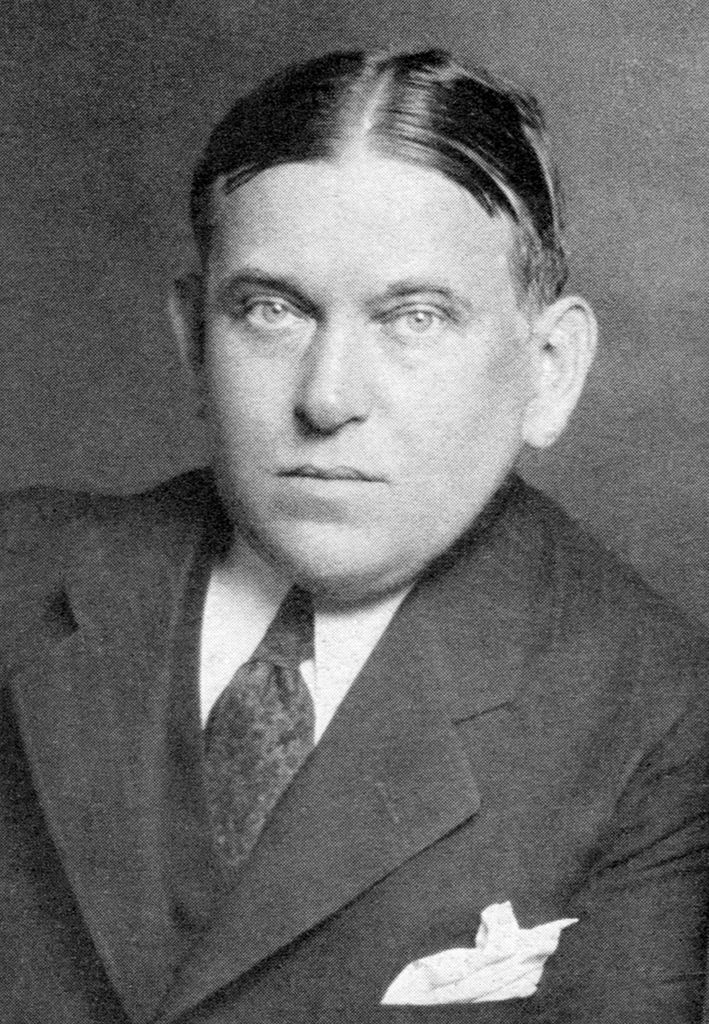
As for me, my literary theory, like my politics, is based chiefly upon one main idea, to wit, the idea of freedom. I am, in brief, a libertarian of the most extreme variety, and know of no human right that is one-tenth as valuable as the simple right to utter what seems (at the moment) to be the truth. Take away this right, and none other is worth a hoot; nor, indeed, can any other long exist. Debauched by that notion, it follows necessarily that I can be only an indifferent citizen of a democratic state, for democracy is grounded upon the instinct of inferior men to herd themselves in large masses, and its principal manifestation is their bitter opposition to all free thought. In the United States, in fact, I am commonly regarded as a violent anti-patriot. But this is simply because most of the ideas upon which American patriotism bases itself seem to me to be obviously sentimental and nonsensical — that is, they have, for me at least, no intelligible relation to the visible facts. I do not object to patriotism when it is logically defensible. On the contrary, I respect it as a necessary corollary to the undeniable inequality of races and people. Its converse, internationalism, appears to me to be almost insane. What an internationalist says, stripping it of rhetoric, is simply that a lion is no more than a large rat.

H.L. Mencken, “Private Reflections”, The Smart Set, 1922-12.

April 26, 2020

“If it saves just one life…”

Filed under: Economics, Government, Health, Liberty — Tags: , , , , — Nicholas @ 03:00

Hector Drummond illustrates the moral failure of falling back on the “if it saves just one life” trope as a justification for any and all restrictions on free people:

Not actually the official symbol of Britain’s National Health Services … probably.

Let me ask you a question. Would you give up your job, your savings, your kids’ economic future, your pension, your parents’ current pension, your house, and your mental health, if I told you that doing so may possibly extend my old, sick grandfather’s life by a year or two? I don’t suppose you’d be too keen, would you? In fact, even the most mild-mannered of people is likely to get angry at the sheer effrontery of such a request.

What if I told the world the same thing? What if I told the world that if everyone in every country gave up their wordly possessions, and spent the rest of their lives in grinding poverty, then it’s possible that my grandfather might get to see Christmas? And suppose that there was some bare plausibility to this, based on a computer model developed by scientists at Imperial College. What do you think the world is likely to say to me? The polite response would be, “Sorry to hear about your grandfather, but we’re not going to do this”. The less polite response would be more like … well, just incredulous laughter, and slammed doors.

The reason I bring up these hypothetical scenarios, though, is that all over social media we are hearing about the Covid-19 lockdown being “worth it if it saves just one life”. But would the people saying this really be willing to give up, say, their own house, car and possessions and teenage daughter to someone who is suicidally depressed over their lack of prospects in life? No. Would they be prepared to serve ten years in jail if it saved the life of someone at risk of being killed by gangsters? No. Would they be happy with having the government forcibly remove a kidney from them to extend the life of someone with failing kidneys? No. Economic ruin and loss of liberty is not something we generally regard as a fair trade for a stranger’s life. Generally even the bleeding hearts among us will say, and rightfully so, “I’m sorry for this person, but they are not entitled to this, and I will not damage my life to any great extent for them”. Charitable donations are one thing. So is volunteer service. But that’s it.

Another thing I am seeing is people who say, “Anything is worth it if it saves lives”. Anything? Really? Shall we ban alcohol then? Because some people die from alcohol. Cars? Paracetamol? Steak knives? Shall we ban mobile phones, because terrorists might use them to communicate with? Shall we lock up for life anyone convicted of a minor juvenile crime, in case they turn out to be a killer? The whole idea is too ridiculous for words, yet all over the world there are fearful people hiding in their homes and posting such thoughts. It is one thing to feel sorry for them, but their stupid ideas shouldn’t pass unchallenged.

April 23, 2020

Trial by jury

Filed under: Britain, History, Law, Liberty — Tags: , , , , — Nicholas @ 03:00

Peter Hitchens recounts the essential role of the jury system in the evolution of the English (and, by inheritance, the Australian, Canadian, and even American) constitutional rights of the individual, which today seems to be in peril:

A still from the 1957 movie Twelve Angry Men, directed by Sidney Lumet, starring Henry Fonda, Lee J. Cobb, and Martin Balsam.

Am I going to have to fall out of love with juries? For decades I have defended these curious committees, which can ruin a man’s life in an afternoon. It has been a romance as much as it has been a reasoned position. Most people get their best lesson in jury trials from the 1957 movie Twelve Angry Men. In that version, a single determined juror, played by Henry Fonda, gradually wins the rest of the panel round to an acquittal, at great cost in emotion and patience. But what really won my heart was Thomas Macaulay’s account of the Trial of the Seven Bishops, in which a London jury defied the wishes of the would-be autocrat King James II in 1688. It was an astonishing event, a monarch’s authority challenged by — of all unlikely things — a collection of Anglican prelates. Their acquittal, perhaps more than anything else, led to James’s fall a few months later. It was the beginning of true constitutional monarchy in Europe, the genesis of the English Bill of Rights and the forerunner of the very similar American document of the same name. It could not have happened without a jury.

For without a jury, any trial is simply a process by which the state reassures itself that it has got the right man. A group of state employees, none of them especially distinguished, are asked to confirm the views of other state employees. With a jury, the government cannot know the outcome and must prove its case. And so the faint, phantasmal ideal of the presumption of innocence takes on actual flesh and bones and stands in the path of power. Juries grew up in England almost entirely by happy accident, and no government would nowadays willingly create them where they do not already operate. A brief fashion for them in 19th-century Europe was swiftly stamped out by governments that understood all too well how much they limited their power. I believe the last true Continental juries, sitting in the absence of a judge, were abolished in France in 1940 by the German occupation authorities. People in Anglosphere countries, unaware that true independent juries rarely exist outside the English-speaking world, have no idea what a precious possession they are.

I remember actually pounding the arm of my chair with delight as I read Macaulay’s account of the response of the bishops’ attorney, Francis Pemberton, when threatened by the chief Crown prosecutor, the solicitor general: “Record what you will. I am not afraid of you, Mister Solicitor!” So this was England after all, and even the majesty of the Stuart Crown could not overawe the defense. This was wholly thanks to the fact that the trial took place before a jury — which duly acquitted the bishops of “seditious libel,” the ludicrous charge by which James had hoped to crush opposition to his plans to reverse the Reformation. Without a jury, the king would of course have won his case, and England would have gone down the road to absolutism (already followed in France, Prussia, Russia, and the Habsburg dominions) with incalculable consequences for the whole world. Instead we had what came to be called the Glorious (or Bloodless) Revolution.

And my blood still runs faster when I recall this and other moments at which the mere existence of juries has made us all more free. Yet I also have terrible doubts. Is the independence of juries possible in the modern world, in which the English Bill of Rights is all but forgotten and a new dispensation reigns? All too often, I read reports of trials in my own country that fill me with doubt. I did my fair share of court reporting as an apprentice journalist many years ago, and I have a good understanding of how these things used to work and ought to work. Something has changed. There is a worrying number of sex cases now coming before the courts in which clear forensic proof of guilt is often unobtainable.

The alleged crimes themselves are repulsive, and the mere accusation is enough to nurture prejudice. The defendants have often been arrested in the scorching light of total publicity, in spectacular dawn raids totally unjustified by any immediate danger they present. Pre-trial media reporting has further undermined the presumption of innocence. In England there is still officially a strong rule against the media taking sides before the jury delivers its verdict. But this is not enforced as it once was. The prosecutions are frequently as emotional as they are unforensic, the opposite of the proper arrangement. Yet the defendants are often convicted even so (sometimes by majority verdicts, which in my view violate the whole jury principle). The state seems somehow to have turned the jury — often swayed by emotion — into its own weapon. And it is worse than the alternative. A wrongfully-convicted defendant, pronounced culpable by a jury of his peers, must feel a far deeper despair than one cast into prison by a mere panel of judges.

April 21, 2020

Homeschooling is bad and should be tightly regulated or banned, says Harvard Professor of Karenism

An article in Harvard Magazine draws heavy fire from people who do not automatically demand to speak to the manager:

Illustration from Harvard Magazine via Twitter.

Harvard Magazine decided that this moment was the PERFECT time to take a gigantic shit on homeschooling parents. Author Erin O’Donnell decided write a piece on Elizabeth Bartholet, a “professor” who knows the best way to handle child education, and that is to turn them over to the State, immediately. Her rationale? Parents are simply too stupid to educate children without the state looking over their shoulder.

    Yet Elizabeth Bartholet, Wasserstein public interest professor of law and faculty director of the Law School’s Child Advocacy Program, sees risks for children — and society — in homeschooling, and recommends a presumptive ban on the practice. Homeschooling, she says, not only violates children’s right to a “meaningful education” and their right to be protected from potential child abuse, but may keep them from contributing positively to a democratic society.”

    “We have an essentially unregulated regime in the area of homeschooling,” Bartholet asserts. All 50 states have laws that make education compulsory, and state constitutions ensure a right to education, “but if you look at the legal regime governing homeschooling, there are very few requirements that parents do anything.” Even apparent requirements such as submitting curricula, or providing evidence that teaching and learning are taking place, she says, aren’t necessarily enforced. Only about a dozen states have rules about the level of education needed by parents who homeschool, she adds. “That means, effectively, that people can homeschool who’ve never gone to school themselves, who don’t read or write themselves.” In another handful of states, parents are not required to register their children as homeschooled; they can simply keep their kids at home.”

    This practice, Bartholet says, can isolate children. She argues that one benefit of sending children to school at age four or five is that teachers are “mandated reporters,” required to alert authorities to evidence of child abuse or neglect. “Teachers and other school personnel constitute the largest percentage of people who report to Child Protective Services,” she explains, whereas not one of the 50 states requires that homeschooling parents be checked for prior reports of child abuse. Even those convicted of child abuse, she adds, could “still just decide, ‘I’m going to take my kids out of school and keep them at home.'”

Bartholet goes on to cite an example of one woman, who was raised by “Idaho survivalists” and was working in the family business instead of getting an education. Conveniently, while lauding “teachers and other school personnel” as mandated reporters, Bartholet fails to cite or even acknowledge that there is plenty of child abuse that happens on school property, by school employees, and maybe there are just evil people who do evil things to children because they have the opportunity to do so. Giving someone the title of “mandated reporter” does not magically make them into an upstanding citizen and defender of children.

Bartholet – and by extension, O’Donnell – makes no rational argument against homeschooling. It’s only her gut feeling that if the nanny state isn’t over the shoulder, trying to mold “young skulls full of mush” (as Rush Limbaugh has said more than once) into educated and functional adults, then there could be shenanigans afoot! Why, these children might end up RELIGIOUS. *GASP!*

Shruti Rajagopalan noted that the original illustration (which appears to have been corrected since the image at the top of this post was published) included the word “ARITHMATIC” on the spine of one of the books.

April 17, 2020

Chris Selley – “… if John Q. Bylaw is hassling you just for taking a walk, for heaven’s sake get your smart phone out and make a righteous stink”

Our proto-surveillance society is moving rapidly toward all-surveillance, all the time and the current justification is to fight the Wuhan Coronavirus epidemic:

For civil libertarians, these are alarming times — but less alarming than they might be. During a pandemic, when everyone agrees life cannot go on as normal, people who place maximum value on individual freedom are liable to look rather selfish. “Trust our leaders” types get a big boost.

But if Canadian officialdom has not botched its response to this crisis, neither has it excelled. Theresa Tam’s defenders are right that official advice will naturally change over the course of a pandemic — but nothing justifies her proactive downplaying of the COVID-19 risk at a time when several Canadian governments were, we now know, woefully unprepared. The pandemic doesn’t care that Prime Minister Justin Trudeau went to Harrington Lake, against advice from three governments including his own to stay away from any second homes — but it would have been so bloody easy for him not to go, to set an example. It’s equally inconsequential that Andrew Scheer added six more human beings than necessary to a government charter flight from Regina to Ottawa — and it would have been equally easy for him not to bring his family along.

Meanwhile, certain big Canadian cities have so obviously overstepped the mark, by cracking down on perfectly safe behaviours — walking in parks, notably — as to highlight the value of some don’t-tread-on-me pushback. An unscientific survey of social media suggests not a single real human being supports the City of Ottawa’s latest ridiculousness: Days after its bylaw officers threatened a father and son for kicking a ball around [noted here], fined a man $880 for walking his dog, and allegedly assaulted a man questioning his eviction from a park — none of which seems to be supported by the provincial emergency act they were ostensibly enforcing — a public health official now advises against exchanging properly distanced outdoor pleasantries with one’s neighbours lest it “turn into a parking lot or backyard party.” (Don’t laugh: Studio 54 was a cozy little jazz bar before Mick Jagger and Debbie Harry showed up one night with some records and a pound of blow.)

For civil libertarians who remember life before smart phones, meanwhile, the plan Google and Apple are working on to help governments control COVID-19 might as well be custom-designed to induce heebie-jeebies. The basic idea is that your phone’s operating system would reach out to other phones via Bluetooth and record the date, time, duration and location of the meeting. No personal information need be attached to those data points, just the identity of the device. When someone reports a COVID-19 diagnosis on an app, using a code provided by their public health department, devices that had been nearby would receive a warning that their owners might have been exposed, and should take such measures as local authorities advise.

It could be the stuff of dystopian sci-fi. You can just see the guy with the giant translucent computer screen shouting “magnify! Enhance!” Really, though, this comes down to a simple question: Whom do you least distrust? A co-production between Google, which is not at all known for respecting users’ privacy, and Apple, which at least seems to make an effort? Or governments?

April 15, 2020

QotD: The limited utility of the “left-right” scale in political debate

Filed under: Economics, Liberty, Politics, Quotations — Tags: , — Nicholas @ 01:00

Categorizing a political position according to some simple left-right scale of values leaves something to be desired. Political views cover such a wide variety of issues that it is impossible to describe adequately any one person merely by identifying where he sits on a lone horizontal line.

Use of the single left-right scale makes impossible a satisfactory description of libertarian (and classical-liberal) attitudes toward government. Libertarians oppose not only government direction of economic affairs, but also government meddling in the personal lives of peaceful people. Does this opposition make libertarians “rightists” (because they promote free enterprise) or “leftists” (because they oppose government meddling in people’s private affairs)? As a communications tool, the left-right distinction suffers acute anemia.

Nevertheless, despite widespread dissatisfaction with the familiar left-right — “liberal-conservative” — lingo, such use continues. One reason for its durability is convenience. Never mind that all-important nuances are ignored when describing someone as being, say, “to the right of Richard Nixon” or “to the left of Lyndon Johnson”. The description takes only seconds and doesn’t tax the attention of nightly news audiences.

Don Boudreaux, “Coercivists and Voluntarists”, The Freeman, 1997-08-01.

April 9, 2020

You know you’re entering a police state when the police can just make up new “laws” to enforce

Filed under: Cancon, Health, Law, Liberty — Tags: , , , , , — Nicholas @ 03:00

I was surprised to see the name of someone I used to work with pop up in a story about over-enthusiastic enforcement of imaginary “laws” in the Ottawa area:

On Tuesday, the City of Ottawa’s bylaw enforcement team tweeted out an important clarification to a recent news report: An Orléans man had not been and would not be issued a $700 ticket for “playing soccer with his son in an empty field.” Rather, the city maintains, he had only been issued a “verbal warning” for playing soccer with his son in an empty field.

One can understand the Orléans man’s confusion. As David Martinek told it to the Ottawa Citizen, he was kicking around a ball with his four-year-old son William, who has autism and “more energy than needed to power the City of Ottawa,” when a bylaw officer arrived, took note of his licence plate and mentioned the $700 figure. He quite logically expected a summons in the mail.

The good news, such as it is, is that Martinek is no poorer to the tune of $700 (though he could have crowdfunded that in about 90 seconds). The remarkable thing about the city’s clarification, however, is that it actually paints a more offensive picture. A ticket is something you can fight — and such a ticket would deserve to be fought unto its demise, because Martinek doesn’t seem to have been doing anything illegal. As such, the “verbal warning” serves only as intimidation against a harmless, indeed beneficial activity.

The City of Ottawa’s website lays out the “rules and restrictions” in force due to COVID-19. It notes that bylaw officers have been empowered to enforce Ontario’s Emergency Management and Civil Protection Act. Regulation 104/20, made under said act, orders the closure of “outdoor recreational amenities that are intended for use by more than one family.”

It defines “outdoor recreational amenities” as off-leash dog parks, community and allotment gardens, “all portions of park and recreational areas containing outdoor fitness equipment,” “all outdoor playgrounds, play structures and equipment,” “all outdoor picnic sites, benches and shelters in park and recreational areas,” and “all outdoor sports facilities and multi-use fields, including baseball diamonds; soccer fields; frisbee golf locations; tennis, platform tennis, table tennis and pickleball courts; basketball courts; BMX parks; and skate parks.”

Considerable thought went into those very thorough prohibitions, you will agree. Yet they conspicuously do not prohibit two members of the same household kicking a ball around. Martinek says he questioned the bylaw officer as to whether they were on city parkland, but there’s nothing in the act prohibiting intra-household kick-arounds in parks or anywhere else. “Nothing in this order precludes individuals from walking through or using portions of park and recreational areas that are not otherwise closed and that do not contain an outdoor recreational amenity described,” the regulation reads.

« Newer PostsOlder Posts »

Powered by WordPress